

Anyone who sees a doctor about hair loss mainly wants to know two things: which blood values should actually be measured, and what the numbers on the report mean. Six values carry most of the weight: a full blood count, ferritin, CRP, TSH, 25-OH vitamin D and zinc. Together they cover the treatable causes of diffuse hair loss. The most common form, pattern (androgenetic) hair loss, cannot be seen in the blood at all. This article walks through each value on its own, with typical ranges, the things that can distort them and the underlying sources, as of 2026.
The key points at a glance
- ✓The basic panel for diffuse hair loss consists of a full blood count, ferritin, CRP, TSH, 25-OH vitamin D and zinc
- ✓Ferritin is the single most informative value, and ‘within the reference range’ does not automatically mean ‘optimal’ here
- ✓A full blood count alone is not enough: ferritin, TSH, vitamin D and zinc are not part of it
- ✓Hormone values in women are a medical decision and have to be timed to the cycle
The table of contents shows where to find what. From there the article goes into detail value by value, right down to the question of what to do when every blood value is normal and hair keeps falling out. Already have your lab report to hand? The lab report decoder explains every abbreviation on it, from Hb and MCV to anti-TPO.
Summary
- What a blood test for hair loss can and cannot answer
- Which blood tests for hair loss? The complete overview
- Diffuse hair loss: which blood values really count here
- Ferritin in hair loss: the most important and most debated value
- Full blood count in hair loss: what it includes and what it misses
- Thyroid and hair loss: TSH and when more than TSH is needed
- Vitamin D, zinc, B12 and folate: the nutrient values in the lab
- Blood values in hair loss in women: hormone profile, cycle and the pill
- The process: how to get a blood test that is actually useful
- Does the NHS cover a blood test for hair loss?
- Reading blood values correctly: a reference range is not an optimal range
- All blood values normal and still hair loss: the next steps
- How long does it take for the hair to grow back after a deficiency is corrected?
- Diffuse or hereditary: what the distinction means in practice
- Frequently asked questions about blood values in hair loss
- Scientific sources
What a blood test for hair loss can and cannot answer
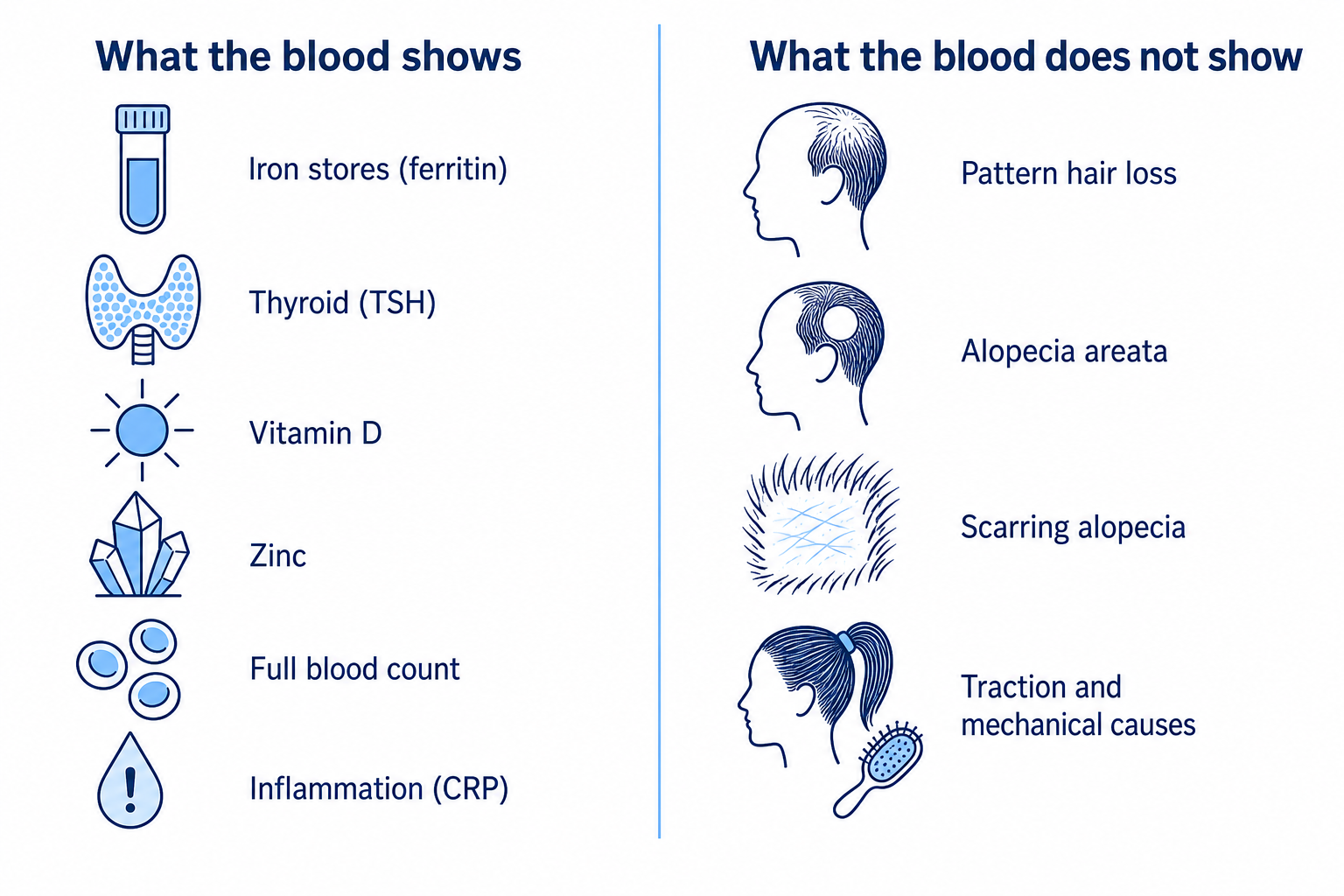
A blood test for hair loss checks for the acquired, treatable triggers: iron deficiency, thyroid dysfunction, nutrient gaps and inflammation, less often hormonal or systemic causes. What it can neither confirm nor rule out is pattern hair loss. That form is a clinical diagnosis based on the history, the pattern of loss and trichoscopy, as the dermatological literature consistently describes it.
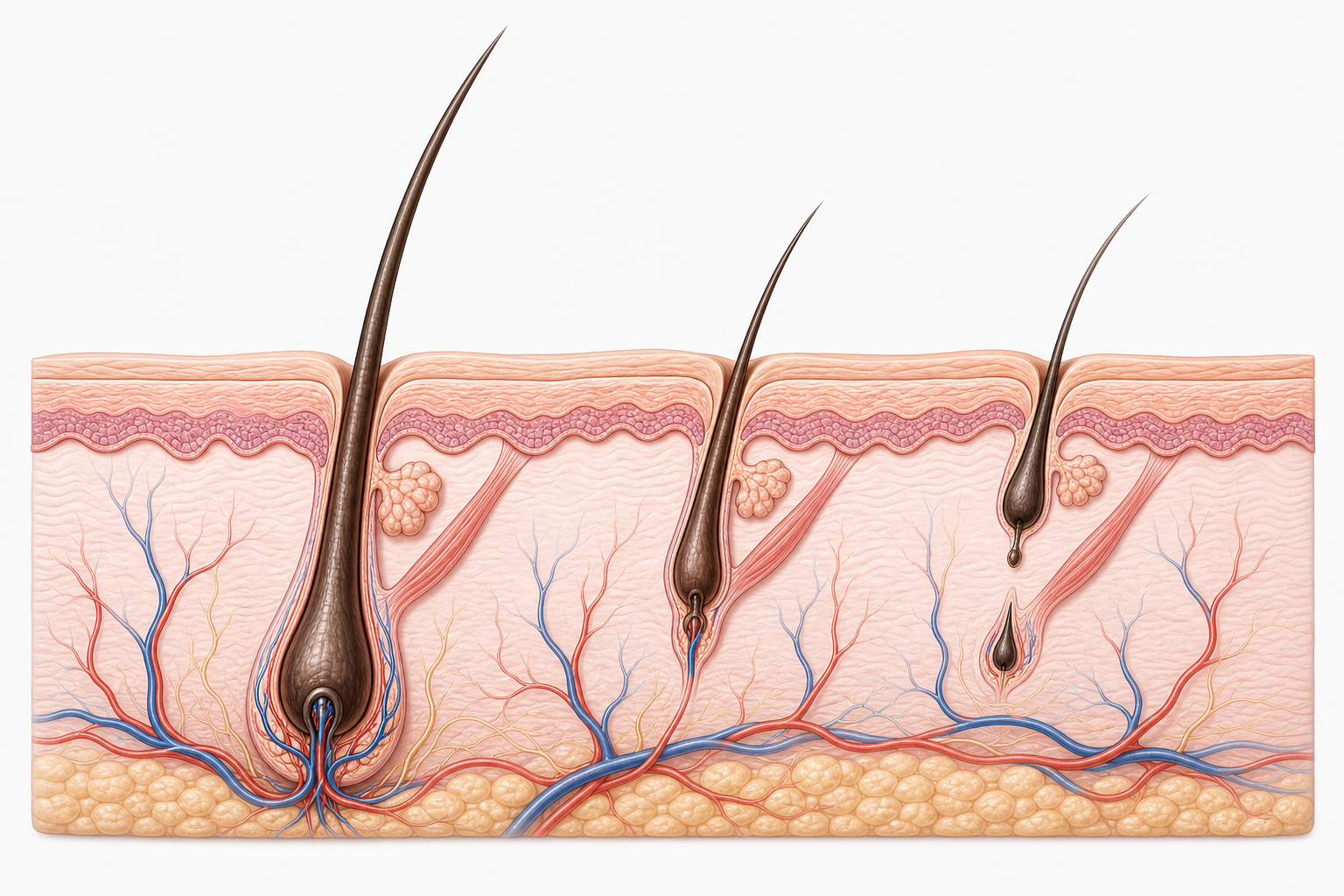
Two terms recur throughout this article. Androgenetic alopecia is the hereditary form of hair loss, in which follicles at the hairline, the temples and the crown react sensitively to the androgen DHT and gradually shrink. Telogen effluvium is a diffuse hair loss across the whole scalp, in which unusually many follicles shift into the resting phase early at the same time.
Blood values in hair loss: the six key takeaways
- Basic panel: full blood count, ferritin, CRP, TSH, 25-OH vitamin D, zinc.
- Ferritin is the most informative single value in diffuse hair loss.
- CRP always belongs with it, because inflammation makes ferritin appear falsely high.
- A full blood count with differential contains neither ferritin nor TSH, vitamin D or zinc.
- Hormone values only after a proper history, in women additionally timed to the cycle.
- Once a deficiency has been corrected, it typically takes three to six months for the shedding to subside.
The fact that blood values do not capture pattern hair loss does not make the work-up pointless; the opposite is true. Because the hereditary pattern is so common, the treatable share often goes unnoticed. Diffuse hair loss caused by iron deficiency or a thyroid disorder is reversible, and both can be present at once: a hereditary pattern plus an additional diffuse component.
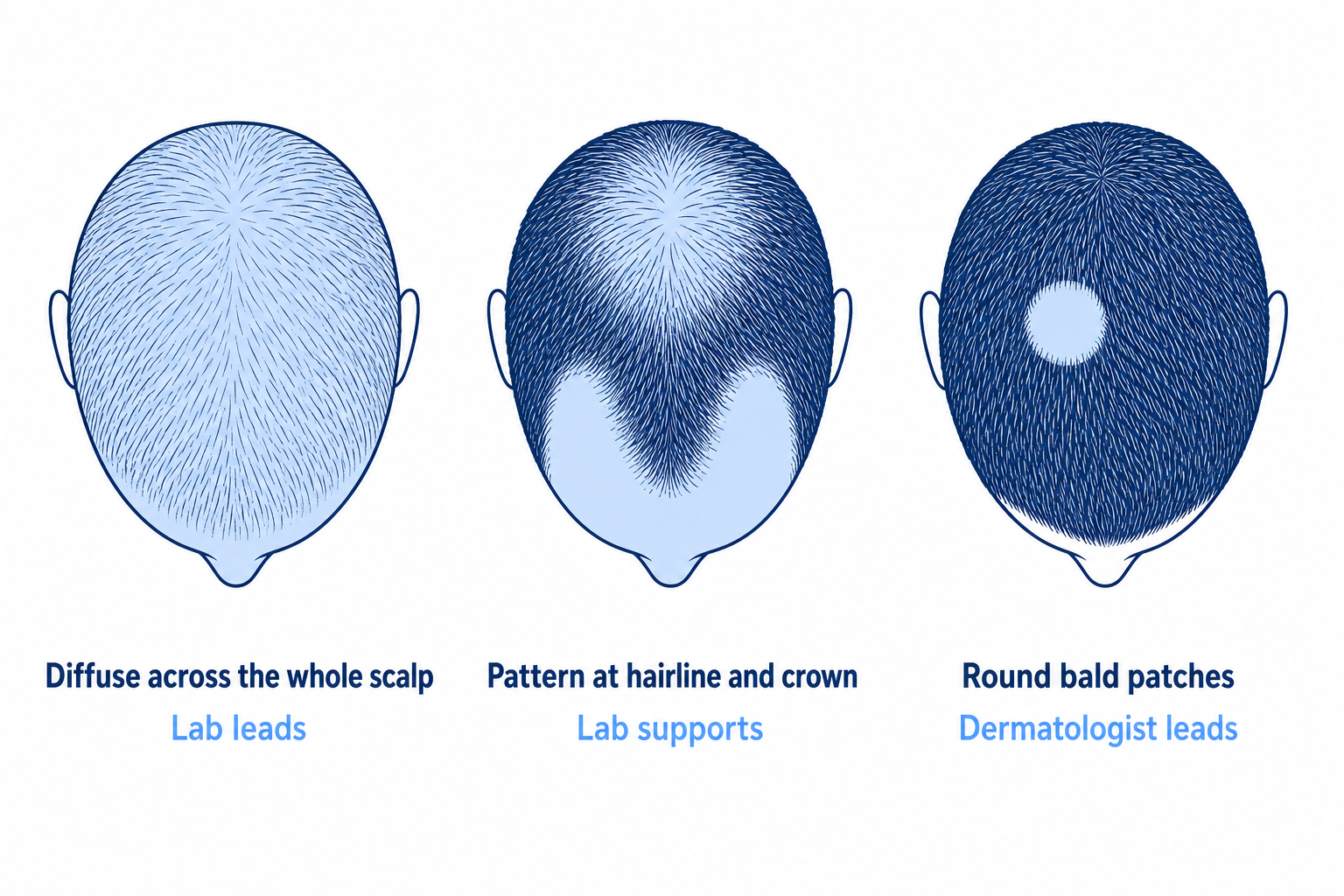
So the pattern decides how much the lab can contribute: diffuse across the whole scalp means the lab leads; a pattern at the hairline and crown means the lab is a side issue; round bald patches or an inflamed scalp mean the dermatologist takes the lead. Which causes may be behind it is covered in the overview of the causes of hair loss .
| Cause or type | Visible in the blood? | How it is identified instead |
|---|---|---|
| Iron deficiency | Yes, via ferritin together with CRP | Blood test, plus transferrin saturation when the picture is unclear |
| Thyroid dysfunction | Yes, via TSH, and if abnormal FT3, FT4, TPO antibodies | Blood test plus clinical examination |
| Vitamin D deficiency | Yes, via 25-OH vitamin D | Blood test |
| Zinc deficiency | Yes, via zinc in serum or whole blood | Blood test; the value fluctuates over the course of the day |
| Anaemia | Yes, via the blood count and haemoglobin | Blood test |
| Inflammation or infection | Yes, via CRP and the differential count | Blood test plus history |
| Vitamin B12 deficiency | Yes, via B12 or holo-transcobalamin | Blood test; a high MCV often gives the first hint |
| Hormonal disorder in women | Yes, with matching symptoms, via a hormone panel selected by a doctor | History and gynaecological work-up, lab as a supplement |
| Pattern (androgenetic) hair loss | No | Pattern at the hairline, temples and crown, trichoscopy, history |
| Patchy hair loss (alopecia areata) | No | Visible round patches, trichoscopy, dermatological examination |
| Scarring alopecia | No | Dermatological examination, scalp biopsy if suspected |
| Traction alopecia from pulling | No | History of hairstyles and tension, examination of the hairline |
| Trichotillomania | No | History and the typical picture of broken hairs of differing lengths |
| A trigger in the past such as an infection, a diet or surgery | Only indirectly, and often no longer | History covering the past two to four months |
Is it worth having testosterone or DHT measured?
No, in men with pattern hair loss, measuring testosterone or DHT in serum adds nothing diagnostically. Androgenetic alopecia rests on the sensitivity of the hair follicles to dihydrotestosterone, not on an elevated hormone level in the blood. According to the dermatological literature, affected men usually have normal testosterone and DHT values.
Both conclusions follow from this: a normal value does not rule the diagnosis out, and a high value does not confirm it. In women, by contrast, measuring androgens does make sense, though for a different reason. It looks for an underlying hormonal disorder such as polycystic ovary syndrome, not for the explanation of the hair loss pattern.
Which blood tests for hair loss? The complete overview
The basic panel in hair loss consists of six values: a full blood count with differential, ferritin, CRP, TSH, 25-OH vitamin D and zinc. An extended panel is added when the picture stays unclear or the shedding persists; hormone values and autoimmune serology follow only when the history calls for them. The tables below map out these three tiers, each with what the value shows, when it makes sense and what the typical range looks like.
| Value | What it shows | When it makes sense | Typical range |
|---|---|---|---|
| Ferritin | How full the iron stores are; often abnormal well before anaemia appears | In any diffuse hair loss, especially in women | Depending on the lab, deficiency usually below 15 to 30 µg/L (ng/mL); higher targets for the hair are a matter of expert debate, not of any guideline |
| CRP | Inflammation in the body; reveals a falsely high ferritin | Always together with ferritin | Lab-dependent, see your own report |
| Full blood count with differential | Anaemia, cell size (MCV), signs of inflammation or a blood disorder | Baseline test in unexplained hair loss | Lab-dependent, see your own report |
| TSH | The pituitary hormone that controls the thyroid; responds to both underactivity and overactivity | In diffuse hair loss, all the more with fatigue, weight changes or cycle changes | Often summarised as 0.4 to 4.0 mIU/L; the upper limit is 3.5 to 5.0 mIU/L depending on the lab |
| 25-OH vitamin D | Vitamin D supply over the past weeks | In diffuse hair loss and with little sun exposure | 50 nmol/L (20 ng/mL) and above sufficient, 30 to 50 nmol/L suboptimal, below 30 nmol/L deficiency (IOM classification) |
| Zinc | Zinc supply; also drops with inflammation | In diffuse hair loss, a one-sided diet or bowel disease | In serum roughly 9 to 21 µmol/L (75 to 140 µg/dL), depending on the method |
Tier 1, the basic panel: Full blood count, ferritin, CRP, TSH, 25-OH vitamin D and zinc. This combination covers iron deficiency, anaemia, inflammation, thyroid function and the two nutrient gaps most often discussed. Specialist sources in Germany, the United Kingdom, Italy and Turkey describe it almost identically, which makes it the internationally accepted core of blood testing in hair loss. Whether these tests are done as part of routine care depends on the documented clinical reason rather than on the individual parameter; where that line runs is explained further down in the section on cost and cover.
| Value | What it shows | When it makes sense | How to read it |
|---|---|---|---|
| FT3 and FT4 | Free thyroid hormones; they show the actual metabolic situation | When TSH is abnormal or the clinical suspicion remains | Interpreted together with TSH, never in isolation |
| TPO antibodies | An autoimmune process in the thyroid (Hashimoto’s thyroiditis) | With an abnormal TSH or a family history | A positive result on its own is not yet a condition that needs treatment |
| Vitamin B12 or holo-transcobalamin | B12 supply; holo-TC reflects the fraction actually available to the cells | With a vegetarian or vegan diet, a high MCV, gastrointestinal disease | Holo-transcobalamin is considered more informative than total B12 |
| Folate | Folate supply, important for rapidly dividing tissue | With large red cells in the blood count or a one-sided diet | Usually assessed together with B12 |
| Transferrin saturation | The share of the transport protein loaded with iron | When ferritin and the clinical picture do not match | Below 20 per cent with a high iron-binding capacity can point to a functional iron deficiency |
| Liver and kidney values | Basic liver and kidney function | With general symptoms or long-term medication | In rare cases they help explain a diffuse hair loss |
| Blood glucose or HbA1c | Glucose metabolism over the past weeks | With excess weight, cycle disorders or suspected PCOS | Fasting glucose requires a fasting sample |
| Selenium | Selenium supply | Only with a concrete suspicion | An overdose can itself trigger hair loss, so never take it blindly |
Tier 2, extended: These values are added when the basic panel is unremarkable but the diffuse hair loss continues, or when a finding still needs explaining. An example from practice: a transferrin saturation below 20 per cent together with a high iron-binding capacity can point to a functional iron deficiency even though ferritin looks ‘normal’.
| Value | What it shows | When doctors order it |
|---|---|---|
| Testosterone, total and free | Androgen level; only free testosterone is biologically active | In women with signs of androgen excess such as cycle disorders, acne or increased facial hair growth |
| SHBG | Transport protein for the sex hormones; it changes free testosterone | Together with testosterone, especially on hormonal contraception |
| DHEA-S | Androgen production in the adrenal cortex | When an androgen source outside the ovaries is suspected |
| Prolactin | A hormone of the pituitary gland | With cycle disorders, nipple discharge or difficulty conceiving |
| 17-OH progesterone, FSH, LH, oestradiol | Further building blocks of the hormone profile | As indicated within a gynaecological or endocrinological work-up |
| Autoimmune serology or syphilis serology | Clues to an autoimmune or infectious cause | Only with a concrete suspicion from history and examination, not as a routine |
Tier 3, doctor-indicated: Hormone values and autoimmune serology do not belong in a self-ordered package. They are requested when the history gives a reason, and they are interpreted alongside the clinical picture. A Spanish dermatology journal, Actas Dermo-Sifiliográficas, puts it this way for women: hormone studies, above all where there are additional signs of androgen excess.
More values are not automatically the better approach. A package of 30 parameters mainly produces incidental findings, follow-up tests and costs. National guidance points the same way: the National Institute for Health and Care Excellence deals with vitamin D through targeted supplement use in groups at risk rather than through screening symptom-free adults, and the risk of testing broadly lies less in the blood test itself than in false findings and overdiagnosis. Testing deliberately beats testing broadly.
Diffuse hair loss: which blood values really count here
The decisive blood values in diffuse hair loss are ferritin together with CRP, TSH, 25-OH vitamin D, zinc, vitamin B12 and a full blood count. This is where a blood test delivers the most, because an acquired and often correctable trigger can be behind it. Diffuse means the hair thins across the whole scalp, without a bald spot.
The pattern determines how much the lab can contribute at all. The assignment below is the practical short version of what you may expect from a blood test. Details on the course and on the typical triggers are in the article on diffuse hair loss.
Diffuse across the whole scalp, no bald spot
The lab leads. Ferritin, CRP, TSH, vitamin D, zinc and the blood count clarify the acquired causes that can be treated.
A pattern at the hairline, temples and crown
The lab is a side issue. The diagnosis comes from examining the pattern and the scalp. The lab checks whether a diffuse component is present on top of it.
Round bald patches or an inflamed, painful scalp
The dermatological work-up leads. Here trichoscopy decides, and a tissue sample if there is a suspicion; the lab only adds to the picture.
A timeline that is rarely spelled out, and that explains many findings: telogen effluvium typically sets in only two to four months after the trigger, because the affected follicles first remain in the resting phase for several weeks, which on its own lasts around 100 days. So if you are losing hair today, you are looking for an event two to four months ago.
Typical triggers are a feverish infection, surgery, a diet with heavy weight loss, childbirth, significant blood loss or a new medication. An important limitation follows from this: a value measured today may long since be back to normal even though the trigger was real. Once the trigger is gone, the shedding usually settles within three to six months.
A blood test before a hair transplant: why the cause is clarified first
Before a planned hair transplant the blood test serves to draw a line: it should show whether, on top of the hereditary pattern, there is also a diffuse, active hair loss. An ongoing telogen effluvium caused by iron deficiency or an untreated thyroid condition is, from a medical standpoint, a reason to treat that cause first.
The reasoning is straightforward: a transplant relocates hair you already have; it changes neither iron status nor thyroid function. As long as the diffuse component is active, the starting point keeps shifting. The treating doctor decides which values are ordered before a procedure, based on history and findings.
Ferritin in hair loss: the most important and most debated value
Ferritin is the most informative single value in diffuse hair loss, because an iron deficiency can affect the hair before anaemia develops. Ferritin is the storage protein for iron, and the serum ferritin value shows how well the iron stores are filled. With empty stores and no anaemia, haemoglobin is still normal, so a blood count alone stays unremarkable.
The mechanism is easy to follow. Hair follicles are among the most rapidly dividing tissues in the body. Empty iron stores push follicles into the telogen phase prematurely, and the result is a telogen effluvium, that is, diffuse hair loss across the whole scalp. How the phases fit together is explained by the article on the hair growth cycle in detail.
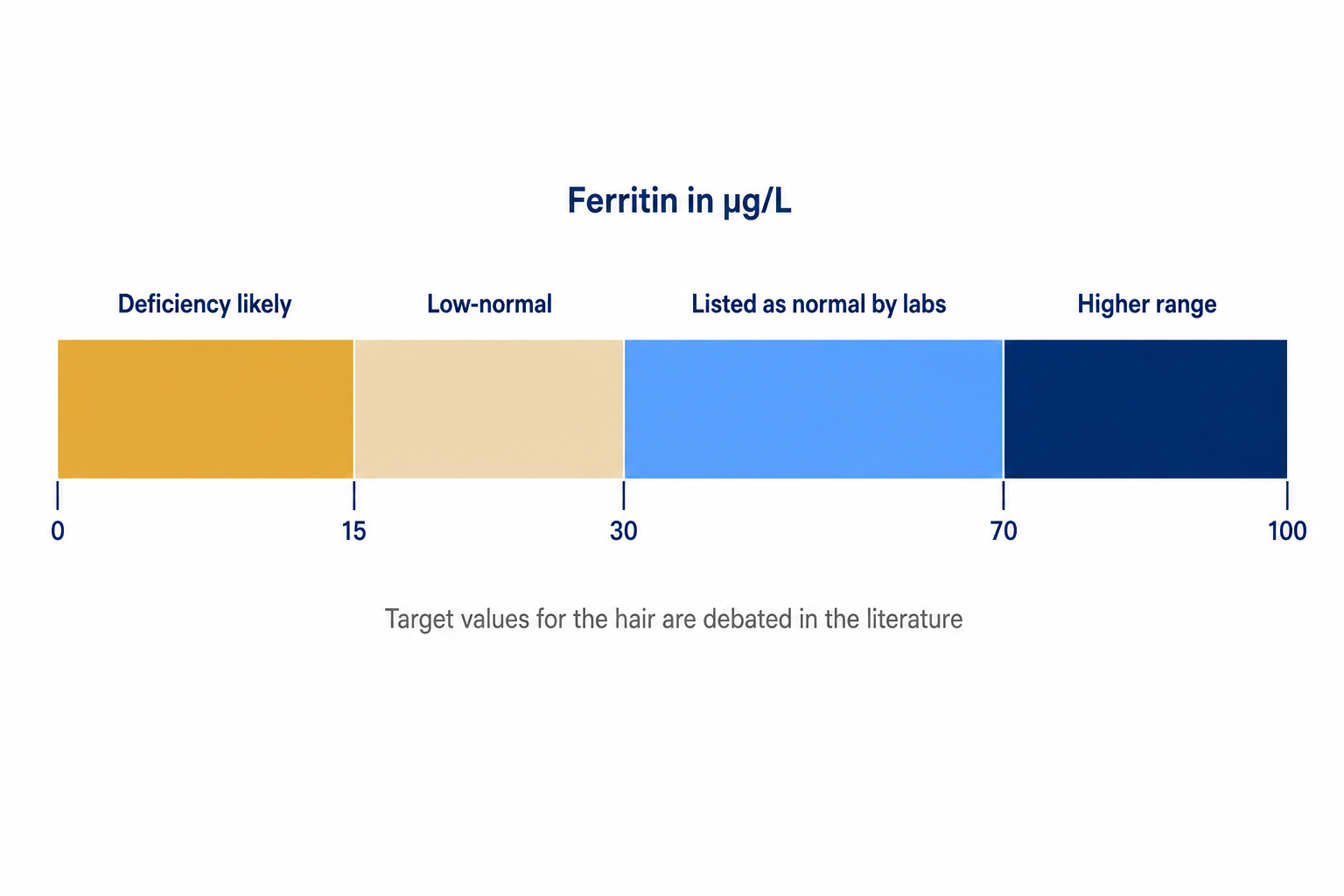
The question of the ‘right’ ferritin value is where things get murky, and precision pays off here. Lab references often define an iron deficiency only below roughly 15 to 30 µg/L, depending on the lab; a value below 15 µg/L is considered highly specific for iron deficiency, provided CRP is unremarkable. That is the well-established part.
The rest is contested. In the specialist debate, a higher target range of roughly 40 to 70 µg/L is put forward for the hair, notably by Rushton (2002) and Trost, Bergfeld and Calogeras (2006), with iron given only after a confirmed deficiency and under medical supervision, because too much iron in the body can cause organ damage and mask an iron storage disorder. Controlled studies such as the one by Olsen and colleagues (2010, Journal of the American Academy of Dermatology), by contrast, found no higher rate of iron deficiency in women with female pattern hair loss or chronic telogen effluvium compared with controls.
It matters where these figures come from: the 40 to 70 µg/L range reflects the position of individual authors, many of them specialising in trichology, and not a guideline recommendation. No major dermatological guideline sets a ferritin target value for the hair. Commercial hair clinics have been quoting the figure as consensus for more than twenty years, although it ultimately goes back to a single piece of work.
On top of that comes an interfering factor that often gets lost in everyday practice. Ferritin is an acute phase protein, that is, a protein whose blood level rises during inflammation. With an infection, inflammation or liver disease the value therefore comes out falsely high. A ferritin of 60 µg/L with a CRP of 12 mg/L can hide a genuine deficiency, which is why CRP is always measured alongside it.
| Ferritin value | What it can mean | Typical medical approach |
|---|---|---|
| below 15 µg/L | An iron deficiency with high specificity, provided CRP is unremarkable | Further iron work-up and a search for the source of the loss |
| 15 to 30 µg/L | Borderline to low-normal, depending on the lab still formally within the reference range | Interpreted in the overall picture; in the specialist debate this range is partly regarded as insufficient for the hair |
| roughly 30 to 70 µg/L | Listed as normal by most labs; individual authors (Rushton 2002, Trost et al. 2006) discuss it as suboptimal for hair growth | Follow-up over time, no blanket supplementation without a confirmed deficiency |
| above 70 µg/L | Named as a favourable target range by authors specialising in trichology, not consistently confirmed by controlled studies (see Olsen et al. 2010); with inflammation it can also be falsely high | No action derived from the number alone, assess CRP and the clinical picture as well |
A note from practice
The most common mistake in consultations is not that too little gets measured. It is that a ferritin value at the lower edge of the reference range gets written off as ‘normal’ while a hereditary pattern is present at the same time. The diffuse component then goes unnoticed, and those affected attribute the continuing loss to genetics alone. Looking at both together, the value and the pattern, usually achieves more than any additional lab parameter.
What follows from a low value belongs in a conversation with a doctor, not in self-treatment. The in-depth article on iron deficiency and hair loss explains symptoms, risk groups and the course after supplementation, that is, after the targeted correction of a confirmed deficiency.
Full blood count in hair loss: what it includes and what it misses
A full blood count with differential comprises the basic count, that is, red and white blood cells, haemoglobin, haematocrit, platelets and the red cell indices, plus the differential of the white blood cells. Ferritin, TSH, 25-OH vitamin D and zinc are not included in either type of blood count. Anyone who has only a blood count done for hair loss misses exactly the values that matter for the hair.
| Test | What is included | What is not included |
|---|---|---|
| Full blood count | Red blood cells, the total white cell count, platelets, haemoglobin, haematocrit and the red cell indices MCV, MCH, MCHC | Ferritin, CRP, TSH, 25-OH vitamin D, zinc, vitamin B12 |
| Full blood count with differential | Everything in the basic count, plus the differential, that is, the breakdown of the white blood cells into neutrophils, lymphocytes, monocytes, eosinophils and basophils | Ferritin, TSH, 25-OH vitamin D, zinc and all hormone values have to be ordered separately |
That is not an argument against the blood count; it simply does something else. It detects anaemia, and the mean corpuscular volume (MCV) points the way: small cells suggest an iron deficiency, large ones a lack of vitamin B12 or folate. It also gives clues to inflammation and to haematological diseases that call for further work-up.
That leads to a practical rule of thumb for the appointment: instead of asking for ‘a full blood panel’, describe your symptoms and name the values that matter. Ferritin, TSH, 25-OH vitamin D and zinc have to be requested individually, because they are not automatically included in either type of blood count.
Thyroid and hair loss: TSH and when more than TSH is needed
TSH is the baseline value of thyroid testing, and both an underactive and an overactive thyroid can cause diffuse hair loss, because the thyroid hormones T3 and T4 help control the hair cycle. TSH itself is the hormone with which the pituitary gland controls the thyroid. If TSH is abnormal or the clinical suspicion is strong, FT3, FT4 and TPO antibodies follow.
The reference range for adults is often summarised as roughly 0.4 to 4.0 mIU/L, with the upper limit sitting between 3.5 and 5.0 mIU/L depending on the lab. A threshold of 2.5 mIU/L is discussed in parts of the literature as a way to catch a low-normal thyroid function. That is not a hard diagnostic boundary, and a borderline TSH without further signs is not a diagnosis.
In everyday terms, the NHS sets out what an underactive thyroid is and which blood values are used to assess it. Just how common a latent, or subclinical, underactive thyroid really is cannot be stated precisely; cross-sectional epidemiological studies report very different figures, roughly in the range of 3 to 16 per cent, more often in women and at older ages.
TPO antibodies point to Hashimoto’s thyroiditis, an autoimmune condition of the thyroid and the most common cause of an underactive thyroid. A distinction matters here: as part of an autoimmune cluster, Hashimoto’s occurs more often together with patchy hair loss , alopecia areata. That is a patchy and not a diffuse hair loss, and the British Association of Dermatologists publishes separate patient information on the different forms of hair loss and how they are assessed and treated.
One source of interference affects exactly the values at stake here: high-dose biotin from hair and nail supplements distorts immunoassay-based lab tests, thyroid values among them. More on this further down in the section on preparation. What follows from an abnormal value is explained in the article on hair loss and the thyroid .
Vitamin D, zinc, B12 and folate: the nutrient values in the lab
In the lab, the hair-relevant nutrient values are called 25-OH vitamin D, zinc, vitamin B12 or holo-transcobalamin, and folate. The correct parameter name decides how meaningful the result is. What is measured is 25-OH vitamin D, not ‘vitamin D3’. For vitamin B12, holo-transcobalamin, the fraction bound to transcobalamin and therefore available to the cells, is more informative than total B12. Zinc is measured in serum or whole blood and fluctuates over the course of the day.
For vitamin D, the Institute of Medicine classification applies: 50 nmol/L (20 ng/mL) and above is sufficient, 30 to 50 nmol/L is suboptimal, below 30 nmol/L counts as a deficiency. How widespread inadequate levels are depends heavily on the cut-off used and on the season, which is why prevalence figures from different surveys are hard to compare.
Zinc in serum lies roughly between 9 and 21 µmol/L (75 and 140 µg/dL), depending on the method. Because the value fluctuates over the day and drops with inflammation, a single measurement should be read with caution. Folate and vitamin B12 belong to the extended panel, particularly when the blood count shows large red cells.
And the evidence? Honestly, it is inconsistent. A 2019 review by Almohanna, Ahmed, Tsatalis and Tosti in Dermatology and Therapy on the role of vitamins and minerals in hair loss describes the data itself as extensive but in part contradictory. In practice this means: a confirmed deficiency is corrected in a targeted way, while a preventive intake without a deficiency cannot be justified from this evidence.
High intakes carry their own risks. Too much vitamin A or selenium can trigger hair loss, and zinc taken at high doses over a longer period without balancing copper can lead to a copper deficiency. Which nutrients actually matter for the hair is explained in the article on vitamins for hair loss .
Blood values in hair loss in women: hormone profile, cycle and the pill
The blood values in hair loss in women cover the same six basic values as in men: full blood count, ferritin, CRP, TSH, 25-OH vitamin D and zinc. Additional hormone values are a medical decision and are ordered when signs such as cycle disorders, increased facial hair growth, acne or difficulty conceiving are present as well. Testosterone, SHBG, DHEA-S and prolactin then come into consideration, with the selection guided by the clinical picture.
With these values, the timing matters more than the list. Androgens and gonadotropins fluctuate across the cycle, and testosterone additionally follows a daily rhythm with a peak at around 8am. Doctors therefore usually arrange the test for the early follicular phase, around cycle days 2 to 5, and in the morning. Only then are the values comparable at all.
The pill is a real source of interference here. Ethinylestradiol increases SHBG production in the liver, and because only free testosterone, not the fraction bound to SHBG, is biologically active, androgen values on hormonal contraception can only be judged to a limited extent. The literature recommends measuring SHBG alongside and calculating the free androgen index instead of looking at total testosterone alone.
What does not follow from this is that you should stop the pill on your own before a blood test. Whether and when to pause is decided by the doctor treating you, because stopping can itself trigger a temporary diffuse hair loss. This phenomenon is known as post-pill effluvium; there are no reliable figures on how often it occurs.
Stages of life shift the emphasis. After childbirth, postpartum effluvium is in the foreground, and here it is worth looking at ferritin after the blood loss at delivery. During menopause hormonal change and iron status overlap. The broader connection between hormones and hair is explained in a separate article.
One point to close this section: a suspected polycystic ovary syndrome cannot be settled with a hormone package ordered online. It takes a history, an ultrasound scan and a doctor’s overall reading of the values, usually in a gynaecology clinic. A single elevated lab value without that context is more likely to mislead than to help.
The process: how to get a blood test that is actually useful
A GP surgery can take blood just as a dermatology clinic can; for the basic values, the GP is usually the faster route. For the hair-relevant values you do not have to fast; that is mainly needed for blood glucose and blood lipids. What matters is that you describe your symptoms and say which values you want tested.
Biotin interference: pause hair supplements before the blood test
High-dose biotin from hair and nail supplements distorts immunoassay-based lab tests, and with them precisely the thyroid values that are measured in hair loss. The US Food and Drug Administration published a safety communication on this on 28 November 2017, updated in November 2019: thyroid values and the heart attack marker troponin are among those affected, and one death was reported in connection with such interference.
How long beforehand? That depends on the dose. Clinical laboratories consider low-dose multivitamins with 30 to 60 µg of biotin per day harmless, recommend a break of at least eight hours for the 5 to 10 mg per day typical of hair supplements, and at least three days for therapeutic high doses above 10 mg.
The key points on pausing biotin
Pause hair vitamins, biotin and combination supplements several days before the blood test and actively mention that you take them at the appointment, including the last dose. It costs nothing and prevents a distorted TSH result that would otherwise lead to a wrong assessment or an unnecessary repeat test. With prescribed supplements, clarify beforehand with your doctor whether and how long to pause.

How to walk into the appointment prepared
This list is a preparation aid, not an order form. The doctor decides which values are measured, and describing your symptoms well achieves more than demanding tests.
1. My situation in three lines
- ✓Since when has the hair been falling out more, and how did it start
- ✓Diffuse across the whole scalp or as a pattern at the hairline, temples and crown
- ✓Accompanying symptoms and events of the past four months (infection, surgery, diet, childbirth, new medication)
2. Values that are often part of the basic work-up in diffuse hair loss
- ✓Full blood count with differential
- ✓Ferritin
- ✓CRP
- ✓TSH
- ✓25-OH vitamin D
- ✓Zinc
3. Only after a medical assessment
- ✓Extended values such as FT3, FT4, TPO antibodies, B12, folate, transferrin saturation
- ✓Hormone values such as testosterone, SHBG, DHEA-S or prolactin, in women additionally timed to the cycle
4. Preparation
- ✓Pause hair vitamins and biotin supplements several days beforehand and mention that you take them at the appointment
- ✓No blood test during an acute infection, otherwise CRP and ferritin will be skewed
- ✓If hormone values are planned, agree on the cycle day with the surgery
- ✓Bring a list of all medicines and supplements, and do not stop the pill on your own
- ✓Fast only if the surgery explicitly says so (for blood glucose or blood lipids, for example)
A suggested way to open the conversation
‘I have been losing noticeably more hair for about four months, evenly across my whole scalp. I would like to find out whether there is a cause behind it that can be treated, iron or the thyroid, for example.’
Self-tests and online labs are technically an option, and for some people they are the way in to begin with. Without medical interpretation, though, a value stays a number without consequence, and typical sources of interference such as an elevated CRP or biotin intake are often not taken into account. Anyone who takes this route should have the result discussed with a doctor afterwards.
Who goes through the results with me, my GP or a dermatologist?
The results are explained by the practice that ordered them. The hair-specific interpretation, that is, connecting the lab value with the hair picture, is usually done by a dermatology clinic, because the scalp and the pattern are examined there as well. The two complement each other, and neither route is the wrong one.
A practical note on this: take a copy of your results to your next appointment. That prevents the same values being measured twice in quick succession and makes a trend visible. Who plays which role in the work-up is explained in the article hair loss: which doctor can help.

Does the NHS cover a blood test for hair loss?
If there is a medical indication, the basic work-up is usually part of routine NHS care; what counts is the documented clinical reason, not the individual value. So the testing has to have a reason that follows from symptoms and findings. Values requested purely at the patient’s request, without a clinical reason, are normally arranged privately and paid for out of pocket. What a private test costs differs from provider to provider, so it is worth clarifying beforehand.
Where the line runs is not a fixed list but a question of clinical reasoning. In practice, a full blood count, ferritin and TSH are ordered as part of the work-up when a diffuse hair loss is well founded. Extensive vitamin or hormone panels without a concrete clinical suspicion are frequently paid for privately, and ‘hair loss profiles’ are marketed directly to consumers as a paid add-on.
That is why it is worth starting the conversation with the reason rather than with an order list: since when, how severe, diffuse or as a pattern, which accompanying symptoms, which events in the past four months. That is exactly what justifies the test. We deliberately do not quote prices here, because there is no reliable, current source for the individual case.
A second question usually comes up alongside this one: the treatment of pattern hair loss is widely classified as cosmetic and is usually not funded. Products bought from a pharmacy are paid for out of your own pocket in any case. Whether any of it is covered for you is worth clarifying with your GP or your insurer before you start.
Reading blood values correctly: a reference range is not an optimal range
A reference range describes which values occur in the middle 95 per cent of a healthy comparison population. It is a statistical span, not an individual target value. That is why a value can be ‘within the normal range’ and still be too low for your hair, especially at the lower edge of the ferritin range. That explains much of the confusion between what the surgery says and what you read online.
Second, reference ranges depend on the method and on the lab. There is no single universal range, neither for vitamin D nor for zinc or TSH. Comparisons between two labs or with numbers from the internet therefore regularly go wrong. What is reliable is the range printed next to the value on your own report.
Third, a single value is a snapshot. A trend over months says more than one measurement, especially with ferritin and TSH.
Lab report decoder: the abbreviations on your results
The overview below translates the common abbreviations on your lab report, from Hb and MCV to anti-TPO, and says for each one what it has to do with the hair. It is a glossary and not an interpretation of your results: what a specific value means for you belongs in the conversation with your doctor.
| How it appears on the report | What it is | Why it matters for your hair |
|---|---|---|
| Hb (haemoglobin) | The red pigment in blood that carries oxygen | A normal haemoglobin does not rule out an iron deficiency |
| Hct (haematocrit) | The share of cells in the blood volume | Adds to the assessment of an anaemia |
| MCV | Mean volume of the red blood cells | Small cells can point to an iron deficiency, large ones to a B12 or folate deficiency |
| RBC (red blood cells) | Red blood cells | Part of the anaemia work-up |
| WBC (white blood cells) | White blood cells | Can point to an inflammation that changes ferritin |
| PLT (platelets) | Platelets for blood clotting | No direct link to the hair, part of the basic assessment |
| Ferritin | Storage protein for iron | The most important single value in diffuse hair loss |
| TSAT (transferrin saturation) | The share of the transport protein loaded with iron | Can reveal a functional iron deficiency despite a normal ferritin |
| CRP | Acute phase protein, marker of inflammation | An elevated CRP can make ferritin look higher than it is |
| TSH | The hormone that controls the thyroid | Abnormal values can go along with diffuse hair loss |
| FT3 and FT4 | Free thyroid hormones | They show how hard the thyroid is actually working |
| Anti-TPO (TPO antibodies) | Antibodies against thyroid peroxidase | A pointer to Hashimoto’s thyroiditis |
| 25(OH)D | The storage form of vitamin D in the blood | A deficiency is assessed alongside in diffuse hair loss |
| Zn (zinc) | Trace element in serum or whole blood | A deficiency can contribute to diffuse hair loss |
| Vit B12 / holo-TC | Total vitamin B12 and the available fraction respectively | A deficiency can affect blood formation and hair growth |
| Folate | Folate in serum | Assessed together with B12 |
| Testosterone, total | An androgen, largely bound to proteins | In women, part of the search for a hormonal cause |
| SHBG | Transport protein for the sex hormones | Influences how much free testosterone is active |
| DHEA-S | An androgen from the adrenal cortex | Can point to an androgen source outside the ovaries |
| Prolactin | A hormone of the pituitary gland | Abnormal values should be assessed by a doctor |
| HbA1c | The long-term blood glucose value | Part of the work-up when PCOS is suspected |
All blood values normal and still hair loss: the next steps
Unremarkable blood values are a result and not a failure: they rule out the most common correctable causes and move the question to the pattern. The next step is then not another round of lab tests but the dermatological examination of the scalp. Four explanations cover most of these cases.
A pattern at the hairline, temples or crown, lab unremarkable
Likely explanation: a pattern hair loss that does not show up in the blood. Next step: a dermatological examination with trichoscopy and photo documentation, instead of further rounds of lab tests. An overview of the different forms is offered by the article on the causes of hair loss.
Diffuse shedding, but all values normal
Likely explanation: the trigger lies in the past. A telogen effluvium begins two to four months after the event, and the value may long since have normalised by the time it is measured. Next step: watch how things develop, because this form is usually self-limiting.
A value sits at the lower edge but was never discussed
Likely explanation: the result was formally normal, but the hair was not the topic of the conversation. This most often concerns ferritin. Next step: check the value over time and discuss it explicitly in connection with the hair loss.
Bald patches, itching, pain or redness of the scalp
Likely explanation: a form you see rather than measure, such as alopecia areata, a scarring alopecia or a traction alopecia. Next step: see a dermatologist promptly, with a scalp biopsy if there is a suspicion.
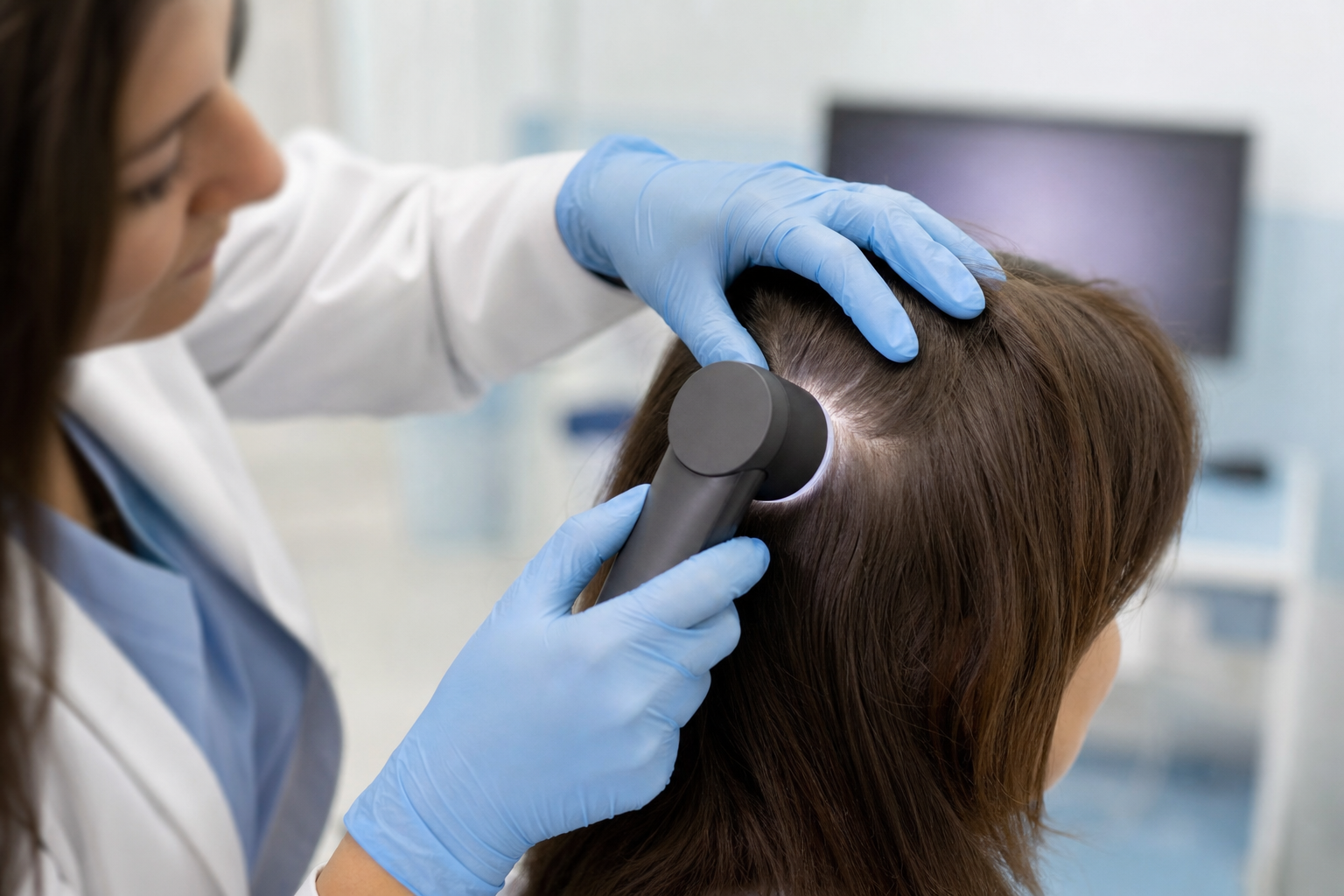
What the clinic does instead is not a way of dodging the issue, but the next diagnostic step. Trichoscopy is a digital dermoscopic examination of the scalp that shows hair diameter, follicular openings and signs of inflammation. Added to it are the pull test, standardised photo documentation to track the course and, where there is a suspicion, a scalp biopsy.
One question that comes up almost every time: can stress be detected in the blood? There is no ‘stress value’ that proves stress-related hair loss. Cortisol is not a routine parameter of hair diagnostics and is only measured when there is a concrete endocrinological suspicion. It does not appear in the usual lab panels for hair loss. Whether the amount of hair you are losing is unusual at all is explained in the article on excessive hair loss .
How long does it take for the hair to grow back after a deficiency is corrected?
After a confirmed deficiency has been corrected, the hair loss typically subsides within three to six months; full cosmetic recovery can take 12 to 18 months. The reason is the hair cycle: follicles already in the resting phase still shed before new hairs grow in. That delay is biology, not a sign that treatment has failed.
| Period | What happens in this time |
|---|---|
| Month 1 to 2 | The medically supervised treatment brings the abnormal value back into the target range. The shedding usually continues, because the affected hairs are already in the resting phase. |
| Month 3 to 4 | The telogen shedding eases, and follicles enter the growth phase (anagen) again. |
| Month 5 to 6 | The shedding drops markedly, and the first short new hairs become visible at the roots. |
| Month 6 to 12 | The new hairs keep growing, and the density slowly becomes assessable. |
| Month 12 to 18 | Full cosmetic recovery is reached, provided no further cause is present. |
This timeline is a guide, not a schedule. It is derived from the duration of the hair cycle phases and from the described course of a telogen effluvium. How quickly this happens in an individual case depends on the starting value, on the severity of the deficiency and on whether a pattern hair loss is present as well, which does not respond to correcting a nutrient.
Diffuse or hereditary: what the distinction means in practice
The distinction determines the treatment. A diffuse hair loss across the whole scalp points to an acquired cause and is treated at the root, for example by correcting a confirmed deficiency or by adjusting thyroid treatment. A pattern at the hairline, temples and crown points to the hereditary form, and only this form can respond in the long term to hair growth medication or a hair transplant. Frequently both are present at the same time.
If you are unsure which picture applies to you, the free hair analysis from Elithair gives a first assessment of which pattern is recognisable and what might be worth considering in principle. It is a guide, not a medical diagnosis, and it does not replace a dermatological work-up. Before any treatment, Elithair additionally carries out a blood test to look for causes: if it shows that a deficiency or a hormonal cause is driving the hair loss, that cause is treated first and no transplant is performed. That is the reason we turn down a considerable share of enquiries.
Frequently asked questions about blood values in hair loss
Which blood values should be tested in hair loss?
A basic panel of six values makes sense: a full blood count with differential, ferritin, CRP, TSH, 25-OH vitamin D and zinc. This combination covers iron deficiency, anaemia, inflammation, thyroid function and the most common nutrient gaps. If the diffuse hair loss persists despite unremarkable values, extended parameters such as FT3, FT4, TPO antibodies, B12 or transferrin saturation are added.
Is ferritin included in a full blood count?
No. A full blood count with differential consists of the basic count and the differential of the white blood cells. Ferritin, TSH, 25-OH vitamin D and zinc are not included in it and have to be requested separately. Through the MCV the blood count offers at most an indirect hint: small red blood cells can suggest an iron deficiency.
Which ferritin value is relevant for the hair?
There is no established target value for the hair. Lab references usually define an iron deficiency below 15 to 30 µg/L. In the specialist debate, 40 to 70 µg/L are named for the hair (Rushton 2002, Trost et al. 2006), while controlled studies such as Olsen et al. 2010 contradict this. Iron is prescribed only when a deficiency has been confirmed.
Can pattern hair loss be detected in the blood, and is it worth having DHT or testosterone measured?
No. Androgenetic alopecia rests on the sensitivity of the follicles to DHT, not on elevated hormone levels; affected men usually have normal testosterone and DHT values. The diagnosis comes from examining the pattern and the scalp. In women, androgens are measured with a different aim, namely to look for an underlying hormonal condition.
Do I have to fast for the blood test, and do I have to stop hair supplements beforehand?
For ferritin, TSH, vitamin D, zinc and B12, fasting is usually not necessary, but it is for blood glucose and blood lipids. Pausing hair vitamins with high-dose biotin, on the other hand, is expressly recommended by clinical laboratories: at least eight hours at 5 to 10 mg per day, at least three days above 10 mg. In 2017 the FDA warned of distorted thyroid and troponin results.
Which blood values in diffuse hair loss in women, and when should the blood be taken?
The basis is the same in women as in men: full blood count, ferritin, CRP, TSH, 25-OH vitamin D and zinc. Hormone values are added only with matching signs and are arranged by the doctor, usually in the early follicular phase around cycle days 2 to 5 and in the morning, because testosterone peaks at around 8am. On the pill, androgen values can only be judged to a limited extent.
Does the NHS cover a blood test for hair loss?
If there is a medical indication, the basic work-up is usually part of routine care; what counts is the documented clinical reason. A full blood count, ferritin and TSH are commonly ordered in a well-founded diffuse hair loss, while extensive vitamin and hormone packages without a suspicion are often arranged privately. Treatment of pattern hair loss is widely classified as cosmetic and is usually not funded; the details depend on where you are treated.

All my blood values are normal, so why is my hair still falling out?
In most cases the cause is one that does not show up in the blood at all. Four explanations cover most of these cases: a pattern hair loss that is not visible in the blood; a trigger in the past whose value has long since normalised, because the shedding only starts two to four months later; a value at the lower edge that was written off as normal; or a form you see rather than measure. The next step is trichoscopy.
How long does it take for the hair to grow back after a deficiency is corrected?
After the correction, the shedding typically subsides within three to six months, and full cosmetic recovery can take 12 to 18 months. The reason is the hair cycle: hairs in the resting phase still shed before new ones grow in. The first short new hairs usually appear from month five to six.
Who goes through the results with me, my GP or a dermatologist?
The results are explained by the practice that ordered them. Connecting the lab value with the hair picture is usually done by a dermatology clinic, because the scalp and the pattern are examined there as well. Take a copy of your results with you, then the same values are not measured twice and a trend becomes visible.
Scientific sources
- Trost LB, Bergfeld WF, Calogeras E (2006): The diagnosis and treatment of iron deficiency and its potential relationship to hair loss. J Am Acad Dermatol. ScienceDirect
- Rushton DH (2002): Nutritional factors and hair loss. Clin Exp Dermatol. Wiley Online Library
- Olsen EA, Reed KB, Cacchio PB, Caudill L (2010): Iron deficiency in female pattern hair loss, chronic telogen effluvium, and control groups. J Am Acad Dermatol. JAAD
- Almohanna HM, Ahmed AA, Tsatalis JP, Tosti A (2019): The Role of Vitamins and Minerals in Hair Loss: A Review. Dermatol Ther (Heidelb) 9(1):51-70. Springer
- NHS: Underactive thyroid (hypothyroidism), patient information on symptoms, blood tests and treatment. NHS
- British Association of Dermatologists: patient information leaflets on hair loss, assessment and treatment. BAD
- Cross-sectional analysis of vitamin D status in the adult population, indexed in PubMed Central , available as an open-access full text. Full text
- FDA Safety Communication (28 November 2017, updated 2019): The FDA warns that biotin may interfere with lab tests. Summary by the American Society of Anesthesiologists
- National Institute for Health and Care Excellence (NICE): Vitamin D, supplement use in specific population groups, public health guidance. NICE
- Cover for treatments of androgenetic alopecia is limited; such treatments are widely classified as cosmetic and are usually paid for privately. Ask your GP or pharmacist before you start.
- Hormone analysis: what the gynaecologist needs to know (2018). Der Gynäkologe, Springer. Springer
Research current as of August 2026. This article explains laboratory diagnostics in plain language and does not replace a medical examination, consultation or interpretation of your results.
Dr. Imad Moustafa
Hair transplant specialist