


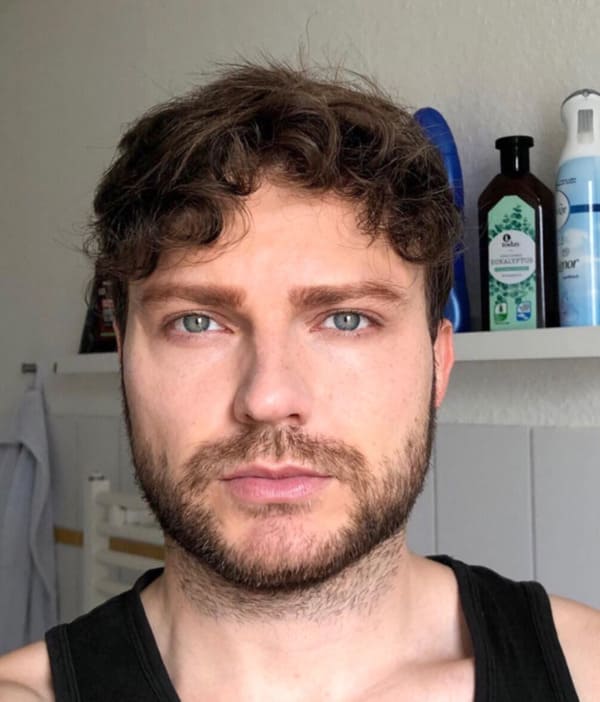
Temples & Hairline (90–100%)
After one year, the hairline is fully restored and has reached maximum density. The new hairline frames the face perfectly, as this area heals most quickly.

4.9 - 11,000+ Reviews on Google

150,000+ Happy Patients Worldwide
free & without obligation
 4.9 out of 5 stars on Google
More than 150,000 treatments
at our specialist clinic, certified to ISO 9001:2015
by TÜV Thüringen.

 Results at 12 Months
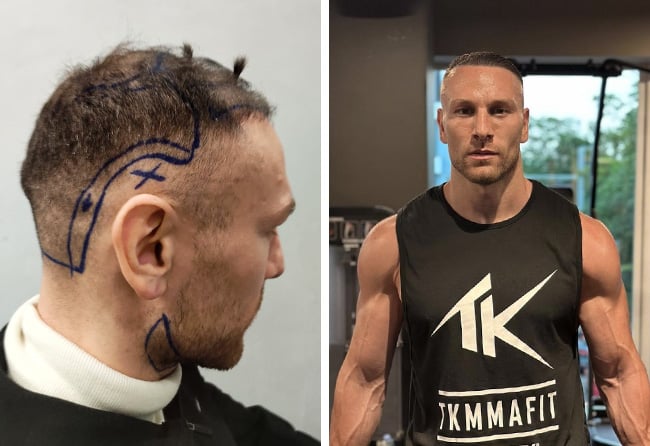
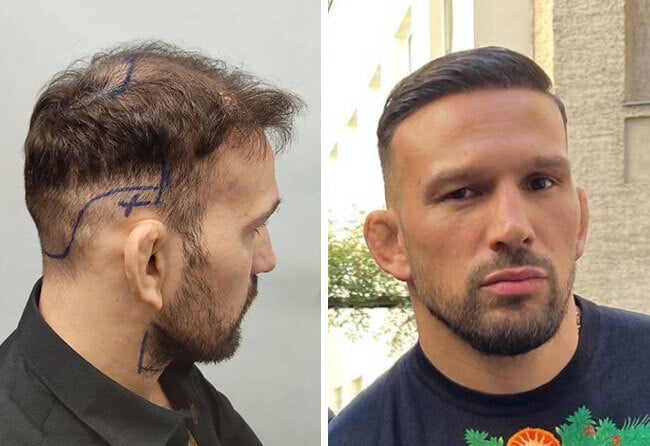
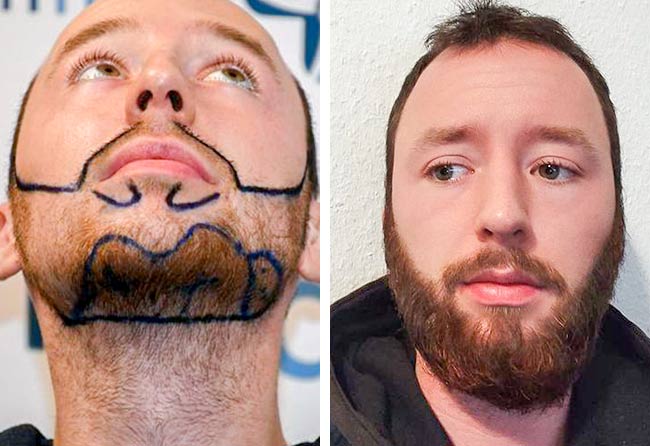
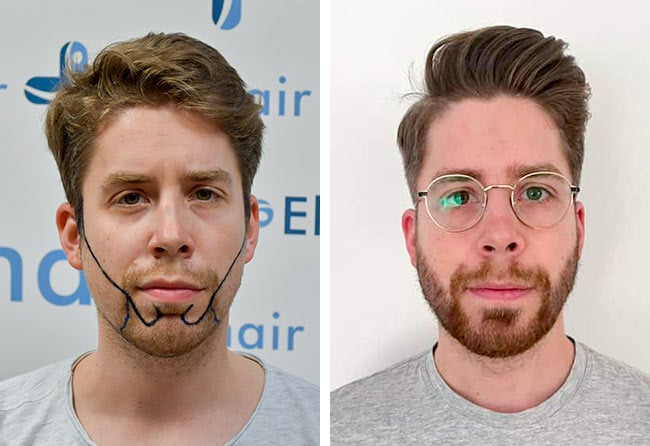
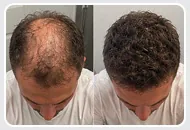
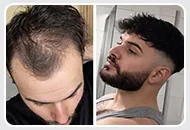
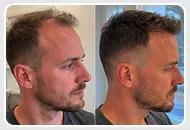
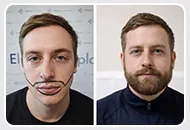
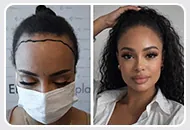
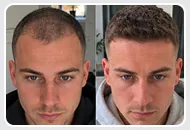
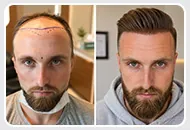
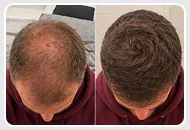
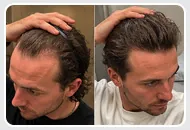
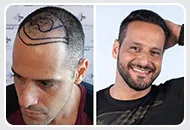
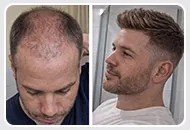
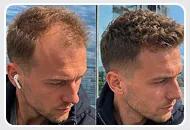
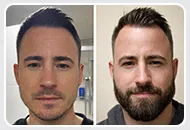
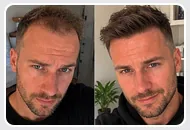
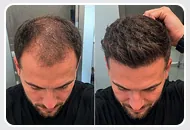
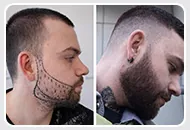
One year after the procedure, most patients already have a striking, well-established result. The hairline and hair at the temples are usually fully restored by this point, while the top of the head and crown often gain their final fullness over the following months. See the high quality of our genuine 12-month before and after results and discover how the appearance of the hair transforms over this period.
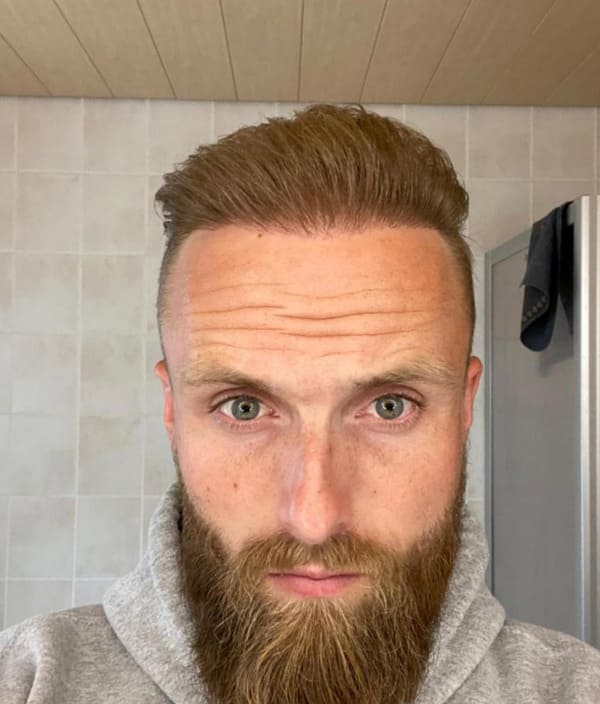
Our 12-month before and after results show the precise restoration of natural hair growth in cases of progressive hair loss. See the clear transformation and the density we achieve through our specialised methods for a balanced overall appearance.
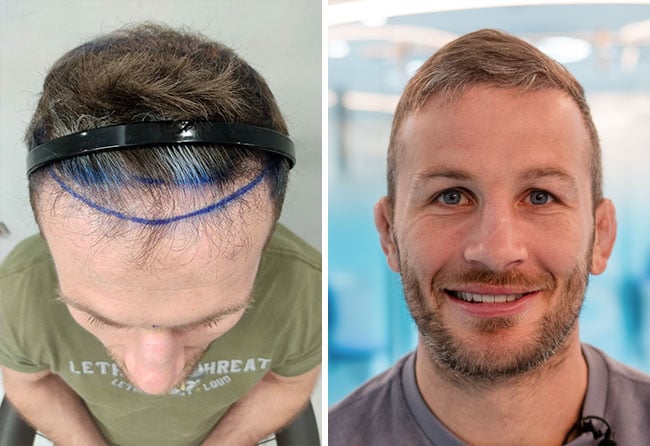 BeforeAfter
 BeforeAfter
 BeforeAfter
 BeforeAfter
 BeforeAfter
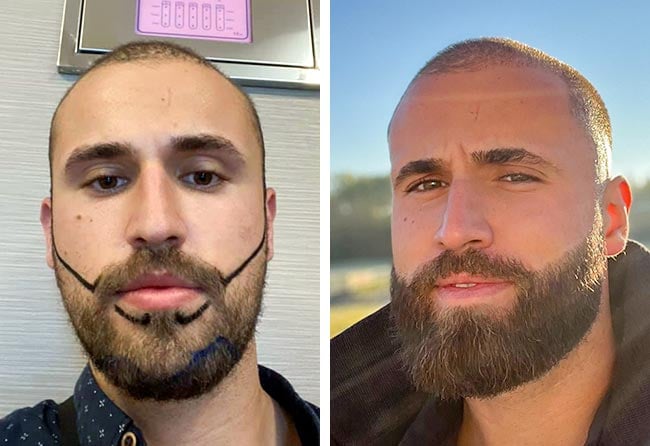 BeforeAfter
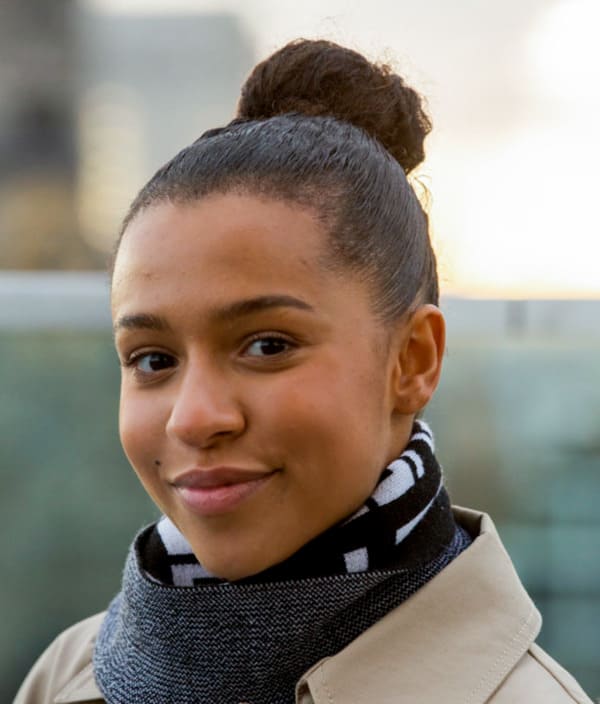
A perfect 12-month before and after result starts with precise planning and an individual graft analysis. We combine an exact graft calculation with the latest technology to guarantee maximum density at the temples and a natural appearance.
What to Expect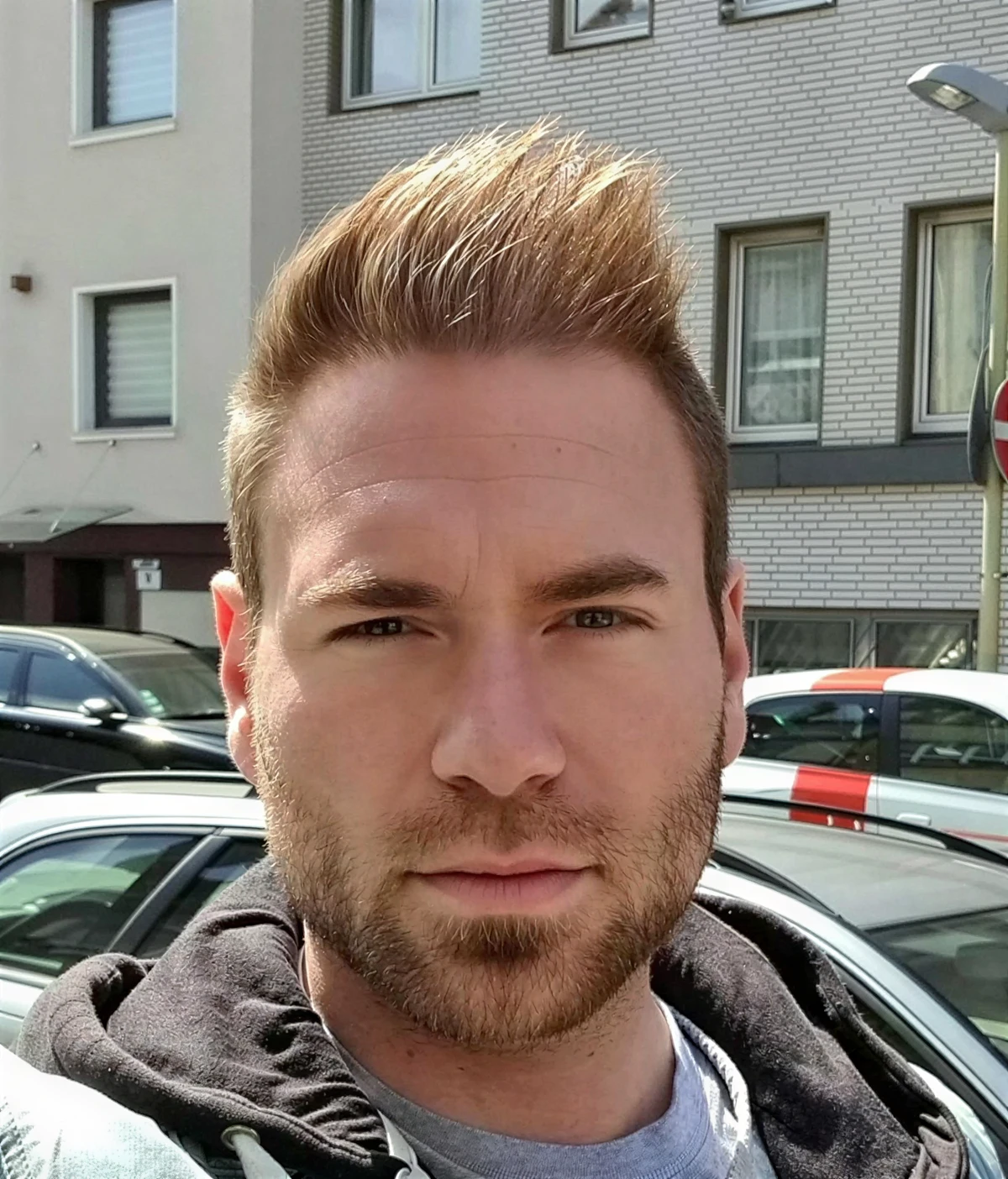
One year after the procedure is a major milestone, though it is often not the final outcome. After a resting phase, the transplanted follicles gradually move into their active growth phase. This process is individual, and not every hair emerges at the same time, so visible density builds up steadily over the full twelve months.
The front hairline tends to show the change fastest. Blood supply in this area is excellent and the hairs grow in a straight direction. Density and growth direction are usually fully developed here within a year, so for most patients the aesthetic shape at the front is complete by this point. It is the area that already frames the face clearly after twelve months.
The crown and vertex need more patience. The growth pattern is more complex and spiral, and blood supply at the back of the head is lower. If density in this region has not yet reached the level you want after one year, there is no cause for concern. Results in this area often continue to mature for another three to six months, until the full volume becomes visible.
Hair texture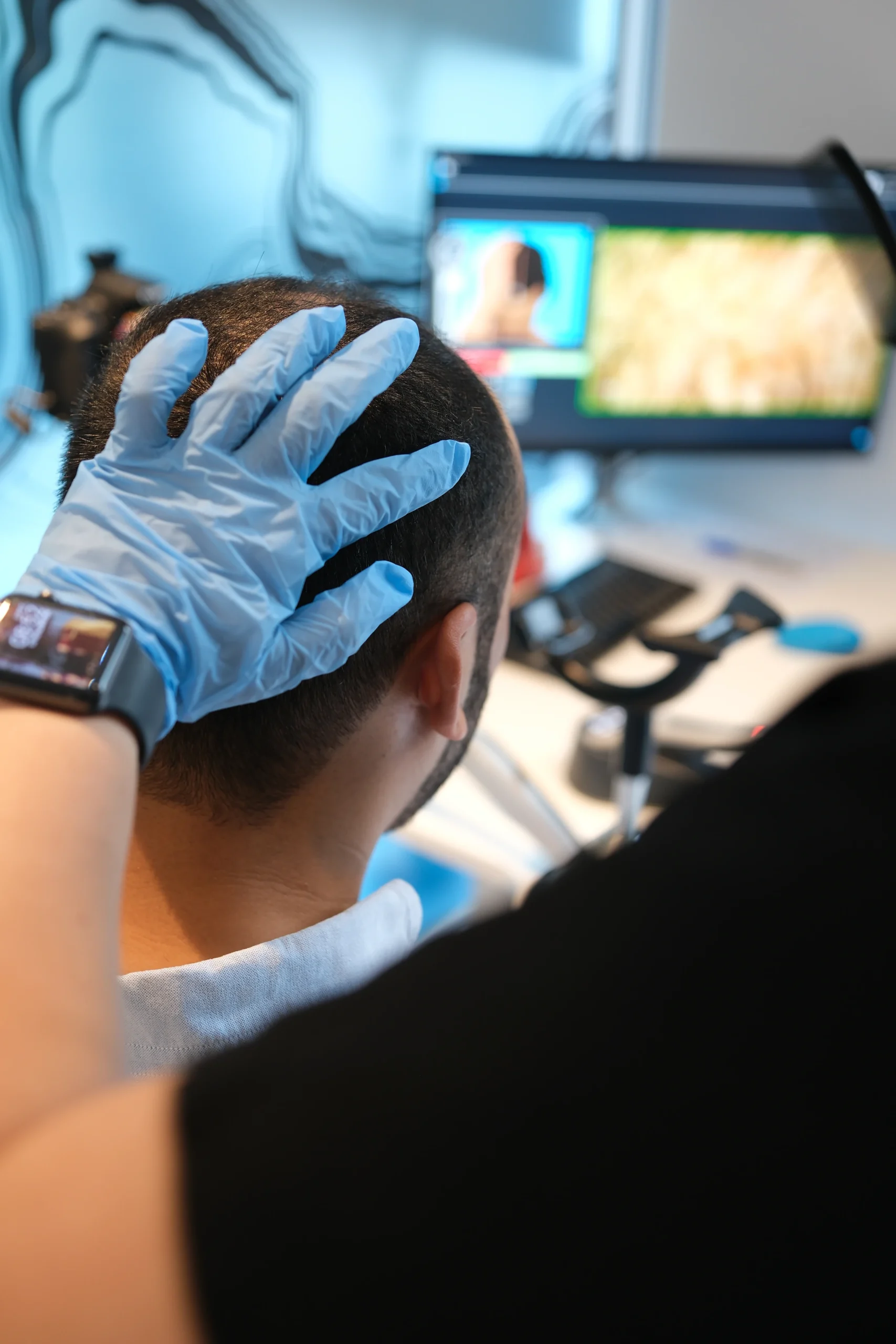
One point that often gets overlooked: after 12 months, hardly any new hairs emerge, because the number of successfully established follicles is essentially set by this stage. The visible change patients notice in the months that follow comes down to hair thickness, not quantity. Density is already stable, but the next phase is about each hair gaining quality and substance.
Every transplanted hair starts out very fine and does not reach its full diameter in the first growth cycle. Only with the second and third cycles does the hair shaft thicken noticeably, giving the overall hair a fuller appearance . This is why results at 18 months often look clearly stronger than at the one-year mark, even though the actual number of hairs is the same.
This process is closely linked to tissue regeneration and collagen remodelling in the scalp. The tissue around the transplanted follicles needs roughly 12 to 18 months to fully reorganise and provide optimal supply. Only once this is complete can each follicle produce its maximum hair shaft thickness, which is what separates a good result from a perfect final outcome.
by AreaAfter one year, the hairline is fully restored and has reached maximum density. The new hairline frames the face perfectly, as this area heals most quickly.
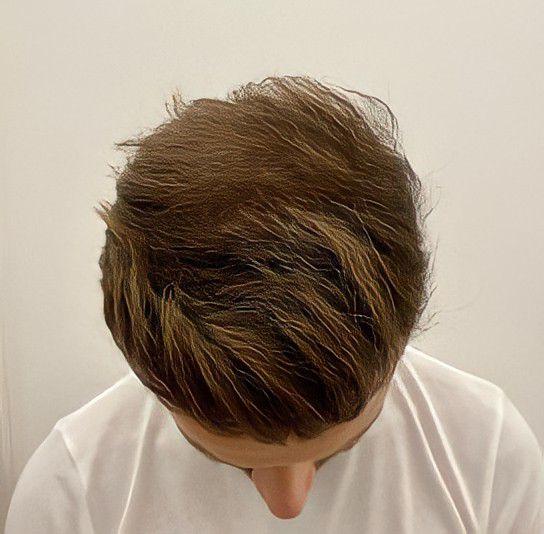
Coverage here is already very good after 12 months. In the months that follow, the hairs gain noticeably more structure and thickness, so volume continues to build up to month 18.
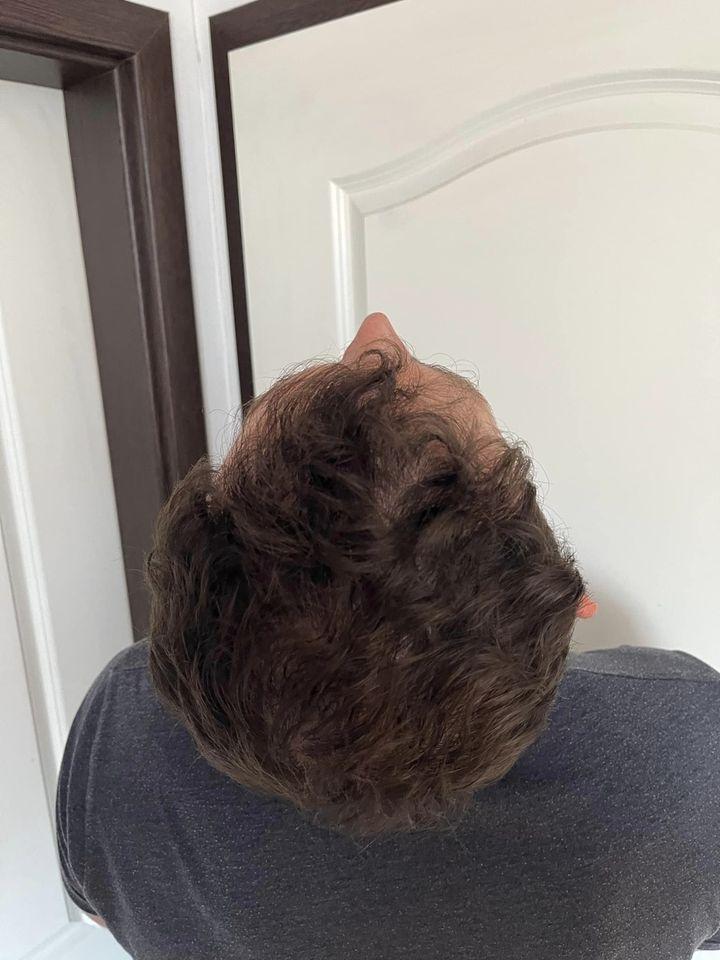
Because of the complex growth direction and reduced blood flow, the vertex takes the longest. After one year, the foundation is in place, but full visual coverage is usually only reached at the 18-month mark.
For the hairline and temples, 12 months usually marks the end point. Density and growth are fully developed here. The vertex and crown, on the other hand, can take up to 18 months to reach their final volume. See our 18-month hair transplant before and after results for a closer look.
Progress at 12 MonthsThe hairline is clearly defined and the temples are fully filled in. The hair is ready for any style, and the donor area at the back of the head is already fully regenerated with no sign of the procedure.
Volume at the crown and density at the vertex continue to build steadily. Hair structure gains noticeable strength, closing any last thin areas over the coming months.
Development after a hair transplant follows a set of characteristic phases, from the first fine signs of growth through to a nearly finished result. The early months ask for patience, but your new hair steadily comes together into a natural overall look across the first year.
| Timing | Criterion: Visible growth | Other criteria |
|---|---|---|
| 3 months | First fine hairs | Hair density: Sparse and fine. Styling: Limited. Donor area: Slight redness. Everyday activities: With restrictions. Overall progress: 20–30%. |
| 6 months | 40–60% growth | Hair density: Noticeable thickening. Styling: Possible with care. Donor area: Nearly healed. Everyday activities: Possible. Overall progress: 40–60%. |
| 12 Months | 80–90% visible | Hair density: Front complete, crown still developing. Styling: ✓ No restrictions. Donor area: ✓ Fully regenerated. Everyday activities: ✓ Fully back to normal. Overall progress: 80–90%. |
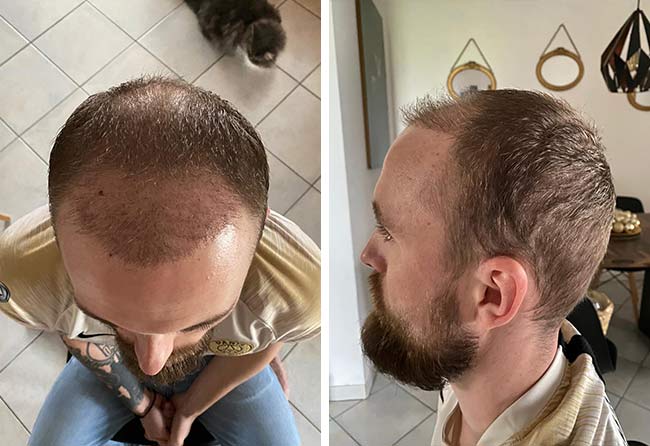 2 Months
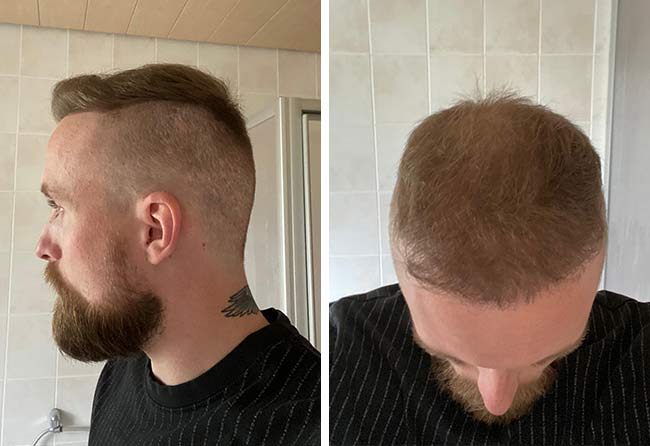 6 months
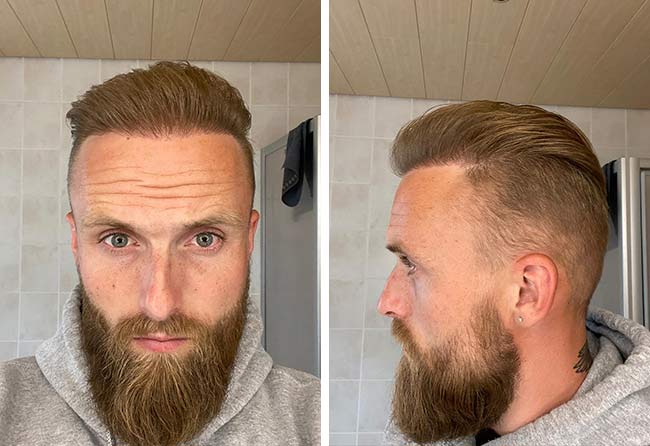 8 Months
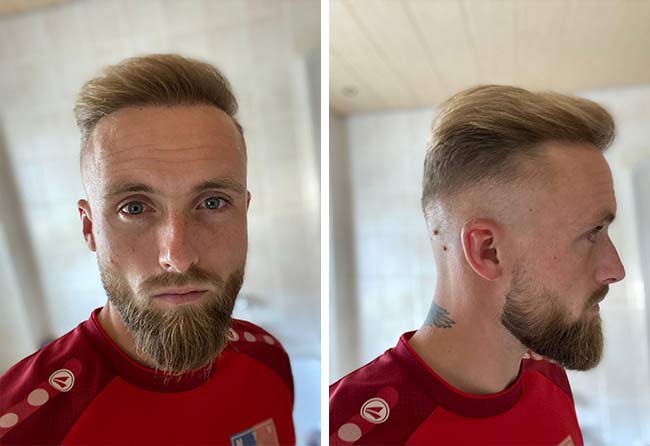 12+ Months
Frederik G., 4,700 Grafts
Overview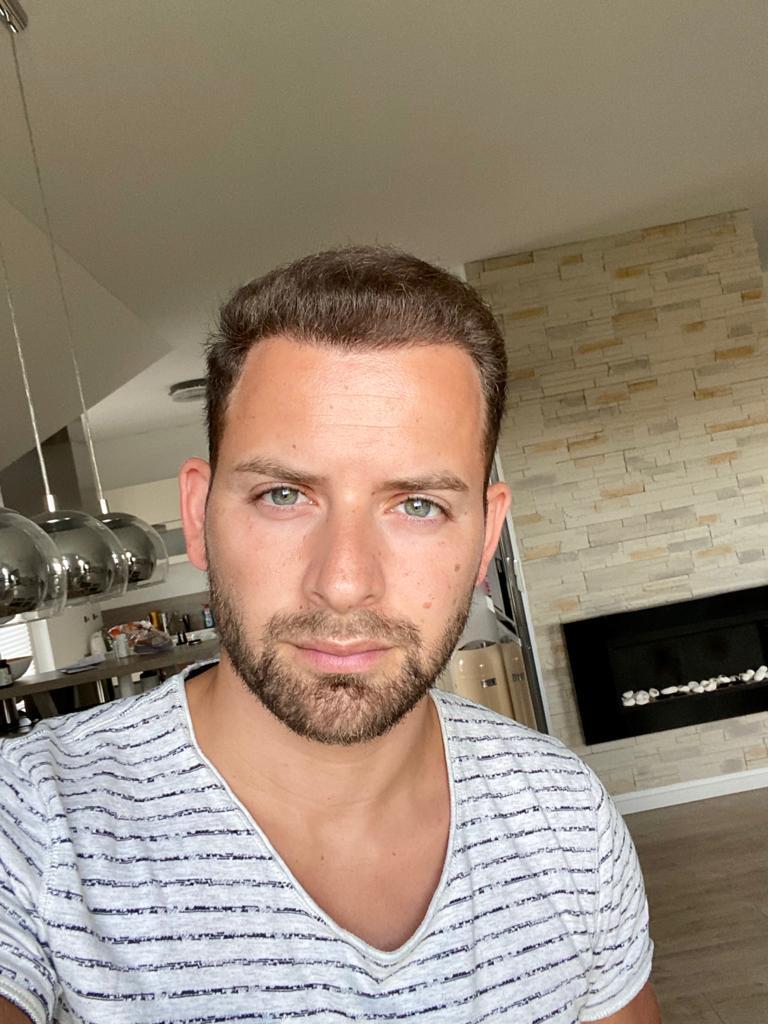
| Treatment Area | Progress at 12 Months |
|---|---|
| Receding Hairline | 90–100% |
| Hairline | 90–100% |
| Crown | 70–85% |
| Vertex | 60–80% |
| Beard | 85–95% |
| Women (Parting Area) | 80–90% |
Gaps After 12 Months
Stay calm for now. If the gaps are mainly on the crown or at the vertex, this is usually no cause for concern and comes down to biology. These zones have lower blood flow, so true volume often only emerges after 18 months. Patience is the key here.
A medical check-up is only advisable if the front hairline or the temples still show noticeable gaps after one year, since these areas are normally fully developed by that point. In such cases, targeted PRP therapy can help stimulate growth in the slower-responding zones.
A second session to increase density can be considered no earlier than 6 months after the procedure, although a longer wait may be needed. Results at the crown can continue to develop for 15–18 months. An individual medical assessment helps determine whether further treatment is appropriate or whether natural hair thickening may still deliver the desired result.
This autologous blood therapy improves blood flow in the scalp and can speed up growth in slower zones such as the vertex in a targeted way.
Above all, it protects your existing hair from further loss, so the overall look between transplanted and native hair stays balanced.
Biotin, zinc and a protein-rich diet strengthen hair structure from the inside and support the vitality of the new follicles.
Three to six extra months often make a real difference, as full volume at the crown only develops by the 18-month mark.
Your New Daily Life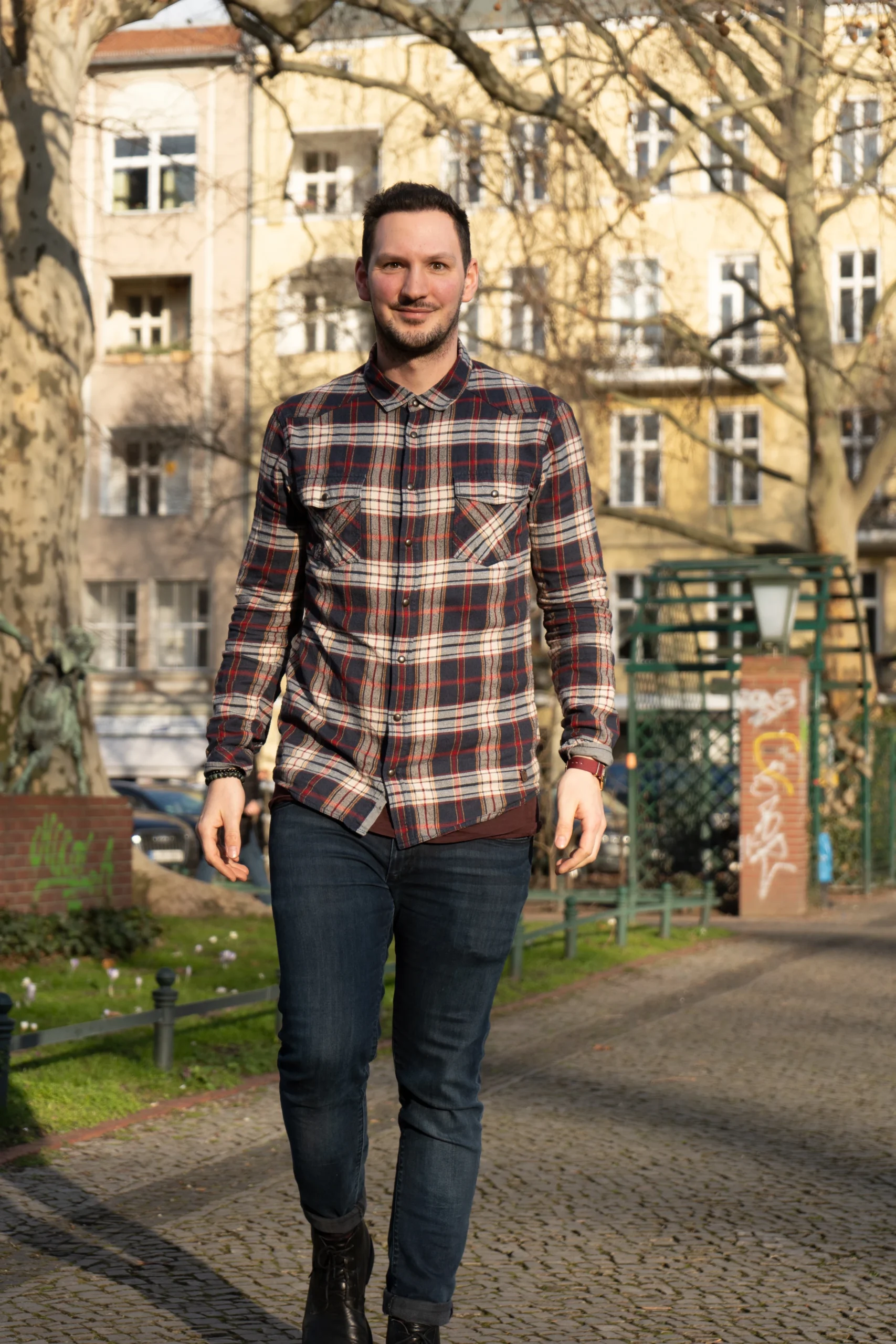
After twelve months, the regeneration phase is officially complete. The transplanted follicles are now permanently integrated with your scalp and behave in every situation exactly like your natural hair. Enjoy your regained freedom with no medical restrictions.
Any activity is possible without limits. Whether it is weight training, swimming or a sauna session, the hair roots are now firmly anchored in the tissue and no longer need any special precautions.
Your hair can be dyed, blow-dried or straightened as you like. The grafts behave biologically just like your existing hair and stand up to chemical products and heat.
Special instructions for your hairdresser are no longer needed. Your hair can be cut or shaved as normal, because the follicles are fully healed and highly resilient.
Thanks to the full regeneration of the donor area, short haircuts are also an option. The extraction points have healed invisibly and allow any finish you want.




The transplanted follicles are permanent and no longer need special care. Prescription medicines such as minoxidil or finasteride may help protect your existing hair from further loss (Adil et al. 2017). Elithair also includes 12 months of aftercare.
Yes. PRP improves circulation and strengthens existing hair structure, which is especially helpful when the vertex is slow to develop. It will not create new hairs, but it clearly improves hair quality and density in the slower-growing zones.
A second session can be considered no earlier than 6 months after the procedure, although a longer wait may be needed. Final volume and density at the crown can take 15–18 months to develop. A further session is only advisable if density remains insufficient or hair loss has progressed in untreated areas, following an individual medical assessment.
Treat it exactly like your natural hair. Washing, styling and colouring are all possible without restrictions. For long-term hair health, we recommend gentle care products, protection from extreme heat, and nutrient-rich support through biotin and zinc.
ResultsSee the quality of our work for yourself and read genuine patient stories that clearly document success across different treatment areas.
Maximum density is reached. Even the more demanding areas at the crown and vertex are now fully and robustly developed.
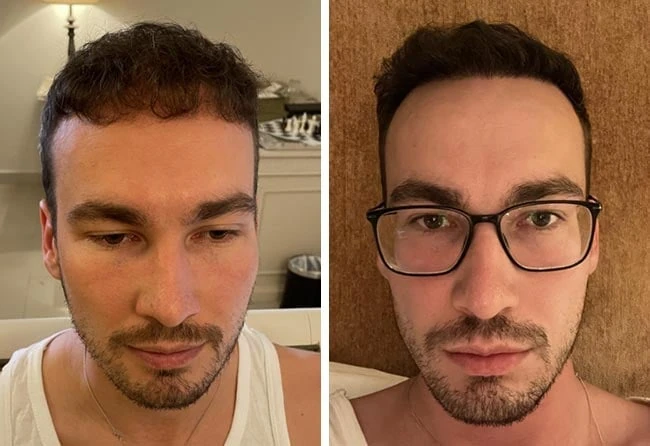
We use approximately 2,000 to 3,500 grafts to restore the hairline. As this area has a very good blood supply, growth here is usually particularly quick.
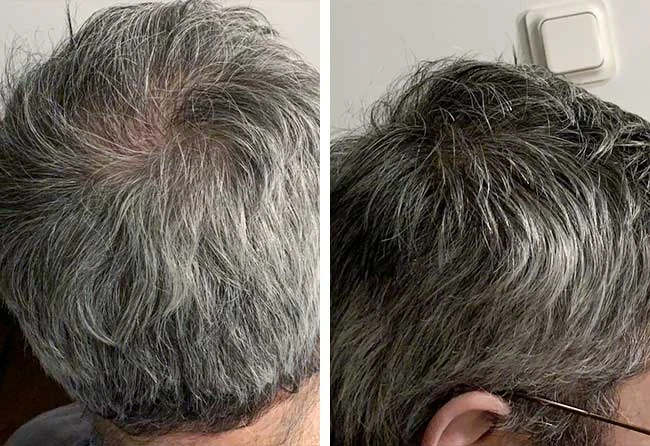
For extensive restoration of hair density, we use 3,000 to 4,500 grafts. The modern DHI technique guarantees natural-looking, full volume.
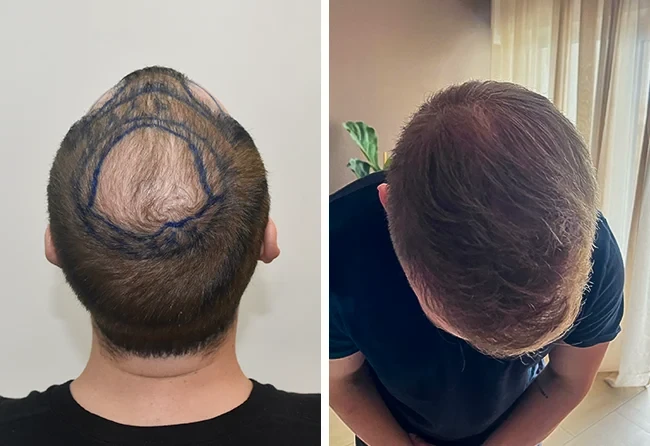
Because of its whorl structure, this area requires the most patience. Comparing progress between months 12 and 18 reveals the final density here.
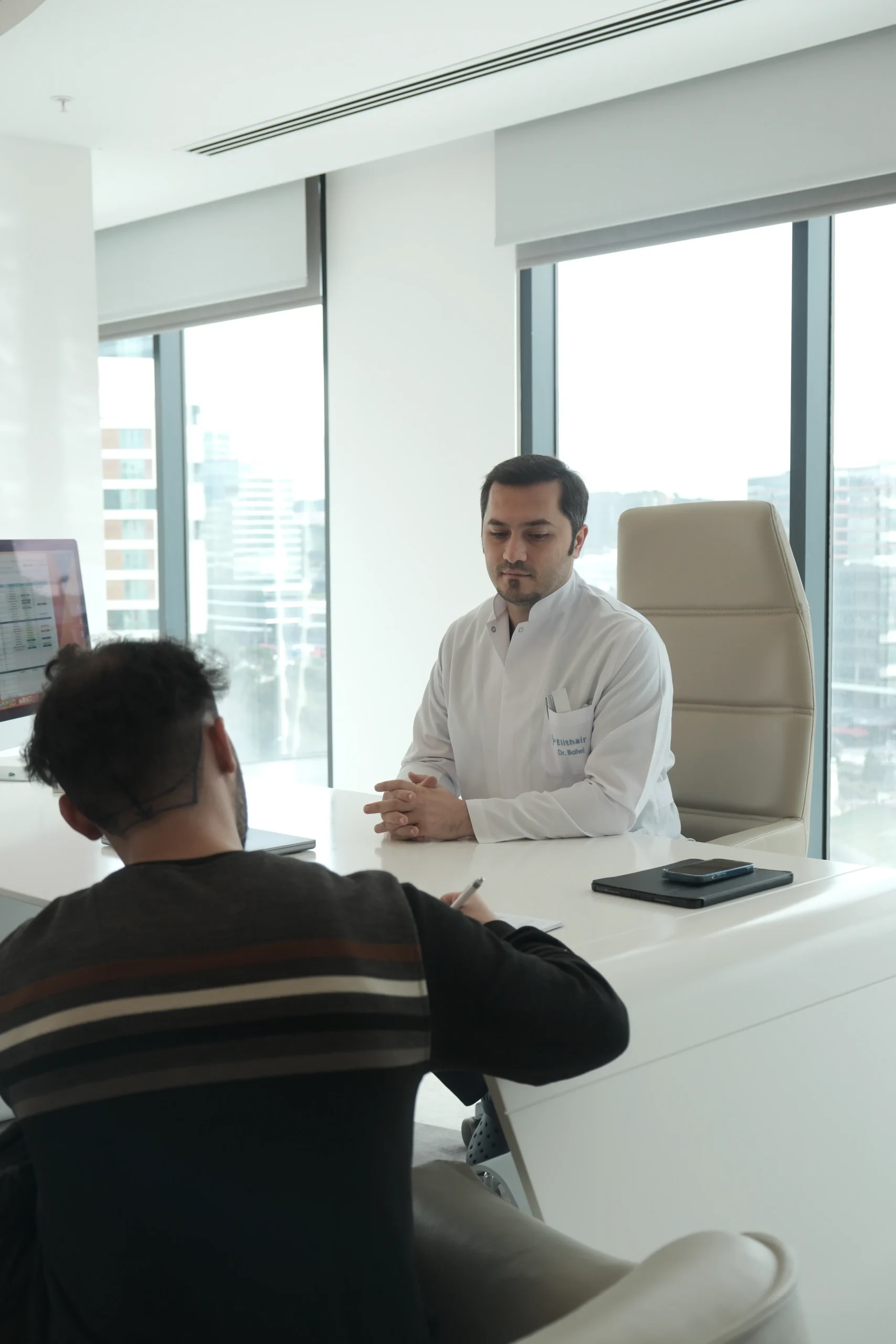
Send us your photos for a medical assessment of your needs. You will receive a tailored treatment plan right away, including a precise calculation of the required graft count.
Experience the latest technology with our all-inclusive package in Istanbul. Enjoy a stay at a 4-star hotel, VIP transfers and completely pain-free treatment thanks to our exclusive Pre-Test System.

After 15 to 18 months, enjoy maximum hair density and fully filled-in temples. Digital aftercare via the Elithair App supports you safely all the way to your final before and after result.
Simply upload your photos and receive a medical assessment of your hair loss. Our specialists will show you, on an individual basis, what a strong 12-month result could look like for you. Completely free and with no obligation.