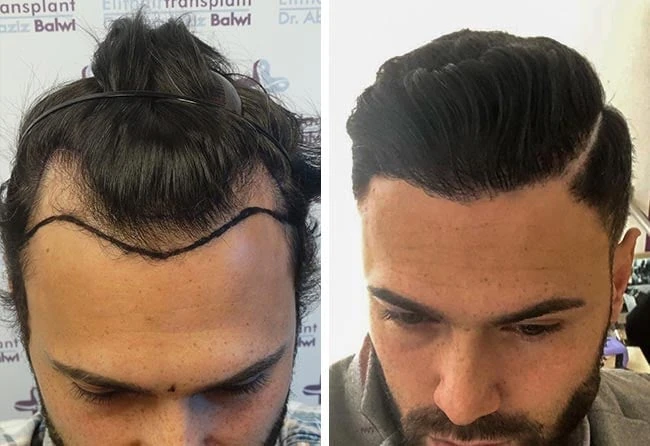
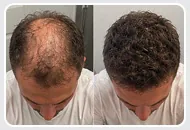
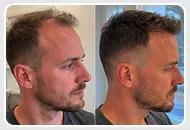
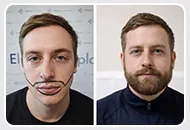
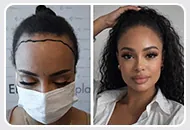
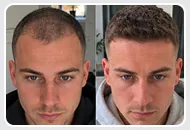
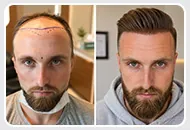
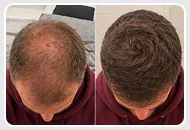
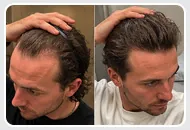
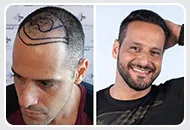
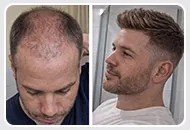
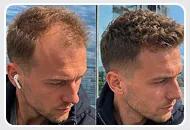
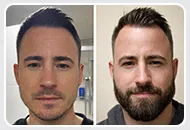
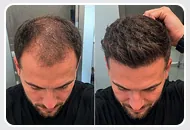
Before
After
Stefan D. – 3,150 grafts

4.9 - 11,000+ Reviews on Google

150,000+ Happy Patients Worldwide
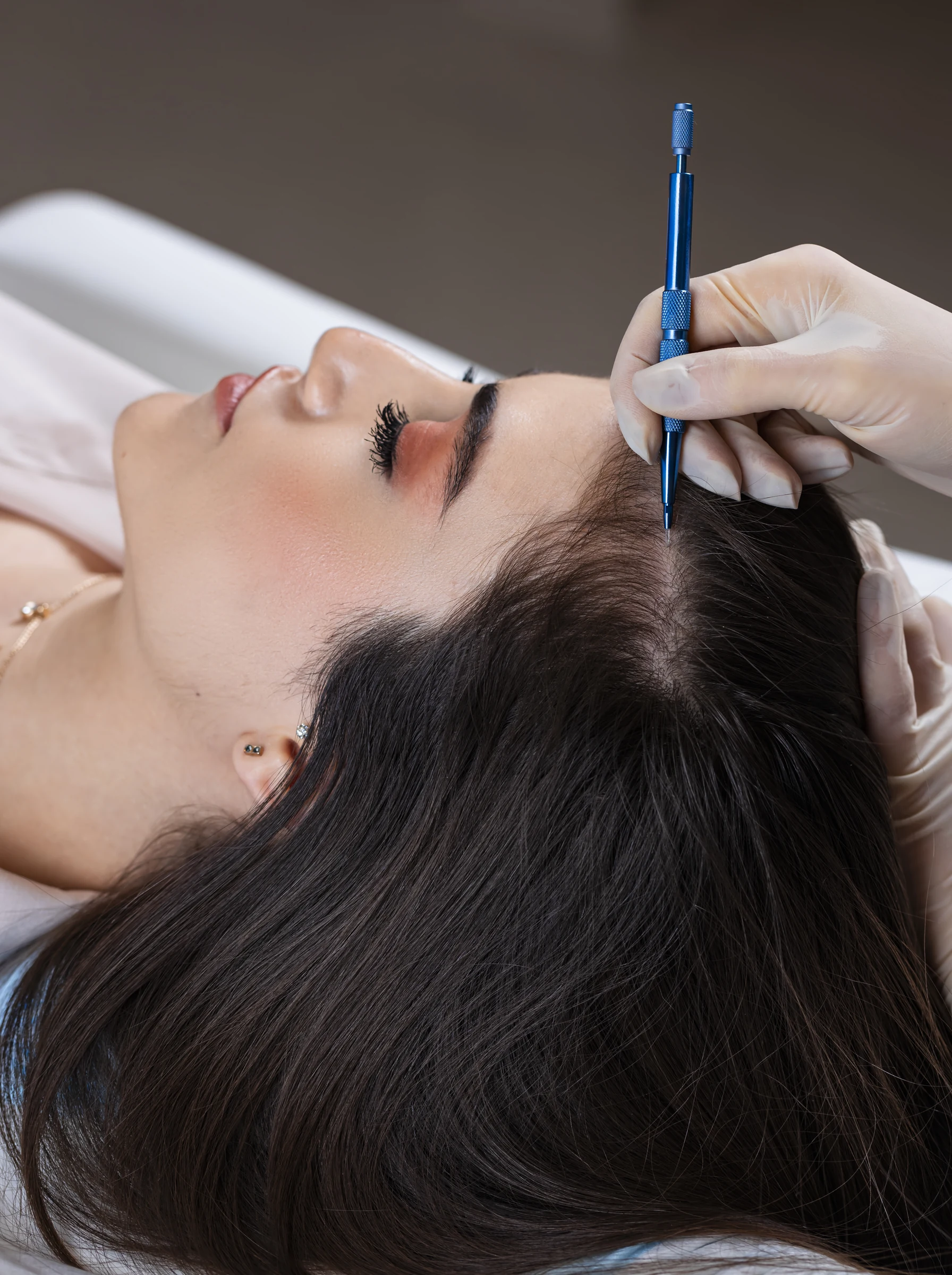
free & without obligation
 4.9 out of 5 stars on Google
More than 150,000 treatments
at our specialist clinic, certified to ISO 9001:2015
by TÜV Thüringen.

 Sapphire FUE explained
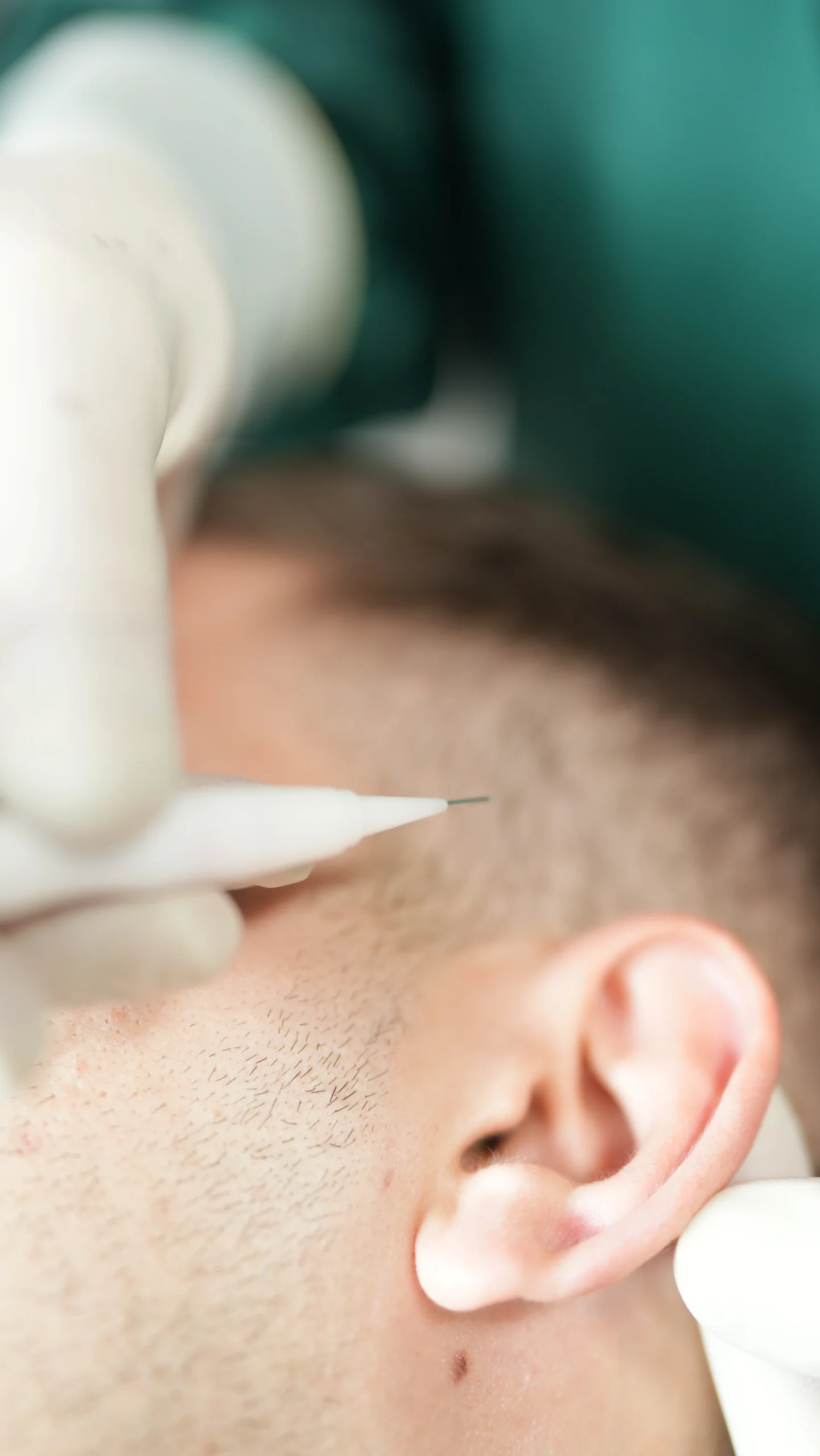
A sapphire hair transplant, often called Sapphire FUE, uses synthetic sapphire blades to create recipient-site incisions before grafts are placed into them.
One distinction matters:
'Sapphire' describes how the sites for the transplanted hair are created, not how the grafts are extracted. Follicles are removed from the donor area using FUE, then sapphire blades are used to make the incisions where the grafts will be placed.
This page explains how Sapphire FUE works and why Elithair uses DHI exclusively for implantation.
Stefan D. – 3,150 grafts
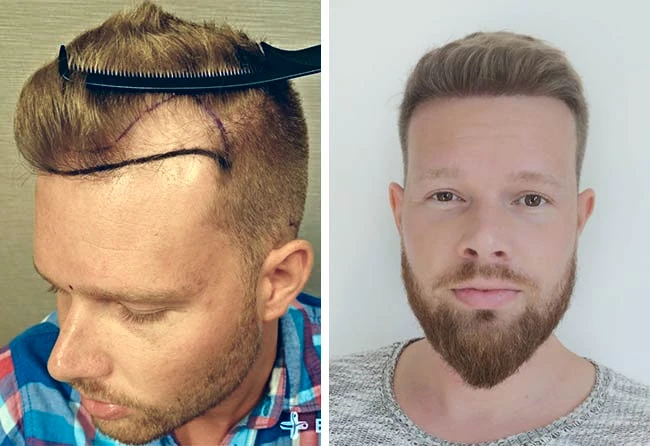
Alexander K. – 2,800 grafts
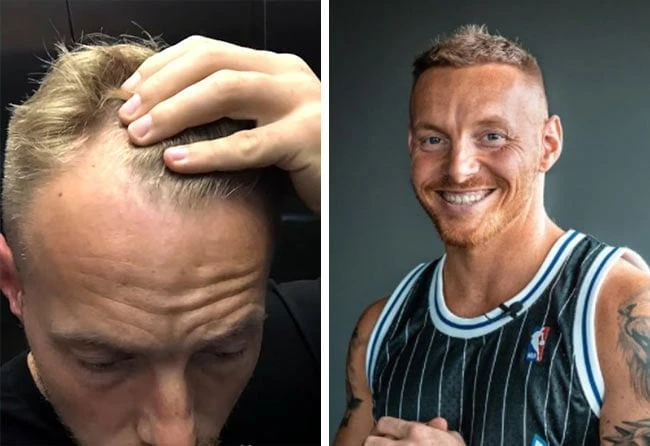
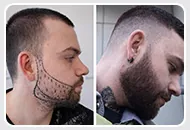
Coach Stef - 3,100 grafts
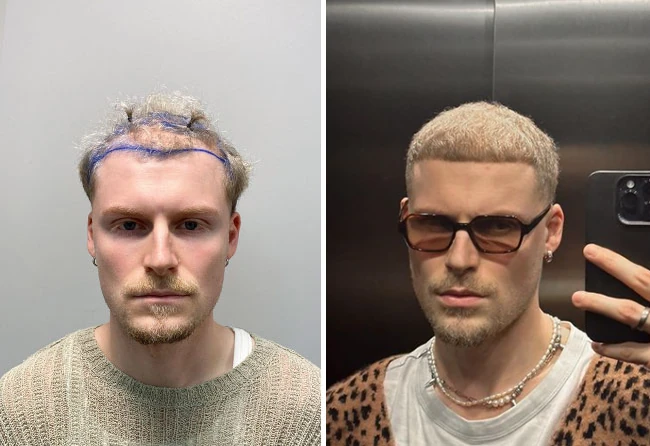
Tom C. – 5,200 grafts
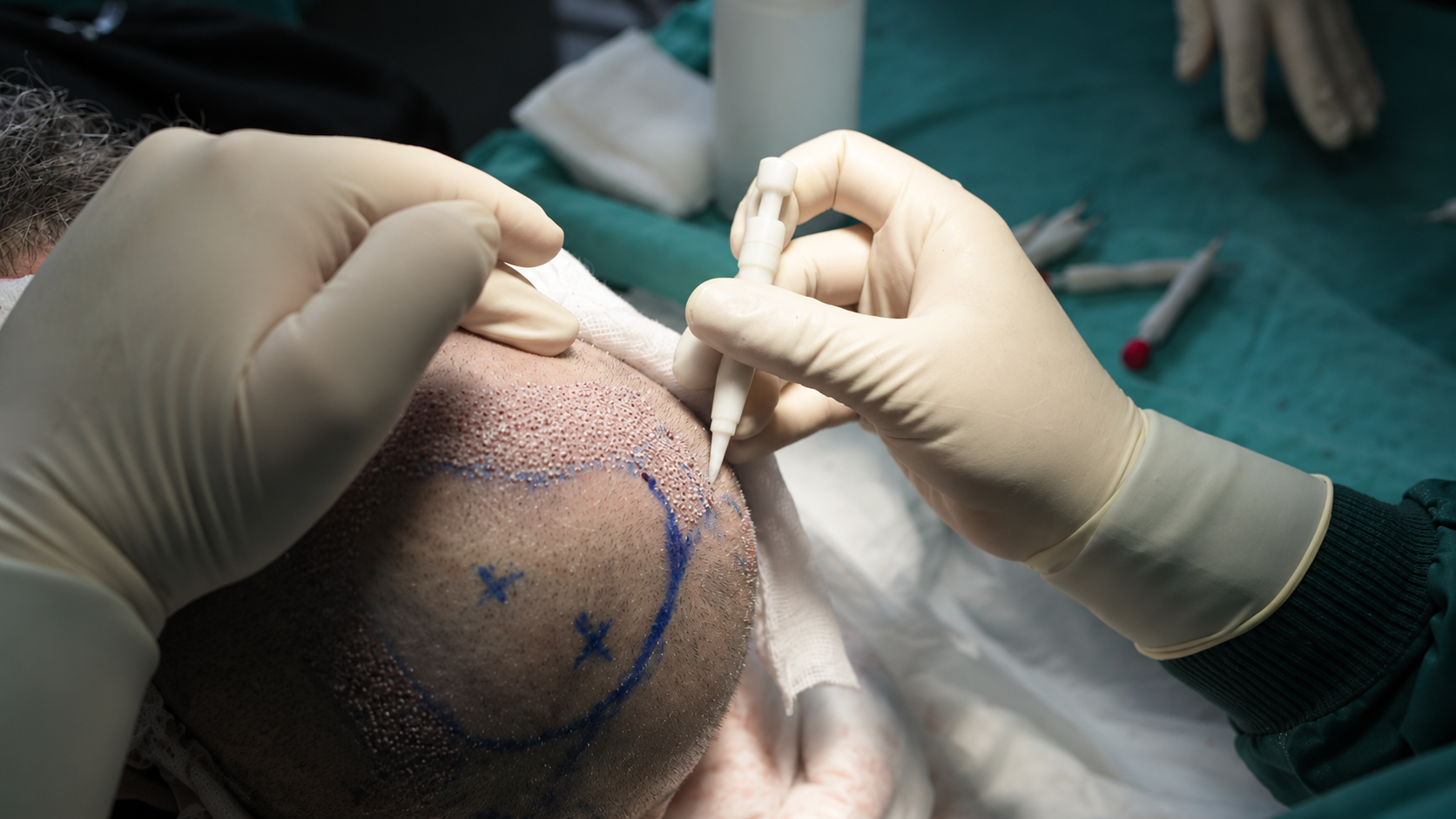
Sapphire FUE is widely used but is considered an outdated method because channel creation and graft placement happen in two separate steps. Elithair uses the modern DHI method exclusively in all areas because it is a better technique and delivers better results.
With DHI, the CHOI Implanter Pen creates each site as the graft is placed, so there is no need to make the incisions beforehand.
This allows the team to adjust angle and depth as each graft is placed. Time outside the body also depends on the overall workflow. At Elithair, DHI is our only implantation method, and it comes at no extra charge.
A modern hair transplant has two main stages: extracting the grafts, then preparing the implantation sites and placing the grafts.
During FUE extraction, follicular units are removed individually from the donor area, usually at the back of the head, using a fine hollow needle (Rassman et al. 2002). This step is the same in every modern hair transplant, regardless of how the procedure is marketed.
The sapphire technique refers to the implantation stage. First, channels are created in the recipient area to hold the extracted grafts. With the sapphire technique, these channels are made with a lab-grown sapphire blade instead of a steel one. So 'sapphire FUE' refers to a procedure in which the channels are created with sapphire blades, usually 0.8 to 1.5 mm wide. The blade width is selected to match the characteristics of your hair.
The key technical difference is the shape of the channels. Blade geometry can influence the shape of recipient channels, but channel size and spacing also depend on blade design and technique. A specific increase in achievable density from sapphire alone has not been established clinically.
The cutting angle depends on the area of the scalp, rather than the tool. At the front hairline, hair emerges at a shallow angle of roughly 15 to 20 degrees. In the mid-scalp area, the angle is steeper, around 30 to 45 degrees. This angle helps determine how natural the result looks.
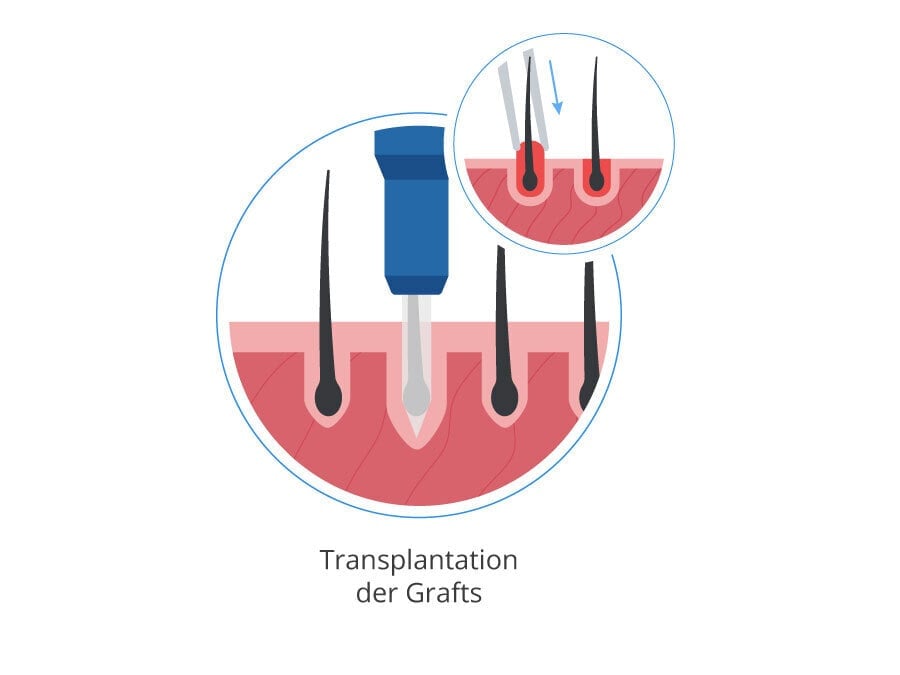
The procedure has three steps:
With Sapphire FUE, making the incisions and placing the grafts are separate steps: the incisions are prepared first, then the grafts are implanted. With DHI, both happen as each graft is placed.
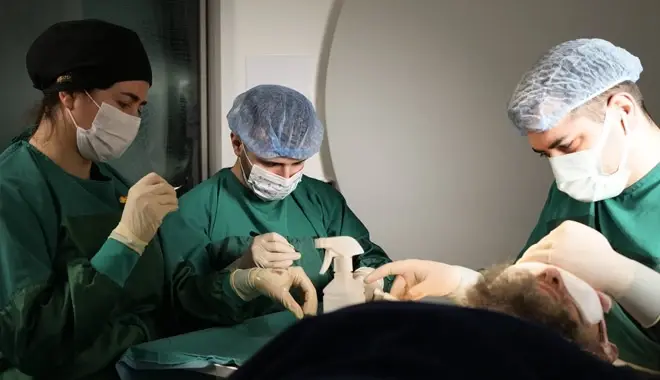
Follicular units are removed individually from the donor area with a small FUE punch after local anaesthetic has been administered.
The sapphire blade is then used to make incisions in the thinning or bald area. Their position, direction, angle and spacing are planned as part of the procedure and affect how natural the result can look.
The extracted grafts are then placed into the prepared incisions, usually with forceps.











 Sapphire and Steel Blades
The key technical difference between a steel blade and a sapphire blade is the shape of the opening it leaves in the recipient area.
Why use sapphire? Synthetic sapphire is extremely hard, can be honed to a very smooth cutting edge, and is used to create recipient channels. Providers cite these properties to support the claimed advantages below.
The toolSapphire blades for making graft incisions come in different sizes. The blade should suit the graft size, hair calibre, tissue being treated and the planned shape of the incision.
0.8–1.5 mm common sapphire blade widths
40–45° the cutting angle commonly used in practice
V-shaped cross-section of the channel, narrower at the base than with steel
 The evidence
One published study addresses this question. In a 2021 modelling study in the Journal of Cosmetic Dermatology, Muhammad Ahmad and Muhammad Ismael calculated the tissue damage caused by different blade shapes and cutting angles.
In the model, the sapphire blade at a shallow angle caused the least tissue trauma, and the rectangular steel blade the most. That supports the idea that sapphire cuts more cleanly.
This study used a mathematical model; it did not involve patients or measure graft survival. There are still no robust, independent clinical trials comparing sapphire and steel blades in patients.
If you see claims such as “30% more density” or “20% faster healing with the sapphire blade”, keep in mind that no independent study supports those specific numbers. Treat them as advertising claims rather than established facts. Your result depends on how precisely the transplant is planned and the grafts are placed, rather than on the blade material.
For channel creation alone, a sapphire blade is probably better than a steel blade, and that is real progress over older methods. The practical distinction with DHI is how channel creation and graft placement are performed.
A Side-by-Side ComparisonThe main difference between Sapphire FUE and DHI lies in how recipient sites are created and grafts are placed.
With Sapphire FUE, recipient sites are created first and the grafts are placed afterwards. Two separate steps, using a sapphire blade and forceps.
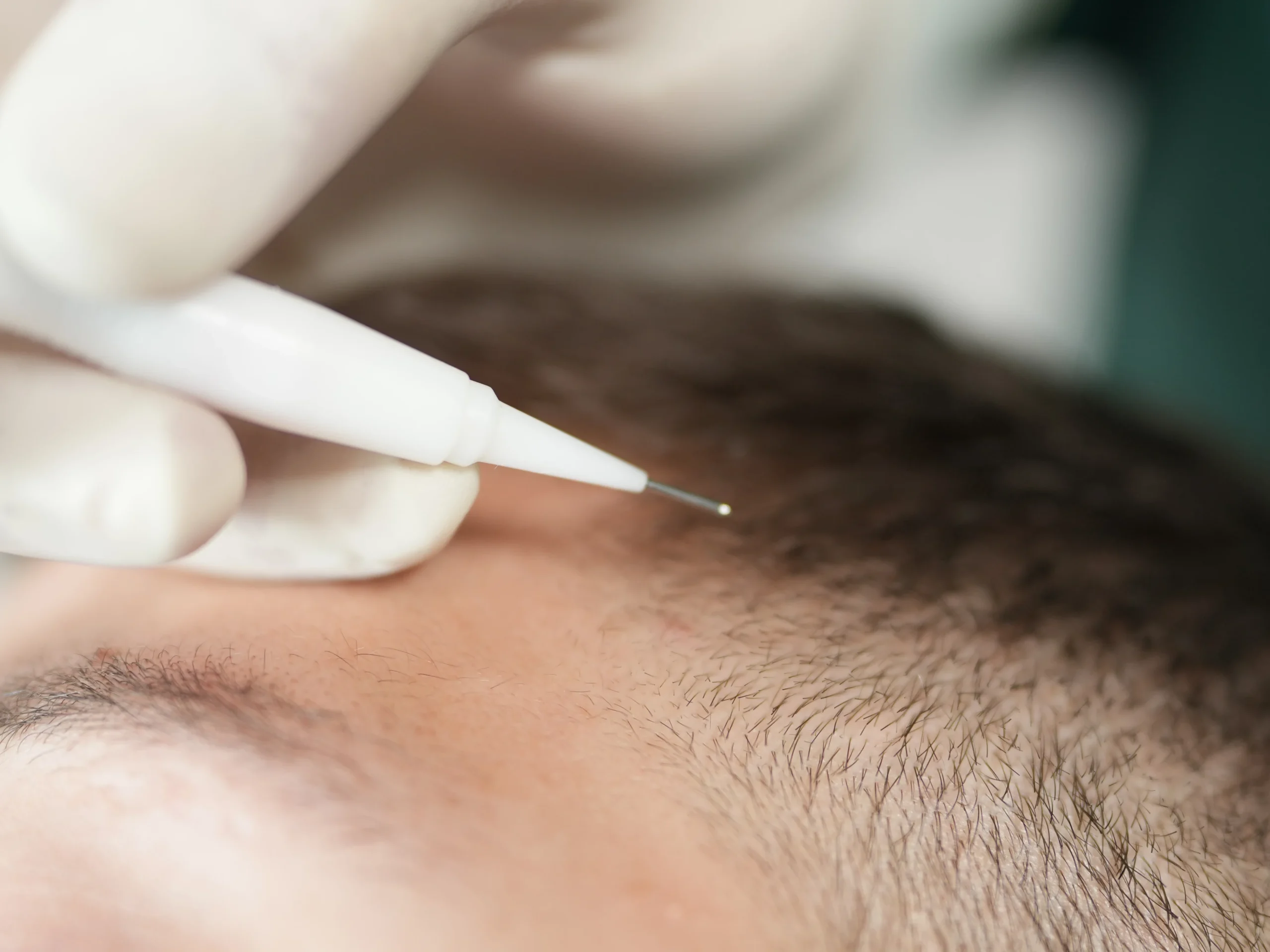
DHI combines channel creation and graft placement in a single step. The CHOI Implanter Pen holds the graft inside a fine hollow needle and creates the channel as it places the graft, without cutting the channel beforehand.
For your result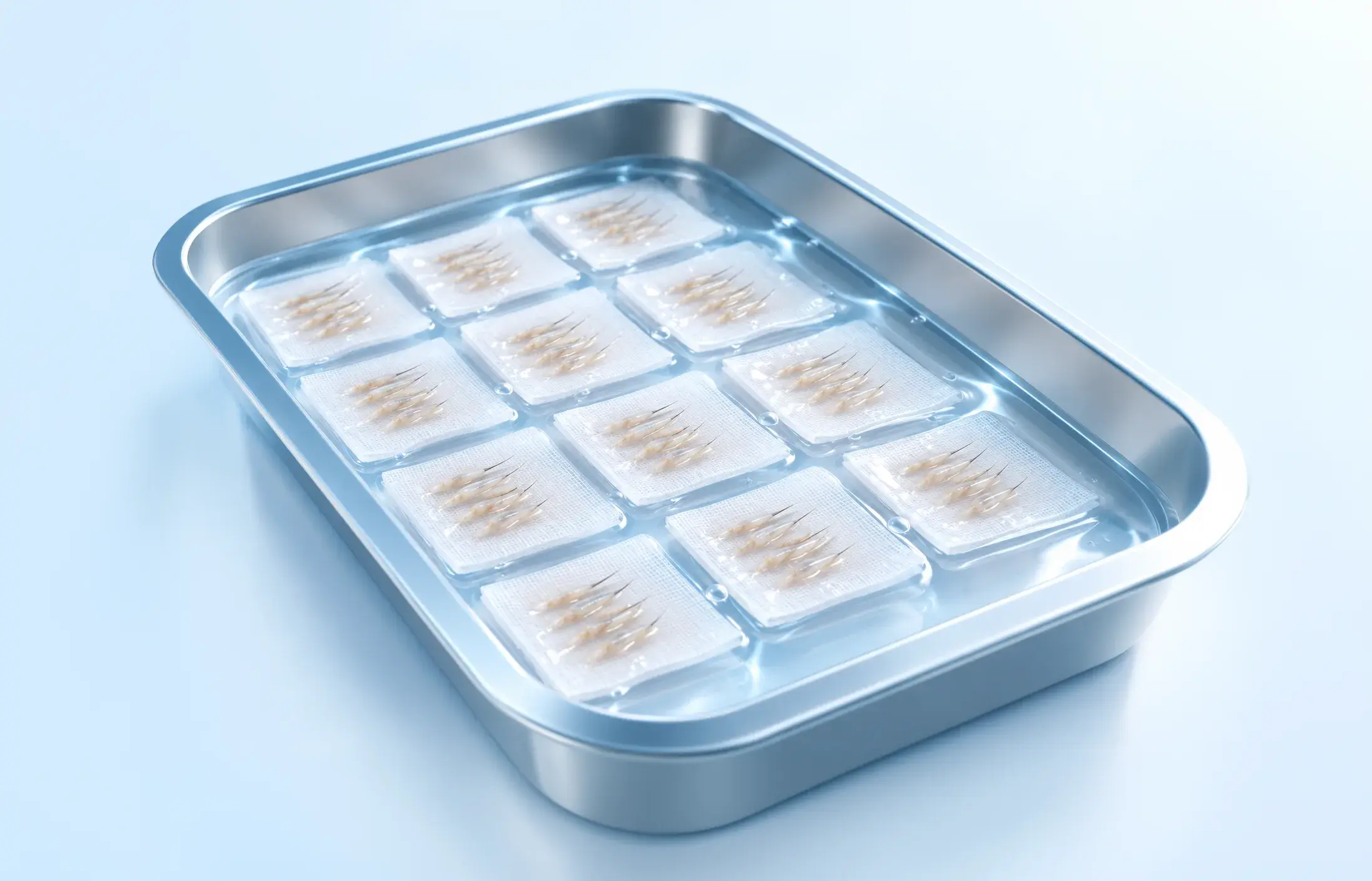
Grafts are delicate, living tissue. Spending less time outside the scalp helps preserve their vitality. DHI places each graft as the channel is created, shortening this phase.
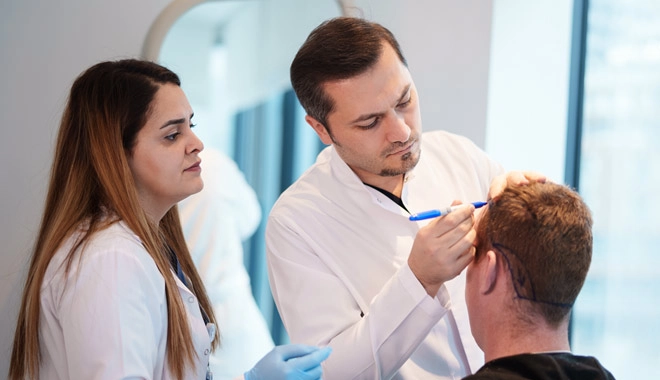
Creating channels in advance fixes their angle and depth before the individual graft is in hand. With DHI, the angle, depth and direction are determined individually as each graft is placed. These details are crucial to whether a transplant looks natural.
This is not simply Elithair's view. Several international clinics also describe DHI as the more precise technique for hairline restoration and adding density.
Why Elithair Uses DHI Today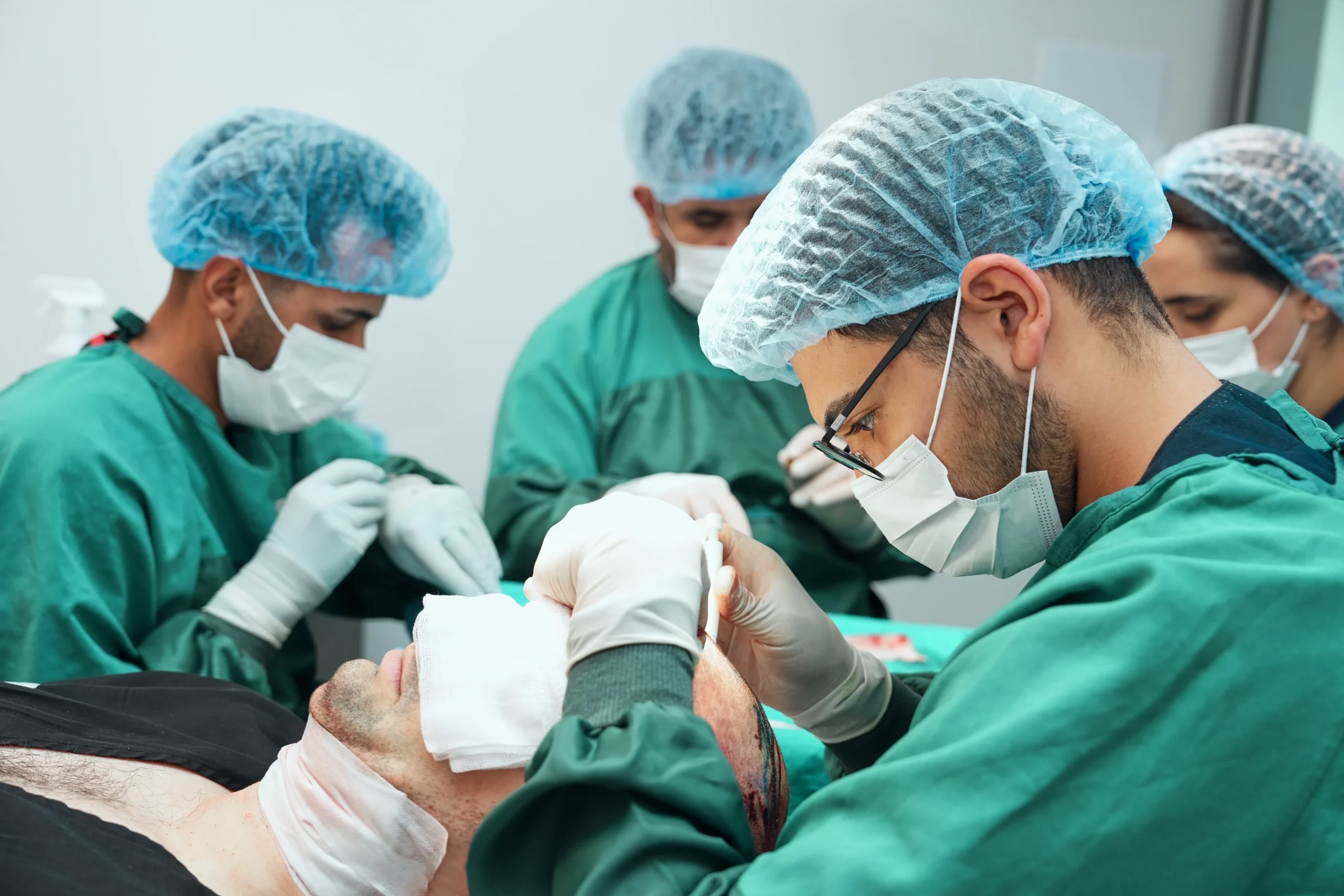
Elithair previously offered Sapphire FUE. Today, the clinic uses DHI exclusively for implantation in all treatment areas. With DHI, there is no need to make the incisions beforehand: the CHOI Implanter Pen creates each site as the graft is placed. This allows the team to adjust the angle, depth and direction during implantation.
This allows greater precision at the hairline, closer graft placement when increasing density and gentler treatment of existing hair.
Good to know: FUE and DHI describe different stages. FUE refers to graft extraction; DHI refers to the implantation approach. At Elithair, the two are used together.
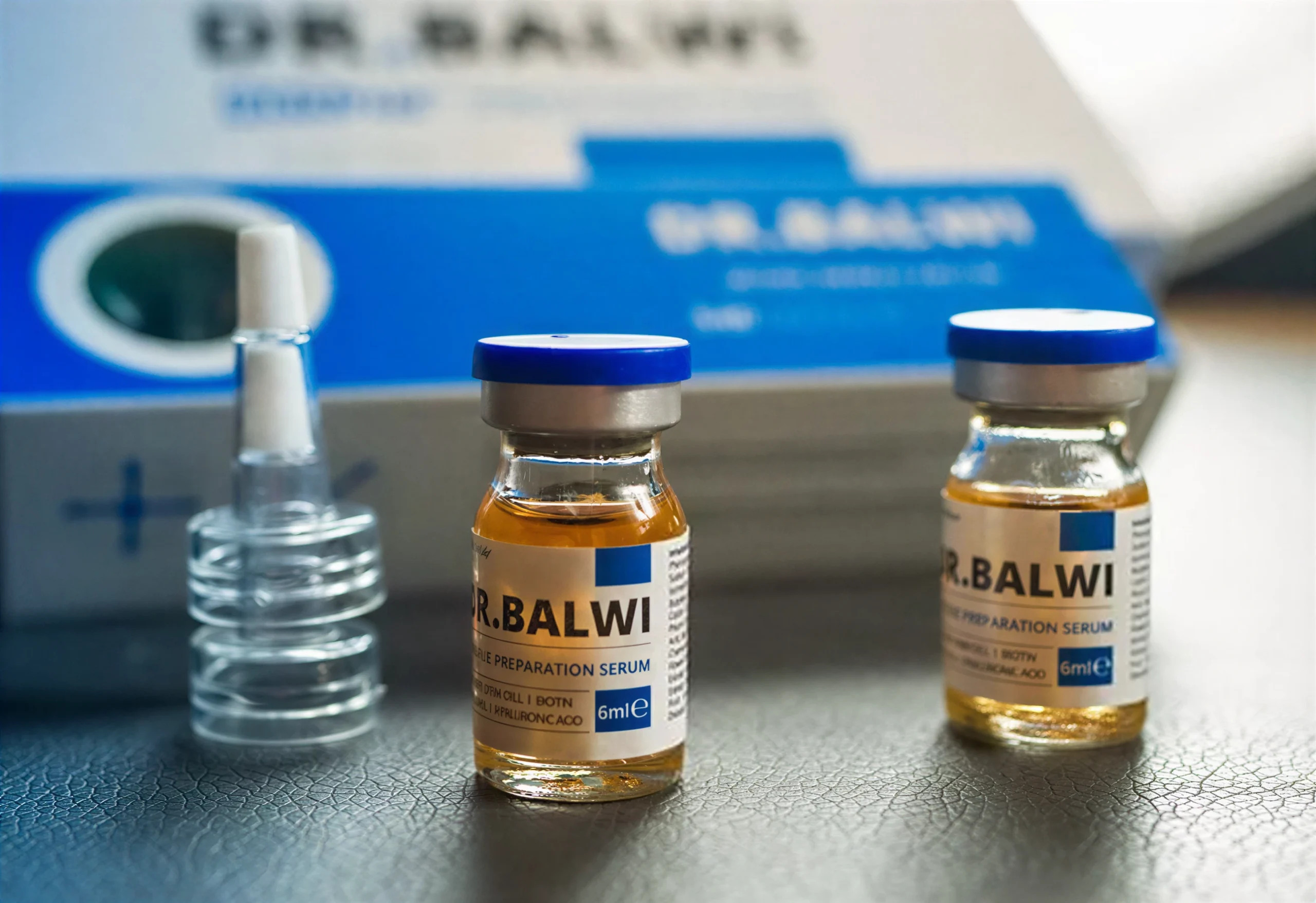
You receive our patented NEO FUE® Serum set with a dermaroller at the clinic and apply the serum to your scalp on days 14 and 28 after the procedure to support healing.
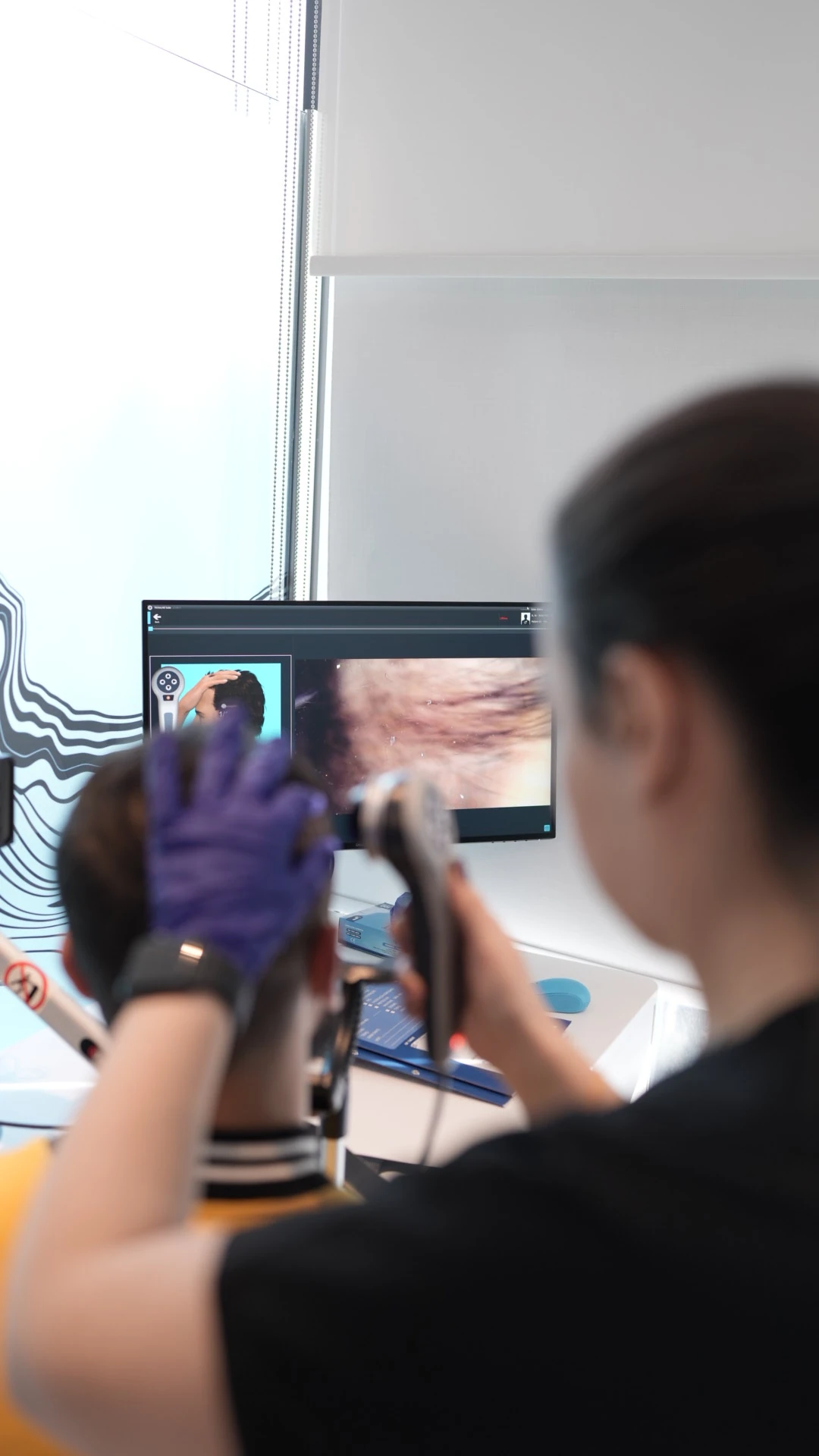
Straight after you arrive in Istanbul, six checks are carried out at the clinic: an electrocardiogram (ECG), a blood test to assess your general health, a blood test to investigate hair loss, hair analysis with the TrichoLAB scanner, a scalp ultrasound and a Doppler ultrasound. The results form the basis of your individual treatment plan.
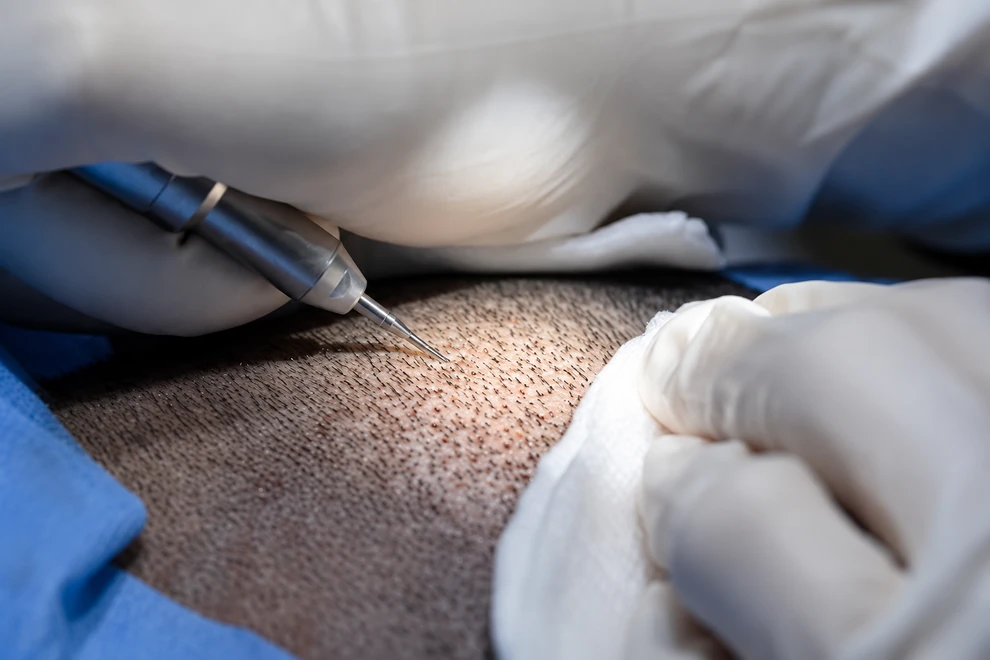
Based on the individual treatment plan, grafts are taken from donor regions that are relatively resistant to androgen-related miniaturisation.
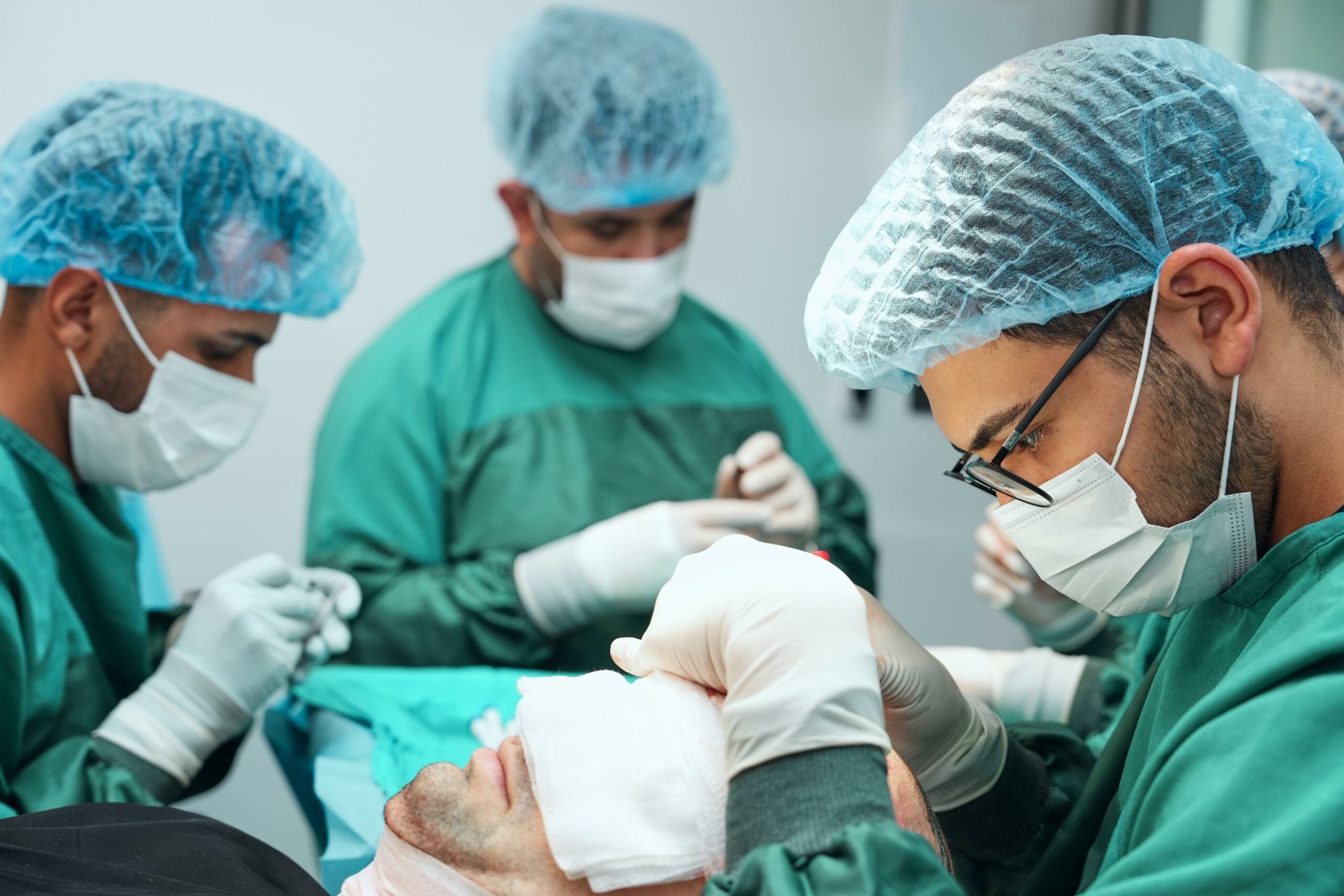
Our specialised team then places the grafts using the CHOI Implanter Pen. Because our medical specialists work exclusively with this technique, every movement is second nature: specialisation beats versatility.
Many clinics offer Sapphire FUE as their standard or basic package and charge more for DHI as a premium option. At many clinics, this means you pay extra for the more precise method.
Elithair uses DHI exclusively for implantation and includes it in the package price, with no extra charge for the technique. The price depends on the number of grafts:
| Grafts | All-inclusive price |
|---|---|
| Up to 2,000 grafts | £2,849 |
| up to 2,500 grafts | £2,949 |
| up to 3,000 grafts | £3,049 |
| Up to 3,500 grafts | £3,149 |
| up to 4,000 grafts | £3,249 |
| Up to 4,500 grafts | £3,349 |
| from 5,000 grafts | £3,449 |
DHI is included at no extra charge.
What's includedThe standard UK package includes the procedure, medical services, three nights at a 4-star hotel near the clinic, local transfers and aftercare. Flights are booked separately. Zero Shave FUE and Manual FUE are available as optional extras at an additional cost.

 Graft count
Graft requirements depend on your pattern of hair loss. As an approximate guide using the Norwood scale:
Some patients can receive more than 5,000 grafts in a single session. For others, dividing treatment into two sessions is better for long-term results. This depends on your individual hair loss and, especially, how many grafts your donor area can safely provide over the long term. Your hair transplant adviser will discuss this with you during your consultation.
Planning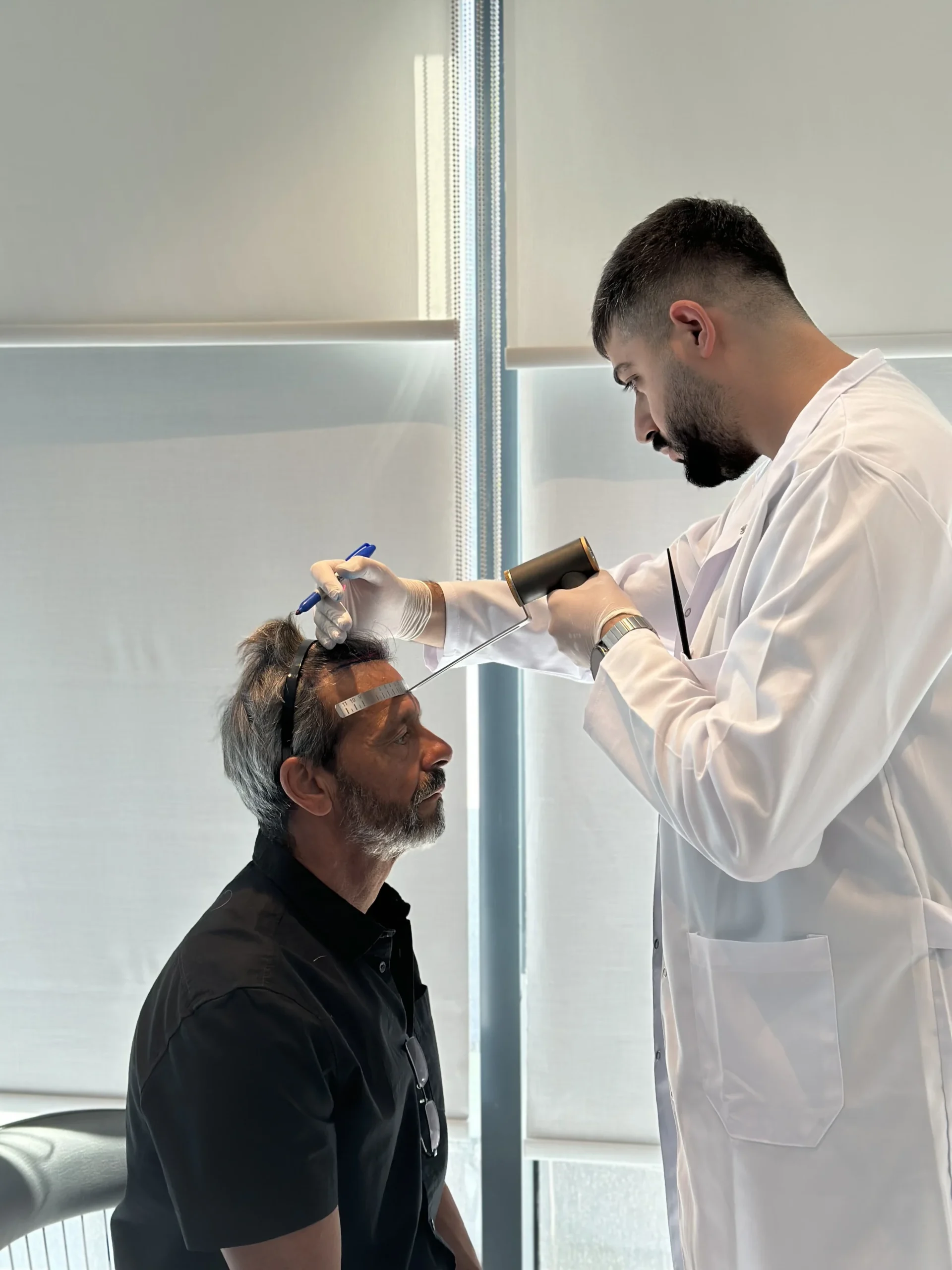
Many clinics still use Sapphire FUE primarily for large bald areas because creating all the channels in advance is efficient when a large number of grafts is needed. For both large areas and the hairline, your result depends on minimising the time grafts spend outside the body and precisely controlling their angle and depth (Parsley et al. 2010).
The more grafts are placed, the longer treatment takes and the more these factors matter.
That is why we make no distinction based on the stage of hair loss: you always receive the modern DHI technique, whether you need 2,000 grafts or 5,000, at the hairline or across larger areas, with no surcharge.
In the end, the tool is only one part of the result. The treatment plan has to account for how many grafts the donor area can safely provide, how those grafts are distributed and how future hair loss may progress. Extracted donor follicles do not regenerate in the donor area (Unger et al. 2013).
Healing after Sapphire FUE typically progresses as follows:
| Timing | What happens |
|---|---|
| Days 1 to 3 | small crusts and redness in the treated area. |
| From days 2 to 3 | you may be able to do light desk work, depending on your role and recovery. |
| Days 10 and 11 | the crusts are gently loosened and removed with a lotion; redness usually takes between two weeks and three months to fade. |
| In the first weeks after treatment | the transplanted hairs may shed temporarily (shock loss), while the roots remain in the scalp and produce new hair. Shock loss can happen, but not every patient experiences it. Existing hair around the treated area may also shed temporarily. Both are normal parts of recovery and do not mean your treatment has suffered a setback. |
| Months 3 to 4 | early new growth may begin to appear. |
| Month 6 | the first result becomes visible. |
| Months 10 to 12 | the final result at the front of the scalp is visible; at the crown, it takes around 15 to 18 months. |
Send photos of your current hair loss and receive a medical assessment within 24 hours, including an estimated graft count and a no-obligation quote.






A free, no-obligation hair analysis can give you an initial indication of whether a transplant may be suitable for you and what the next steps would be.
Sapphire FUE is a hair transplant procedure in which a synthetic sapphire blade, rather than a steel blade, creates channels in the recipient area. The grafts are then placed into these channels. The sapphire technique therefore refers to channel creation, not extraction. Grafts are extracted using FUE, as in modern treatments. The sapphire tip makes finer incisions than steel and creates V-shaped channels.
With Sapphire FUE, a sapphire blade creates all the channels first, and forceps are then used to place the grafts. These are two separate steps. With DHI, the CHOI Implanter Pen creates each channel and places the graft in a single motion, giving the team more control over each graft's angle and depth.
DHI offers an advantage in precise hairline placement, achieving high density and gently increasing density around existing hair. It combines channel creation and graft placement in a single step, reducing the time grafts spend outside the body. Many clinics use sapphire blades for large bald areas because pre-cutting is efficient when many grafts are needed. However, precise angles and less time outside the body matter just as much in these areas as at the hairline. That is why Elithair uses DHI exclusively at every stage of hair loss and in all areas.
No. Elithair no longer uses the sapphire method, which is considered outdated. Elithair uses DHI exclusively for implantation in all areas. A sapphire blade creates channels more effectively than a steel blade, while DHI eliminates the separate channel-creation step altogether. The CHOI Implanter Pen creates each channel as it places the graft, giving the team more control over angle and depth. Many clinics charge extra for DHI; at Elithair, it is included in the price.
Some providers charge more for DHI. At Elithair, DHI implantation is included in the package, with current graft-tier prices starting at £2,849 for up to 2,000 grafts and reaching £3,449 for 5,000+ grafts. The final graft estimate is confirmed after assessment.
For the incision itself, probably yes. A 2021 modelling study found the least tissue trauma with a sapphire blade and the most with a rectangular steel blade. However, no independent clinical studies in patients have demonstrated an advantage in graft survival. Advertised percentages for improvements in density and healing attributed to the blade are marketing claims unsupported by research.
The crusts are gently removed on days 10 and 11, and redness usually takes between two weeks and three months to fade. You may be able to do light desk work from day 2 or 3, depending on your role and recovery. New growth often begins around months 3 to 4 and becomes more noticeable from around month 6. The final results are visible at the front of the scalp after 10 to 12 months and at the crown after 15 to 18 months.


