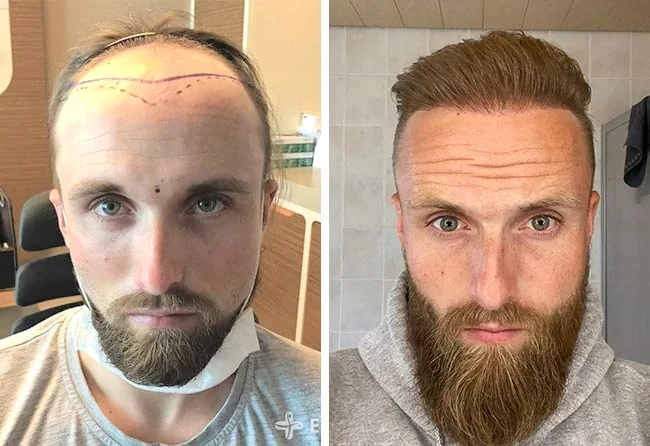
Before
After
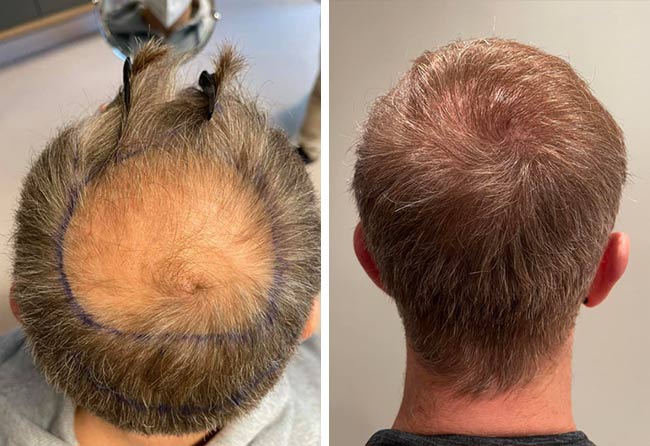
Frederik G. – 4,700 grafts

4.9 - 11,000+ Reviews on Google

150,000+ Happy Patients Worldwide
free & without obligation
 4.9 out of 5 stars on Google
More than 150,000 treatments
at our specialist clinic, certified to ISO 9001:2015
by TÜV Thüringen.

A hair transplant is a modern solution for filling bald areas permanently and restoring natural-looking hair.
Individual follicular units are taken from the donor area and implanted into the areas identified in your treatment plan.
The procedure is carried out as a day case at Elithair's clinic in Istanbul. Grafts are extracted using an FUE-based technique and implanted using DHI with the CHOI Implanter Pen. All-inclusive UK package prices start at £2,849.
A hair transplant is particularly effective for androgenetic alopecia (AGA), the most common form of hair loss in men and women, and restores natural-looking fullness. With Sleep-Deep sedation, you experience 0% pain during treatment. Each graft is placed individually at the right angle, giving you a natural-looking result.
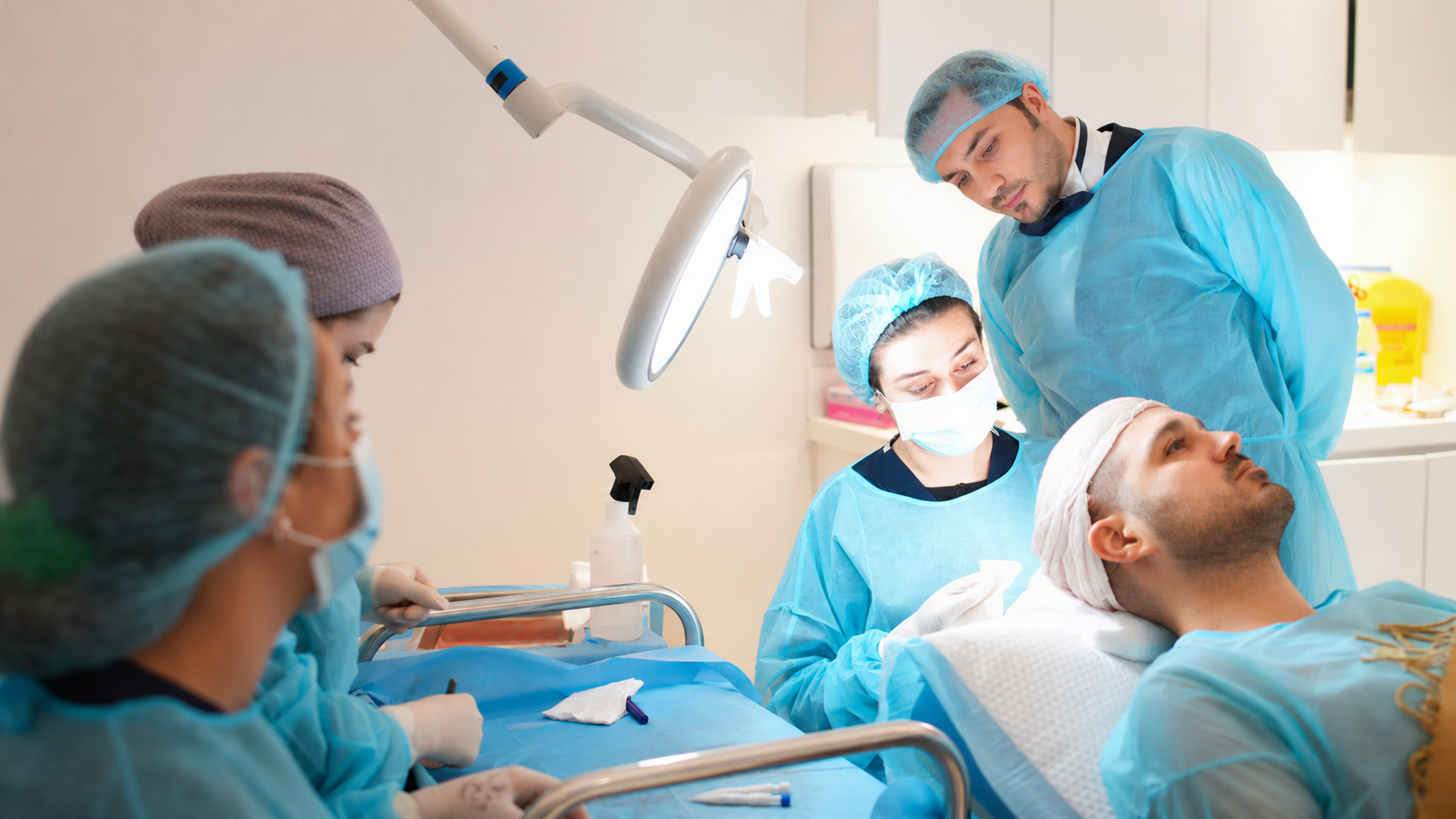
FUE extraction, DHI implantation with the CHOI Implanter Pen
Learn moreFour days and three nights in Istanbul: arrival on day one and the Pre-Test System, which informs your individual treatment plan; hairline planning and treatment on day two; then follow-up, aftercare and departure
Learn moreOne treatment day; the procedure takes around 5 to 8 hours, depending on the number of grafts to be transplanted
Learn moreLocal anaesthesia with Sleep-Deep sedation; no general anaesthesia
Learn moreFrom the fourth month at the latest
Learn moreAt the front of the scalp after 10 to 12 months; at the crown after 15 to 18 months
Learn moreAll-inclusive packages cost £2,849 to £3,449, depending on the graft tier; flights cost extra, and Zero Shave FUE and Manual FUE are available as options at an extra charge.
Learn moreThe NHS states that hair transplantation is not available on the NHS because it is cosmetic surgery
Learn moreStabilised hair loss and enough donor hair. We decline around 40% of enquiries after the hair analysis
Learn moreOur patients' results are the best proof of the quality of our hair transplants.
Compare patients' starting points with their final results to see how a personalised treatment plan can bring a lasting change to your appearance.
Frederik G. – 4,700 grafts
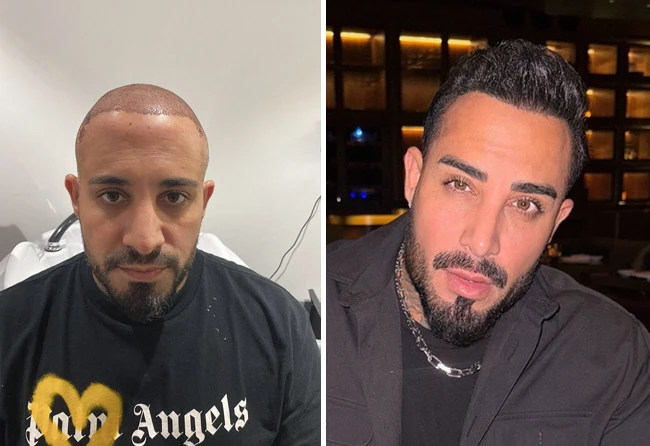
Bartmann - 3,800 grafts
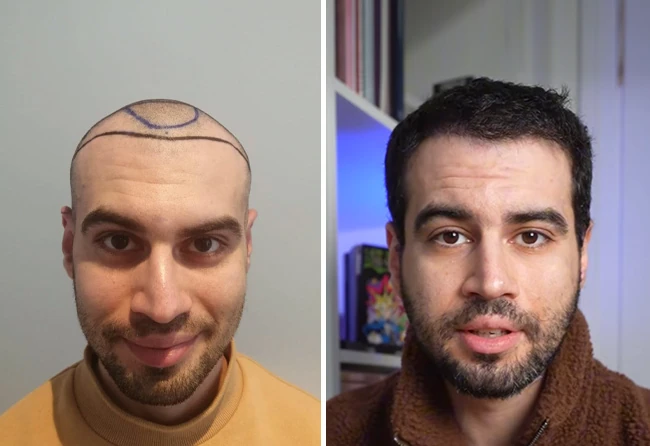
Spybas - 3,200 grafts
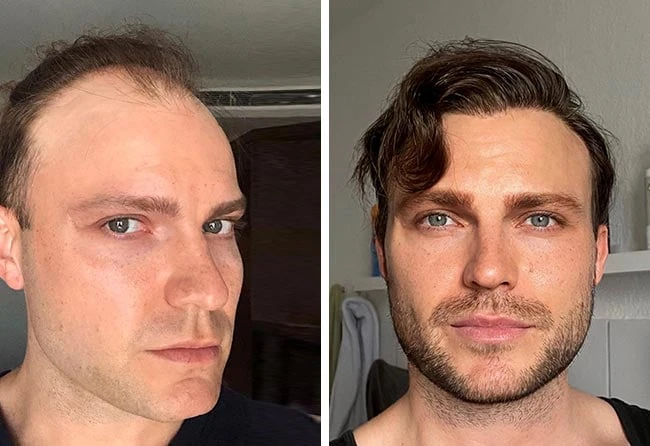
Edgars N. – 3,700 grafts
A hair transplant treats the effects of hair loss, not its cause. The first step is therefore to establish what is causing your hair loss.
In most cases, hair loss is hereditary: the follicles at the hairline and on the top of the head are genetically sensitive to dihydrotestosterone (Lolli et al. 2017).
According to the German Federal Ministry of Health's health information portal, hereditary hair loss affects up to 70 per cent of men and 40 per cent of women during their lifetime. A hair transplant is designed to treat this form of hair loss because the follicles in the donor area remain unaffected by this hormone.
Hair loss can also be caused by an illness, a hormonal disorder or a deficiency. In those cases, a transplant is not the right first step because the underlying cause remains active. That is why the Pre-Test System before your treatment includes a blood test for hair loss, and the results are used to create your personalised treatment plan. This way, you know in advance if something else needs to be treated first.
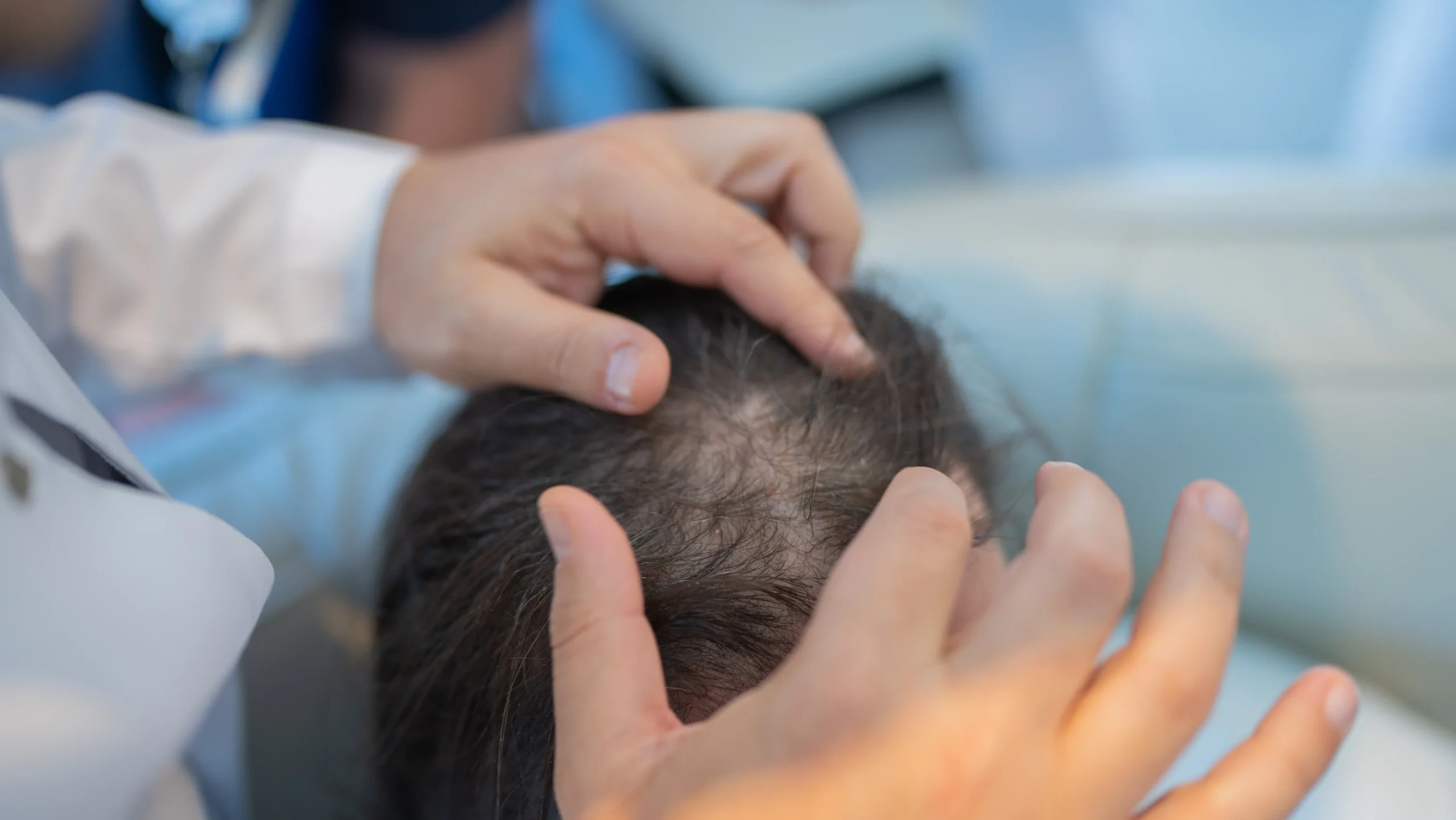











 Four criteria
A hair transplant is not appropriate for every type of hair loss. The review "Hair transplantation: Basic overview" (Jimenez et al., Journal of the American Academy of Dermatology 2021) identifies assessment of the donor area as a key factor. The medical literature also outlines other criteria for determining whether you are a suitable candidate.
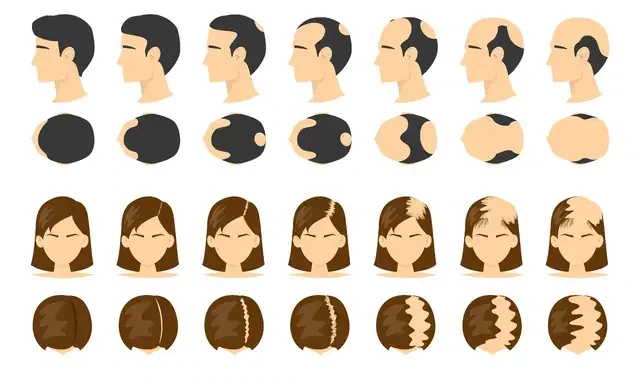
The first is a clear, stable pattern: Norwood III to V in men and Ludwig II to III in women, with at least 50% thinning in one or more areas.
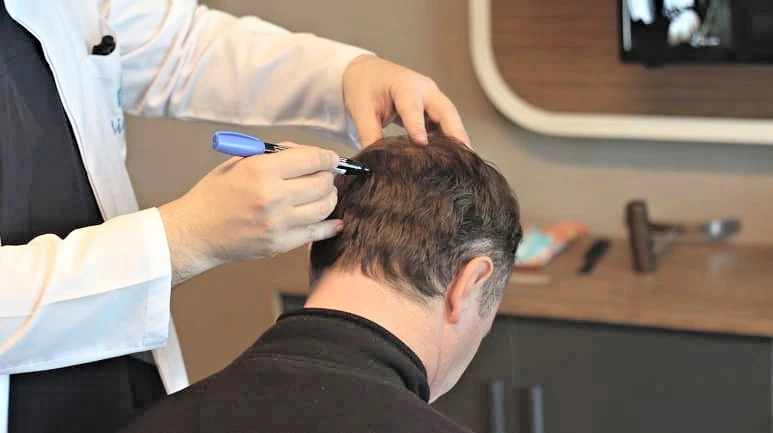
The second requirement is enough donor hair to supply the grafts. A density of 65 to 85 follicular units per square centimetre provides a good foundation. You also need a healthy scalp, donor hair of adequate quality and realistic expectations about density and the timeline for results.
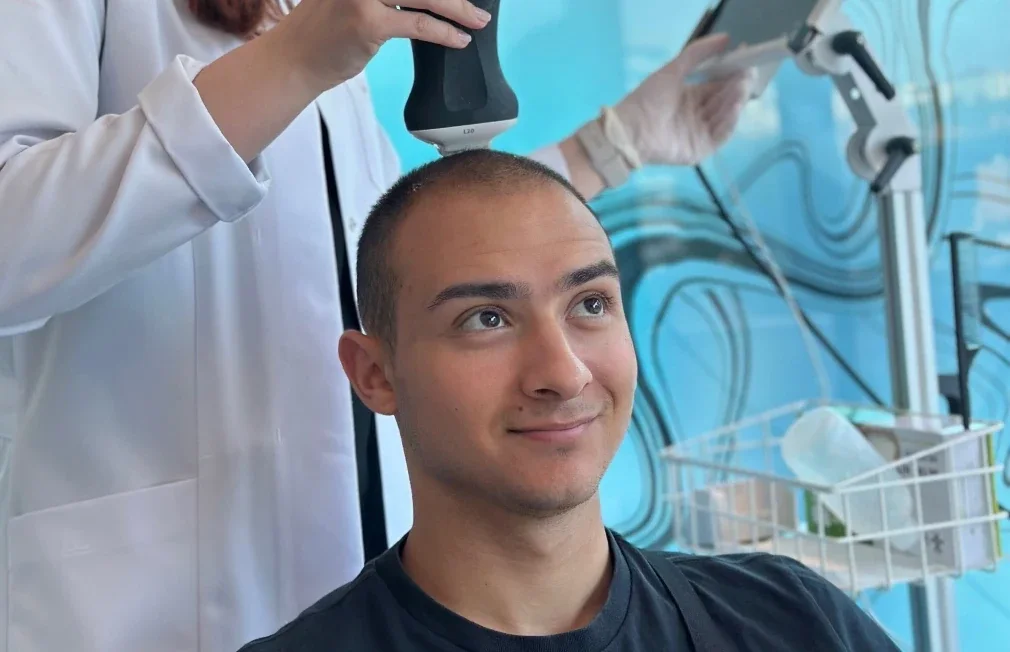
We do not use a strict age cut-off; we assess each case individually. The literature advises against using limited donor hair reserves too early when hair loss is still progressing rapidly (Unger et al. 2013).
At the same time, the ISHRS Practice Census 2025 shows how young many patients are: 95% of first-time patients are between 20 and 35 years old. Your individual assessment, rather than your year of birth, determines whether your hair loss is stable enough.
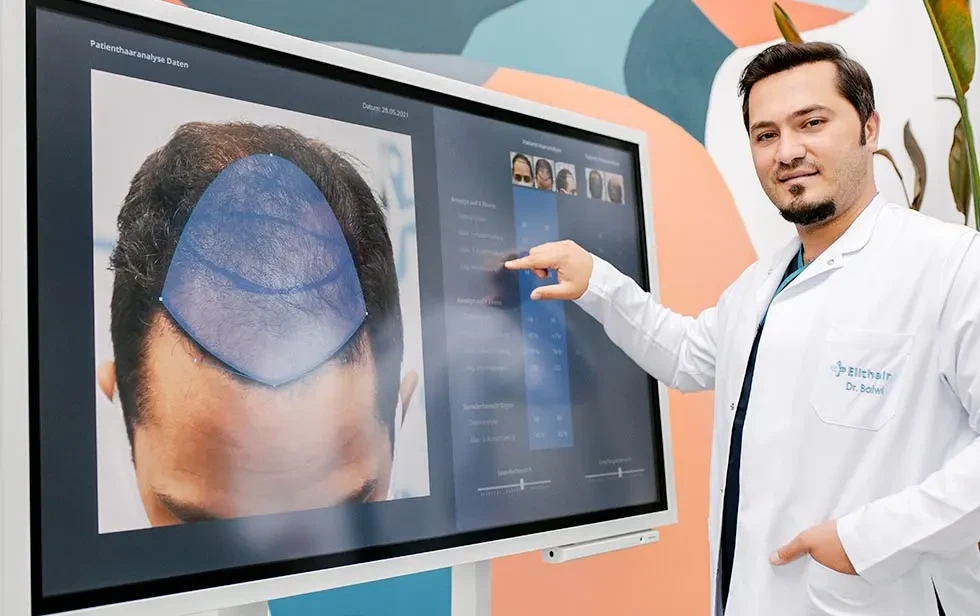
As part of our commitment to responsible medical care, we decline around 40% of enquiries. If the free hair analysis shows that you do not have enough donor hair or that your hair loss is progressing too quickly, we explain this openly during your consultation. This helps us prevent poor results before treatment begins.
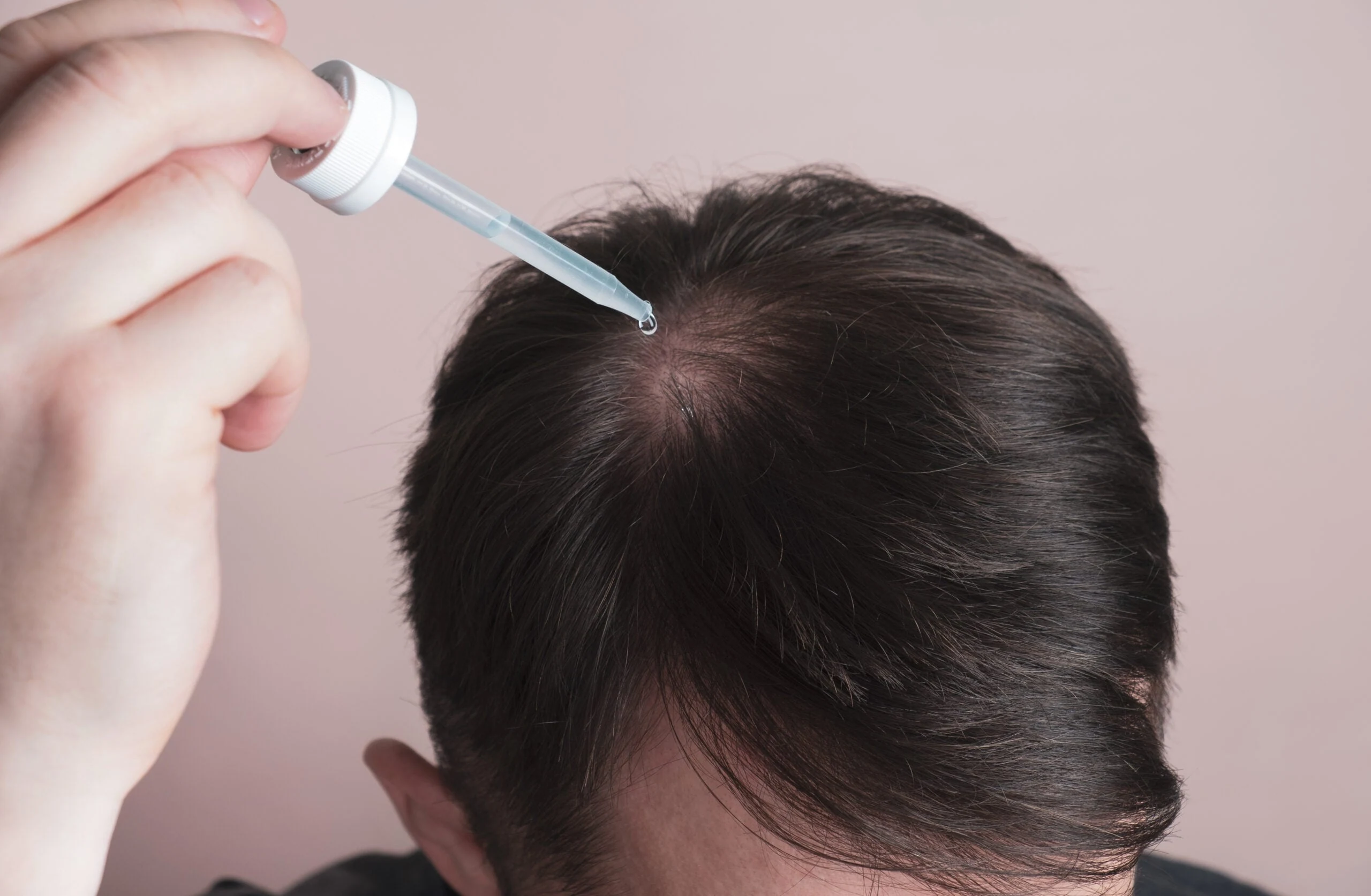
Medication and transplantation can complement each other in treating androgenetic alopecia.
The European S3 guideline on androgenetic alopecia (Kanti et al. 2018) lists medicines such as finasteride and minoxidil as first-line treatments and hair transplantation as a surgical treatment option.
These approaches can be combined because they act on different groups of hairs: transplanted hair is resistant to dihydrotestosterone, while your surrounding hair is not. Our doctors will discuss whether medication alongside your transplant is appropriate for you.
How treatment differs for women. Hair transplants for women require a different assessment. Hair loss usually appears as diffuse thinning along the parting, and a receding hairline can also indicate scarring alopecia (Herskovitz et al. 2013).
Active scarring alopecia is a contraindication to surgery: the literature describes how inflammation also attacks transplanted follicles (StatPearls, Hair Transplantation, 2025), creating a high risk of treatment failure.
A review of transplantation in scarring alopecia (Roga and Thomas, CosmoDerma 2021) reports graft survival of around 50 per cent in scarred tissue, compared with over 90 per cent in non-scarring alopecia. The review states that the condition must have remained inactive for one to two years before surgery. That is why a thorough assessment of the cause of hair loss always comes first for women.
Special considerations for a beard transplant. A beard transplant requires a completely different approach from a scalp transplant. For a natural look, follicles are placed at very shallow growth angles of 10 to 15 degrees. The final result depends on how much donor hair is available at the back of your head, where suitable, strong follicles are extracted.
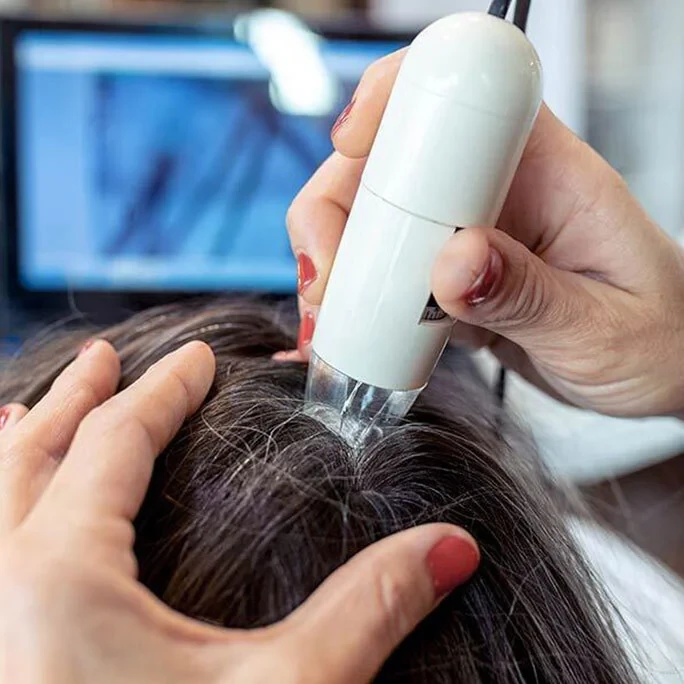 Treatment plan
Two stages of assessment help shape the treatment plan before the procedure begins.
The first is a free hair analysis based on your photos, carried out before you travel. It gives an initial assessment of your pattern of hair loss, donor area and likely graft range, together with a non-binding price estimate.
This establishes whether a hair transplant is medically appropriate for you and can deliver visibly fuller hair.
You also receive our exclusive NEO FUE set at the clinic. You apply it to your scalp on days 14 and 28 after the procedure to support graft survival.
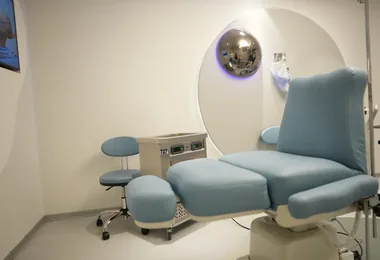
The six-step Pre-Test System takes place at our clinic in Istanbul on the day you arrive. The clinic's checks include:
Your individual treatment plan is drawn up based on the results.
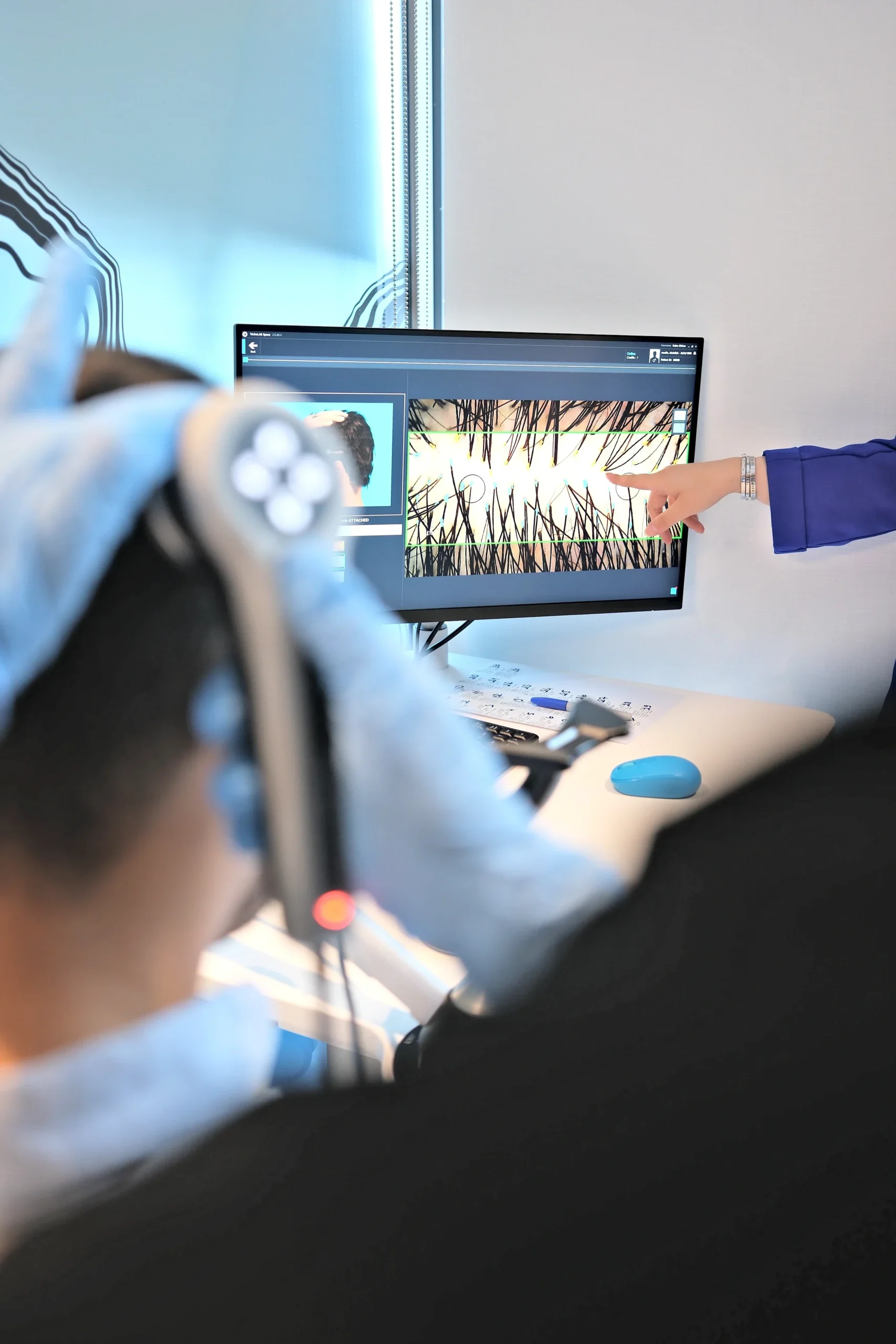
The findings are considered together when the treatment plan is confirmed:
These findings help shape your individual treatment plan. Two patients receiving the same number of grafts may need different designs and graft distribution because their hair characteristics, available donor hair and treatment needs differ.
The patented NEO FUE® serum, developed under the direction of Dr Abdulaziz Balwi, is also part of your package. You receive the set, containing a dermaroller and two ampoules of serum, at the clinic in Istanbul. Apply it to the donor and recipient areas using the supplied dermaroller on days 14 and 28 after the procedure to support healing and graft survival.
TechniquesA hair transplant has two stages: extracting the follicles and implanting them. The techniques used for these stages are often presented as competing methods, but they work together.
At Elithair, an FUE-based technique is used to extract individual follicular units from the donor area. They are then implanted using DHI with the CHOI Implanter Pen, without creating channels in a separate step beforehand.
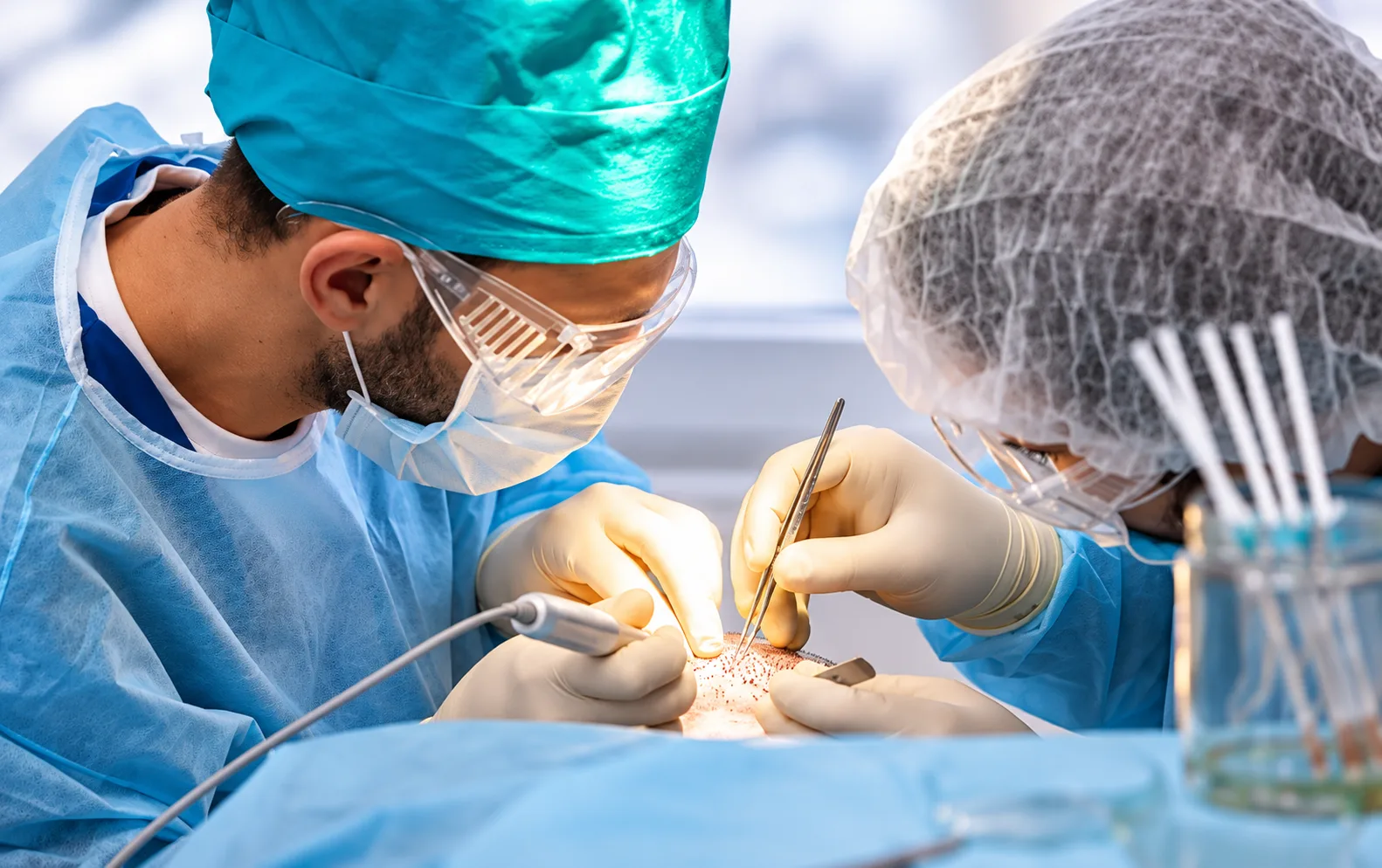
We use FUE to extract follicles. According to ISHRS data, over 85 per cent of procedures in men use this method. Its advantage over strip methods is that it leaves no scars in the donor area.
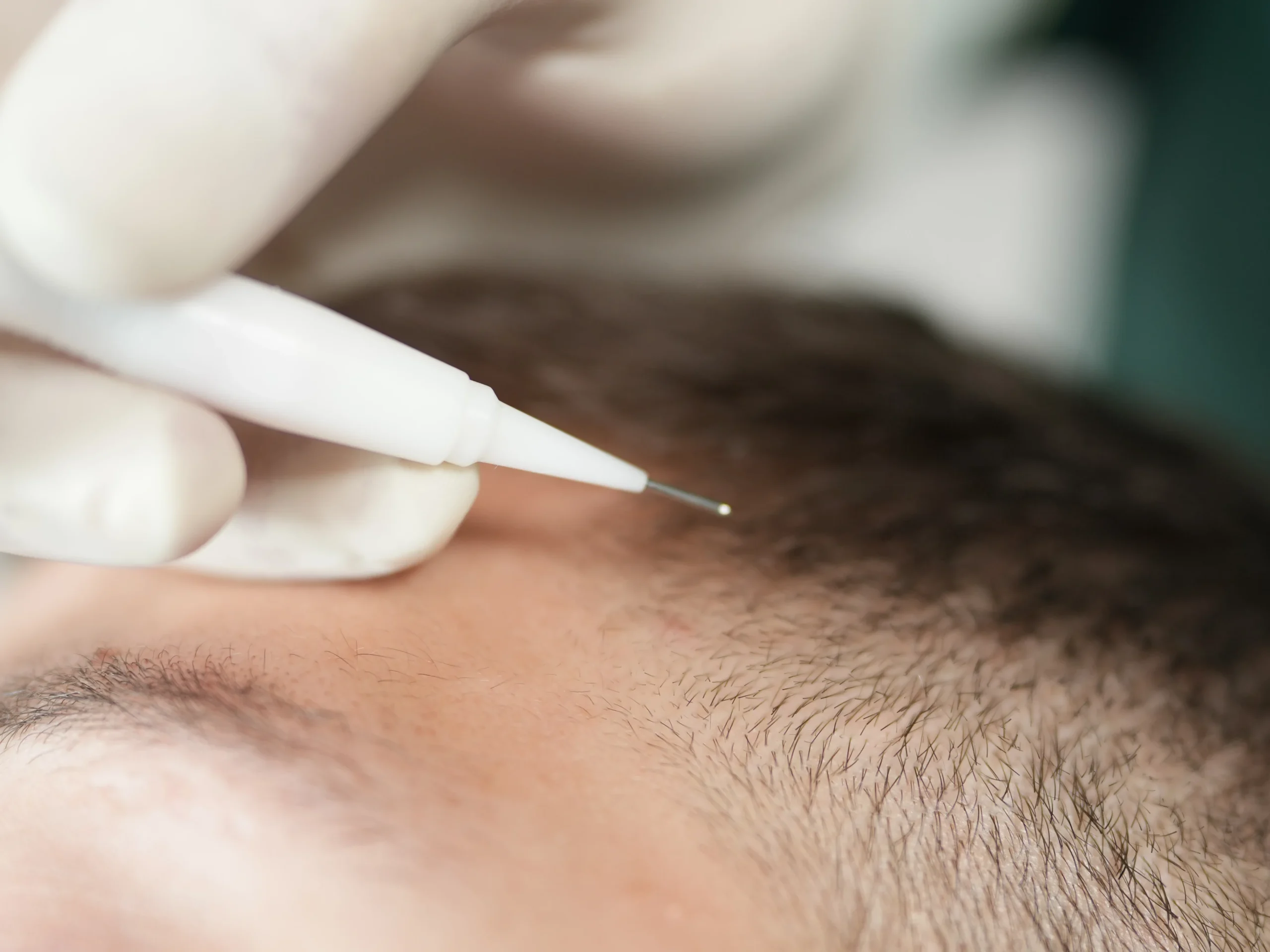
With DHI, the CHOI Implanter Pen creates the opening for each graft and places it in one step, minimising the time grafts spend outside the body.
We precisely control the growth angle (15 to 35 degrees at the hairline), depth and direction of every graft to create a completely natural appearance. At Elithair, we use DHI exclusively for implantation in every area, regardless of graft count.
OptionalZero Shave FUE can be combined with DHI implantation for suitable patients who want to avoid shaving the donor and treatment areas. It is available for up to 3,500 grafts at an extra charge.
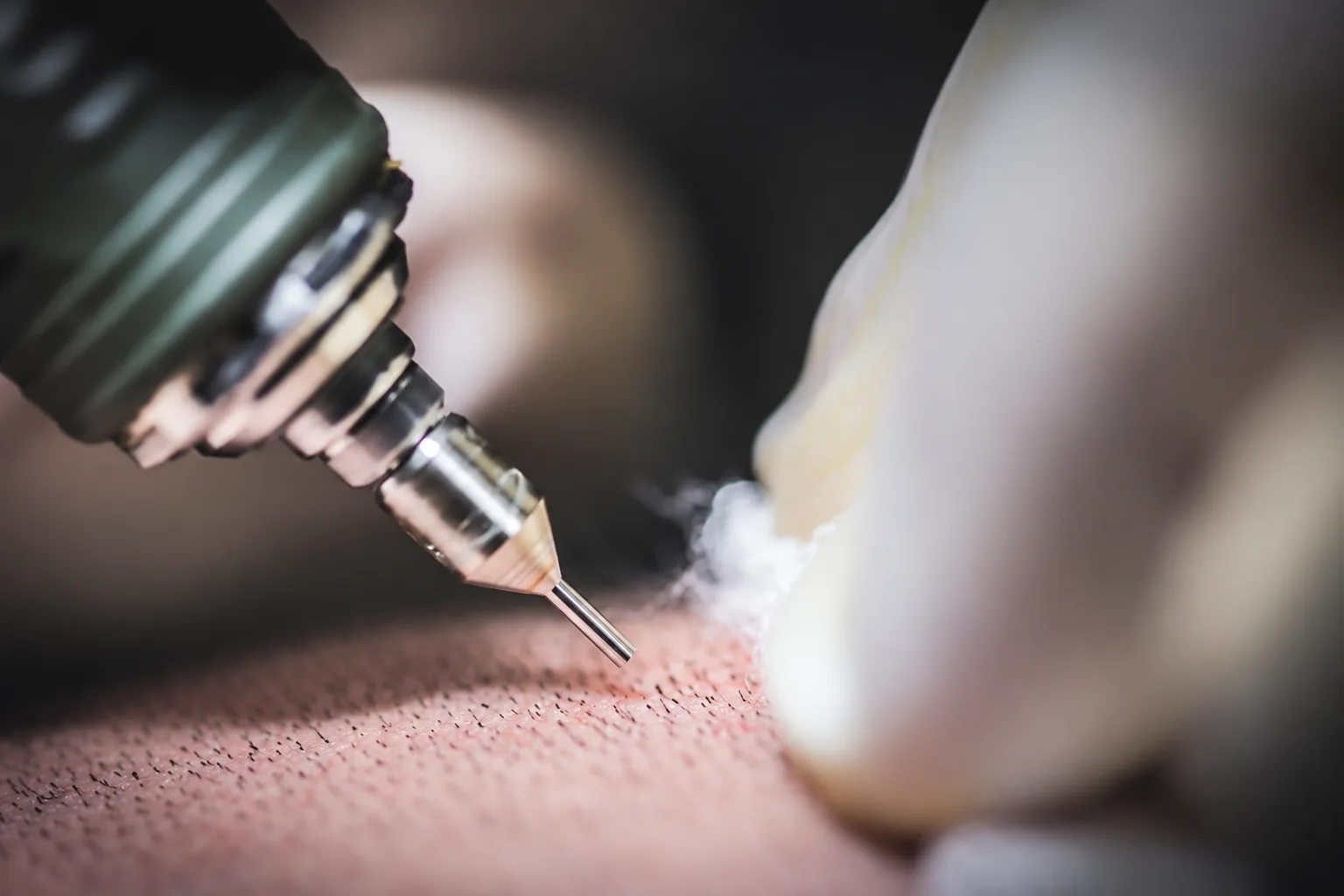
The extraction technique plays a major role in how dense your donor area looks after the transplant. Micromotor speed is a key factor: higher speeds make extraction faster but put stress on the surrounding tissue. While speeds of around 4,000 revolutions per minute are common in the industry, we prioritise gentle extraction.
Our devices are limited to 750 revolutions per minute, and we extract grafts at just 100 to 200 revolutions per minute. This delicate technique takes years of practice. At Elithair, only medical specialists with at least seven years of experience in this specific step perform it.
Optional For the highest level of precision, we also offer Manual FUE at an additional cost. Each graft is removed entirely by hand, taking its growth angle and the tissue structure into account. This keeps signs of extraction in the donor area inconspicuous while preserving valuable reserves for the future.
When comparing providers, ask what motor speed they use and whether they offer Manual FUE.
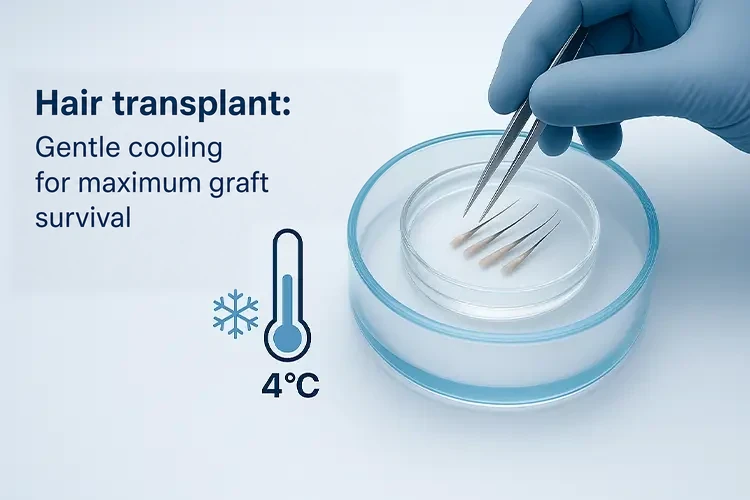
Once a follicle is removed, it needs continuous care until implantation (Parsley et al. 2010). Between extraction and implantation, the graft remains outside the body without its natural blood supply. To keep the cells viable, we store your grafts in a special nutrient solution that prevents them from drying out before implanting them during the same session.
The precise insertion depth plays a major role in graft survival. Placing grafts too superficially reduces survival to around 60%. By matching the depth to your tissue structure, our medical specialists achieve approximately 98% survival, also supported by NEO FUE care. We do not estimate this depth: during the Pre-Test System, we use ultrasound and Doppler ultrasound to assess skin thickness and blood flow, then specify the depth in your personalised treatment plan.
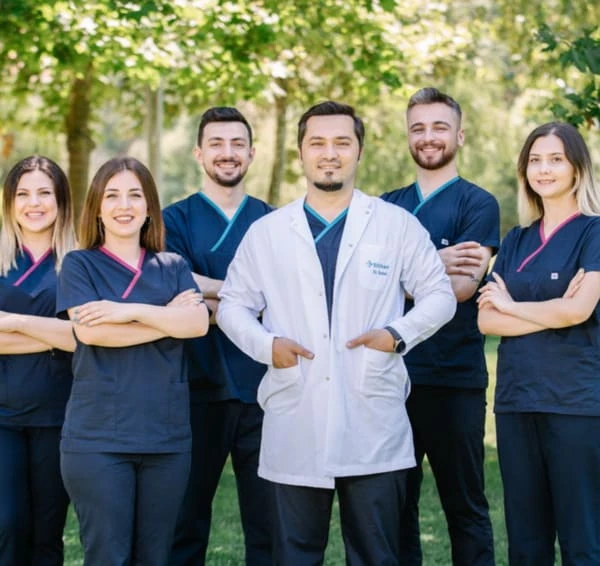
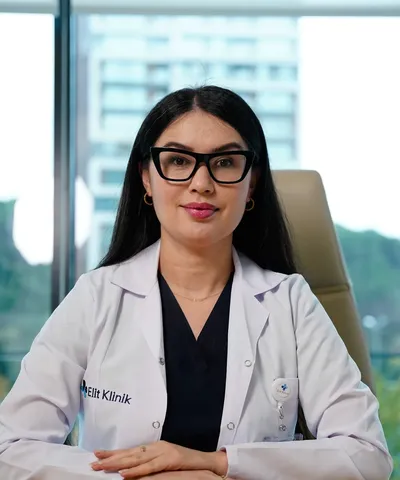
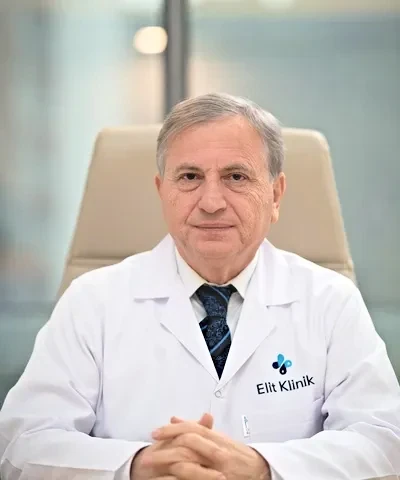
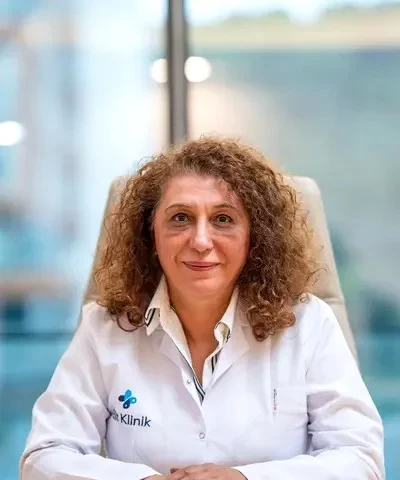
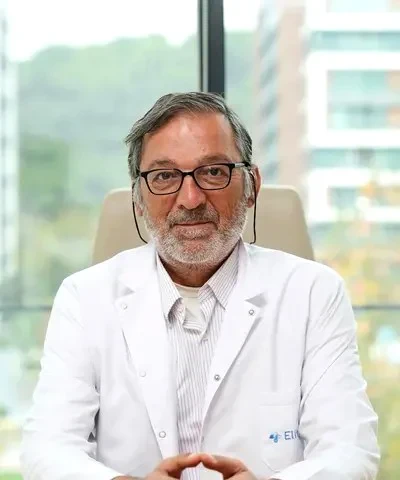
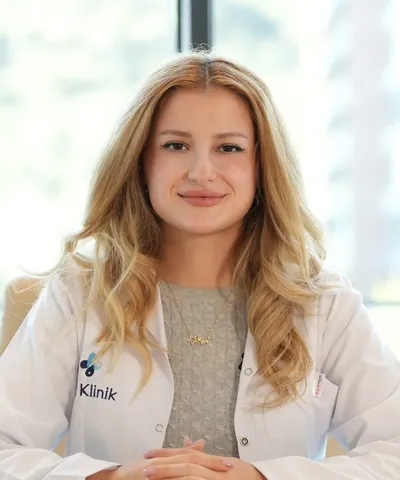
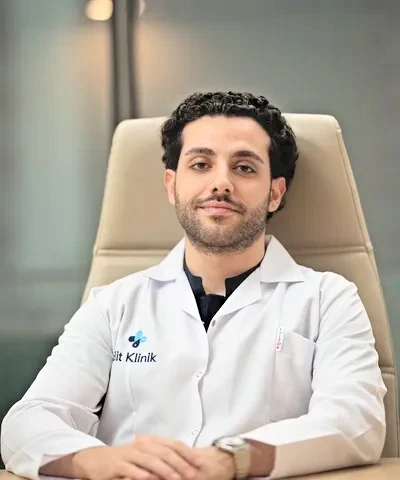
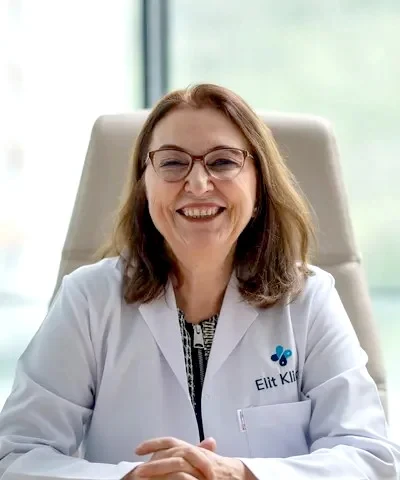
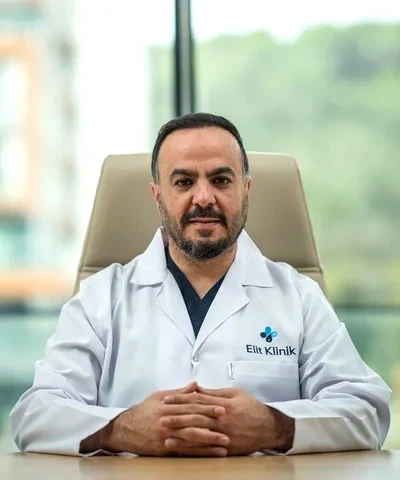
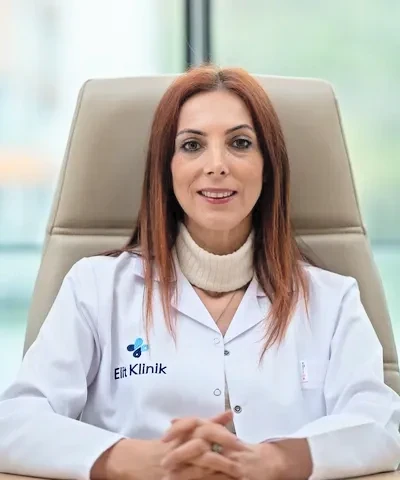
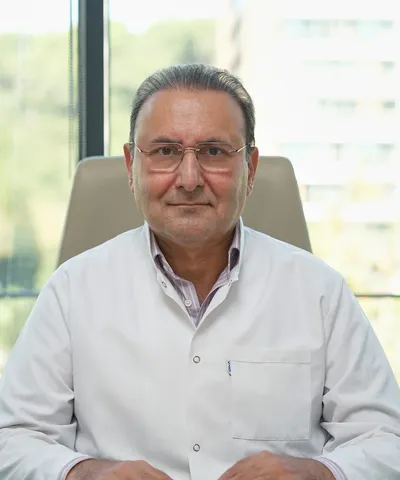
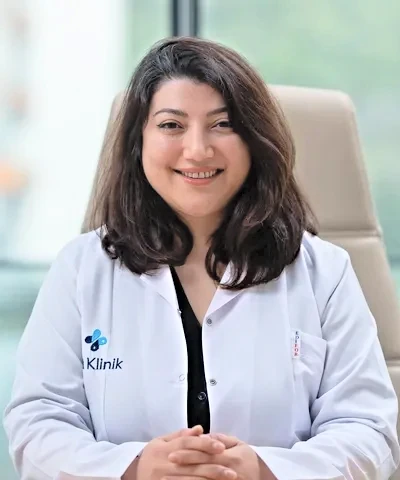
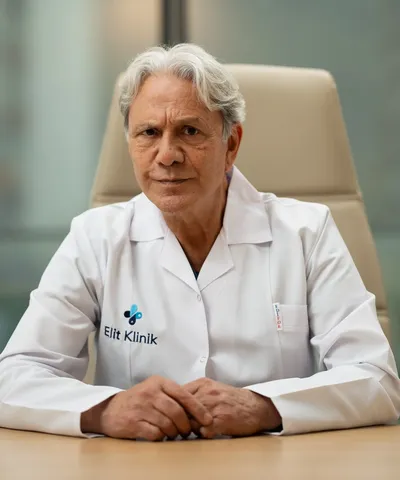
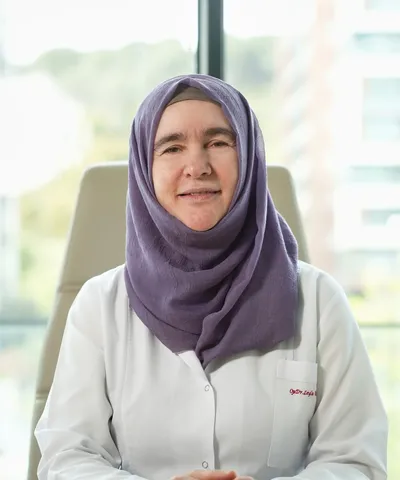
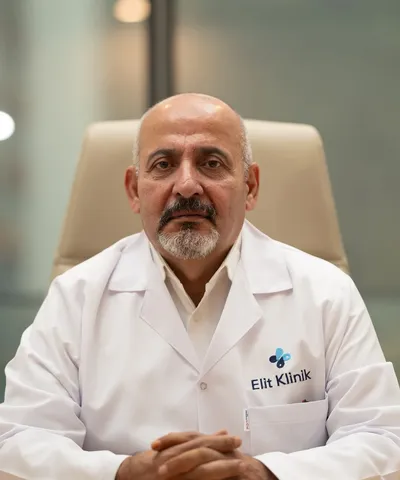
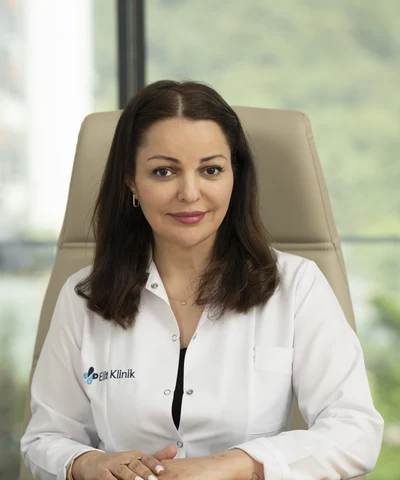
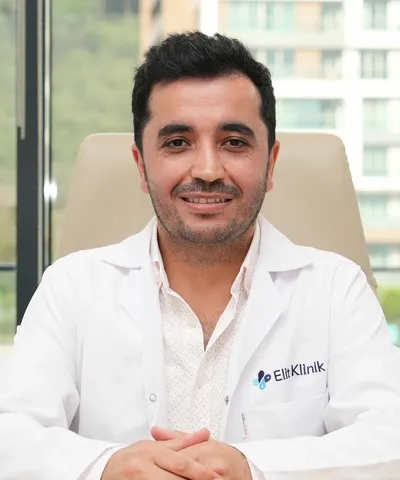
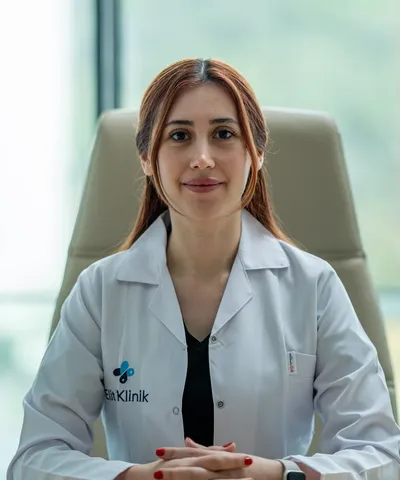
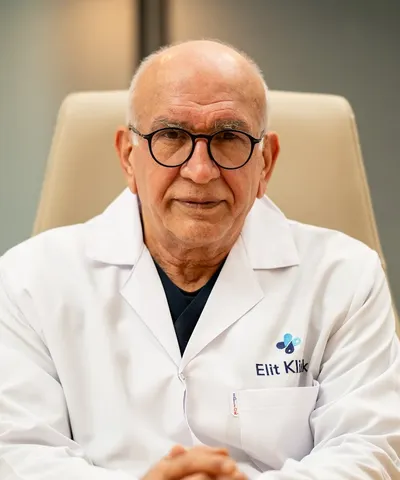
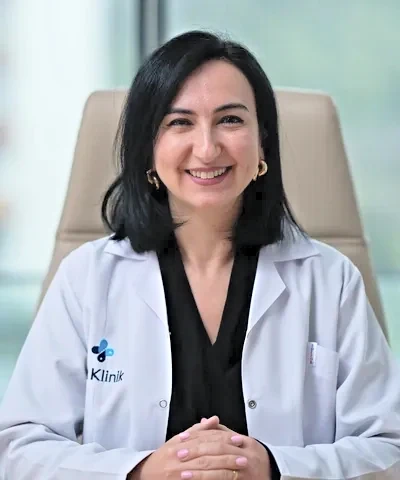
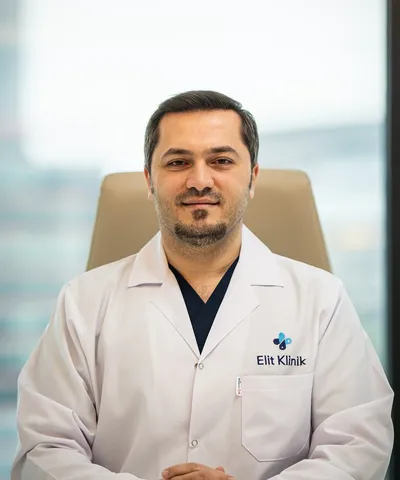
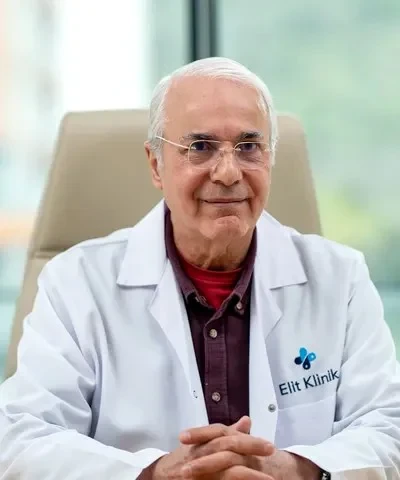
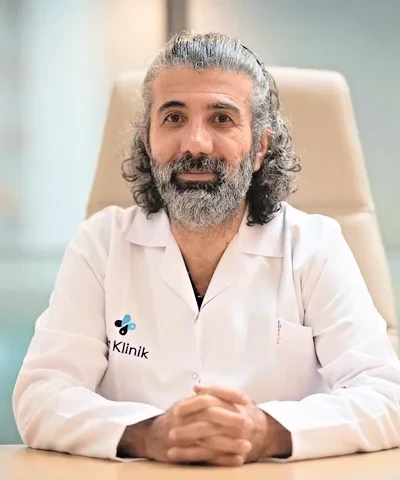
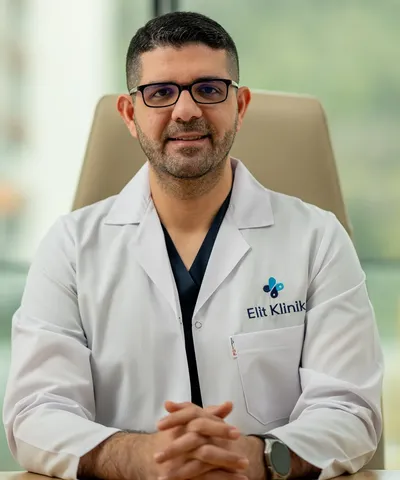
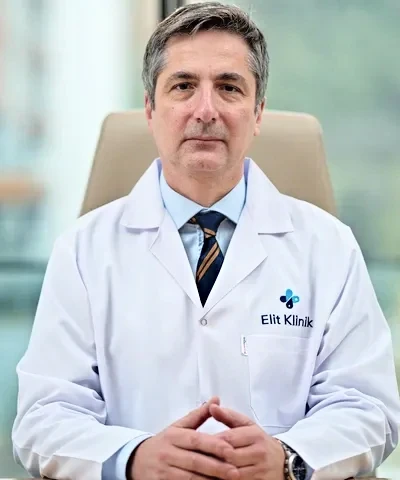
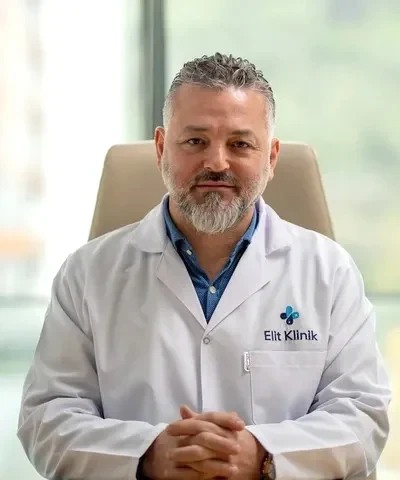
A treatment plan is only as good as the team that carries it out. At Elithair, every surgical step is performed by medical specialists with at least seven years of experience in that specific step.
Our doctors also oversee and take responsibility for your treatment at five key points: during the hair analysis, as part of the Pre-Test System, when your hairline is planned, during anaesthesia and at the final examination. This is our 5-Doctor Standard.
Our quality standards undergo ongoing external review. The Turkish Ministry of Health conducts unannounced inspections once or twice a month, reviewing hygiene, sterilisation, documentation and medical procedures.
Based on these inspections, the ministry has also officially authorised Elithair as a hair transplantation training centre for doctors. More than 70 doctors have completed the programme so far. The procedures used in your treatment meet the same standards taught at our clinic and monitored by the authorities.
Two independent credentials confirm how our processes are run:
 Istanbul
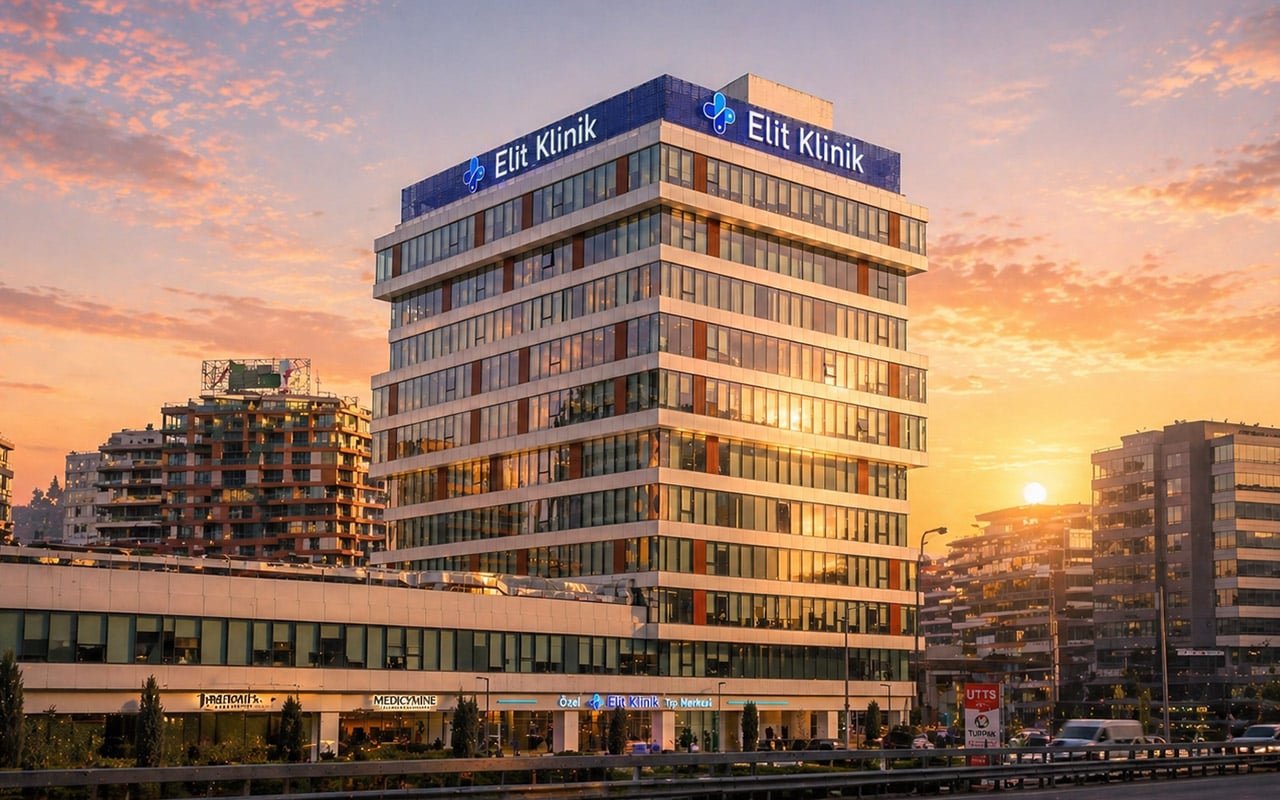
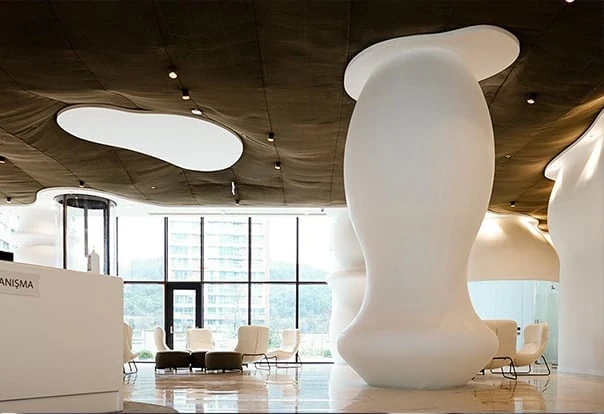
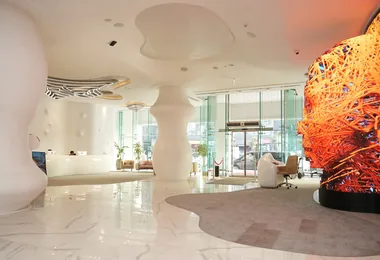
The procedure takes place at the Istanbul clinic.
Aftercare continues through the Elithair App. You upload photos for our medical team to review and monitor your healing.
As the world's leading destination for hair transplants, Istanbul brings together an exceptional concentration of medical expertise. The doctors and medical specialists treating patients there draw on years of specialised daily practice and experience gained from thousands of successful procedures.
Strict government oversight supports these professional standards. Mandatory authorisation and unannounced inspections once or twice a month help maintain high safety standards throughout the treatment process.
Elithair specialises in hair restoration, with assessment, treatment and follow-up organised around this speciality at the Istanbul clinic.
The procedure itself takes place on one treatment day within a four-day, three-night Istanbul itinerary.

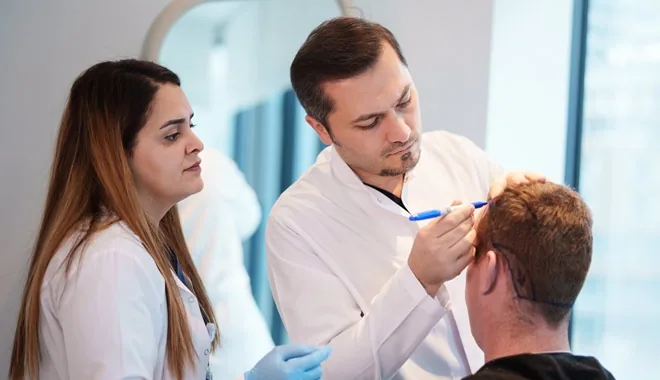
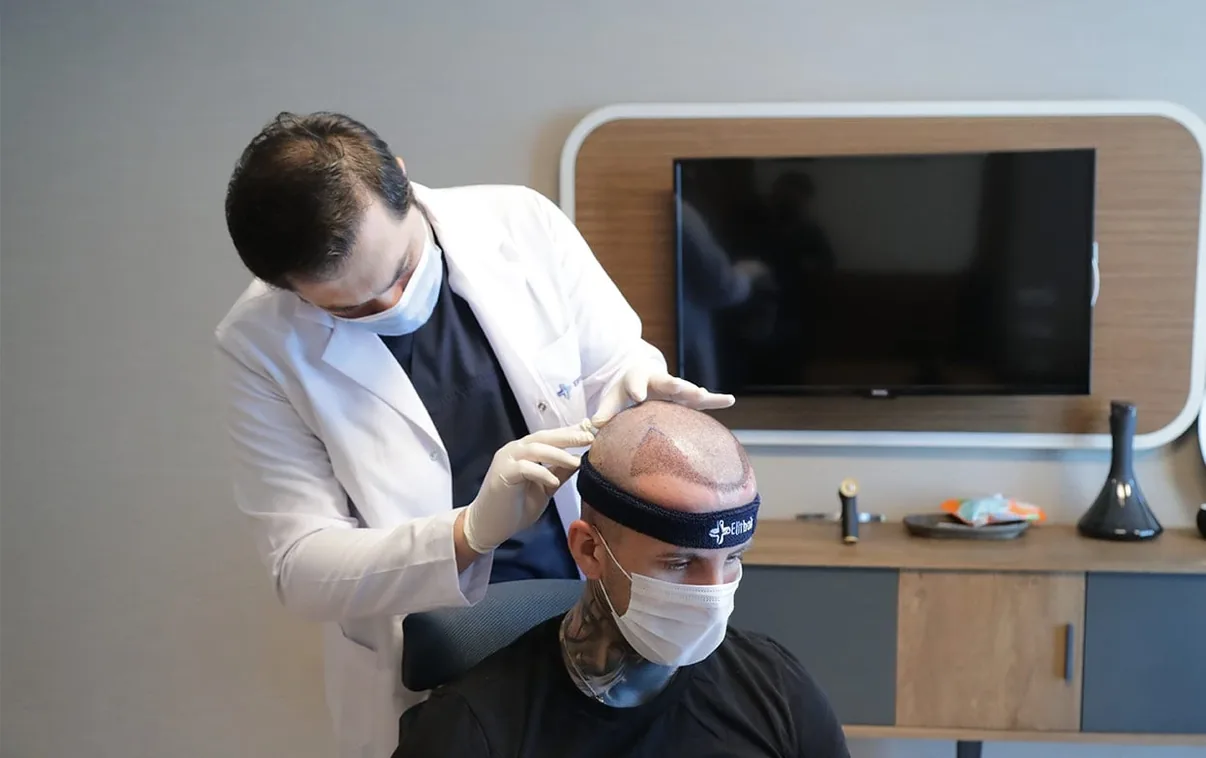
You arrange the treatment date with your hair transplant adviser after the initial hair analysis and booking process.
Many providers describe the risks simply as "rare" and the procedure as "minimally invasive", without further explanation. Documented rates offer more useful information for your decision by showing what you can actually expect.
A review of complications in FUE hair transplantation ("Complications in follicular unit excision hair transplantation", Romera de Blas et al., Frontiers in Medicine 2026) combined the available case series and found an overall complication rate of 1.2 to 4.7 per cent (Liu et al. 2025). The vast majority of complications were mild and resolved on their own.
A retrospective study of 1,030 FUE procedures (Aksoz et al.) reported a slightly higher rate of notable complications, at 9.9 per cent, although just under half of the affected patients had only mild symptoms.
The difference between these figures reflects how complications were counted: Aksoz included swelling and itching, while older studies mainly documented more serious cases. Rates for individual complications therefore tell you more than an overall figure alone.
Swelling is the most common complication and resolves after a week. Patients often worry most about shock loss, although it is the least harmful complication listed here. It may occur, but not every patient experiences it (Okochi et al. 2024). If it does, only the visible hair shaft falls out, while the root remains in the scalp and produces new hair.
These risks make surgical protocols, hygiene and medical supervision essential. We steam-sterilise all instruments using the Harvard autoclave protocol in four US-certified units. Compliance with these procedures is reviewed during the Ministry of Health's unannounced inspections once or twice a month.
| What can occur | How often | When |
|---|---|---|
| Swelling around the forehead and eyes | 40 to 50 per cent | Begins on days 1 to 2, peaks on days 2 to 3 and resolves by days 5 to 7 |
| Folliculitis, meaning inflamed hair follicles | Around 12% | Often appears within the first 1 to 4 weeks |
| Shock loss: temporary shedding of the transplanted hair | approx. 3.7% (Okochi 2024) | In the first few weeks after treatment; it can occur, but not every patient experiences it |
| Infection | under 1 per cent | usually as superficial folliculitis |
Visible healing is largely complete after two weeks. Results at the front of the scalp develop over twelve months, while the crown can take fifteen to eighteen months. Our doctors monitor your progress for a full year.
During recovery after a hair transplant, redness fades after two weeks to three months. You can resume light exercise after two weeks, moderate exercise after four weeks and strength training after six weeks. Protect your scalp from direct sunlight for the first 14 days with the hat provided by the clinic, and use the supplied care kit for the first ten days.
Aftercare continues for 12 months through the Elithair App. You upload photos regularly for our medical team to review, and push notifications remind you when you can resume each activity.
Transplanted hair from the donor area at the back and sides of the head remains permanently because it is resistant to dihydrotestosterone.
Crusting, redness and swelling can occur; light desk work may be possible from day 2 or 3, depending on your role and recovery.
On days 10 and 11, the crusts are gently loosened with the lotion, and from day 12 you can resume washing your hair normally with shampoo.
Shock loss: the transplanted hair shafts may fall out temporarily, but the roots remain intact. Not every patient experiences this shedding.
New growth begins by this stage, with approximately 10% more growth each month thereafter.
Around 40% of the result is visible, but it is still developing.
At the front of the scalp, the result is in place after 10 to 12 months; at the crown, it takes 15 to 18 months.
Graft countThe number of grafts you need depends on the area being treated and the density you want to achieve.
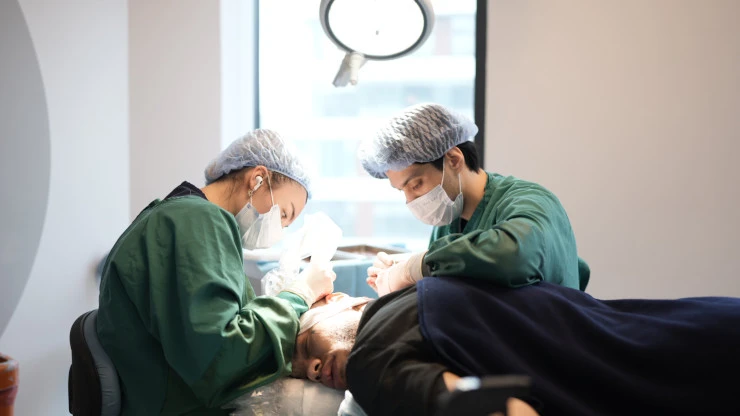
More grafts do not automatically produce a better result: your doctor carefully limits extraction to maintain density in the donor area and keep signs of extraction inconspicuous while preserving enough reserves for future procedures (Okochi et al. 2020). Your free hair analysis determines the ideal graft count for you.
Elithair offers fixed package prices based on graft tiers. Your free hair analysis provides a non-binding initial estimate before you travel. The NHS states that hair transplantation is not available on the NHS because it is cosmetic surgery.
| Grafts | Your price | In the UK | Your saving |
|---|---|---|---|
| Up to 2,000 grafts | £2,849 | £5,100 | about 44% |
| 2,500 grafts | £2,949 | £6,400 | about 54% |
| 3,000 grafts | £3,049 | £7,600 | about 60% |
| 3,500 grafts | £3,149 | £8,900 | about 65% |
| 4,000 grafts | £3,249 | £10,100 | about 68% |
| 4,500 grafts | £3,349 | £11,400 | about 71% |
| from 5,000 grafts | £3,449 | £12,700 | about 73% |
All-Inclusive PackageThe package includes the listed treatment services. Only your flight costs extra; Zero Shave FUE and Manual FUE are available as options at an extra charge.

 Price Comparison
The price difference reflects lower operating, rental and staffing costs in Istanbul rather than differences in quality.
Look closely at unusually low prices from other providers in Istanbul. Price differences often result from:
Our fair pricing is based on the highly efficient organisation of our own specialist clinic, without compromising your medical safety.
Treatment areasThe area affected has a greater influence on treatment planning than the technique used.
The most commonly treated patterns are a receding hairline at the temples, thinning at the crown and extensive hair loss across the forehead and the top of the head.
Hair at the crown grows in a different pattern and requires different implantation angles from hair at the hairline, where each individual hair is noticeable (Devroye 2013).
If an area has diffuse thinning rather than complete hair loss, the aim is to increase density among the existing hair. New grafts must be placed between the existing roots without damaging them.
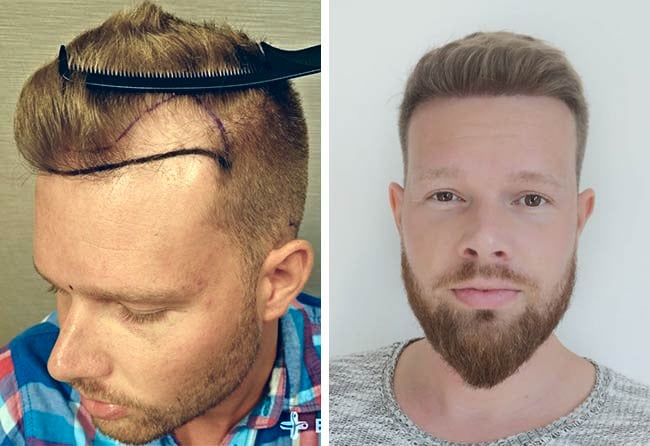
2,800 grafts
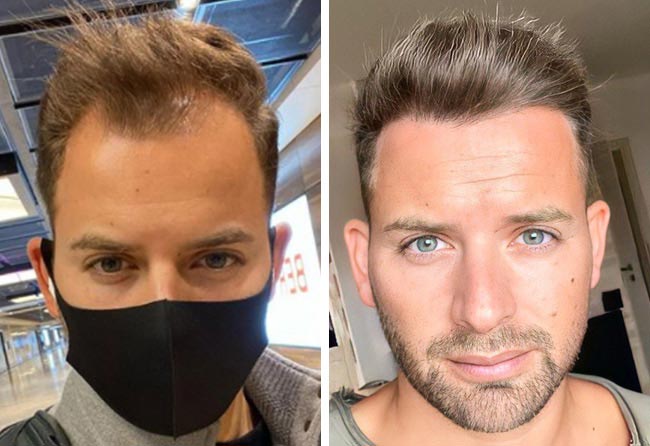
4,200 grafts
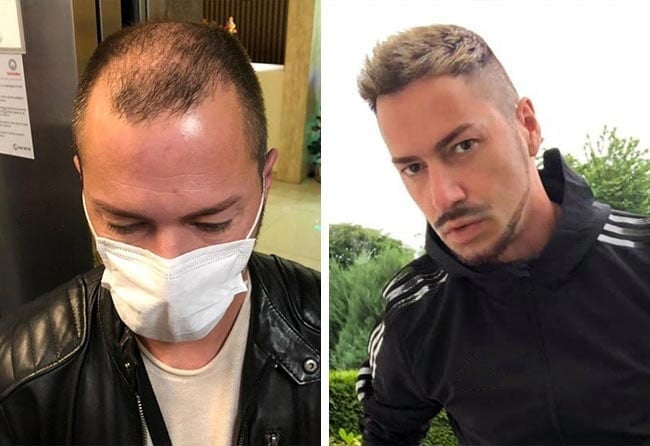
4,750 grafts
4,700 grafts
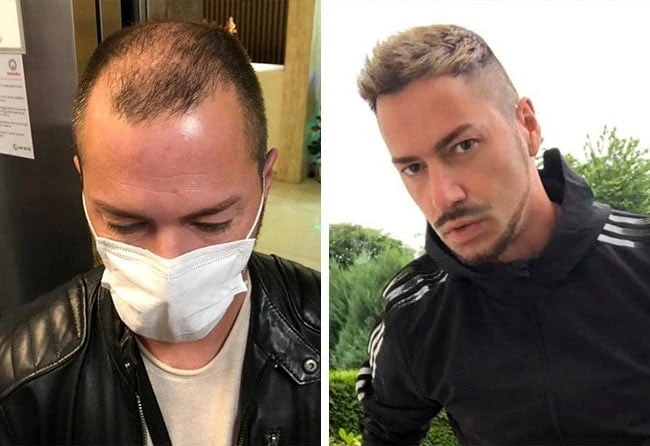
5,200 grafts
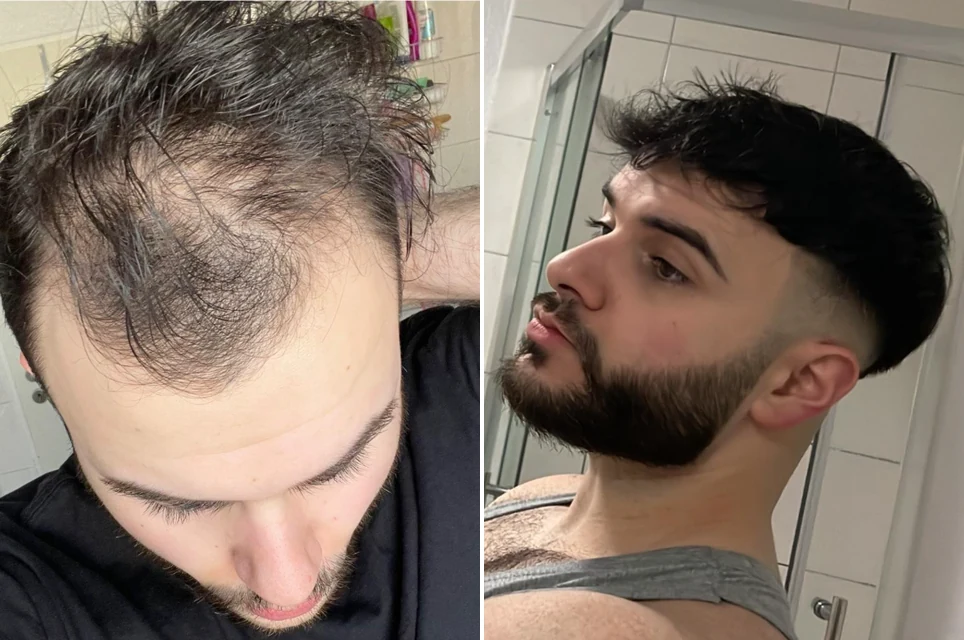
4,700 grafts
In our hair transplant before-and-after gallery, all results are grouped by treatment area. Each case includes the number of grafts and the time since treatment, so you can quickly find patients whose initial hair loss was similar to yours.
Most of our patients take more than a year from first considering treatment to making a final decision, losing valuable time while their hair loss continues to progress.
The earlier your treatment is planned, the more scope your doctor has to create a dense, natural-looking hairline. No one can guarantee that a hair transplant will still be possible in a year.
Andre O. – 5,200 grafts
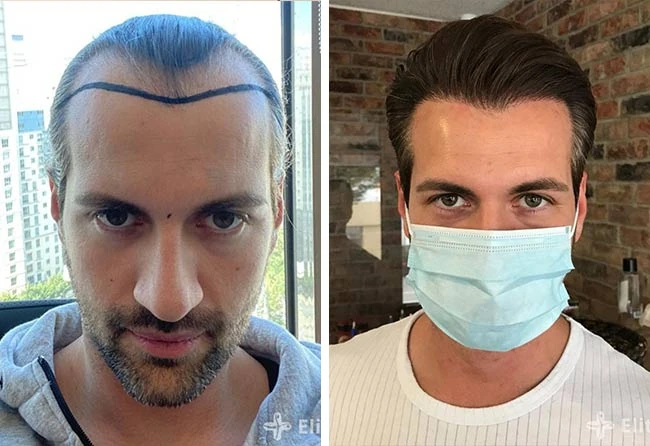
Cagatay T. – 4,000 grafts
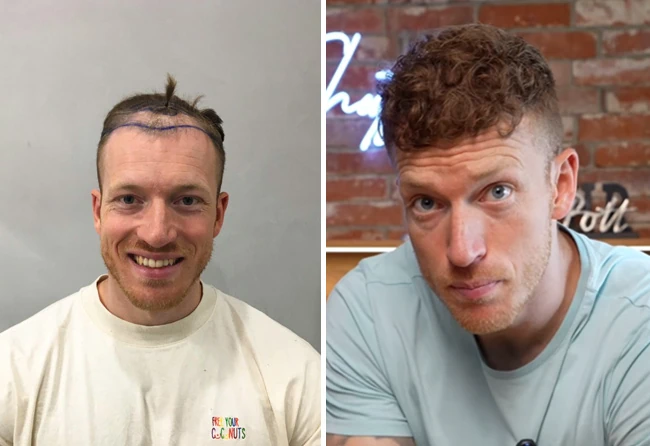
Schmale Schulter - 4,200 grafts
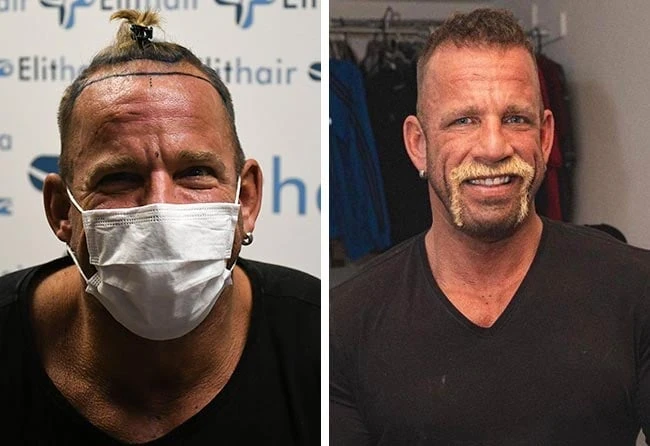
Hollywood Matze - 2,900 grafts
Full results at the front of the scalp take a year to develop; the crown can take fifteen to eighteen months. Every month you wait delays your result by the same amount of time.
Take the first step now: our free hair analysis shows you what is possible for you. If you are a suitable candidate, we plan your treatment together. If treatment is not medically appropriate, we will be just as honest about that.

More than 150,000 treatments
More than 150,000 treatments have given our team extensive experience. Our doctors have successfully managed nearly every type of case many times, allowing us to give you a precise, realistic assessment of the results you can expect.
Google4.9over 11,000 reviews Trustpilot4.7over 3,700 reviews
 ProvenExpert4.84over 2,500 reviews
 ausgezeichnet.org4.92over 570 reviews
Our patient reviews reflect that trust: a Google rating of 4.9 with more than 11,000 reviews, a Trustpilot rating of 4.7 and ratings of 4.84 on ProvenExpert and 4.92 on ausgezeichnet.org.
These reviews come from patients who completed the entire twelve-month process, so they reflect real, long-term results.
Elithair has also been covered by Forbes and German outlets including ARD, SAT.1, WELT and t-online.
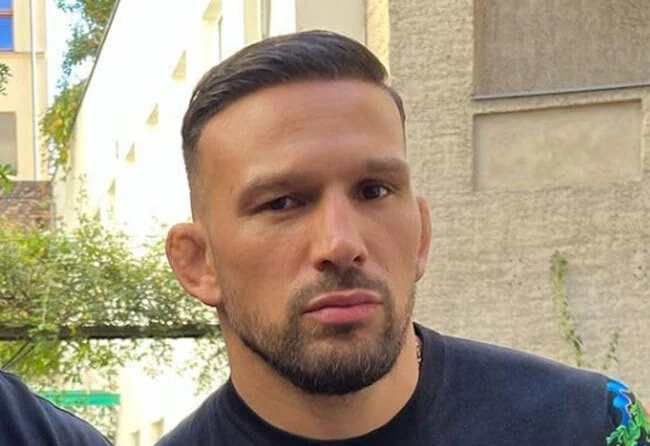
“Everything was extremely professional and extremely hygienic. I'm just really, really happy that I decided to do it.”
Max Coga · Aged 34 · 3,250 grafts
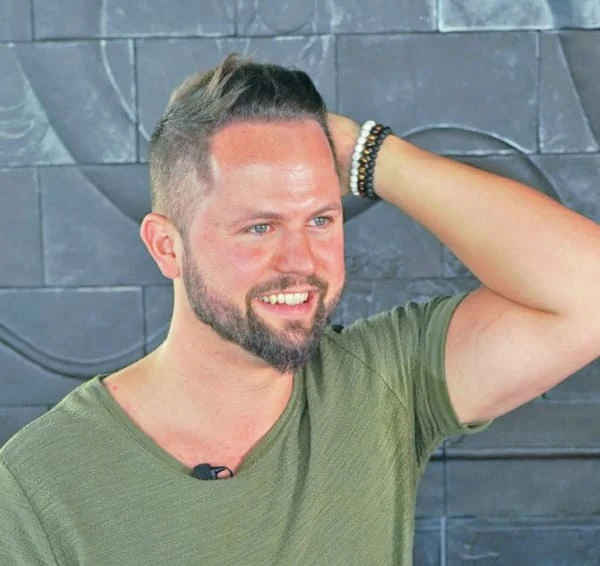
"I can't put into words how happy I am with the result. Definitely the best decision of my life."
Nico G. · Aged 27 · 2,800 grafts
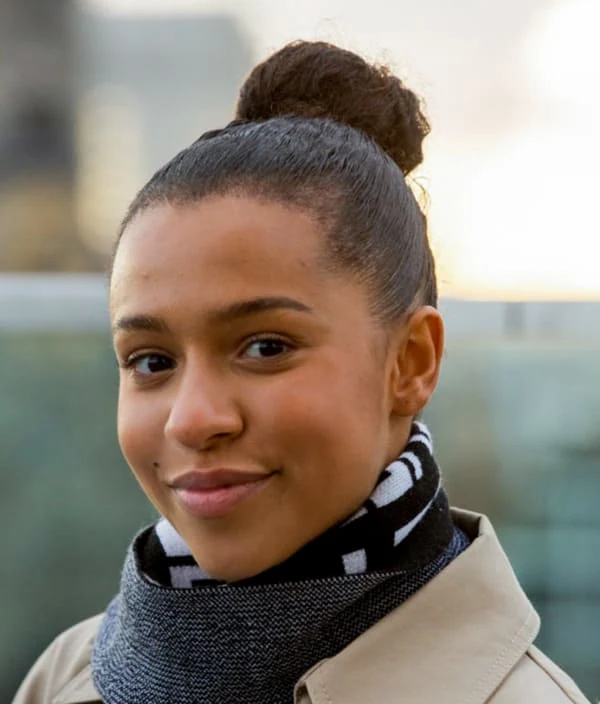
“I'm just happy I had a hair transplant… and yes… I'm just happy – that's what matters.”
Melissa Z. · Aged 22 · 2,700 grafts
Medical treatment starts with a diagnosis before you decide how to proceed. Your next step with us is a thorough assessment of your hair loss by experienced doctors, rather than a sales conversation.
The analysis of your photos provides an initial estimate of the available donor hair and the number of grafts you may need to improve coverage in thinning areas.
You receive a clear, written assessment of the density and hairline you can achieve, giving you the information you need to make your decision.
If our doctors determine that treatment is not medically possible for you, we will explain this clearly and openly before proceeding with any further planning.
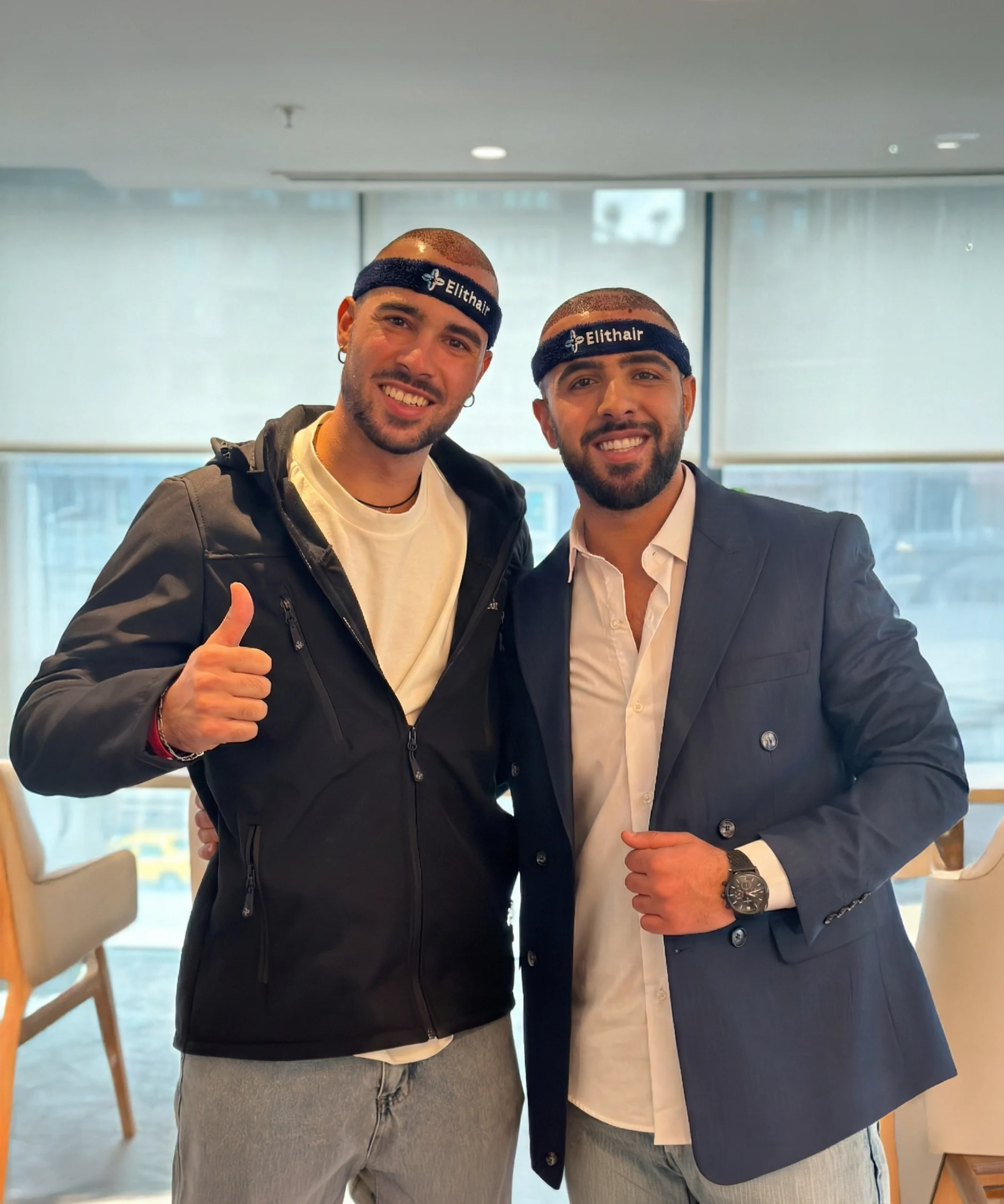
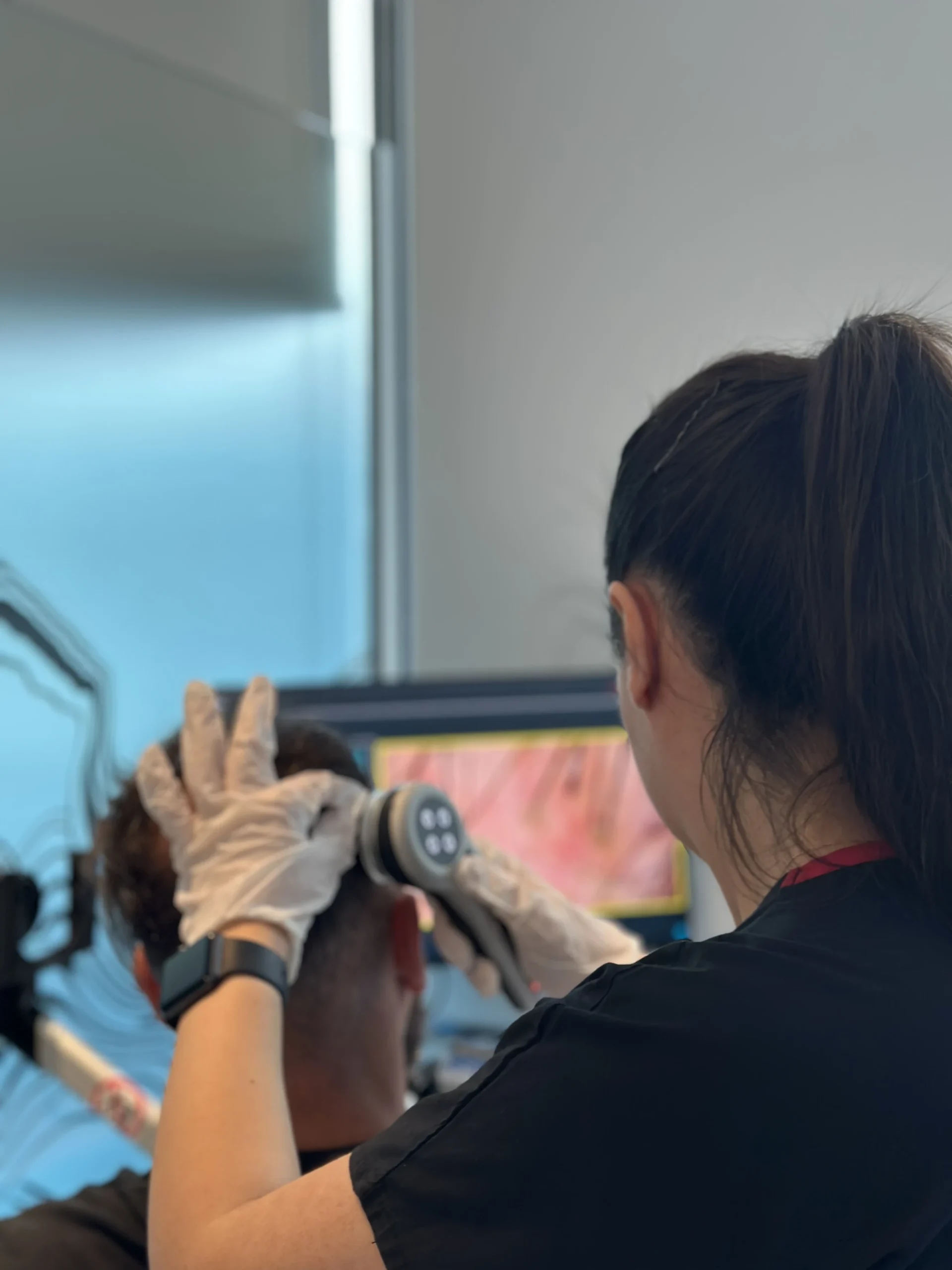
A hair transplant moves your own follicles from the donor area at the back of your head to thinning or bald areas. With FUE, follicular units are extracted individually using a fine hollow punch; at Elithair, they are then implanted using DHI with the CHOI Implanter Pen. A graft is a natural group of hair follicles containing one to four hairs, about 2.2 on average.
A retrospective study of 158 men with androgenetic alopecia (Wang, Chen, Yang et al., BMC Surgery 2024) tracked follicle survival for twelve months after FUE extraction. Survival exceeded 90 per cent, and more than 85 per cent of patients had survival rates above 95 per cent. Patient satisfaction exceeded 98 per cent, while the complication rate was under 6 per cent. These figures reflect carefully planned and performed procedures and do not apply to every clinic. Insertion depth is a decisive factor: we measure it for you with the Pre-Test System and incorporate it into your personalised treatment plan.
Hair transplantation is an established, minimally invasive procedure, supported by the available data. A 2026 review (Romera de Blas et al.) reports overall complication rates of 1.2 to 4.7 per cent, with most complications mild and resolving on their own (Liu et al. 2025). Forehead swelling is the most common, affecting 40 to 50 per cent of patients and resolving after five to seven days. Infection rates are under 1 per cent.
The procedure is performed under local anaesthesia, without general anaesthesia. Sleep-Deep sedation lets you sleep through the most uncomfortable part: the 20 to 30 local anaesthetic injections. A specialist anaesthetist employed by the clinic puts you into a light sleep for about 15 minutes and monitors you throughout. You are then awake for the rest of the operation, with 0% pain.
Transplanted hairs remain permanently because they retain the donor hair's resistance to hair loss. We provide a 20-year written guarantee on transplanted hair when you follow the aftercare instructions. Your surrounding, untreated hair can still change during that time, so it makes sense to discuss medication alongside your transplant with your doctor.
A hair transplant is not suitable if your hair loss is progressing rapidly, your donor area is too sparse or your hair loss has another underlying cause. Active scarring alopecia also rules out treatment for the time being because the same process can destroy transplanted follicles. That is why we perform the free hair analysis before scheduling treatment and decline around 40 per cent of enquiries.
Elithair's current UK packages range from £2,849 for up to 2,000 grafts to £3,449 for 5,000+ grafts. Only your flight costs extra; Zero Shave FUE and Manual FUE are available as options at an extra charge. The UK comparison figures used on this page range from £5,100 to £12,700 by graft tier, but actual clinic prices and what is included vary.
That depends on the affected area. The hairline and receding temples usually need 2,000 to 3,500 grafts; the whole top of the head needs 2,500 to 4,500; the crown needs 2,000 to 4,500; and extensive hair loss, up to complete baldness, needs 5,000 to 6,000, depending on the available donor hair.
In the first few weeks after treatment, the transplanted hair may fall out temporarily (shock loss), although not every patient experiences this and the roots remain intact. New growth begins by the fourth month at the latest, and around 40% of the result is visible after six months. The result at the front of the scalp is in place after 10 to 12 months, and at the crown after 15 to 18 months.
You can usually return to desk work on days 2 to 3. The scabs have come off by around day 10, and redness fades after two weeks to three months. You can resume heavy physical work, such as construction or kitchen work, and light exercise after two weeks, moderate exercise after four weeks and strength training after six weeks. Your stay in Istanbul lasts four days.
FUE and DHI describe different stages of treatment rather than competing methods. FUE refers to the extraction of individual follicular units, while DHI refers to implantation using the CHOI Implanter Pen, which creates the opening for each graft and places it in one step, controlling its angle and depth. The direction is planned to suit the natural hair growth pattern. At Elithair, FUE-based extraction and DHI implantation are both included in the standard package.


