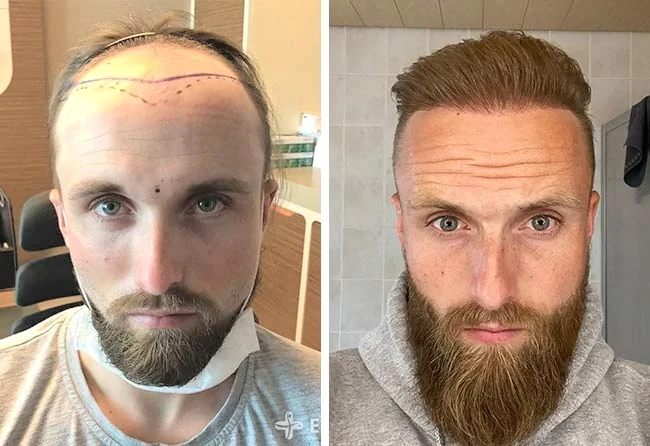
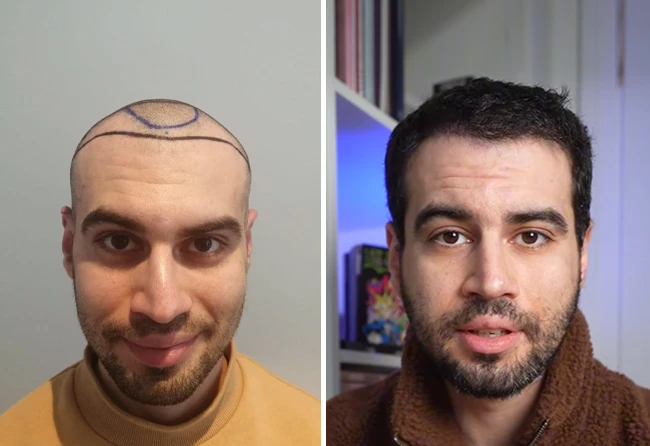
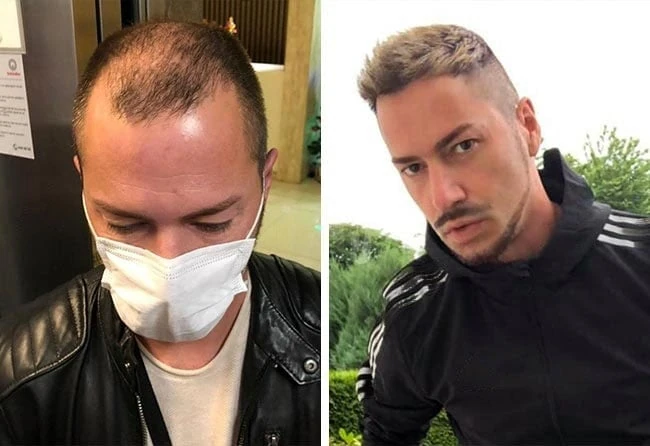
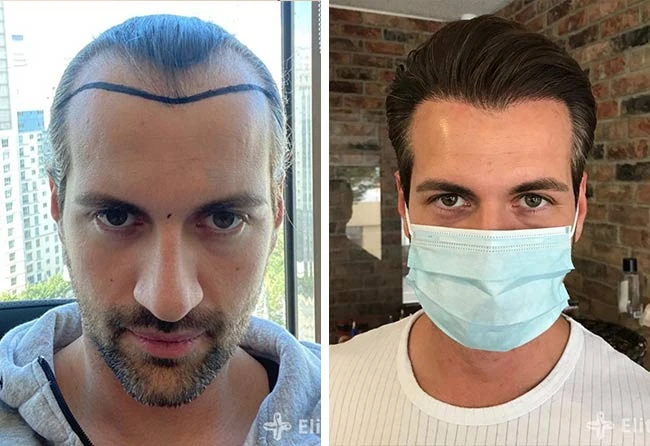
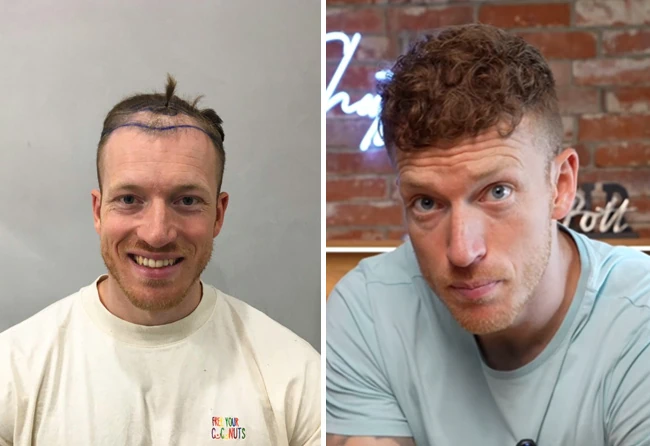
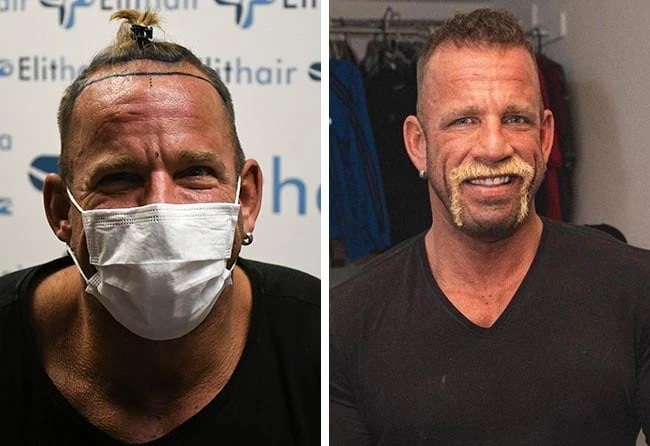
Before
After
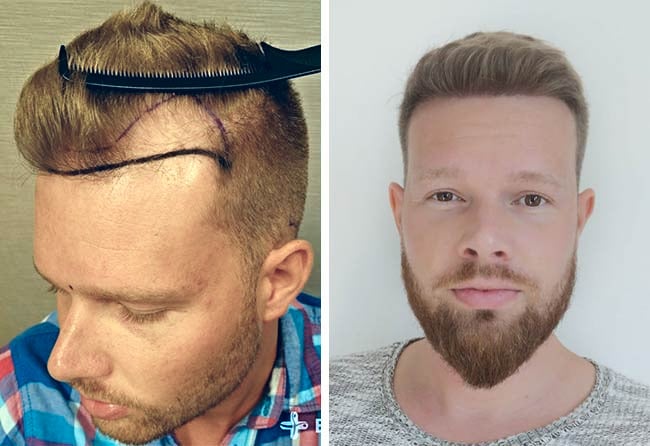
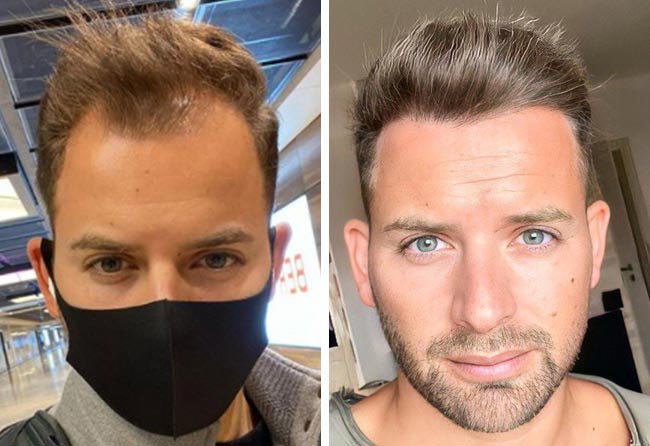
Frederik G. – 4,700 grafts

4.9 - 11,000+ Reviews on Google

150,000+ Happy Patients Worldwide
free, no obligation
 4.9 out of 5 stars on Google
More than 150,000 treatments
at our specialist clinic, certified to ISO 9001:2015
by TÜV Thüringen.

A hair transplant fills in bald areas with your own hair for permanent, natural-looking results.
Individual follicles are taken from a donor area and precisely placed in thinning areas to create visible, lasting results.
Your hair transplant is a minimally invasive outpatient procedure performed at our clinic in Istanbul. We harvest the grafts with FUE and always implant them with DHI. All-inclusive prices start at $3,899.
The procedure treats androgenetic alopecia (AGA), the most common form of hair loss in men and women, and restores natural-looking fullness. With Sleep-Deep sedation, you experience 0% pain during treatment. Each graft is placed individually at the right angle, giving you a natural-looking result.
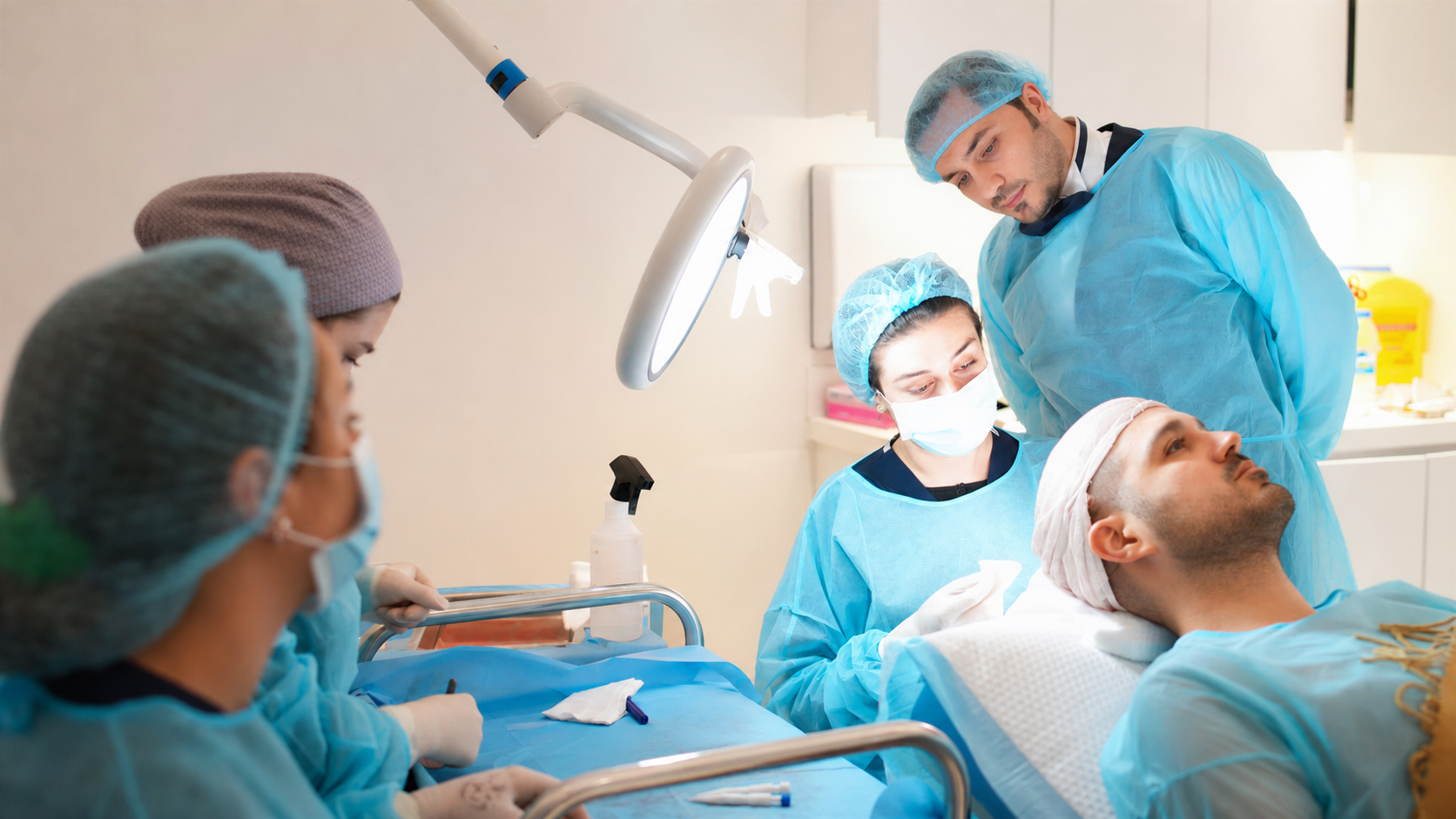
FUE extraction, DHI implantation with the CHOI Implanter Pen
Learn more3 nights in Istanbul: arrival and the Pre-Test System for your personalized treatment plan on day one, hairline planning and treatment on day two, aftercare and a follow-up check with your doctor on day three, departure on day 4
Learn moreOne treatment day, about 5 to 8 hours depending on how many grafts are transplanted
Learn moreLocal anesthesia with Sleep-Deep sedation; no general anesthesia
Learn moreAround months 3 to 4
Learn moreIn the front after 10 to 12 months, at the crown after 15 to 18 months
Learn moreAll-inclusive price based on graft count, $3,899 to $4,499; everything included except your flight; Zero Shave FUE and Manual FUE optional at an extra cost
Learn moreNo. US insurers treat hereditary hair loss as cosmetic, not as a medical condition
Learn moreStable hair loss and enough donor hair. We decline around 40% of inquiries after the hair analysis
Learn moreOur patients' results are the best proof of what our hair transplants deliver.
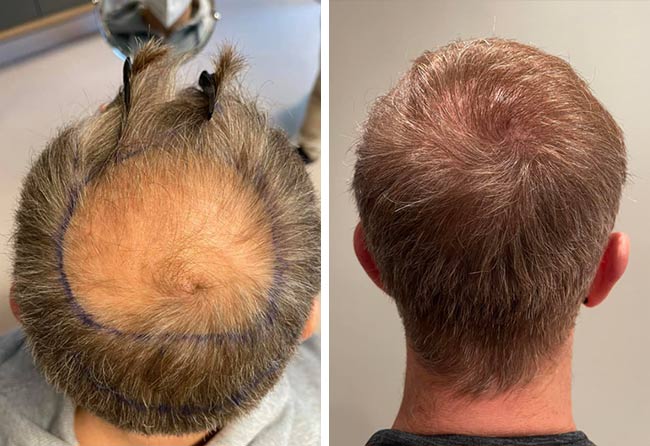
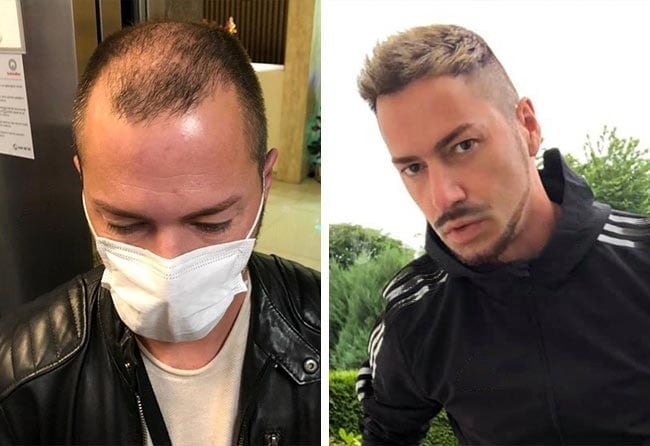
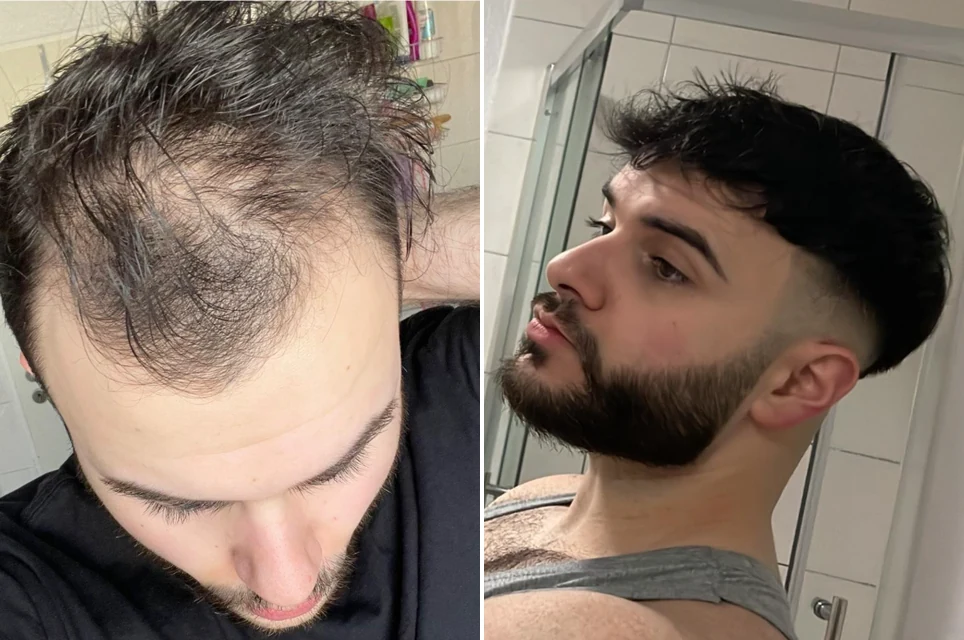
Compare patients' before-and-after photos to see how much a personalized treatment plan can change their appearance.
Frederik G. – 4,700 grafts
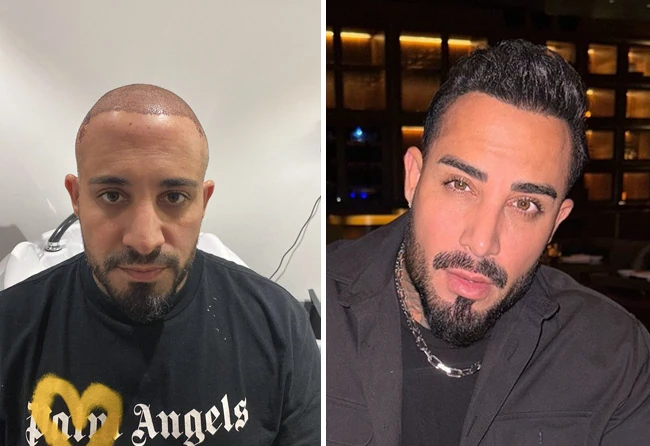
Bartmann - 3,800 grafts
Spybas - 3,200 grafts
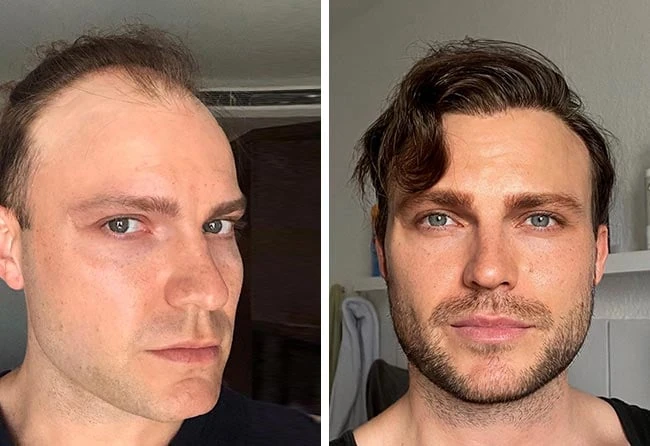
Edgars N. – 3,700 grafts
A hair transplant addresses the effects of hair loss, not the underlying cause. That is why we first determine what is causing your hair loss.
In most cases, the cause is hereditary hair loss: follicles at the hairline and on top of the head are genetically sensitive to dihydrotestosterone (Lolli et al. 2017).
According to the US National Library of Medicine, hereditary hair loss affects around 50 million men and 30 million women in the United States. A hair transplant is designed to treat this form of hair loss because follicles in the donor area generally have greater resistance to androgen-related miniaturization.
Hair loss can also be caused by an illness, a hormonal disorder, or a deficiency. In those cases, a transplant is not the right first step because the underlying cause remains active. That is why the Pre-Test System before your treatment includes a blood test for hair loss, and the results are used to create your personalized treatment plan. This way, you know in advance if something else needs to be treated first.


















 Four criteria
A hair transplant is not appropriate for every type of hair loss. The review "Hair transplantation: Basic overview" (Jimenez et al., Journal of the American Academy of Dermatology 2021) identifies assessment of the donor area as a key factor. The medical literature also outlines other criteria for determining whether you are a good candidate.
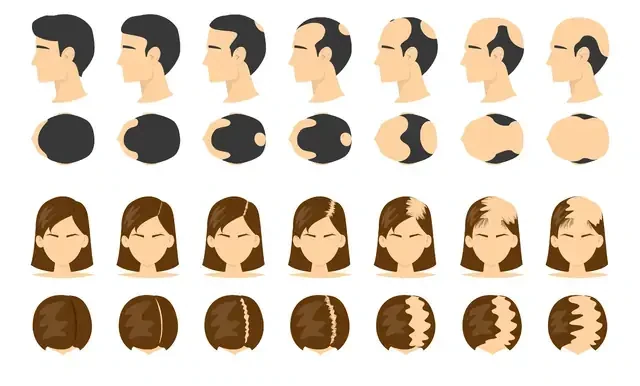
The first is a clear, stable pattern: Norwood III to V in men, Ludwig II to III in women, with at least 50% thinning in one or more areas.
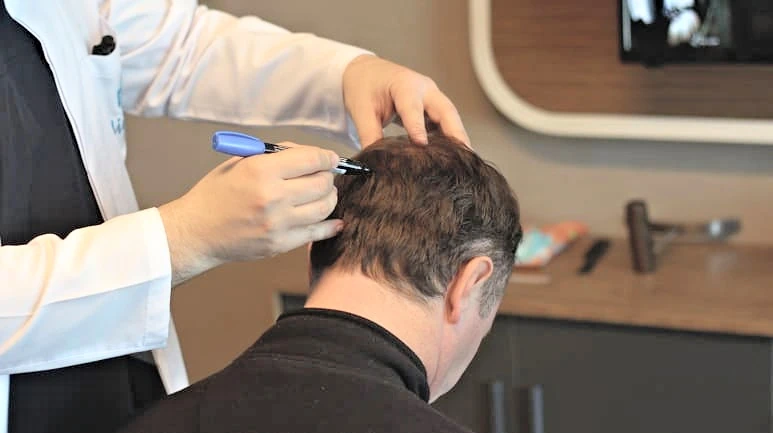
The second requirement is enough donor hair to supply the grafts. A density of 65 to 85 follicular units per square centimeter provides a good foundation. You also need a healthy scalp, donor hair of adequate quality, and realistic expectations about density and the timeline for results.
We do not use a strict age cutoff; we assess each case individually. The literature advises against using limited donor hair reserves too early when hair loss is still progressing rapidly (Unger et al. 2013).
At the same time, the ISHRS Practice Census 2025 shows how young many patients are: 95% of first-time patients are between 20 and 35 years old. Your assessment, not your age, determines whether your hair loss is stable enough.
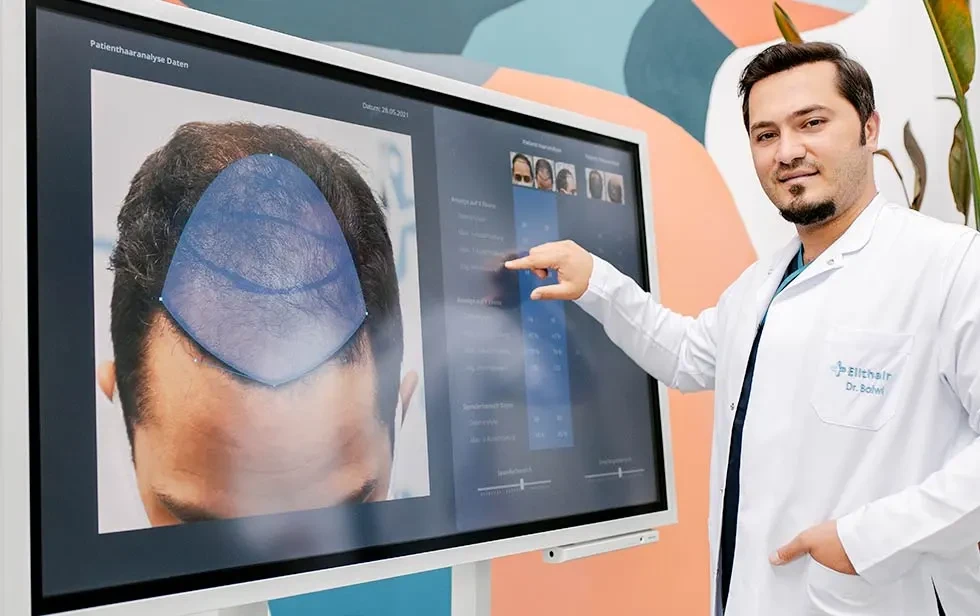
As part of our commitment to responsible medical care, we decline around 40% of inquiries. If the free hair analysis shows that you do not have enough donor hair or that your hair loss is progressing too quickly, we explain this openly during your consultation. This helps us prevent poor results before treatment begins.
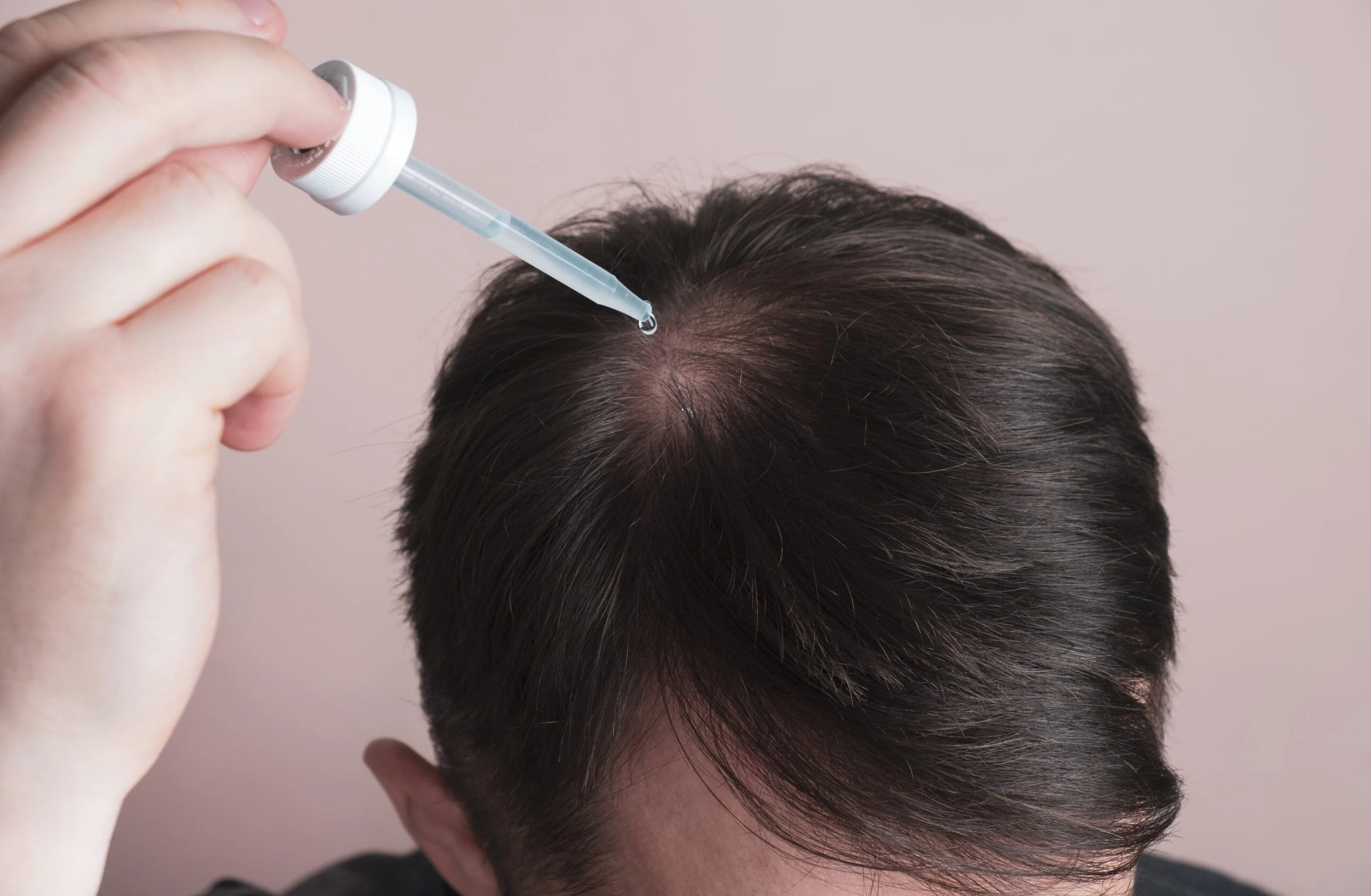
Surgery and medication can work together, a benefit that is often overlooked.
The European S3 guideline on androgenetic alopecia (Kanti et al. 2018) lists medications such as finasteride and minoxidil as first-line treatments and hair transplantation as the surgical option.
These approaches are compatible because they work in different ways: transplanted follicles generally retain greater resistance to androgen-related miniaturization, while the surrounding hair does not. Our doctors will discuss whether medication alongside your transplant makes sense for you.
How treatment differs for women. Hair transplants for women require a different assessment. Hair loss usually appears as diffuse thinning along the part, and a receding hairline can also indicate scarring alopecia (Herskovitz et al. 2013).
An active form of scarring alopecia is a contraindication to surgery: the literature describes how inflammation also attacks transplanted follicles (StatPearls, Hair Transplantation, 2025) and how often this causes the procedure to fail.
A review of transplantation in scarring alopecia (Roga and Thomas, CosmoDerma 2021) reports graft survival of around 50 percent in scarred tissue, compared with over 90 percent in non-scarring alopecia. Surgery requires the condition to have remained inactive for one to two years. That is why a thorough evaluation of the cause of hair loss always comes first for women.
Special considerations for a beard transplant. A beard transplant requires a completely different approach from a scalp transplant. For a natural look, follicles must be placed at very shallow growth angles of 10 to 15 degrees. The final result depends on how much donor hair is available at the back of your head, where the strong follicles needed for the procedure are harvested.
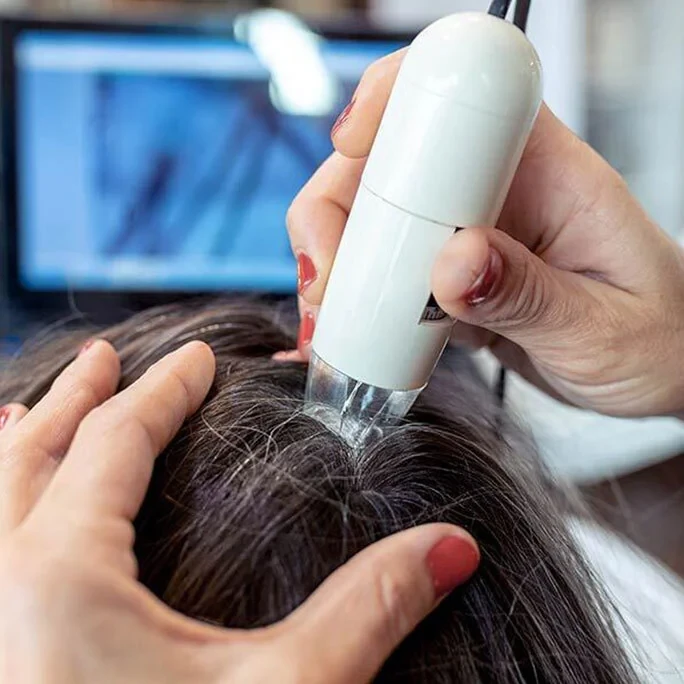 Treatment plan
Two carefully coordinated assessments shape your treatment, and both take place before the transplant begins.
The first assessment is your free hair analysis before you travel. Using the photos you send of your current hair, our medical team assesses your hair loss pattern and donor area density, estimates how many grafts you will need, and prepares a nonbinding cost estimate.
This establishes whether a hair transplant is medically appropriate for you and can deliver visibly fuller hair.
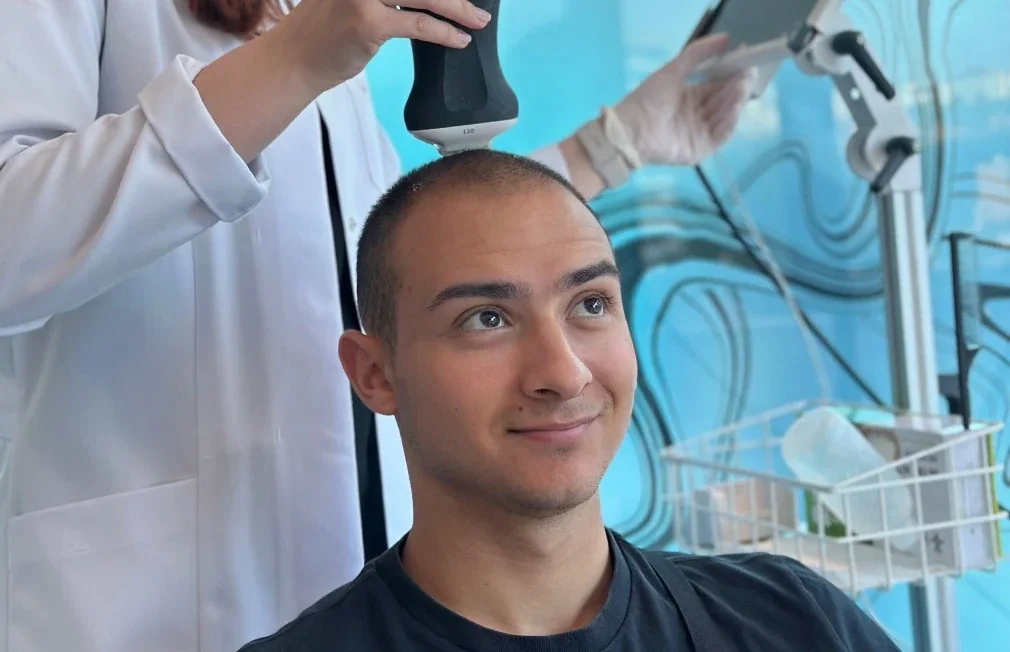
The second assessment is the six-step Pre-Test System, performed at our clinic in Istanbul on the day you arrive. It includes:
The results are used to create your personalized treatment plan.
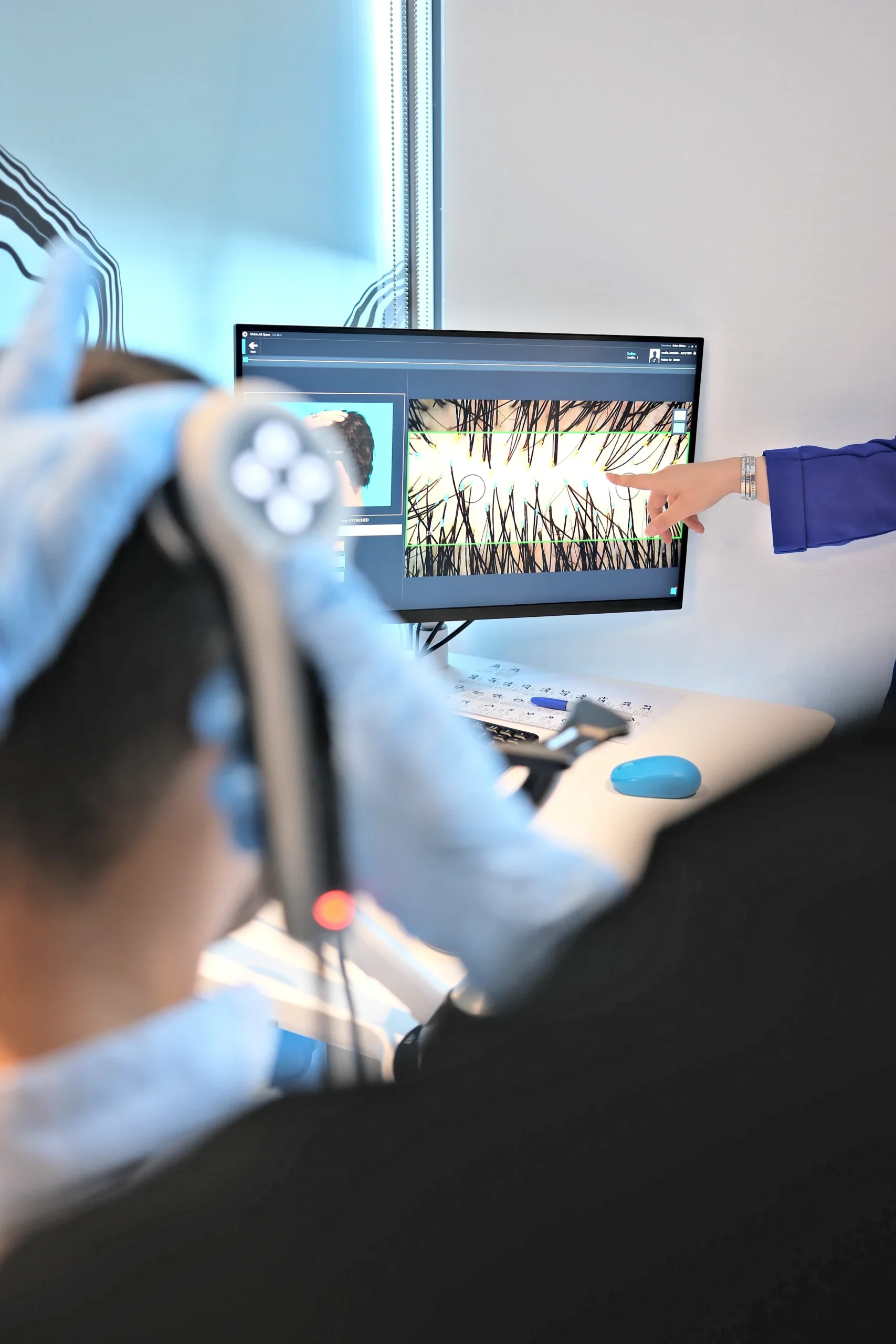
Each finding directly informs your treatment:
Together, these findings shape your personalized treatment plan. Even with the same graft count, two patients need different treatment adjustments because their tissue characteristics differ.
The patented NEO FUE® serum, developed under the direction of Dr. Abdulaziz Balwi, is also part of your package. If you are traveling from the US, you receive it at the clinic in Istanbul and apply it on day 14 and day 28 after the procedure.
TechniquesA hair transplant has two phases: harvesting follicles and implanting them. Although these steps are often presented as competing methods, they work together.
At Elithair, we use FUE as our standard technique for gently harvesting individual follicles from the donor area. We then use DHI to place the grafts directly in the recipient area at the correct growth angle, without a separate step to create channels.
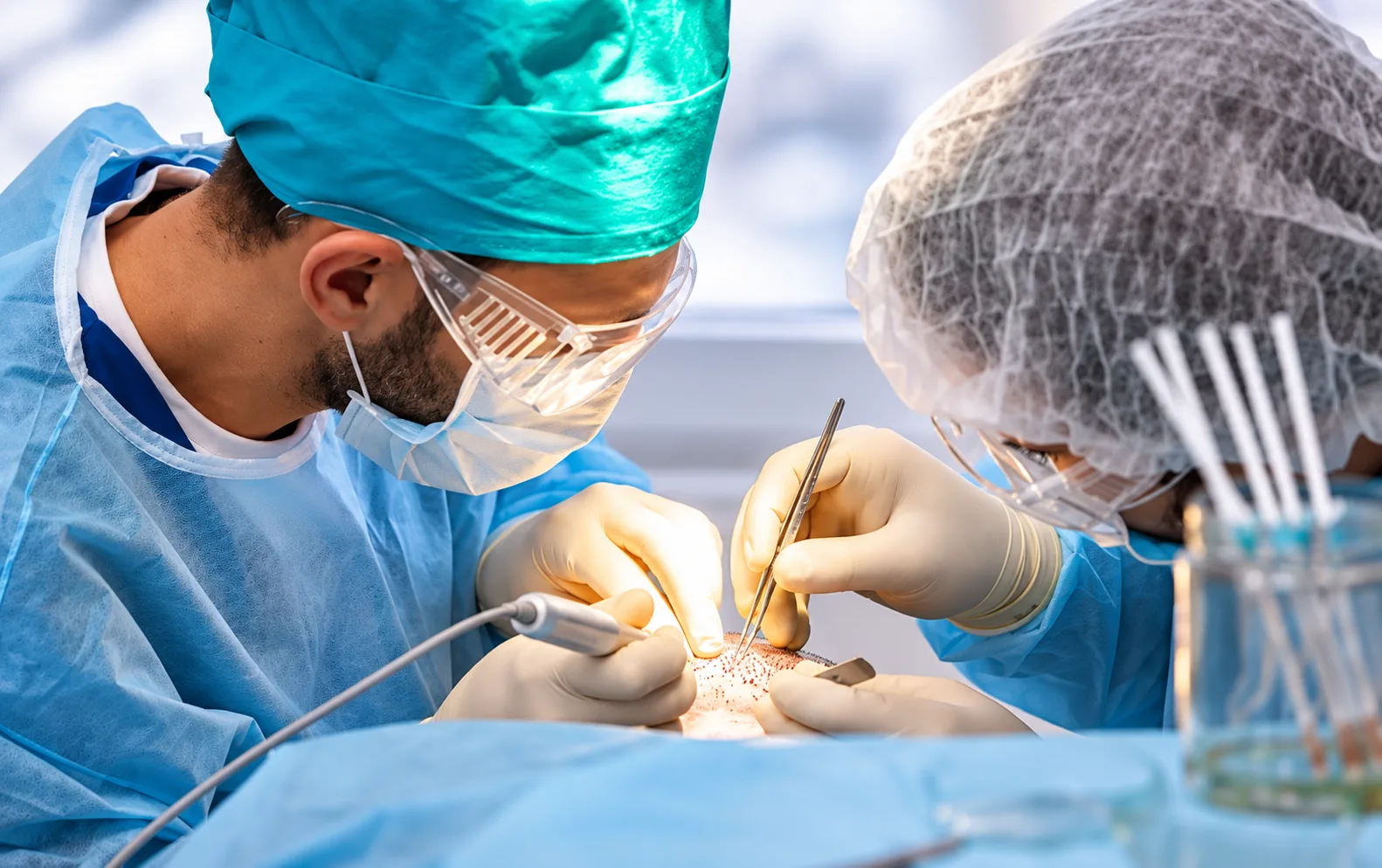
We use FUE to harvest follicles. According to ISHRS data, over 85 percent of procedures in men use this method. Its advantage over strip methods is that it leaves no scars in the donor area.
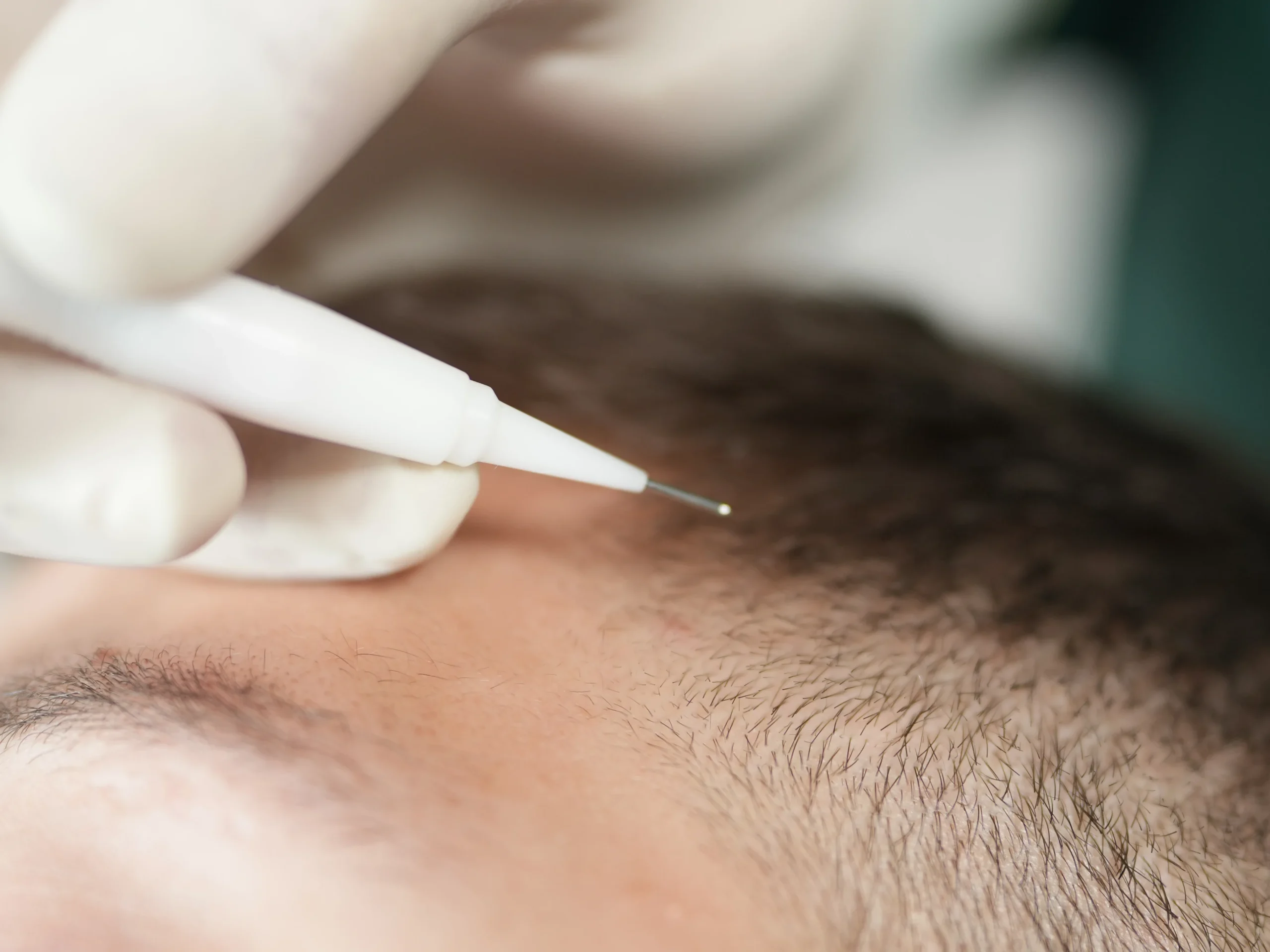
DHI implantation makes the key difference. The CHOI Implanter Pen opens the channel as the graft is placed, minimizing the time follicles spend outside the body.
We precisely set the growth angle (15 to 35 degrees at the hairline), depth, and direction of every graft so your hair looks completely natural. At Elithair, we use DHI exclusively for implantation, regardless of graft count.
OptionalFor a completely discreet procedure, DHI implantation can be combined with Zero Shave FUE at an extra cost: up to 3,500 grafts can be transplanted without shaving either the donor or recipient area.
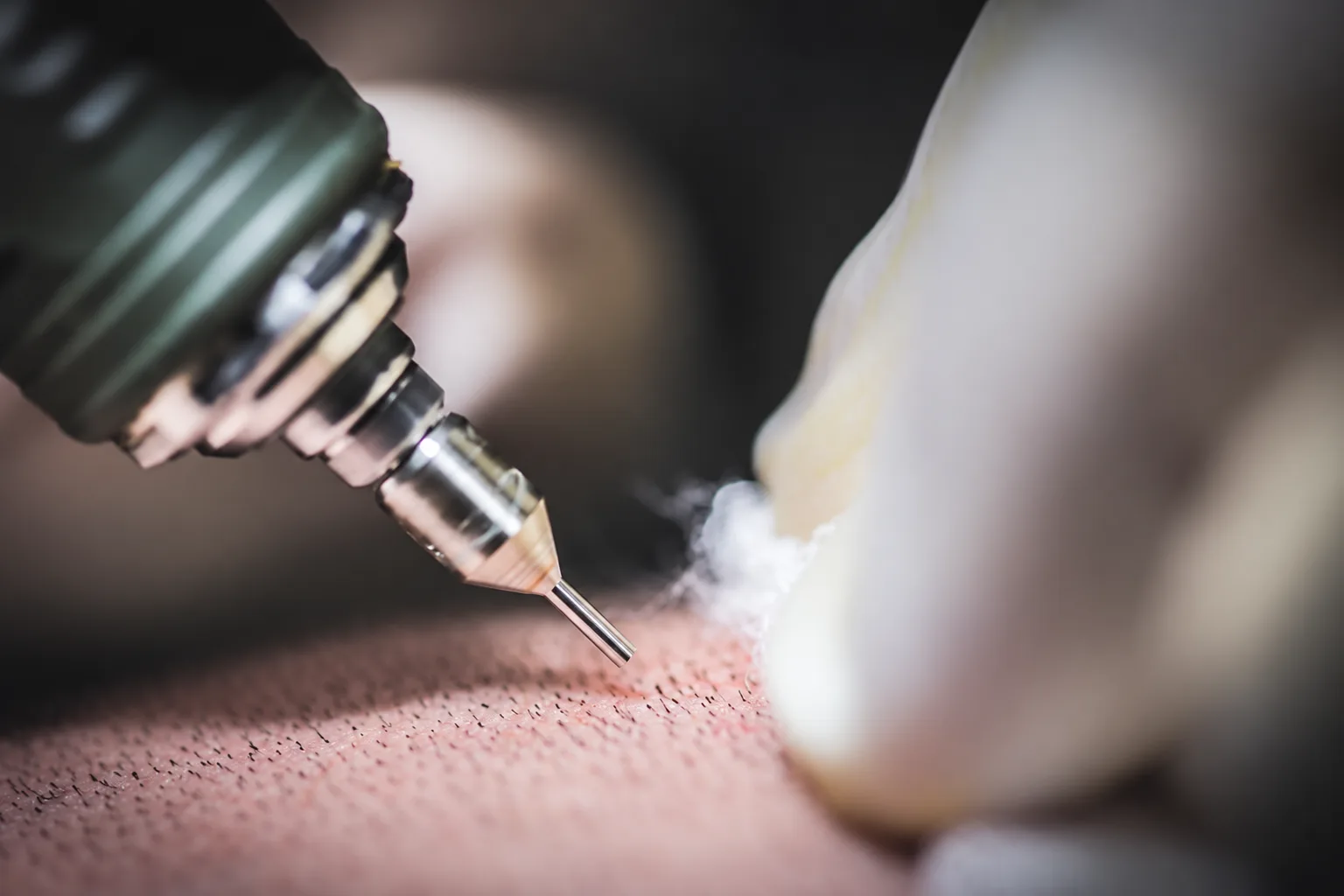
The extraction technique determines how dense your donor area looks after the transplant. Micromotor speed is a key factor: higher speeds make extraction faster but put stress on the surrounding tissue. While the industry uses speeds of around 4,000 revolutions, we use much lower speeds.
Our devices are limited to 750 revolutions, and we harvest at just 100 to 200 revolutions per minute. This delicate technique takes years of practice. At Elithair, only medical specialists with at least seven years of experience perform it.
OptionalFor the highest level of precision, we also offer Manual FUE at an extra cost. Each graft is carefully removed by hand, with its growth angle and the tissue structure taken into account. This keeps the donor area discreet while preserving valuable reserves for future procedures.
When comparing providers, ask what motor speed they use and whether they offer Manual FUE.
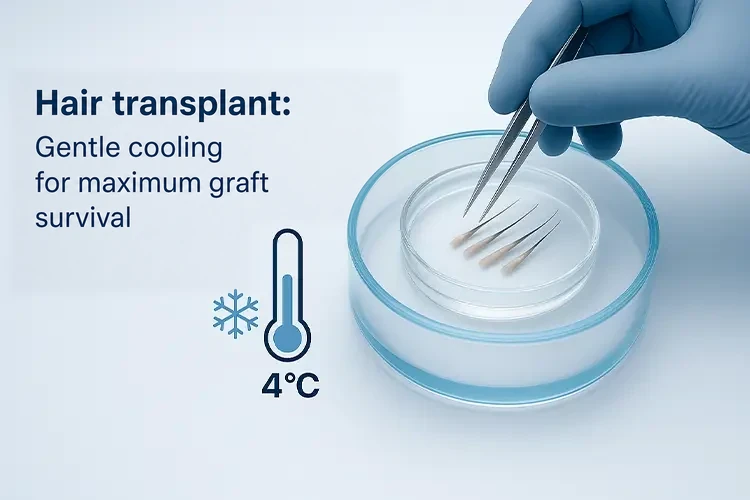
Once a follicle is removed, it needs continuous care until implantation because it no longer has a blood supply. To keep the cells viable, we store your grafts in a nutrient solution that prevents them from drying out, then implant them during the same session.
The precise insertion depth plays a major role in graft survival. Placing grafts too superficially can reduce survival. By matching the depth to your tissue structure, our medical specialists achieve approximately 98 percent survival. We do not estimate this depth: we measure it during the Pre-Test System using ultrasound and blood flow analysis, then specify it in your personalized treatment plan.
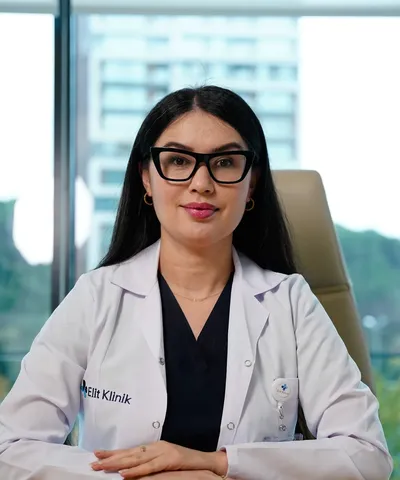
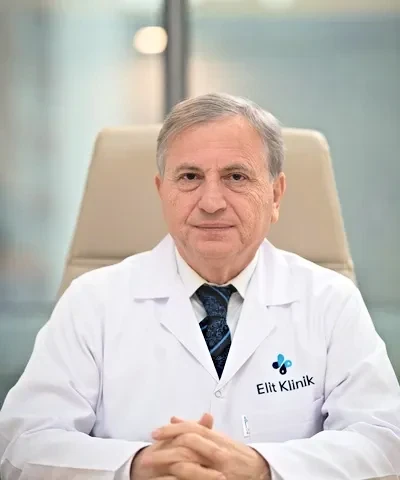
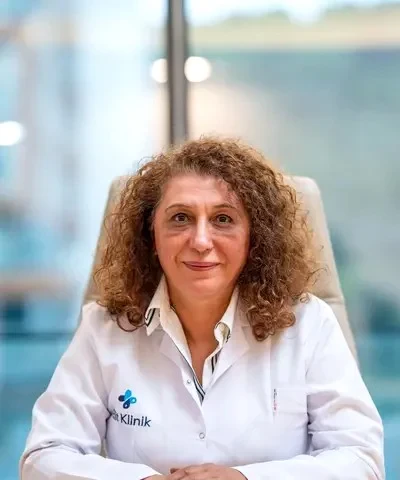
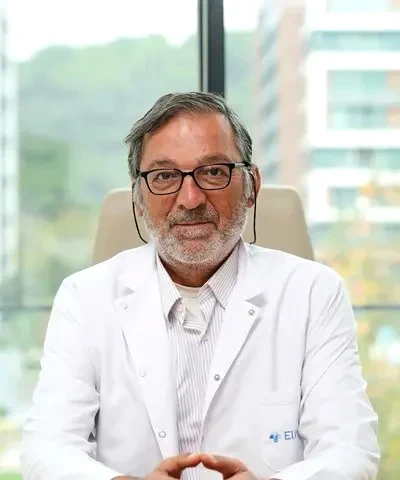
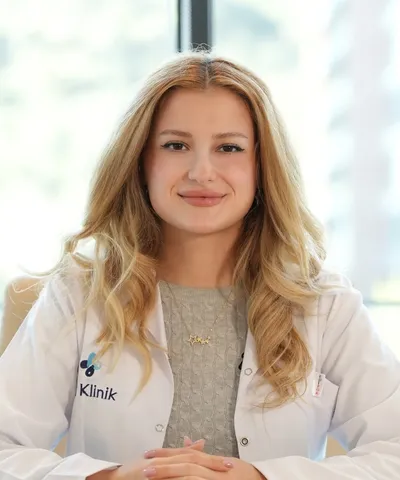
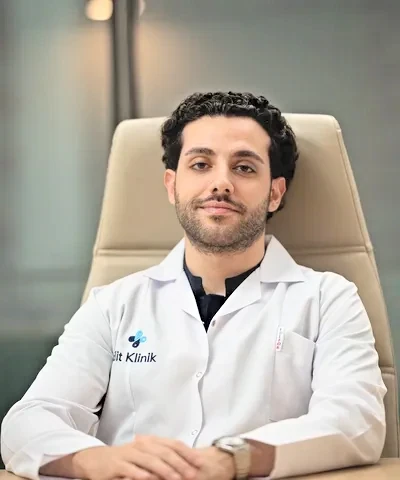
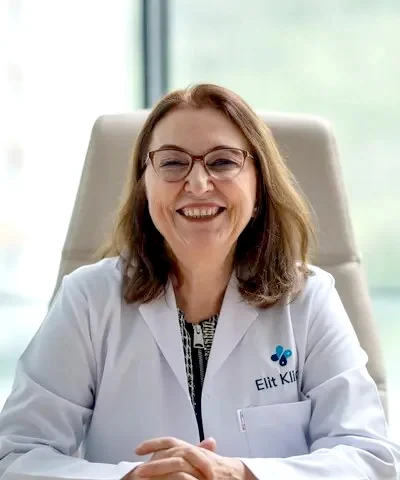
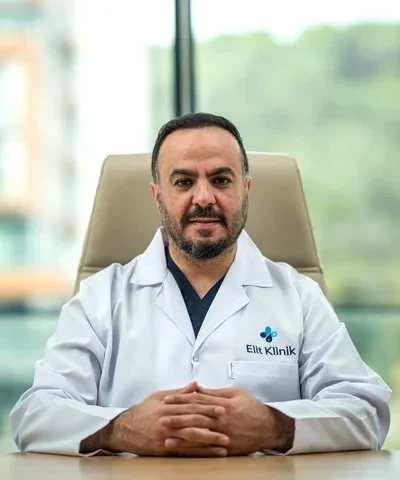
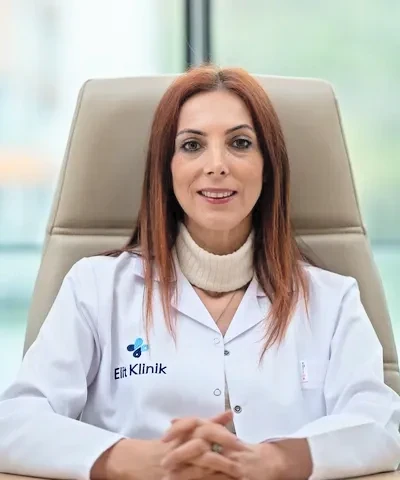
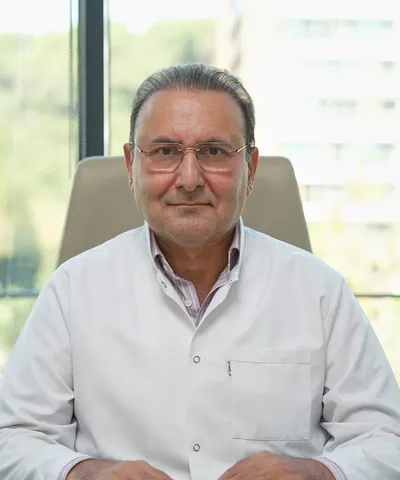
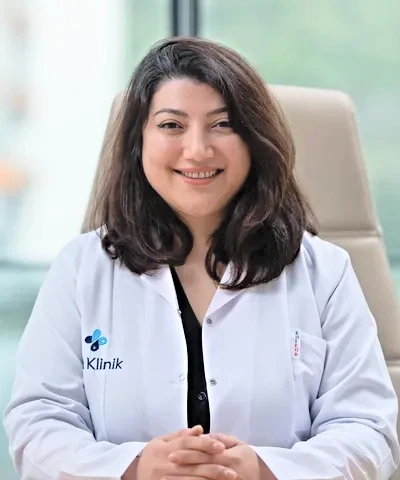
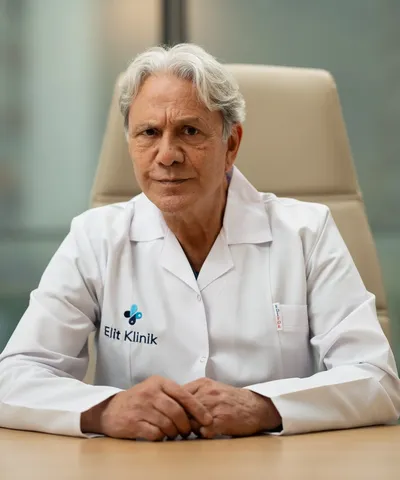
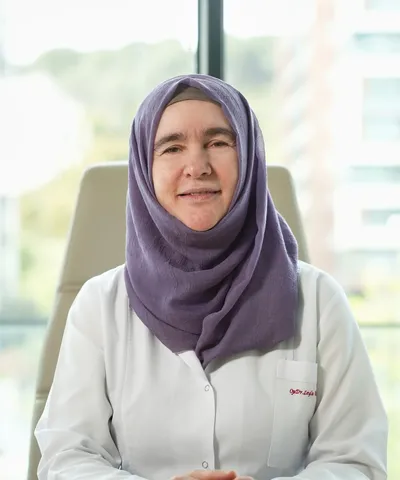
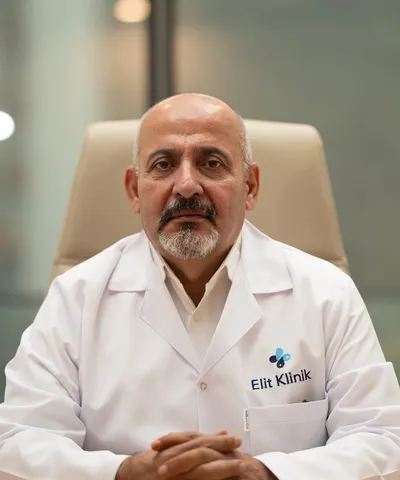
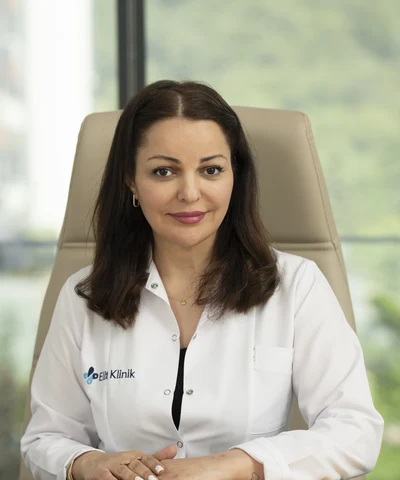
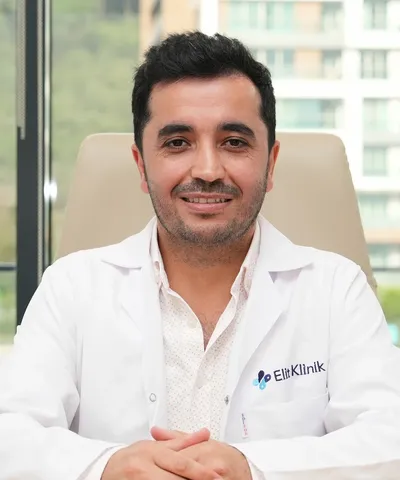
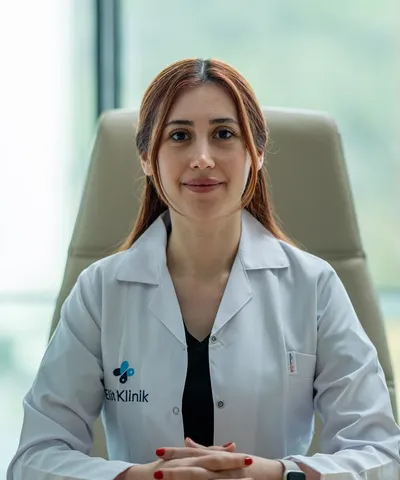
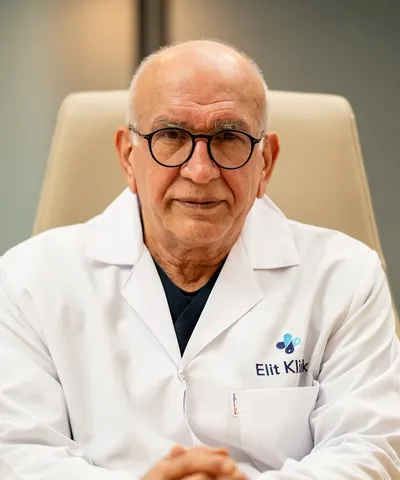
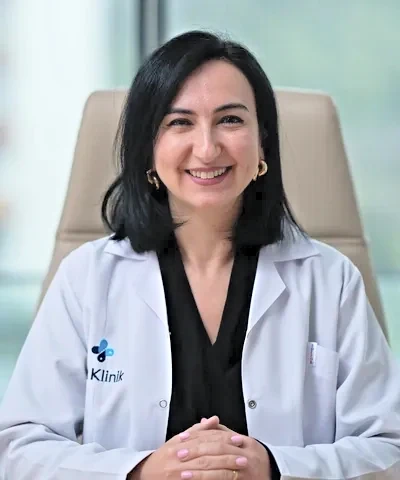
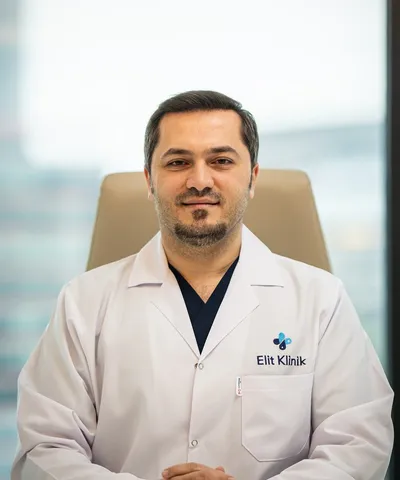
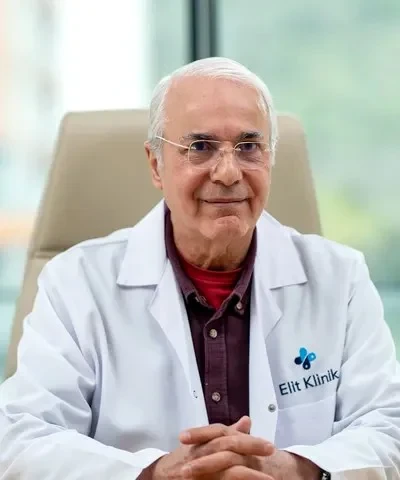
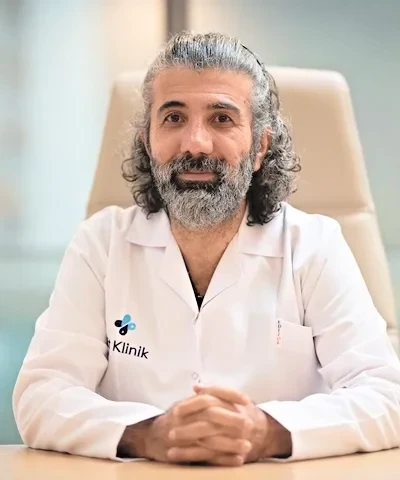
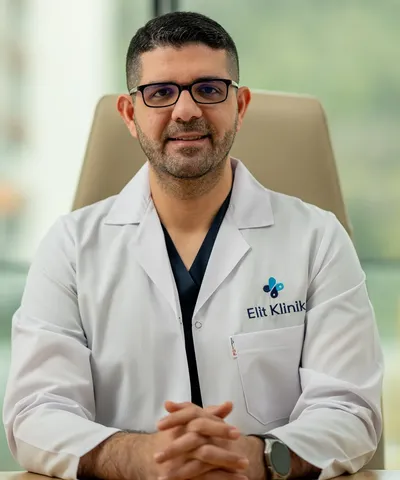
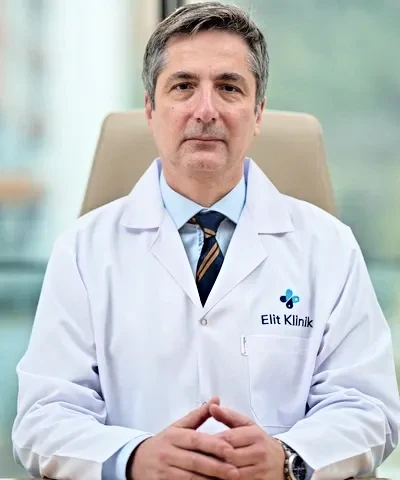
A treatment plan is only as good as the team that carries it out. At Elithair, every surgical step is performed by medical specialists with at least seven years of experience in that specific step.
Our doctors also oversee and take responsibility for your treatment at five key points: during the hair analysis, as part of the Pre-Test System, when your hairline is planned, during anesthesia, and at the final checkup. This is our 5-Doctor Standard.
Our quality standards undergo ongoing external review. The Turkish Ministry of Health conducts unannounced inspections once or twice a month, reviewing hygiene, sterilization, documentation, and medical procedures.
Based on these inspections, the ministry also officially authorized Elithair as a hair transplantation training center for doctors. More than 70 physicians have completed the program so far. The procedures used in your treatment are the same ones taught at our clinic and supervised by the authorities.
Two independent credentials document our standards:
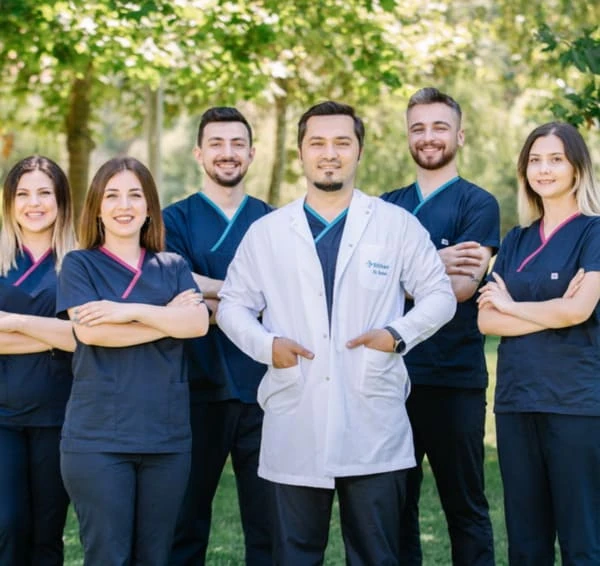
 Istanbul
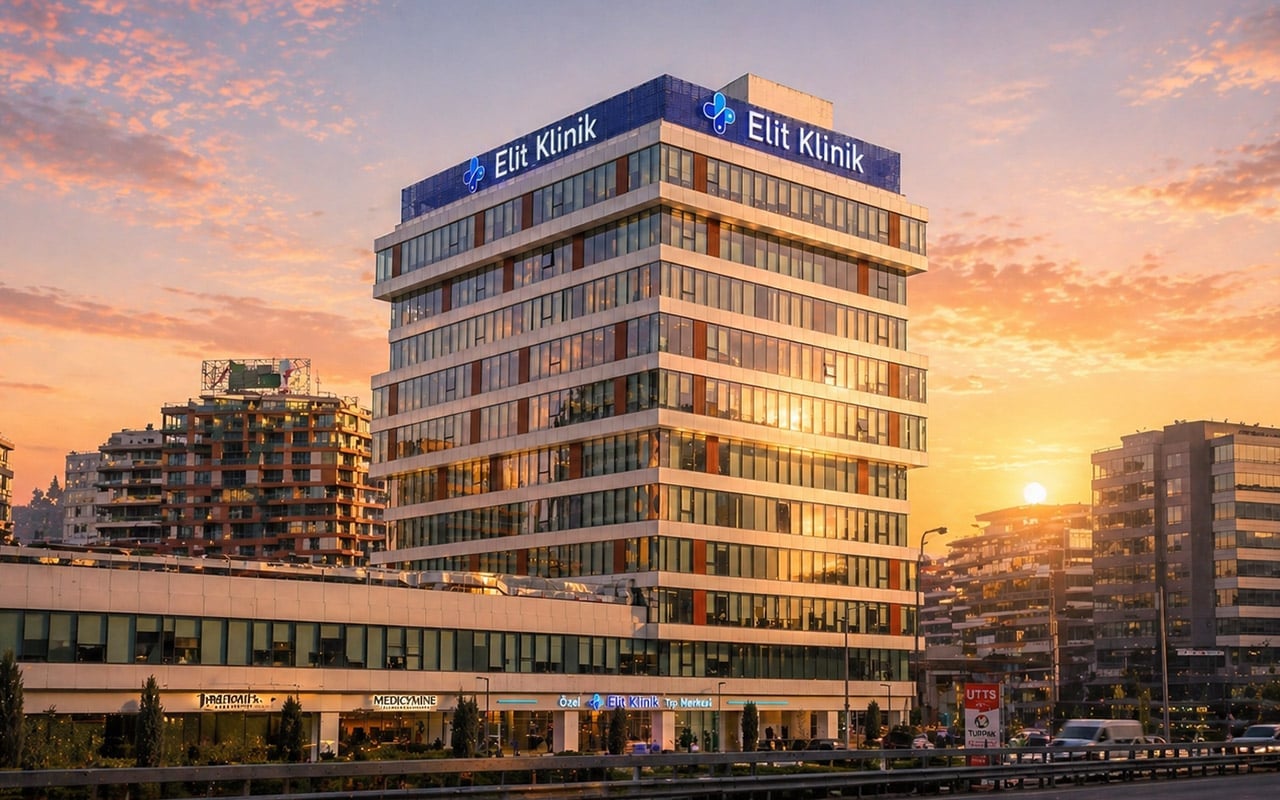
Your procedure takes place at our main clinic in Istanbul, but your care extends beyond your time there. Before your trip, our team supports you in English, starting with the free hair analysis.
Afterward, you upload photos through the Elithair app for our medical team to review and monitor your healing.
Istanbul is the world's leading destination for hair transplants, with an exceptional concentration of medical expertise. Our doctors and medical specialists work in hair transplantation every day and draw on experience from thousands of completed procedures.
Strict government oversight supports these professional standards. Mandatory authorization and unannounced inspections once or twice a month maintain safety throughout the treatment process.
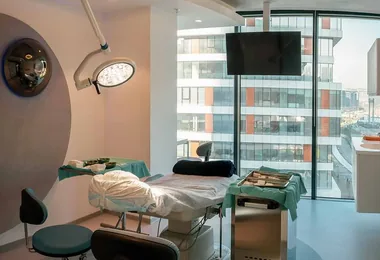
Our clinic specializes in hair transplantation. This focus allows us to handle every step in one place, from your initial examination through surgery and your follow-up checkup.
The procedure is minimally invasive and performed on an outpatient basis, with your stay in Istanbul organized over four days.

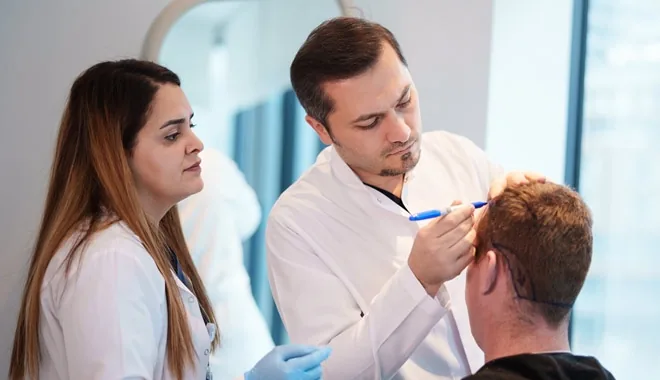
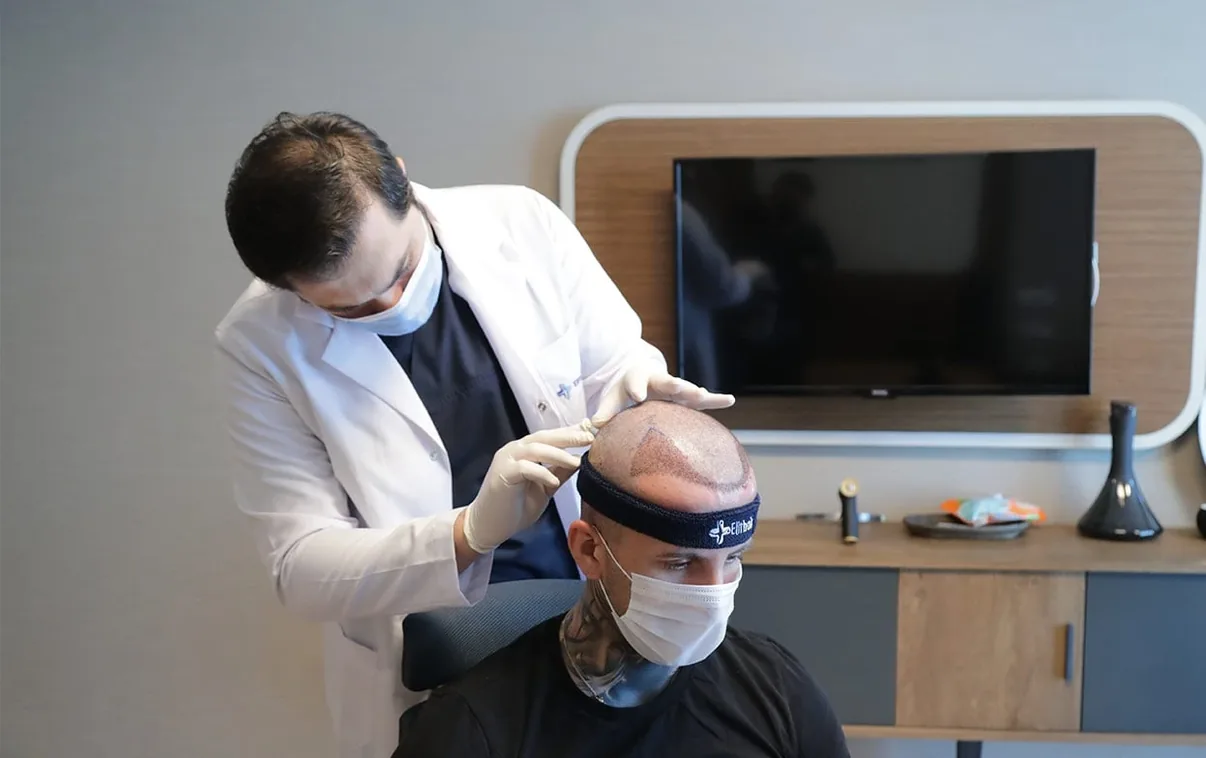
After your free hair analysis, you and your hair transplant consultant choose a date that works for you.
Many providers describe the risks simply as "rare" and the procedure as "minimally invasive," without further explanation. Documented rates offer more useful information about what you can expect.
A review of complications in FUE hair transplantation ("Complications in follicular unit excision hair transplantation", Romera de Blas et al., Frontiers in Medicine 2026) combined the available case series and found an overall complication rate of 1.2 to 4.7 percent (Liu et al. 2025). The vast majority of complications were mild and resolved on their own.
A retrospective study of 1,030 FUE procedures (Aksoz et al.) reported a higher rate of notable complications, at 9.9 percent, although just under half of the affected patients had only mild symptoms.
The difference reflects how complications were counted: Aksoz included swelling and itching, while older studies mainly documented more serious cases. Rates for individual complications therefore tell you more than an overall figure alone.
Swelling is the most common complication and resolves after a week. Patients often worry most about shock loss, though it is the least harmful complication listed. It may occur, but not every patient experiences it (Okochi et al. 2024). If it does, only the visible hair shaft falls out, while the root remains in the scalp and produces new hair.
These risks make surgical protocols, hygiene, and medical supervision essential. We steam-sterilize all instruments using the Harvard autoclave protocol in four U.S.-certified units. Compliance with these procedures is reviewed during the Ministry of Health's unannounced inspections once or twice a month.
| What can occur | How often | When |
|---|---|---|
| Swelling in the forehead and eye area | 40 to 50 percent | Begins on day 1 to 2, peaks on day 2 to 3, resolves by day 5 to 7 |
| Folliculitis, meaning inflamed hair follicles | about 12 percent | Typically during weeks 1 to 4 |
| Shock loss, temporary shedding of the transplanted hairs | approx. 3.7% (Okochi 2024) | In the first weeks after treatment (it may or may not occur) |
| Infection | under 1 percent | usually as superficial folliculitis |
Visible healing is largely complete after two weeks. Your results develop over twelve months, which is why our medical team monitors your progress for a full year.
During hair transplant healing, mild redness fades after two weeks to three months. You can resume light exercise after two weeks, moderate exercise after four weeks, and strength training after six weeks. Protect your scalp from the sun during the first few days and use the provided care kit for the first ten days.
For twelve months, you regularly upload photos through the Elithair app for our medical team to review. Push notifications remind you when you can resume each activity.
Transplanted follicles from the donor area generally have greater resistance to androgen-related miniaturization and retain this donor-area characteristic after transplantation.
Crusting, redness, and swelling; you can usually return to desk work on day 2 to 3
On days 10 and 11, the scabs are gently loosened with the lotion; from day 12, you can wash normally with shampoo
Shock loss: the transplanted hair shafts may shed temporarily while the roots remain intact. Shock loss may occur, but it does not happen to everyone.
New growth begins around months 3 to 4 and gradually becomes more visible over time
Around 40 percent of the result is visible
The result is final after 10 to 12 months in the front and after 15 to 18 months at the crown
Graft countThe number of grafts you need depends on the area being treated and your target density.
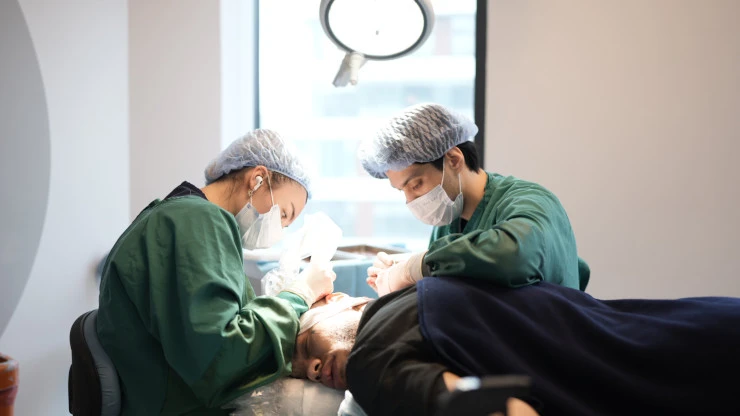
More grafts do not automatically produce a better result. Your doctor carefully limits harvesting to keep the donor area dense and discreet while preserving enough hair for future procedures. Your free hair analysis determines the ideal graft count for you.
You pay an all-inclusive price based on your graft count, never a per-graft charge. After your free hair analysis, you receive a nonbinding initial quote, risk-free and before you travel to Turkey. US insurers classify hereditary hair loss as cosmetic, so they do not cover hair transplants; HSA or FSA funds can be used when medical necessity is documented.
| Grafts | Your price | Typical U.S. cost | You save |
|---|---|---|---|
| Up to 2,000 grafts | $3,899 | $6,300 | about 38% |
| 2,500 grafts | $3,999 | $7,900 | about 49% |
| 3,000 grafts | $4,099 | $9,300 | about 56% |
| 3,500 grafts | $4,199 | $10,900 | about 61% |
| 4,000 grafts | $4,299 | $12,400 | about 65% |
| 4,500 grafts | $4,399 | $13,500 | about 67% |
| From 5,000 grafts | $4,499 | $15,600 | about 71% |
All-Inclusive PackageOur all-inclusive package covers every essential service. You only need to book and pay for your flight; Zero Shave FUE and Manual FUE are available as options at an extra cost. Direct flights to Istanbul are available from almost every major US departure airport.

 Price Comparison
In the US, comparable treatments cost $2.70 to $5.30 per graft, or $6,300 to $15,600 for a full session. The price difference reflects operating expenses, not a difference in quality. Wages, rent, and other clinic costs all contribute to the final bill; a hair surgeon in the US earns $8,600 to $13,500 a month.
Look closely at unusually low prices from other providers in Istanbul. A lower price often means:
Our fair pricing reflects the efficiency of our own specialized clinic. We never compromise your medical safety to lower costs.
Treatment areasThe treatment area has a greater influence on planning than the technique itself.
Common concerns include a receding hairline at the temples, thinning at the crown, and extensive hair loss at the front and top of the head.
The crown has a distinct growth pattern and requires different placement angles from the hairline, where each individual hair is especially noticeable (Devroye 2013).
When an area has diffuse thinning rather than complete hair loss, treatment adds density among the existing hairs. New grafts must be placed between existing roots without damaging them.
2,800 grafts
4,200 grafts
4,750 grafts
4,700 grafts
5,200 grafts
4,700 grafts
Our hair transplant before-and-after gallery organizes results by treatment area. Each case includes the graft count and time since treatment, making it easy to find patients whose hair loss resembles yours.
Most of our patients spend more than a year between first considering treatment and making a final decision. That is a year lost while hair loss continues to progress.
The earlier your treatment is planned, the more room your doctor has to create a dense, natural-looking hairline. No one can guarantee that a hair transplant will still be possible in a year.
Andre O. – 5,200 grafts
Cagatay T. – 4,000 grafts
Schmale Schulter - 4,200 grafts
Hollywood Matze - 2,900 grafts
Results also take a year to fully develop. Every month you wait delays your result by the same amount of time.
Take the first step now with a free hair analysis to find out what is possible for you. If you are a good candidate, we plan your treatment together. If treatment is not medically appropriate, we will be just as honest about that.

More than 150,000 treatments
More than 150,000 treatments have given our team extensive experience. Our doctors have successfully treated nearly every type of case many times, allowing us to give you a precise, realistic assessment of the results you can expect.
Google4.9more than 11,000 reviews Trustpilot4.7more than 3,700 reviews
 ProvenExpert4.84more than 2,500 reviews
 ausgezeichnet.org4.92more than 570 reviews
Our patient reviews reflect that trust: a Google rating of 4.9 with more than 11,000 reviews, a Trustpilot rating of 4.7, and ratings of 4.84 on ProvenExpert and 4.92 on ausgezeichnet.org, two German review sites.
These reviews come from patients who completed the entire 12-month process, so they reflect real, long-term results.
Elithair has also been covered by Forbes and by German outlets including ARD, SAT.1, WELT and t-online.
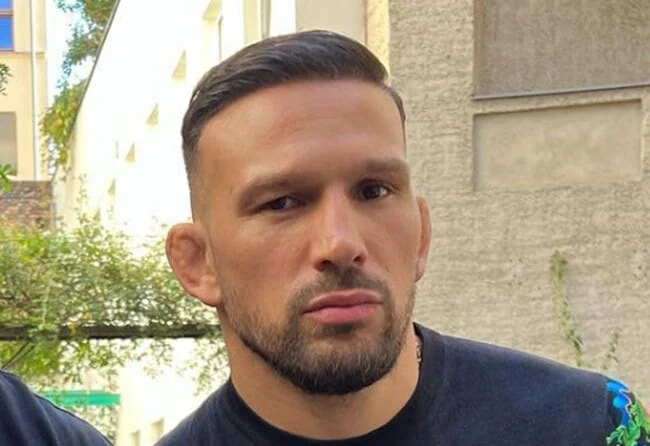
“Everything was extremely professional and extremely hygienic. I'm just really, really happy that I decided to do it.”
Max Coga · Age 34 · 3,250 grafts

“I can't put into words how happy I am with the result. Definitely the best decision of my life.”
Nico G. · Age 27 · 2,800 grafts
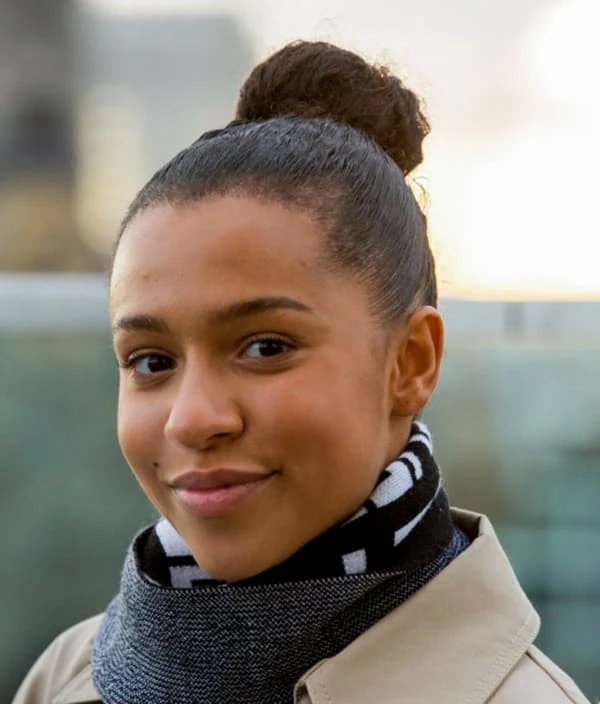
“I'm just happy I had a hair transplant… and yes… I'm just happy. That's what counts.”
Melissa Z. · Age 22 · 2,700 grafts
Medical treatment starts with a diagnosis before you decide how to proceed. Your next step with us is a thorough assessment of your hair loss by experienced doctors, rather than a sales call.
Our doctors assess your donor area and determine how many grafts are needed to restore natural-looking fullness in thinning areas.
You receive a clear, written assessment of the density and hairline you can achieve, giving you the information you need to make your decision.
If our doctors determine that treatment is not medically possible for you, we will explain this clearly before proceeding with any further planning.
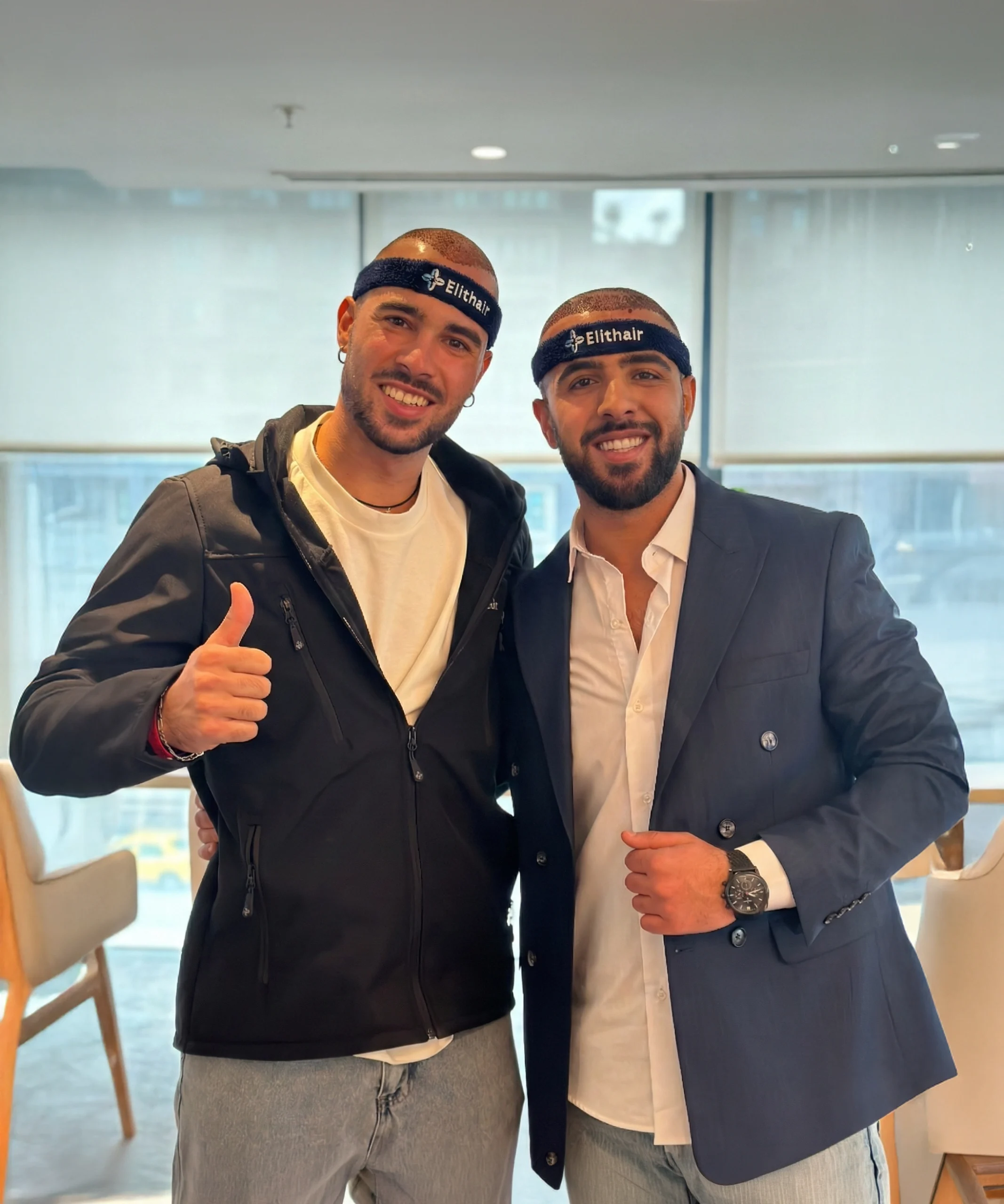
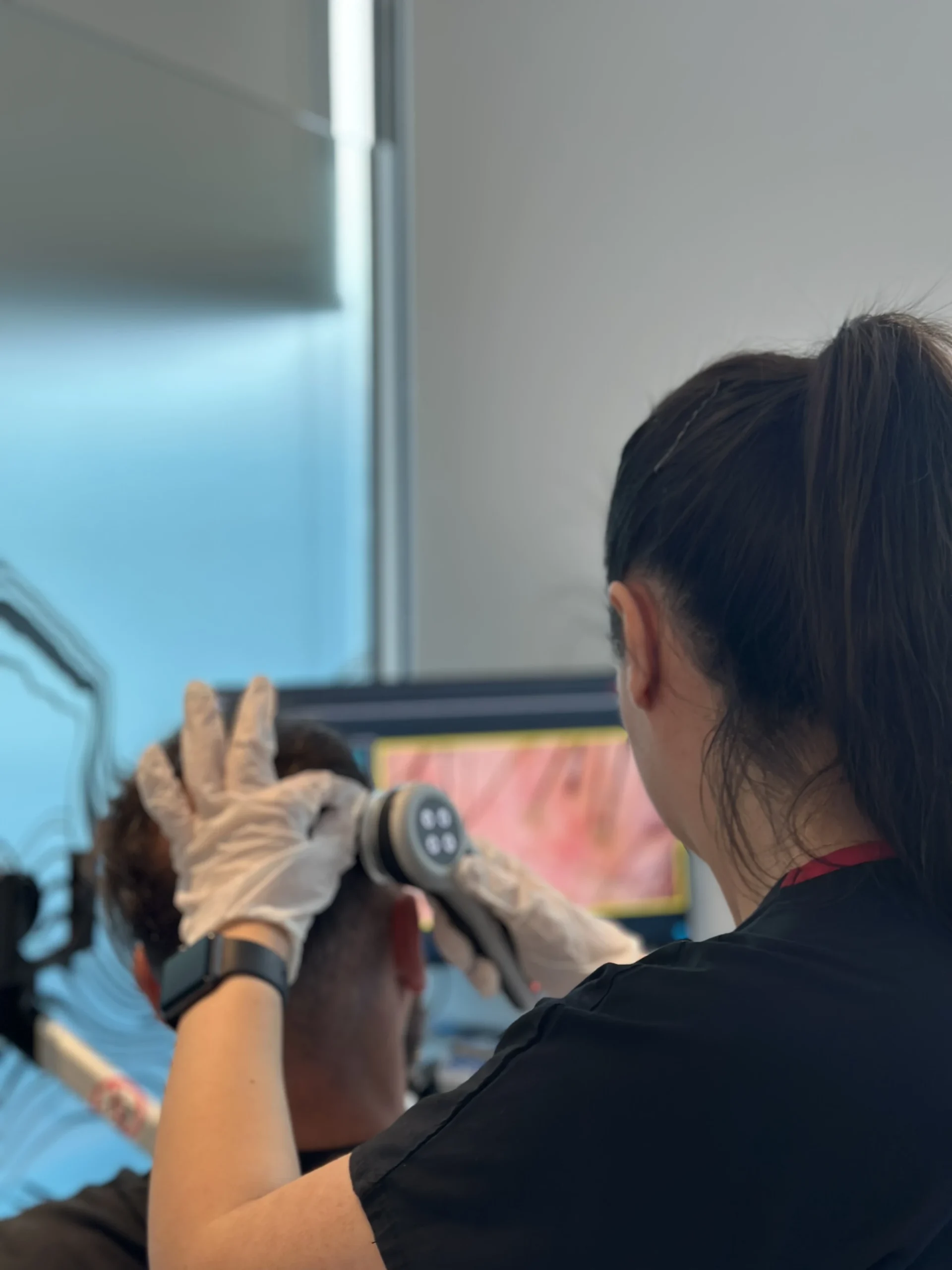
A hair transplant moves your own follicles from the donor area at the back of your head to thinning or bald areas. With FUE, follicular units are extracted individually using a fine hollow punch; at Elithair, they are then implanted using DHI with the CHOI Implanter Pen. A graft is a natural group of hair follicles containing one to four hairs, about 2.2 on average.
A retrospective study of 158 men with androgenetic alopecia (Wang, Chen, Yang et al., BMC Surgery 2024) tracked follicle survival for twelve months after FUE extraction. Survival exceeded 90 percent, and more than 85 percent of patients had survival rates above 95 percent. Patient satisfaction exceeded 98 percent, while the complication rate was under 6 percent. These figures reflect carefully planned and performed procedures and do not apply to every clinic. The decisive factor is insertion depth, which we measure for you with the Pre-Test System and build into your personalized treatment plan.
Hair transplantation is an established, minimally invasive procedure, supported by the available data. A 2026 review (Romera de Blas et al.) reports overall complication rates of 1.2 to 4.7 percent, with most complications mild and resolving on their own (Liu et al. 2025). Forehead swelling is the most common, affecting 40 to 50 percent of patients and resolving after five to seven days. Infection rates remain under 1 percent.
The procedure is performed under local anesthesia, without general anesthesia. Sleep-Deep sedation lets you sleep through the most uncomfortable part: the 20 to 30 anesthetic injections. A specialist anesthesiologist on our staff puts you into a light sleep for about 15 minutes and monitors you throughout. You are then awake for the rest of surgery, with 0% pain.
Transplanted hairs remain permanently because they retain the donor hair's resistance to hair loss. We provide a 20-year written guarantee on transplanted hair when you follow the aftercare instructions. Your surrounding, untreated hair can still change during that time, so it makes sense to discuss medication alongside your transplant with your doctor.
A hair transplant is not suitable if your hair loss is progressing rapidly, your donor area is too sparse, or your hair loss has another underlying cause. Active scarring alopecia also rules out treatment for the time being because the same process can destroy transplanted follicles. That is why we perform the free hair analysis before scheduling treatment and decline around 40 percent of inquiries.
A hair transplant costs $3,899 to $4,499, depending on graft count: $3,899 for up to 2,000 grafts and $4,499 for 5,000 grafts or more. Everything is included except your flight; Zero Shave FUE and Manual FUE are available as options at an extra cost. A comparable treatment in the US usually costs $6,300 to $15,600.
The number depends on the area being treated. The hairline and receding temples usually require 2,000 to 3,500 grafts; the entire top of the head, 2,500 to 4,500; the crown, 2,000 to 4,500; and extensive hair loss up to complete baldness, 5,000 to 6,000.
In the first weeks after treatment, the transplanted hairs may shed temporarily (shock loss). Not every patient experiences shock loss. New growth usually begins around months 3 to 4, around 40 percent of the result is visible after six months, and full results are visible after 10 to 12 months at the front and after 15 to 18 months at the crown.
You can usually return to desk work on day 2 to 3. The scabs are loosened by day 11, and mild redness fades after two weeks to three months. You can resume light exercise after two weeks, moderate exercise after four weeks, and strength training after six weeks. Your stay in Istanbul lasts four days.
FUE and DHI describe two different steps, so they are complementary techniques. FUE is the extraction of individual follicular units from the donor area. DHI uses the CHOI Implanter Pen to open a channel and implant a graft in one motion, with the angle, depth, and growth direction set individually for each graft. At Elithair, we use both techniques, and both are included in the price.


