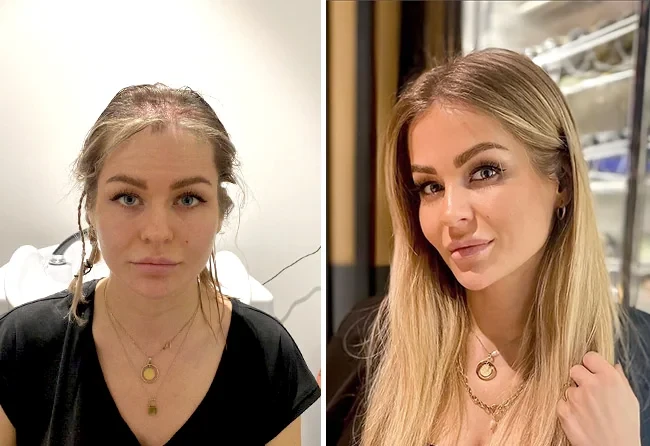
Before
After
Julia O. – 1,700 grafts

4.9 - 11,000+ Reviews on Google

150,000+ Happy Patients Worldwide

free, no obligation
 4.9 out of 5 stars on Google
More than 150,000 treatments
at our specialist clinic, certified to ISO 9001:2015
by TÜV Thüringen.

 Your own hair follicles
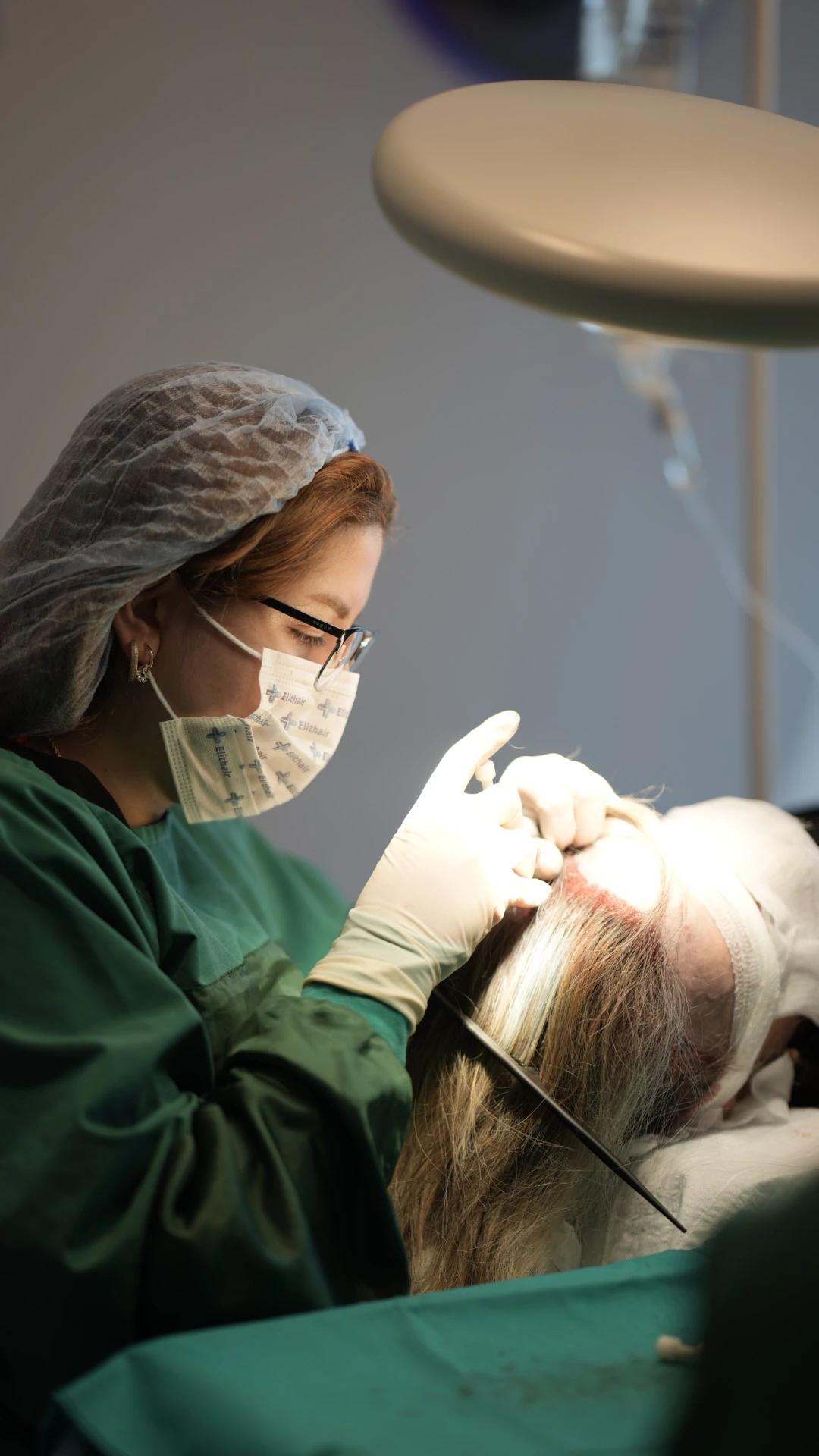
For most women, thinning hair along the part is more than a cosmetic concern. It affects how you feel each day and how you wear your hair.
A hair transplant for women addresses exactly that by adding your own follicles to the thinning areas, placing them between your existing hairs. Our all-inclusive package starts at $3,899.
A transplant may improve fullness in suitable candidates, with discreet treatment and a no-shave option for those who qualify. The achievable density depends on having enough suitable follicles in the donor area at the back of your head.
During your free hair analysis, we give you an honest assessment of whether a transplant is medically appropriate for you. We only recommend treatment when we expect the results to last for years.
Overview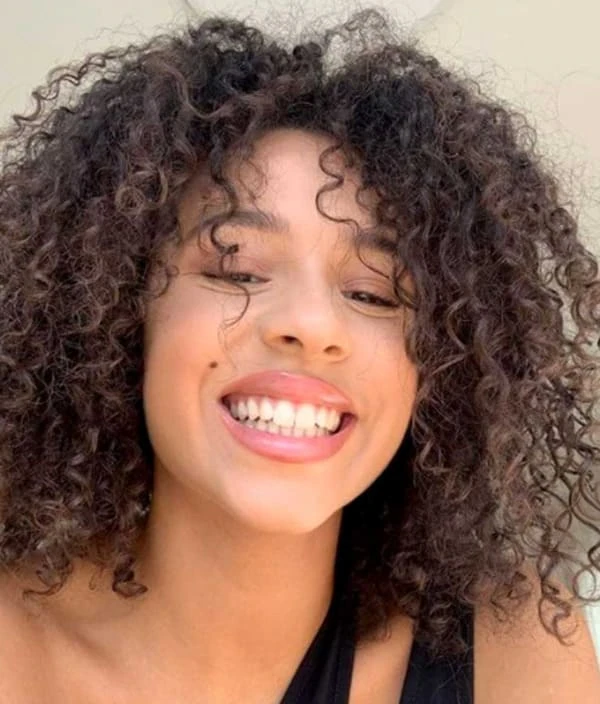
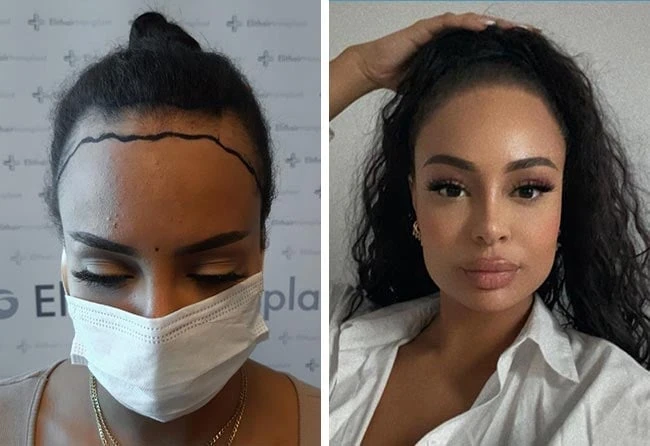
See how thinning areas fill in. Our before-and-after gallery features real results from women who chose Elithair for their hair transplants: personalized and natural-looking, with results that can last long-term.
Julia O. – 1,700 grafts
Jahy C. – 3,200 grafts
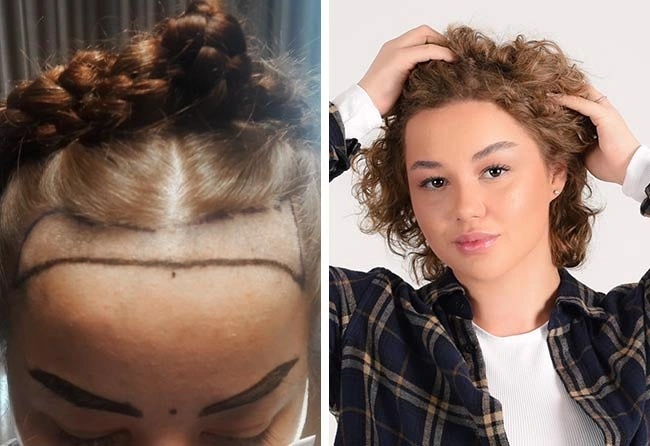
Lilianna S. – 2,600 grafts
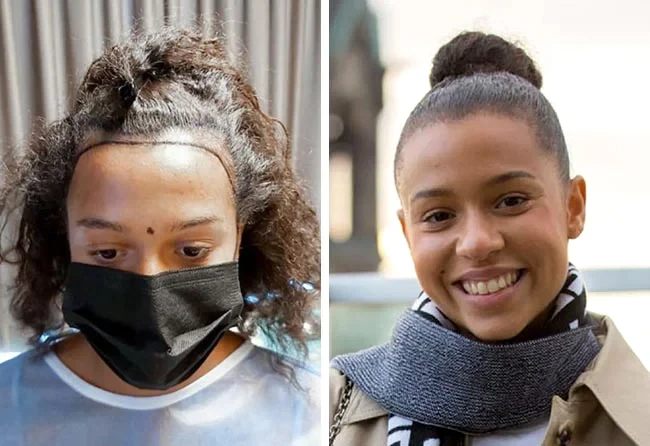
Melissa Z. – 2,700 grafts
Hair loss in women has many causes, including hormonal changes after pregnancy or during menopause, thyroid disorders, iron deficiency, medications, and constant tension from tight hairstyles (Treister-Goltzman et al. 2022).
Before discussing surgery, we need to identify the cause of your hair loss. An untreated cause can undermine what would otherwise be a lasting result. Potential underlying causes should be assessed and appropriately managed before considering a transplant.
According to the 2024 practice census of the International Society of Hair Restoration Surgery, 15.3 percent of all surgically treated patients worldwide were women, compared with 11.4 percent in 2004.
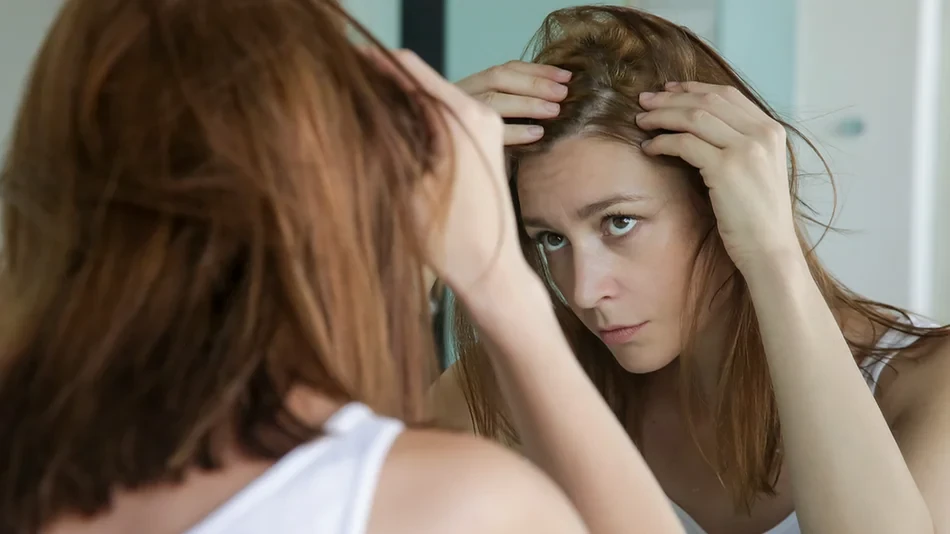 Donor area
In 1975, Dr. O'Tar Norwood described two diffuse patterns of female hair loss, and that distinction remains crucial when assessing a woman for a transplant.
In the diffuse patterned form, known in the literature as “Diffuse Patterned Alopecia,” hair thins along the part while the band of hair at the sides and back remains stable.
If examination confirms sufficient density and stability, this may provide a suitable donor area for carefully planned extraction (Okochi et al. 2020).
In the diffuse unpatterned form, “Diffuse Unpatterned Alopecia,” hair density decreases across the entire scalp, including the back of the head.
This form is far more common in women than in men. That makes a thorough assessment before treatment more important than the choice of transplant technique.
Harvesting from a thinning donor area causes two problems: visible thinning at the back of your head and transplanted hair along the part that does not last. We decline around 40% of inquiries after the free hair analysis when transplantation is not appropriate. A transplant is only worthwhile if the result still looks good years later.
If a hair transplant is not right for you, you still have options. PRP treatment uses platelet-rich plasma from your own blood to strengthen weakened hair. Highly concentrated plasma is injected at the hair roots to stimulate microcirculation in the scalp, help slow hair loss, and potentially improve hair density in selected patients, although results vary.
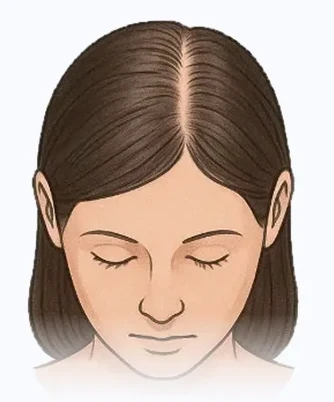
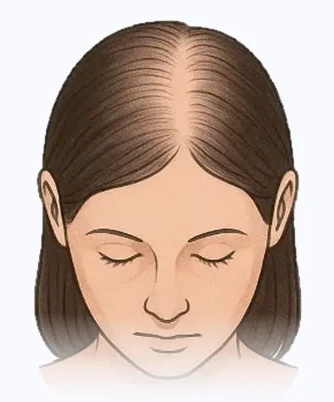
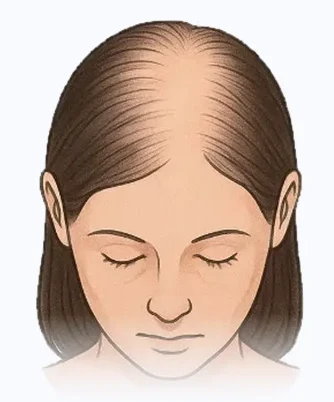
Hair loss in womenSince Ludwig's work in 1977, doctors have used three stages to classify hereditary hair loss in women. Unlike men, women usually retain their frontal hairline. A narrow band of hair about half an inch to just over an inch wide remains at the front, while the part behind it continues to widen.
Olsen expanded this classification to include thinning at the front of the scalp, known as the “Christmas tree pattern,” which also affects the hairline. These classifications do not replace a diagnosis, but they can help you understand your hair loss before your consultation.
This approach is the medical standard. Appropriate candidates generally need:
Those are exactly the points we confirm in our analysis before we recommend treatment.
Nonsurgical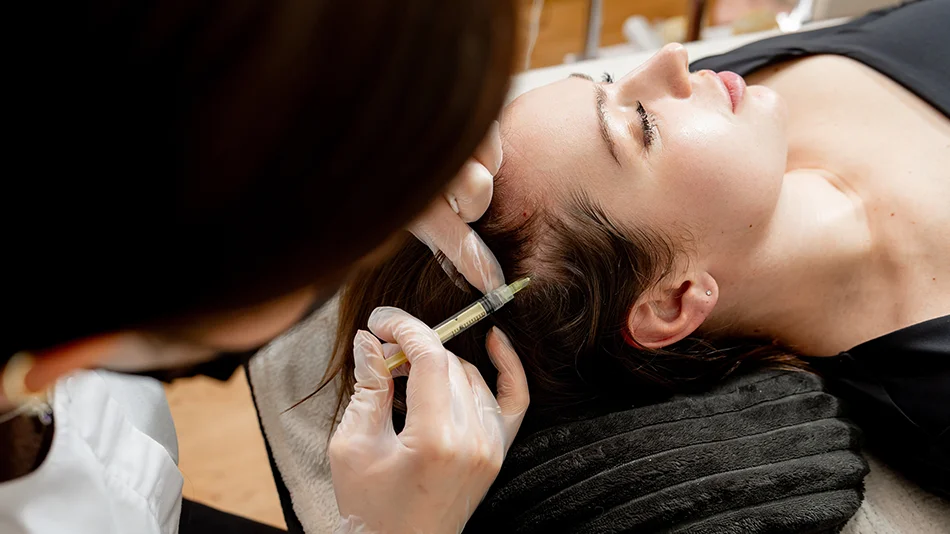
Medical treatment differs for women and men. Topical minoxidil is among the best-supported treatments for female pattern hair loss (Adil et al. 2017). Other medicines may be considered by a physician in selected circumstances, with particular precautions around pregnancy. Visible results take about six months of consistent use.
PRP therapy uses platelet-rich plasma prepared from your own blood and may help some patients with existing thinning hair. At Elithair, one PRP treatment is included in your all-inclusive package and takes place at the clinic on the day of your procedure.
Nonsurgical treatment has its limits when follicles are permanently lost. A hair transplant can restore density in those areas. Medical therapy and transplantation may complement each other, depending on the underlying diagnosis.




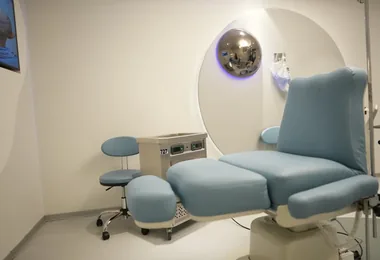











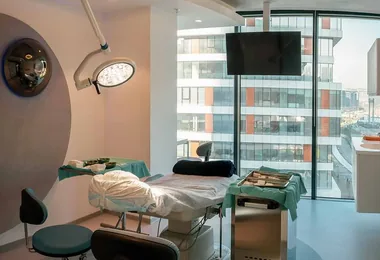



The procedure is technically the same for women and men. The goal, however, is usually to restore volume along the part, which changes four aspects of treatment planning.
Center part, the area along and behind it; no pattern of receding temples
Often lower density at the back of the head than in men
Finer hair that requires greater precision in placement angle and depth
Lower in the center, higher at the sides, with a rounded shape and no receding temples
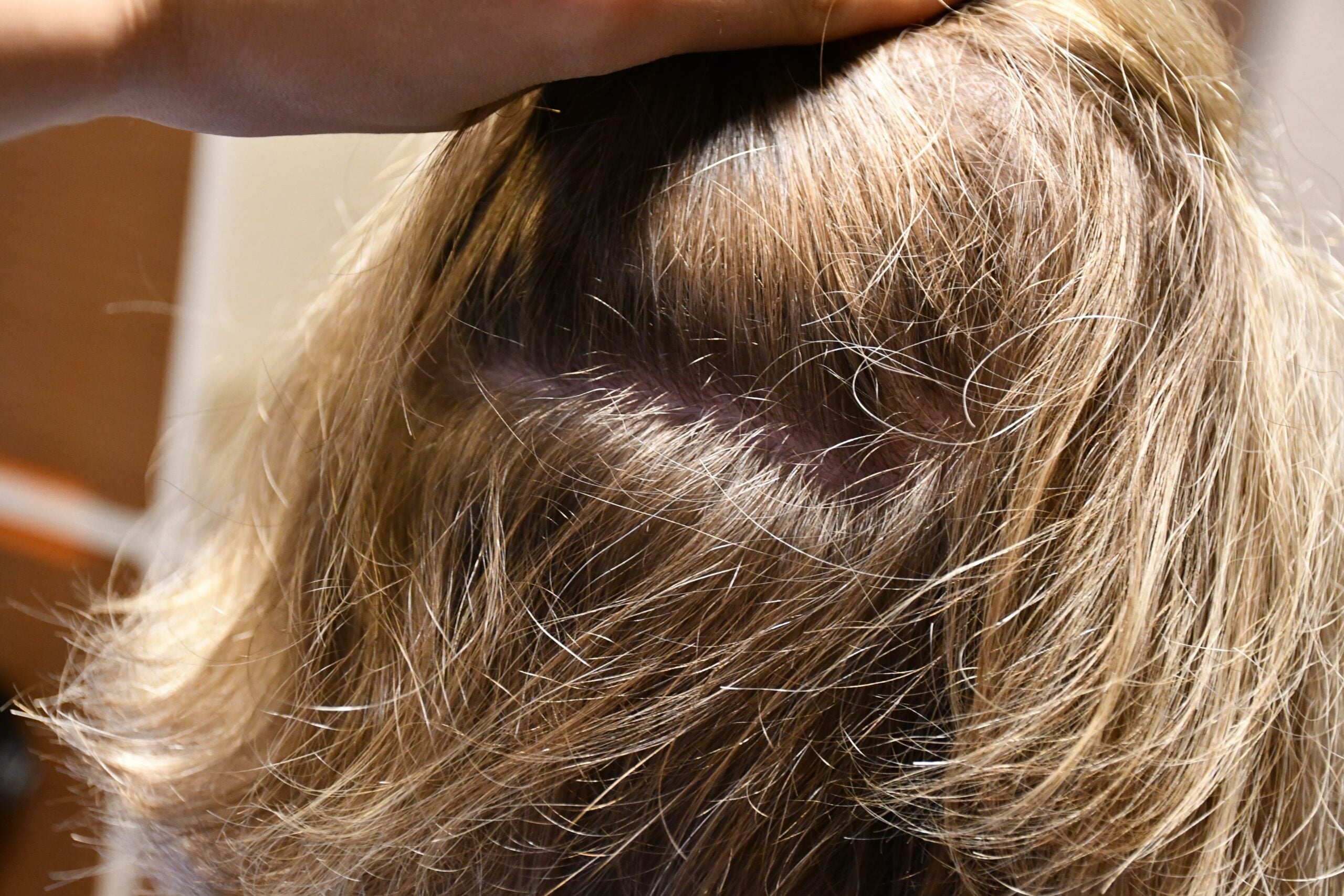
The donor hair available for a transplant is limited and cannot be replaced. Women often have lower donor density at the back of the head than men, which makes this assessment one of the most important measurements before treatment.
Your doctor plans the extraction to keep it hidden beneath your remaining hair, distributing it across the donor area and taking only the grafts needed for the treatment area (Kumaresan et al. 2023). More grafts do not necessarily mean better results. They use up your donor reserves faster, leaving fewer follicles available for a second procedure later.
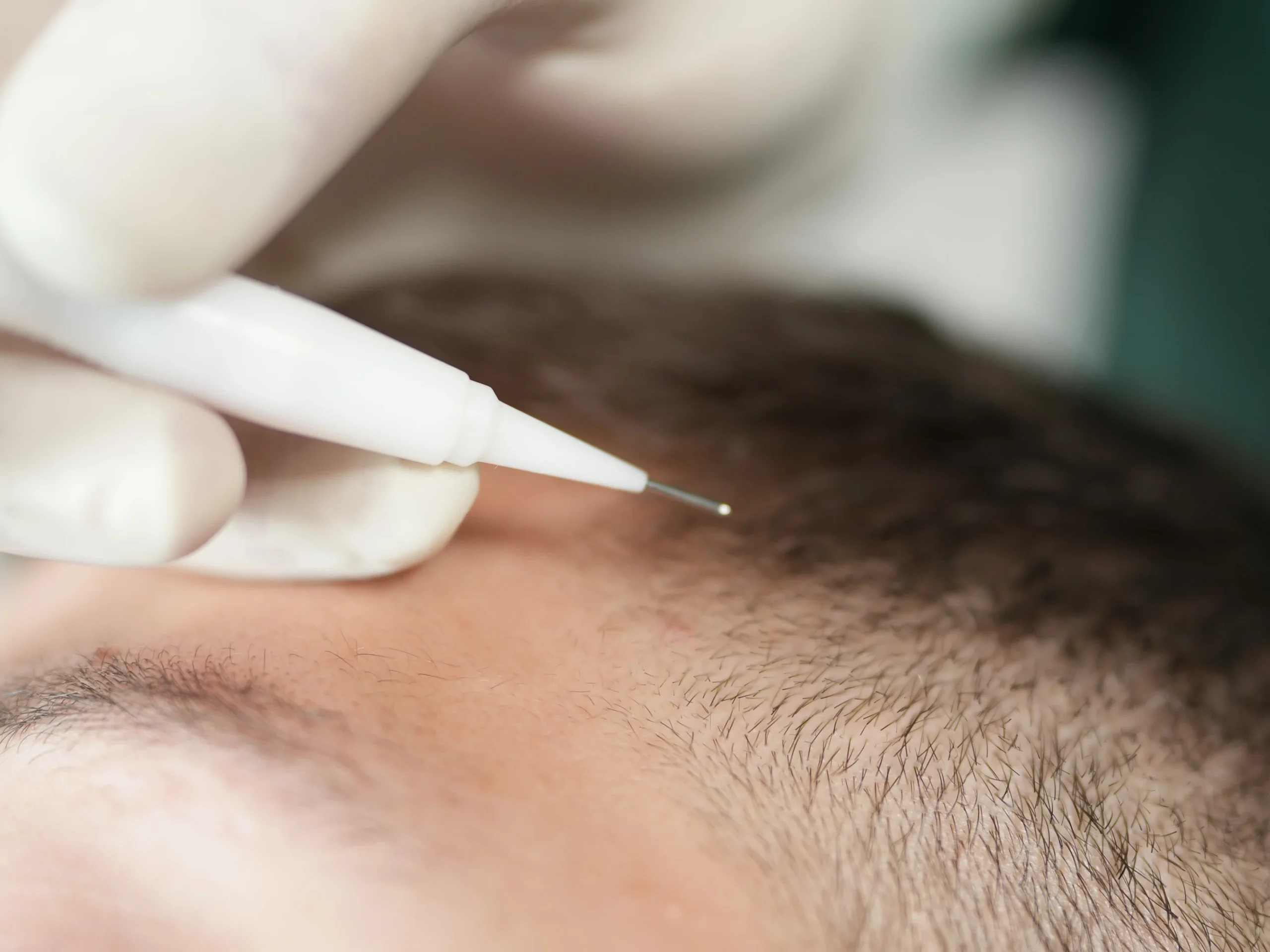
DHI techniqueWhen adding density between existing hairs, protecting their roots is essential. The DHI technique is designed for this: the CHOI Implanter Pen creates a channel and places the graft at the same time. No channels are cut beforehand. Instead, the angle, depth, and growth direction are determined individually as each graft is placed, rather than in advance for the entire treatment area.
For fine hair, this precision affects graft survival and how the hair grows afterward. The once-common sapphire technique creates channels before placing the grafts. Both approaches are used in hair restoration, but the choice depends on the treatment plan and surrounding hair.
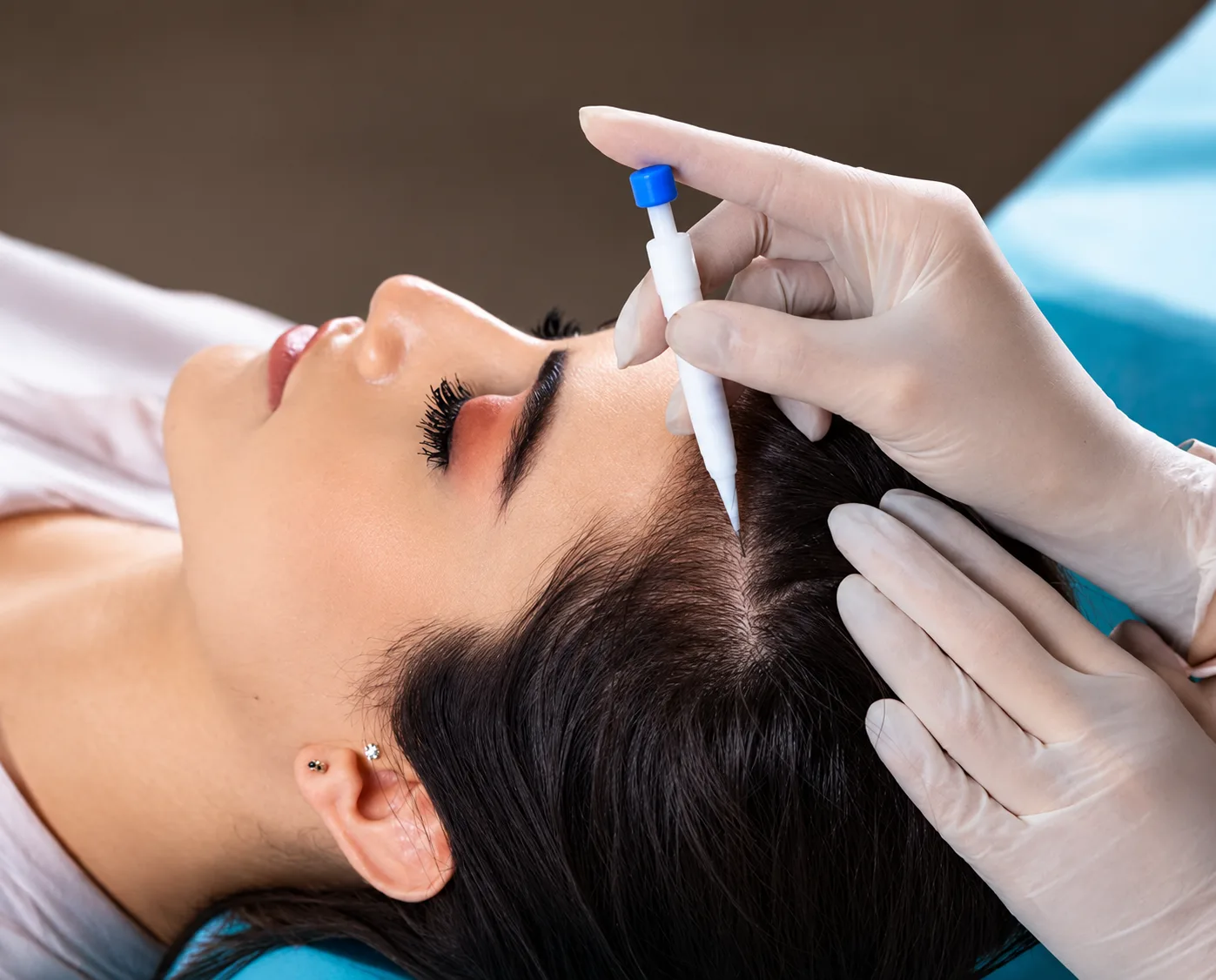
FUT, or the strip method, removes a strip of skin and leaves a linear scar. It remains an option in some circumstances. Some clinic websites still describe it as the standard for hair restoration in women, but clinical practice has changed: according to the 2024 ISHRS census, 68.2 percent of procedures in women used individual FUE extraction, while only 30 percent used the strip method.
At Elithair, we extract grafts using modern FUE and implant them exclusively with DHI, which is included in your price. Other providers charge between $800 and $2,000 extra for DHI.
Not every patient comes to us with thinning hair along her part. A second common reason women seek a hair transplant is a forehead that feels too high, either because of a naturally high hairline or because the hairline has receded over time.
In these cases, we bring the hairline forward by a few millimeters to about three quarters of an inch. This visibly changes your facial proportions and typically requires 2,000 to 3,000 grafts, since we treat only a narrow strip.
The shape matters more than the size of the treatment area. A hairline placed too low or too straight can look permanently unnatural, so a doctor plans it with you before treatment. Temple restoration may also be considered when medically appropriate.
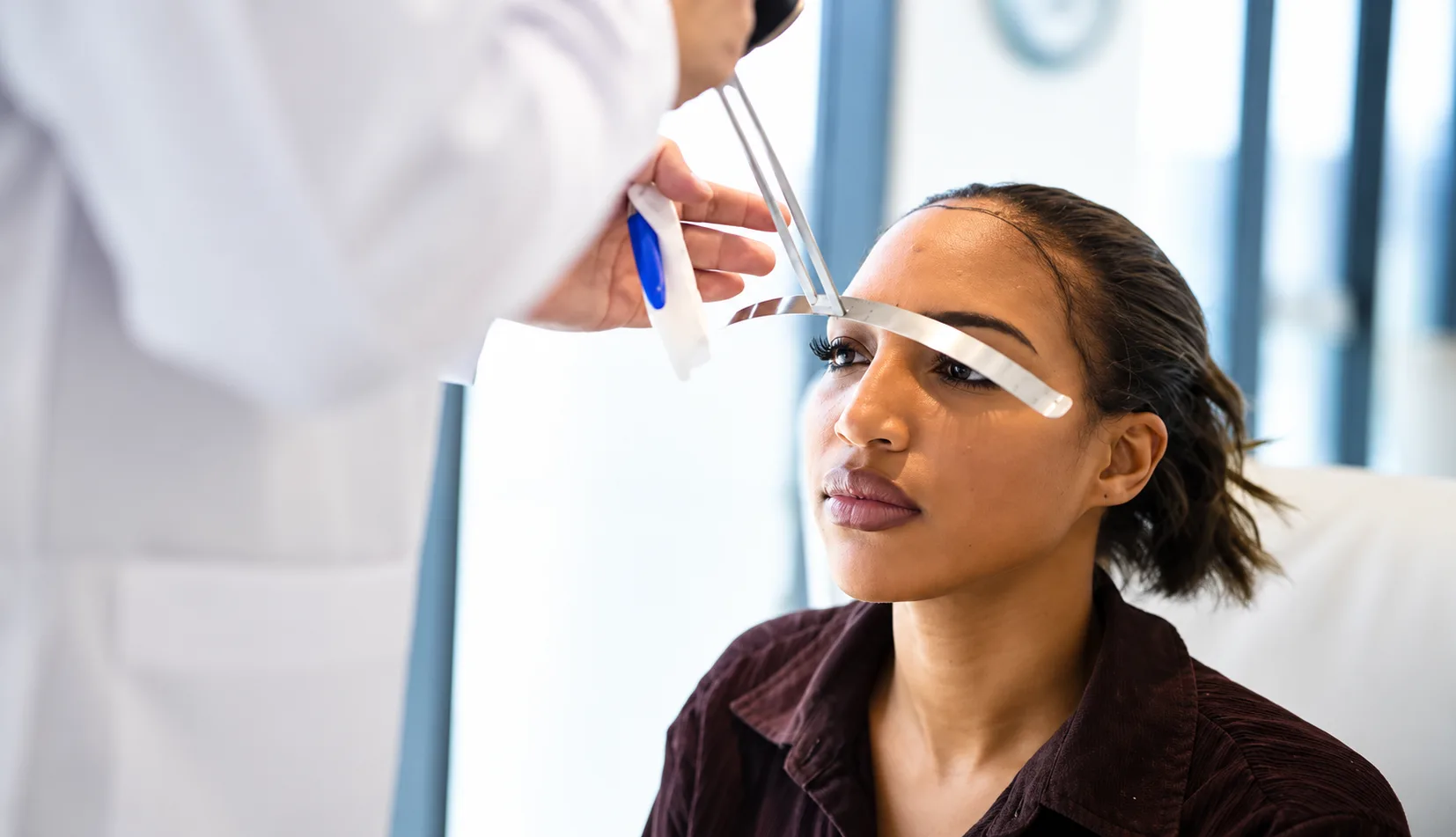
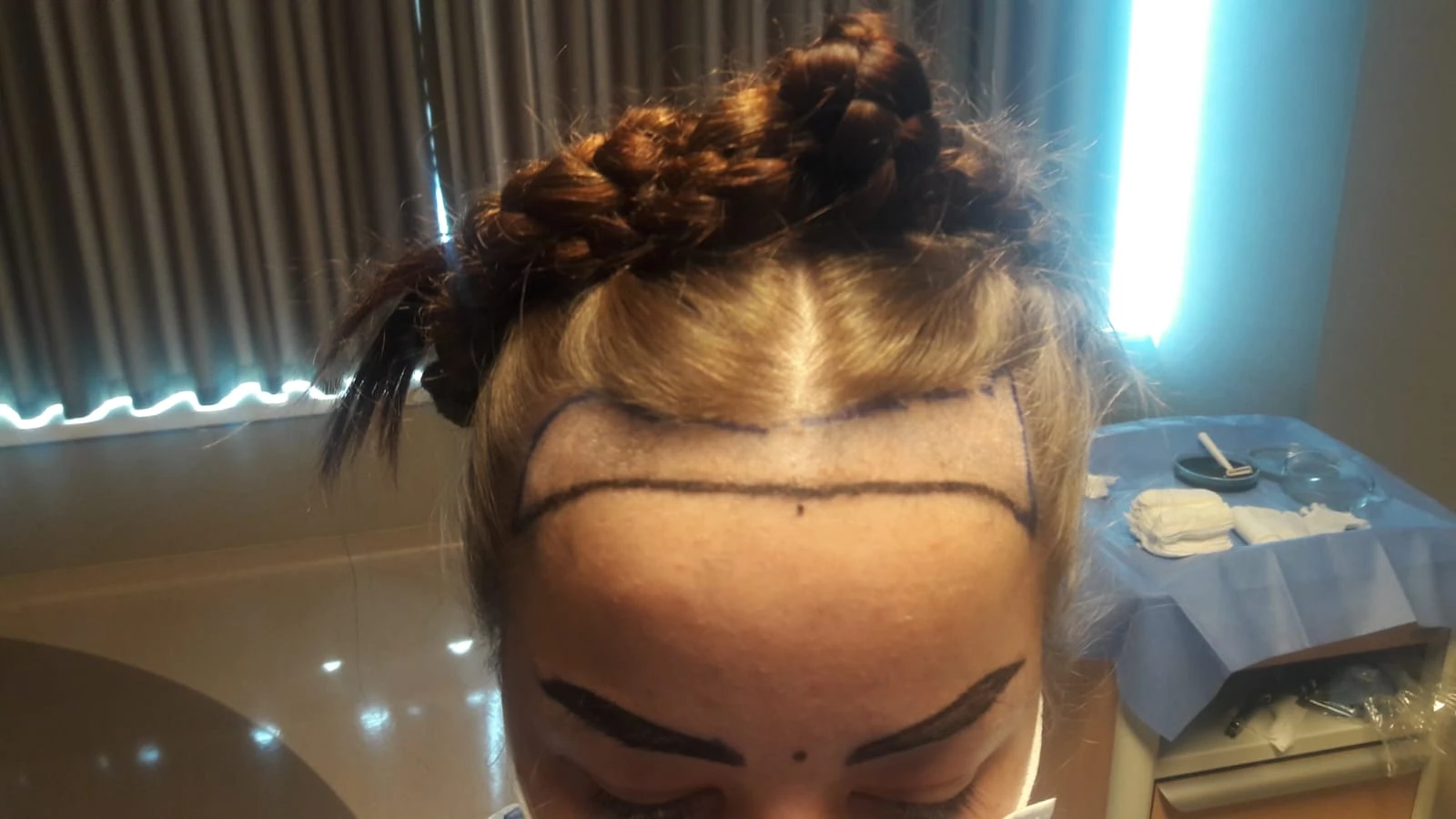
Unlike the male M-pattern, a female hairline forms a soft, slightly curved arc. It sits lower in the center, tapers gently toward the sides, and typically differs from the pronounced temple recession common in male pattern hair loss. This subtle distinction determines whether the result looks natural from every angle.
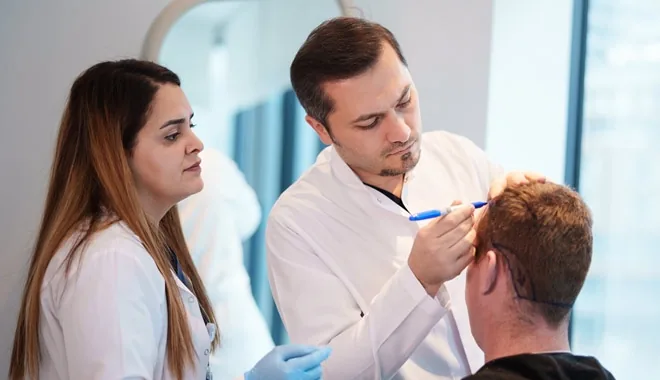
Our doctors plan your hairline and part with you in person. Together, we draw a hairline that suits your facial proportions and reflects the result you want, before placing the first graft.
Zero ShaveFor most women, the biggest concern is visible shaving rather than the procedure itself. Work, family and friends, and the question “Will anyone be able to tell?” often come up during consultations.
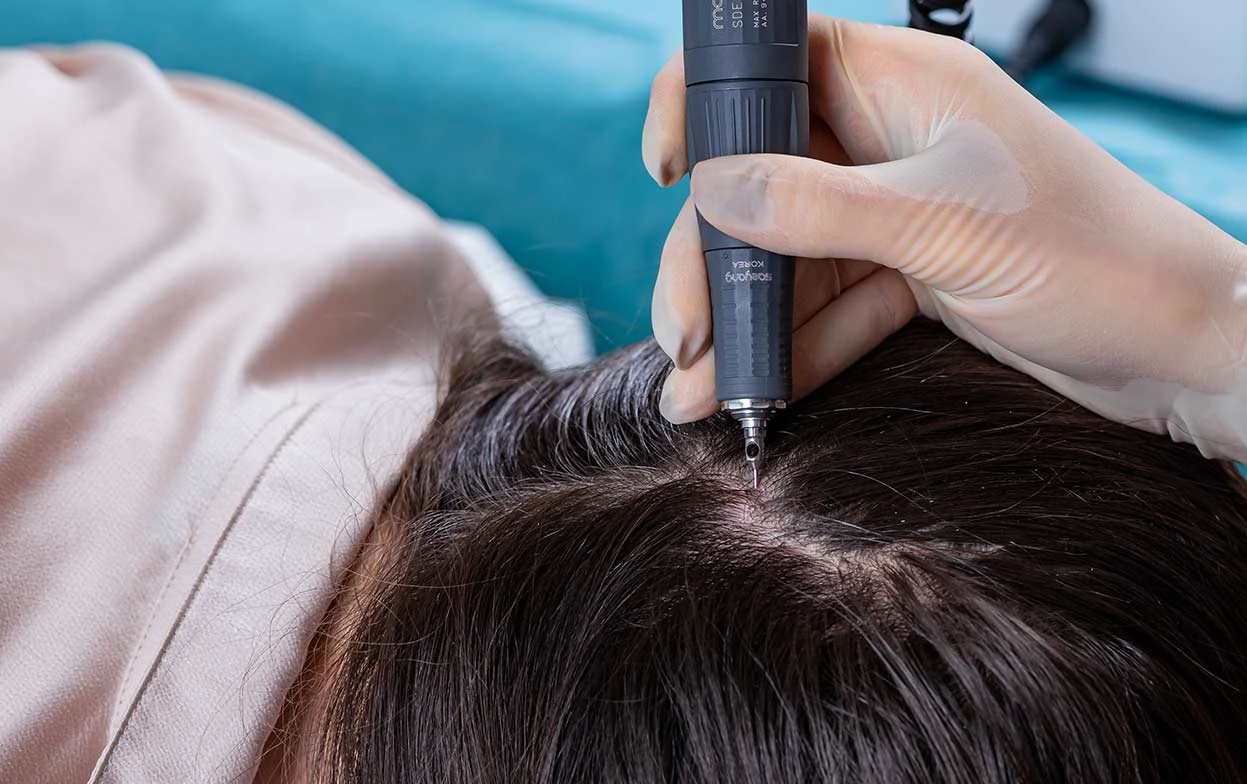
With Zero Shave FUE, available for an additional fee, up to 3,500 grafts can be transplanted, and the procedure may be performed without shaving in suitable candidates:
The suitability of a no-shave approach depends on the hair characteristics, graft count, and extraction plan. We also offer Manual FUE, extraction entirely by hand, for an additional fee. At Elithair, only medical specialists with at least 7 years of experience perform this demanding step.
During your free hair analysis, we check whether your hair length and treatment area are suitable. More about Zero Shave
Your hair is as unique as your fingerprint, so Elithair takes a personalized approach to hair transplants for women. Even two patients who need the same number of grafts have fundamentally different surgical plans. We develop yours in two steps before treatment:
Free hair analysis before your trip: our doctors assess your hair loss using the photos you send. Before you travel, we give you an honest assessment of whether a transplant is appropriate, how many grafts you are likely to need, and what it will cost.
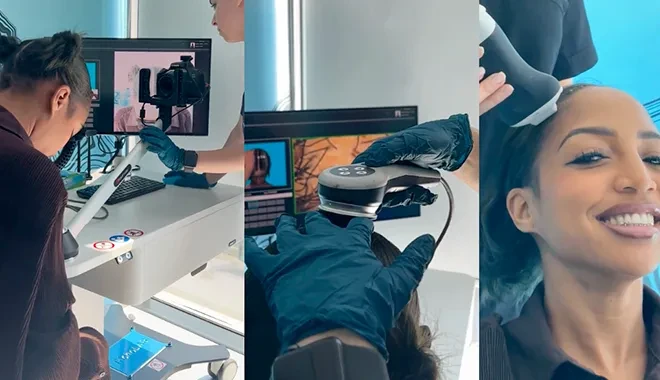
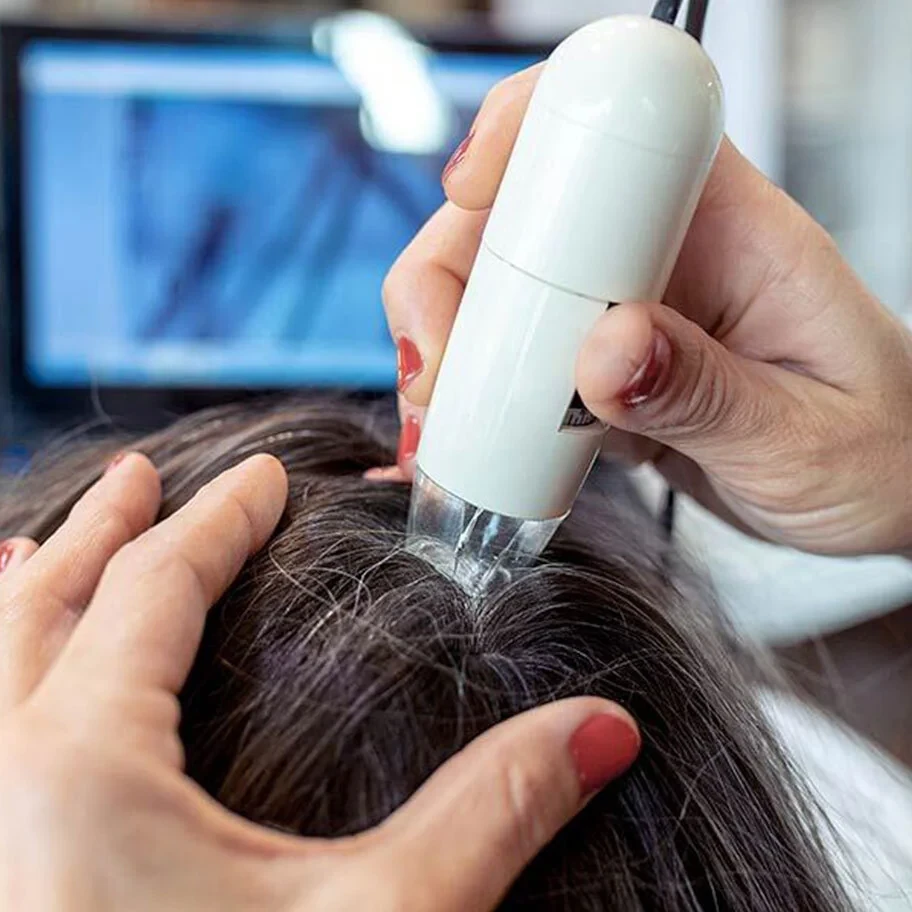
The 6-step Pre-Test System at the clinic: on the day you arrive, you have an EKG, a general health blood test, a hair loss blood test, a hair analysis with TrichoLAB, an ultrasound to measure your scalp thickness, and a Doppler ultrasound to measure blood flow. Our doctors use the results to create your personalized treatment plan.
Our doctors use measurements of your scalp thickness and blood flow together to calculate the right incision depth for your scalp. The difference is substantial: the implantation depth determined through the Pre-Test System is associated with our approximately 98% graft survival figure. Individual results can vary.
Your treatment trip to our clinic in Istanbul lasts 4 days and includes 3 nights. We arrange your transfers, hotel, and appointments in Istanbul. For logistical reasons, you book your own flight.

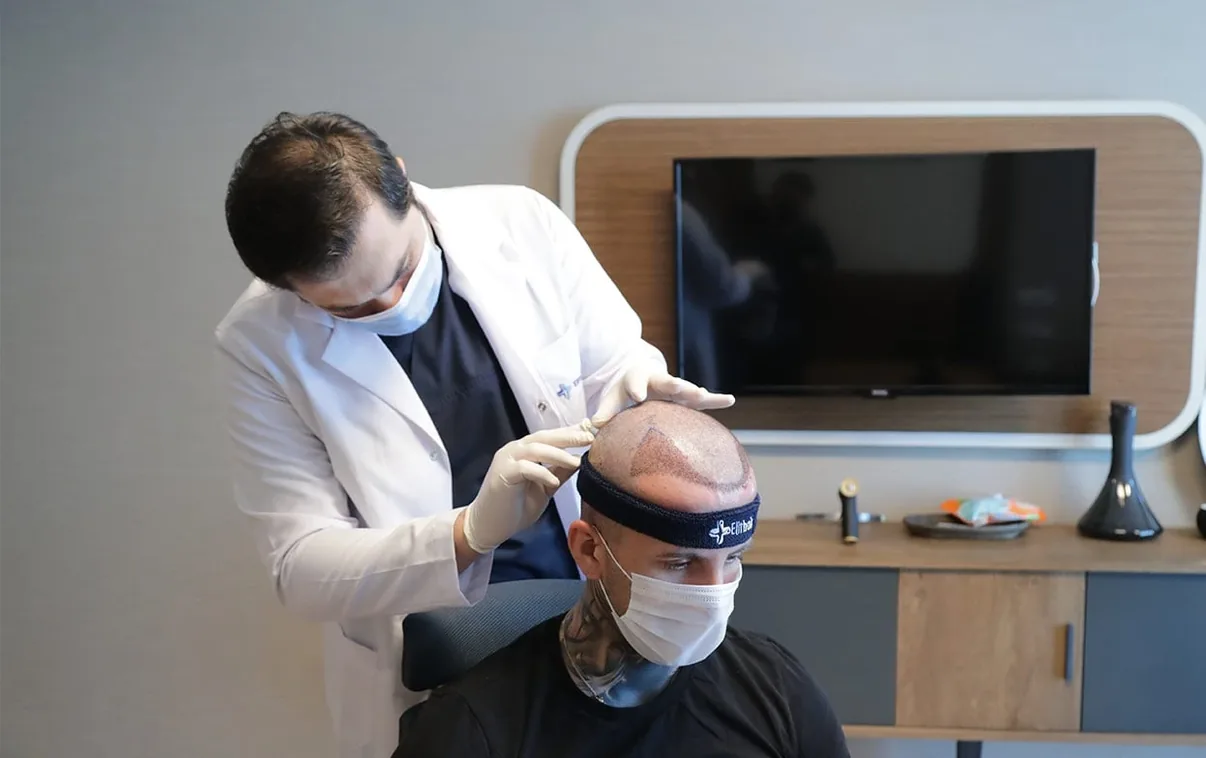
If you are traveling from the US, your preparation begins when you arrive in Istanbul, with the Pre-Test System at our clinic. The patented NEO FUE® Serum, developed by Dr. Abdulaziz Balwi, is part of your package as well: you receive it at the clinic in Istanbul and apply it on day 14 and day 28 after the procedure.
The most unpleasant part of a hair transplant is the local anesthesia: 20 to 30 injections into the scalp. You sleep through this step. Intravenous sedation lets you sleep for about 15 minutes while the anesthetic is administered. A staff anesthesiologist manages your sedation and monitors your circulation and breathing throughout. With the Sleep-Deep method, you feel 0% pain during treatment.
On the day of treatment, we use FUE to extract grafts individually, adjusting the technique to your hair thickness. FUE avoids a linear scar but leaves small dot-like extraction scars that generally become less noticeable as they heal. The follicles are kept in a special nutrient solution to maintain their viability until implantation (Zhou et al. 2023). We then implant them using DHI with the CHOI Implanter Pen, at the precise depth and in the growth direction calculated for you.
Our doctors oversee and take responsibility for your treatment at five key stages: the initial hair analysis, the Pre-Test System, hairline design, anesthesia, and the final check. This is our 5-Doctor Standard.
More than 20 doctors work at our clinic to make this seamless care possible. Experienced medical specialists handle extraction, sorting and implantation. Each has at least 7 years of experience in their part of the process.

5-Doctor Standard
Graft extraction and implantation: performed by medical specialists, each focused on their own step, under a doctor's supervision.
Independent oversight provides ongoing checks on quality and safety at Elithair. The Turkish Ministry of Health makes unannounced visits once or twice a month to inspect hygiene, sterilization, and treatment procedures.
Elithair is also a government-authorized training center for hair surgery. The program has trained over 70 doctors to date.
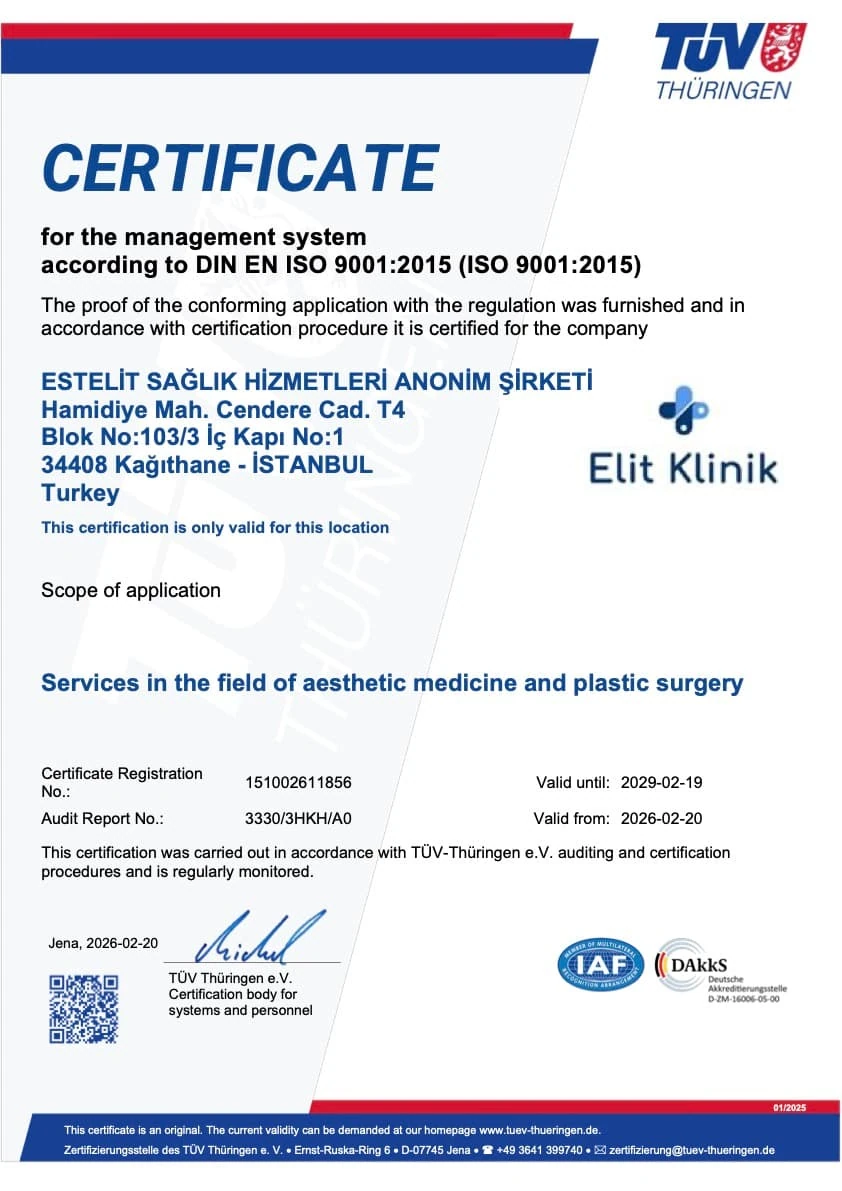
We are also certified to the international quality standard ISO 9001:2015 by TÜV Thüringen, an accredited German certification body (certificate number: 151002611856).
All procedures take place exclusively in our state-of-the-art, specialized clinic.


Our prices are identical for women and men. There is no separate price list for women and no surcharge for finer hair. You are not billed per hair root but by graft tier, and that all-inclusive price covers everything except your flight. Zero Shave FUE and Manual FUE are optional extraction methods available for an additional fee.
| Grafts | Your price | Typical U.S. cost | You save |
|---|---|---|---|
| Up to 2,000 grafts | $3,899 | $6,300 | about 38% |
| 2,500 grafts | $3,999 | $7,900 | about 49% |
| 3,000 grafts | $4,099 | $9,300 | about 56% |
| 3,500 grafts | $4,199 | $10,900 | about 61% |
| 4,000 grafts | $4,299 | $12,400 | about 65% |
| 4,500 grafts | $4,399 | $13,500 | about 67% |
| From 5,000 grafts | $4,499 | $15,600 | about 71% |
All-InclusiveOur all-inclusive package makes your costs clear: every treatment and service is included in the package price. Your flight and optional Zero Shave FUE or Manual FUE extraction are not included. Additional grafts, if needed after assessment, cost $105 per 500 grafts and require your approval. Flight availability to Istanbul depends on your departure airport.

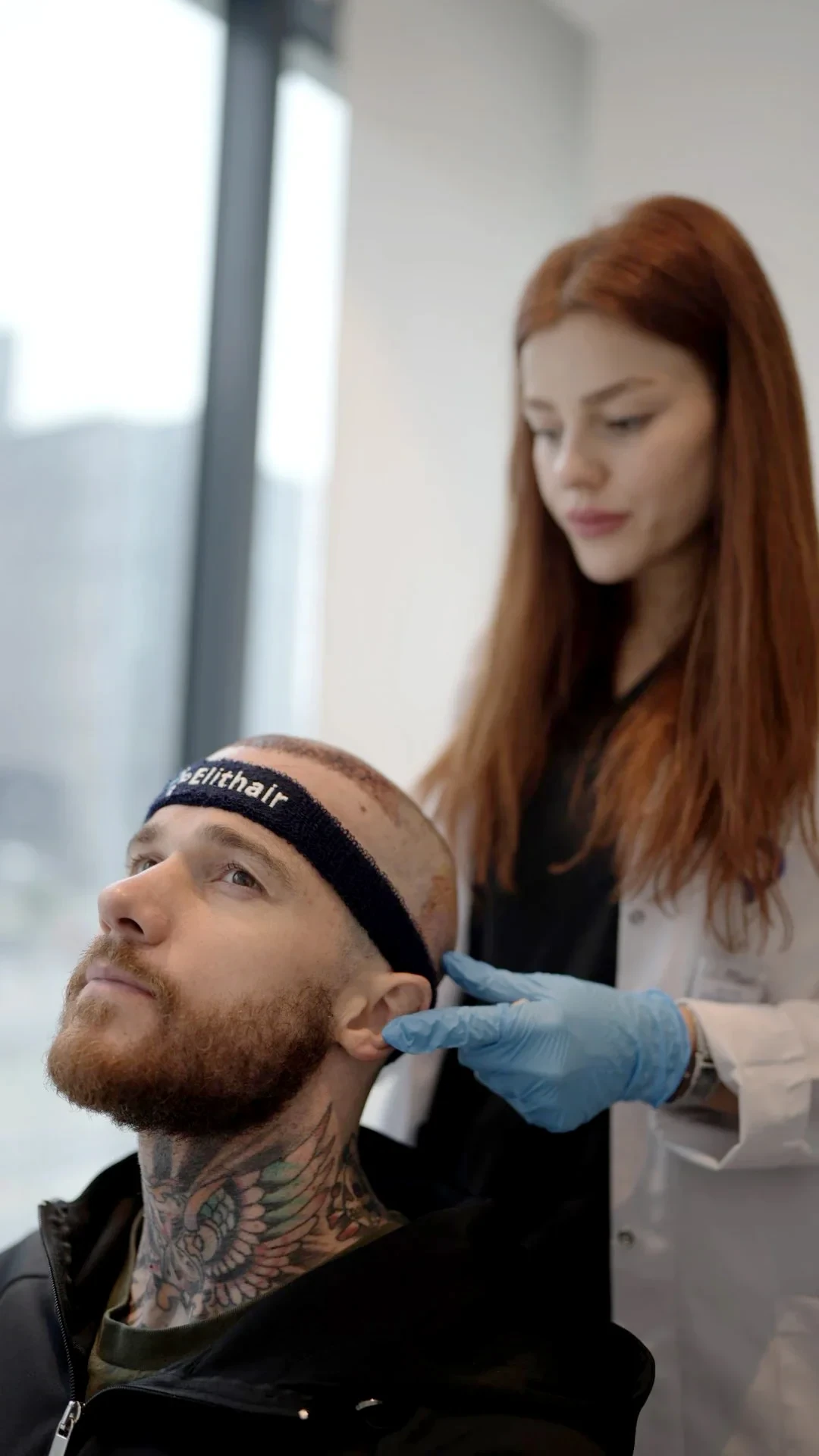 Price Comparison
When comparing hair transplant prices for women, you will notice two differences: higher prices in the US and much lower starting prices from some providers in Turkey.

US clinics charge $2.70 to $5.30 per graft, bringing the cost of a full treatment to $6,300 to $15,600. Our lower prices reflect location rather than medical quality: rent, wages, and operating costs are far lower at our specialized clinic in Istanbul.
We also distinguish ourselves from providers advertising prices starting at $1,500. When comparing unusually low prices, check what medical services, supervision, and aftercare are included.
At Elithair, all services are included:
With a 20-year guarantee on transplanted hair and 12 months of digital aftercare through the Elithair app, the package gives you peace of mind. Our prices are possible because our specialized clinic operates at full capacity, while maintaining our stated medical protocols.
In the US, the same procedure costs $6,300 to $15,600, depending on graft count. At Elithair, you pay up to 71% less because of lower facility and operating costs in Istanbul, while receiving the same standard of care.
Read the fine print when comparing unusually low prices. Essential services such as medical supervision, sedation, aftercare, and DHI often carry additional charges.
Insurance generally does not cover a hair transplant for hereditary hair loss. Although there is no single nationwide rule in the US, Medicare, Medicaid, and private insurers classify the procedure as cosmetic. Rare exceptions include reconstructive procedures for scarring alopecia after an illness or accident, when medical necessity is documented. These cases generally require prior authorization from your insurer, with medical documentation completed before the procedure. HSA and FSA eligibility depends on plan terms and applicable tax rules; medically necessary treatment may qualify. For a purely cosmetic procedure, you pay out of pocket, which is why we state our all-inclusive price up front.

Crusting, redness and slight swelling around the forehead are normal healing reactions. Swelling subsides within a week at most. The crusts come off during the targeted crust removal process on days 10 and 11, and redness can remain visible for two weeks to three months. The hardest part of this phase is ignoring the itch and not scratching, so the new grafts can grow undisturbed.
In the first weeks after treatment, transplanted hairs may shed temporarily while the roots remain in place and produce new hair. This is known as shock loss, and not every patient experiences it (Okochi et al. 2024).
In women, nearby existing hair can also temporarily enter a resting phase and shed. This can be temporary but is not always harmless or fully reversible, so we use the smallest possible openings and handle the scalp gently. Starting in the third month, the transplanted roots produce lasting new growth.
For 12 months, you upload photos of your healing progress through the Elithair app, and our medical team reviews them and guides you through aftercare. The app also sends push notifications to remind you which activities you can resume, and when.

New hair generally starts to grow around months 3 to 4 and develops gradually over the following year. Frontal results are commonly assessed around months 10 to 12, while crown maturation may take 15 to 18 months. Growth follows distinct, normal phases, helping you understand what to expect at each stage.
| Timing | Growth phase | What is happening |
|---|---|---|
| Day 1 to 3 | First crusts and slight redness | First crusts form, along with slight redness. Light desk work is usually possible again from the second or third day. |
| Days 2 to 4 | Temporary swelling | Temporary swelling around the forehead and eyes can occur and subsides within a week at most. |
| Day 10 to 12 | The crusts are removed with the lotion | The crusts are removed with the lotion on days 10 and 11, and from day 12 you can wash your hair with regular shampoo again. Redness can remain visible for two weeks to three months. |
| In the first weeks after treatment | Shock Loss | The transplanted hair shafts may fall out temporarily (shock loss) while the roots stay firmly anchored and produce new hair. Not every patient experiences shock loss. |
| After 2 to 6 weeks | You return to exercise in stages | You return to exercise in stages: light exercise after 2 weeks, moderate activity after 4 weeks, and weight training after 6 weeks. |
| Months 3 to 4 | The first fine hairs become visible | The first fine hairs become visible in the treated areas. |
| Months 6 to 9 | Early results are often visible | Early results are often visible by month 6, when around 40% of growth may be seen; density can continue improving. |
| Month 12 | Results in the frontal area mature | Results in the frontal area are usually mature by months 10 to 12. Crown areas may continue maturing through months 15 to 18. Density and timing vary. |

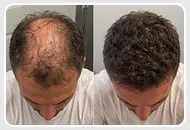
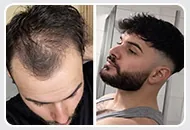
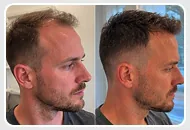

For women, a hair transplant is rarely a spur-of-the-moment decision.
Your free hair analysis is a first step with no cost or obligation. If it shows that you are a suitable candidate, acting sooner can pay off. We plan your result based on your current hair loss, and a more stable starting point allows for greater density. New hair takes about six to twelve months to fill in, so every month you wait also delays your results by a month.
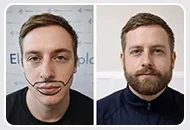
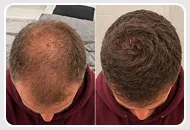
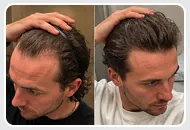
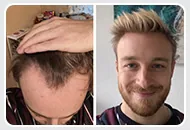
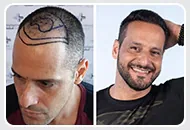
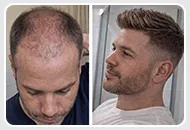
Julia O. – 1,700 grafts
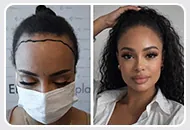
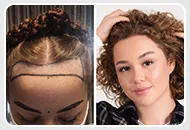
Jahy C. – 3,200 grafts
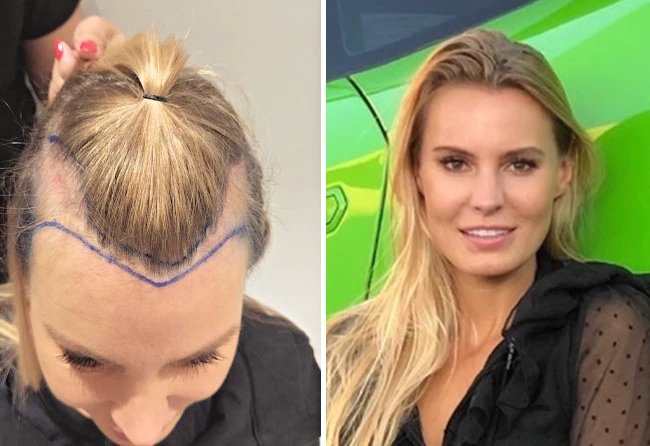
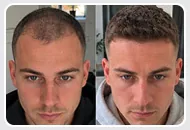
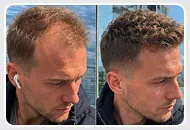
Doreen S. – 3,100 grafts
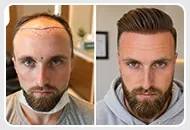
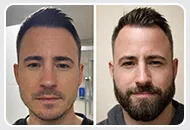
Melissa Z. – 2,700 grafts
Your health comes first, of course. If you are pregnant, breastfeeding, actively trying to conceive or going through hormonal changes, we will tell you plainly to postpone the procedure until your hair has stabilized.
More than 11,000 official Google reviews, averaging 4.9 out of 5 stars, speak for themselves. Our experience with 150,000 treatments allows us to provide individual care informed by almost every hair loss pattern and treatment option.
We measure success by what you see in the mirror: density along your part, a hairline that looks naturally yours, and the confidence to wear your hair down again. Graft count alone is not our benchmark.
During your free hair analysis, we give you an honest assessment of whether a hair transplant is right for you. If it is not medically appropriate, we will tell you.

Your all-inclusive price is set by graft tier rather than charged per hair root. Prices start at $3,899 and cover everything except your flight: DHI, the Pre-Test System for your personalized treatment plan, three nights at a 4-star hotel near the clinic, VIP transfers, one PRP treatment, and twelve months of medically supervised aftercare through the Elithair app. The included PRP treatment takes place at the clinic on the day of your procedure. At least six PRP sessions are recommended overall, with additional timing based on your individual treatment plan. Women and men pay the same prices. Zero Shave FUE and Manual FUE are optional extraction methods available for an additional fee.
A hair transplant is not right for every woman, and a reputable clinic assesses your suitability before treatment. We decline around 40 percent of all inquiries after the hair analysis, but that overall figure does not determine your candidacy. What matters is your hair loss pattern, your donor area, and whether you have an underlying cause that can be treated. Nonsurgical treatment and transplantation can work together: treatment protects and strengthens your existing hair, while transplanted grafts may improve coverage in suitable areas.
A transplant is not suitable if the donor area at the back of your head is also thinning, as it does with diffuse hair loss. Extraction would make the thinning worse. You also need to wait if you have an active inflammatory or scarring form of hair loss, or if the underlying cause has not been treated. If you are trying to conceive, pregnant, or breastfeeding, we postpone treatment because your hair changes during these stages.
Not necessarily. With Zero Shave FUE, available for an additional fee, both the donor and recipient areas may remain unshaved in suitable cases. It requires medium-length or long hair and a maximum of 3,500 grafts. We assess whether you are a suitable candidate during your free hair analysis.
There is no single answer. Your graft count depends on the size of the thinning area and how much hair your donor area can safely provide. More grafts do not necessarily mean better results; they use up your donor reserves faster (Unger et al. 2013). Our doctors determine your graft count only after assessing the donor area, helping keep the extraction site discreet and preserve follicles for future treatment.
The procedure itself is the same, but planning is more demanding for women (Unger 2013). Women often have lower donor density at the back of the head, finer hair, and a hairline that sits lower in the center and higher at the sides. We use the Pre-Test System to measure scalp thickness and blood flow, then calculate the incision depth rather than estimate it. These measurements inform each patient’s personalized treatment plan. We use DHI to place grafts between existing hairs while taking care to minimize injury to surrounding follicles.
Transplanted follicles come from the donor area around the sides and back of the head. They generally have greater resistance to androgen-related miniaturization and retain this characteristic after transplantation, but they are not immune to future thinning. We provide a written 20-year guarantee on the transplanted hair, provided you follow the aftercare instructions.
There is no fixed age limit. What matters is a stable hair loss pattern, sufficient donor hair, and your overall health. A 28-year-old with stable hair loss may be a better candidate than a 55-year-old whose hair loss is still progressing. Your assessment determines suitability, rather than your birth year.
The crusts come off during the targeted crust removal process on days 10 and 11, and redness can remain visible for two weeks to three months. Forehead swelling can occur between day two and day four and subsides within a week at most. You can often return to desk work on day two or three, resume light exercise after two weeks, and return to weight training after six weeks. In the first weeks after treatment, transplanted hair shafts may shed temporarily (shock loss) while the roots remain in place. Not every patient experiences shock loss. Temporary shedding can be a normal part of recovery, but contact the medical team if it is severe, prolonged, or otherwise concerning. New growth usually starts around months 3 to 4, approximately 40% may be visible around month 6, and frontal results generally mature by months 10 to 12. Crown results may take 15 to 18 months.
Hair transplants for hereditary hair loss are generally considered cosmetic and are usually not covered by Medicare, Medicaid, or private insurers. Coverage may be available for scarring alopecia caused by an accident or illness. In those cases, submit a request to your insurer, generally with prior authorization and always with medical documentation completed before treatment. HSA and FSA eligibility depends on plan terms and applicable tax rules; medically necessary treatment may qualify. You pay out of pocket for a purely cosmetic procedure.


