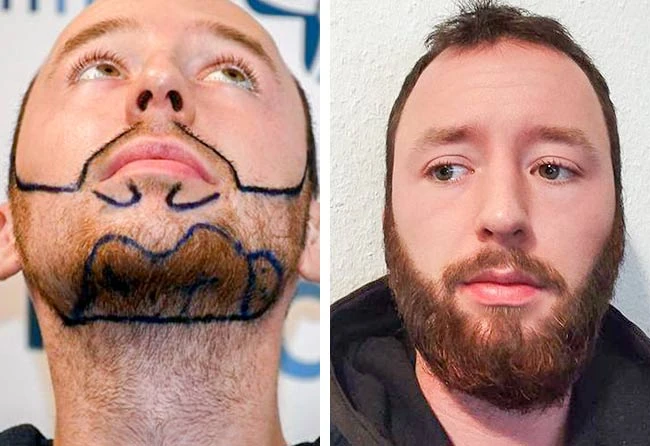
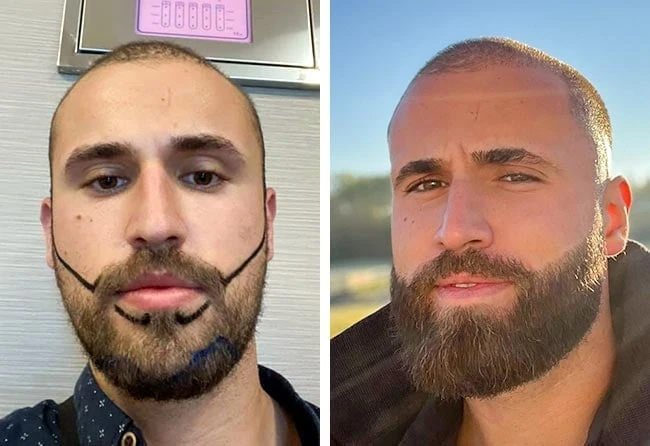
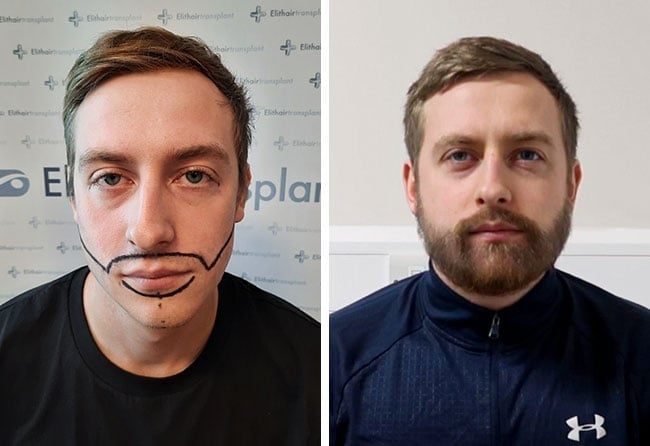
Before
After
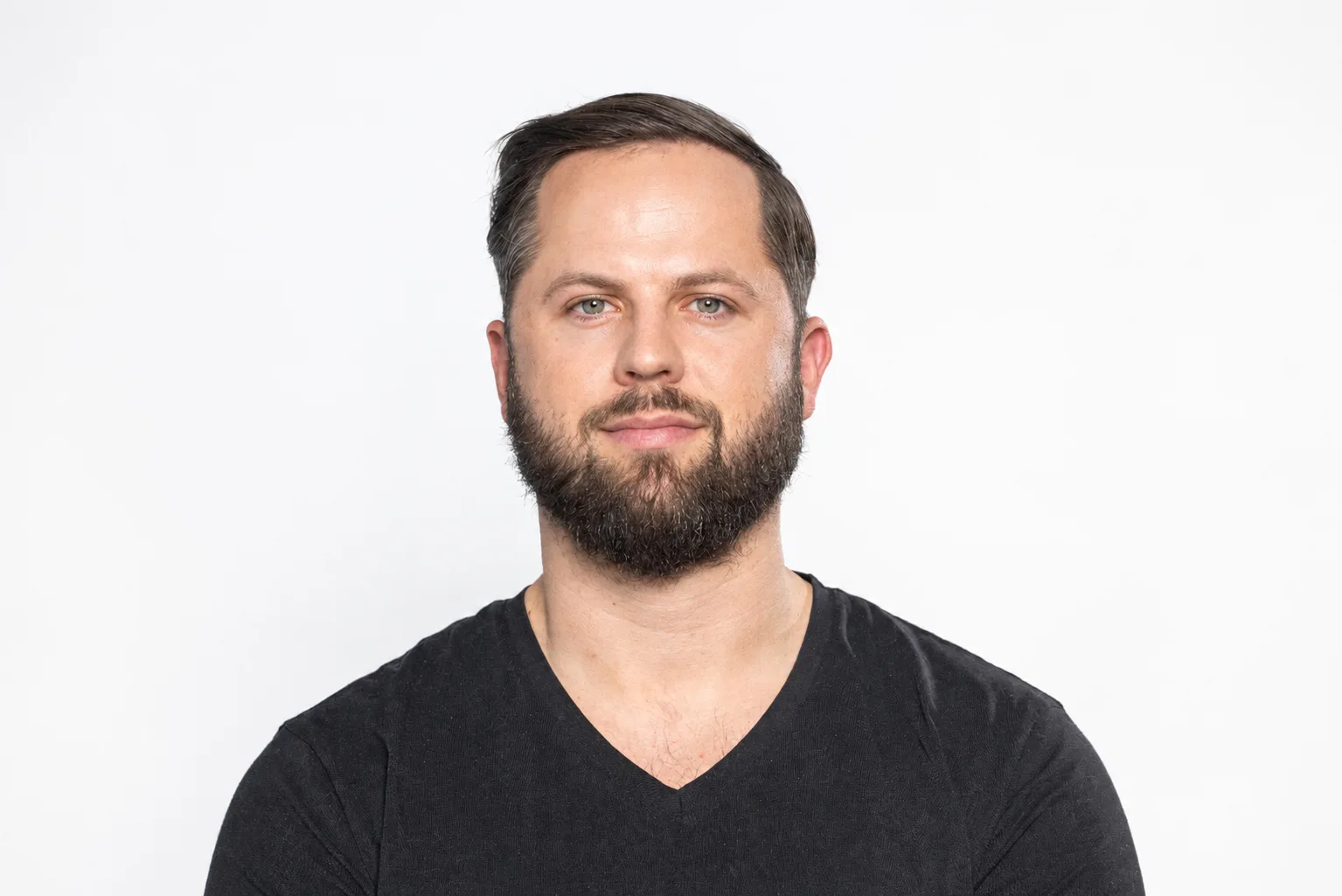
Felix V. – 3,700 grafts

4.9 - 11,000+ Reviews on Google

150,000+ Happy Patients Worldwide
free, no obligation
 4.9 out of 5 stars on Google
More than 150,000 treatments
at our specialist clinic, certified to ISO 9001:2015
by TÜV Thüringen.

 Beard transplant
A beard transplant moves your own hair follicles from the back of your head into the gaps on your cheeks, chin or upper lip (Dua et al. 2021).
Grooming products can't stimulate follicles that were never there. A transplant provides lasting growth for a fuller beard you can shape however you want. All-inclusive package from $3,899.
How many grafts you need depends on your existing beard growth. For a full beard, we typically plan for roughly 2,500 to 4,700 grafts; for isolated gaps on the cheeks or sideburns, about 2,000 to 2,500. The procedure uses local anesthesia, with no general anesthesia. Plan to spend three days in Istanbul, and expect to see your final results in around ten to twelve months.
Our free hair analysis starts by determining whether you're a good candidate. We turn down about 40% of inquiries because the chances of a successful outcome are too low.
FUE extraction at the back of the head, DHI implantation into the beard area, included in the price
Learn morelocal anesthesia, administered during 15 minutes of Sleep-Deep twilight sedation; no general anesthesia
Learn moreapprox. 5 to 8 hours, depending on the number of grafts to be transplanted
Learn morefrom $3,899, depending on the pricing tier for your graft count, including three nights at a 4-star hotel near the clinic, transfers and aftercare
Learn moreusually after one to two days; scabs are carefully removed on days 10 and 11
Learn morelight exercise after two weeks, gym after four weeks, weight training after six weeks
Learn more20-year written guarantee on the transplanted hair, provided you follow the aftercare instructions
Learn moreOur patients' results show what a carefully planned beard transplant can achieve.
Compare the before and after photos and see for yourself how a denser beard with a defined outline can change the way you look.
Felix V. – 3,700 grafts
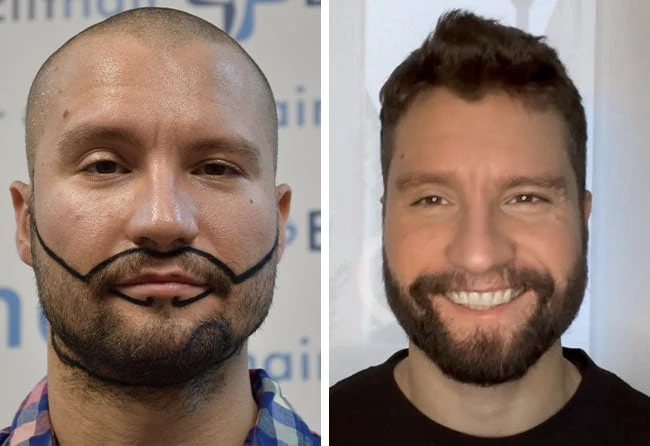
Dominik S. – 3,500 grafts
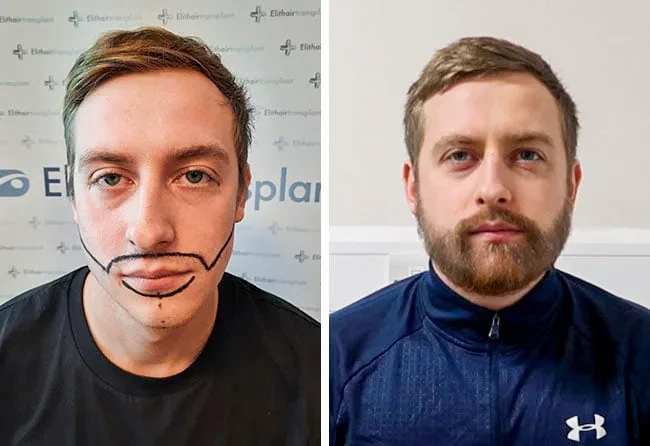
Jay J. – 4,200 grafts
Hu L. – 3,300 grafts
CausesFor most men, patchy beard growth is genetic: the number of facial hair follicles is set at birth. Areas without follicles — often matching patches on both cheeks — won't fill in on their own.
Scars can also permanently damage hair follicles. Alopecia areata affecting the beard is a different issue and requires an evaluation by a dermatologist first.
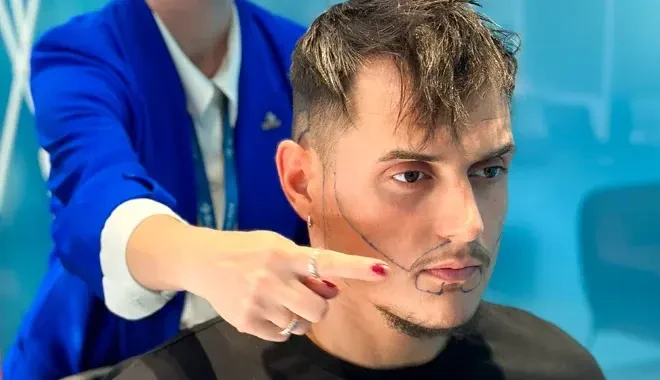
This is what sets a transplant apart from grooming products and tonics:
Active ingredients like minoxidil only stimulate existing follicles, and only while you keep using them.
A beard transplant moves your own follicles to a new area, where they take root and continue growing permanently.
Your own hair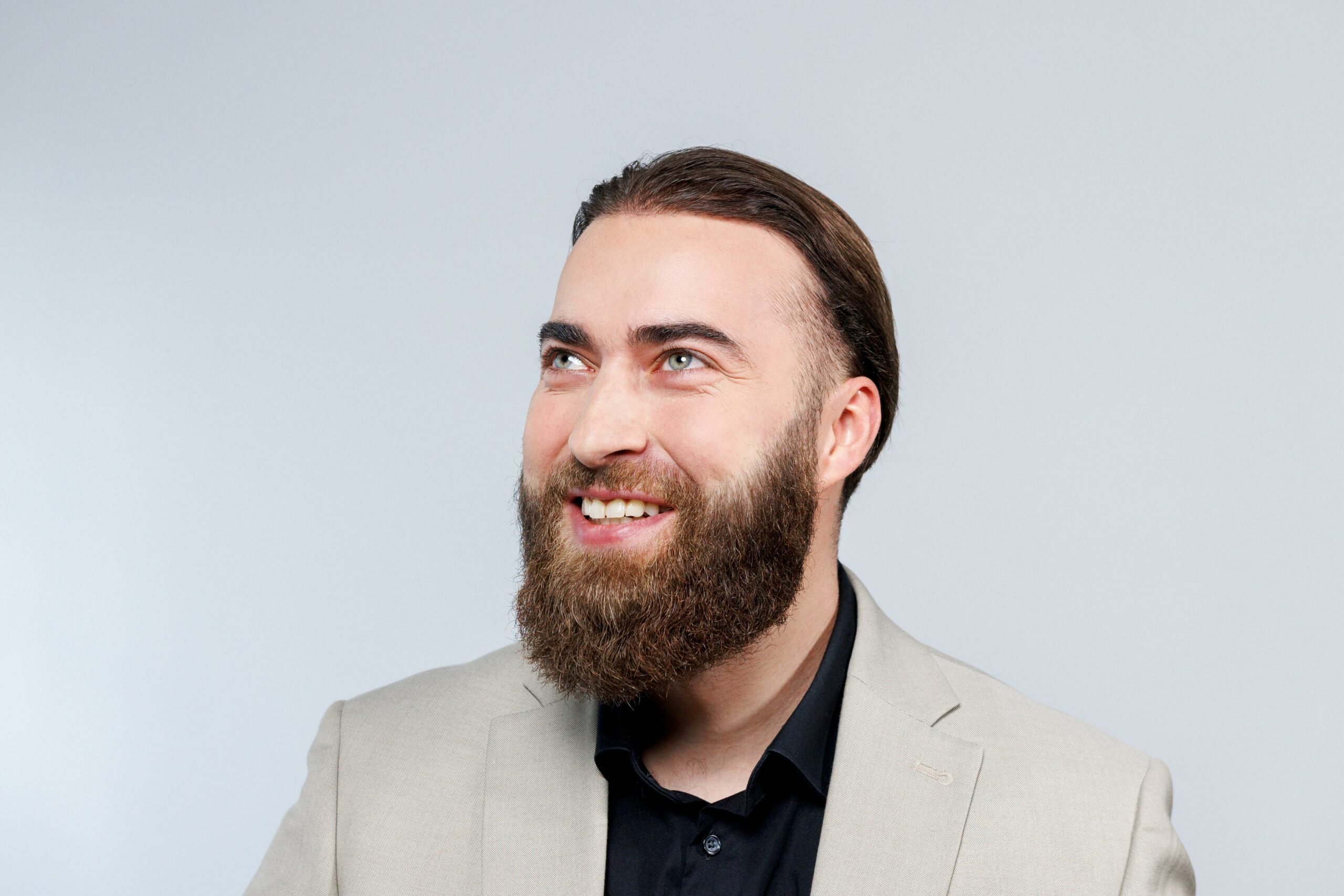
A beard transplant is an outpatient, minimally invasive procedure that moves your own hair follicles from the donor area at the back of your head to patchy areas of your beard. The result is permanently fuller growth using your own hair, which you can shave, trim and style as usual (Civaş et al. 2020).
The hair follicles in the donor area at the back of your head generally have greater resistance to androgen-related miniaturization. They retain this donor-area characteristic after transplantation to the face and can continue to grow over the long term.
The dense hair under the chin can provide a second donor source. The supply is limited, and the area heals within one to four weeks after extraction. We don't use chest or body hair: in the comparative study cited below, chest hair grafts had the highest shedding rate of the three donor types examined, at 53.3%.
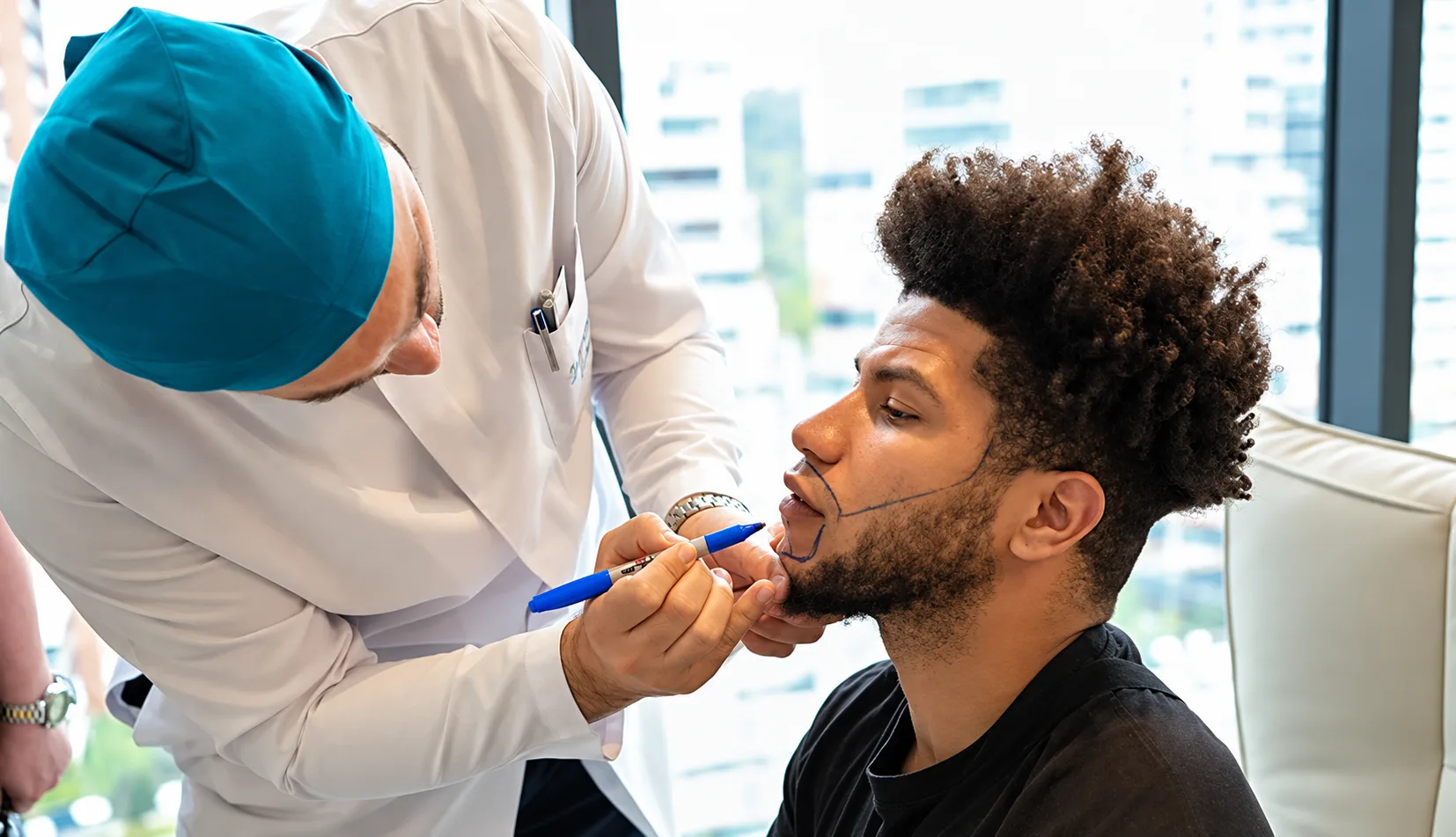
We can treat any beard area on its own or combine several areas. The number of grafts needed depends on the size of the gap, your existing growth and your desired density. During your free hair analysis, our doctors estimate how many grafts you will need.
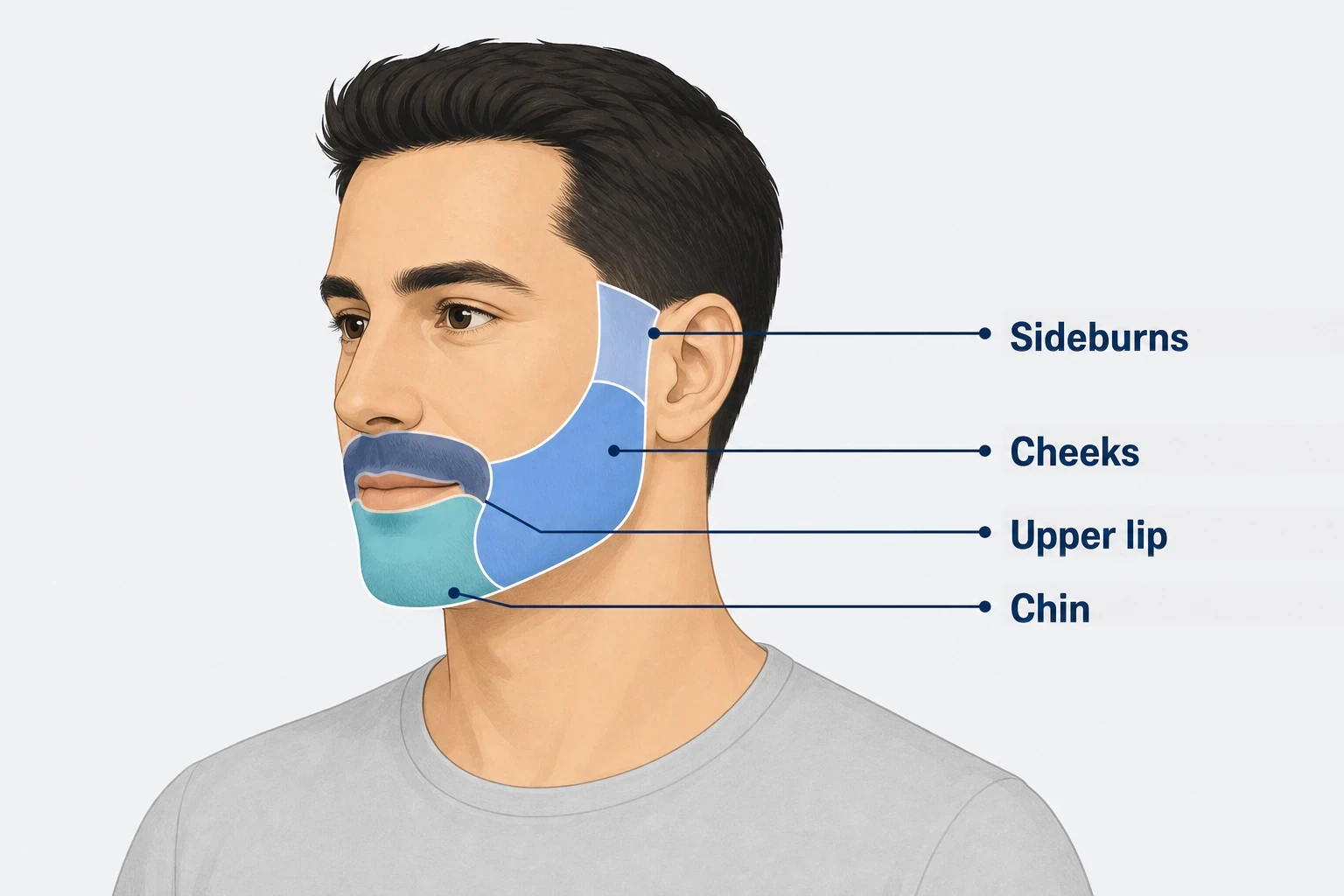
*The number of grafts needed for a dense result varies by patient and depends on the size of the gaps, your existing beard growth and your goals. These numbers are a guide, not a quote.
Angle, direction, distributionOne difference between scalp and beard transplants rarely gets explained: scalp hair usually grows in natural groups of two to four follicles, while beard hairs typically grow individually.
Before implantation, we sort the extracted grafts by thickness and growth characteristics: finer follicles create a natural outline, while thicker follicles add density throughout the beard.
The angle at which each hair emerges from the skin is just as important: every follicle must sit at a shallow angle of 10 to 15 degrees.
Growth direction changes several times across the face, so each hair must align with its neighbors — a channel created at too steep an angle can't be corrected later.
A natural-looking beard depends on the right angles, growth directions and careful distribution, not just on a high graft count (Epstein 2024).
FUE and DHI aren't competing methods; they handle different stages of the same procedure. FUE gently extracts the hair follicles, and DHI places them precisely. In a beard transplant, these steps form one continuous process.
With FUE, follicular units are extracted individually using a fine hollow needle, also known as a micro-punch, with a diameter of 0.6 to 0.8 mm. FUE is the preferred technique for beard transplants because it heals without scars, unlike the older strip method, which leaves a continuous linear scar.
One often overlooked factor in extraction quality is micromotor speed. The faster the motor turns, the more trauma it causes in the donor area.
The industry standard is around 4,000 revolutions per minute. We limit our devices to 750 rpm and perform the extraction itself at 100 to 200 rpm. This requires considerable skill, so only medical specialists with at least seven years of experience perform this step.
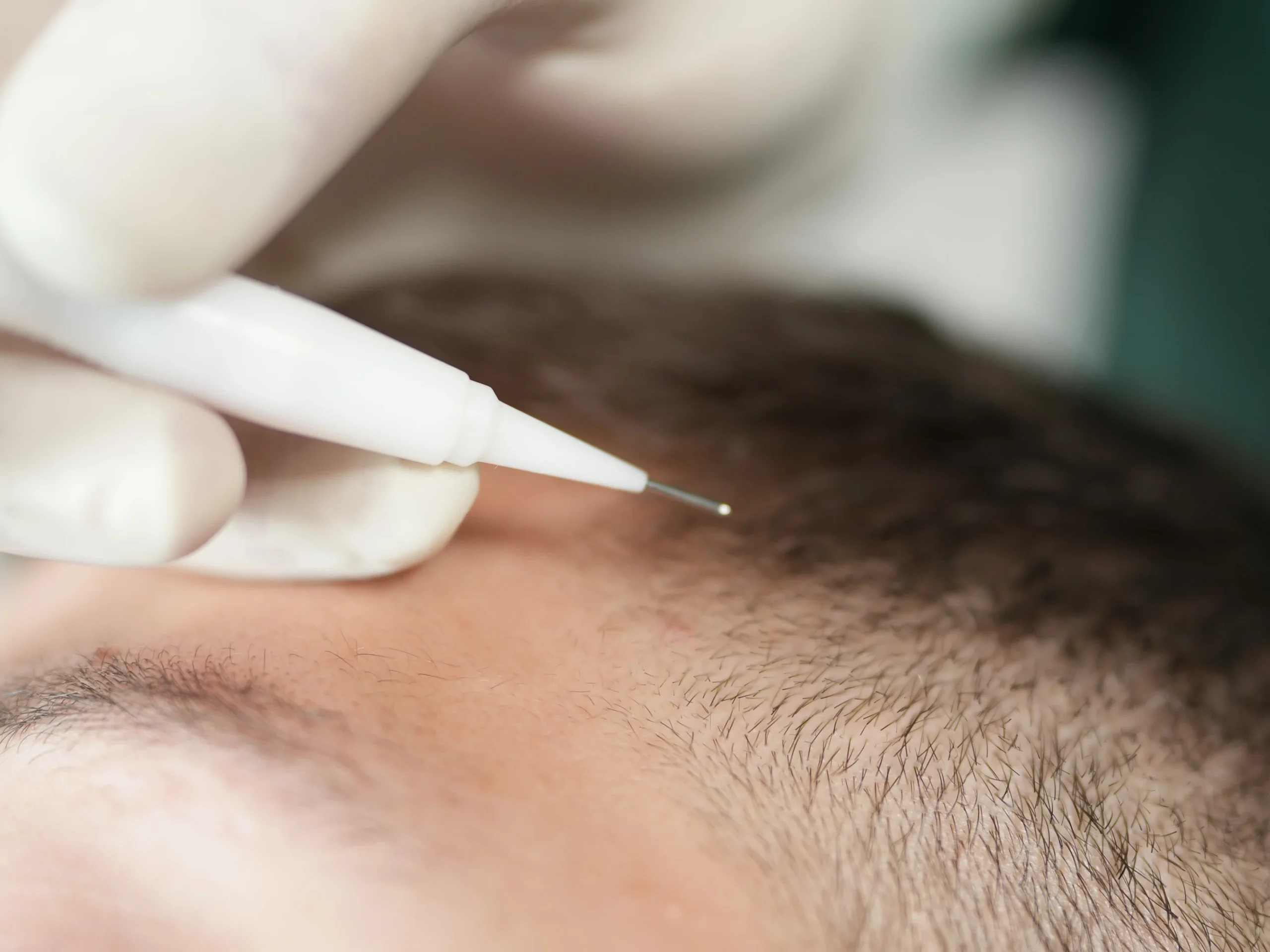
For beard transplants, we use the modern DHI method, just as we do for scalp hair transplants. The CHOI Implanter Pen places each graft individually, creating the recipient site as it inserts the graft (Choi et al. 1992).
This combines site creation and implantation into one step per follicle, allowing us to precisely control the angle, depth and growth direction of each beard hair.
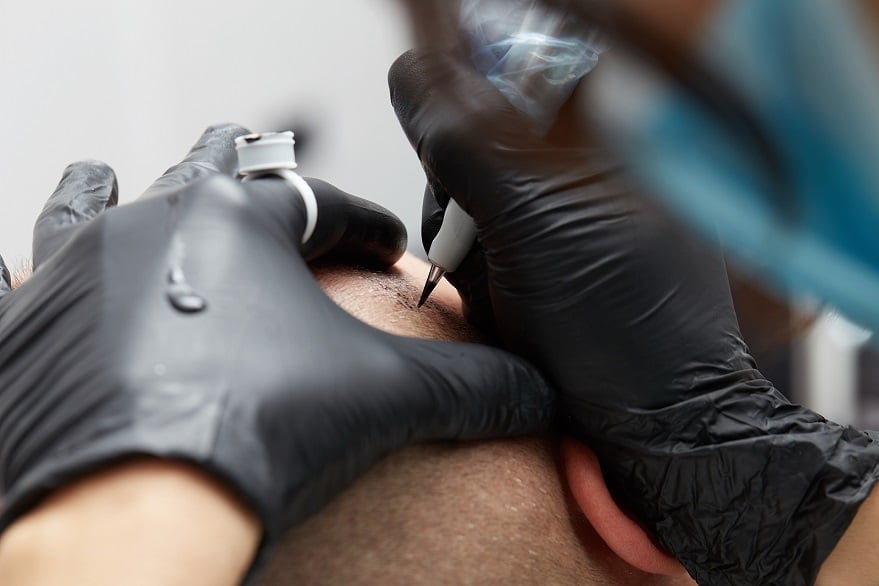
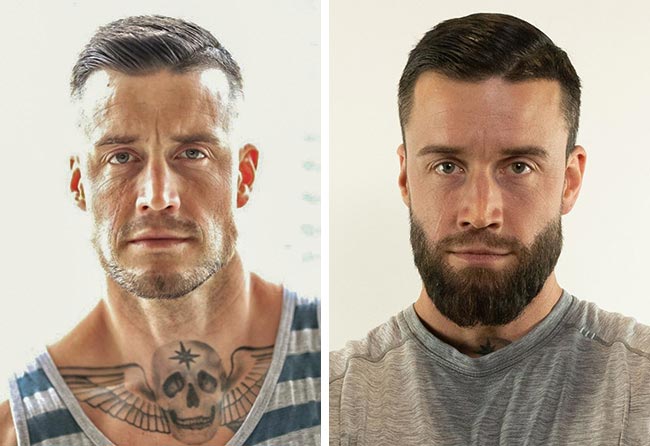
Most of the men who come to us want the same thing: a continuous, clearly defined beard outline and the freedom to style their beard the way they like, instead of gaps dictating the shape.
The most common reason for a beard transplant is genetically patchy growth. We also restore hair in areas affected by scars or burns (Yaseen et al. 2021). Age alone doesn't determine eligibility. What matters is that your beard growth has matured, you have enough donor hair and the cause of the patchiness has been medically established.
Active alopecia areata affecting the face rules out a beard transplant for now. The autoimmune reaction can flare up again and damage transplanted hair, so we require at least two years without symptoms before proceeding.
Active inflammatory skin conditions in the recipient area also require treatment by a dermatologist first. If hair loss is unstable and follicular miniaturization exceeds 15%, the first step is to stabilize it medically over about six to twelve months.
However, an autoimmune condition doesn't automatically rule out treatment. A well-managed condition that doesn't affect the skin is usually not an obstacle; what matters is that there is no active inflammation in the recipient area.
IstanbulIstanbul is recognized worldwide as one of the leading centers for hair transplants.
Beard transplants cost less in Turkey because rents, salaries and operating costs are much lower, not because clinics cut corners on quality.
With so many clinics to choose from, use these 4 criteria to compare providers:
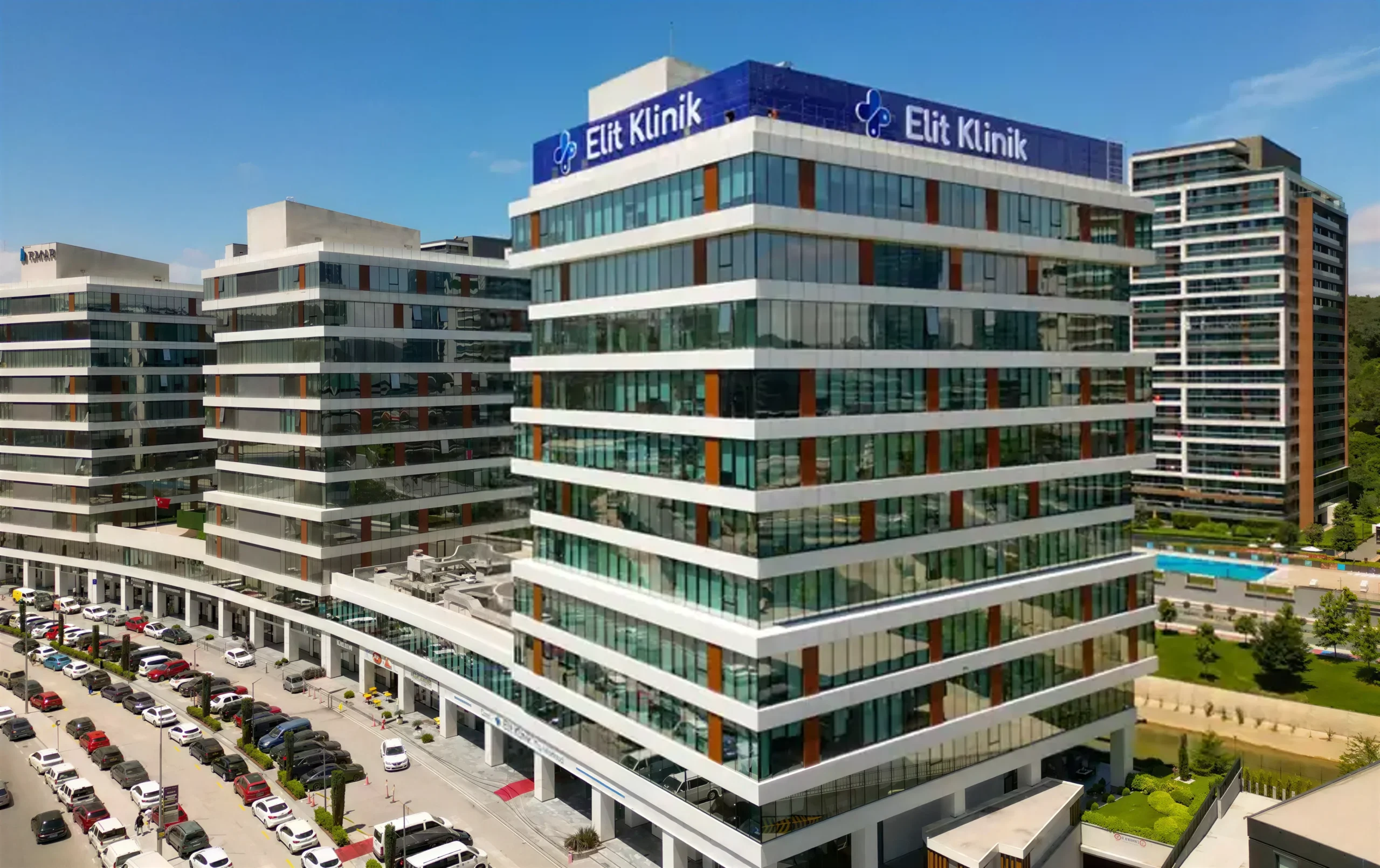
The Turkish Ministry of Health conducts unannounced inspections of our clinic one to two times per month. Inspectors check hygiene, sterilization, treatment protocols and documentation — a level of inspection most private clinics never experience.
TÜV Thüringen, an accredited German certification body, has audited and certified our processes to ISO 9001:2015 (certificate number: 151002611856). The registration is publicly verifiable, and that's what sets genuine proof of quality apart from a marketing badge.
Hair transplantation isn't part of the medical school curriculum, so the Turkish Ministry of Health designated us an official hair transplant training center. More than 70 doctors have trained with us.
Hair transplantation is our field, and our expertise and daily practice are devoted to restoring scalp and beard hair.
People considering a beard transplant abroad are often more concerned about aftercare than the procedure itself: will language barriers make it difficult to ask questions, and how will follow-up care work once they are home? At Elithair, you receive care in English from your first message to your final check-in.
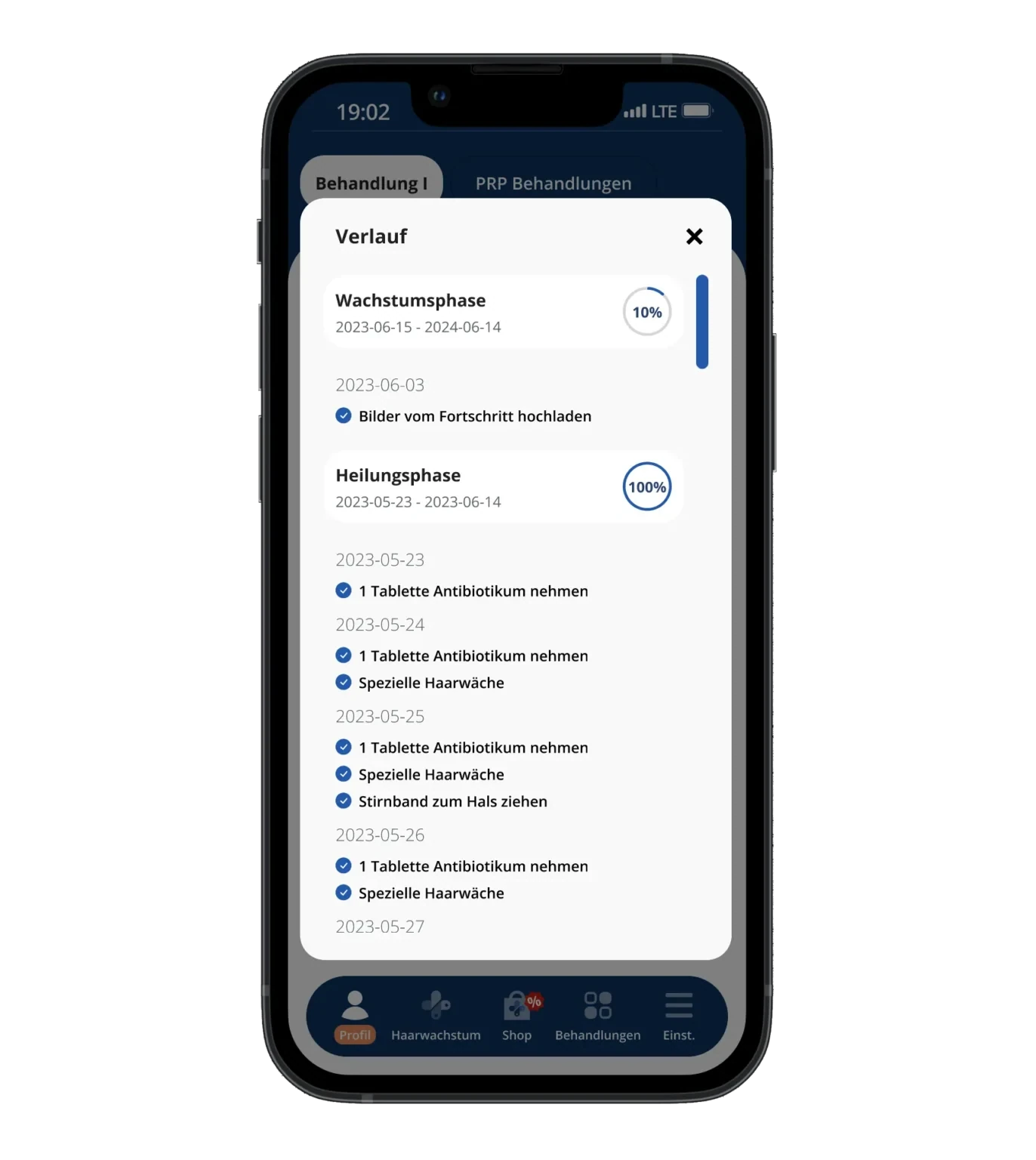
All aftercare is provided digitally through the Elithair App. We monitor your healing for a full twelve months: you upload photos at scheduled intervals, and our medical team reviews them.
At Elithair, pricing is based on clearly defined graft tiers rather than a charge per individual follicle. Your beard transplant consultant explains the costs in detail. Medicare, Medicaid and private insurance plans classify a beard transplant for genetic hair loss as cosmetic, so it isn't covered. HSA or FSA funds may be used only when medical necessity is documented.
| Grafts | Your price | Typical U.S. cost | You save |
|---|---|---|---|
| Up to 2,000 grafts | $3,899 | $6,300 | about 38% |
| 2,500 grafts | $3,999 | $7,900 | about 49% |
| 3,000 grafts | $4,099 | $9,300 | about 56% |
| 3,500 grafts | $4,199 | $10,900 | about 61% |
| 4,000 grafts | $4,299 | $12,400 | about 65% |
| 4,500 grafts | $4,399 | $13,500 | about 67% |
| From 5,000 grafts | $4,499 | $15,600 | about 71% |
All-Inclusive PackageOur all-inclusive package covers every medical service and all arrangements for your stay, so you know the full price upfront. For logistical reasons, you book your own flight. Direct flights to Istanbul are available from almost every major U.S. gateway, and fares vary by route and travel dates. Zero Shave FUE and Manual FUE are available as options for an additional fee.

 Price differences
A comparable beard transplant at a U.S. clinic costs $6,300 to $15,600, roughly $2.70 to $5.30 per graft. That gap reflects lower rent, staffing and operating costs in Turkey rather than a difference in medical quality.
Elithair also differs from low-cost providers in Istanbul. A search for a beard transplant will quickly turn up offers starting at $1,500. Those savings usually come from cuts you can't immediately see: lower medical standards.
Our price always includes the full range of medical services:
Your savings come from lower local costs and the efficient processes at our specialist clinic. We do not reduce costs at the expense of your medical care.
PreparationIf you are traveling from the U.S., preparation begins when you arrive in Istanbul, with the Pre-Test System at our clinic.
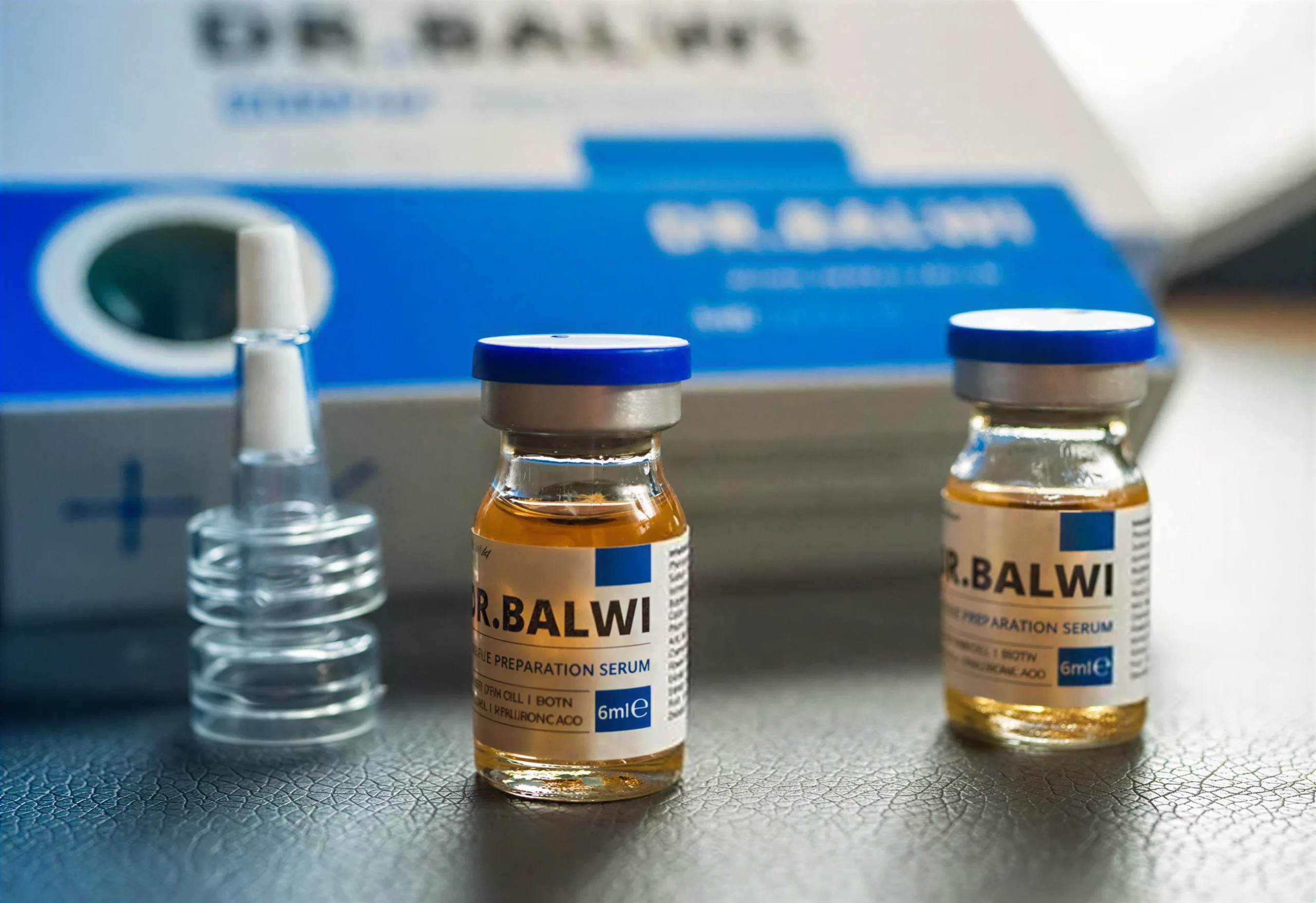
The patented NEO FUE® Serum is part of your package as well: you receive the set, with a dermaroller and two ampoules of serum, at the clinic in Istanbul and apply it on day 14 and day 28 after the procedure.
During the beard transplant, extracted grafts are stored in a special nutrient solution to maintain maximum viability until implantation (Zhou et al. 2023).
To prepare your tissue and circulation for the procedure, please follow these guidelines:
| What to avoid | Time frame |
|---|---|
| Minoxidil | 14 days |
| Anti-hair-loss shampoos, serums and sprays | 7 days |
| Trimming your beard and hair | 14 days (your beard and hair will be precisely trimmed at the clinic) |
| Alcohol | 3 days |
| Smoking, coffee and tea | 1 day |
| Eating before Sleep-Deep sedation | 6 hours (water is allowed up to 2 hours before) |
Note: If a doctor has prescribed finasteride, keep taking it without interruption.
Plan to spend three days in Istanbul for your beard transplant. We arrange your entire stay, from airport transfers to accommodation, so you can focus on your treatment.

Your stay includes three nights at a 4-star hotel near the clinic. Rooms at the clinic are also available on request.
On the day you leave, we check the treated area without washing it. You receive a personal care kit and detailed instructions for your first gentle wash at home.
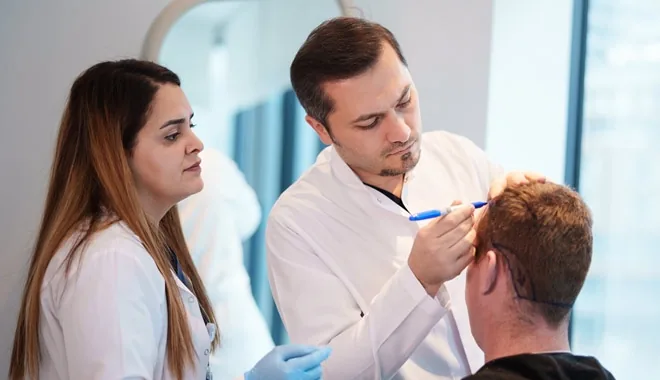
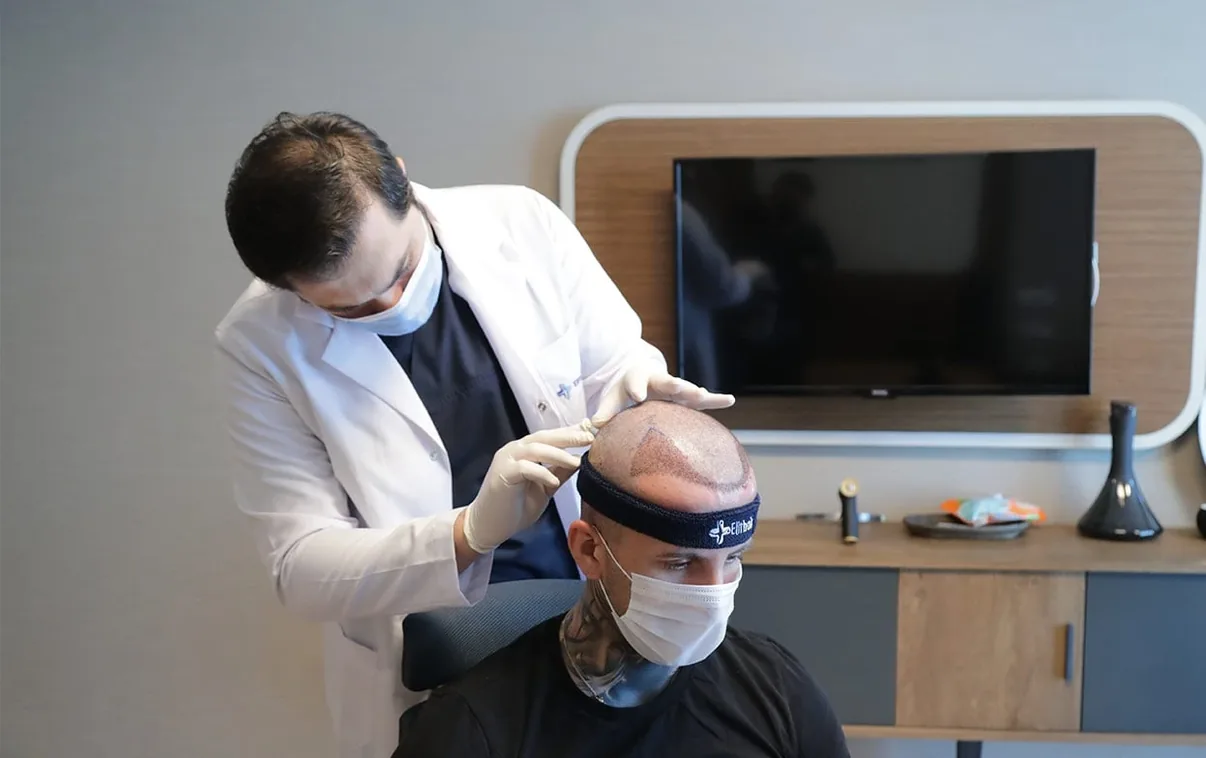
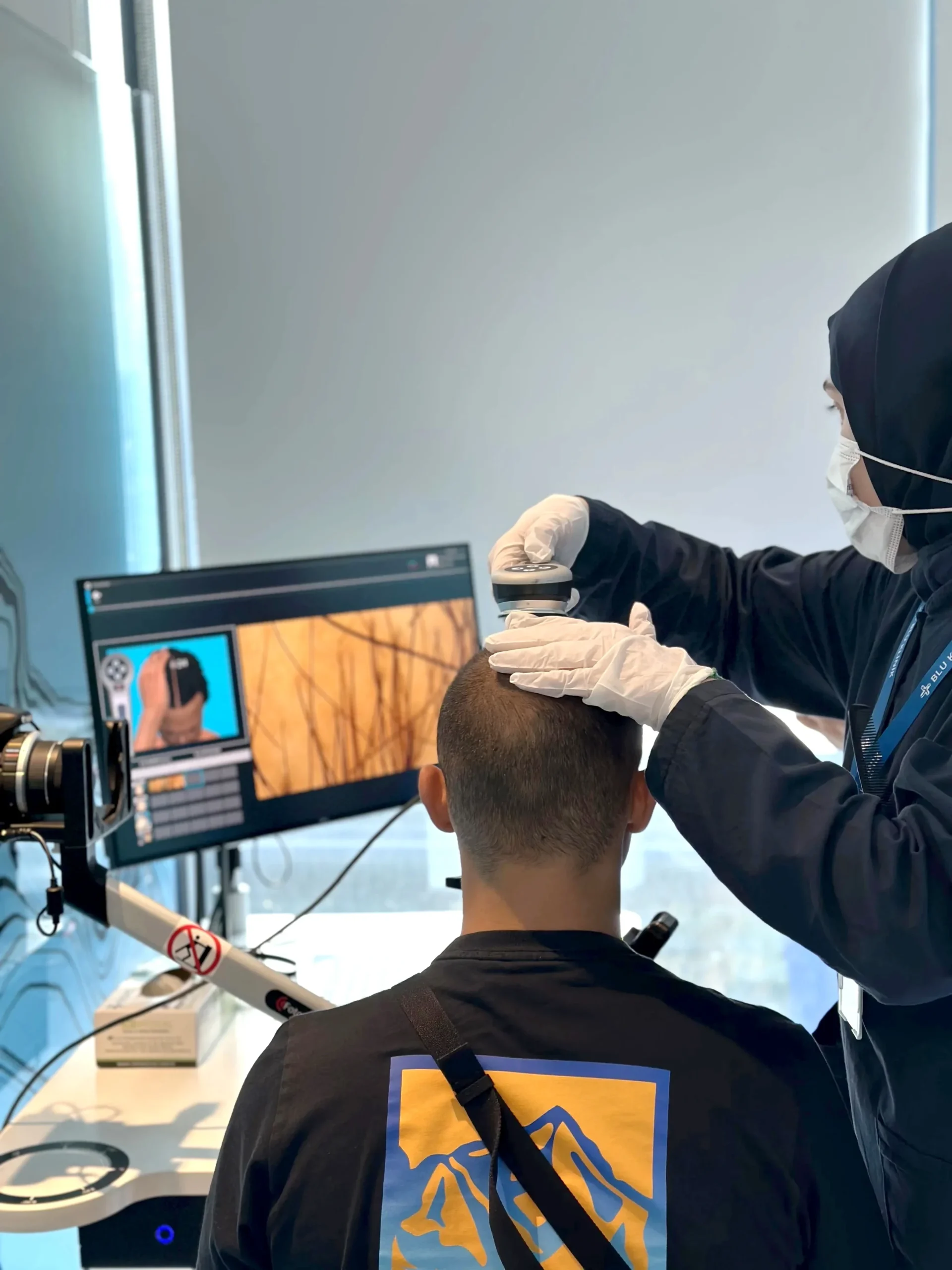
Right after you arrive in Istanbul, you complete our Pre-Test System at the clinic. It includes six coordinated assessments: an EKG, a general health blood test, a second blood test to investigate the causes of your hair loss, a TrichoLAB analysis of follicle density and hair structure, an ultrasound of the scalp to determine skin thickness and a Doppler ultrasound to measure blood circulation.
Your personalized treatment plan is built on the results. Each finding affects our approach: scalp thickness determines the exact insertion depth, blood flow and existing density guide placement angles and distribution, and the TrichoLAB scan shows how many grafts of each type are available in the donor area.
This level of personalization directly affects your treatment planning: placement that is too shallow can reduce graft survival, while Elithair cites a graft survival rate of approximately 98% when implantation depth is tailored using the Pre-Test System. That is why every treatment is different, even when the graft count is the same.
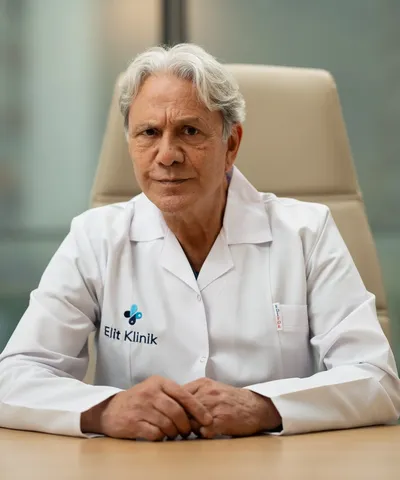
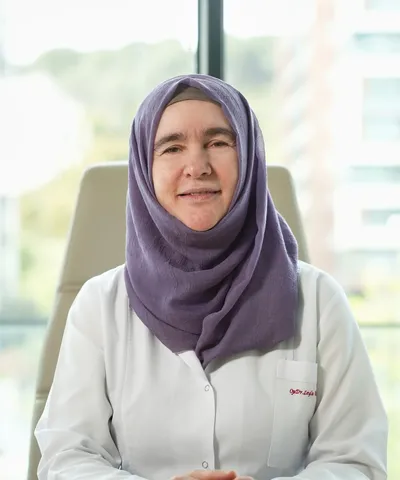
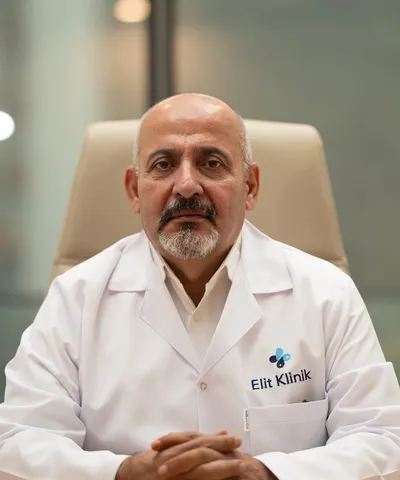
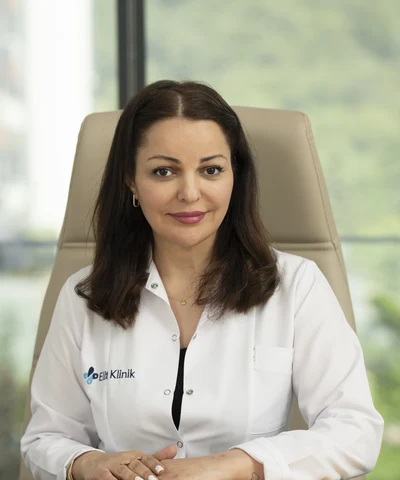
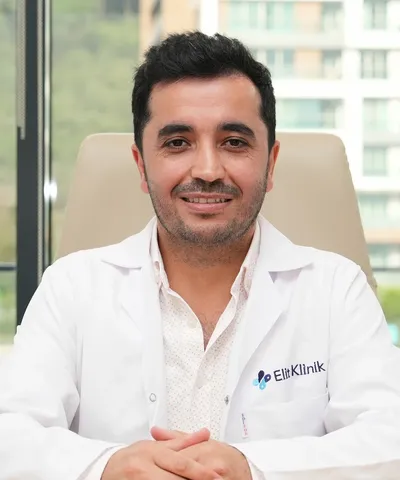
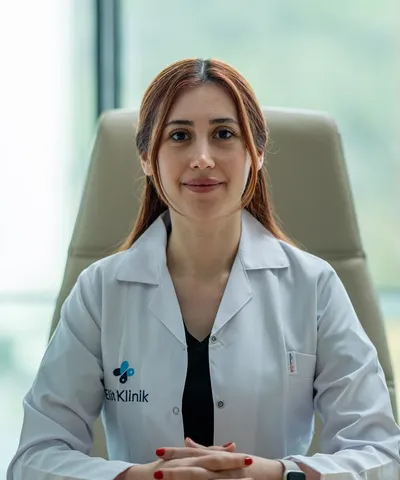
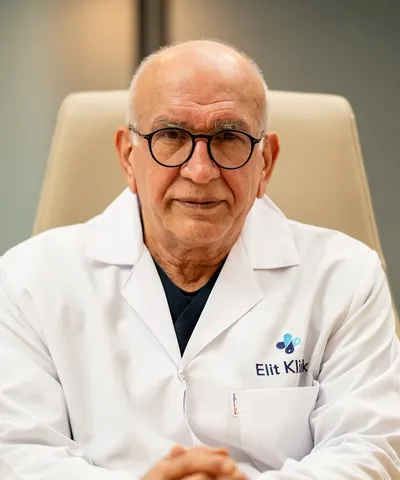
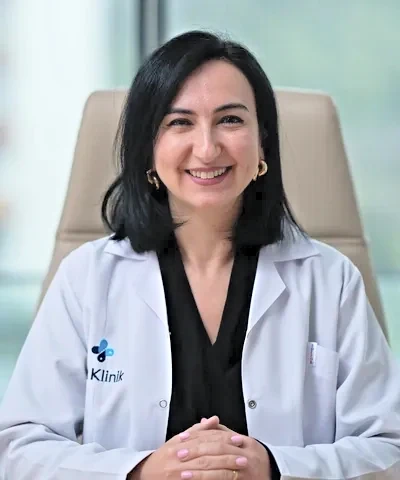
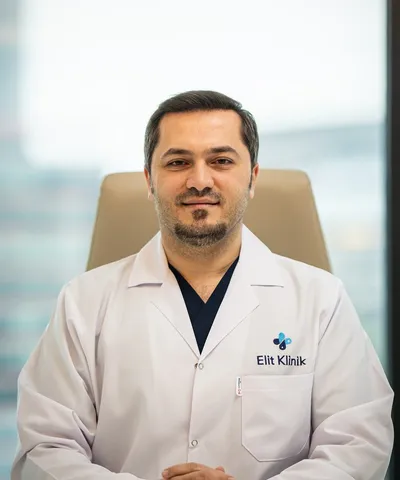
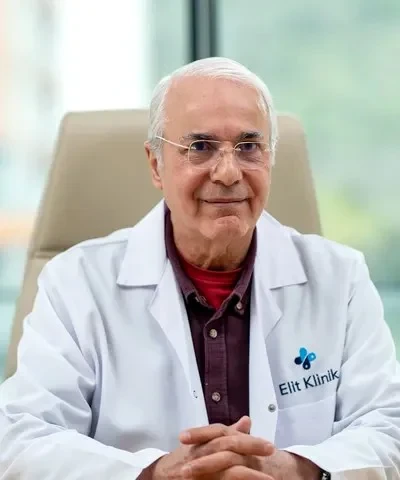
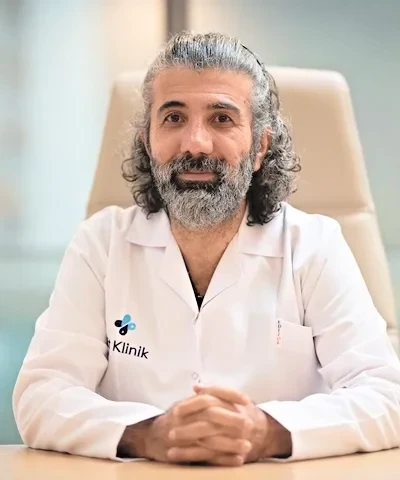
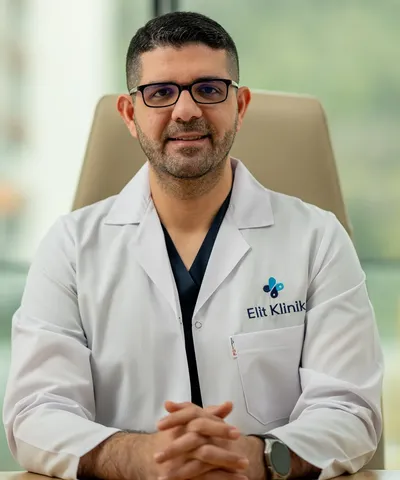
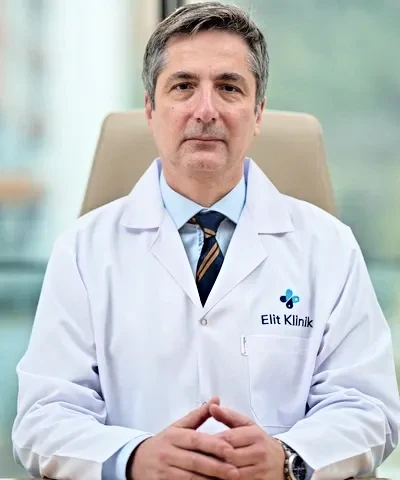
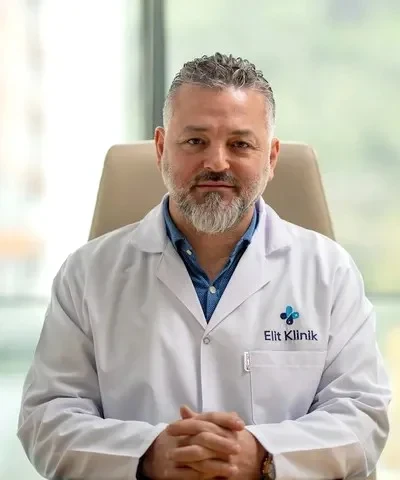 5-Doctor Standard
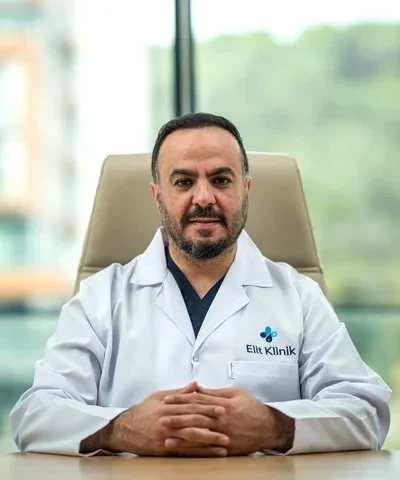
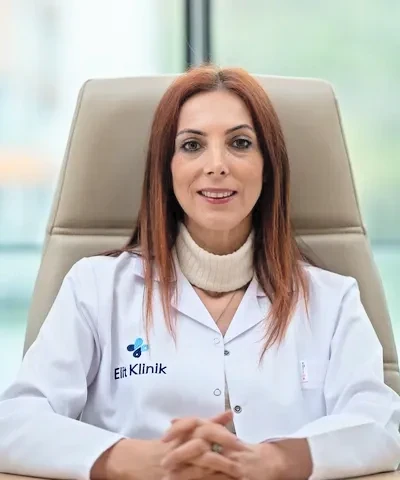
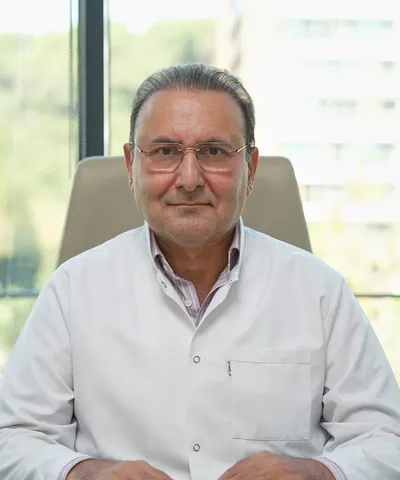
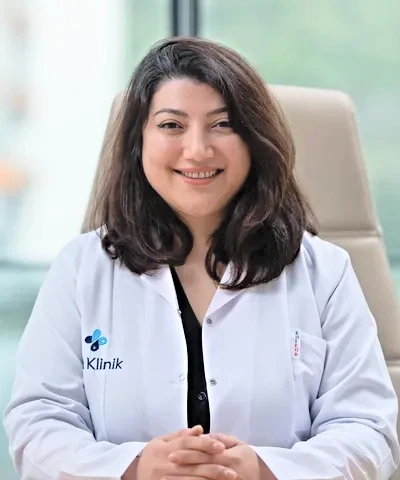
Your initial consultation takes place in advance with our specialized beard transplant consultants. A highly specialized medical team develops your detailed treatment plan at the clinic.
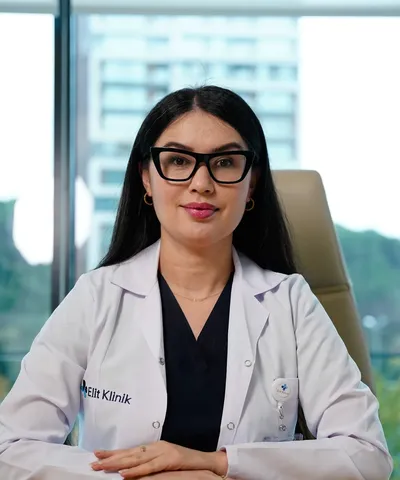
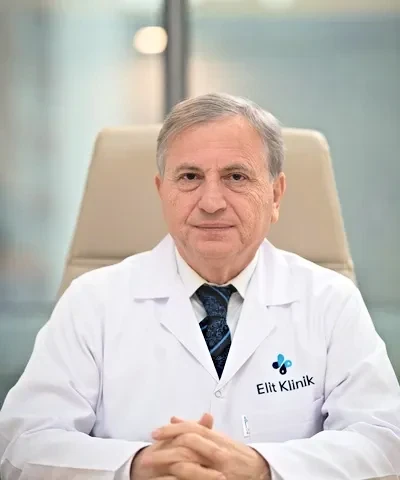
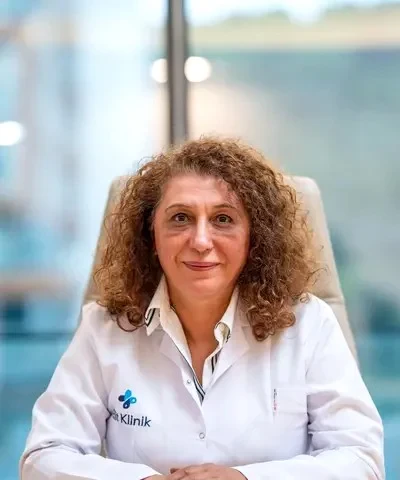
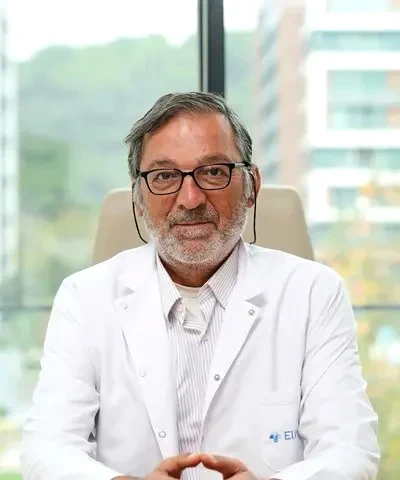
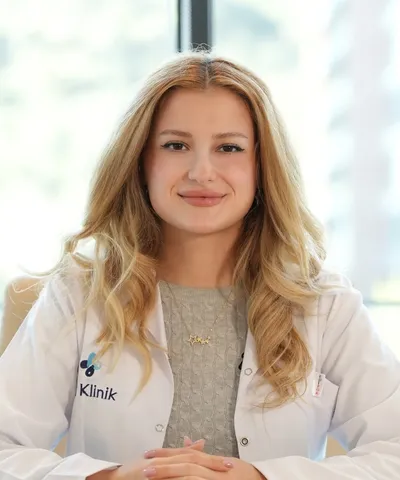
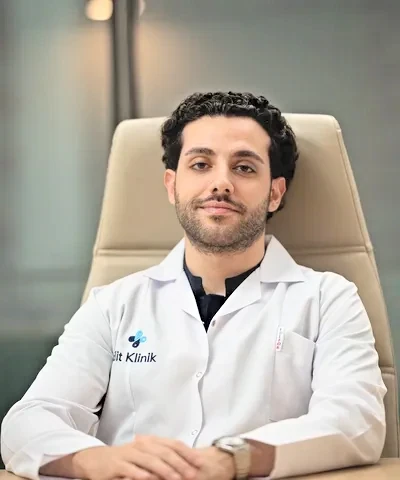
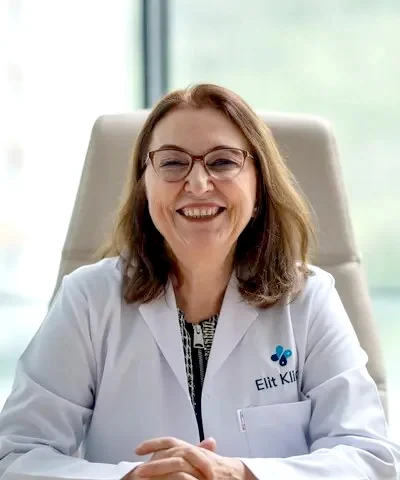
Under our 5-Doctor Standard, our doctors guide your care and take responsibility for your treatment at five key stages:
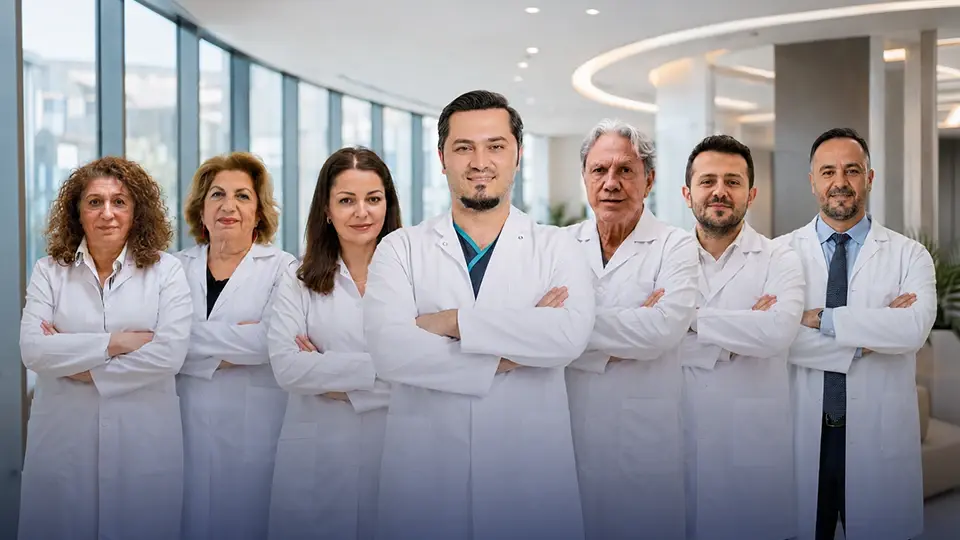
Graft extraction and implantation: performed by medical specialists, each focused on their own step, under a doctor's supervision.
More About the 5-Doctor StandardOur team of more than 20 doctors makes this close oversight possible. Each treatment step is carried out by trained medical specialists with at least seven years of experience in their specific role.
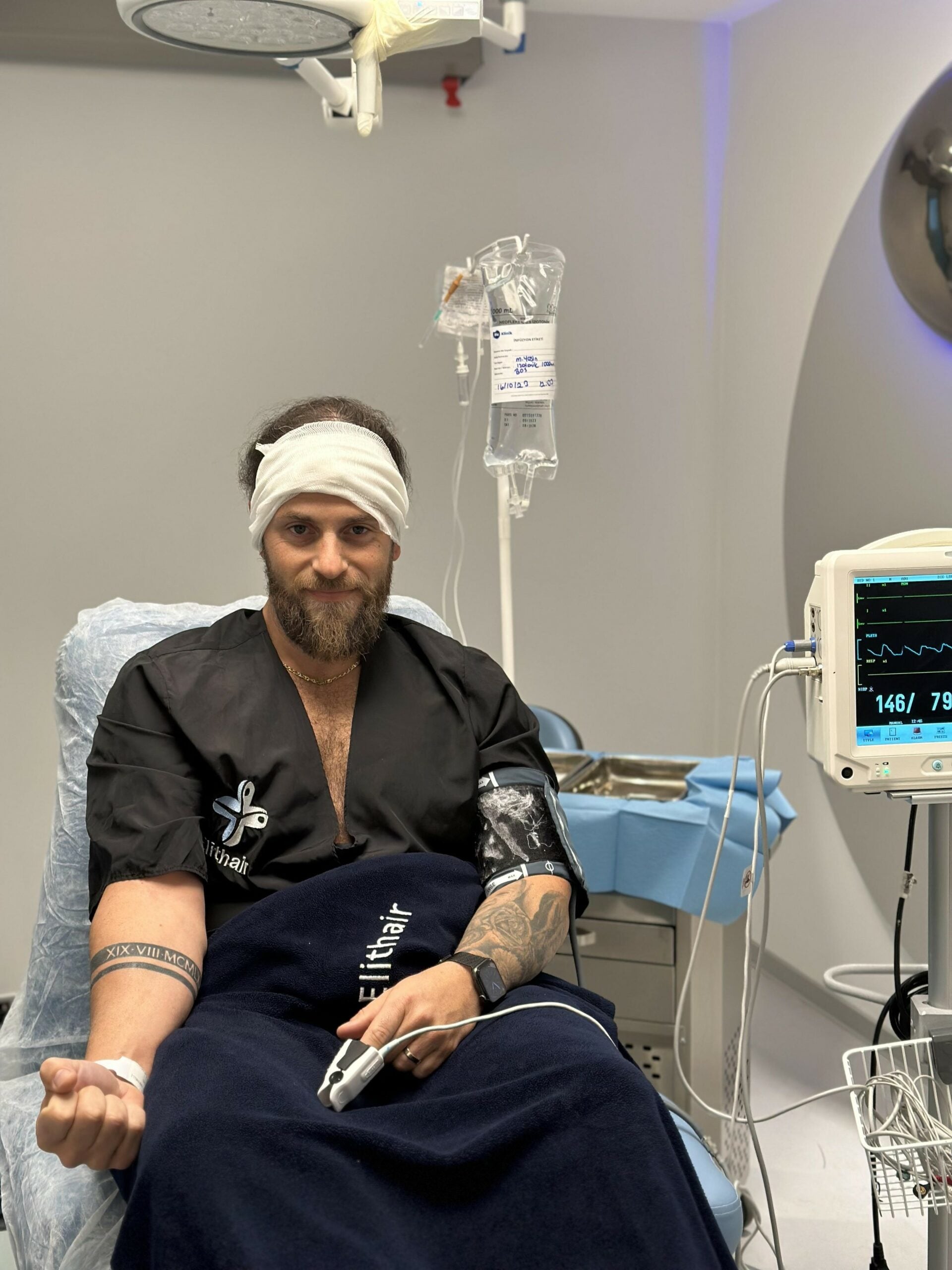 Sleep-Deep
The most unpleasant part of a beard transplant isn't the procedure. It's the injection of the local anesthetic.
Our Sleep-Deep method makes this step completely comfortable and pain-free:
Healing processHealing after a beard transplant in Turkey is much like healing after a scalp hair transplant.
Because your face is visible every day, you'll notice each stage of healing.
Here's what to expect in the first weeks and months:
| Timing | What happens | Recommendation |
|---|---|---|
| Day 1 to 3 | tiny scabs form, sometimes mild redness and swelling | sleep on your back with a neck pillow, don't touch the area |
| From day 2 | the first wash, then daily for seven days | lotion and foam shampoo as instructed, dab only, never rub |
| Days 4–6 | the swelling goes down, the redness stays visible | from day 5 you can sleep on your side again and without the neck pillow |
| Days 9–11 | pause washing on day nine to allow the scabs to loosen | remove the scabs on days 10 and 11 with the lotion, never with your fingernails |
| In the first weeks after treatment | Shock loss: transplanted hairs may shed temporarily while the roots remain in the skin; not every patient experiences this | stay calm; this is a normal part of healing |
| Months 2 to 3 | the first new, still fine beard hairs appear | upload photos in the Elithair App |
| Months 4–9 | from around the fourth month, density gradually becomes more noticeable | normal beard care |
| Months 10 to 12 | the final result is visible; you can shave and style your beard normally | no remaining restrictions |
In the first weeks after treatment, the transplanted hairs may shed temporarily (shock loss). This is not a setback: only the visible hair shaft falls out, while the root stays in the skin and produces new hair.
The first weeks require extra care to support healing and protect the transplanted follicles:
For the first five days, avoid any pressure on the treated area and sleep on your back with a neck pillow. You can sleep on your side again starting on day five and on your stomach starting on day ten.
For the first three days, avoid heavily salted foods and drink plenty of water — at least three liters (about 100 oz) a day. Avoid heavy sweating for 15 days.
Gently wash the treated area for the first time two days after the procedure, then daily for the next seven days. Pause washing on the ninth day to allow the scabs to loosen. On days 10 and 11, gently remove the scabs using the special lotion; never pick at them with your fingernails. You can resume using your normal shampoo on the twelfth day.
| Activity | Safe to resume after |
|---|---|
| Trimming the beard with scissors | 2 weeks |
| Trimming the beard with clippers | 1 month |
| Wet shaving in the treated beard area | 3 months |
| Light exercise (jogging or cycling) | 2 weeks |
| Gym and soccer | 4 weeks |
| Strength training | 6 weeks |
| Alcohol and cigarettes | 2 weeks |
| Taking a bath, swimming with your head above water | 2 weeks |
| Sauna, tanning bed, swimming with your head underwater | 6 weeks |
| Physically demanding work, for example on a construction site or in a kitchen | 2 weeks |
| Head covering at 75°F to 102°F | necessary for the first 14 days |
| Head covering at 104°F and above | necessary for the first month |
Even so, the current evidence supports the potential of beard hair for a successful and lasting transplant.
A prospective comparative study (Gupta et al., 2019) examined scalp, chest and beard hair in the same subject to compare growth and survival rates under identical conditions.
The results confirm how robust beard hair is:
These findings highlight the biological resilience of beard hair. The literature calls for additional large-scale studies to determine whether the findings apply to larger patient populations.
Pros and cons
You can restore density to your beard and scalp in the same treatment because both use the same extraction techniques and donor area. The key is having enough donor grafts available.
Our digital hair analysis provides an initial assessment; the Pre-Test System at the clinic determines exactly how many donor grafts are available, and its results form the basis of your personalized treatment plan.
If your donor supply is limited, we prioritize density rather than spreading the grafts too thinly, focusing on the area that matters most to your appearance.
You've probably wanted a full, well-defined beard for a while. Our free hair analysis helps you make an informed decision by checking whether your donor area can support a result without gaps.
If the assessment is positive, there's good reason to start planning soon. We can plan precisely for your current hair growth; how it will change without treatment is uncertain.
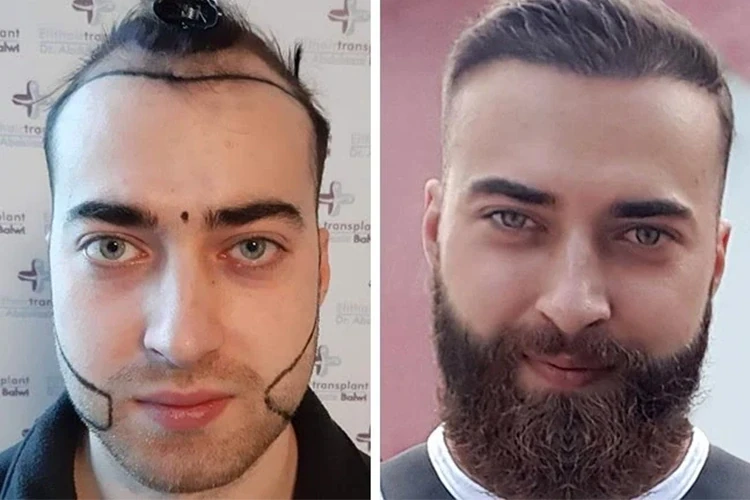
Haariger Andre - 4,250 grafts
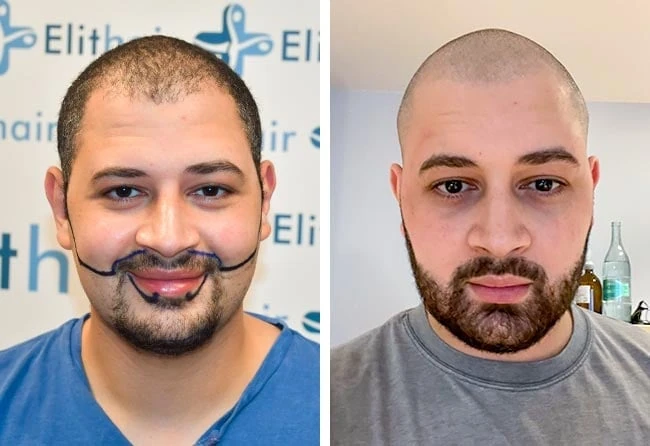
Mohammed E. – 3,750 grafts
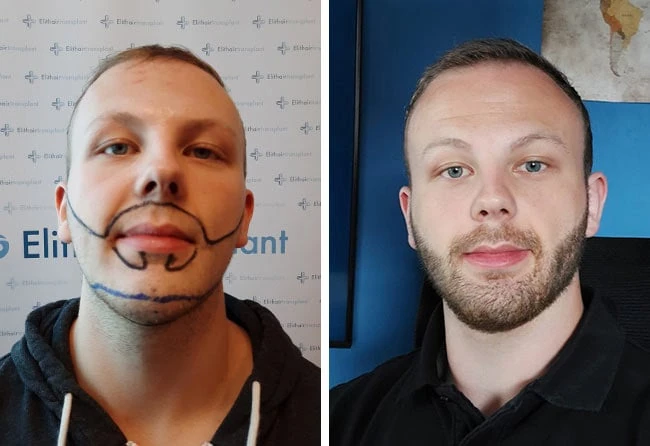
Sascha L. – 3,250 grafts
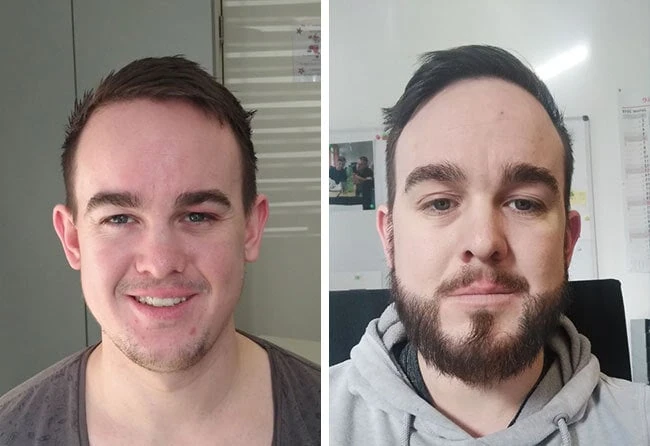
Oliver N. – 4,300 grafts
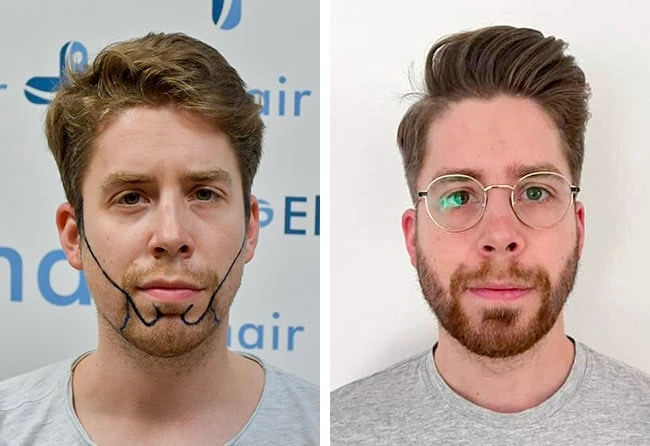
Eike R. – 3,200 grafts
Keep in mind: the ten to twelve months it takes to see your final result don't begin until the day of your treatment.
Clear photos help us assess how full and dense your beard can become before you book a flight. Send photos of your beard area and the back of your head, and our doctors will evaluate your donor hair, the pattern of gaps and any causes that still need to be investigated. You'll receive an assessment with a graft count and a no-obligation cost estimate — or, if we have concerns, we'll advise against treatment.
Elithair has performed more than 150,000 treatments and holds a Google rating of 4.9 out of 5 stars across more than 11,000 reviews. That experience means we've seen almost every beard growth pattern and can identify early what matters for yours.
At Elithair, a beard transplant costs between $3,899 and $4,499. Pricing is based on graft tiers rather than a charge per graft. Your package includes DHI implantation, the Pre-Test System, three nights at a 4-star hotel near the clinic, local VIP transfers, one PRP treatment, medication and twelve months of digital aftercare through the Elithair App. The PRP treatment included in your package takes place at the clinic on the day of your procedure. You book your own flight. Zero Shave FUE and Manual FUE are available as options for an additional fee. A comparable procedure at a U.S. clinic costs around $6,300 to $15,600.
A full beard typically requires around 2,500 to 4,700 grafts. Filling in just the cheeks requires fewer, roughly 2,000 to 2,500 grafts. Our doctors determine the exact number during your free hair analysis.
Plan to spend three days in Istanbul. On the day you arrive, the VIP transfer takes you from the airport straight to the clinic for the Pre-Test System. Your beard outline is planned and your procedure performed the next day; the treatment takes approximately 5 to 8 hours, depending on the number of grafts to be transplanted. On the third day, you have a medical follow-up check before traveling home. Three nights at a 4-star hotel near the clinic and transfers are included in the price.
The hair comes from the donor area at the back and sides of your head. These follicles generally have greater resistance to androgen-related miniaturization and retain this donor-area characteristic after transplantation to the face. Dense hair under the chin can provide a second donor source. We don't use chest or body hair because published studies show considerably higher shedding rates for those grafts.
No. With the Sleep-Deep method, you experience 0% pain during treatment. IV sedation lets you sleep for about 15 minutes while our medical specialists administer the local anesthetic and a board-certified anesthesiologist monitors you. The beard area may feel tight in the days after the procedure, but you will receive medication to relieve that sensation.
You can resume shaving in stages: trim with scissors after two weeks, use clippers after a month and wet-shave the treated beard area after three months. The Elithair App sends push notifications to let you know when you can resume each type of shaving.
The first new beard hairs usually appear around two to three months after treatment, with a noticeable increase in density after six months and final results after ten to twelve months. Before then, the transplanted hairs may shed temporarily in the first weeks after treatment (shock loss). This doesn't happen to every patient. Either way, the roots remain in the skin and produce new growth.
Usually one to two days after the procedure. Depending on your job, you can usually return to office work on day 2 or 3. You can resume light exercise after two weeks, and the Elithair App sends push notifications to let you know when you can resume each activity.
Our medical team monitors your healing for twelve months through the Elithair App. You upload photos, and our team of doctors reviews and analyzes them. All care is provided in English.


