

Hair Transplant Turkey Cost 2026: Transparent & Fair
Every cost of your hair transplant in Turkey at a glance: from $3,899 all-inclusive, with no surcharge for NEO FUE, the Pre-Test System, DHI, your hotel or aftercare. In the US you pay $6,300 to $15,600 for the same procedure.
Start your free hair analysis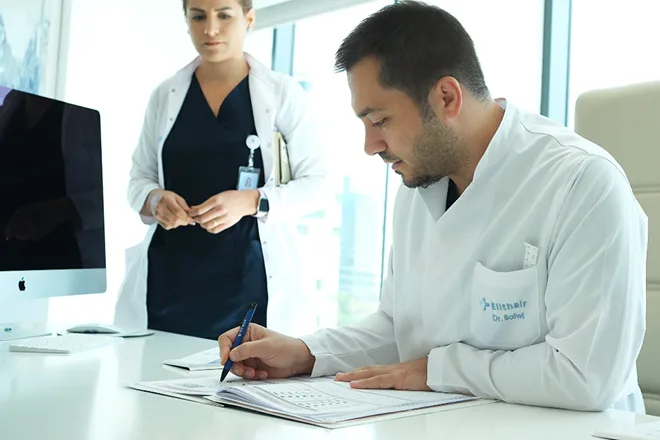
- From $3,899 all-inclusive
- Exclusive NEOFUE®
- Pre-Test System
- DHI, hotel & transfer included
Hair Transplant Cost 2026: Turkey and the US Compared
Full transparency instead of package tricks: at Elithair you pay one fixed all-inclusive price from $3,899. In the US the same procedure costs $6,300 to $15,600.
| Area | Grafts | Elithair | US clinics | Saving |
|---|---|---|---|---|
| Receding hairline | up to 2,000 | $3,899 | $6,300 | −38% |
| Hairline & front | 2,500 | $3,999 | $7,900 | −49% |
| Crown / vertex | 3,000 | $4,099 | $9,300 | −56% |
| Partial baldness | 3,500 | $4,199 | $10,900 | −61% |
| Full crown | 4,000 | $4,299 | $12,400 | −65% |
| Extended crown | 4,500 | $4,399 | $13,500 | −67% |
| Full baldness | from 5,000 | $4,499 | $15,600 | −71% |
If you need more grafts on the day of your procedure than we planned for, a flat $105 is added for every additional 500 grafts. We talk it through with you first and only charge it if you agree.
The medical care your price covers
Our specialist doctors check and supervise your treatment at five key stages.
- Hair analysis: a precise first medical assessment of your hair structure.
- Pre-Test System: a full diagnostic workup on site with six in-depth analyses, including hair density, scalp health and trichoscopy. This is not a general health check-up; it is the basis for your individual treatment plan and for how well the grafts take.
- Hairline design: a doctor maps out a hairline that looks natural on your face.
- The procedure: continuous medical supervision from start to finish.
- Final check: a closing medical examination before you travel home.
This level of attention is possible because more than 20 specialist doctors work at our clinic. Not a single step happens without medical supervision.
Independently audited, officially authorized
Independent audits confirm that we hold to these standards consistently.
- TÜV Thüringen certifies our processes at regular intervals against strict German standards.
- The Turkish Ministry of Health inspects our clinic once or twice a month, including our treatment workflows, and has officially authorized us to train specialist doctors in hair transplantation ourselves.
A clinic that the state recognizes as a training institution gives you something you can verify instead of a promise.
What will your hair transplant in Turkey cost?
Find out instantly what you can expect to pay for your hair transplant in Turkey.
Our price calculator gives you an initial cost range with no obligation. The exact graft count is set by your doctor, in the free hair analysis and in the Pre-Test on site.
Full hair, a new lease of life: your hair transplant from $3,899

Nico G.
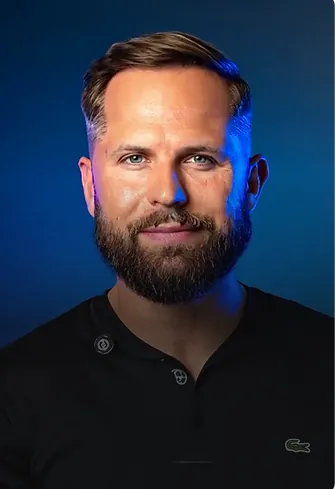
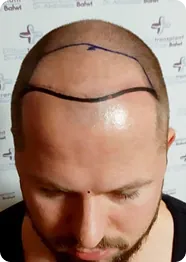
“I never thought I would actually go through with it, but the result is better than I expected. It looks natural and I feel a lot more confident.”


Marcel O.
“A brilliant experience overall. You need a bit of patience before the results show, but now I am really happy.”
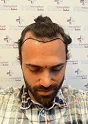
Stefan D.
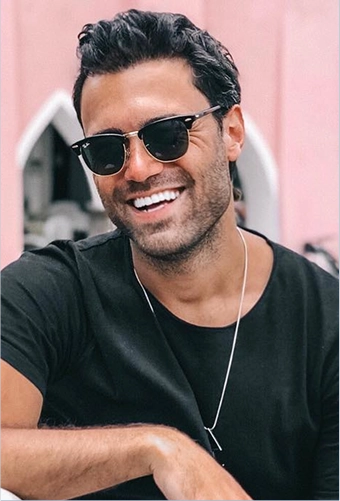
“Honestly, it looks just like my own hair. No one can tell, sometimes not even me. Absolutely worth every penny.”
The best time for your new hair is now, not “later”
The truth is, you did not start thinking about this yesterday. For most of our patients, more than a year passes between the first thought and the decision.
Your free hair analysis settles the first question. It shows whether you are a suitable candidate and whether your donor area holds enough hair for a natural, dense result. If it does, there is little reason to keep waiting: today you know exactly where you stand. Nobody can predict how your hair loss will develop over the next few years, and the better your starting point, the better your result.
Then there is the time your new hair needs. The first visible change comes after four to seven months, and the front has fully grown in by month twelve. Every month you wait pushes that day back by exactly one month.
So the choice is not really between now and later. It is between certainty today and uncertainty tomorrow.
Why is a hair transplant in Turkey cheaper than in the US?
The difference is not in the medical work. It is in what it costs to run a clinic, and that depends entirely on where it stands.
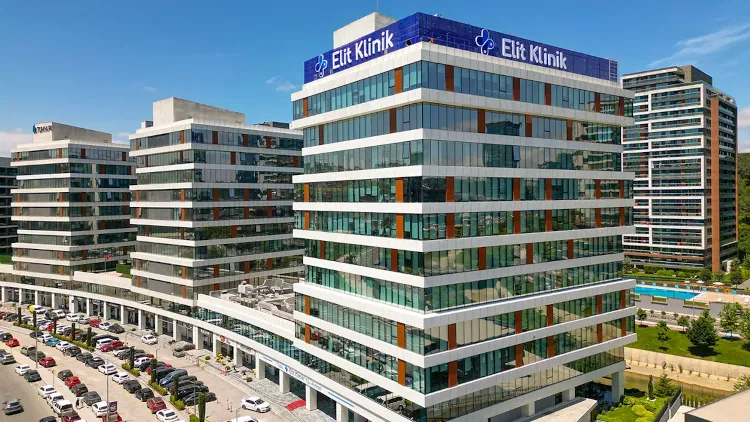
Dramatically lower overheads
Running costs are a decisive factor. Clinic space in a major US city such as New York can cost $16,000 to $31,900 a month in rent. In Istanbul, property prices and operating costs are significantly lower.
There is a similar gap on staffing: a specialist hair surgeon in the US earns $8,600 to $13,500 a month, while in Turkey the figure is $3,200 to $5,300, for the same six years of training and the same specialist qualification.
- A far lower final price, with the same consistently high quality.
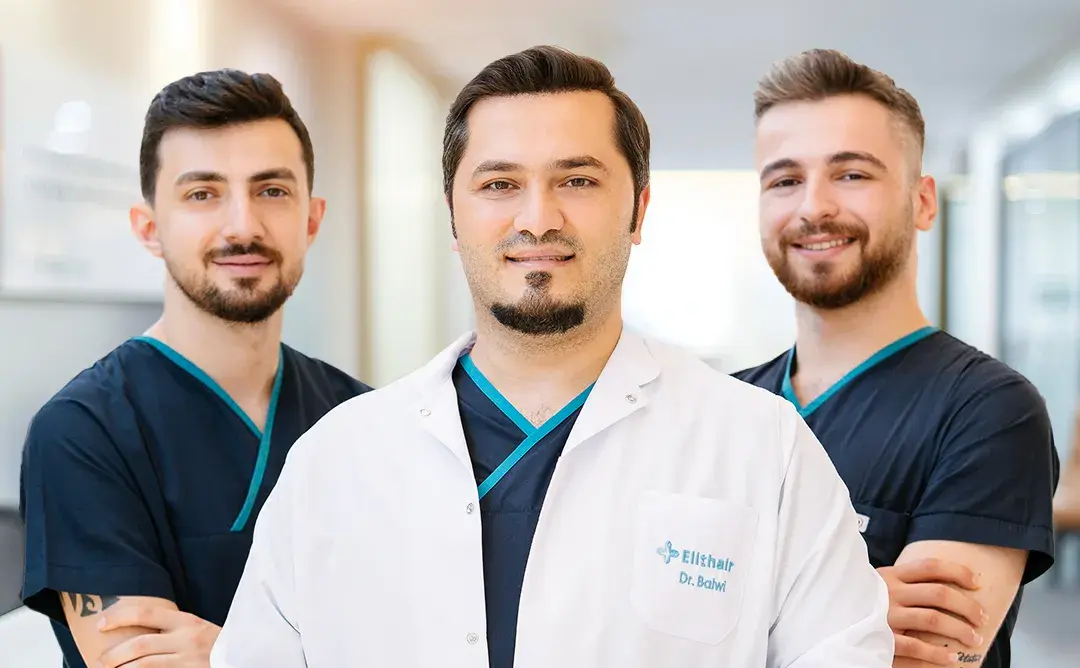
Specialization drives efficiency
In the US, hair transplants are a sideline for many cosmetic surgeons, one aesthetic procedure among a dozen. We do nothing else, and we do it in Istanbul, where running a clinic costs a fraction of what it costs in New York. But the real difference is the standard: you get a level of medical precision that few clinics anywhere match, for considerably less than you would pay in the US.
From the individual treatment plan our 6-stage Pre-Test System produces, through Sleep-Deep sedation, the NEO FUE® graft preparation and the included DHI technique, to our specialist doctors and a 20-year guarantee: every step is checked, with nothing left to chance.
- The latest techniques such as the DHI method at a fraction of the US price, with maximum routine and precision.
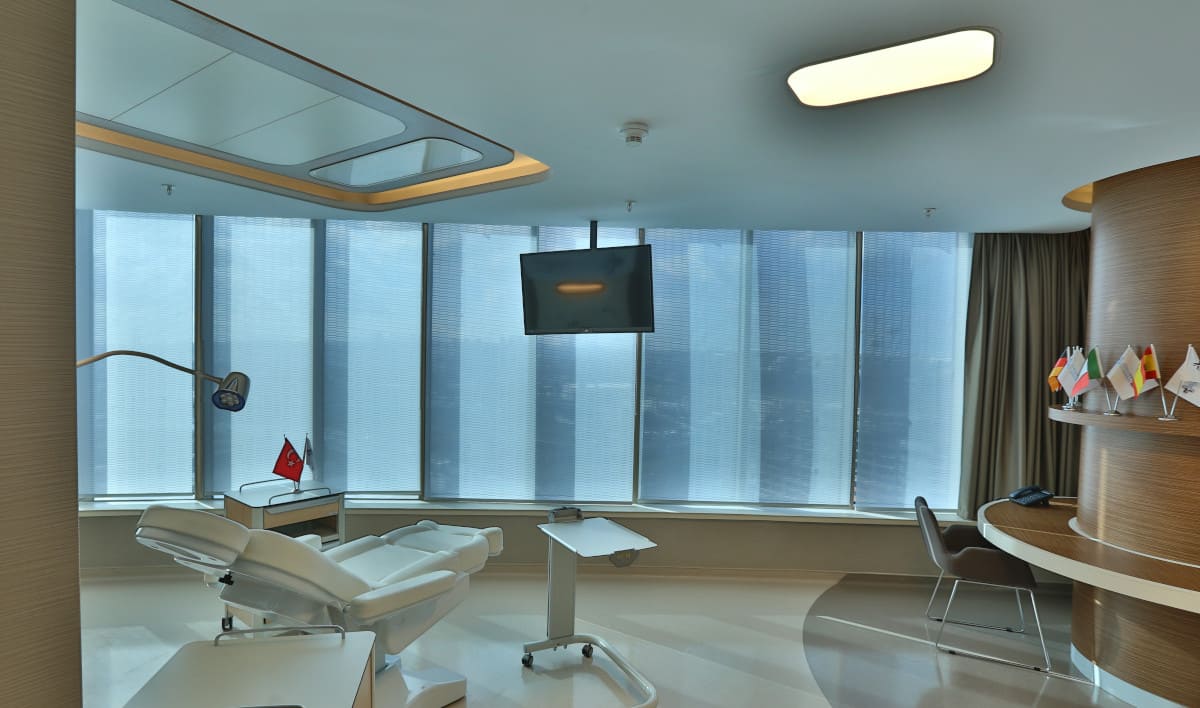
State support for medical tourism
The Turkish government actively supports medical tourism through subsidies and tax incentives for accredited clinics.
This lets Elithair invest in the latest technology without passing the full cost on to patients. US clinics carry a heavy tax burden, while Istanbul benefits from a specialized economic ecosystem.
- The highest medical standards at a price well below the European average.
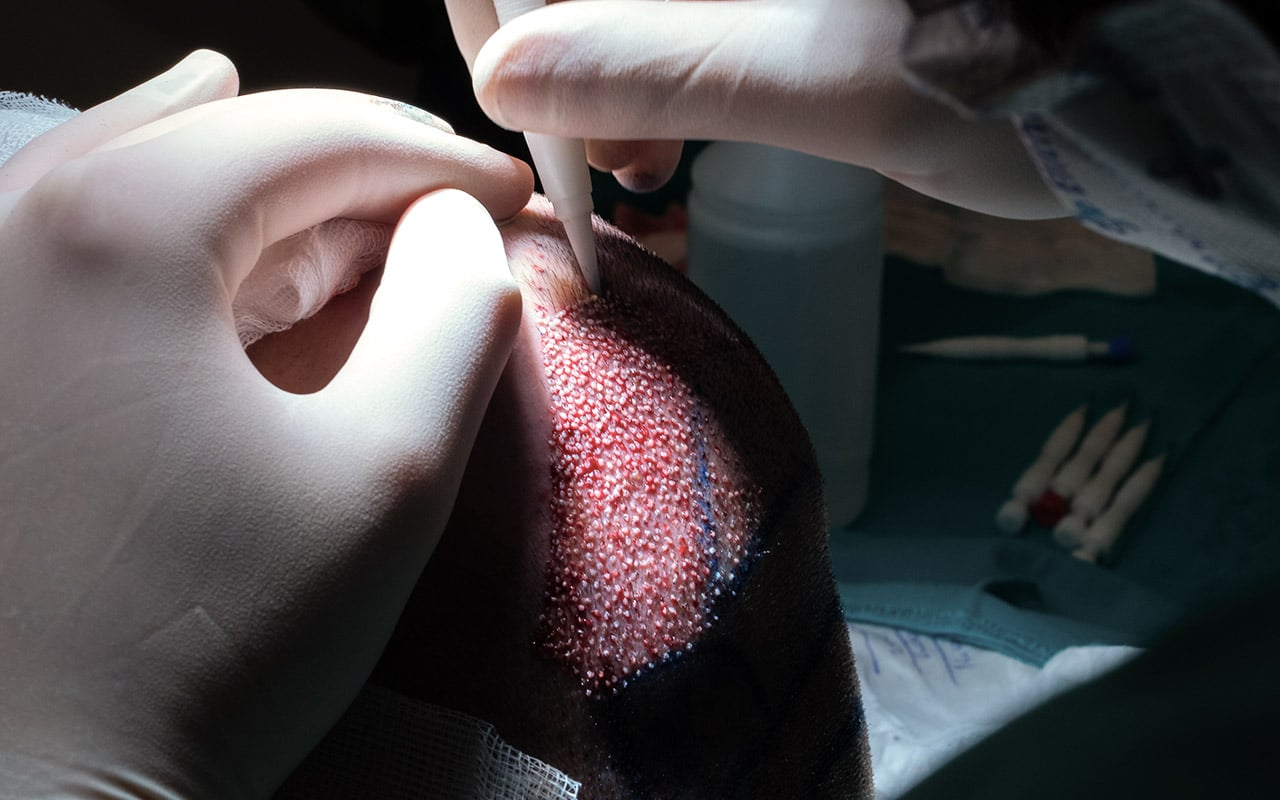
The DHI method: premium standard at no extra cost
Many US clinics charge a surcharge of $860 to $2,150 for the DHI method. At Elithair this premium technique is included as standard, with no complicated upgrade tiers.
Our transparent fixed-price model covers the precise work with CHOI implanter pens, the entire hotel stay, all VIP transfers and a supporting PRP treatment.
Because the DHI technique implants the grafts directly without opening channels beforehand, you benefit from higher hair density and noticeably faster healing. For us this quality is not an optional luxury, it is the basis for every perfect result.
Saving on the price usually means saving on the planning
When a clinic cuts the price, it almost always cuts the part you never see: the planning. Your donor area is the one resource in this procedure you cannot buy more of. Every graft that is placed badly and does not take is one you will miss in any later correction. That is why the cheapest treatment is rarely the cheapest bill.
How is the cost of a hair transplant calculated?
Understand how pricing works before you compare quotes.
Compare quotes and you quickly run into big price differences. To make the right choice, it pays to understand the logic behind the pricing.
In the US and many other countries, pricing is usually based on the number of grafts needed (follicular units). A graft contains on average 2 to 3 individual hairs.
The simple formula is: number of grafts × price per graft = total cost. But be careful: the headline “price per graft” is often only half the story. There are two completely different ways of charging.
Per-graft billing
- Price per graft: $2.70 to $5.30
- Base price covers only the surgeon's fee for extraction and implantation
- Hotel, aftercare and PRP are usually billed separately
- Specialist techniques such as DHI add to the price
All included, one number
- One fixed price covers the entire treatment (flights excluded)
- DHI, luxury hotel, VIP transfer, PRP and aftercare already included
- Extra grafts: a flat $105 for every additional 500 grafts
- Need fewer grafts than planned? Your price drops accordingly
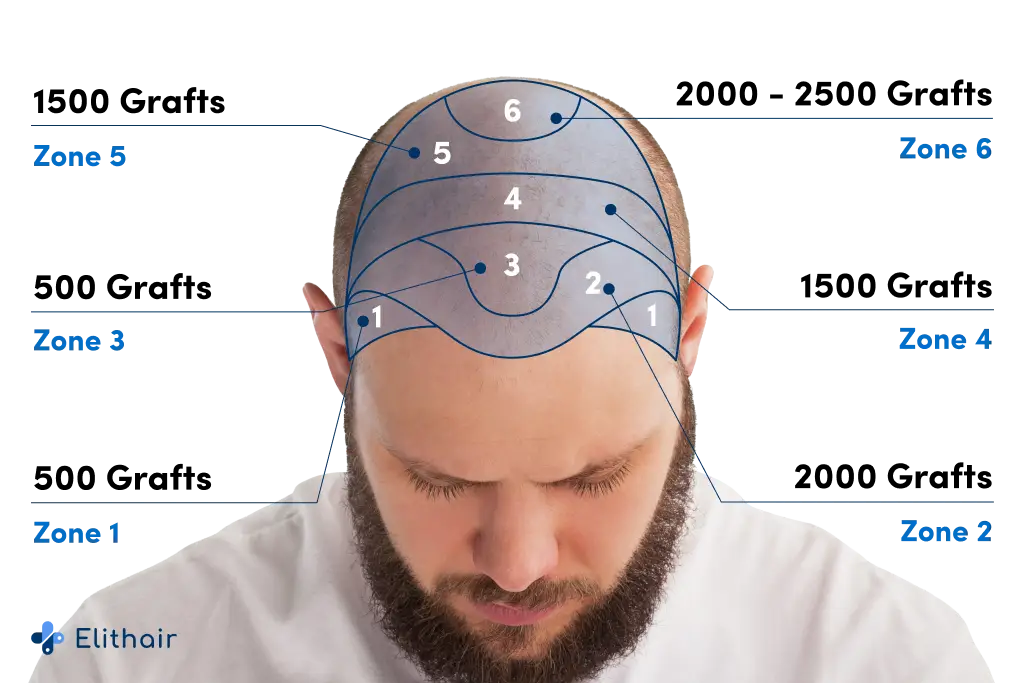
The secret of natural density: grafts and the Pre-Test System
The quality of a hair transplant is not decided by the number of hairs, but by how the grafts are distributed and by the analysis that comes first. Which is why two patients with the same graft count do not get the same treatment.
Pre-Test System
Hair is as individual as a fingerprint. In an in-depth diagnostic workup with ultrasound, Doppler measurement of blood flow, a TrichoLAB scan, blood work and an ECG, our doctors establish your exact scalp and hair readings.
Your individual treatment plan is built on those numbers. The precisely calculated implantation depth lifts the graft survival rate from around 60% to approx. 98%, while the implantation angle is matched to give you a completely natural growth direction and hairline. The factors that decide the outcome:
- Graft count: we determine precisely how many single and multi grafts are needed.
- Single grafts (1 hair): used to build a delicate, natural hairline and recreate the fine transition at the front perfectly.
- Multi grafts (2 to 4 hairs): deliver the volume and maximum density needed across the thinning areas on top.
- The implantation angle: calculates the exact, natural growth direction so new and existing hairs blend together seamlessly.
- The optimal implantation depth: identifies the ideal tissue depth for the highest possible survival rate of the implanted roots.
The result: a hair design that does not look “done”, but as natural as if it had never been any different. More on this in the Pre-Test System.
FUE, Sapphire or DHI: why comparing prices by method is misleading
Many clinics advertise cheap prices per “method”. That is misleading. FUE is not a method you choose, it is the extraction of the hair roots, and it is used in every modern hair transplant. What decides the quality is the implantation: Sapphire or DHI. Elithair uses DHI exclusively, the highest-quality technique, and never charges it as an add-on.
| Technique | Phase | What it involves | At Elithair |
|---|---|---|---|
| FUE | Extraction | Individual grafts are removed with a micro hollow needle. Identical in every modern procedure. | ✓ Included, always |
| Sapphire | Implantation | Channels are pre-cut with a sapphire blade, then the grafts are placed. An older standard technique with lower density and less control over the exit angle. | not offered, an outdated method |
| DHI | Implantation | Direct implantation with the Choi pen, no pre-cutting. Highest density, more precise growth direction, a more natural result. | ✓ Included, premium standard in the fixed price |
At many clinics DHI costs a surcharge of $860 to $2,150. At Elithair, DHI is always included in the all-inclusive fixed price from $3,899.
What does a hair transplant cost by area?
The cost depends on the area being treated and the number of grafts needed.
 Receding hairline
approx. 2,000 – 3,500 grafts
from $3,899
See details →
Receding hairline
approx. 2,000 – 3,500 grafts
from $3,899
See details →
 Crown & vertex
approx. 2,500 – 4,000 grafts
from $3,999
See details →
Crown & vertex
approx. 2,500 – 4,000 grafts
from $3,999
See details →
 Full crown
approx. 4,000 – 5,500 grafts
from $4,299
See details →
Full crown
approx. 4,000 – 5,500 grafts
from $4,299
See details →
 Beard transplant
approx. 1,500 – 3,000 grafts
from $3,899
See details →
Beard transplant
approx. 1,500 – 3,000 grafts
from $3,899
See details →
 Women's hair transplant
approx. 1,500 – 3,500 grafts
from $3,899
See details →
Women's hair transplant
approx. 1,500 – 3,500 grafts
from $3,899
See details →
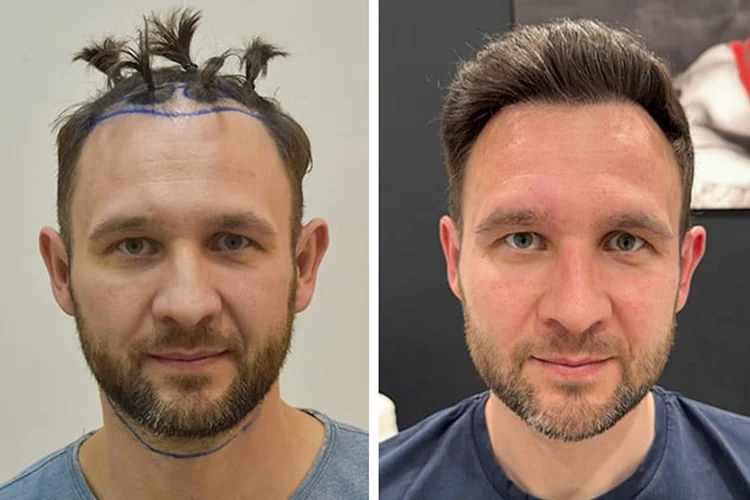
Receding hairline: 2,000 to 3,500 grafts, $3,899 to $4,199
A receding hairline is one of the most common reasons men have a hair transplant. When the temples recede and the forehead starts to look wider, for many this is the first major change to their appearance. On the Norwood scale this stage usually corresponds to grade 2 to 3, the ideal point to correct the progression cosmetically.
Mild recession (Norwood 2) takes roughly 2,000 to 2,500 grafts. More pronounced recession, with a hairline that has clearly moved back (Norwood 3), needs around 2,500 to 3,500. One session is normally enough. For context: 2,700 grafts is a perfectly ordinary, mid-range figure for the temples and the hairline together.
- Norwood grade 2 to 3
- 2,000 to 3,500 grafts
- At Elithair $3,899 to $4,199 all-inclusive
- In the US $6,300 to $10,900
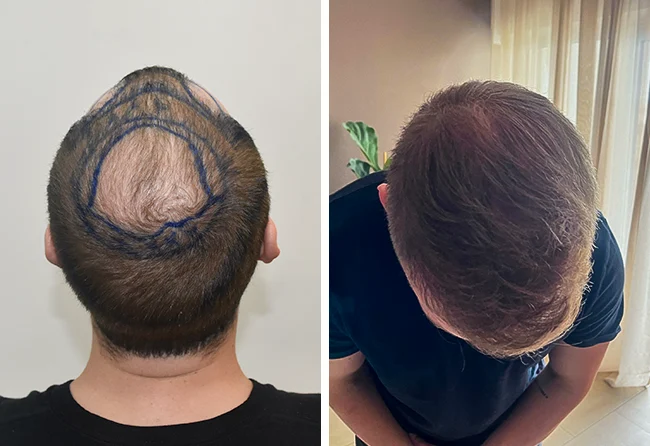
Crown and vertex: 2,500 to 4,000 grafts, from $3,999
The area around the whorl at the back of the head, known medically as the crown or vertex, is a common treatment area. Hair loss here often goes unnoticed for a long time, as it is hard to see in the mirror, until a photo or a comment from someone reveals the thinning patch.
Rebuilding the crown is complex because the hair here grows in a spiral pattern. Because of the density required, it usually needs a higher volume of follicles, typically 2,500 to 4,000 grafts.
At Elithair this treatment costs from $3,999 all-inclusive. In the US you would pay $7,900 to $12,400.
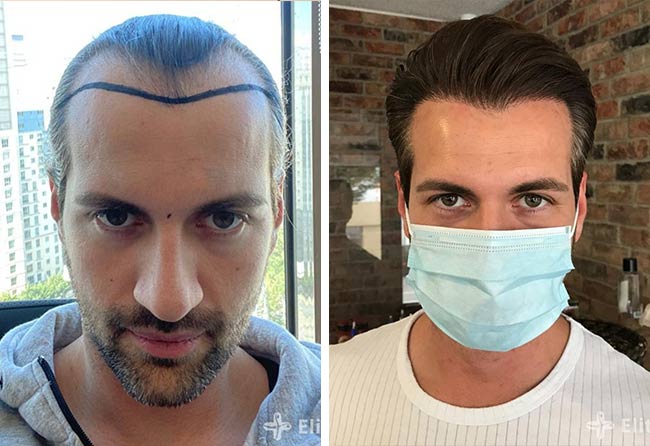
Full crown: 4,000 to 5,500 grafts, from $4,299
At Norwood grades 5 to 6, hair loss is already well advanced and affects the area from the hairline to the whorl (vertex). To restore natural density, we carry out a comprehensive hair transplant of 4,000 to 5,500 grafts in a single session.
Success depends largely on how healthy the grafts remain. That is why Elithair uses a highly efficient system: two specialist teams work in parallel. While one team extracts the grafts, the second team prepares the implantation.
Despite the latest technology, we offer you a significant cost advantage over treatment in the US. At Elithair the cost starts from $4,299, whereas in the US it usually falls between $12,400 and $15,600.
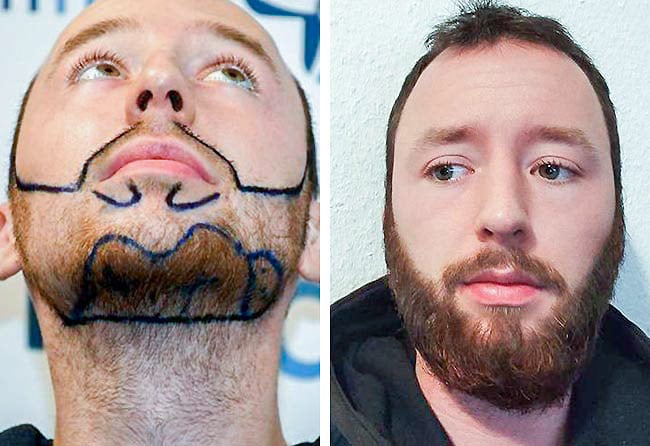
Beard transplant: 1,500 – 3,000 grafts, from $3,899
A beard transplant permanently fills gaps or scars using your own hair from the back of the head. For a natural result, the shallow growth angle of 10 to 15 degrees is crucial.
The DHI method with the Choi pen delivers the precision needed so the hairs do not stick out unnaturally.
The procedure takes around five hours and produces beard hair that grows for life and is cared for as normal. The all-inclusive package starts at $3,899.
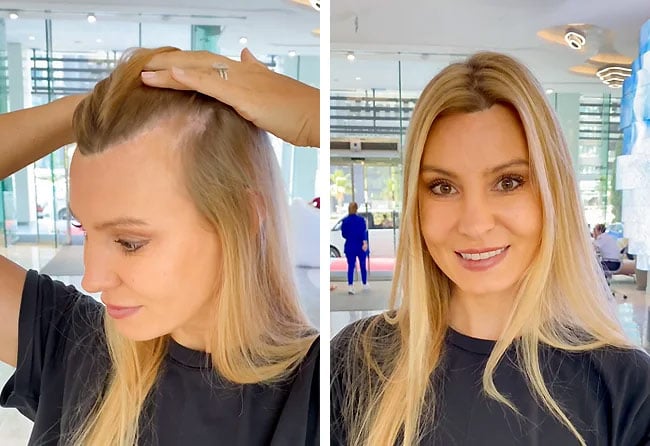
Women's hair transplant: 1,500 – 3,500 grafts, from $3,899
Hair loss in women is usually diffuse: a widening parting and thinner hair on top.
Because the grafts have to be placed precisely between the existing hairs, the DHI method is the perfect technique here. Hair loss is far from a men-only issue: more than 15% of the over 150,000 patients at Elithair are women.
Prices for the all-inclusive packages are the same regardless of gender and start at $3,899.
What is included in the price?
Plenty of clinics in Istanbul offer an all-inclusive package, and hotel, transfer and a PRP treatment are often part of theirs too. The difference is not the length of the list. It comes down to two questions: which medical services do you get that you would not get elsewhere, and how can you tell whether a line item on someone else's list is really the same thing? That is why we note what to watch out for on every point.
| Service | Elithair all-in | Typical market surcharge | What to watch out for |
|---|---|---|---|
| DHI hair transplant | ✓ Included | + $860 – $2,150 | Is DHI in the price, or is it offered as an upgrade once you are already in the chair? Ask before you book. |
| Patented NEO FUE technique | ✓ Included | EXCLUSIVE | A patent can be shown to you. Ask exactly what it covers. |
| Pre-Test System (6 analyses) | ✓ Included | EXCLUSIVE | A blood test on its own is not a diagnostic workup. Ask for every analysis to be named, and for what each one is used. |
| Sleep-Deep sedation | ✓ Included | + $310 – $530 | Is it local anesthetic only or sedation as well, and who monitors the sedation? |
| 1 PRP treatment | ✓ Included | + $210 – $530 | Is the PRP treatment part of the price, or an add-on sold to you once you are there? |
| Luxury hotel (2 nights) | ✓ Included | + $160 – $320 | “Hotel included” says nothing about which hotel or how many nights. Get both in writing. |
| VIP airport transfer | ✓ Included | + $50 – $110 | Does the transfer cover both ways, and are the trips to the clinic included? |
| Medication & care pack | ✓ Included | + $50 – $160 | What is actually in the care pack, and what would you have to buy on site? |
| Elithair app aftercare | ✓ Included | EXCLUSIVE | Who answers once you are home again, and for how long? |
| 20-year guarantee on the grafts | ✓ Included | EXCLUSIVE | Ask for the guarantee in writing, along with the conditions that apply. |
| Your saving at Elithair | $1,650 – $3,750 |
The only thing not covered is your flight. Istanbul is served by direct flights from almost every major US gateway, and the flat price covers everything else, including the days when the procedure takes longer than planned.
The comparison worth making is not with other Istanbul packages but with the US: there you pay $6,300 to $15,600 for the same procedure, usually without a hotel, without aftercare and with DHI as a surcharge.
Real patients, real results, real prices
Four real treatments, from an early receding hairline to a full crown. The price depends solely on the number of grafts, everything else is included in the fixed price.
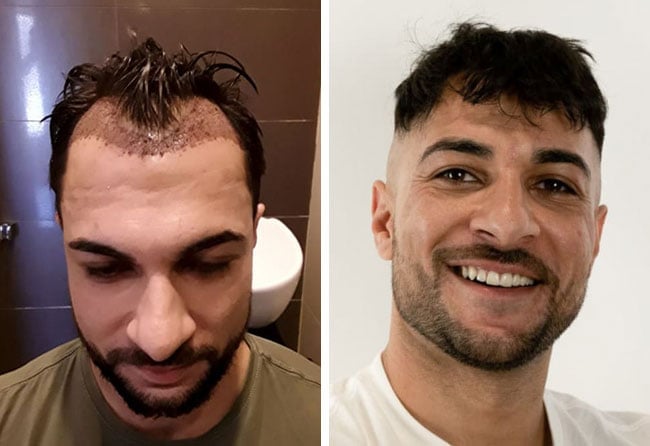
Osmani P.
Receding hairline · 2,200 grafts
$3,999 all-inclusive
“I am a hairdresser. When my colleagues cut my hair, they cannot tell I have had a hair transplant.”
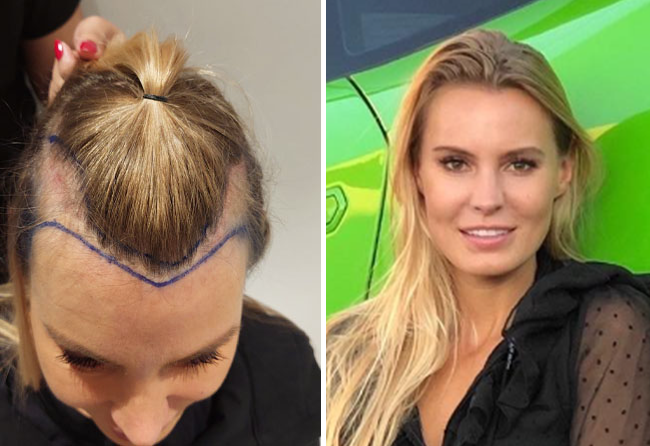
Doreen Seidel
Women, receding hairline · 3,100 grafts
$4,099 all-inclusive
“Even though I live in Las Vegas, I chose Elithair in Istanbul because it is the best clinic.”
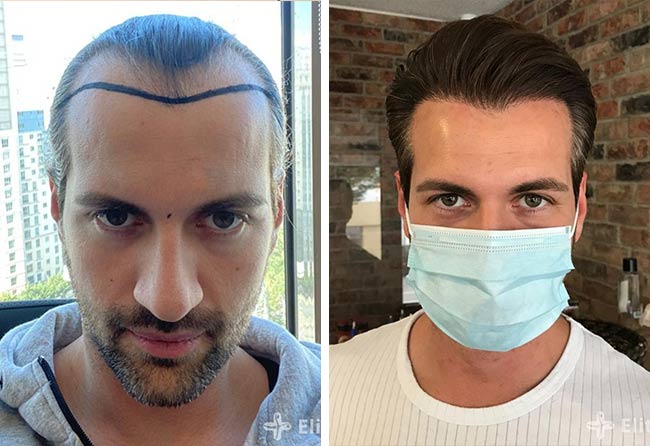
Cagatay T.
Crown & hairline · 4,000 grafts
$4,299 all-inclusive
“Without doubt one of the best decisions of my life.”
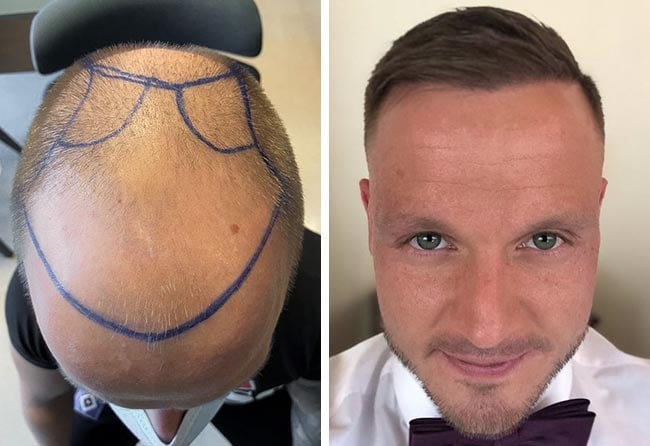
Dominik K.
Full crown · 5,200 grafts
$4,499 all-inclusive
“Elithair gave me back not just my full head of hair, but my confidence too.”
How does Elithair compare on hair transplant cost with other clinics in Istanbul?
Istanbul has a very high concentration of hair transplant clinics. Always compare both cost and what is on offer, because the crucial quality differences only become clear on closer inspection.
All-inclusive package: DHI as standard, patented NEO FUE, Sleep-Deep, Pre-Test System, VIP transfers, Elitoria Hotel, complete pre- and aftercare, the Elithair app.
The largest hair clinic in the world, high safety and quality standards, DHI included, in-house sterilization, experienced medical teams, transparent pricing, a naturally dense result.
An all-inclusive package, usually without the DHI technique.
DHI is available, but often at a higher cost. No exclusive or patented techniques. Often no aftercare.
Treatment only, usually no aftercare or accommodation.
Inadequate medical supervision, outdated techniques, no specialist teams, a high risk of poor results, serious safety concerns.
At Elithair, advanced services such as the DHI method are included as standard, whereas other clinics often charge a hefty surcharge for them. Exclusive innovations such as the Elithair app, Sleep-Deep sedation and the thorough Pre-Test System are also fully covered by the fixed price.
Apparent savings at other clinics usually come at the expense of quality, whereas Elithair wins on technological superiority and maximum safety.
How long does a hair transplant last?
The short answer: a lifetime. The longer answer is below.
Transplanted hair does not fall out again
The follicles come from the “donor safe zone” at the back of the head, an area that is genetically resistant to DHT, the hormone that drives hair loss. Every follicle keeps that property even after transplantation. The hair stays, for good.
One point we are upfront about: your non-transplanted hair can carry on thinning. The procedure does not stop hair loss, it offsets it. That is why Elithair recommends supporting measures.
- No top-ups, no maintenance, no subscription costs.
- Wash, cut, color and style it like normal hair.
- Genetically DHT-resistant follicles from the donor safe zone.
Possible ongoing costs at a glance
PRP treatment (optional)
$160 to $320 / session. A treatment using your own blood that strengthens the hair roots. 2 to 4 sessions a year are recommended. The first session is included in the all-inclusive package. Follow-up sessions are available in Istanbul.
Medication (optional)
approx. $35 / month. Finasteride (~$20/month) blocks DHT. Minoxidil (~$15/month) improves circulation. Both slow further hair loss, but are prescription only.
Second transplant (optional)
from $3,899 (after 5 to 10 years). If natural hair loss progresses in the surrounding areas. Fewer grafts are needed than the first time. A free hair analysis will tell you whether it makes sense.
10-year cost overview
| Method | One-off / annual cost | Total over 10 years | Result |
|---|---|---|---|
| Elithair hair transplant | $3,899 – $4,499 | $3,899 – $4,499 | Permanent, real hair growth with no ongoing costs. |
| Hair system (toupee) | $2,650 – $4,200 / year | ~$34,400 | Instant fullness, but high maintenance and ongoing costs. |
| Drug therapy | approx. $440 / year | ~$4,400 | Can stop hair loss (with continuous use), but does not restore lost volume. |
As a one-off investment, a hair transplant quickly pays for itself against ongoing hair systems, because there are no lifelong subscription costs. While medication merely preserves the status quo, only the surgical procedure fills bald areas permanently with your own regrowing hair. On top of that comes a maintenance-free everyday life with no daily restrictions or regular adjustment appointments. Note: the prices given are guide values and can vary depending on your individual situation and the number of grafts required.
Will US health insurance cover the cost?
Health insurance
The US has no single national coverage rule. In practice, Medicare, Medicaid and private insurers all treat a hair transplant for hereditary hair loss as a cosmetic procedure, so it is not covered.
The narrow reconstructive cases that may be considered:
- Hair loss caused by burns
- Hair loss after an accident or other physical trauma
- Reconstruction following surgery or tumor removal
- A disfiguring scarring (cicatricial) condition
Even then, coverage is rare. It requires documented medical necessity from your physician and, in most cases, prior authorization from the insurer before treatment.
Private health insurance
Private policies contractually exclude cosmetic hair transplants, and the same narrow reconstructive exception applies. Where a hair transplant is medically necessary, funds from an HSA or FSA can generally be used for it. For a standard cosmetic procedure, you should plan to fund the cost yourself, which is exactly why our transparent all-inclusive price matters.
Why Turkey is cheaper, for the same quality
Cheaper does not mean worse, it means more efficient. The explanation lies in hard economic facts.
Staffing costs
60 to 70% cheaper. A specialist hair surgeon in the US earns $8,600 to $13,500 a month, in Turkey $3,200 to $5,300, for the same six years of training and the same specialist qualification.
Rent and running costs
Three to four times lower. Clinic space in New York costs $25 to $45 per m², in Istanbul $8.50 to $15. Energy and administration are cheaper too.
Specialization
More than 500 clinics in Istanbul. We do hair transplants and nothing else. In the US many practices treat just two or three patients a month and have to spread their fixed costs over that handful of patients.
Identical equipment
The same manufacturers worldwide. Choi pens, FUE micromotors and PRP centrifuges come from the same international manufacturers as in the US. On top of that we run our own research lab, which is where our patented techniques originate.
State support
Tax breaks for clinics. The Turkish government promotes medical tourism through investment incentives and tax breaks for accredited clinics.
A BMW built in South Africa costs less to produce than one built in Munich. Same brand, same parts, same standards, different production costs. The same applies to hair transplants: cheaper does not mean worse, it means more efficient.
What to watch out for
The most common tricks used by dubious clinics, and how Elithair does it differently.
Technicians instead of doctors
At budget clinics under $1,600, trained-up technicians often do the implantation instead of doctors. It is illegal in Turkey, but it still happens. Ask directly: who carries out the implantation?
Manipulated graft counts
“$1.25 per graft” sounds fair. Then multi-follicle grafts (1 graft = 3 hairs) are counted as 3 grafts. So 2,000 real grafts become 4,000 on the invoice. At Elithair, fixed prices apply.
Bait and switch
The advertised price only covers basic FUE. On the day, you are told DHI is better, with a surcharge of $860 to $1,600. That is not an upgrade, it is pressure selling.
Zero aftercare
After the procedure: left to fend for yourself. No app, no follow-up, no point of contact. Elithair: 365 days of app-based support and a dedicated patient care team you can reach any time.
Exaggerated graft promises
7,000+ grafts in one session? Medically risky. Above 5,500 grafts the donor area is overstretched, leading to visible scarring and a lower survival rate. Reputable clinics cap each session at 5,000 to 5,500 grafts.
Opaque pricing
Flat prices with no individual hair analysis, DHI/FUE as a paid upgrade rather than standard, no genuine before and after photos, no verified reviews. Always ask exactly what is included in the price, and check Google and Trustpilot reviews independently.
Your complete service at Elithair
More than 150,000 patients trust Elithair. Not just a hair transplant, but a complete package: from the free hair analysis to the procedure in Istanbul and app-based aftercare at home.
Pre-Test System
6 precise analyses before the procedure let us tailor your hair transplant down to the last detail. For quality reasons we consistently turn down over 40% of inquiries, so that we can guarantee nothing short of a first-class result.
Patented NEO FUE
The exclusive NEO FUE method, developed by Dr. Balwi, nourishes the grafts with a special nutrient solution. This unique process secures you an exceptional survival rate of approx. 98%.
Sleep-Deep sedation
Innovative Sleep-Deep sedation delivers a completely pain-free, anxiety-free procedure through gentle sedation, with no general anesthesia. The whole treatment feels as relaxed as a short nap.
Elithair App
The Elithair App proactively guides you for 365 days after your procedure, with daily care and aftercare instructions delivered straight to your smartphone. No more anxious searching for answers online.
Hair transplant cost: country comparison 2026
Hair transplant costs vary widely around the world in 2026, because most Western countries charge per graft while Turkey works with patient-friendly all-inclusive packages. A procedure in the US costs $6,300 to $15,600, whereas leading clinics like Elithair in Istanbul offer the modern DHI method including hotel and transfer from $3,899 all-inclusive.
| Country | Average price | per graft |
|---|---|---|
| United States | $6,300 – $15,600 | $2.70 – $5.30 |
| Switzerland | $8,500 – $21,100 | $3.20 – $7.40 |
| Ireland | $5,300 – $12,600 | $2.10 – $4.80 |
| Hungary | $3,200 – $6,300 | $1.60 – $3.20 |
| Poland | $3,200 – $5,300 | $1.60 – $2.65 |
| Elithair Istanbul | $3,899 – $4,499 | all-inclusive |
Hungary & Poland: prices sit between Turkey and the US, but with far less specialization: 20 to 30 clinics rather than 500+. No patented NEO FUE, no Pre-Test Systems.
Switzerland: the most expensive in the world. Many Swiss patients travel specifically to Istanbul. A saving of $10,400+ more than justifies the flight.
Ireland: a little below the US, but few specialist clinics. Direct flights to Istanbul from Dublin make the trip easy.
Recovery at a glance
You can follow the full course of recovery, with documented patient cases, on our before and after page.
You decide when you travel
Your stay in Turkey lasts three days. Many patients build the trip around a weekend or add a few vacation days to it. Most are back to their normal routine after five to six days, depending on what they do for a living.
The small crusts in the recipient area have healed after about ten days, and from then on everything looks completely normal again. Our doctors follow your recovery through the Elithair app: you upload photos at regular intervals, and your doctor clears you for exercise and physical exertion individually, in line with how you are healing.
You pick the date that suits you together with your personal hair transplant advisor, around your work commitments. And if something comes up, we move your appointment at no cost.
Frequently asked questions about hair transplant costs in Turkey
What does a hair transplant cost?
From $3,899 all-inclusive at Elithair. In the US the same procedure costs $6,300 to $15,600, and services such as PRP or hotel nights are usually billed on top. Our flat price depends on the number of grafts you need and covers DHI, the patented NEO FUE, Sleep-Deep sedation, the 6-stage Pre-Test System, 2 nights in a luxury hotel, all VIP transfers, one PRP treatment, the medical check-up the day after the procedure and 365 days of doctor-supervised aftercare through the Elithair app. The only thing on top is your flight, which is not part of the package. Istanbul is reachable on direct flights from almost every major US gateway.
How many grafts do I need?
That depends on the area and how far the hair loss has progressed. As a guide: receding hairline 2,000 to 3,500 grafts, crown and vertex 2,500 to 4,000, full crown 4,000 to 5,500, beard transplant 1,500 to 3,000. A graft holds 1 to 4 hairs, on average about 2.2, so 3,000 grafts means roughly 6,600 individual hairs. The binding number comes out of the Pre-Test System, which is also where your treatment plan comes from.
What is included in the all-inclusive package?
DHI and the patented NEO FUE, Sleep-Deep sedation, the 6-stage Pre-Test System, one PRP treatment, medication and care pack, 2 nights in a luxury hotel, all VIP transfers, the medical check-up the day after the procedure and 365 days of doctor-supervised aftercare through the Elithair app. On top of that you get a written 20-year guarantee on the transplanted hair. The only thing you pay separately is your flight.
Are there any hidden costs at Elithair?
No. There is no DHI surcharge, no hotel surcharge and no medication fee. For practical reasons the only thing not included is your flight to Istanbul. If you need more grafts on the day of your procedure than the pre-analysis planned for, we discuss it with you and charge a flat $105 per additional 500 grafts.
Are prices different for men and women?
No, the cost depends solely on the number of grafts needed. Women typically need 1,500 to 3,500 grafts, because their hair loss is usually diffuse rather than confined to defined areas. The technique is more demanding, since the grafts have to be placed between existing hairs without damaging them. The price stays the same. Around 15% of our patients are women.
Other clinics in Istanbul are cheaper. Why Elithair?
Because the price is only half the question. For $3,899 you get DHI at no surcharge, the 6-stage Pre-Test System that calculates your implantation depth, angle, hairline and complete individual treatment plan, five medical checkpoints during your treatment, the patented NEO FUE, Sleep-Deep sedation and a written 20-year guarantee on the transplanted grafts, provided you follow the aftercare. Cheaper offers are usually missing exactly that: the planning beforehand, the medical supervision during, and someone to turn to afterwards. What you save there, you often end up paying for later in a correction.
Why is Elithair cheaper than in the US?
For two reasons, and neither of them is medical. First, wages, rents and running costs in Istanbul are far lower than in the US, with identically trained doctors and equipment from the same international manufacturers. Second, we do hair transplants and nothing else. In the US the procedure is one service among many for most cosmetic surgeons, but the clinic and the team still have to be paid for, and those fixed costs are spread across very few patients.
When can I get back to work and social life?
Most patients can do desk work again from day 2 to 3 and are back to their normal routine after five to six days, depending on what they do for a living. The small crusts in the recipient area have healed after about ten days, and after that everything looks completely normal again. Heavy physical work and exercise are generally back on the table after four to six weeks.
How soon can I get an appointment?
You pick the date that suits you together with your personal hair transplant advisor, around your work commitments. The treatment takes three days, so many patients only need to take a couple of days off. If something comes up, we move your appointment at no cost.
Will US health insurance cover the cost?
In nearly all cases, no. There is no single national coverage rule in the US, but Medicare, Medicaid and private insurers alike treat a hair transplant for hereditary hair loss as a cosmetic procedure and do not cover it. A narrow reconstructive exception can apply when the hair loss results from burns, an accident or trauma, surgery or tumor removal, or a disfiguring scarring condition. Even then, coverage is rare: it requires documented medical necessity from your physician and usually prior authorization from the insurer before treatment. If your situation might qualify, it is worth checking with your insurer in advance.
Are the costs tax-deductible?
For a cosmetic hair transplant, no. The IRS lists hair transplants specifically among the non-deductible cosmetic procedures in Publication 502, so a procedure for hereditary hair loss cannot be deducted. Only a reconstructive hair transplant, for example to correct a congenital deformity, injury, or a disfiguring disease, can count as a medical expense. In that case you would claim it as an itemized deduction on Schedule A, and only the portion of your total medical expenses that exceeds 7.5% of your adjusted gross income (AGI) is deductible. If your case might qualify, keep all your records and speak to a tax professional. For a standard cosmetic procedure, plan to fund the cost yourself, which is why a clear all-inclusive price helps you plan with confidence.
How long does the transplanted hair last?
For life, and for a biological reason: the follicles come from the donor safe zone at the back of the head, which is genetically resistant to DHT, the hormone behind hereditary hair loss. They keep that property in their new position, so they do not fall out again. We back that with a 20-year guarantee, provided you follow the aftercare and document it in the Elithair app.
The only thing that can change over those years is your own untreated hair around the transplanted area, which is why it is worth talking to your doctor about a maintenance plan.
What does a second hair transplant cost?
A second treatment follows the same pricing structure. In practice fewer grafts are usually needed, because only certain areas are being topped up, typically 2,000 to 2,500 grafts, which puts the cost at $3,899 to $3,999 all-inclusive. It mainly comes into play when natural hair loss in the surrounding areas has progressed after 5 to 10 years. It requires enough donor hair, which we check in another free hair analysis, plus a gap of about 12 months since the first treatment.
What does a beard transplant cost?
From $3,899 all-inclusive. Depending on the result you want, 1,500 to 3,000 grafts are moved from the donor area into the beard zone. The procedure takes 3 to 5 hours. The DHI method is particularly suited to this, because beard hairs have to go in at a very shallow angle of 10 to 15 degrees so they do not stick out. First results show after about 4 months, the full result after 12 months.
What happens if the transplant does not take?
Thanks to your individual treatment plan — implantation depth and angle are calculated for you in the Pre-Test System — and the patented NEO FUE, our graft survival rate is approx. 98%. A complete failure to take is extremely rare when the procedure is carried out properly, and in that case our 20-year guarantee applies, provided the aftercare was followed. What unsettles many patients is the shock loss that can happen in weeks 2 to 6: only the visible hair shaft falls out; the root stays and grows back. The hairs come back from month 3 to 4, the first result is visible from month 6, and the full result after about 12 months. Our doctors follow that process with you for 12 months through the Elithair app and get in touch if anything is not going as expected.
What happens during your treatment in Istanbul?
Day 1, after you arrive: you go through the 6-stage Pre-Test System, with ultrasound of the scalp thickness, Doppler ultrasound of the hair arteries, a TrichoLAB scan of your grafts, an ECG and two blood tests. Your individual treatment plan is built from those readings.
Day 2, treatment day: a doctor draws your hairline with you, down to the millimeter, based on those readings and your facial proportions. Then comes Sleep-Deep sedation, extraction of the grafts from the donor area by FUE, and implantation by DHI with the Choi pen. Depending on the graft count that takes 5 to 8 hours, with a team of doctors checking every step.
Day 3: a medical check-up at the clinic, your care pack, and then your flight home.
Can I fly home straight after the procedure?
Yes, most patients fly home the day after the treatment. There is no medical concern: cabin pressure has no effect on the transplanted grafts. Before you leave there is a medical check-up at the clinic. For the journey you get a care pack with a special shampoo, spray, medication and a sleep cap to protect the treated zone.
Can someone come with me?
Yes, companions are welcome. You arrange their hotel and transfer directly with your personal advisor, since the cost depends on when you travel.
Personal advice for your hair transplant
Our English-speaking expert team advises you free of charge and with no obligation: a thorough hair analysis, a tailored quote and support throughout the entire process.