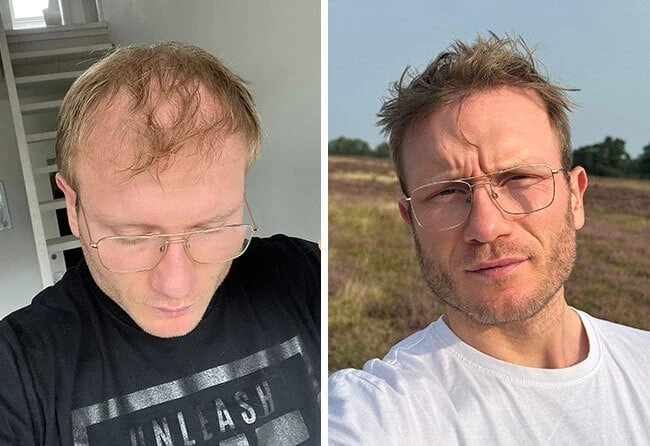
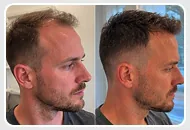
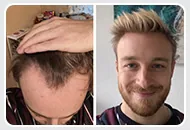
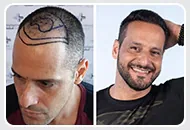
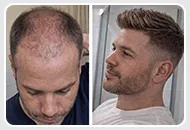
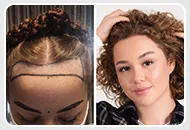
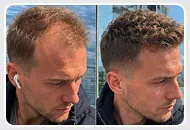
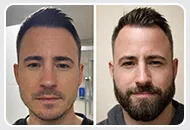
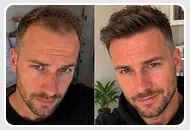
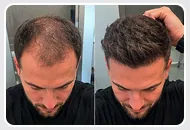
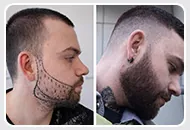
Before
After
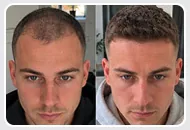
Holle21614 - 3,700 grafts

4.9 - 11,000+ Reviews on Google

150,000+ Happy Patients Worldwide
free, no obligation
 4.9 out of 5 stars on Google
More than 150,000 treatments
at our specialist clinic, certified to ISO 9001:2015
by TÜV Thüringen.

 Your own hair
For many men, a receding hairline is an early visible sign of hereditary hair loss, and it may be what bothers them most when they look in the mirror. Hair loss along the forehead and temples can change the appearance of your face, even if the rest of your hair is still full.
A hair transplant may restore lasting coverage in those areas and create a natural-looking hairline.
At Elithair, we use your own hair from the back of your head. These donor follicles generally have greater resistance to androgen-related miniaturization and can continue to grow long-term after transplantation.
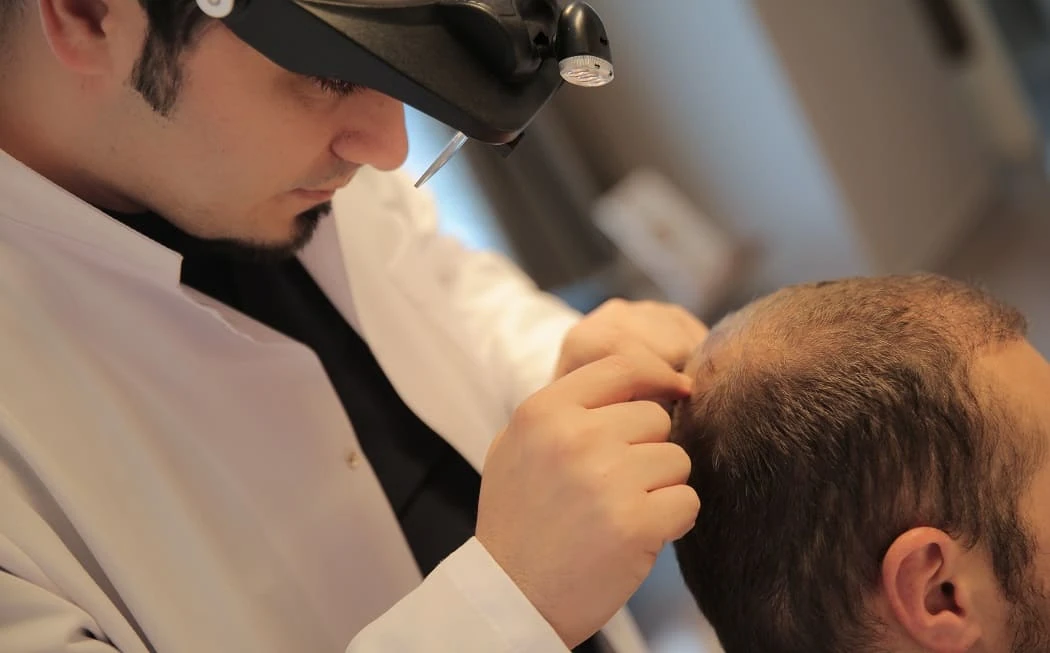
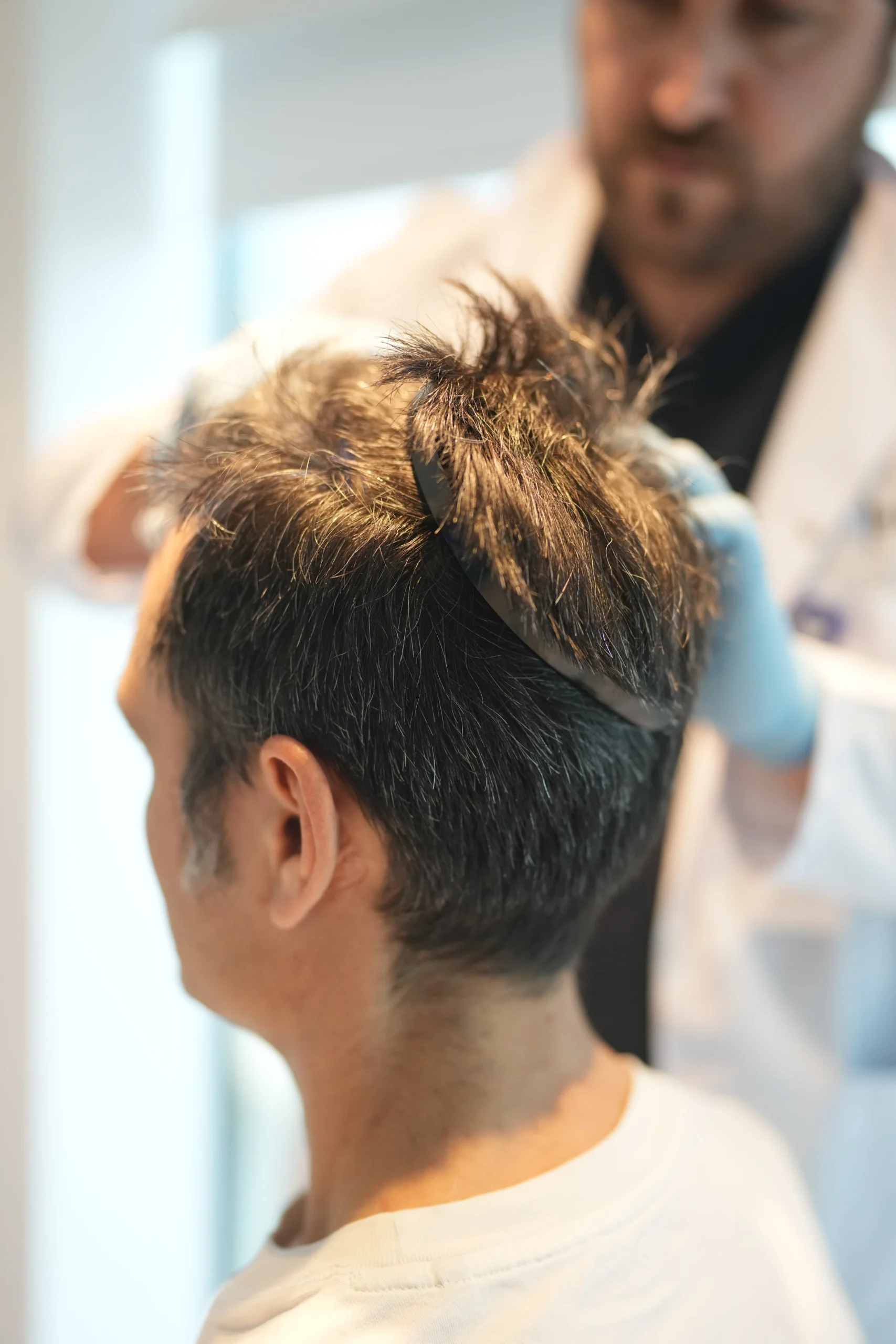
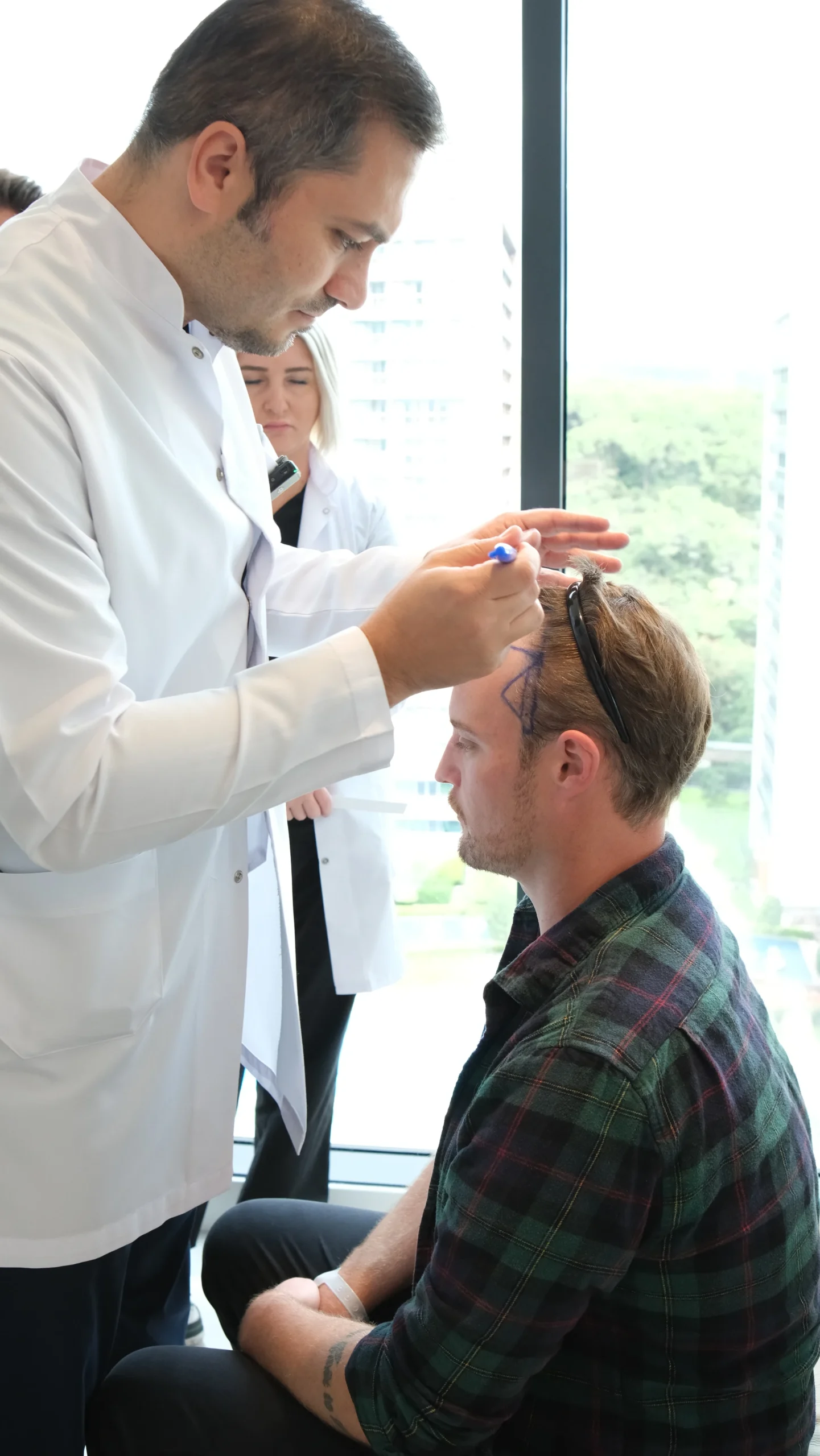
Hair transplants for a receding hairline are among the most common procedures at Elithair. At the hairline, one of the most technically demanding parts of the procedure, careful planning is what makes the result look natural (Shapiro 2004).
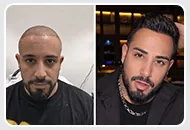
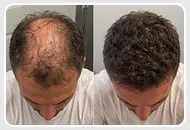
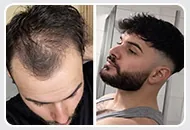
Holle21614 - 3,700 grafts
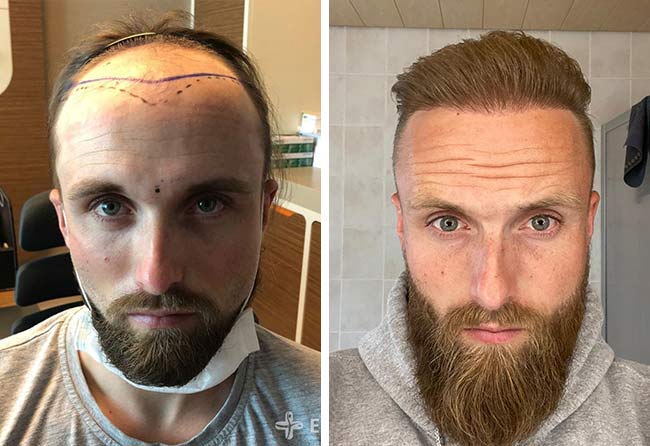
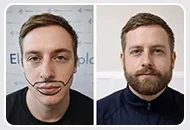
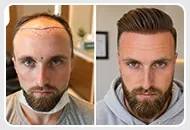
Frederik G. – 4,700 grafts
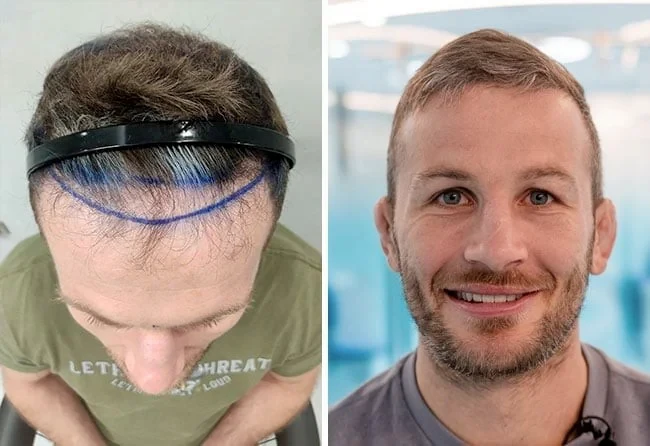
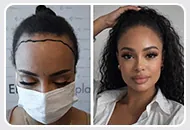
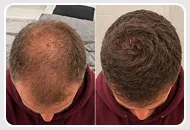
Stephan P. – 5,700 grafts
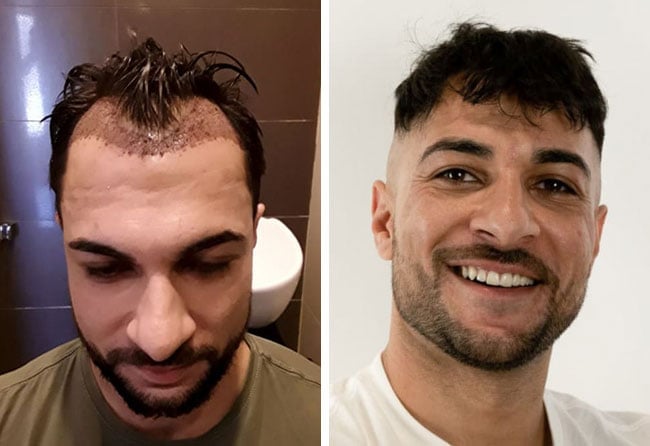
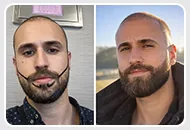
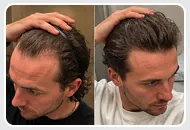
Osmani P. – 2,200 grafts
A receding hairline develops when your hairline gradually moves back at both temples. Because hair in the center usually remains dense at first, this creates the characteristic M or V shape that many men begin to notice in their mid-twenties.
Frontal recession can be an early sign of androgenetic alopecia, also known as hereditary hair loss, a common form of progressive hair loss in men (Kanti et al. 2018).
Genes and hormones work together to cause this hair loss (Lolli et al. 2017). The enzyme 5-alpha reductase converts some of your testosterone into DHT (dihydrotestosterone).
In men with a genetic sensitivity to DHT, the follicles along the forehead and temples respond especially strongly: DHT shortens their growth phase, and the follicles shrink with each cycle in a process called miniaturization. Hair that was once thick can grow back thinner, shorter, and lighter, and in advanced cases visible growth may cease. Because this sensitivity is inherited, receding hairlines tend to run in families.
It is important to distinguish a receding hairline from a mature hairline. Some men's hairlines move back slightly in early adulthood and then stabilize. This may represent normal hairline maturation rather than progressive hair loss, so an assessment is important before considering treatment.
Photos taken over time and a dermatological examination, including trichoscopy when appropriate, can help distinguish progressive miniaturization from a mature hairline.















 Norwood scale
Doctors use the Norwood-Hamilton scale, which runs from stage I to stage VII, to classify hereditary hair loss in men. The early stages are particularly relevant to a receding hairline, but suitability for surgery depends on age, the stability of hair loss, donor capacity, and long-term planning.
The overview below can help you estimate your stage. Our 6-step Pre-Test System provides a precise assessment, with each measurement informing a specific treatment decision. We use those results to develop your individual treatment plan.

So if you only need the receding temples filled in, you are generally at Norwood 2 or 3. From Norwood 3 onward, medication may help preserve or thicken existing hair, but a hair transplant can restore hair to areas that are already bare.
A hair transplant can be the next step when a receding hairline bothers you, but it is not something to rush into at the first sign of recession. The timing plays a major role in whether your result will still look natural years later.
Stable hair loss: your hairline has settled at Norwood 2 to 3 and is no longer receding rapidly. Age and diagnosis: you are of legal age, and your hair loss has been clearly identified as hereditary. Limits of medication: drugs such as minoxidil or finasteride can slow hair loss and may improve thinning hair, but regrowth in long-bald areas is generally limited. A transplant can restore hair in those areas.
Active hair loss: hair behind your new hairline may continue to thin, creating an unnatural "island effect" that requires another procedure later. A hairline that has not yet matured: a natural male hairline has some recession at the temples. A low, straight hairline created at a young age can look increasingly out of place as you get older. That is why we always design your hairline to suit your age.
Keep in mind: transplanted follicles may continue growing long-term, while untreated hair can continue thinning.
Your initial free hair analysis helps assess suitability; a final medical evaluation confirms the treatment plan.
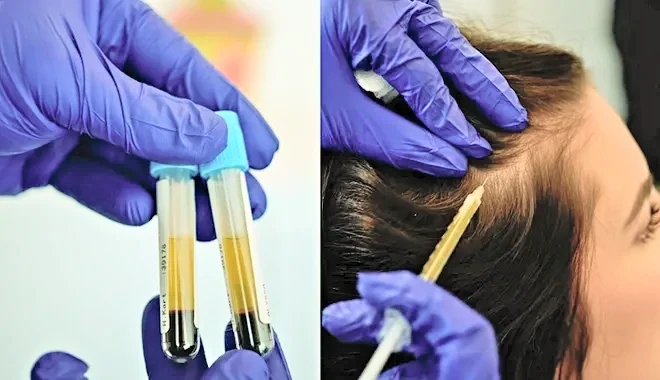
Many products promise to reverse a receding hairline. In practice, nonsurgical treatments can stabilize hair loss and thicken the hair you still have, but meaningful regrowth in areas that have been bald for a long time is unlikely. The overview below explains what each option can do and where its limitations lie.
What it does: Extends the growth phase and thickens existing hair that has become finer. Where it falls short at bald temples: May improve thinning hair, but has limited effects in long-bald areas; benefits generally require continued use.
What it does: Lowers DHT levels and can slow further androgen-related hair loss in many men. Where it falls short at bald temples: Primarily helps preserve existing hair; regrowth at bare temples is limited.
What it does: Growth factors support existing follicles and density. Where it falls short at bald temples: Supports existing follicles but cannot replace those you have lost.
What it does: Moves donor follicles with greater resistance to androgen-related miniaturization into bald areas at the temples. Where it falls short at bald temples: A surgical method that can restore hair in those areas long-term.
Medication and transplantation address different needs: medication protects the hair you still have, while a transplant restores hair where it has been lost.
Discuss with your doctor whether medication alongside a transplant makes sense for you. This may help preserve existing hair and reduce the risk of new gaps developing around transplanted hair.
 Grafts
A receding hairline usually requires 2,000 to 3,500 grafts, depending on the extent of the recession. Mild recession (Norwood 2) typically requires 2,000 to 2,500 grafts; more pronounced recession with a visibly higher hairline (Norwood 3) requires roughly 2,500 to 3,500. One session may be sufficient, depending on the individual treatment plan.
A graft is a naturally occurring follicular unit that usually contains one to four hairs, with an average of about 2.2. The number you need depends on how far your hairline has receded. The table below provides a realistic estimate based on your Norwood stage.
For the cases described here, 2,000 to 3,500 grafts is the typical planning range, and one session may be sufficient. A common question is whether 2,700 grafts for the temples and hairline is reasonable: it is a typical figure within that range. Higher estimates, such as 5,000 grafts, apply to large bald areas rather than a receding hairline alone.
A second session may be considered if further coverage or density is appropriate, or if hair loss continues afterward. We allow at least six months between the two procedures, whether the second one treats a new area or adds density.
One session may be sufficient, and more grafts are not automatically better. Removing too much hair from the donor area can leave it visibly thin (Okochi et al. 2020). A skilled doctor takes only as many grafts as the treatment area needs, preserving donor hair for the future (Unger et al. 2013).
CostMost clinics charge per graft, so you may not know the final price until the graft count is confirmed. Elithair uses all-inclusive graft-based pricing tiers, so you receive a clear quote before you travel. If additional grafts are needed after the on-site assessment, they cost $105 per 500 grafts and are added only with your approval.
For the graft count typically needed to treat a receding hairline, the all-inclusive price ranges from $3,899 to $4,199.
Flights are not included. Direct flight availability to Istanbul depends on your departure airport. The Zero Shave FUE and Manual FUE extraction methods are optional and available at an additional cost.
Health insurance generally does not cover hair transplantation for hereditary hair loss because it is usually considered cosmetic. Coverage depends on the individual plan and medical circumstances.
 All-Inclusive
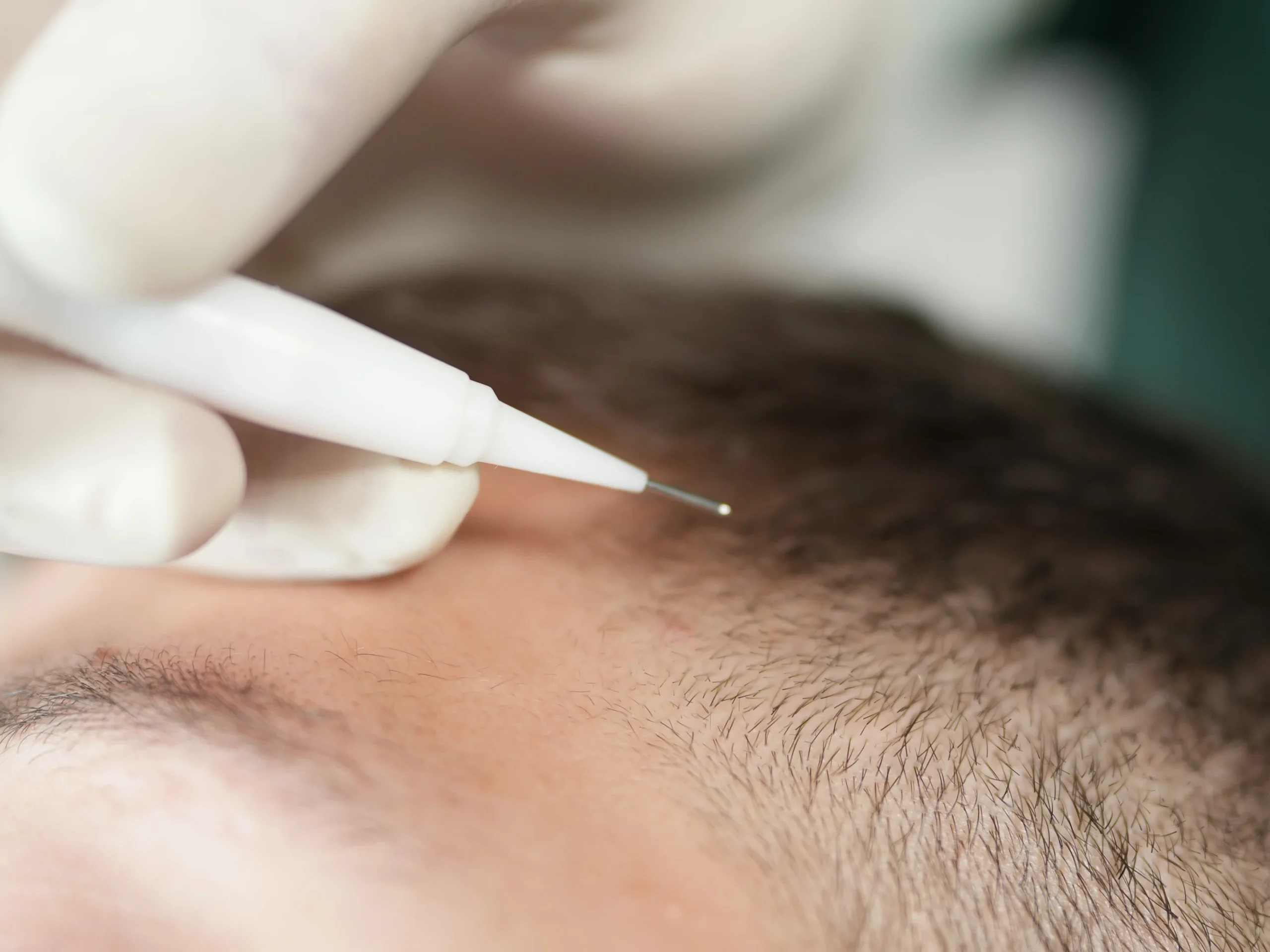

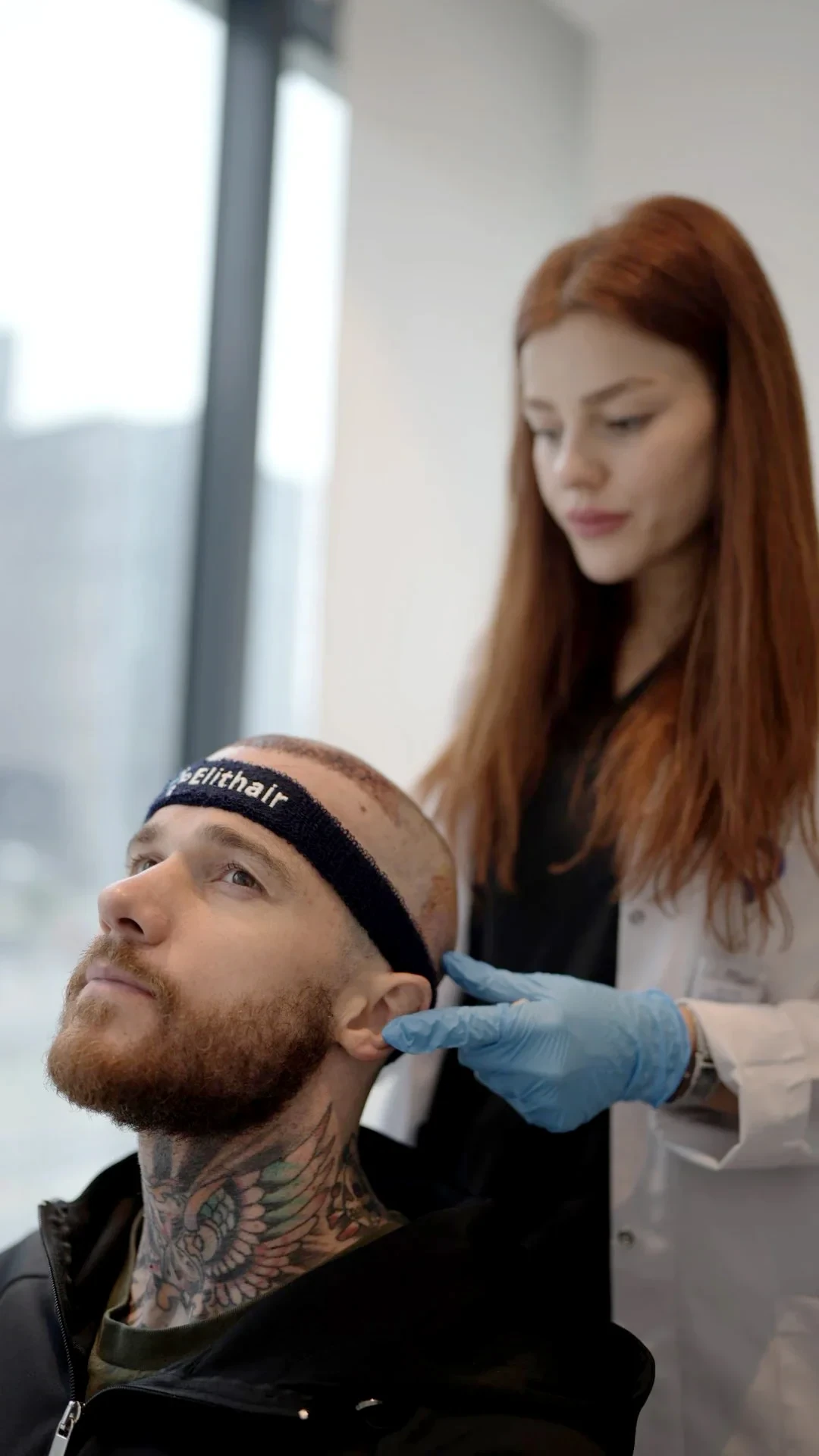
The hairline is one of the most technically demanding parts of the procedure. An incorrect angle or a misplaced single-hair graft is immediately noticeable. Careful design makes the difference between an obvious transplant and a result that looks like your natural hair.
A natural-looking hairline generally includes subtle irregularities rather than a perfectly straight edge (Shapiro et al. 2013). It has gentle curves and a soft transition zone adapted to the patient's existing hairline.
We use single-hair grafts from the donor area in this zone to create a soft edge rather than a harsh, doll-like hairline. Behind them, we place 2-hair grafts for fullness, followed by thicker 3- and 4-hair grafts farther back. Grafts in the front row are implanted at a shallow angle to match the patient's natural growth direction.
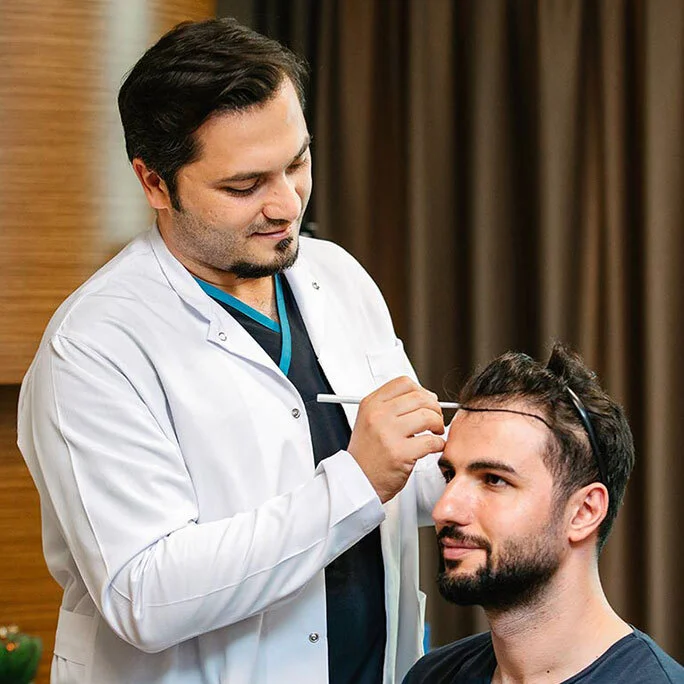
The temples are a common source of mistakes when designing a male hairline. Slight recession at the temples is natural. Filling them in too straight or too low can make your hairline look unnatural, especially as you age. At Elithair, a doctor designs your hairline to suit your age and face shape, helping the result look balanced for decades.
 Procedure
At Elithair, each treatment follows the same sequence: the 6-step Pre-Test System on arrival, FUE extraction of grafts from the back of your head, DHI implantation, and then the patented NEO FUE® Serum after the procedure.
Good to know: At Elithair, FUE is used for graft extraction and DHI with the CHOI Implanter Pen for implantation. The overview below explains each step.
The patented NEO FUE® Serum is the final step and is included in your package. If you are traveling from the U.S., you receive it at the clinic in Istanbul together with a dermaroller set and apply it on day 14 and day 28 after the procedure to support healing.
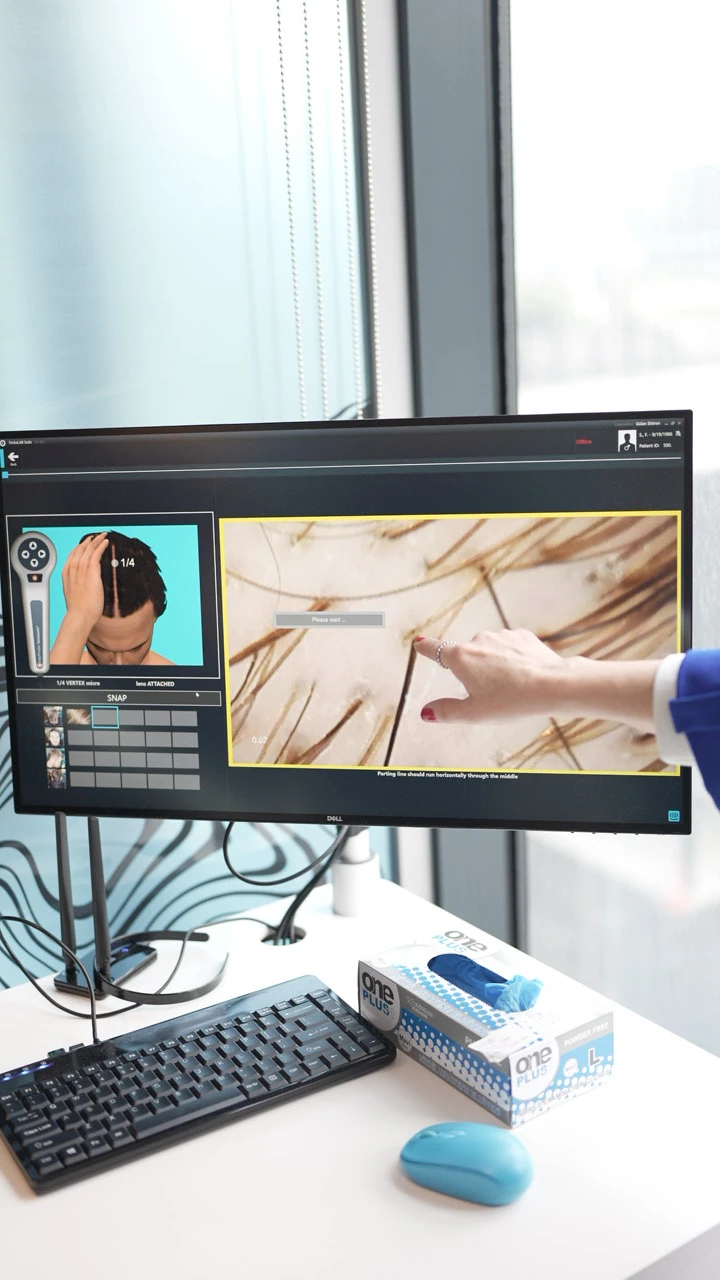
Your treatment in Istanbul begins with the 6-step Pre-Test System. The six assessments are an electrocardiogram (ECG), a general health blood test, a hair loss blood test, a hair analysis with the TrichoLAB scanner, a scalp ultrasound (skin thickness), and a Doppler ultrasound (blood circulation). Based on the results, our doctors create your individual treatment plan.
Each value informs a specific decision: together, skin thickness and blood flow determine the insertion depth, which is the basis for a graft survival rate of approximately 98%.
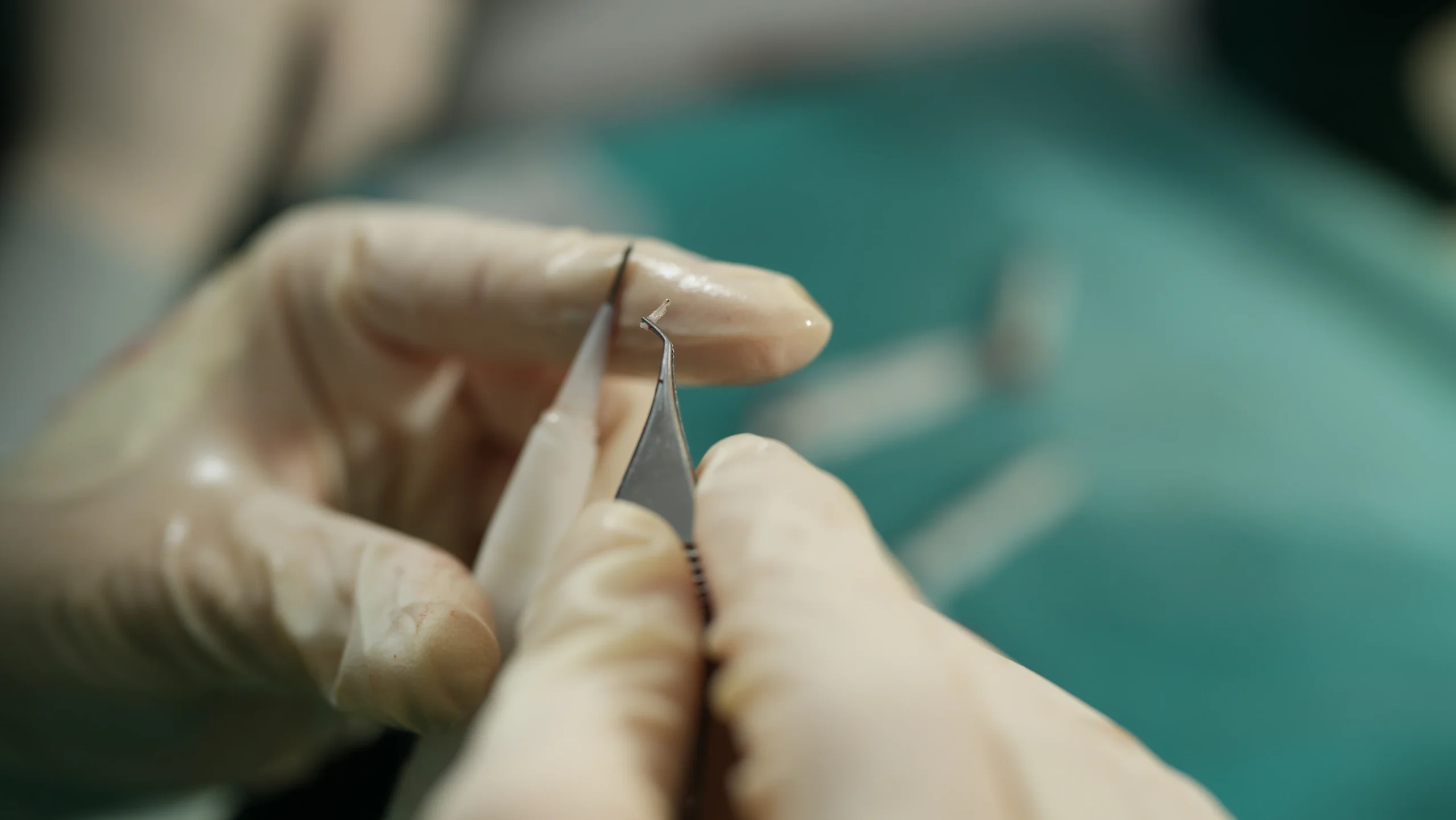
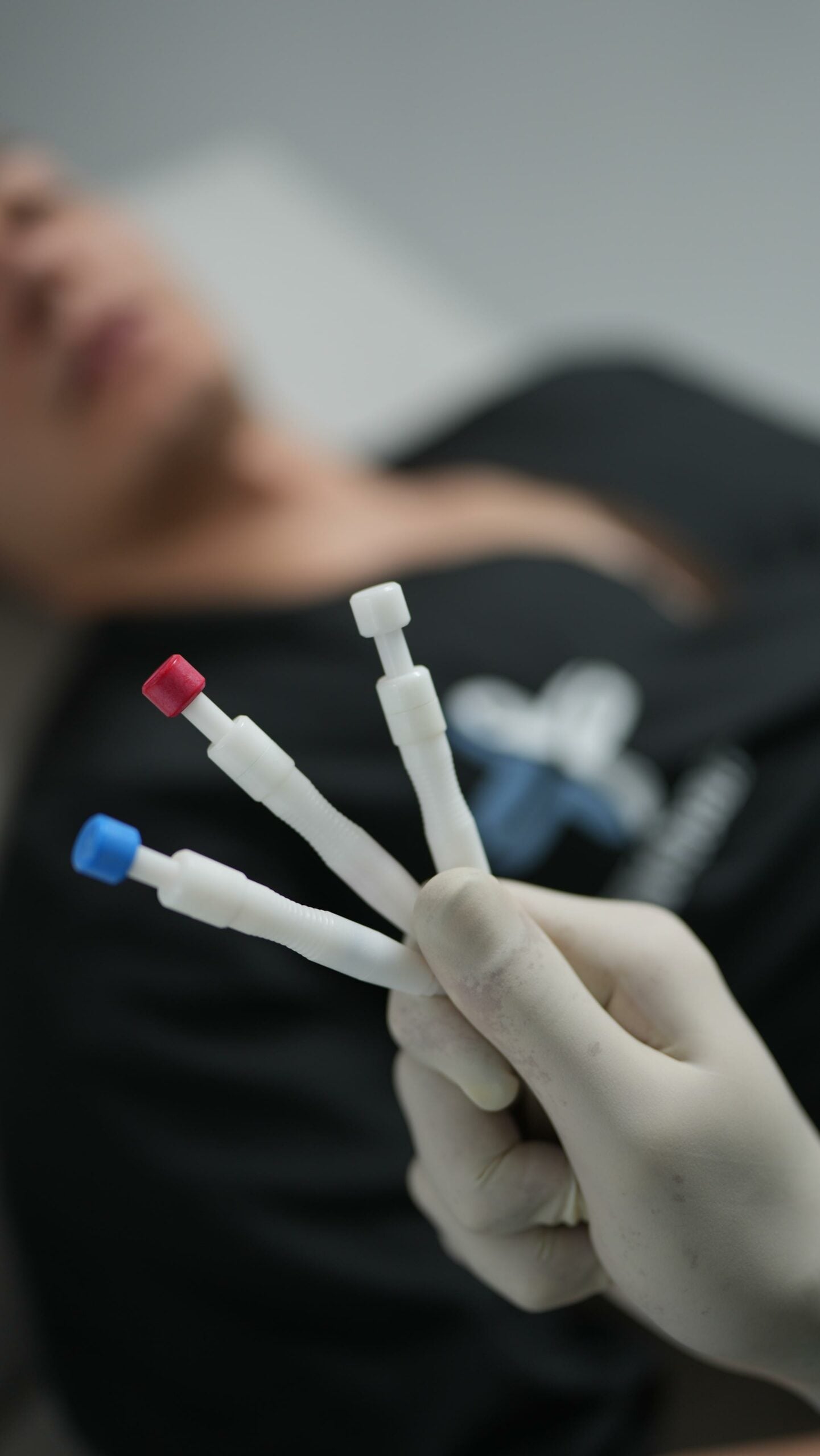
DHI can be particularly useful for precise graft placement at the hairline. The CHOI Implanter Pen opens a channel and inserts the graft in one step, allowing precise control over the angle during placement, including a shallow angle appropriate for a natural-looking front row. Hair can be placed follicle by follicle, supporting carefully planned density in the transition zone.
 Shaving
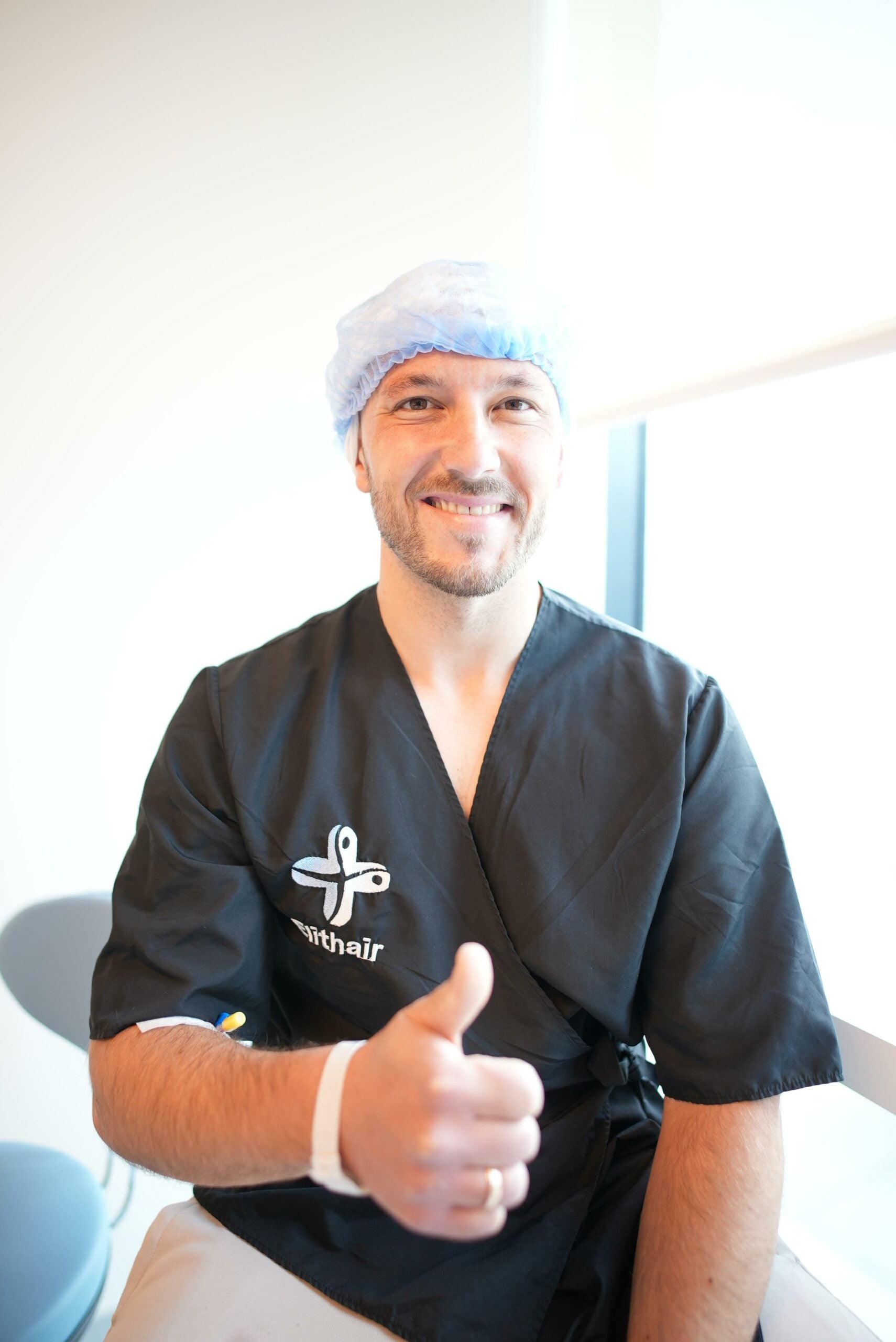
Because treatment for a receding hairline involves a limited area, the amount of shaving depends on the graft count and extraction plan.
A partial shave may be possible, with longer surrounding hair helping cover the donor area.
At the hairline, we place grafts directly between your existing hairs.
Zero Shave FUE, our optional extraction method available at an additional cost, may avoid shaving the recipient and donor areas in suitable cases. It is suitable for procedures requiring under 3,500 grafts, which includes most receding hairlines.
We determine whether Zero Shave is an option during your free hair analysis. Your personal hair transplant consultant then guides you through the remaining details.
ProcessSend us photos of your receding hairline so our doctors can estimate the number of grafts you need and the cost. Together, we choose a date that works for you, with no obligation.
We pick you up at the airport and take you straight to the clinic. There, you undergo six assessments: an electrocardiogram (ECG), a general health blood test, a hair loss blood test, a hair analysis with the TrichoLAB scanner, a scalp ultrasound (skin thickness), and a Doppler ultrasound (blood circulation). Together, skin thickness and blood flow determine the insertion depth. Your individual treatment plan is created based on the results.
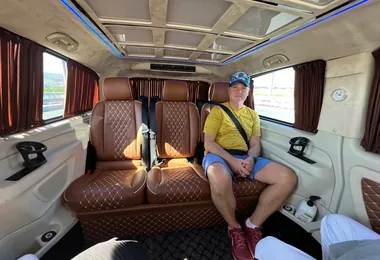
Afterward, we drive you to your hotel. If you arrive late in the evening, the team will advise you about the timing of the Pre-Test System steps.
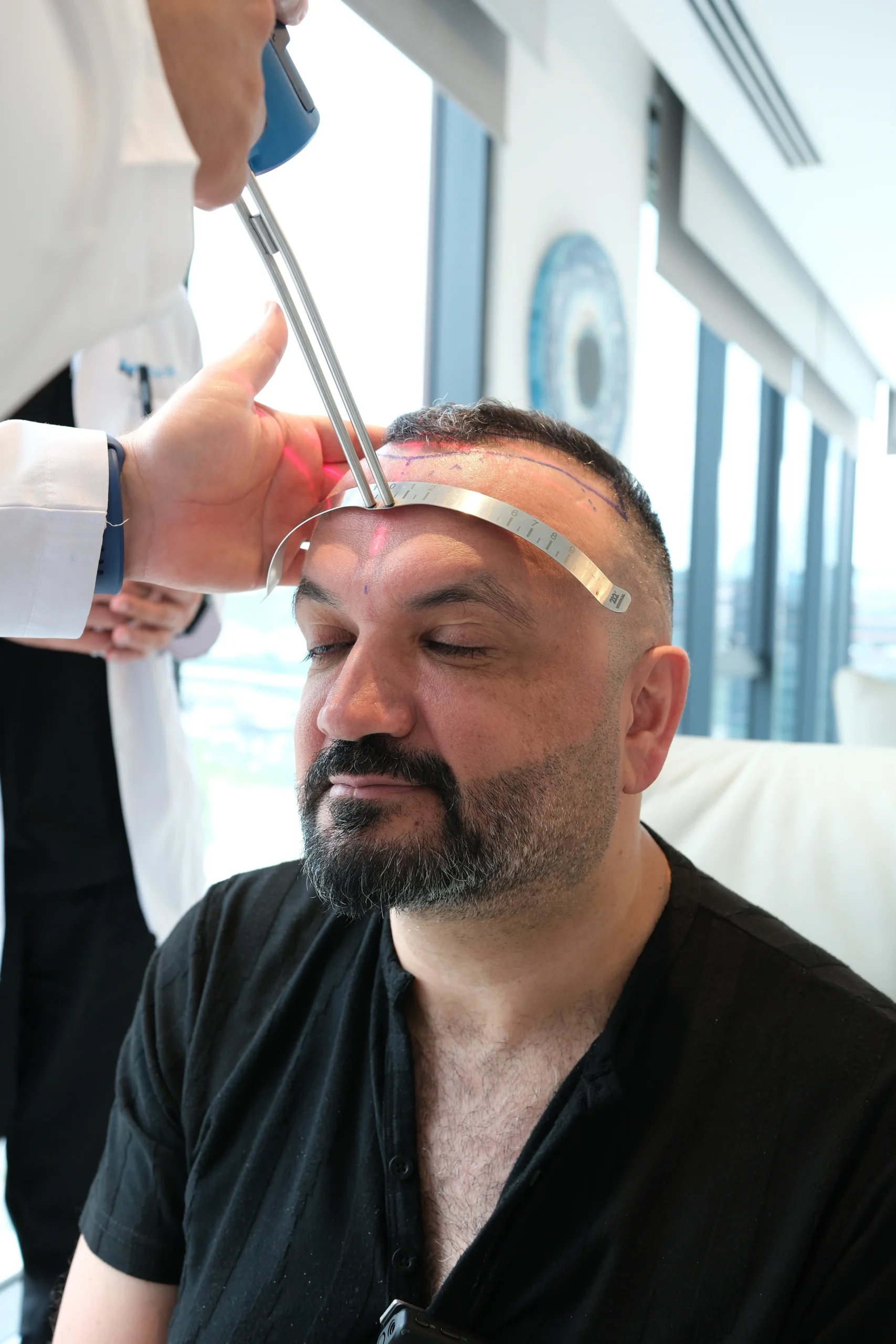
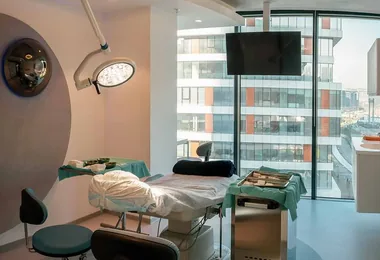
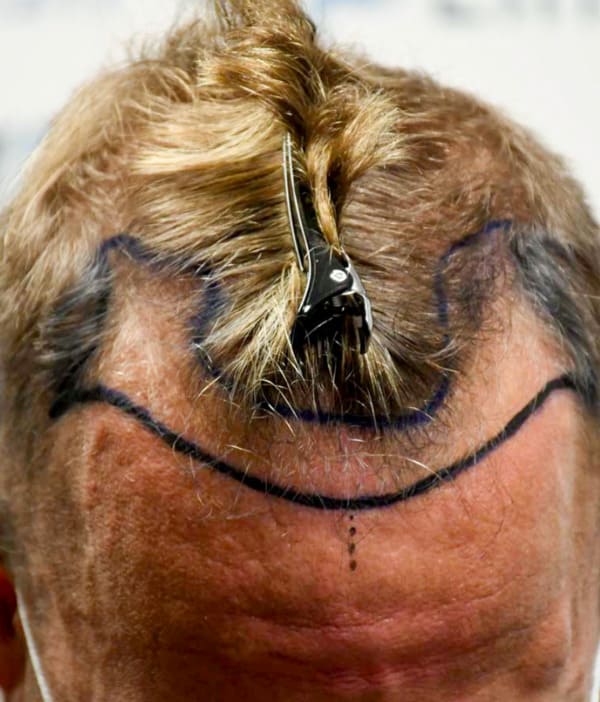
On the day of treatment, your doctor draws your hairline with your input, using your measurements to plan it down to the millimeter. The procedure takes place on an outpatient basis without general anesthesia. It begins with about 15 minutes of twilight sleep using our Sleep-Deep method, so you sleep through the administration of the local anesthetic and experience 0% pain during the procedure. Afterward, you are awake under local anesthesia, although some discomfort may still occur.
Treatment takes about 5 to 8 hours, depending on the number of grafts. Under our 5-Doctor Standard, our doctors oversee and take responsibility for your treatment at five key points.
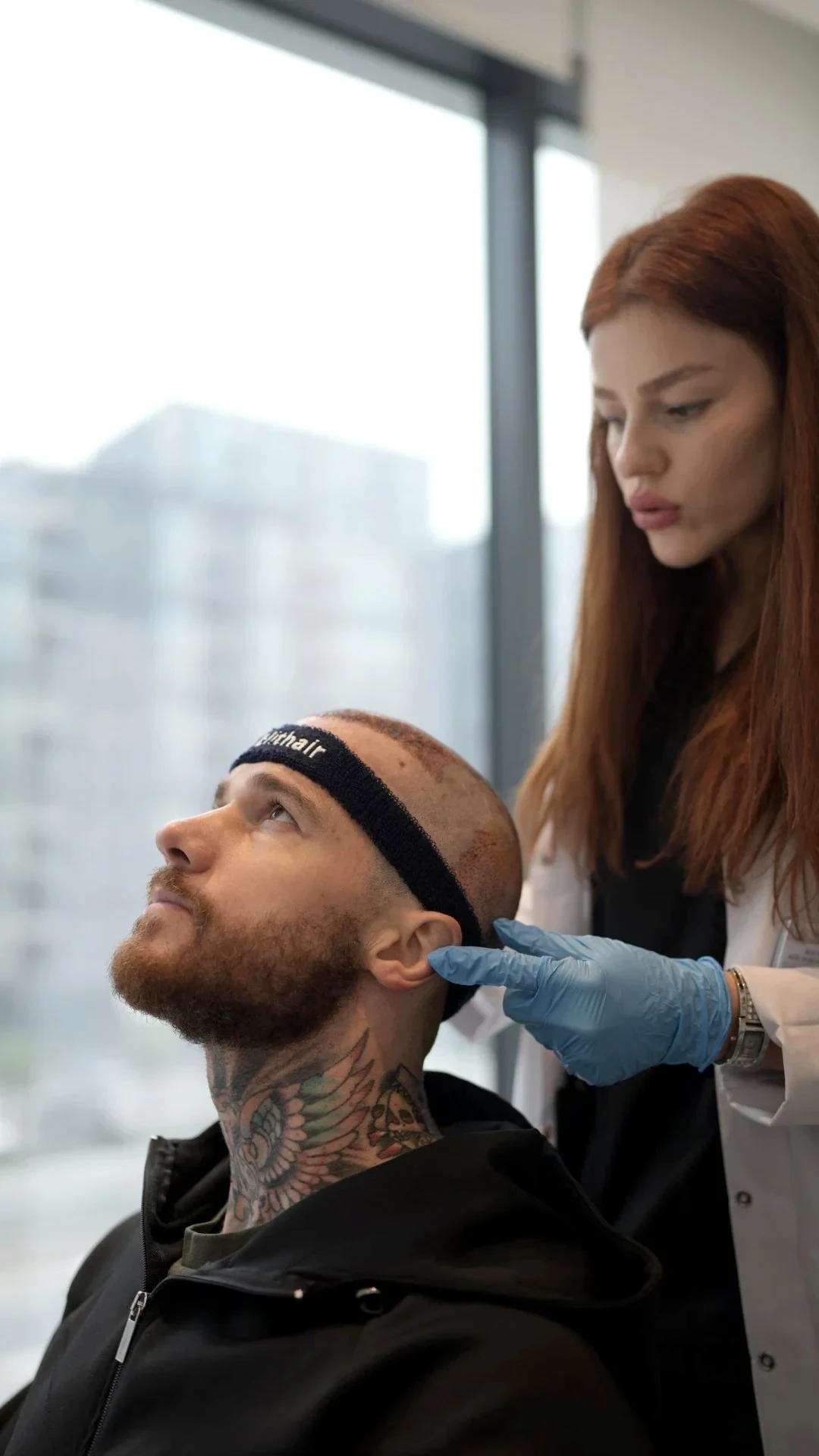
You return to the clinic the next day for aftercare and a medical check-up, and fly home on day 4.
Our medical team monitors your recovery through the Elithair app for 12 months. You regularly upload photos, which our medical team reviews. The app also sends push notifications reminding you when you can resume each activity.
The timeline below shows what to expect as you heal.
Crusts, slight redness and swelling at the temples, desk work possible from day 2 to 3
The scabs have come off; mild redness may remain visible for a few weeks
The transplanted hair shafts may fall out temporarily while the follicles stay intact; in some patients, existing hair nearby also falls out for a while (shock loss). Not every patient experiences this
The first fine new hairs begin to grow at the temples
Early results may be visible, with around 40% of growth in some patients
Frontal hairline results typically become established
Crown results may continue maturing
Guarantee and oversight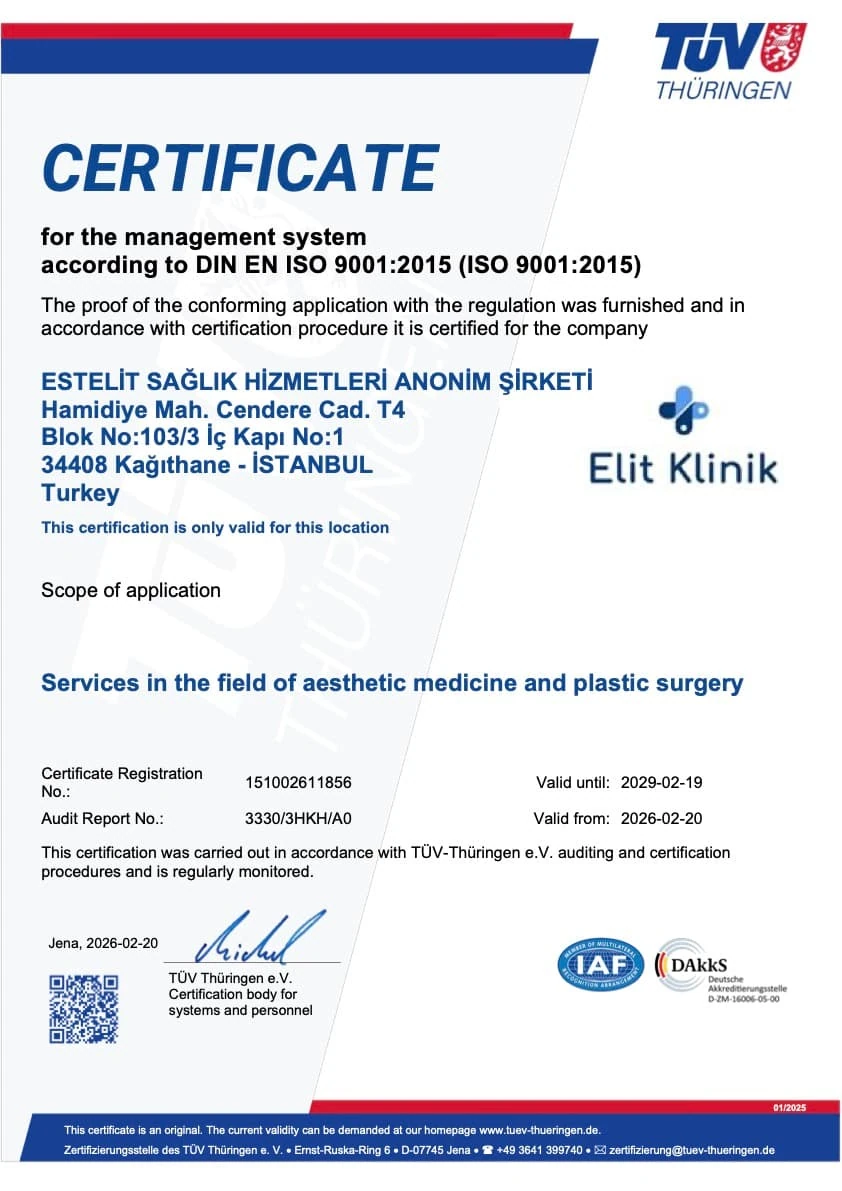
We provide a 20-year written guarantee on your transplanted hair, provided you follow the aftercare instructions. These follicles come from the donor area, where they generally have greater resistance to androgen-related miniaturization, and can continue to grow long-term after transplantation. That lasting growth is the basis of our written guarantee.
Independent oversight provides another layer of reassurance. Our ISO 9001:2015 certification from TÜV Thüringen, a German inspection body, can be verified at any time. The Turkish Ministry of Health also conducts unannounced inspections of our clinic once or twice a month and has authorized us to train doctors in hair transplantation.
written guarantee on your transplanted hair, provided you follow the aftercare instructions.
certification from TÜV Thüringen, a German inspection body, can be verified at any time.
conducts unannounced inspections of our clinic once or twice a month.
A hair transplant for a receding hairline is an established surgical procedure, but it still carries risks. It is important to understand the possible complications and how careful planning can help reduce them.
This can look unnatural as you age. Your doctor designs your hairline individually to suit your age.
"Devil's horns": if surgery is performed too early, while hair loss is still active, the hair behind the transplanted temples may continue to thin until only the transplanted hair remains.
During the first few weeks after treatment, transplanted hair shafts may fall out temporarily, while the follicles remain in place. Not every patient experiences this shedding. Some patients also temporarily lose existing hair nearby, known as shock loss. This is a normal stage of recovery, though many people find it unsettling.
Removing too many grafts can damage the donor area at the back of your head. A carefully planned procedure uses only as many grafts as the treatment area needs.
Careful planning, honest guidance, and appropriate medical oversight can help reduce these risks, although no surgical outcome is guaranteed.
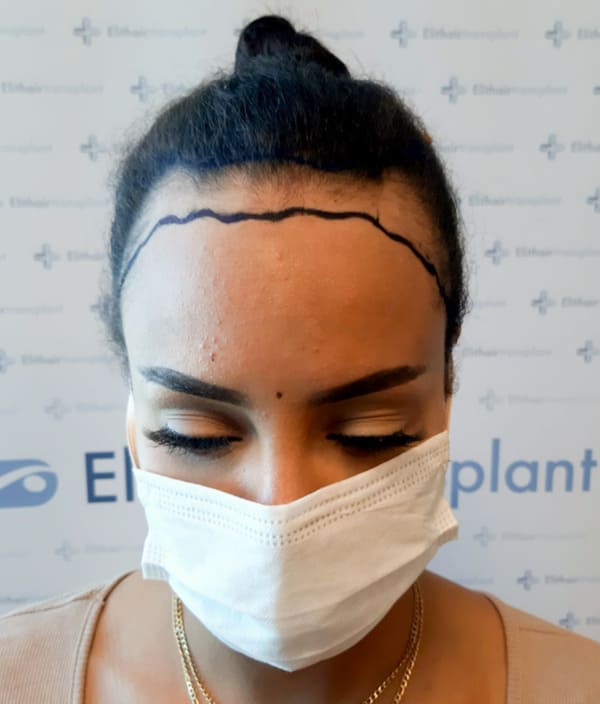
That is why women need a thorough dermatological evaluation first (Lam 2020).
Women can also develop a receding hairline, although it is less common and requires a different approach to planning. A woman's hairline has a different shape, sitting lower in the center and higher at the sides. Hereditary hair loss in women more often causes diffuse thinning along the part than pronounced recession at the temples. Whether a transplant is suitable depends largely on the underlying cause.
Frontal recession in women can also indicate a form of scarring hair loss, such as frontal fibrosing alopecia. A hairline transplant is not appropriate while the condition is active, because the same process can destroy transplanted follicles.
That is why women need a thorough dermatological evaluation first (Lam 2020). Our doctors provide this as part of your individual hair analysis.
At Elithair, you pay an all-inclusive price by graft tier, rather than a price per graft. The typical requirement of 2,000 to 3,500 grafts costs $3,899 to $4,199. This includes the procedure, three nights at a 4-star hotel near the clinic, VIP airport transfers, the 6-step Pre-Test System, a PRP treatment, your medical check-up the following day, and twelve months of aftercare through the Elithair app. Your included PRP treatment takes place at the clinic on the day of your procedure. At least six PRP sessions are recommended overall, with additional sessions scheduled according to your individual treatment plan. Your flights are not included. If you choose the optional Zero Shave FUE or Manual FUE extraction method, the additional fee is also separate. Direct flight availability to Istanbul depends on your departure airport.
It depends on how far your hairline has receded. Mild recession (Norwood 2) usually requires 2,000 to 2,500 grafts; more pronounced recession (Norwood 3) requires roughly 2,500 to 3,500. Around 2,700 grafts is a typical figure for the temples and hairline, and one session may be sufficient, depending on the treatment plan. Your doctor confirms the graft count following an assessment and the Pre-Test System, using only as many grafts as the treatment area needs while considering the limits of your donor area.
Not always. The amount of shaving depends on the graft count and the extraction plan. A partial shave may be an option for some patients. At the hairline, we place grafts directly between your existing hairs. Zero Shave FUE, an optional extraction method available at an additional cost, may avoid shaving in suitable cases, generally when fewer than 3,500 grafts are required. We determine whether it is suitable during your free hair analysis.
Elithair's Sleep-Deep method is designed to provide 0% pain during the procedure without general anesthesia. You sleep through the most uncomfortable step: administration of the local anesthetic. Your scalp may feel slightly tight for a few days afterward, but the medication we provide for you to take home manages this well.
The procedure itself takes place on a single day and lasts about 5 to 8 hours, depending on the number of grafts. You return to the clinic for a medical checkup the next day and fly home on day 4 after the planned 4-day, 3-night stay. Results develop over the following months. During the first few weeks after treatment, transplanted hair shafts may temporarily shed; some patients also lose existing hair nearby, a process called shock loss. Not every patient experiences this. New growth usually begins around months 3 to 4, and full results at the hairline are visible after ten to twelve months.
Yes. The hairline is one of the most technically demanding parts of the procedure, and at Elithair a doctor designs your hairline. We use only fine single-hair grafts in the transition zone, placing them at a shallow angle that follows the natural direction of hair growth. Your hairline is designed with your age, facial proportions, and potential future hair loss in mind.
Yes. Transplanted hair comes from the horseshoe-shaped donor area, where the follicles generally have greater resistance to androgen-related miniaturization. They retain this donor-area characteristic after transplantation to the forehead and temples and can continue to grow long-term. We provide a 20-year written guarantee, provided you follow the aftercare instructions. Your untreated hair around the transplanted area can still change, so discuss with your doctor whether maintenance medication is right for you. This can help maintain a balanced appearance over the long term and prevent new gaps from developing around your transplanted hair.
Your hair transplant takes place at our clinic in Istanbul, where our doctors oversee and take responsibility for your treatment at five key points under the 5-Doctor Standard, and the 6-step Pre-Test System forms the basis of your individual treatment plan. The rest can be managed from home: your free hair analysis uses photos you send us, treatment is planned before you travel, and twelve months of aftercare are provided through the Elithair app. You receive the full standard of care at our clinic in Istanbul.
Generally not. Hair transplants for hereditary hair loss are usually considered cosmetic and are not covered by Medicare, Medicaid, or private health insurance. A rare exception is reconstructive treatment with documented medical necessity, which usually requires prior authorization. HSA or FSA eligibility depends on the plan and applicable tax rules, and generally requires qualifying medical necessity. Otherwise, you pay out of pocket, which makes a transparent, all-inclusive price especially helpful.


