

In brief: the causes of hair loss
Summary: The three most common causes of hair loss are hereditary (androgenetic) hair loss, diffuse hair loss (telogen effluvium) and patchy, autoimmune hair loss.
The most common causes of hair loss are hereditary (androgenetic) hair loss (ICD-10 L64), diffuse hair loss (telogen effluvium, L65.0) triggered by factors such as iron deficiency, thyroid disorders, stress or hormonal changes, and patchy, autoimmune hair loss (alopecia areata, L63). Which type you have determines whether the hair grows back.
- Losing 50 to 100 hairs a day is considered normal (American Academy of Dermatology).
- The cause determines the outlook: diffuse triggers are usually reversible, while hereditary and scarring hair loss progress without treatment.
- The pattern tells you a lot: a receding hairline or a thinning crown points more towards genetic, even thinning across the whole scalp towards diffuse, round bald patches towards autoimmune, and reddened or scarred areas are an emergency.
Summary
- How much hair loss is normal, and when does it become a problem?
- The main types of hair loss at a glance
- Reasons for hair loss in women and men
- Androgenetic hair loss (hereditary): the most common cause (L64)
- Diffuse hair loss (telogen effluvium) and its triggers (L65.0)
- Patchy hair loss (alopecia areata): the autoimmune cause (L63)
- Scarring hair loss: the cause that is an emergency (L66)
- Mechanical and other hair loss
- Is hair loss hereditary? And what role does lifestyle play?
- Myths: what does NOT cause hair loss?
- Identifying and correctly diagnosing the cause: when should you see a doctor?
- Reversible or permanent? And: diffuse or genetic?
- Frequently asked questions about the causes of hair loss
- Sources
How much hair loss is normal, and when does it become a problem?
Losing 50 to 100 hairs a day is considered normal, according to the American Academy of Dermatology. Only a clearly and persistently higher loss, visibly thinning hair or bald patches point to hair loss that needs treatment. There is no fixed figure in the literature such as “over 150 hairs is abnormal”.
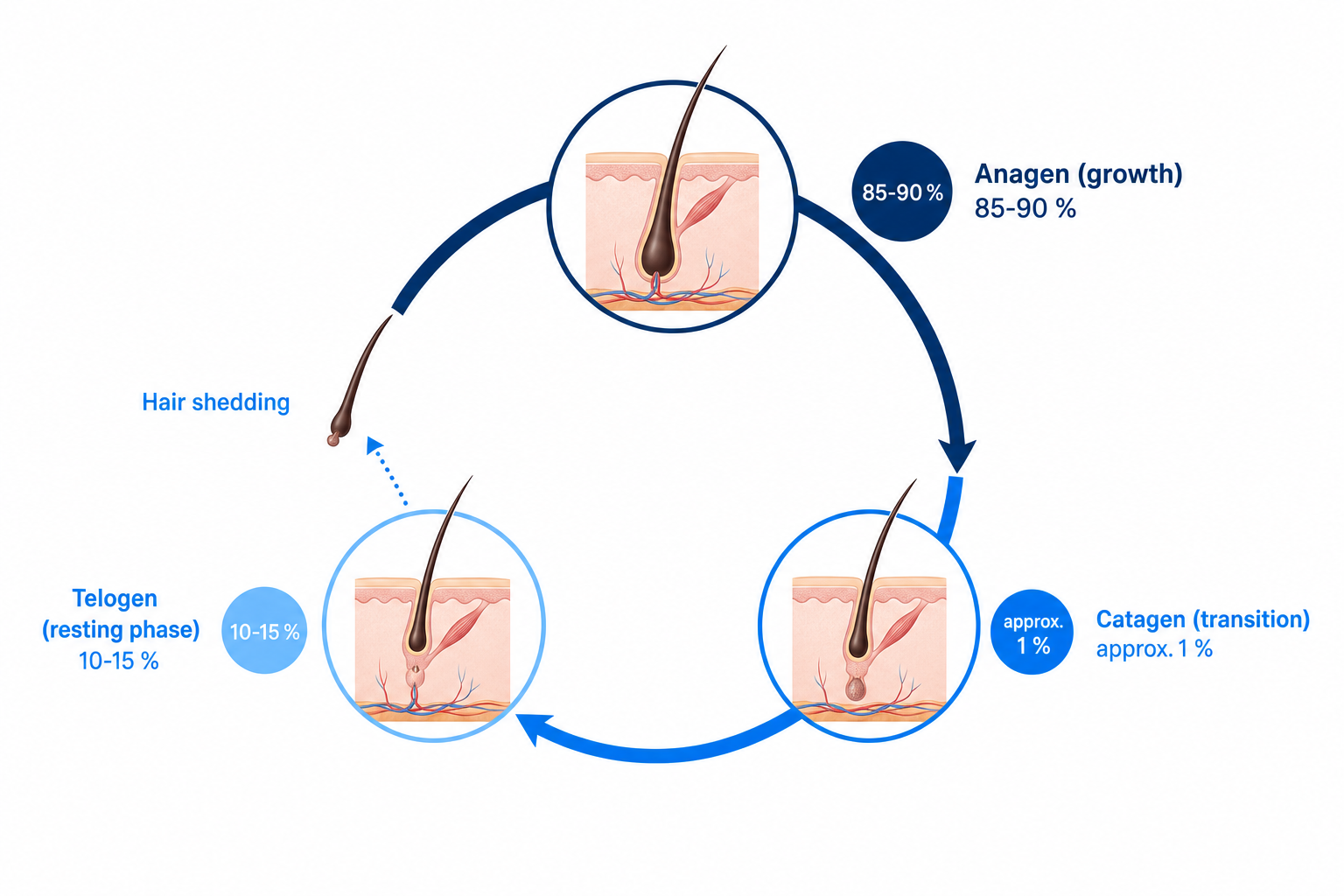
What causes hair loss in detail is closely linked to the hair cycle. Around 85 to 90 per cent of scalp hairs are in the growth phase (anagen, 2 to 6 years), about 1 per cent in the transition phase (catagen) and 10 to 15 per cent in the resting phase (telogen, around 2 to 3 months). At the end of the telogen phase the hair falls out. More on this in our in-depth article on the hair cycle.
Three markers can give you a rough self-assessment: the pull test (if noticeably many hairs come away when you gently tug on a strand, that is a warning sign), visibly more hair in the drain, on your brush and on your pillow, and a widening parting. These signs are no substitute for a medical check, but they do give you a first indication.
The main types of hair loss at a glance
What causes hair loss can usually be assigned to one of three major types: androgenetic (hereditary), diffuse (telogen effluvium) and patchy (autoimmune) hair loss. On top of these there are rarer special forms such as scarring and mechanical hair loss. The pattern, triggers and outlook differ considerably, as the following overview shows.
| Type of hair loss | Typical pattern (where?) | Common triggers | Reversible? | First port of call |
|---|---|---|---|---|
| Androgenetic (L64) | Men: receding temples + crown (Norwood scale). Women: thinning crown, hairline usually preserved (Ludwig scale) | Genetic DHT sensitivity of the follicles | No, but can be slowed and treated | Dermatologist / hair analysis |
| Diffuse (telogen effluvium, L65.0) | Evenly across the whole scalp | Iron deficiency, thyroid, stress, hormones, medication, crash diet, infection/surgery/childbirth | Yes, usually once the trigger is resolved | GP (blood test) |
| Patchy (alopecia areata, L63) | Sharply defined, round bald patches, any age | Autoimmune reaction against the hair follicles | Unpredictable; spontaneous remission possible, but under 10% within the first 6 months according to the S3 guideline | Dermatologist |
| Scarring (e.g. lichen planopilaris, FFA, L66) | Shiny, scarred areas with no visible follicle openings, often with redness/itching | Inflammatory destruction of the follicles | No, irreversible. Treat as an emergency | See a dermatologist immediately |
| Mechanical (traction alopecia) | Hairline and temple area, along the direction of pull | Constant tension from braids, extensions, tight hairstyles | Yes at first, scarred and irreversible in later stages | Dermatologist |
Reasons for hair loss in women and men
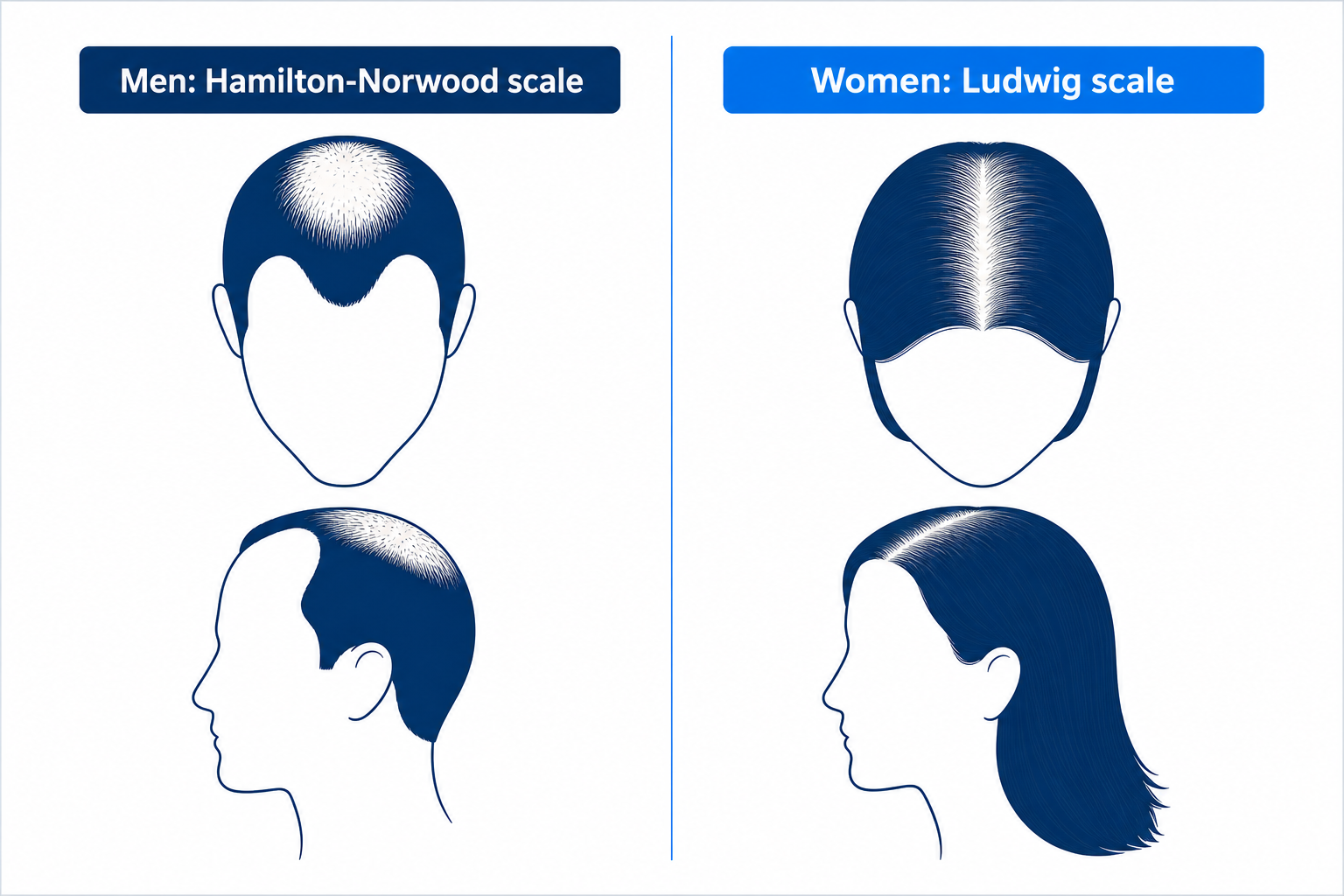
The reasons for hair loss differ between women and men mainly in pattern and frequency. Men lose hair predominantly through androgenetic hair loss, often early (around 25 per cent show first signs before the age of 21), with receding temples and a thinning crown following the Norwood scale. The progression is easy to predict and follows the typical male pattern.
In women the picture is more varied: diffuse causes such as iron deficiency, thyroid problems and postpartum shedding are more common, along with hormonal triggers (menopause, PCOS) and androgenetic alopecia in the Ludwig pattern, with a thinning crown rather than a receding hairline. Because several causes often overlap, a thorough assessment is worthwhile. More detail in our article on hair loss in women.
Androgenetic hair loss (hereditary): the most common cause (L64)
Hereditary androgenetic hair loss is the most common cause of hair loss overall. Among men of Caucasian descent, epidemiological data show that around 50 per cent are affected by the age of 50 and up to 80 per cent by the age of 70 (PMC11867384). The German health portal gesund.bund.de cites a range of up to 70 per cent of men and 40 per cent of women.
The underlying cause is not a disease in the narrower sense but an inherited sensitivity of the hair follicles to dihydrotestosterone (DHT). It is not a high testosterone level but the receptor sensitivity that shortens the growth phase and causes the follicles to shrink (miniaturisation). Around 25 per cent of men show first signs before the age of 21 (PMC11867384). More on this in our article on androgenetic alopecia.
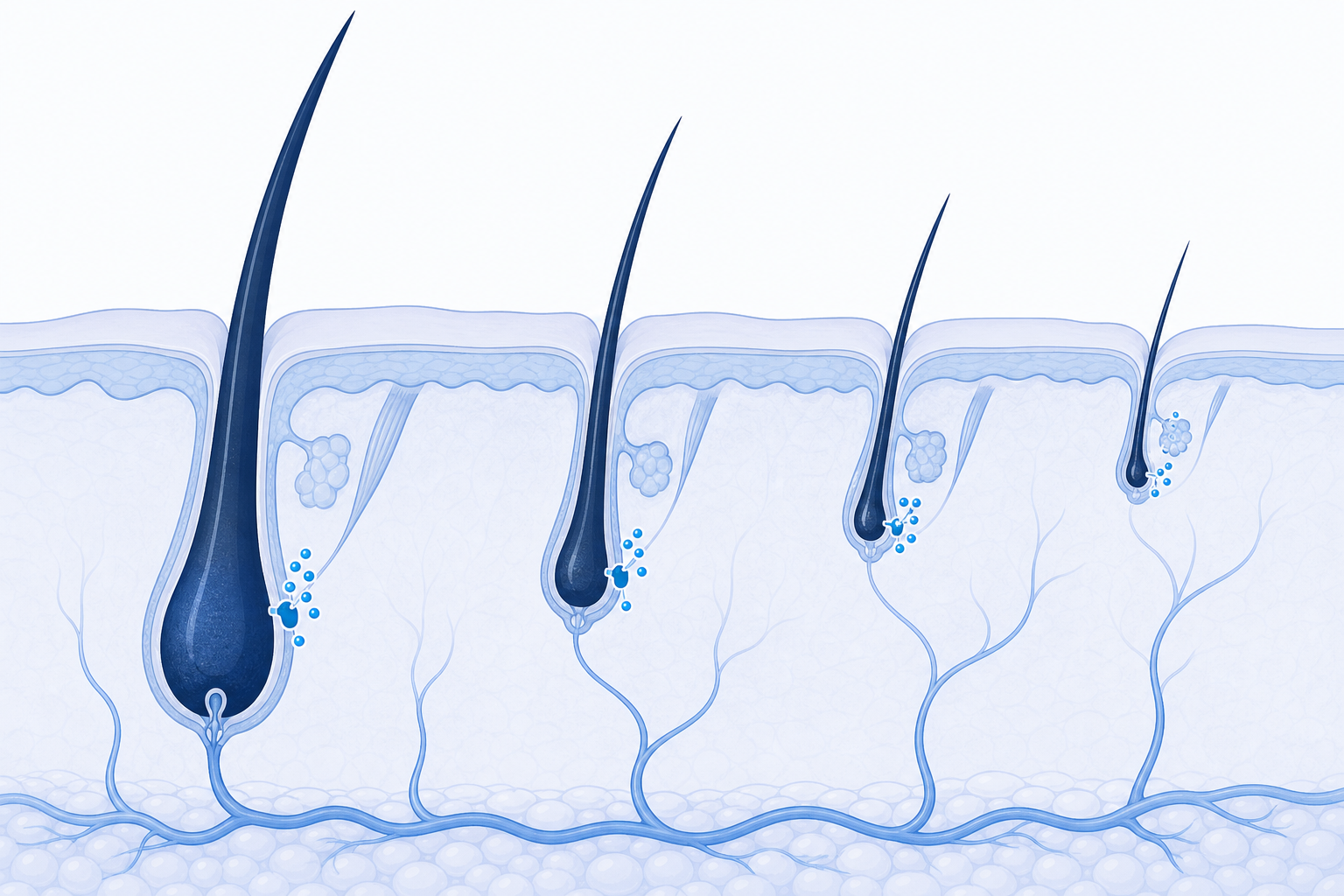
The pattern is characteristic: men lose hair according to the Hamilton-Norwood scale at the temples and crown, women according to the Ludwig scale as diffuse thinning of the crown while the hairline is usually preserved. Details on how the condition develops in women in our article on hair loss in women.
As an evidence-based first-line treatment, the European S3 guideline recommends topical Minoxidil (for women and men) as well as oral finasteride 1 mg/day for men. Finasteride is a prescription-only medicine and can have sexual side effects, which is why medical assessment is required. Androgenetic hair loss progresses without treatment, but it can be slowed and treated. Timing is decisive: medication can slow the loss and preserve existing hair, but it cannot reactivate follicles that have already fully regressed. How density can be restored in areas that are already bald is explained in the section on reversibility further down.
Diffuse hair loss (telogen effluvium) and its triggers (L65.0)
Diffuse hair loss (telogen effluvium) is spread evenly across the whole head and is set off by a trigger that typically dates back 3 to 4 months. Too many follicles move into the resting phase at the same time. According to the review by Malkud (2015), this type is usually self-limiting and subsides within about 6 months once the cause has been resolved.
Because months pass between the trigger and the visible shedding, the cause is often overlooked. The most common reasons for this kind of hair loss range from nutrient deficiencies through hormones and stress to medication. The following subsections set them out.
Iron and nutrient deficiency
Iron deficiency is one of the most common, and often overlooked, causes of diffuse hair loss, especially in women. The decisive value is the storage marker ferritin: a deficiency is considered present below 30 ng/ml according to guideline consensus, and some laboratories set the threshold below 15 to 20 ng/ml. A lack of iron slows the rapidly dividing hair matrix and pushes follicles prematurely into the telogen phase.
A higher “hair target value” of 40 to 70 ng/ml is discussed by some specialists, goes back to the review by Trost et al. (2006) and is not confirmed by controlled studies. The authors themselves spoke of insufficient evidence for routine iron supplementation in non-anaemic deficiency. The German Nutrition Society (DGE) recommends 16 mg of iron per day for menstruating women and 11 mg for men. More on this under iron deficiency and hair loss as well as vitamins for hair loss.
Thyroid (overactive and underactive)
Both an underactive and an overactive thyroid can cause diffuse hair loss, because the hormones T3 and T4 help regulate the hair cycle. Studies report that around 25 per cent of people with an underactive thyroid and up to 15 per cent with an overactive thyroid experience hair loss. The TSH value (reference range around 0.4 to 4.0 mU/l, laboratory-dependent) is the first screening test.
This type of hair loss is typically diffuse and reversible over several months once the values have normalised. More detail in our hub on hair loss caused by the thyroid and in our in-depth article on hair loss caused by hypothyroidism.
Hormonal changes: childbirth, the pill, menopause, PCOS
Hormonal changes are among the most important reasons for hair loss in women. After childbirth, postpartum shedding usually sets in 2 to 4 months later, because the drop in oestrogen sends up to 30 per cent of follicles into the resting phase at the same time (normally 10 to 15 per cent). According to review articles, over 95 per cent of women recover within 6 to 12 months.
During the menopause, the falling oestrogen level unmasks the genetic DHT sensitivity of the follicles. In these cases it is often androgenetic alopecia in the Ludwig pattern becoming visible, rather than pure effluvium. In younger women, PCOS (polycystic ovary syndrome, diagnosed according to the Rotterdam criteria) is a key hormonal cause and should be assessed by a specialist. More on how these factors interact under hormones and hair.
Can stress cause hair loss?
Yes, severe physical or psychological stress can cause hair loss. Through activation of the stress axis (cortisol), follicles are pushed prematurely into the resting phase, producing a diffuse telogen effluvium, typically 2 to 3 months after the stressful event (JAAD Reviews, 2025). Once the stress eases, this loss is usually reversible.
An important distinction: stress does not trigger genetic hair loss, but it can accelerate an existing hereditary progression. So if you suddenly lose a lot of hair under pressure, you usually have a temporary effluvium rather than newly developed hereditary hair loss.
Crash diets, protein and calorie deficiency
Crash diets and one-sided eating can cause hair loss, because the body lacks the building blocks for the energy-hungry process of hair growth. After heavy weight loss, diffuse shedding usually begins 6 to 12 weeks after the start of the diet. Reviews suggest that a protein intake below 0.8 g/kg of body weight per day could roughly double the risk of a telogen effluvium.
Besides protein, zinc, essential fatty acids and total calories also play a role in restrictive diets. Once you return to a balanced diet, the hair usually recovers.
Hair loss after COVID-19, surgery, childbirth and fever
Acute physical stresses such as a COVID-19 infection, an operation, childbirth or a high fever often cause an acute telogen effluvium. After COVID-19 it frequently appears more quickly than usual, at a median of around 1.5 months after the infection (JAAD). According to one study, about 25 per cent of those affected develop this kind of hair loss within the first 2 to 3 months (PMC8407603).
The mechanism is always the same: physical stress pushes many follicles into the resting phase at once, and the loss only becomes visible after a delay. The peak is usually around month 3 to 5, and full density typically returns within 6 to 12 months.
Medication
Various medicines can cause hair loss, usually as a telogen effluvium. The following table lists the most important drug groups. The key principle here is this: if you suspect a medicine, never stop taking it on your own. With blood thinners and cardiovascular medicines in particular, it is essential to consult the prescribing doctor.
| Drug group | Examples | Type of hair loss triggered |
|---|---|---|
| Beta blockers | Propranolol, atenolol, metoprolol | Telogen effluvium (rare) |
| Blood thinners (anticoagulants) | Heparin, warfarin; also DOACs (rivaroxaban, dabigatran, apixaban) according to suspected-case reports | Telogen effluvium |
| Antidepressants / mood stabilisers | Citalopram, fluoxetine, sertraline, lithium | Telogen effluvium |
| Retinoids (oral) | Isotretinoin, acitretin | Telogen effluvium |
| Thyroid / hormone medicines | Incorrectly adjusted levothyroxine, stopping the pill | Telogen / hormonal effluvium |
| Chemotherapy agents | Cytostatics in general | Anagen effluvium (directly affects the growing hairs, to be distinguished) |
| Anticonvulsants | e.g. valproate | Telogen effluvium |
Sources for this overview include DermNet and pharmacovigilance-based suspected-case reports. The DOAC reports mentioned do not prove a causal link but are suspected cases. If a new medicine coincides in time with the hair loss, the prescribing doctor is the right person to speak to.
Seasonal hair loss
Mild seasonal hair loss is real but harmless. A cohort of 823 women showed the highest proportion of resting-phase hairs at the end of summer and the start of autumn (August to October), and the lowest in winter (PubMed 19407435). The effect is subtle and temporary and does not create visible gaps. It is clearly distinct from a genuine effluvium that needs treatment.
Patchy hair loss (alopecia areata): the autoimmune cause (L63)
Patchy hair loss (alopecia areata) is an autoimmune cause of hair loss in which the immune system attacks individual hair follicles and sharply defined, round bald patches appear. In Germany, according to the new AWMF S3 guideline (register 013-104, published 18 September 2025), around 170,000 people are affected, and the internationally pooled prevalence is about 2.1 per cent.
So-called exclamation-mark hairs at the edge of a patch are characteristic. The condition can occur at any age and is often associated with other autoimmune conditions (such as Hashimoto’s or vitiligo) as well as with anxiety and depression. The course is unpredictable. Spontaneous remission is possible, but according to the guideline it occurs in under 10 per cent of cases within the first 6 months. The guideline explicitly makes no recommendation for dietary supplements.
A frequently described link with vitamin D is interesting: in one study, 97 per cent of alopecia areata patients had a vitamin D deficiency, compared with 32.8 per cent of controls. Whether the deficiency contributes to the condition or is a consequence of it remains unclear. Patchy hair loss is treated by a dermatologist, for example with steroids or newer JAK inhibitors.
Scarring hair loss: the cause that is an emergency (L66)
Scarring hair loss (scarring alopecia, such as lichen planopilaris or frontal fibrosing alopecia) destroys the hair follicles permanently and is irreversible. That is why this cause of hair loss is the most urgent: the sooner the inflammation is stopped, the more follicles are preserved. The time window matters, before the scarring is complete.
Warning signs are redness, itching or burning together with shiny, scarred areas that have no visible follicle openings. Anyone who notices this combination should see a dermatologist immediately. The diagnosis is usually confirmed by a scalp biopsy, while trichoscopy provides early clues. Unlike diffuse effluvium, nothing here should be left to wait and see.
Mechanical and other hair loss
Mechanical hair loss is caused by constant tension. Traction alopecia typically affects the hairline and temple area and results from tight braids, extensions or a permanent bun. In the early stage it is reversible, but with continued tension it can scar. In trichotillomania, sufferers compulsively pull out their own hair, which needs to be addressed psychologically.
Another cause is tinea capitis, a fungal infection of the scalp that mainly affects children under 10. It shows scaly, sometimes inflamed bald patches with broken hairs, is contagious and is treated with oral antifungals. Very rarely, an infection such as secondary syphilis can cause a “moth-eaten” pattern of alopecia, which belongs in a medical assessment.
Is hair loss hereditary? And what role does lifestyle play?
Hereditary predisposition is the most common reason for hair loss. What is inherited, however, is not a single “baldness gene from the mother’s side” but the sensitivity of the hair follicles to DHT, and this is polygenetic, passed down through both parents’ lines. The widespread belief that the maternal grandfather alone is decisive is therefore disproven.
Lifestyle acts as an aggravating cofactor, not as a sole cause. For smoking, a meta-analysis (Gupta et al., 2024) shows an odds ratio of 1.82 for androgenetic alopecia, and for heavy smokers (10 or more cigarettes a day) an almost threefold increased risk of severe forms. Heavy alcohol consumption can have a contributing effect through disrupted zinc and iron metabolism, while moderate consumption is not regarded as a relevant risk factor.
Myths: what does NOT cause hair loss?
Frequent hair washing, wearing hats, blow-drying and most styling products do not cause permanent hair loss. These are widespread myths. The following table sets the most common misconceptions against the facts.
| Myth | Fact |
|---|---|
| Frequent hair washing causes hair loss | Wash frequency does not affect the hair cycle. Telogen hairs that have already been released simply come out visibly during washing, instead of ending up on the pillow or comb later. |
| Hats and caps make you bald | Normal headwear exerts no relevant tension and does not impair the blood supply. Only extremely tight coverings worn constantly could contribute to traction at the hairline. |
| Blow-drying and styling cause permanent hair loss | Heat and styling can stress the hair shaft (breakage), but they do not permanently damage the hair follicles. |
| Hereditary hair loss comes only from the mother’s family | The mode of inheritance is polygenetic. The predisposition can be passed down through both parents’ lines. |
| Headstands or scalp massage stimulate lasting growth | A short-term improvement in blood flow is possible, but there is no proven effect on genetically caused hair loss. |
| Cutting your hair makes it grow back thicker | Cutting affects only the dead hair shaft and has no influence on the activity of the hair follicles. |
| Special shampoos and silicones stop hair loss | Silicones coat the hair shaft and make it feel smoother and look fuller, but they do not reach the hair follicles. They have no effect on the hair cycle and therefore none on genetic or diffuse hair loss; at most they can reduce breakage. |
| Biotin or caffeine shampoo makes hair grow back | There is no evidence for any effect against genetically caused hair loss. A shampoo only has a short contact time on the scalp. Biotin supplementation also helps only in a genuine, medically confirmed biotin deficiency, which is rare. |
Identifying and correctly diagnosing the cause: when should you see a doctor?
You can recognise which cause of hair loss you have from three things: the pattern (where?), the course (how fast?) and your blood values. The pattern is the quickest filter. The following guidance is a help but is no substitute for a medical diagnosis. Red flags such as scars, itching or sudden sharply defined patches should always be assessed immediately.
| Where is the hair falling out? | Likely group of causes | Next step |
|---|---|---|
| Receding temples / crown | more likely genetic (androgenetic) | Dermatologist or hair analysis |
| evenly across the whole head | diffuse (look for the trigger) | GP, blood test |
| round, bald patches | autoimmune (alopecia areata) | Dermatologist |
| reddened, itchy, scarred | scarring alopecia | Emergency: see a dermatologist immediately |
For diffuse hair loss, a simple time-window rule helps: if your hair is shedding more heavily now, look at events around 3 months earlier (the current month minus 3). It is precisely this telogen lag of 3 to 4 months (Malkud 2015) that often disguises the actual cause, such as an infection, a diet or an operation.
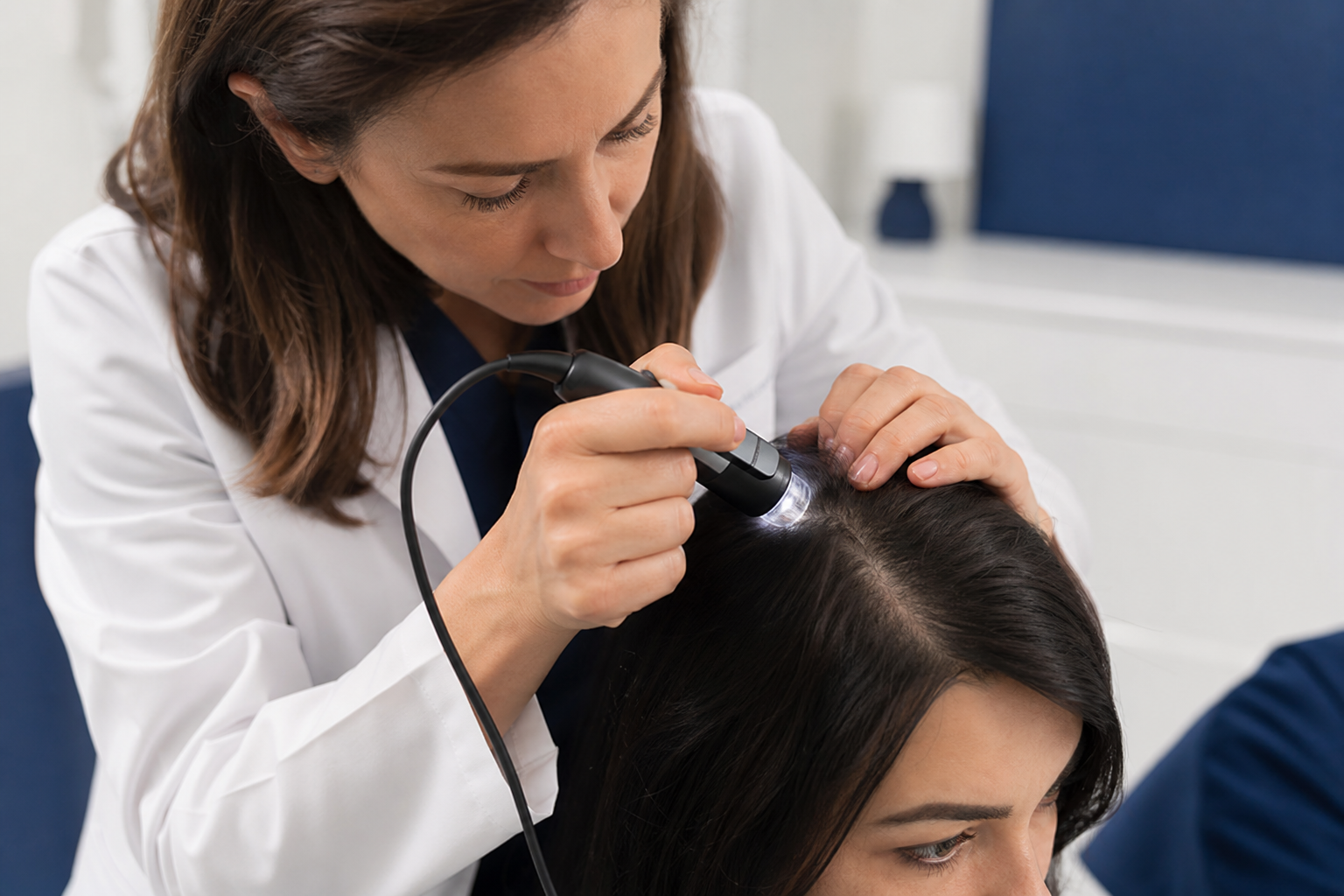
Diagnosis includes taking a history, the pull test, trichoscopy and a blood test. The following checklist shows which values are worth looking at. Details on laboratory diagnostics in our article on blood tests for hair loss.
Checklist for your doctor’s appointment (to print out)
It is best to answer these questions in advance:
- Since when has your hair been falling out, and how fast?
- Where exactly (receding temples, crown, whole head, patches)?
- Is there hair loss in your family?
- Which medicines are you taking?
- Was there an event around 3 months ago (childbirth, surgery, diet, infection, COVID, severe stress)?
These blood values are worth raising (target ranges as a guide, to be interpreted by a doctor if in doubt):
- Ferritin: deficiency confirmed below 30 ng/ml. A higher “hair target value” of 40 to 70 ng/ml is discussed but is not confirmed by studies.
- TSH: reference range approx. 0.4 to 4.0 mU/l (laboratory-dependent).
- 25-OH vitamin D: a link with alopecia areata has been described, but causality is unclear.
- Zinc: DGE reference 7 to 16 mg/day depending on sex and diet.
- In women, hormone status / androgens where appropriate to assess for PCOS according to the Rotterdam criteria.
Reversible or permanent? And: diffuse or genetic?
Whether hair loss is reversible depends on the cause: diffuse triggers (iron, thyroid, stress, hormones) can usually be resolved, while hereditary and scarring hair loss progress without treatment. With diffuse effluvium the regrowth follows the hair cycle, which is why it takes a few months. The following timeline shows the typical course after the trigger has been resolved.
| Time frame | What happens in the follicle |
|---|---|
| Month 1-2 | The trigger is identified or resolved, and the hair loss begins to slow down. |
| Month 3-4 | Follicles increasingly re-enter the growth phase. With acute triggers (COVID, childbirth) this is often where the shedding peaks. |
| Month 5-6 | The first fine “baby hairs” become visible. |
| Month 9-12 | With most forms of effluvium, largely to fully restored density (postpartum in over 95% of cases). |
Diffuse hair loss across the whole head almost always has a treatable cause and is treated at the source, not surgically. Only genetic (androgenetic) hair loss with a typical pattern, that is receding temples or a thinning crown, responds to hair growth medication or a hair transplant. Both forms often occur at the same time. That is why the question always comes first: which type do you have? A free hair analysis assesses this visually and is no substitute for a medical blood test.
A view from clinical practice
In women especially, diffuse hair loss is too often assumed to be “genetic” in clinical practice, when in fact an iron deficiency, a thyroid disorder or a hormonal change is behind it. Conversely, an already emerging androgenetic pattern is easy to overlook if the search is only for triggers. That is why every case should begin with a careful determination of the type of hair loss before any treatment is decided.
Frequently asked questions about the causes of hair loss
What is the most common cause of hair loss?
By far the most common is hereditary (androgenetic) hair loss. Depending on age, it affects roughly half to two-thirds of men and many women later in life. What is inherited is not baldness itself, but how sensitively the hair roots respond to the hormone DHT.
Can stress really cause hair loss?
Yes. Severe physical or emotional stress can send many hairs prematurely into the resting phase, and the shedding then usually shows up only 2 to 3 months later. Stress does not trigger genetic hair loss, but it can accelerate it. Once the stress eases, the hair usually recovers.
Which deficiency most often leads to hair loss?
Most often an iron deficiency is behind it, especially in women. The meaningful value is ferritin, which reflects your iron stores. It can already be low enough to cause hair loss while a standard blood count still looks normal.
Is hair loss reversible, does the hair grow back?
That depends entirely on the cause. Diffuse hair loss from iron deficiency, the thyroid, stress or hormones usually reverses once the trigger is gone. Hereditary hair loss keeps progressing without treatment, and scarring hair loss is permanent.
How do I tell which cause I have?
Mainly from the pattern and the course. Receding temples or a thinning crown point more towards hereditary, even thinning towards diffuse, round bald patches towards autoimmune. Reddened, itchy or scarred areas are a warning sign. Only a medical examination can assess this reliably.
How much daily hair loss is still normal?
Losing between 50 and 100 hairs a day is completely normal. Only when noticeably more fall out persistently, the hair visibly thins or bald patches appear is it worth having it checked.
Which doctor should I see for hair loss?
For a first assessment and a blood test, your GP is a good starting point. For round patches, redness or scarring you should see a dermatologist. Reddened, itchy or scarred areas should be looked at by a dermatologist promptly.
Do hormones, the pill or the menopause cause hair loss?
Yes. After childbirth or stopping the pill, a drop in oestrogen can temporarily cause a lot of hair to fall out. During the menopause, hereditary thinning of the crown often becomes apparent. In younger women, PCOS is an important hormonal cause.
Can a diet trigger hair loss?
Yes, especially crash diets with too little protein and too few calories. The hair loss then usually sets in 6 to 12 weeks after the start of the diet. Once your diet is balanced again, the hair generally grows back.
Why does so much hair suddenly fall out after childbirth or COVID?
Both are an acute telogen effluvium. After COVID the hair often falls out as early as around 1.5 months later, after childbirth more like 2 to 4 months later. The body sends many hairs into the resting phase at the same time. Recovery usually takes 6 to 12 months.
Does frequent washing or wearing hats cause hair loss?
No, these are persistent myths. How often you wash makes no difference to the hair cycle; hairs that have already been released simply come out visibly during washing. Normal hats exert no meaningful tension and do not impair the blood supply.
Does more hair really fall out in autumn?
A little, yes. At the end of summer and the start of autumn, slightly more hairs are in the resting phase, which raises shedding a touch. But the effect is small, temporary and harmless, and leaves no visible gaps.
Can smoking or alcohol contribute to hair loss?
Smoking demonstrably raises the risk of hereditary hair loss, especially in heavy smokers. Heavy alcohol consumption can also contribute through disrupted zinc and iron balance. Both are aggravating factors, but not a sole cause.
Sources
- American Academy of Dermatology (AAD): Do you have hair loss or hair shedding? aad.org
- Malkud S.: Telogen Effluvium: A Review. J Clin Diagn Res. 2015. PMC4606321
- Epidemiological landscape of androgenetic alopecia (All of Us). PMC11867384
- gesund.bund.de (BMG): Hereditary hair loss in men. gesund.bund.de
- AWMF/DDG S3 guideline on alopecia areata (register 013-104, 18/09/2025). register.awmf.org
- Trost LB, Bergfeld WF, Calogeras E.: Iron deficiency and its potential relationship to hair loss. J Am Acad Dermatol. 2006. JAAD
- The role of psychological stress in hair loss: A review. JAAD Reviews. 2025. JAAD Reviews
- COVID-19 infection is a major cause of acute telogen effluvium. PMC8407603
- Gupta AK et al.: Smoking & androgenetic alopecia (meta-analysis). J Cosmet Dermatol. 2024. Wiley
- Seasonality of hair shedding in healthy women. PubMed 19407435
- DGE: Reference values for iron and zinc. dge.de
As of 2026. This article is for general information only and is no substitute for a medical diagnosis or treatment. For persistent or sudden hair loss, reddened, itchy or scarred areas, and before stopping any medication, please consult a doctor.
Dr. Imad Moustafa
Hair transplant specialist