


More hair in the plughole, and in the back of your mind the question of whether the pint after work is to blame: this is the point at which most people start looking for a link between alcohol and hair loss. The honest answer comes in two parts. Moderate drinking has not been shown to cause hair loss, and the two most recent meta-analyses on hereditary hair loss even contradict each other (Alcohol and Alcoholism 2024: odds ratio 1.40, not significant; BMC Public Health 2026: odds ratio 1.72). Sustained heavy drinking, on the other hand, does reach into the hair cycle through nutrients, the liver, sleep and the scalp, and it is only one of many possible triggers of hair loss.
Key takeaways
- ✓A single drink is not the problem; heavy drinking sustained over months is
- ✓Alcohol acts indirectly: through zinc, folate and iron, through the liver and hormones, through sleep and the scalp
- ✓The alcohol-related share is usually reversible: first new hairs 3 to 6 months after quitting, visibly denser hair more like 6 to 12 months
- ✓If a pattern remains at the temples and crown, hereditary hair loss is usually involved as well
The table of contents shows what you will find where. After that we go through the mechanisms one by one, with amounts, timelines and the blood tests that belong in the conversation with your doctor.
Summary
- What is alcohol-related hair loss?
- The link between drinking alcohol and hair loss
- How alcohol disrupts hair growth: the four mechanisms
- How much alcohol is too much for your hair?
- Symptoms of alcohol-related hair loss
- Alcohol or hereditary hair loss? How to tell the patterns apart
- Diagnosing alcohol-related hair loss
- Is hair loss from alcohol reversible?
- Treating alcohol-related hair loss
- Alcohol before and after a hair transplant
- Preventing hair loss from alcohol
- Conclusion: alcohol can impair hair growth in several ways
- Frequently asked questions about alcohol and hair loss
What is alcohol-related hair loss?
Alcohol-related hair loss is not a diagnosis of its own but a diffuse telogen effluvium with alcohol as a cofactor: sustained heavy drinking worsens your nutrient supply, puts a strain on the liver and the hormone axis, and pushes more hair follicles into the resting phase ahead of schedule. The follicles themselves are not destroyed, which is why the alcohol-related share usually grows back once you stop drinking.
The delay is typical. According to StatPearls, 1 to 6 months pass between the trigger and visible shedding, about 3 months on average, because the follicles involved first have to run through their resting phase. So if you are finding more hair in your brush today, you are seeing the result of the months before, not of last night.
Two limits belong in the definition. Moderate drinking has not been shown to cause hair loss, and the question of whether alcohol additionally accelerates hereditary hair loss is answered differently by the two most recent meta-analyses. Both points come with numbers in the next section.
The link between drinking alcohol and hair loss
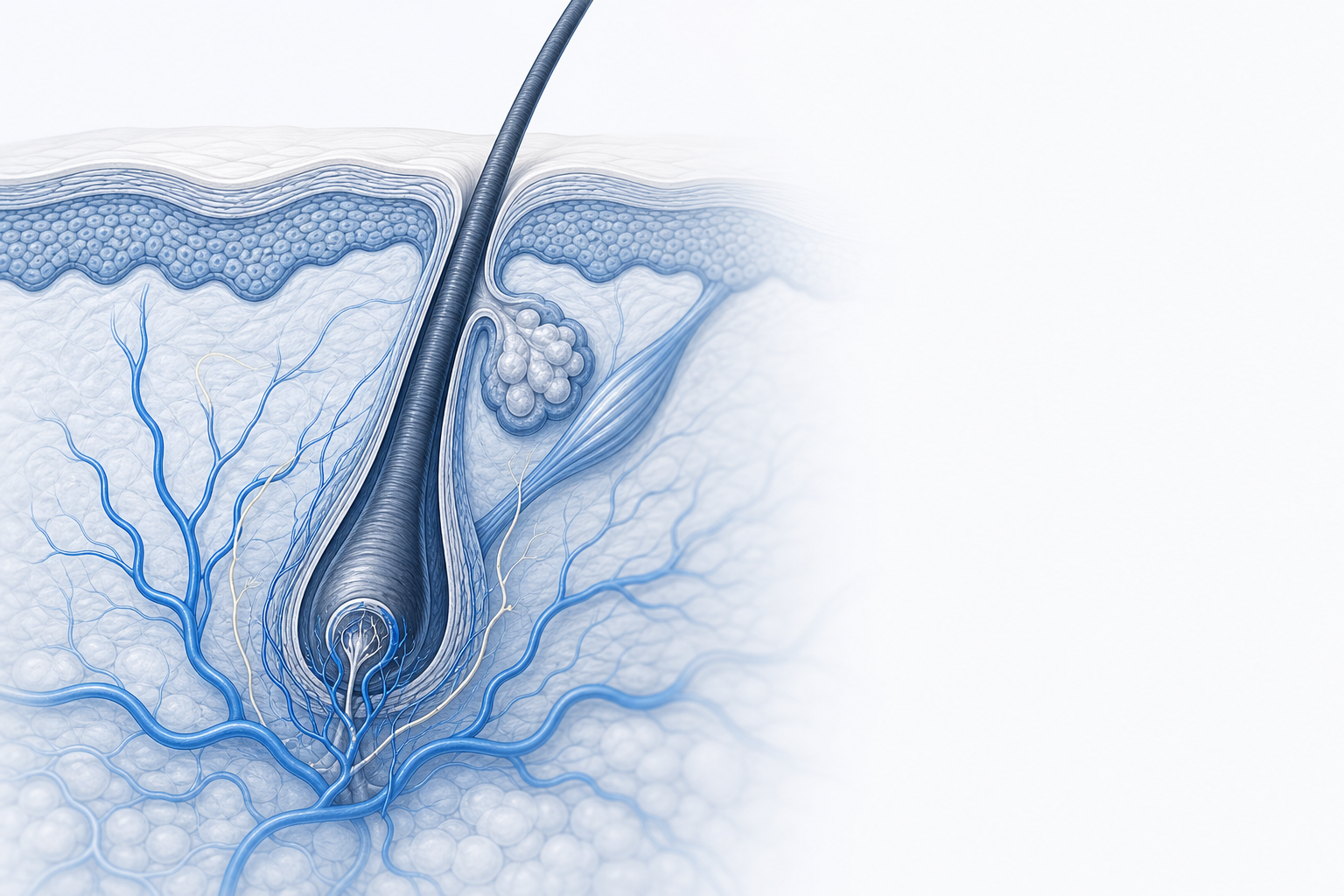
Hair loss from alcohol can develop when regular or excessive drinking impairs key bodily functions. The route does not run through the hair itself but through your metabolism: nutrient absorption, liver metabolism, hormone balance and sleep all shift. The hair follicle is one of the most rapidly dividing tissues in the body, its growth phase lasts 2 to 6 years according to StatPearls, and it responds to shifts like these early.
The claim you often read, that alcohol narrows the blood vessels in the scalp and thereby impairs circulation, does not hold up. Acutely, alcohol actually dilates blood vessels. What is documented is the other pathway: by suppressing the hormone ADH it acts as a diuretic, and fluid balance and the skin barrier suffer as a result. On top of that, it encourages scalp inflammation, which can disrupt hair growth further.
Alcohol also acts on your hormone balance. Heavier drinking can indirectly affect testosterone metabolism and make existing hereditary hair loss more visible. This often shows up as thinning hair, receding temples or hair loss at the crown. How solid that link actually is, we take up further down, in the section on the liver and hormones.
Alcohol puts the whole body under strain: it dehydrates you, weakens the immune system and promotes nutrient deficiencies. Because hair roots are among the last cells to be supplied, they are particularly sensitive to that shortfall. If it persists, it can impair hair growth and encourage hair loss. The follicle then switches early into its resting phase, which lasts 3 to 4 months according to StatPearls, and that is exactly what produces the diffuse hair loss, the shedding people actually notice.
One point matters for context: in the dermatology guidelines on diagnosing and treating alopecia, alcohol is not a hair loss type in its own right but at most a modifiable cofactor in diffuse hair loss. The evidence also remains mixed. A meta-analysis in Alcohol and Alcoholism (2024, 6 studies, 7,072 participants) found no statistically significant link with hereditary hair loss, with an odds ratio of 1.40 (confidence interval 0.95 to 2.32), while a larger review in BMC Public Health (2026, 31 studies, 11,224 cases) reported an odds ratio of 1.72 (1.28 to 2.32).
How alcohol disrupts hair growth: the four mechanisms
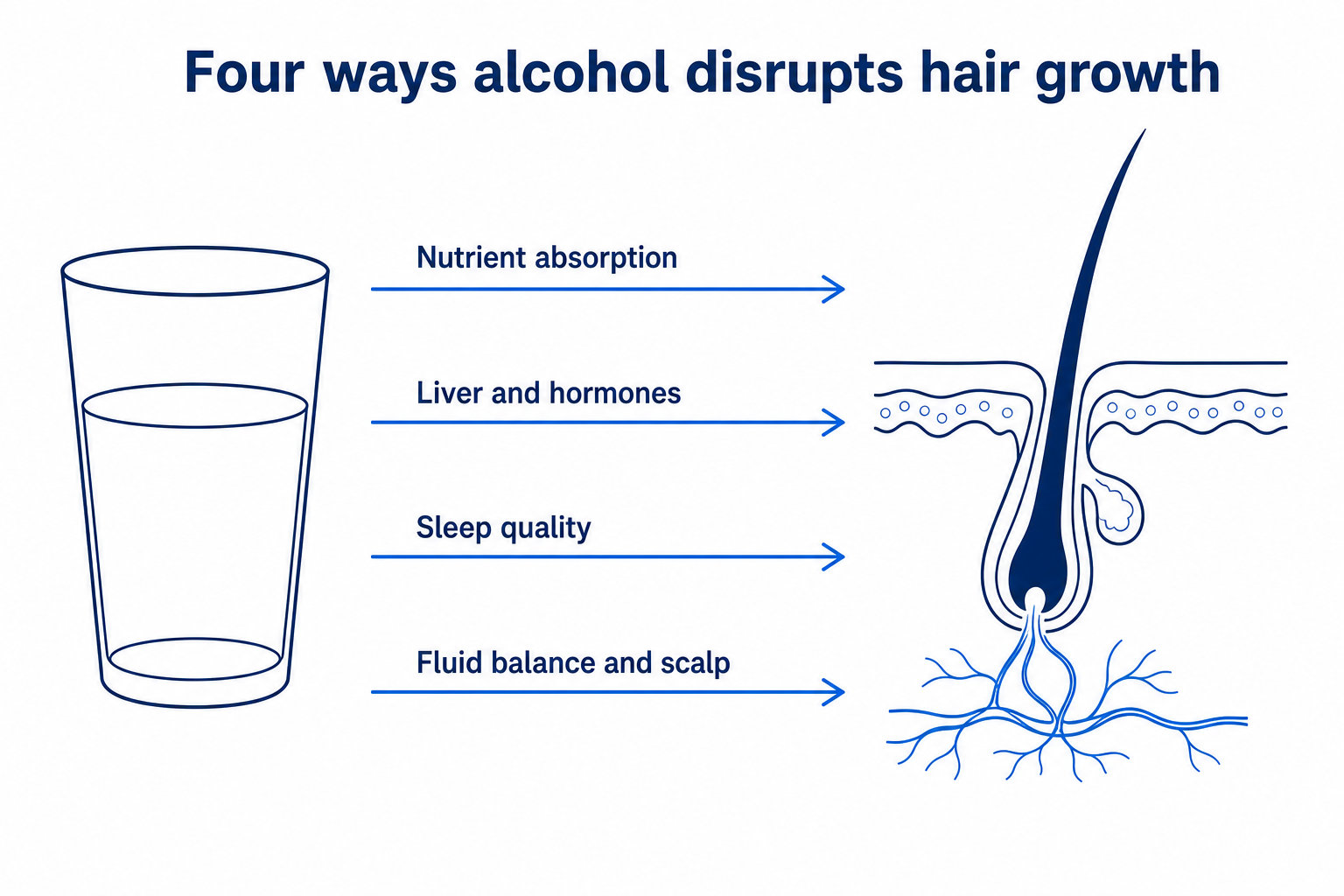
Alcohol reaches the hair along four routes: nutrients, the liver and hormones, sleep, and fluid balance and the scalp. None of these routes hits the hair root directly, and all four need time. That explains why a glass of wine in the evening has to be judged differently from a bottle a day over two years.
How alcohol drains zinc, iron and B vitamins from your hair
Chronic drinking lowers your nutrient supply twice over: absorption in the gut drops, and excretion rises. For zinc, both are documented: reduced intestinal uptake and increased renal excretion (LLL Nutrition in Clinical Medicine). With folate, three routes come together: malabsorption in the gut, reduced uptake in the liver and accelerated loss through the kidneys (review in Psychiatry Investigation on nutrient deficiencies in alcoholism).
Vitamin B12 and thiamine suffer on top of that from alcohol’s direct toxic effect on the intestinal lining. These nutrients matter for hair because zinc is involved in forming keratin, iron ensures oxygen transport to the rapidly dividing hair matrix, and B vitamins sit in the energy metabolism of those cells. If one of them is missing for months, the telogen rate rises. How much you need each day depends on age, sex and diet, and national nutrition guidance sets the reference intakes for iron, folate and vitamin B12.
→ Further reading: Which nutrients hair really needs is covered in our article on vitamins for hair loss. Why iron deficiency ranks among the most common causes of diffuse thinning is explained in our separate article on the subject.
Why the liver and hormone balance affect hair with chronic drinking
Alcohol’s hormonal effect has two levels that often get mixed up. Acutely, after a low dose, testosterone rises slightly in men: in the placebo-controlled crossover study by Sarkola and Eriksson (2003), plasma levels climbed from 13.5 to 16.0 nmol/L after 0.5 g of alcohol per kilogram of body weight. The effect fades again within 2 to 6 hours.
With chronically heavy drinking and beginning liver damage, the picture flips. The liver’s aromatase activity rises and more androgens are converted into oestrogens. In alcoholic hepatitis and cirrhosis, papers describe hyperoestrogenaemia in up to 70 per cent of patients, while testosterone drops markedly (Purohit, Alcohol 2000; Hepatology 2000).
That calls for a correction you rarely find online: the chain in which alcohol raises testosterone, testosterone raises DHT and DHT drives hair loss is not supported by evidence. And the cirrhosis mechanism cannot be transferred to the occasional drinker. What remains: after years of heavy drinking the hormone axis is shifted, and that can accompany an existing androgenetic pattern.
How alcohol changes sleep, and what that has to do with hair loss
Alcohol shortens the time it takes to fall asleep and worsens the second half of the night. The meta-analysis by Ebrahim and colleagues (2013, 27 studies) describes a dose-dependent effect: below a blood alcohol concentration of 0.05 per cent, mild REM suppression; between 0.05 and 0.10 per cent, clear fragmentation of the second half of the night; above 0.10 per cent, pronounced REM suppression.
For hair, this is the most indirect of the four routes. There is no study directly linking sleep loss in people who drink with hair loss. What is plausible is the connection through the stress axis: persistently poor sleep keeps cortisol levels high, and stress is a known trigger of telogen effluvium. That is not proof of a causal chain, but it does make sleep a credible cofactor.
Dry, irritated scalp: what alcohol changes about fluid balance
Alcohol suppresses the antidiuretic hormone ADH and therefore acts as a diuretic. On the scalp this does not damage the hair root; it leaves a drier, more sensitive barrier: flaking, tightness and itching occur more often, and dry hair breaks more easily. Breakage is something other than hair loss, but in the brush it looks much the same.
The inflammatory route is more tangible. In a case-control study in Acta Dermato-Venereologica, regular alcohol consumption was associated with an odds ratio of 10.2 for flares of seborrhoeic dermatitis. In psoriasis, an analysis of more than 1,200 patients showed a link between the amount consumed and severity. Inflammatory scalp conditions can in turn encourage hair loss. That is not proof that alcohol damages the follicle itself.
| What alcohol changes | Why | What the hair notices | Evidence |
|---|---|---|---|
| Zinc, folate, B vitamins, iron | lower absorption in the gut, higher excretion through the kidneys | thinning hair, brittle structure, more follicles in the resting phase | Established |
| Liver and hormone metabolism | altered steroid breakdown, higher aromatase activity with liver damage | can make an existing androgenetic pattern stand out more clearly | Established with chronic heavy drinking |
| Sleep architecture | REM suppression, fragmented second half of the night | acts indirectly on the hair cycle through the stress axis | Indirect effect |
| Fluid balance and scalp | ADH suppression, drier barrier, greater tendency to inflammation | dry, irritated scalp, flaking, breakage | Indirect effect |
| Hereditary hair loss directly | epidemiological association, lifestyle as a possible confounder | studies come to different conclusions | Limited evidence |
How much alcohol is too much for your hair?
Moderate drinking has not been shown to cause hair loss. The amount becomes relevant where it stays high over months, because only then do nutrient stores, liver enzymes and the hormone axis tip measurably. On the evidence we have today, a glass of wine with dinner is not a hair loss risk.
The definitions used by medical bodies help put this in perspective. In the UK, one unit is 10 ml of pure alcohol, which comes to 8 g (NHS). The UK Chief Medical Officers’ low risk drinking guidelines put the limit at 14 units a week, the same figure for men and women, and they are explicit that no level of regular drinking can be called completely safe.
The idea of a harmless amount is considered outdated today. No amount of alcohol has been shown to be free of risk, and in January 2023 the WHO said as much for health as a whole. That is a statement about cancer and cardiovascular risk, not about hair loss. Plenty of texts blur that difference.
The WHO risk levels run from abstinence up to very high risk, which begins at more than 100 g of pure alcohol a day in men and more than 60 g in women. The WHO defines binge drinking as at least 60 g on one occasion, at least once a month. The table below translates those levels into what actually matters for hair.
| Drinking pattern | How medical bodies classify it | What matters for your hair | What makes sense now |
|---|---|---|---|
| No alcohol | the only level with no alcohol-related health risk (WHO) | no alcohol-related contribution to hair loss | if you have hair loss, have the other causes investigated |
| Up to 14 units a week, with alcohol-free days | within the UK Chief Medical Officers’ low risk guideline of 14 units a week, which is the same for men and women; since 2023 the position has been that no amount is proven safe | not established as a cause of hair loss | name the amount at your doctor’s appointment, because it affects how your blood results are read |
| Regularly well above that, over months | in the heavy drinking range, with risk rising as the daily amount rises (WHO) | nutrient stores and liver enzymes can tip measurably; this is where the four mechanisms take hold | cut back, have your blood tested and talk to a doctor |
| Binge drinking: 60 g or more on one occasion, at least monthly | the WHO definition of binge drinking | one episode empties no stores; repeated over months it adds up | track your weekly amount in units instead of estimating by feel |
| More than 100 g a day (men) or 60 g (women) | very high risk (WHO risk levels) | often accompanying deficiencies, altered liver enzymes, a disturbed hormone axis | medical supervision; never stop abruptly on your own |
Unit key: 1 unit is 10 ml of pure alcohol, which comes to 8 g. A pint of lower-strength lager (3.6 per cent ABV) is about 2 units, a pint of stronger beer (5.2 per cent) about 3 units, a 175 ml glass of wine (12 per cent) about 2.1 units and a single 25 ml measure of spirits (40 per cent) 1 unit (NHS, Calculating alcohol units). Beer, wine or spirits makes no difference: every medical body counts in grams of pure alcohol, not in types of drink.
Weekend drinking or daily drinking: what makes the difference for hair
For hair, on what we know today, the weekly amount counts, not the pattern. The relevant mechanisms need time: one binge evening empties no zinc stores, but repeated binge drinking over months reaches the same amount of pure alcohol as steady daily drinking. The evidence has a gap here, and we will say so plainly: no study compares the two patterns for hair loss at the same weekly amount.
For women, the WHO thresholds sit lower, because body water content is lower and alcohol dehydrogenase works differently. With hair, a second factor comes in: iron deficiency is common in women of childbearing age, and alcohol makes the iron and folate supply worse on top of that.
Symptoms of alcohol-related hair loss
Typically, alcohol-related hair loss develops gradually. The first signs are thinning hair, a hair structure that loses body, or more hair coming out when you wash or brush it. If you notice changes like these, it can make sense to take a critical look at how much you drink. When shedding counts as excessive is explained in our article on extreme hair loss.
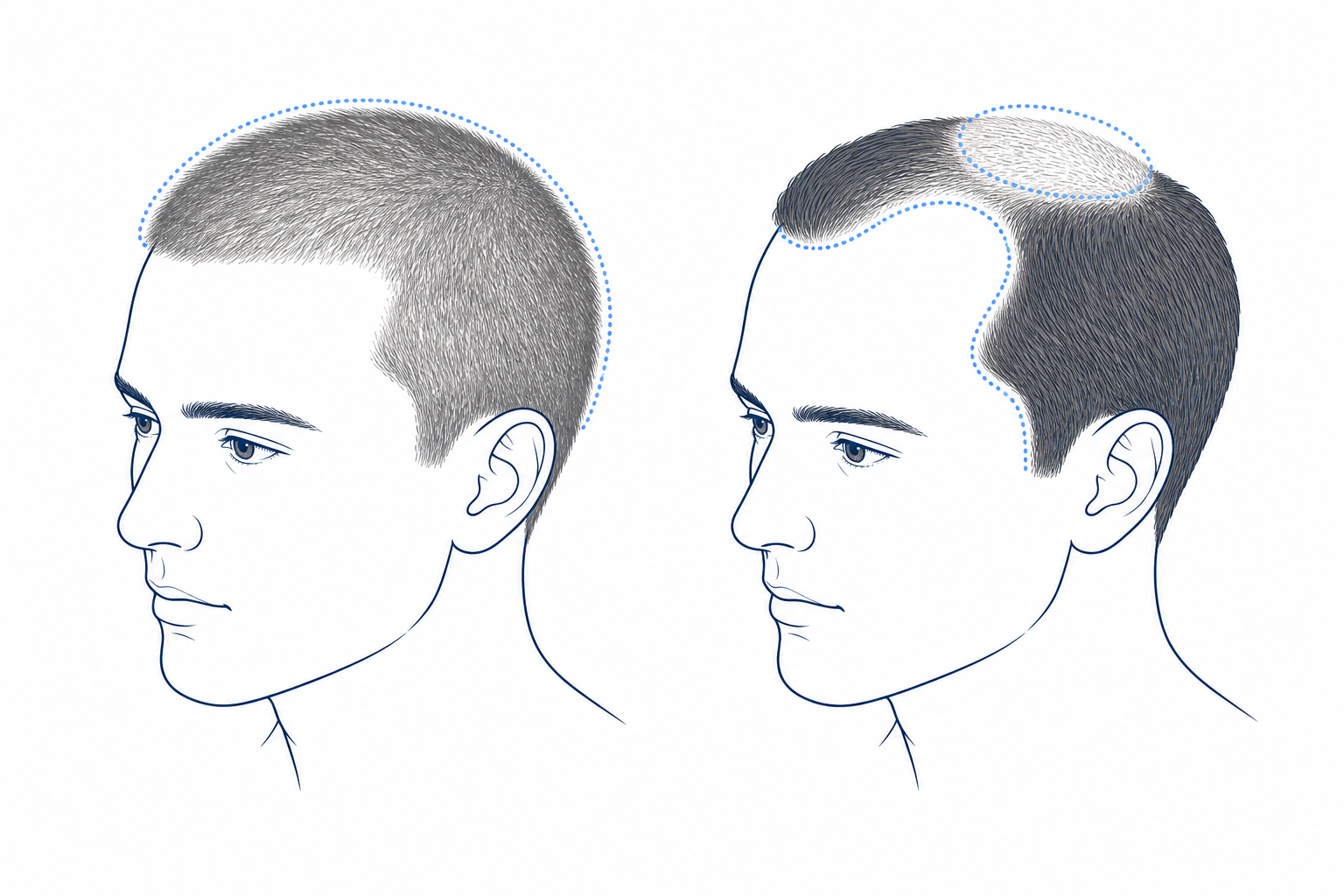
Hair loss from alcohol can show up in various ways, among them a receding hairline or more pronounced thinning at the temples and crown. Changes like these can be encouraged by alcohol’s hormonal and metabolic effects. That exact pattern, however, is typical of hereditary hair loss, which heavy drinking can accompany and make more visible without having caused it.
Hair quality can deteriorate even before any visible shedding. Dull, dry or brittle hair is typical. In some cases premature greying is also observed, which can be connected to nutrient deficiencies. For premature greying, though, the evidence is far clearer for smoking than for alcohol: a cross-sectional study in the Journal of the American Academy of Dermatology identifies smoking as a risk factor, while for alcohol alone the link is weaker and not confirmed to a comparable degree. More on this in our article on smoking and hair loss.
Symptom check: four observations and the next step
✓ More hair in your brush and in the plughole, for weeks, without a bald patch
Points to diffuse shedding with a trigger behind it. Next step: ask for a blood test and bring up how many units a week you drink.
✓ The thinning is most obvious at the temples and crown
Suggests an androgenetic pattern that alcohol can accompany but not explain. Next step: have a dermatologist classify the pattern.
✓ Plus fatigue, brittle nails or cracks at the corners of your mouth
Classic accompanying signs of a nutrient deficiency. Next step: have ferritin, zinc, folate and vitamin B12 measured together with the blood count.
✓ Your scalp has been flaking, tight or itchy since you started drinking more often
Fits the inflammation and barrier route. Next step: have your scalp examined by a dermatologist rather than treating it indefinitely on your own.
Anyone who notices symptoms like these and drinks regularly should have the cause investigated by a doctor. Alongside a medical assessment, cutting down on alcohol is the decisive step so that hair growth is not impaired any further.
Alcohol or hereditary hair loss? How to tell the patterns apart
Alcohol-related hair loss thins evenly; androgenetic hair loss follows a pattern at the temples and crown. If you have both at once, you will see the pattern intensify first, because the genetically sensitive follicles are the first to switch into the resting phase. This distinction decides which treatment makes any sense at all.
So heavy drinking can unmask existing hereditary hair loss without being the trigger itself. Whether alcohol genuinely accelerates androgenetic alopecia is an open question: the meta-analysis in Alcohol and Alcoholism (2024) found no significant link, while the review in BMC Public Health (2026) lists alcohol with an odds ratio of 1.72 as one risk factor among several. One hypothesis under discussion is a disruption of the scalp’s immune environment by the breakdown product acetaldehyde; it has not been proven.
| Feature | Diffuse thinning (alcohol, deficiency, stress) | Androgenetic pattern |
|---|---|---|
| Distribution | evenly across the whole scalp, including the back of the head | temples, hairline and crown, while the back of the head stays dense |
| Time course | usually starts 1 to 6 months after a trigger, often in waves | slowly progressive over years, with no identifiable trigger |
| What you notice first | more hair when washing and brushing, the parting looks wider | the hairline recedes, the crown starts to show through |
| Response once the trigger is removed | recovery usually within up to 6 months | no response, the genetic share keeps running |
| Typical blood results | ferritin, zinc, folate, vitamin B12 or liver enzymes abnormal | blood results usually unremarkable |
In practice that means, put plainly: diffuse hair loss is not an indication for a hair transplant. Only once the triggers have been removed and a pattern remains does a transplant become a topic at all, and then it is about the genetic share, not the alcohol-related one. Often both are present at the same time.
If you are unsure which type you are dealing with, the free hair analysis is the simplest way to get clarity: based on distribution and density, it visually classifies whether you have a pattern or diffuse thinning. It does not replace a medical blood test, and working out the cause remains a job for a doctor.
Diagnosing alcohol-related hair loss
A diagnosis of alcohol-related hair loss is made by a doctor. There is no test that proves it: the diagnosis comes out of your history including how much you drink, the scalp and hair findings, and lab results. At the first signs it makes sense to see your GP or a dermatologist.

During the examination, the scalp and hair structure are assessed and possible symptoms and your personal drinking habits are discussed. Being open matters here, because it is the only way the cause of your hair loss can be classified correctly. Give the amount in units per week rather than calling it occasional or moderate, otherwise the lab results cannot be read properly.
In many cases a blood test rounds out the diagnosis. It can reveal signs of alcohol-related strain as well as nutrient and vitamin deficiencies that impair hair growth. Since heavier drinking often goes hand in hand with deficits, the blood results provide important starting points for the next steps. Which parameters are standard is also described in our article on the blood test for hair loss.
| Test | Why it matters with alcohol and hair loss | What your doctor looks for |
|---|---|---|
| Full blood count including MCV | alcohol and a folate or vitamin B12 deficiency change the size and formation of red blood cells | enlarged red blood cells as a sign of a deficiency or of alcohol-related strain |
| Ferritin, together with CRP | iron deficiency is a common cause of diffuse thinning, and alcohol makes the supply worse | ferritin is an acute-phase protein and can read falsely high during inflammation, which is why CRP goes with it as a control value |
| Zinc | absorption drops while excretion through the kidneys rises with chronic drinking | the link to hair structure, wound healing and scalp problems |
| Folate and vitamin B12 | with alcohol there are three routes of loss, through the gut, the liver and the kidneys | assessed together with the MCV from the blood count |
| GGT, AST and ALT | they show the current strain on the liver, which is where much of hormone metabolism takes place | the trend across several measurements, not a single value |
| TSH and vitamin D | they rule out a thyroid disorder and a common accompanying deficiency as other causes | ruling those out before the shedding is put down to alcohol |
Two details are what make the results usable in the first place. First, timing: GGT rises within 4 to 5 days of repeated drinking, so a reading taken right after the weekend does not describe your baseline. As a practical rule, at least 24 hours between your last drink and the blood test makes sense.
Second, ferritin: as an acute-phase protein it can come out falsely high with any inflammation and mask a genuine iron deficiency , which is why CRP belongs with it as a control value. A sound medical diagnosis is the basis for every further step in treating hair loss from alcohol. It helps you take the right measures and avoid further damage to hair and scalp.
Is hair loss from alcohol reversible?
Yes, as a rule. As long as the shedding is diffuse and no other cause is added on top, the alcohol-related share is reversible: the follicles are not destroyed, only pushed early into the resting phase. According to StatPearls, telogen effluvium usually resolves on its own within up to 6 months once the trigger is gone, while full density can take 12 to 18 months.
What recovers once you stop drinking
After you stop drinking, several systems recover, but not at the same pace. The liver and sleep respond first: raised GGT levels normalise in roughly 2 to 5 weeks, and sleep architecture settles down over those same weeks because the REM suppression falls away. Both are measurable or directly noticeable.
Only then does the hair follow. The telogen rate normalises once nutrient stores are refilled and the hormone axis is stable: zinc and folate are no longer lost in excess through the kidneys, and absorption in the gut improves. What you can measure are your blood results. What you can see is hair density, and that lags months behind the lab.
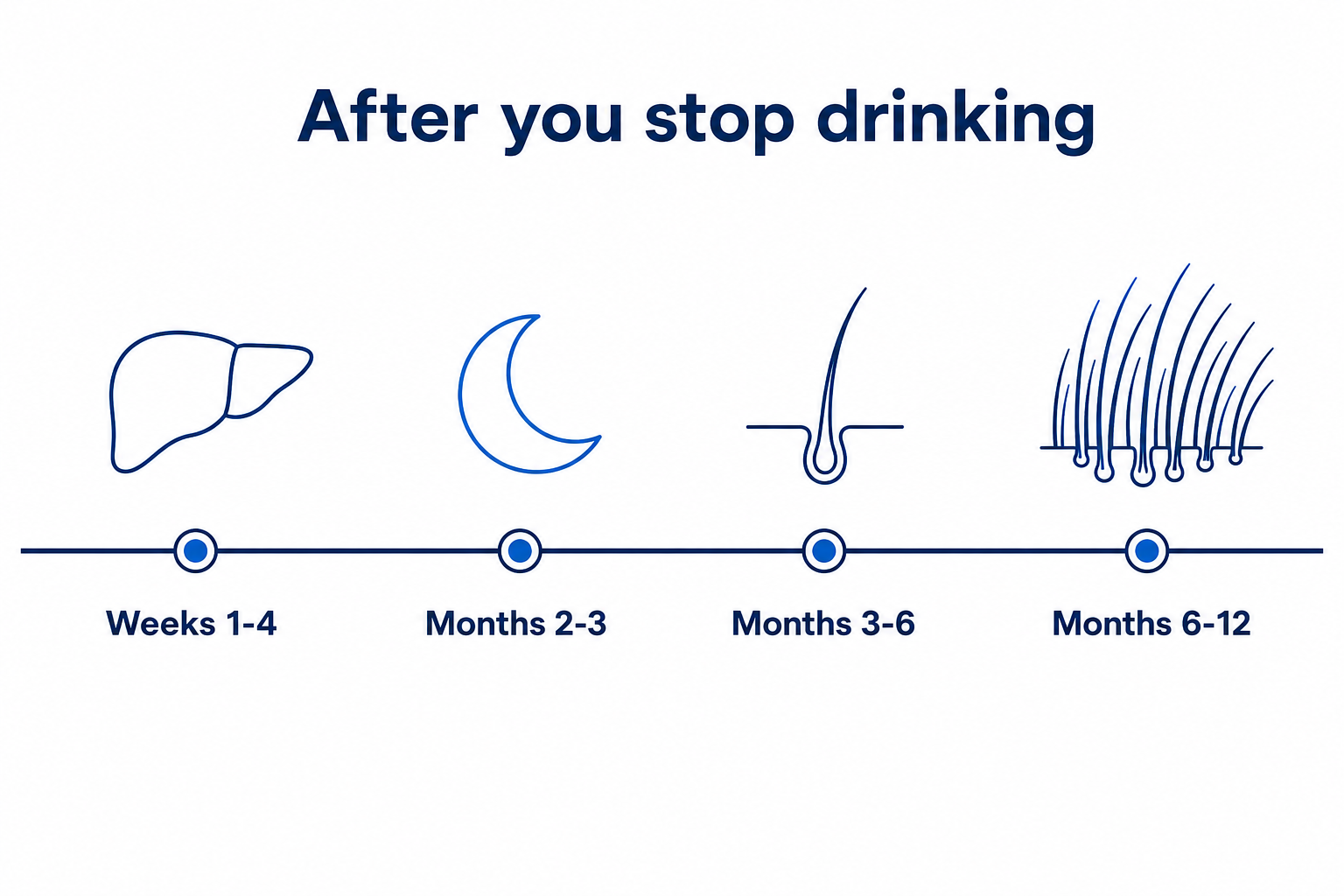
How long does it take? The timeline after you stop drinking
The hair cycle sets the lower limit: what happens in the follicle today, you will see on your scalp 2 to 3 months later. First new hairs show up 3 to 6 months after you stop drinking, a visibly denser head of hair more like 6 to 12 months (StatPearls, Cleveland Clinic). Biologically it does not go any faster.
That also answers the question about the alcohol-free month, Dry January included. Thirty days without alcohol change liver enzymes and sleep measurably, but nothing yet in terms of hair density, because the resting phase alone lasts 3 to 4 months. That is not a study finding but a conclusion drawn from the length of the cycle: there is no dedicated study on alcohol-free months and hair.
| Time frame | What happens in the body | What you notice in your hair |
|---|---|---|
| Weeks 1 to 4 | raised liver enzymes start to fall, sleep architecture normalises, fluid balance stabilises | no change yet, and that is normal; the scalp often feels less dry |
| Months 2 to 3 | nutrient stores refill with a balanced diet or targeted supplementation, GGT levels continue to normalise | the shedding calms down, fewer hairs when washing and brushing |
| Months 3 to 6 | the follicles sent early into the resting phase re-enter the growth phase | first short, fine new hairs along the parting and hairline |
| Months 6 to 12 | the telogen rate has normalised, the new hair gains length and diameter | visibly denser hair, the structure feels stronger |
| From month 12 | the hair cycle is running normally again | full density can take until month 18; if a pattern remains, that points to hereditary hair loss |
When full recovery is not to be expected
Four situations slow recovery down. First, an overlying androgenetic alopecia: the genetic share keeps running regardless of whether you stop drinking. Second, long-standing deficiencies that take longer than one cycle to correct. Third, untreated conditions of the liver or thyroid. Fourth, drinking that stays heavy.
Treating alcohol-related hair loss
The most important measure with alcohol-related hair loss is cutting down on alcohol or giving it up entirely. Two further parts go with it: correcting proven deficiencies and giving the hair cycle time. If drinking is reduced early, hair growth can recover in many cases.
Because the body needs time to break down harmful substances and make up nutrient deficits, though, regeneration is not immediate. If you see no change after four weeks, you are not doing anything wrong; that is simply how the biology works.
Nutrient supplements help where a deficiency has been proven, and not otherwise. The rule is to measure first and supplement second, and it applies especially here, because high doses of individual trace elements bring drawbacks of their own. Shampoos do not address the cause: they can calm an irritated scalp, and no more.
One safety note belongs here: anyone who has drunk heavily for years should not stop abruptly on their own. Withdrawal can become physically dangerous and belongs under medical supervision. Your points of contact are your GP and the NHS alcohol support pages, which list Drinkline on 0300 123 1110.
If hair follicles are permanently damaged or dead, natural regrowth is no longer possible. With the alcohol-related share, however, that is not the case: scarred or dead follicles belong to other conditions. If a pattern at the temples and crown remains after you stop drinking and with normal blood results, what usually sits underneath is androgenetic alopecia, which keeps running on its own.
In cases like that, a hair transplant can be a sensible option. The prerequisite, though, is a stable health situation and a controlled approach to alcohol, since alcohol can have a negative effect on healing and on how well the transplanted hairs take. The alcohol-related share itself does not need a transplant; it needs time.
A note from our clinic
In hair analyses, alcohol is rarely the only cause. It usually turns up as an amplifier alongside nutrient deficiencies, stress and genetic predisposition. That is why we measure first and only then decide whether a treatment is the right answer at all. Diffuse shedding that traces back to a factor you can remove does not belong in an operating theatre; it belongs in a workup first.
Alcohol before and after a hair transplant
Before a hair transplant, and during the healing phase afterwards, alcohol should be avoided consistently. That is the only way to create optimal conditions for the scalp to regenerate and for a lasting result. In the first days after the procedure the rule holds without exception; after that, your clinic’s aftercare instructions set the framework. We deliberately avoid naming a blanket number of days, because medication and the course of healing vary from person to person.
There are three reasons for this. Alcohol increases the tendency to bleed and swell in both the donor and the recipient area. It impairs wound healing precisely during the phase in which the grafts are taking. And it interacts badly with the prescribed painkillers, antibiotics and corticosteroids.
For the time before the procedure, the literature adds another argument: the Cochrane review by Egholm and colleagues (2018) shows that intensive alcohol cessation programmes 4 to 8 weeks before surgery probably reduce postoperative complications, among them infections, wound healing problems and bleeding events. That is general surgical evidence, not an Elithair rule.
→ Further reading: What applies in which week after the procedure is set out day by day in our article on what to do after a hair transplant. The same logic applies to smokers, which you can read up on under smoking after a hair transplant.
Preventing hair loss from alcohol
The most effective way to prevent hair loss from alcohol is a conscious, moderate approach to drinking, or giving it up entirely. Where hair is already thinning or hair loss is beginning, alcohol can add to the shedding. Abstinence is not strictly necessary for that, but an amount below the threshold at which nutrient and hormone balance tip certainly is.

To prevent alcohol-related hair loss, it helps not to put the body under extra strain. Alongside cutting down on alcohol, a balanced diet also plays an important role, since a good nutrient supply supports the hair follicles and stabilises hair health in the long run.
Practical check: four habits that hold up in everyday life
✓ Plan fixed alcohol-free days each week
The UK guideline is set as a weekly amount, 14 units, rather than as a number of alcohol-free days. Fixed days are still easier to keep to than a vague resolution to drink less.
✓ Count the amount in units instead of estimating by feel
1 unit is 10 ml or 8 g of pure alcohol: a single 25 ml measure of spirits is 1 unit, a 175 ml glass of wine about 2.1 and a pint of lower-strength lager about 2. Count for a week, and you have your number and can name it at your doctor’s appointment.
✓ Think about your nutrient supply on drinking days
Zinc, folate, B vitamins and iron are the supply lines alcohol attacks. A balanced meal does more here than a capsule taken without a diagnosis.
✓ If your hair is already thin, have your blood tested
Ferritin with CRP, zinc, folate, vitamin B12 and liver enzymes show whether there is more than a hunch behind it. The timing of the blood test is covered in the diagnosis section.
Conclusion: alcohol can impair hair growth in several ways
Hair loss from alcohol can develop when regular or excessive drinking puts the body under long-term strain. Alcohol impairs the supply of important nutrients to the hair follicles and can affect hormonal processes that add to existing hair loss. On top of that come a drier, more inflammation-prone scalp barrier and poorer sleep.
The most effective measure with alcohol-related hair loss is a clear reduction in drinking or giving up alcohol entirely. Two messages go with that: moderate drinking has not been shown to be a cause, so a pint after work is no reason to panic. And sustained heavy drinking over months is the range in which the mechanisms described here take hold.
If the hair follicles are still intact, hair growth can stabilise again in many cases after a change in lifestyle. The time frame for that has to be set realistically: first new hairs after 3 to 6 months, a denser head of hair more like 6 to 12 months. With persistent problems or lingering uncertainty, a medical workup is advisable so the cause can be treated specifically and further damage avoided.
Frequently asked questions about alcohol and hair loss
How does alcohol affect hormone balance and lead to hair loss?
In two stages, and the two stages point in different directions. A low dose briefly raises testosterone slightly in men, from 13.5 to 16.0 nmol/L in Sarkola and Eriksson (2003), fading after 2 to 6 hours. With chronically heavy drinking and liver damage it flips: more aromatase activity, a shift towards oestrogen, falling testosterone. The chain from alcohol to more DHT to more hair loss is not supported by evidence.
What role does diet play in alcohol-related hair loss?
A central one, because alcohol attacks the supply lines. Alcohol can cause deficiencies by impairing the absorption of nutrients such as vitamins and minerals that are needed for healthy hair growth. If those are missing for months, more follicles switch early into the resting phase. Which nutrients hair needs is covered in our article on vitamins for hair loss.
Are there specific nutrients that alcohol particularly affects and that cause hair loss?
Yes, B vitamins, vitamin C, zinc and iron in particular can be depleted by excessive drinking, which can lead to hair loss. For zinc, lower absorption in the gut alongside higher excretion through the kidneys is documented; with folate, the gut, the liver and the kidneys all come together as routes of loss. This can only be shown in blood, not in the hair.
How can hair loss be reversed if alcohol caused it?
As a rule, the alcohol-related share is reversible. A healthy diet, enough fluids and giving up alcohol can help stop the hair loss and get hair growth going again. The follicles are not destroyed, only early in the resting phase: according to StatPearls, telogen effluvium usually resolves within up to 6 months, while full density can take 12 to 18 months.
Are some alcoholic drinks worse for hair than others?
No, what counts is the amount of pure alcohol, not the type of drink. UK guidance and the WHO count purely in pure alcohol. A single 25 ml measure of spirits is 1 unit, a 175 ml glass of wine about 2.1 units and a pint of lower-strength lager about 2 units, at 8 g of pure alcohol each. What is decisive is the total per week, not whether there is beer, wine or spirits in the glass.
Can moderate drinking cause hair loss too, or does that only apply to heavy drinking?
The link is established only for chronically heavy drinking. Heavy, regular drinking is the more likely cause of hair loss, even though moderate drinking could theoretically play a role in particularly susceptible people. No study has shown that. Name the amount at your doctor’s appointment anyway, because it changes how your blood results are interpreted.
How long does it take after quitting alcohol before hair improves?
First new hairs after 3 to 6 months, a visibly denser head of hair more like 6 to 12 months. The reason is the hair cycle: 2 to 3 months lie between what happens in the follicle and what you see on your scalp. Biologically it does not go any faster.
Does hair fall out more at first after you stop drinking?
Possible, but not established for stopping alcohol. Withdrawal involves physical stress, and stress is a known trigger of telogen effluvium; a flare like that would be temporary. Anyone who has drunk heavily for years should have the stop supervised by a doctor.
Does an alcohol-free month do anything for your hair?
Partly: yes for the liver and sleep, not yet for hair density. Raised GGT levels normalise after roughly 2 to 5 weeks of abstinence, while the resting phase of the hair alone lasts 3 to 4 months. Thirty days are therefore a way of taking stock, not a visible hair result.
How long should I avoid alcohol before and after a hair transplant?
Completely in the first days after the procedure; after that your clinic’s instructions apply. The reasons are the tendency to bleed, interactions with painkillers and antibiotics, and the dehydrating effect. For the time beforehand, the Cochrane review (2018) shows that abstinence 4 to 8 weeks before surgery probably reduces complications.
Does alcohol cause a receding hairline or grey hair?
No. A receding hairline at the temples is the pattern of hereditary hair loss; alcohol can make it more visible but is not considered a cause. For premature greying, smoking above all is documented (Journal of the American Academy of Dermatology), while for alcohol alone the link is considerably weaker and not confirmed to a comparable degree.
Is alcohol in shampoo and hair care products (alcohol denat.) a problem too?
No, that is a different mechanism. Alcohol denat. is a solvent that can leave the scalp dry and prone to irritation without damaging the hair root. Minoxidil solutions usually contain ethanol or propylene glycol as well. The burning and flaking that often go with it are frequently misread as an effect of drinking alcohol.
Does alcohol make dandruff or scalp inflammation worse?
Yes, there is data on that. In a study in Acta Dermato-Venereologica, regular alcohol consumption was associated with an odds ratio of 10.2 for flares of seborrhoeic dermatitis, and in psoriasis a link showed up between the amount consumed and severity.
Can I drink alcohol while using finasteride or minoxidil?
That belongs in a conversation with your doctor; there is no blanket answer. Finasteride is metabolised in the liver via CYP3A4 and is contraindicated with impaired liver function. For minoxidil, the product information lists dizziness, fatigue and a drop in blood pressure as possible consequences of the combination. Check the patient information leaflet as well.
Sources
- WHO/Europe: No level of alcohol consumption is safe for our health (04.01.2023)
- UK Chief Medical Officers and NHS: New alcohol guidelines show increased risk of cancer and Calculating alcohol units (low risk guideline of 14 units a week, definition of a unit)
- Exploring the association between alcohol consumption and androgenic alopecia: a systematic review and meta-analysis, Alcohol and Alcoholism 2024 (odds ratio 1.40, not significant)
- Risk factors for androgenetic alopecia: a systematic review and meta-analysis, BMC Public Health 2026 (odds ratio 1.72)
- Telogen Effluvium, StatPearls, NCBI Bookshelf (hair cycle, latency, recovery time)
- Sarkola T, Eriksson CJP: Testosterone increases in men after a low dose of alcohol, Alcoholism: Clinical and Experimental Research 2003
- Risk Factors for Seborrhoeic Dermatitis Flares, Acta Dermato-Venereologica (odds ratio 10.2 with regular alcohol consumption)
- Egholm JWM et al.: Perioperative alcohol cessation intervention for postoperative complications, Cochrane Database of Systematic Reviews 2018
- NHS: Alcohol support, with advice lines and services including Drinkline on 0300 123 1110
Last updated: August 2026. This article is for information only and does not replace medical diagnosis or treatment. With persistent hair loss, abnormal blood results or questions about cutting down on alcohol, talk to your GP, a dermatologist or an alcohol support service.
Dr. Imad Moustafa
Hair transplant specialist