


For most people, hair loss isn’t just a matter of appearance—it can profoundly affect their self-confidence.
While CRISPR technology is revolutionising genetics by directly altering DNA, microRNA therapy takes a more subtle approach: it doesn’t alter the genetic code itself, but regulates its expression to promote hair growth.
In this article, we’ll be asking if this emergent technology could transform hair medicine in the near future, if it could offer new treatment options, and who would best benefit from this technology.
Summary
The Role of MicroRNAs in the Hair Cycle
MicroRNAs (or miRNAs) are small molecules that act as “genetic switches“. That is to say, they can turn on or off certain genes responsible for key biological processes, including hair growth.
In hair medicine, the targeted use of microRNAs could help regulate genes related to hair follicle health.
Accelerate Growth and Improve Density
MicroRNAs may promote growth by accelerating the transition of follicles from the resting phase to the growth phase. This makes it a promising area of research, particularly for genetic alopecia.
Preliminary studies show a positive effect on hair density, although further clinical evidence and human testing is still needed.
MicroRNA vs. CRISPR: Two Approaches to Gene Regulation

MicroRNA therapy is often compared to CRISPR, a technology that directly modifies DNA. Unlike CRISPR, microRNAs modulate gene expression without altering gene structure. When it comes to hair loss treatment, consider the following:
- CRISPR could disable genes responsible for hair loss.
- MicroRNAs , on the other hand, adjust the activity of existing genes to stimulate growth.
The two methods target different mechanisms, but could prove complementary in hair medicine.
MicroRNA’s Potential in Treating Various Forms of Alopecia
MicroRNAs could prove useful not only against genetic alopecia, but also in other cases:
- Alopecia areata: MicroRNAs could restart the cellular metabolism of the follicles and reactivate growth.
- Telogen effluvium (stress-related hair loss): The technology could regulate the hair cycle and limit hair loss.
- Autoimmune diseases: miRNAs could address immune disorders affecting follicles.
Scalp Regeneration
In addition to stimulating growth, microRNAs could support skin regeneration:
- Healing: Stimulating the renewal of damaged tissue on the scalp.
- Improved vascularisation: Providing a better supply of nutrients to the follicles.
- Preventing future hair loss: Creating an environment conducive to lasting hair health.
Possible Side Effects

Despite their potential, microRNAs still require many studies and human trials to assess their long-term safety. Current complications in the field involve potential side effects and external factors, such as:
- Unexpected genetic modifications: The targeted actions could cause side effects elsewhere in the body.
- Lack of clinical research: Few long-term studies have yet been conducted.
- Overregulation: Too much modulation of genes could cause cellular dysfunction.
Extensive clinical trials are needed before widespread application can become a possibility.
Hair Transplants: The Proven, Long-Lasting Choice
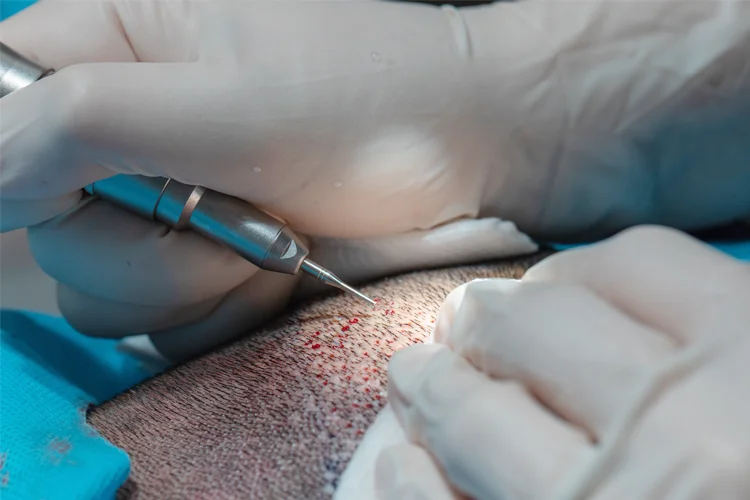
To permanently correct advanced hair loss, hair transplantation remains the gold standard. Thanks to modern techniques such as FUE (Follicular Unit Extraction) or DHI (Direct Hair Implantation), it provides a natural and permanent restoration.
If you’d like to understand the full process—from choosing a clinic and technique to recovery timelines and aftercare—you can learn more with our hair transplant Turkey guide. It explains everything you need to know about planning your procedure abroad, including cost comparisons and what to expect from treatment at world-class clinics.
The advantages of hair transplantation:
- Natural results thanks to precision techniques, creating an overall authentic appearance.
- A personalised approach in which each transplant is adapted to the patient’s needs and expectations.
- A chemical-free procedure with few side effects; a safe and reliable method.
MicroRNA and Transplantation: A Promising Combination?
While transplantation remains the most reliable method, microRNA therapy could complement it in the near future.
When done in tandem, miRNA could promote the regrowth of transplanted follicles, accelerate healing, and optimise post-transplant results.
Conclusion: The Future of Hair Medicine
MicroRNA therapy opens new avenues for the treatment of alopecia, particularly those with genetic causes.
However, this technology is still in its infancy and requires further studies to confirm its long-term effectiveness.
In the meantime, hair transplants remain the most proven solution for permanently restoring density and self-confidence. Contact our experts to find out which method is best suited to your situation.
FAQs
Is microRNA therapy currently available as a treatment for hair loss?
No, microRNA therapy is not currently available as a mainstream or regulated treatment for hair loss. While early research is promising, it remains in the experimental phase and is not yet approved for clinical use.
How soon could microRNA therapy become commercially available?
It’s difficult to predict an exact timeline. Given the early stage of research, several more years of clinical trials and regulatory approval processes are likely required before microRNA therapy becomes commercially available.
Who is funding microRNA hair loss research?
Research into microRNA applications is often supported by academic institutions, biotechnology companies, and public research grants. Some pharmaceutical firms are also investing in gene-regulation therapies, though specific commercial involvement in hair loss treatment is still limited.
How is microRNA therapy administered?
As the therapy is still in development, there is no standard method of administration yet. However, future delivery methods may include topical solutions, injections directly into the scalp, or even microneedle-assisted application—pending further research.
Could microRNA therapy replace Minoxidil or Finasteride?
Not in the immediate future. While it has the potential to work alongside or even improve upon current treatments, it will require significant clinical validation before it could replace existing FDA-approved options like Minoxidil or Finasteride.
Can microRNA therapy be used preventatively, before hair loss becomes visible?
In theory, yes—if specific gene pathways related to early-stage hair thinning can be targeted effectively. However, no current data exists to support preventive use, and clinical trials would need to explore this potential.
Are there ethical concerns with gene regulation therapies like microRNAs?
Yes, there are some ethical considerations, especially around unintended genetic effects and long-term safety. Unlike CRISPR, microRNA does not alter DNA permanently, which may reduce some concerns—but off-target effects and systemic impacts still need thorough evaluation.
What makes microRNA therapy different from other non-surgical hair loss treatments?
Unlike most current topical or oral treatments that work through hormonal pathways or circulation, microRNA therapy works by regulating gene expression at a cellular level, potentially offering a more targeted and personalised treatment approach.
Is microRNA therapy suitable for women experiencing hair loss
Potentially, yes. Since microRNAs target biological pathways involved in hair growth, they may be applicable to both men and women. However, sex-specific studies are needed to confirm safety and efficacy for female patients.

Dr. Imad Moustafa
Hair transplant specialist