


More hair in the brush, and at your last appointment your HbA1c came back too high: the link between diabetes and hair loss is real, but it usually works differently than people assume. Diabetes-related hair loss is typically diffuse and spread across the whole head; with stable blood sugar it recedes over a matter of months. There is a second, far less familiar link as well: in men with early-onset hereditary hair loss, a case-control study of 200 participants found insulin resistance 4.5 times more often than in controls, 18 per cent versus 4 per cent (Erden et al. 2025, Journal of Cosmetic Dermatology). This article separates the two pathways and shows which values you should have checked.
Key takeaways
- ✓Diabetes-related hair loss is usually diffuse and recedes over 3 to 6 months once blood sugar is stable
- ✓Four mechanisms work together: impaired microcirculation, glycation (AGEs), chronic inflammation, and a hormonal shift
- ✓Type 1 adds an autoimmune axis (alopecia areata, thyroid), type 2 mainly brings insulin resistance
- ✓Metformin is not a direct trigger, but long-term use lowers vitamin B12 levels, and a B12 deficiency encourages hair loss
The table of contents shows you what is where. After that we go into detail mechanism by mechanism, from insulin resistance to an itchy scalp to the question of whether a hair transplant even makes sense with diabetes.
Your roadmap in three steps
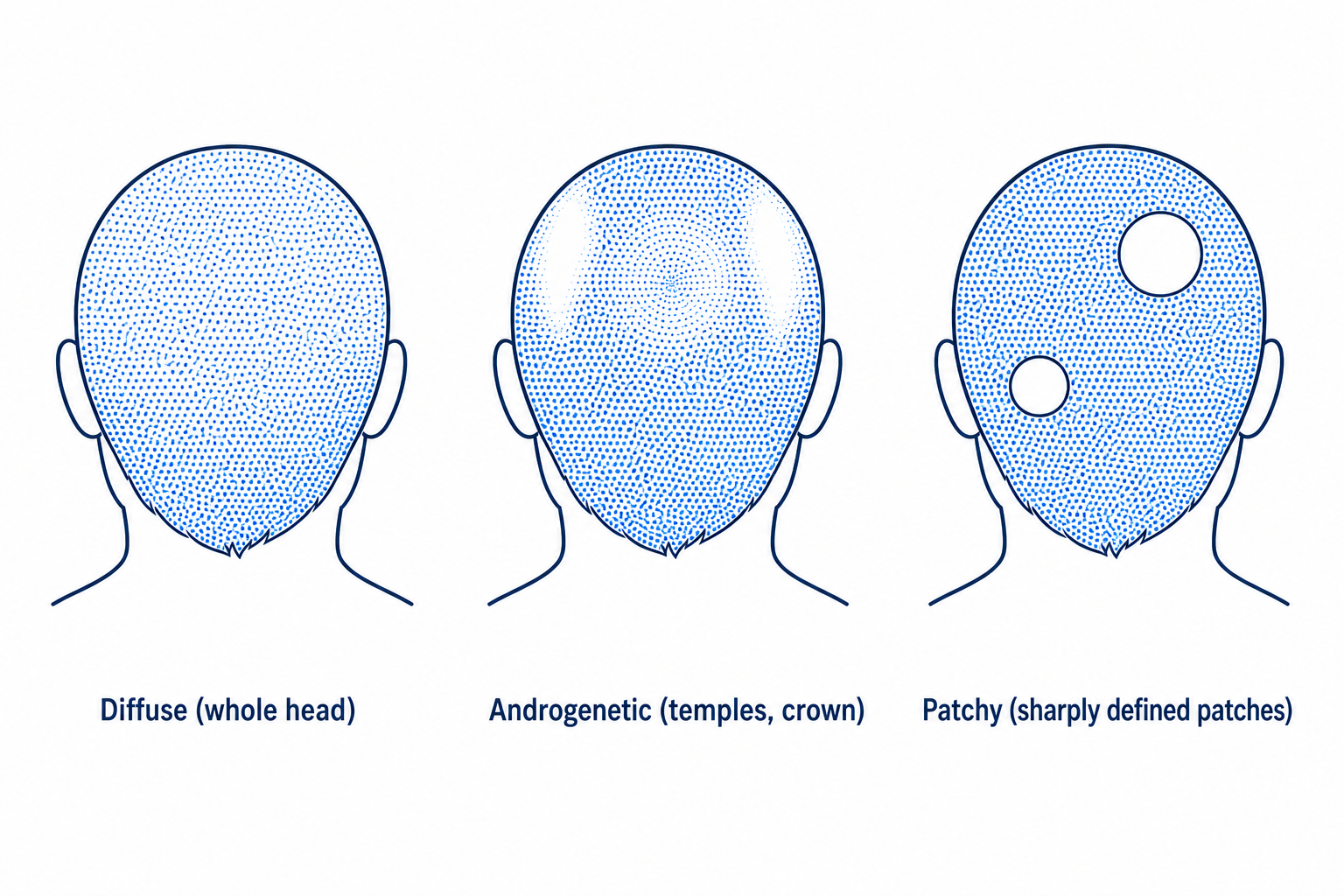
Identify the pattern, do not guess. If hair thins evenly across the whole head, that points to metabolism. If the temples and the crown are receding while the back of the head stays dense, a hereditary component is likely. The pattern decides everything that follows.
Check your lab values instead of switching shampoo. The lab work should cover HbA1c along with its trend, ferritin, vitamin B12 (especially on metformin), zinc, vitamin D, and TSH. No care product corrects a blood sugar reading or a deficiency.
Give the hair cycle time. Once blood sugar is stable, the shedding usually eases in months 1 to 2, the first new hairs show up in months 5 to 6, and the hair looks visibly denser after 9 to 12 months. Before that, there is simply no way to judge the result.
Summary
- Why does diabetes cause hair loss?
- Insulin resistance and hair loss: what the research shows
- What does hair loss with diabetes look like?
- Why does the scalp itch with diabetes, and what does that mean for the hair?
- Risk factors for hair loss with diabetes
- Type 1 and type 2 diabetes: differences in risk
- Hair loss in women with diabetes
- Do diabetes medications such as metformin cause hair loss?
- Lifestyle as a factor
- Can hair loss be an early warning sign of diabetes?
- Prevention: how can hair loss with diabetes be avoided?
- How should those affected proceed?
- Medical and cosmetic treatment options
- Is a hair transplant possible with diabetes?
- Elithair analysis of hair transplants in people with diabetes
- Frequently asked questions about diabetes and hair loss
- Conclusion
Why does diabetes cause hair loss?
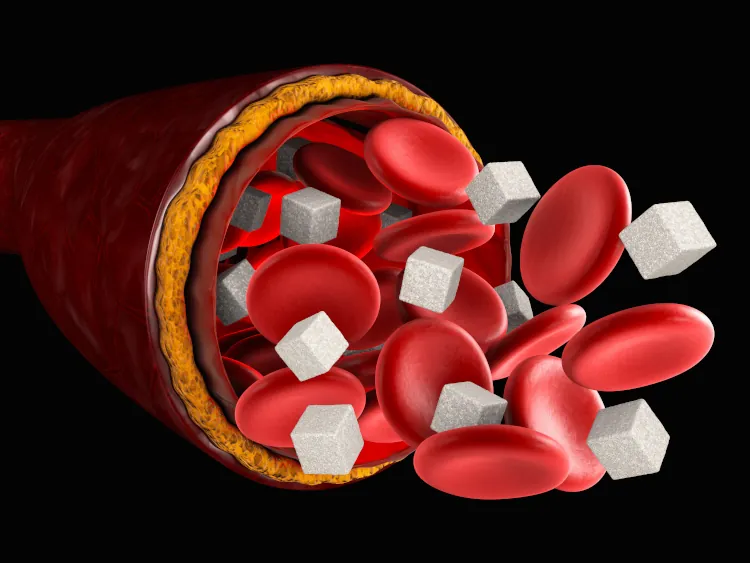
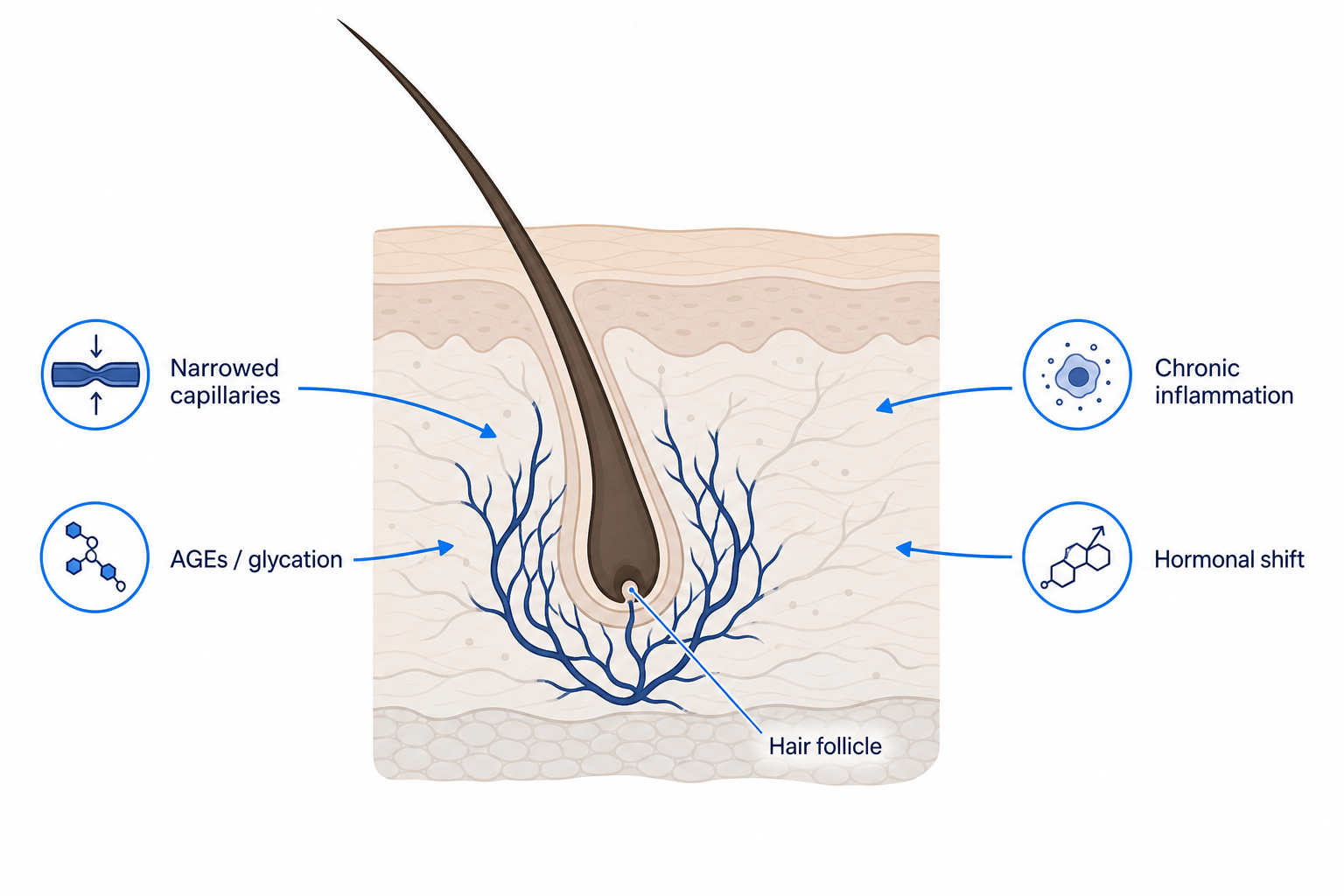
Diabetes causes hair loss along four pathways that reinforce one another: impaired microcirculation at the hair root, the glycation of tissue proteins (AGEs), chronic low-grade inflammation, and a hormonal shift driven by hyperinsulinaemia. In type 1, an autoimmune axis is added.
Diabetes is a chronic condition that affects many processes in the body, including hair health. Hair loss with diabetes is common and can arise from a number of factors that disturb the normal hair cycle in various ways. How strongly they act depends above all on how high blood sugar runs and how long it stays there.
The four mechanisms in plain language, plus the autoimmune axis in type 1
- Microangiopathy means the smallest blood vessels are damaged. The consequence for your hair: less oxygen and fewer nutrients at the root, so hair grows back more slowly and finer.
- Hyperinsulinaemia means permanently too much insulin in the blood. The consequence for your hair: the binding protein SHBG drops, leaving more free testosterone available for conversion into DHT.
- Glycation (AGEs) means sugar sticks to the body’s own proteins. The consequence for your hair: the connective tissue around the follicle stiffens and ages faster, something shown so far mainly in skin and cell models.
- Low-grade inflammation means permanently elevated messengers such as IL-6 and TNF-alpha. The consequence for your hair: follicular stem cells work less well, and hair miniaturises more easily.
- Stress and autoimmunity mean strain plus a misdirected immune system. The consequence for your hair: many follicles enter the resting phase at the same time, and in type 1 alopecia areata comes on top as a picture of its own.
Circulation problems: a restricted supply to the hair follicles
A central factor in hair loss with diabetes is impaired blood circulation. High blood sugar can damage the blood vessels and worsen perfusion. Clinically, this pathway is called diabetic microangiopathy, an established concept in the diabetes literature on skin complications (review of skin complications in diabetes, PMC 2023).
Because hair follicles depend on an adequate supply of nutrients and oxygen, circulation problems can weaken the hair roots. Over time hair growth suffers, which can lead to thinning hair or hair loss.
During its growth phase, the hair follicle is one of the most metabolically active tissues in the body, so it is sensitive to any drop in supply. There is, however, no solid figure for how far blood flow to the follicle drops in diabetes. The evidence is descriptive, not quantified.
Hormonal changes: the role of insulin
Diabetes often brings hormonal changes that can act directly on hair growth. Insulin, the hormone that regulates blood sugar, plays a key role in many metabolic processes.
An unbalanced insulin level, as often occurs in diabetes, can disrupt the hair cycle and shorten the growth phase. Hormonal fluctuations also put additional strain on the body, which inhibits hair growth further. Direct proof at the human follicle is still missing for this pathway; the connection is considered plausible, not proven.
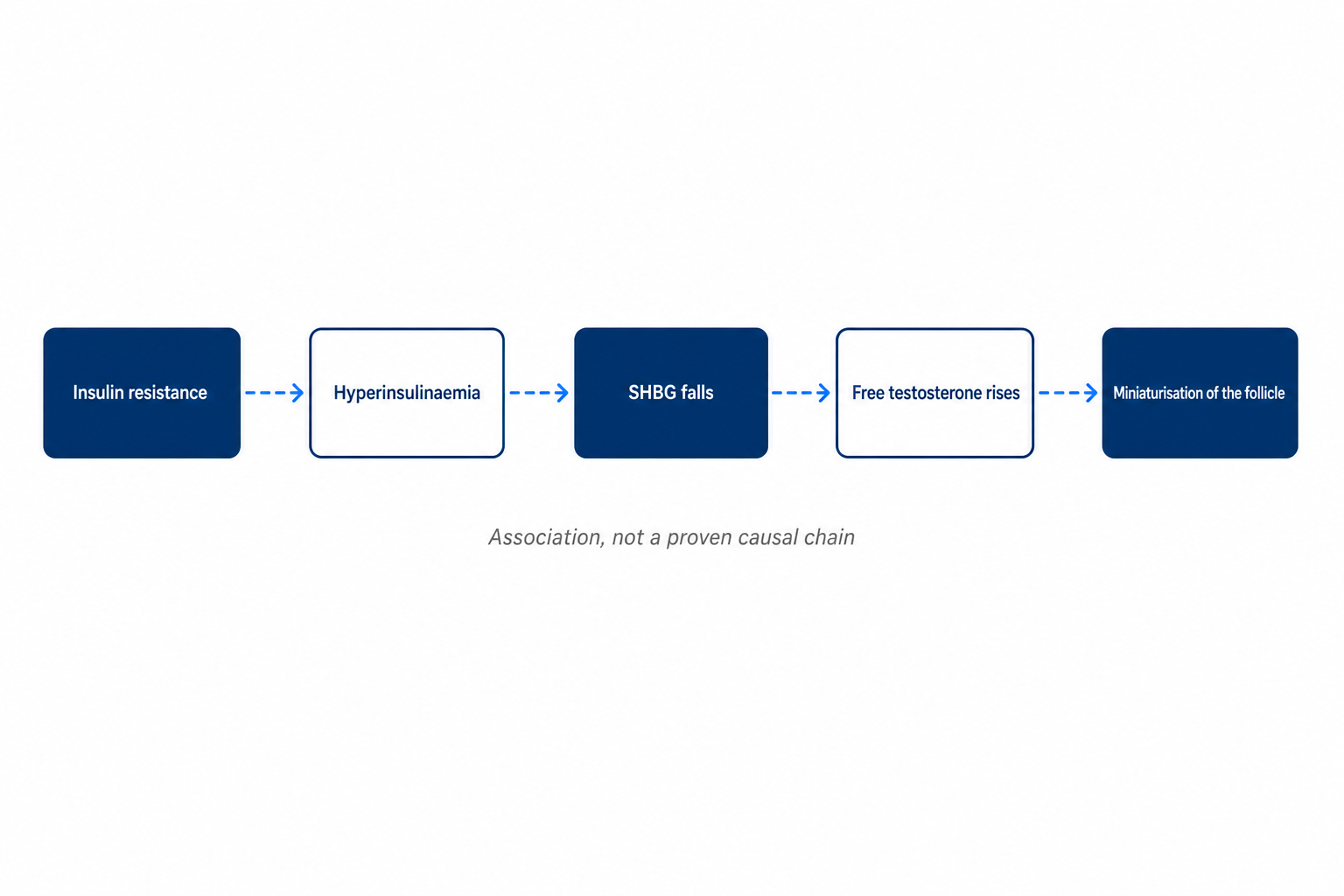
The second hormonal effect is better documented: high insulin levels lower sex hormone-binding globulin (SHBG). That raises the share of free, biologically active testosterone, which is converted into DHT at the follicle. This is the mechanistic bridge to androgenetic alopecia, which the next section puts in context.
AGEs and glycation: why high blood sugar ages tissue
Advanced glycation end products (AGEs) form when sugar binds permanently to proteins. They accumulate measurably in the skin, stiffen collagen, and worsen the elasticity of the tissue (Wang et al. 2024, Experimental Dermatology). A 2025 paper even detected AGE traces directly in hair and discusses them as a non-invasive marker for diabetes and ageing.
Important for context: the idea that AGEs damage the hair follicle itself and shorten the growth phase has so far been shown mainly in cell cultures and skin models, not in clinical studies in humans. The mechanism is well documented for skin ageing and plausible for the follicular environment, but it is not a proven cause of hair loss.
Chronic inflammation and oxidative stress: what happens in the tissue?
Diabetes counts as a state of chronic low-grade inflammation. Pro-inflammatory cytokines such as IL-6 and TNF-alpha impair the function of follicular stem cells and promote miniaturisation of the hair; elevated inflammatory markers go along with a weaker treatment response in hair loss (review of perifollicular inflammation in androgenetic alopecia, Dove Medical Press).
Here too an honest caveat is in order: there is no dedicated cohort study linking CRP or IL-6 levels in diabetes with measured hair loss. Inflammation is a shared pathophysiological denominator of both conditions, not a demonstrated causal chain.
Stress and autoimmune reactions: strain on the body
Diabetes causes not only physical but also psychological strain. Stress from the condition can set off telogen effluvium , in which many hair follicles enter the resting phase at once. The shedding then shows up diffusely and with a delay, usually 2 to 3 months after the triggering event.
Diabetes also raises the risk of autoimmune conditions such as alopecia areata, in which the immune system attacks the hair follicles and causes bald patches. Whether through circulation problems, hormonal changes or stress: diabetes can promote hair loss in a number of different ways.
With targeted measures and treatment, the effects of diabetes on the hair can often be reduced, and the diffuse, metabolically driven component of the hair loss can recede.
How strongly these pathways act depends less on the type of diabetes than on the insulin resistance behind it. And that is exactly where the most interesting research of recent years begins.
Insulin resistance and hair loss: what the research shows
Insulin resistance does not cause hair loss. It is, however, statistically associated with early-onset androgenetic alopecia and with metabolic syndrome. In a case-control study of 200 men between 18 and 35, Erden, Yorulmaz, and Yalcin (2025, Journal of Cosmetic Dermatology) found insulin resistance (HOMA-IR of 2.7 and above) in 18 per cent of those affected versus 4 per cent of controls (p = 0.003).
The same paper found metabolic syndrome in 21 versus 9 per cent (p = 0.011), plus significantly higher fasting insulin levels (p = 0.005), higher triglycerides (p = 0.043), and a larger waist circumference (p = 0.026). The higher the stage on the Hamilton-Norwood scale, the more frequent the insulin resistance.
That fits older data: a 2017 meta-analysis in Scientific Reports found that young men with early-onset androgenetic alopecia had significantly higher insulin levels and HOMA values than controls. A 2026 systematic review in BMC Public Health lists insulin resistance alongside a paternal family history as a risk factor in its own right.
What these studies do not show is at least as important. They are small (100 to 200 participants), mostly come from a single centre, and use a cross-sectional or case-control design. That makes it impossible to establish the direction: whether insulin resistance precedes the hair loss, or whether both share a common cause, remains open.
On top of that, almost all of those studied have been men with early-onset hair loss. For women and for late-onset hair loss, the data are thin. And there is no study showing that treating insulin sensitivity brings hair back. Anyone who claims otherwise is going beyond the evidence.
The mechanistic explanation therefore remains a hypothesis: hyperinsulinaemia lowers SHBG, free testosterone rises, more DHT acts on the sensitive follicle, and miniaturisation speeds up. Poorer perifollicular microcirculation comes on top. Plausible and consistent with the measurements, but not proven.
What this means in practice: HOMA index, fasting insulin, and lifestyle
The HOMA index (HOMA-IR) estimates insulin resistance from two fasting values. The formula is: fasting insulin in microunits per millilitre times fasting glucose in millimoles per litre, divided by 22.5; where glucose is given in milligrams per decilitre, the divisor is 405. A range of 0.7 to 2.0 is often considered normal, and the blood sample requires 8 to 12 hours without food.
The cut-off is where it gets blurry, and that is worth saying: some authors see insulin resistance beginning at 1.9, the NHANES cut-off sits at 2.5, the hair loss study cited above used 2.7, and for Asian populations values of 1.4 to 2.5 are discussed. No professional society has established a uniform threshold (mdcalc.com, 2026).
The HOMA-IR is therefore not a hair loss test but a metabolic test. It does not answer why you are losing hair; it answers whether insulin resistance is running in the background, which needs attention anyway.
The documented ways to improve insulin sensitivity are unspectacular and they work: weight reduction, regular endurance training combined with strength training, and enough sleep. The standard recommendation is 150 minutes of moderate activity per week (WHO physical activity guidance). That comes with no promise of hair growth, but it does come with a metabolic benefit.
Early-onset hair loss as a metabolic signal
The most practically valuable point from this research concerns young men. If hereditary hair loss begins well before the age of 30 to 35, it is worth looking at blood pressure, blood lipids, and fasting glucose. Dermatology is discussing this approach more and more, but no professional society has issued an official screening recommendation for it.
The idea is not to treat hair loss but to find a silent metabolic disorder years earlier. For the hair itself, the finding changes nothing at first. For the heart, the vessels, and the risk of diabetes, it can change a great deal.
What does hair loss with diabetes look like?
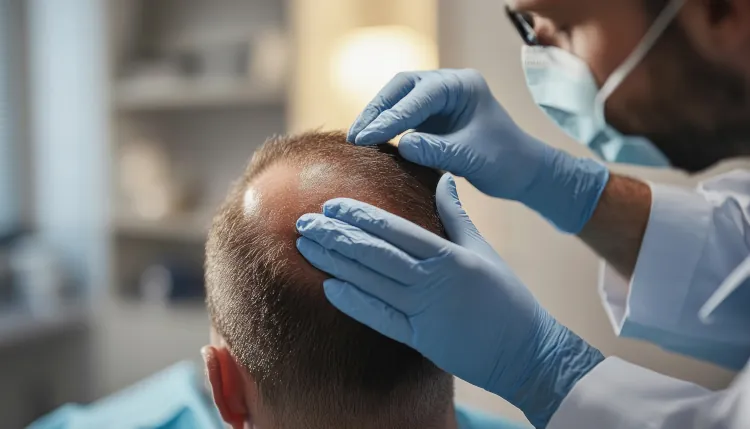
In most cases, hair loss with diabetes shows up as even thinning across the whole head, not as a pattern with a receding hairline at the temples. Diabetes hair loss can present in different ways, depending on the underlying causes and on how an individual body reacts. The symptoms are often subtle, but they can give important clues that the hair loss is connected to the condition.
Typical patterns: thinning and patchy hair loss
Many people with diabetes notice that their hair is gradually getting thinner, often evenly across the whole head (diffuse hair loss). Increased shedding is especially noticeable when combing or washing.
As a rough marker: if 100 or more hairs come out in 24 hours, that points to telogen effluvium (StatPearls, NCBI Bookshelf). In the medical pull test, the finding is abnormal if a gentle tug releases at least 4 hairs at once. Both are clues, not diagnoses.
With an autoimmune reaction, by contrast, the hair loss can appear patchy, with bald spots that develop suddenly on the scalp or on other hair-bearing areas of the body.
Telling it apart from other types
It is important to distinguish hair loss with diabetes from other forms, such as genetic hair loss (androgenetic alopecia).
While genetic hair loss usually appears in specific places, such as the temples or the crown, and follows a clear pattern, hair loss with diabetes is often diffuse or comes together with other physical symptoms. Only the genetic component responds to hair growth medication or a hair transplant, and that is precisely why identifying the pattern comes first.
| What you see | Accompanying signs | Likely cause | Next step |
|---|---|---|---|
| Even thinning across the whole head, lots of hair when washing | HbA1c elevated, fatigue, dry skin | Diffuse telogen effluvium, metabolically triggered | Have HbA1c, ferritin, TSH, and vitamin B12 measured, and get your metabolism under control |
| Receding temples, thinning crown, retreating hairline | Family history, onset before the age of 30 | Androgenetic alopecia, possibly associated with insulin resistance | Have the pattern assessed, and also check blood pressure, blood lipids, and fasting glucose |
| Round, sharply defined bald patches, including in the beard | Type 1 diabetes, abnormal thyroid values, nail changes | Alopecia areata (autoimmune) | Dermatological work-up, test TSH and autoantibodies |
| Thinning on the top of the head, hairline preserved, increased body hair | Irregular periods, acne, insulin resistance | Female pattern, suspected PCOS | Gynaecology or endocrinology: testosterone, SHBG, HOMA-IR |
| Itchy, flaking, reddened scalp with hair loss in the same spots | Burning, pustules, crusts | Inflammation or infection of the scalp | See a dermatologist promptly, do not self-treat |
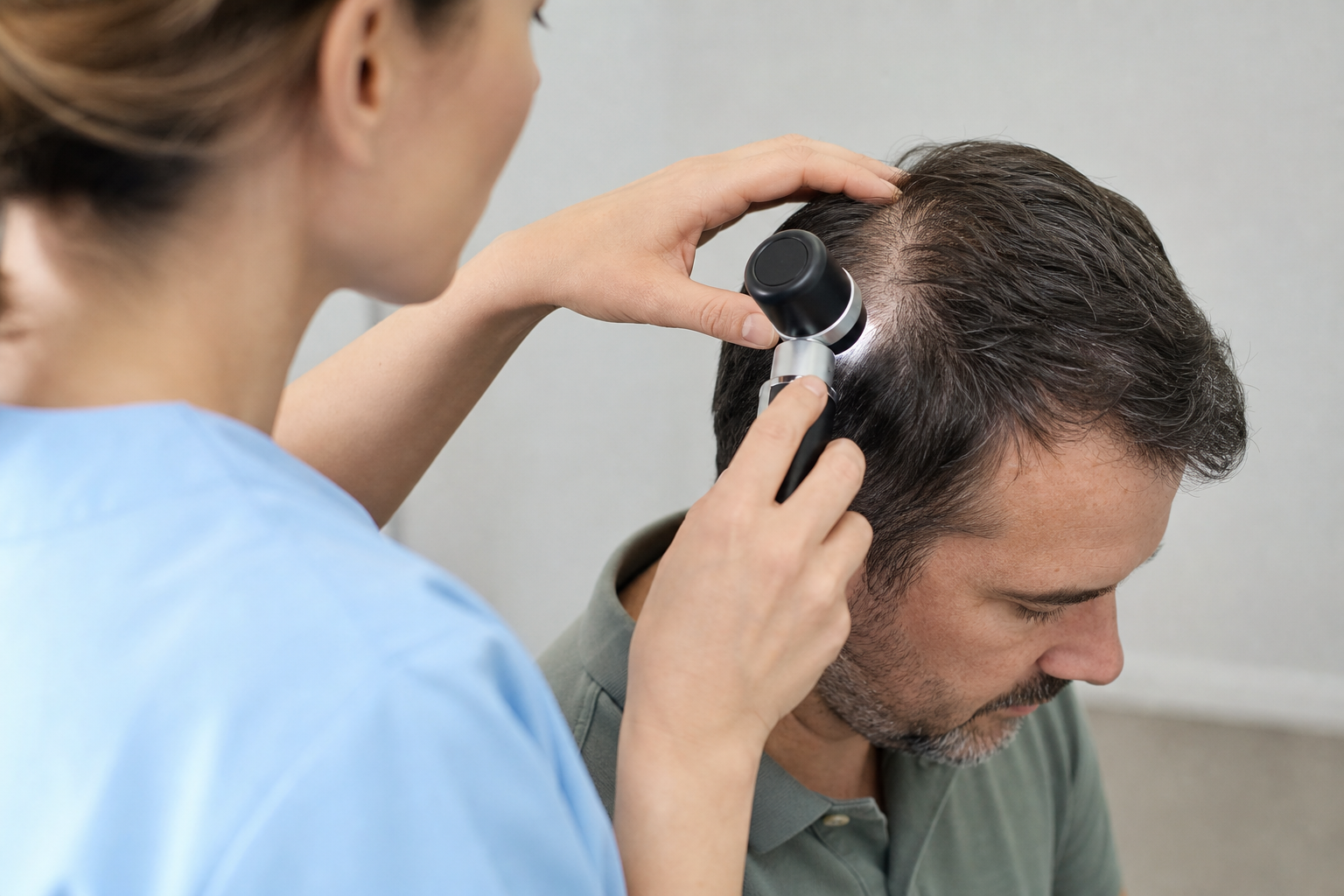
The table is a guide and does not replace a diagnosis. Two forms often occur at the same time, for example diffuse shedding on top of an existing androgenetic pattern. A hair analysis clarifies the visible pattern of loss and therefore which treatment is even an option.
To be honest about it: this analysis is a visual assessment of the pattern. It does not replace a blood test or a dermatological diagnosis. Anyone with diffuse hair loss should start with their GP or diabetes team, not with a transplant consultation.
Further signs: hair growing back slowly
With diabetes, hair that has fallen out often grows back more slowly, because the follicles are not optimally supplied with nutrients and oxygen. Symptoms such as a dry or irritated scalp can come on top, a sign of circulation problems or a weakened skin barrier.
To put numbers on it: normally 85 to 90 per cent of scalp hairs are in the growth phase (anagen) and 10 to 15 per cent in the resting phase (telogen). In telogen effluvium, the proportion of hairs in telogen rises to 30 to 50 per cent; in pronounced cases up to 70 per cent of hairs switch prematurely into the resting phase (StatPearls).
Paying close attention to these signs matters, because that is what makes it possible to classify the hair loss correctly and address it in a targeted way.
Why does the scalp itch with diabetes, and what does that mean for the hair?
Itching is common in diabetes: more recent studies in people with type 2 diabetes find chronic pruritus in 18.4 to 30.9 per cent of those affected, and in one cross-sectional study of 249 patients it was 30.9 per cent. The itch itself does not cause hair loss. But the causes behind it and persistent scratching can make it worse.
The range of figures is wide because studies define itching differently. A methodologically stricter paper in Diabetes Care (1986) found only 2.7 per cent with generalised pruritus and no identifiable cause. Anyone reading a single percentage should therefore treat it with caution.
One finding from the same cohort is clinically more relevant than any prevalence figure: patients with itching had significantly more retinopathy, nephropathy, neuropathy, and peripheral arterial disease. Itchy skin can therefore be a warning sign of advanced complications and belongs in a doctor’s assessment.
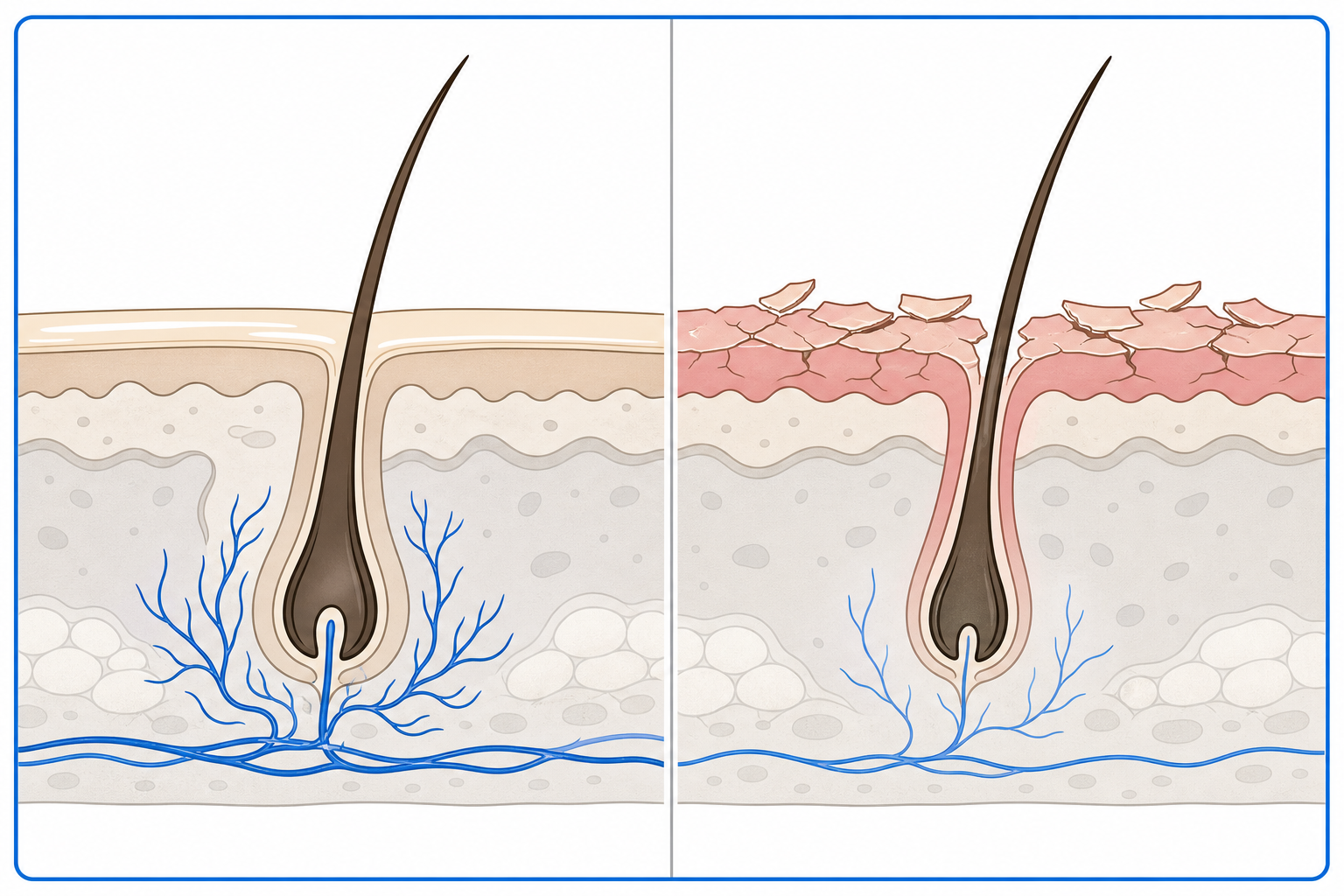
Dry scalp (xerosis) as the most common finding
By far the most common skin finding in diabetic itching is xerosis, or dry skin: 64 per cent of those affected in the cohort mentioned, followed by fungal skin infections at 16 per cent. On the scalp it shows up as tightness, fine flaking, and sensitivity to shampoo.
Three mechanisms contribute: at high blood sugar levels the body loses fluid through osmotic diuresis, the skin barrier is disturbed, and with autonomic neuropathy sebum and sweat production are reduced. The scalp dries out faster than care products can make up for.
Diabetic neuropathy and pruritus
If it itches without anything visible, small-fibre neuropathy is one possible explanation. The fine nerve fibres of the skin then send faulty signals that arrive as itching, burning, or tingling. The connection is discussed in the literature; there is no separate prevalence figure for the scalp.
The flip side matters in practice: with neuropathy, small injuries to the scalp are felt less. Someone who scratches does not notice when it has gone too far. That is why the scalp should be looked at regularly with diabetes, not just felt.
Scalp infections: fungus, eczema, folliculitis
High blood sugar creates a favourable environment for pathogens and at the same time dampens parts of the immune response. Scalp fungus, seborrhoeic dermatitis, and folliculitis therefore occur more easily. They differ from a simply dry scalp by redness, greasy or crusted scales, pustules, and hair loss exactly where the affected areas are.
| Symptom picture | Likely cause | What helps | When to see a doctor |
|---|---|---|---|
| Dry, tight scalp with fine flaking, no redness | Xerosis, the most common skin finding in diabetic itching (64 per cent of a cohort of 249 patients) | Mild, pH-balanced cleansing, lukewarm rather than hot showers, replenishing care | If nothing changes after a few weeks despite consistent care |
| Itching with no visible skin finding, at times burning or stinging | Diabetic pruritus; small-fibre neuropathy is discussed as the mechanism | Getting blood sugar under control, avoiding scratching triggers, checking the scalp regularly | If it burns or if there are additional nerve symptoms in the hands and feet |
| Yellowish, greasy scales at the hairline, reddened skin | Seborrhoeic dermatitis | Medicated shampoos on medical advice, no harsh home remedies | If it spreads, weeps, or if hair falls out in the same spots |
| Round, scaling patches with broken hair stubs | Scalp ringworm (tinea capitis); fungal infections were the second most common finding in the same cohort (16 per cent) | Medical diagnosis by swab, treatment usually systemic | Promptly; do not self-treat, it is contagious |
| Pustules, crusts, and tender nodules around individual hairs | Folliculitis, a bacterial inflammation of the hair follicle | Medical work-up, plus a blood sugar check | Promptly; immediately if there is fever or spreading |
When scratching becomes the problem
Persistent scratching leaves excoriations, that is, superficial skin defects. With poorly controlled blood sugar they close more slowly and become infected more easily. In the worst case, repeated inflammation leads to scarring hair loss, and follicles lost to scarring do not come back.
This is the point where self-help ends. Anyone who has been scratching for weeks needs a GP or a dermatologist, not the shelf at the chemist. The itch is treatable, blood sugar is the cause behind it, and the two belong together in one assessment.
Risk factors for hair loss with diabetes
Diabetes can raise the risk of hair loss considerably. How strongly the condition affects hair health depends on a number of factors. The type of diabetes matters, and so do lifestyle, diet, blood sugar control, and physical activity.
The key figure here: a meta-analysis of 132 studies with 52,501 participants found at least one micronutrient deficiency in 45 per cent of people with type 2 diabetes (Mangal et al. 2024). Not everyone with diabetes loses hair; what matters is the bundle of blood sugar levels, disease duration, comorbidities, and nutrient status.
- How high blood sugar runs and for how long: the longer HbA1c stays above the target range, the more pronounced microangiopathy, glycation, and inflammation become
- Existing complications: microangiopathy, neuropathy, and nephropathy show that the small vessels are already affected
- Nutrient gaps: vitamin D deficiency in 60.5 per cent, magnesium deficiency in 42 per cent, and iron deficiency in 28 per cent of people with type 2 diabetes (same data set)
- Vitamin B12 status: above all on long-term metformin therapy, more on that in the medication section
- Waist circumference and body weight: in the Erden study, waist circumference was significantly larger in men with early-onset hair loss (p = 0.026)
- Smoking: further worsens microcirculation and adds to the vascular damage
- Thyroid disease: especially with type 1, see the article on hair loss and the thyroid
- Rapid weight loss and crash diets: a trigger of telogen effluvium in their own right, independent of the diabetes
- Lack of sleep and chronic stress: worsen insulin sensitivity and blood sugar control
- Age and sex: determine whether an androgenetic pattern is layered on top
Understanding these risk factors is what makes targeted countermeasures possible.
On the common worry about hypoglycaemia: nothing in the literature reviewed suggests that isolated episodes of low blood sugar trigger hair loss. The triggers are sustained strains, meaning persistently high values, large swings over months, or an acute illness.
Special case, kidney involvement: nephropathy and dialysis
With diabetic nephropathy, separate drivers come into play, and at that point hair loss is no longer a blood sugar issue but a kidney issue. Anaemia is an early and frequent complication of diabetic nephropathy, because the kidneys produce too little erythropoietin; it goes along with faster progression towards dialysis.
On dialysis, the risk of deficiencies in iron, zinc, vitamin D, and B vitamins rises further, among other things through protein loss and reduced absorption (patient information from Kidney Care UK and DaVita). Kidney-related itching affects 10 to 77 per cent of haemodialysis patients, depending on the study and the definition.
Anyone with kidney involvement should therefore raise the hair loss with their nephrology team rather than have it treated in isolation as a hair problem. Iron status, anaemia, and vitamin D supply are part of the routine there anyway.
Type 1 and type 2 diabetes: differences in risk
Both type 1 and type 2 diabetes carry an increased risk of hair loss, but the mechanisms differ. Type 1 runs along the autoimmune axis, type 2 along the metabolic axis with insulin resistance. What both share are the consequences of hyperglycaemia.
- Type 1 diabetes: this form is an autoimmune disease in which the immune system attacks the insulin-producing cells of the pancreas. Because type 1 diabetes is linked with other autoimmune conditions such as alopecia areata, the risk of patchy hair loss is often higher.
- Type 2 diabetes: type 2 diabetes often develops out of insulin resistance, which goes along with hormonal imbalances and circulation problems. These factors can weaken the hair follicles and lead to diffusely thinned hair.
| Feature | Type 1 diabetes | Type 2 diabetes |
|---|---|---|
| Underlying mechanism | Autoimmune reaction against the insulin-producing beta cells, absolute insulin deficiency | Insulin resistance of the body’s cells, later joined by insulin deficiency |
| Typical hair picture | Diffuse thinning, plus an increased risk of sharply defined round bald patches | Mostly diffuse thinning, frequently overlaid by an androgenetic pattern |
| Autoimmune comorbidity | Hashimoto’s or hypothyroidism in 16.3 per cent, TPO antibodies in 58.6 per cent, coeliac antibodies in 16.4 per cent (251 adults, Riad 2018 to 2019); alopecia areata is more frequent, but without a reliable prevalence figure | No typical autoimmune clustering |
| Insulin resistance | Possible, but not the defining feature | Defining feature, associated with early-onset androgenetic alopecia (Erden et al. 2025) |
| Typical age at onset | Childhood to young adulthood | Usually from middle age onwards, increasingly earlier |
| Most important lever for the hair | Stable blood sugar control plus a work-up of the accompanying autoimmune conditions | Insulin sensitivity and blood sugar via weight, exercise, diet, and treatment |
| Question of eligibility for a hair transplant | A question of control and blood sugar management, not an exclusion because of the type | A question of control, with comorbidities counting as well |
Type 1: the autoimmune association
Type 1 diabetes is itself an autoimmune disease and clusters with others. A cross-sectional study of 251 adults with type 1 diabetes found Hashimoto’s thyroiditis or hypothyroidism in 16.3 per cent, positive TPO antibodies in 58.6 per cent, and positive coeliac antibodies in 16.4 per cent of those tested.
Alopecia areata is a recognised component of autoimmune polyglandular syndrome type 2, which also includes autoimmune diabetes. A reliable population-wide prevalence figure for alopecia areata in type 1 diabetes does not exist, however. The percentages that circulate online do not hold up when you check the sources.
In practice that means: round, sharply defined bald patches in type 1 diabetes belong in a dermatological work-up, and the thyroid should be checked along with them. How the two are connected is covered in the article on hair loss and the thyroid. For the treatment of alopecia areata, the current dermatological guidance from the British Association of Dermatologists is the reference.
Type 2: the metabolic axis
In type 2 diabetes, insulin resistance is at the centre, and with it the hormonal shift via SHBG and free testosterone. That is why the combination of diffuse thinning and an androgenetic pattern shows up here more often. The two forms need different answers, which is what makes identifying the pattern so important.
The precursor stage matters in practice: the association between insulin resistance and hair loss shows up in the studies even without manifest diabetes, that is, in the prediabetes range. Anyone with diffuse hair loss and an increased waist circumference can have their metabolism checked, even if HbA1c is still below the diagnostic threshold.
Long-term blood sugar: why good control matters
Persistently high blood sugar levels damage the blood vessels and impair circulation, which leaves the hair follicles undersupplied. That weakens the hair roots, thins the hair, and delays regrowth.
Poorly controlled blood sugar also promotes inflammation, which disrupts the hair cycle and intensifies the shedding. Stable blood sugar control is therefore crucial, not just for general health but for strong, healthy hair.
Specifically: NICE guideline NG28 sets an HbA1c target of 48 mmol/mol (6.5 per cent) for adults with type 2 diabetes who are managed by diet alone or by a single drug that does not cause hypoglycaemia, and 53 mmol/mol (7.0 per cent) for those on a drug associated with hypoglycaemia or on two or more drugs, with less stringent, individualised targets where age, comorbidities, or a high risk of hypoglycaemia argue for them.
There is no separate HbA1c threshold for the hair, and nobody should invent one. The guideline target range is also the best available reference point for everything that depends on microcirculation, and the hair follicle is part of that.
Hair loss in women with diabetes
In women, the most common link between insulin resistance and hair loss runs through polycystic ovary syndrome (PCOS). It affects 4 to 8 per cent of women of reproductive age; depending on the diagnostic criteria and the population, figures of up to 25 per cent are also reported. Insulin resistance is present in roughly 20 to 70 per cent of those affected, depending on the study.

Important for self-assessment: this insulin resistance occurs independently of body weight. Slim women with PCOS can be affected too. Anyone who assumes the topic does not apply to them because their BMI is normal often misses the key finding.
The mechanism is the standard model of the PCOS literature and remains a hypothesis: high insulin levels increase androgen production in the ovary and at the same time lower SHBG. Free testosterone rises, and more DHT acts at the follicle. In one comparative study, androgenetic alopecia occurred considerably more often with PCOS than in the control group.
The picture differs from the male one: in women the top of the head thins along the parting, while the front hairline usually stays intact. This distribution is described using the Ludwig scale. A receding hairline at the temples, as in men, is atypical; a widening parting, by contrast, is the leading sign.
Besides PCOS, other factors count in women: iron deficiency from menstruation, thyroid disease, the hormonal shift of menopause and, after a pregnancy, postpartum telogen effluvium. Gestational diabetes is also a pointer to a later risk of type 2.
Worth having measured: fasting insulin and HOMA-IR, testosterone, DHEAS, SHBG, plus ferritin and TSH. Which values are drawn when and what they show is set out in the lab roadmap further down. More on the female pattern in the article on hair loss in women.
Do diabetes medications such as metformin cause hair loss?
Metformin is not a known direct trigger of hair loss. Hair loss is not listed as a side effect in the product information, and across decades of controlled use there is no evidence of a direct effect on the follicle. The documented side pathway is a different one: with long-term use, metformin reduces the absorption of vitamin B12.
Why metformin is not directly to blame
What metformin does not do: it does not act on the hair follicle, it has not been shown to shorten the growth phase, and it is not linked with hair loss in regulatory documents. The warnings in the product information, including the approved summary of product characteristics, name vitamin B12 only, not the hair.
What metformin does do: it improves insulin sensitivity, and in doing so it acts on exactly the metabolic state that the studies associate with early-onset hair loss. No hair growth effect can be derived from that, since there are no studies on it. But the obvious worry that the drug is the culprit does not hold.
Metformin and vitamin B12: who is affected and what gets measured
In a 2022 Drug Safety Update, the MHRA classified low vitamin B12 as a common side effect of high-dose or long-term metformin use, affecting up to 1 in 10 people. Periodic B12 monitoring is recommended for at-risk patients.
The figures from primary studies scatter widely, depending on the cut-off and the population: from around 2.3 per cent with short-term use to 36.5 per cent, and in one paper even 65.7 per cent, with long-term use. French data report 12.9 versus 5.6 per cent, Italian cohort data 5.8 versus 2.4 per cent (odds ratio 2.92). An analysis of the All of Us programme found a 67 per cent higher risk of deficiency in long-term users.
The risk rises with dose and duration of treatment. What gets measured is the B12 level, with holotranscobalamin or methylmalonic acid added at borderline values. Warning signs are anaemia, tingling in the hands and feet, and trouble concentrating. What role B12 plays for the hair is covered in the article on vitamins for hair loss.
This is the crucial point, because it heads off the most common wrong reaction: metformin is not stopped when a B12 deficiency is found. The product information provides for continuing the therapy and supplementing the deficiency in addition. Stopping it or changing the dose is a decision for the prescribing doctor alone.
GLP-1 receptor agonists: Ozempic, Wegovy, and Mounjaro
Hair loss is reported with GLP-1 receptor agonists. The professional consensus explains it mainly as telogen effluvium following rapid and often substantial weight loss, not as a direct action of the drug on the follicle. The details, the reporting data, and how to handle it in practice are covered in the separate article on hair loss on Ozempic.
Other drugs in the picture
For insulin and SGLT2 inhibitors, our review of the literature found no solid evidence relating specifically to hair loss. Statins are occasionally named alongside hair loss in general side effect lists, but robust causal evidence is missing. With thyroid hormones, the connection lies with the underlying condition, not with the medication.
| Drug class | Documented link with hair loss | Mechanism | What to do |
|---|---|---|---|
| Metformin | No documented direct link; not listed as a side effect in the product information | Indirect, via impaired vitamin B12 absorption with long-term use (up to 1 in 10 people, MHRA 2022) | Have B12 levels checked over time, supplement if deficient, do not change the therapy on your own |
| GLP-1 receptor agonists (semaglutide, tirzepatide) | Hair loss is reported, mostly as a consequence of rapid weight loss | Telogen effluvium after substantial weight loss, no documented direct effect on the follicle | Secure protein and micronutrient intake, and discuss the pace of the weight loss with your GP |
| Insulin | No documented link | Not applicable | No separate measure; what counts is the quality of blood sugar control |
| SGLT2 inhibitors | No documented link | Not applicable | No separate measure |
| Statins | No robustly documented link; occasionally named in general side effect lists | No established explanation | Have it checked medically if suspected, never stop it on your own |
| Thyroid hormones | The link runs through thyroid function, not through the medication | An underactive or overactive thyroid disrupts the hair cycle; an initial phase of shedding at the start of treatment is described | Check TSH, and have the dose adjusted by a doctor |
One sentence as a guardrail for this whole section: do not stop any diabetes medication on your own because of hair loss. For the hair, blood sugar is the stronger factor, and a metabolism that has run off the rails costs more hair than any of these drugs.
Lifestyle as a factor

An unhealthy lifestyle can intensify hair loss with diabetes, because it destabilises blood sugar and impairs the nutrient supply to the hair follicles. An unbalanced diet with too much sugar and processed food can lead to deficiencies in iron, zinc, or biotin, essential building blocks for healthy hair.
Chronic stress also acts on the hair cycle and can accelerate the shedding. Regular physical activity improves circulation, stabilises blood sugar, and supports hair growth. The standard recommendation is 150 minutes of moderate endurance activity per week, plus strength training.
With targeted adjustments to diet, exercise, and stress management, hair loss with diabetes can often be reduced considerably. The effect runs through metabolism and not directly through the hair root, so it needs the same patience as the hair cycle.
Low-carb, keto, and rapid weight loss: the overlooked trigger
A very common situation rarely gets mentioned: people who overhaul their diet radically often lose a lot of weight within a few months and then, 2 to 3 months later, see marked hair loss. In that case the trigger is not the diabetes but the change, and the shedding is reversible.
The literature discusses a loss of roughly 15 per cent of body mass, or more than 3.5 kilograms (7.7 pounds) a month, as a risk threshold for telogen effluvium. These figures come from secondary sources and are a rule of thumb for practice, not a hard limit. Recovery usually takes 6 to 9 months once things stabilise.
The trigger is not the type of diet but the deficit: too few calories, too little protein, too little iron and zinc. The right conclusion is therefore not to reverse the dietary change. It is to secure protein intake, have micronutrients checked, and slow the pace of the weight loss.
Can hair loss be an early warning sign of diabetes?
Hair loss can be a pointer to undetected diabetes, especially in combination with other symptoms. The metabolic disorder impairs blood circulation, which leaves hair follicles less well supplied. That weakens the hair roots and can lead to thinning hair or increased shedding.
That is more relevant than it sounds: a substantial proportion of all diabetes cases goes undetected, often for years, and is only found once the first complications appear.
Unnoticed diabetes usually creeps up: alongside hair loss, dry skin, slow wound healing, or persistent fatigue can appear. Add to that intense thirst, frequent urination, blurred vision, and unintended weight loss. If diffuse hair loss joins the list, the thing to check is blood sugar, not the shampoo.
Three tests are available for this: HbA1c shows the long-term value of the past 8 to 12 weeks, fasting glucose a snapshot, and the oral glucose tolerance test the response to a defined amount of sugar. An HbA1c of 48 mmol/mol (6.5 per cent) or above counts internationally as a diagnostic criterion.
Why an early diagnosis is decisive
The earlier the condition is recognised, the better blood sugar can be stabilised and damage to blood vessels, nerves, and hair follicles prevented. Treatment in good time can reduce the hair loss and support growth.
For the hair, that means concretely: diffuse loss that is metabolically triggered can recede. An area that is scarred or damaged by advanced microangiopathy cannot, at least not to the same degree.
If the problem occurs together with dry skin, fatigue, or slow wound healing, it should be checked by a doctor. A simple blood test gives an answer quickly. Do not wait: an early diagnosis protects not only your hair but your health. If you are unsure where to start, the article on hair loss: which doctor helps explains who is responsible for what.
Prevention: how can hair loss with diabetes be avoided?
Preventing hair loss starts with managing your diabetes attentively and looking after your general health. Targeted measures can markedly reduce the risk of hair loss and support the growth of healthy hair in the long run, which lets those affected actively stop diabetes hair loss.
The question of whether diabetes hair loss can be stopped has an honest answer: the diffuse, metabolically triggered component does recede, while an androgenetic component is untouched by this and needs its own treatment.
Blood sugar management: the basis for healthy hair
Good blood sugar control is crucial in preventing hair loss with diabetes. High values damage the blood vessels, reduce the nutrient supply to the hair follicles, and promote hair loss.
A stable HbA1c value in the guideline target range, for most adults 48 to 53 mmol/mol (6.5 to 7.0 per cent), keeps blood flow to the hair roots as good as it can be. Regular blood sugar measurements and a treatment plan adjusted in consultation with your doctor help avoid complications and support hair growth.

Regular check-ups: spotting problems early
Diabetes can bring a number of accompanying problems with it. Regular medical appointments make it possible to spot issues such as nutrient deficiencies, hormonal changes, or poor circulation early and treat them in a targeted way. Raise the hair loss yourself while you are there; otherwise it rarely gets mentioned at a diabetes appointment.
A comprehensive health check that includes blood tests and an examination of the scalp helps to limit the hair loss early enough and to support the health of the hair follicles. With neuropathy, checking for small injuries that have gone unnoticed is part of it, because otherwise inflammation and, in the worst case, scarring hair loss develop from them.
A healthy lifestyle: the key to prevention
A healthy lifestyle supports the hair as well. Regular exercise improves circulation and supplies the hair roots with nutrients. Even daily walks or gentle exercise support hair growth.
Diet counts too: cutting out sugar and heavily processed food helps keep blood sugar stable. Smoking worsens circulation and intensifies hair loss, which makes quitting the underrated step with the greatest vascular benefit.
When does the hair grow back?
With diffuse, metabolically triggered hair loss, an acute telogen effluvium resolves on its own in roughly 95 per cent of cases once the trigger has been removed (StatPearls). The time frame is set by the hair cycle and cannot be shortened, not even with supplements.
| Period | What happens in the body | What you see |
|---|---|---|
| Month 1 to 2 | The trigger is behind you, blood sugar stabilises, fewer follicles newly enter the resting phase | The shedding slowly eases, fewer hairs collect in the brush and the drain |
| Month 3 to 4 | Follicles increasingly re-enter the growth phase (anagen) | The shedding is clearly reduced, density has not visibly changed yet |
| Month 5 to 6 | New hairs grow in; for most people an acute telogen effluvium counts as resolved | Short baby hairs along the parting and the hairline, the hair looks denser again at the roots |
| Month 9 to 12 | The new hairs reach length and calibre, the cycle catches up on the shifted resting phase | Visible gain in density; full density can take 12 to 18 months in individual cases |
Two caveats go with this: if blood sugar stays high, the timeline shifts back, because the trigger keeps running. And an androgenetic component does not grow back along with the rest; without its own treatment it slowly progresses.
How should those affected proceed?
Hair loss with diabetes is hard to live with, but with the right strategy it can often be reduced. What matters is stable blood sugar control, because it improves circulation and supplies the hair follicles properly.
Regular medical check-ups and an adjusted treatment plan help avoid long-term damage to blood vessels and hair roots. Combined with careful hair care and a healthy lifestyle, this lets those affected support their hair growth.
The first step is therefore not a product but an appointment with the right lab values. These eight values clarify, in most cases, whether metabolism, a deficiency, the thyroid, or a hormonal cause is behind the hair loss. Take the list with you to the appointment.
| Value | Why it matters with diabetes and hair loss | Reference | Fasting? | Who measures it |
|---|---|---|---|---|
| HbA1c | Long-term blood sugar of the past 8 to 12 weeks, the strongest factor you can influence | NICE target 48 to 53 mmol/mol (6.5 to 7.0 per cent) depending on treatment, individualised targets where appropriate, diagnostic threshold 48 mmol/mol (6.5 per cent) | No | GP or diabetes team |
| Fasting insulin and HOMA-IR | Quantifies the insulin resistance behind type 2 and PCOS | Abnormal from roughly 1.9 to 2.7 depending on the source, no agreed cut-off | Yes, 8 to 12 hours | GP or endocrinologist |
| Ferritin | The most common silent deficiency in diffuse hair loss, especially in women | Standard laboratory reference range; have the result put in context by your doctor | No | GP |
| TSH, plus free T3, free T4, and TPO antibodies if abnormal | Thyroid; frequently affected alongside type 1 diabetes (Hashimoto’s in 16.3 per cent) | Standard laboratory reference range | No | GP |
| Vitamin B12, plus holotranscobalamin at borderline values | Metformin reduces absorption with long-term use | Standard laboratory reference range | No | GP |
| Zinc | Needed for the hair cycle, more often low in diabetes | Standard laboratory reference range | Best in the morning; confirm the requirements with the lab | GP |
| Vitamin D | Particularly often low in type 2 diabetes (60.5 per cent in a meta-analysis) | Standard laboratory reference range | No | GP |
| Testosterone, SHBG, DHEAS (women) | Hyperandrogenaemia when PCOS is suspected | Standard laboratory reference range, depends on the cycle day | In the morning; mind the cycle day | Gynaecologist or endocrinologist |
Three practical notes on this: bring the HbA1c trend of the past 12 months, not just the latest value. Not every one of these tests is done as a matter of course, so ask beforehand which ones are included. And supplements only make sense once a deficiency has been documented, because vitamin A and selenium in excess can themselves encourage hair loss.

Diet: food as a building block for healthy hair
A balanced diet stabilises blood sugar and strengthens the hair roots. Nutrient-dense foods such as leafy greens, nuts, seeds, and lean protein deliver iron, zinc, biotin, and vitamin D, all essential for hair growth.
High-fibre whole grains help keep blood sugar steady, while sugar and heavily processed foods are best avoided. Where deficiencies exist, supplements can help, but only in consultation with a doctor.
The diabetes-specific gap is well documented: 45 per cent of people with type 2 diabetes have at least one micronutrient deficiency, led by vitamin D at 60.5 per cent, followed by magnesium at 42 and iron at 28 per cent (meta-analysis of 132 studies, Mangal et al. 2024). Without a documented deficiency, supplementation achieves nothing, and with vitamin A and selenium an excess even has the opposite effect.
Hair care: gentle methods for sensitive hair
The right hair care matters for protecting the hair and avoiding further loss. Use gentle, silicone-free products that do not irritate the scalp, and avoid harsh treatments such as chemical colouring or perms.
Heat styling such as straighteners or curling tongs should be reduced or avoided altogether, since it puts extra strain on the hair. Instead, regular scalp massages with natural oils such as castor or coconut oil can help promote circulation and strengthen the hair follicles.
Some context on that: there is no solid evidence that such massages and oils promote hair growth. As a pleasant way to counter dryness they do no harm; they should not be mistaken for a treatment.
Specifically for a diabetic scalp: no hot showers, mild pH-balanced cleansing, and a regular look at the scalp for injuries. With neuropathy, small wounds are not felt, and at elevated blood sugar they heal more slowly.
Stress management: calm for body and mind
Stress promotes hair loss and impairs blood sugar control. Relaxation techniques such as yoga, meditation, or progressive muscle relaxation help lower stress levels and improve well-being.
Regular exercise, whether a walk or moderate physical activity, also has a calming effect and stabilises blood sugar. A combination of physical and mental relaxation strengthens not only the hair but overall health. The underrated factor here is sleep: too little of it worsens insulin sensitivity and raises fasting values.
Medical and cosmetic treatment options
There are a number of medical and cosmetic approaches that can help stop the loss and encourage growth. Depending on the individual situation, these options can be used in a targeted way to achieve visible results.
Which treatment makes sense, however, depends entirely on the pattern. Minoxidil, finasteride, and PRP are aimed at androgenetic alopecia. With purely diffuse, metabolically triggered hair loss, they work in the wrong place while the cause keeps running.
Topical treatments: effective care directly on the scalp
Minoxidil is a well-established option and the only topical therapy with a high level of evidence in androgenetic alopecia. Among other things it widens the blood vessels, which can improve blood flow to the hair follicles, it lengthens the growth phase, and with regular use it can produce visible results.
Because it can have side effects, people with diabetes should seek medical advice before using it. Serums containing caffeine and biotin are also said to strengthen the hair roots and can help as supplementary care; a benefit from biotin, however, is documented only where a deficiency has been shown.
Two points matter for people with diabetes. First, the effect is documented only in androgenetic alopecia, not in metabolically triggered telogen effluvium. Second, oral minoxidil used off-label leads to sodium and water retention and can cause oedema and, in people with pre-existing heart or kidney failure, decompensation (Mayo Clinic). That makes it a point for medical assessment, not for self-medication.
PRP therapy: your own blood for stronger hair
The PRP therapy is meant to stimulate hair growth through injections of the patient’s own blood, which bring growth factors directly into the scalp. These strengthen the hair follicles and encourage regeneration.
Several systematic reviews show moderate evidence for improved hair density in androgenetic alopecia, but no significant effect on hair thickness. Current meta-analyses describe the evidence as heterogeneous, of low quality, and with recognisable publication bias; a consensus protocol on concentration, dose, injection depth, and number of sessions is missing.
A benefit specifically for people with diabetes is not documented, since diabetes-specific PRP studies do not exist. What remains practically relevant is that no systemic medication is needed. Medical advice beforehand is nevertheless recommended.
Systemic support with medication
Medications such as finasteride can slow hair loss by inhibiting the conversion of testosterone into DHT at the follicle. They are not suitable for everyone, though, and with diabetes should only be used after consulting a doctor. In a diffuse effluvium with no androgenetic share they do nothing, and finasteride is not suitable for women of childbearing age.
Medicines that treat diabetes-related inflammation or autoimmune reactions can also improve hair health indirectly.
What comes first with diabetes-related, diffuse hair loss
The order decides the outcome: metabolic control and correction of deficiencies first, everything else after. Without stable blood sugar, every topical therapy is working against a cause that keeps running, and the effect stays correspondingly small.
In concrete terms: get HbA1c into the target range, check ferritin, B12, zinc, vitamin D, and TSH and close the gaps, keep weight loss from going too fast, and look after sleep and exercise. Only if a pattern remains after roughly 6 months does the question of drugs or a transplant make sense.
Hair transplant: a permanent solution for advanced hair loss
With advanced androgenetic hair loss, a hair transplant is the only way to restore lost density permanently; whether it is an option at all depends on the individual case (more on that in the next section). Modern techniques such as the DHI method allow particularly natural results by transplanting the patient’s own hair follicles precisely into thinning areas. At Elithair, DHI is the standard and included in the price.
A transplant is possible for people with diabetes too, with the right preparation. Stable blood sugar control minimises risks and supports optimal healing. A thorough consultation with experienced doctors ensures that all the conditions for a successful result are met. With the right care, this step can lead to new confidence and fuller hair.
Is a hair transplant possible with diabetes?
A hair transplant is generally possible with well-controlled diabetes. It only makes sense, however, if an androgenetic pattern is present. Diffuse, metabolically triggered hair loss is not an indication, because transplanted hair would then end up in a disturbed environment and the donor area itself may be affected.
Am I a candidate for a hair transplant?
The starting question is always the same: how is the hair falling out?
Evenly across the whole head
The hair is getting thinner everywhere, including at the back of the head. Typical of metabolically triggered, diffuse loss.
No transplant. The donor area is affected as well. First clarify HbA1c and nutrient levels, get things stable for 3 to 6 months, then reassess.
Receding temples, hairline, or crown
The rim at the back of the head stays dense and the recession follows a pattern. A sign of an androgenetic component.
A hair analysis makes sense. It clarifies the pattern and the donor area. In parallel, the HbA1c trend should be on the table, and the medical assessment decides whether to proceed.
Both at once? This is the most common case. The diffuse component is addressed first through metabolic control, and only afterwards is it assessed which pattern remains.
A guide, not a diagnosis. Eligibility is always decided by the medical assessment in each individual case.
What gets checked medically before a decision: HbA1c and its trend, blood pressure, kidney function, wound healing history, signs of neuropathy, the complete list of concomitant medication, and blood sugar control on the day of the procedure. Where needed, this is coordinated with the treating diabetes team. It is a case-by-case decision, expressly not a blanket clearance based on a diagnosis.
On wound healing there are solid figures, though from general surgery: a meta-analysis of 29 randomised trials with 14,126 patients found significantly fewer wound infections under intensive perioperative blood sugar control than under more liberal management (risk ratio 0.63; 95 per cent confidence interval 0.50 to 0.80; p = 0.0002; Lai et al. 2022), and the effect was particularly clear in people with diabetes.
What does not follow from that: that people with diabetes have poorer graft survival. Studies on graft survival rates specifically in diabetes do not exist. Anyone who quotes you a percentage on this did not get it from the literature. What is documented is only the general surgical relationship between hyperglycaemia, delayed healing, and infection risk.
One claim that circulates online deserves correction: diabetes does not increase the risk of bleeding. In haemostasis research, diabetes counts as a prothrombotic, that is, clot-promoting state, with elevated fibrinogen and clotting factor levels. The real surgical concern with poor control is delayed wound healing and infection risk.
It pays to be precise about the type of diabetes too: there is no guideline and no study supporting a blanket refusal in type 1. What matters is blood sugar control, not the type. With type 1, there is the practical point that a longer procedure needs a blood sugar management plan, meaning measurements, breaks, and if necessary an insulin adjustment by the diabetes team.
How we handle this is part of the answer. We turn down around 40 per cent of enquiries, and where metabolism is not stable, we treat first rather than transplant. The blood test we carry out beforehand to identify the cause shows whether a transplant is the right treatment at all. Every step is signed off by a doctor, and the hairline design is done 100 per cent by the doctor.
Realistically on timing: a visible result takes 6 to 9 months, the final result up to 12 months. Elithair gives a 20-year guarantee on the transplanted hair. You will find more on the extraction technique FUE and its combination with DHI on the relevant technique pages.
What to bring to the consultation
- ✓Your current HbA1c along with the trend of the past 12 months
- ✓Your complete medication list, including insulin and blood thinners
- ✓Feedback from your treating diabetes team on your fitness for the procedure
Anyone who cannot put these three things together is not yet at the stage where a transplant is the right question. Metabolic control comes first.
Elithair analysis of hair transplants in people with diabetes
Alongside the published research, what we see in daily practice counts too. We have brought together our experience with patients who have type 1 and type 2 diabetes and derived from it the points that actually make a difference in the process. This is clinical experience from our own practice, not a controlled study, and that is exactly how we frame it.
Background and aim of the analysis
The Elithair analysis addresses the question of how hair transplants can be carried out safely and successfully in people with diabetes. The focus was on identifying the particular needs of this patient group and developing practical recommendations for the pre-assessment and the aftercare.
Diabetes brings its own challenges with it, such as circulation problems and an increased risk of wound healing issues, which have to be taken into account in surgical procedures.
Setup: how was the analysis carried out?
The analysis looked at a heterogeneous group of patients with type 1 and type 2 diabetes. Before the hair transplant, a comprehensive history was taken, focusing on blood sugar control (HbA1c), comorbidities, and general physical condition.
Only modern methods were used in the analysis, such as the FUE technique (follicular unit extraction) for the extraction, since it is minimally invasive and allows faster healing, combined with DHI implantation. The participants were followed over several months in order to document healing, possible complications, and satisfaction with the results.
Key observations from the analysis
- The importance of the HbA1c value. A stable blood sugar level (HbA1c) was the single most important factor for the success of the hair transplant. Patients with a value below 53 mmol/mol (7 per cent) healed considerably better and had a lower risk of complications. This threshold matches the general surgical evidence on perioperative blood sugar control (Lai et al. 2022).
- Modern techniques allow better results. The FUE technique proved particularly advantageous for people with diabetes. It allows precise results in the donor area, minimal blood loss, and a faster recovery.
- Risk assessment and preoperative preparation. The analysis underlines the importance of an individual risk assessment before a hair transplant. That includes comprehensive medical examinations and careful coordination with the endocrinologist.
- Psychological benefits. Beyond the aesthetic improvements, many patients reported a boost in confidence and a better quality of life after the hair transplant. That is subjective feedback, not a measured value.
Result: hair transplants with diabetes, safe with the right preparation
This analysis shows that hair transplants can be carried out safely and effectively in patients with diabetes when their particular needs are taken into account. What matters most is stable blood sugar control and careful postoperative monitoring of wound healing.
What is not decisive, by contrast, is a tendency to bleed. This worry, widespread in older texts, has no factual basis; diabetes tends to promote clotting. The attention belongs on wound healing and infection risk, and both hang on blood sugar.
To support the healing process, PRP therapy is used, because it is meant to encourage regeneration and improve circulation; the evidence for it is, as described above, moderate and has not been studied specifically in diabetes. Close monitoring of vital signs and targeted aftercare are essential in order to catch and treat possible complications early.
The analysis underlines the importance of a personalised treatment plan that takes in the duration of the diabetes, blood sugar values, and general health factors. This approach minimises risks and improves the chances of a successful hair transplant in people with diabetes.
Clinical perspective from our hair analysis
With diabetes, we look at two things first in the hair analysis: the pattern of loss and the HbA1c trend. If there is even thinning across the whole head and metabolism is not stable, the transplant is not the next step; getting things under control is. If a clear androgenetic pattern is present alongside it, the two are planned separately.
A clinical observation from our consultation practice, not a study result.
Frequently asked questions about diabetes and hair loss
Does hair grow back with diabetes, and how long does it take?
With diffuse, metabolically triggered hair loss, usually yes: an acute telogen effluvium resolves on its own in roughly 95 per cent of cases once the trigger has been removed (StatPearls). The shedding eases after 1 to 2 months, the first new hairs appear after 5 to 6 months, and a visible gain in density after 9 to 12 months. An androgenetic component does not grow back with it.
Does metformin cause hair loss?
No, a direct link is not documented, and hair loss is not listed as a side effect in the product information. What is documented is an indirect route: with long-term use, metformin reduces vitamin B12 absorption; according to the MHRA (2022), low B12 affects up to 1 in 10 people on high or long-term doses. A B12 deficiency can encourage hair loss. So have B12 checked, and do not stop metformin on your own.
What is the HOMA index, and when is it abnormal?
The HOMA index (HOMA-IR) estimates insulin resistance from fasting insulin and fasting glucose; the formula is insulin times glucose divided by 22.5 with glucose in millimoles per litre, or divided by 405 with glucose in milligrams per decilitre. A range of 0.7 to 2.0 is often considered normal. On the cut-off, the literature is inconsistent: 1.9, 2.5, and 2.7 are used side by side, and no professional society has established one. It is a metabolic test, not a hair loss test.
Which HbA1c value matters for the hair?
There is no separate hair threshold in the literature. The general target range serves as a reference: NICE guideline NG28 names an HbA1c of 48 mmol/mol (6.5 per cent) for adults with type 2 diabetes managed by diet or by a single drug that does not cause hypoglycaemia, and 53 mmol/mol (7.0 per cent) where a drug associated with hypoglycaemia or two or more drugs are used, with individualised targets where age, comorbidities, or the risk of hypoglycaemia call for them. Before surgical procedures, a value below 53 mmol/mol (7 per cent) is aimed for, because wound healing benefits from it.
Can insulin resistance encourage hair loss without diabetes?
The research shows the association even without manifest diabetes, that is, in the prediabetes range. In a case-control study of 200 men between 18 and 35, insulin resistance was present in 18 per cent of the men with early-onset hair loss versus 4 per cent of the controls (Erden et al. 2025). That is a statistical clustering, not proof of causality. Insulin resistance also occurs at a normal body weight.
Why does the scalp itch with diabetes?
Chronic itching affects 18.4 to 30.9 per cent of people with type 2 diabetes, depending on the study. The most common cause is dry skin (xerosis, 64 per cent of those affected in a cohort of 249 patients), followed by fungal infections (16 per cent). Faulty nerve signals in small-fibre neuropathy come on top. The itch itself does not cause hair loss, but persistent scratching can make it worse.

Which doctor is responsible for hair loss and diabetes?
The first stop is your GP or diabetes team: they clarify HbA1c, nutrient status, and comorbidities. With round bald patches or an inflamed or infected scalp, dermatology belongs in the picture. Women with suspected PCOS should see a gynaecologist or an endocrinologist. A hair analysis at a hair clinic clarifies the pattern of loss but does not replace any of these work-ups.
What special precautions should people with diabetes observe before, during, and after a hair transplant?
Before a hair transplant, people with diabetes should make sure their blood sugar is stable and well controlled. Close cooperation with the treating doctor is essential in order to minimise risks such as infection or delayed wound healing. During the procedure, continuous monitoring of blood sugar is important, with breaks and measurements in longer sessions. After surgery, patients with diabetes should follow the postoperative care instructions strictly and keep their follow-up appointments in order to support the healing process as well as possible.
Are there differences in eligibility for a hair transplant between people with type 1 and type 2 diabetes?
It is not the type that decides but the control. There is no guideline and no study supporting a blanket refusal in type 1 diabetes. In practice, a longer procedure in type 1 needs a blood sugar management plan with measurements, breaks, and if necessary an insulin adjustment by the diabetes team. With type 2, comorbidities such as kidney involvement or heart failure count as well. An individual medical assessment is indispensable in both cases in order to determine eligibility case by case.
What non-surgical alternatives are there for people with diabetes who have hair loss?
First comes working on the cause: getting blood sugar into the target range and correcting documented deficiencies in ferritin, B12, zinc, or vitamin D. People with diabetes who do not want surgery or are not eligible for it can consider the following options beyond that: topical solutions such as minoxidil can encourage hair growth, though this is documented only in androgenetic alopecia; it is important to consult a doctor before starting such a therapy. PRP shows moderate evidence for hair density in reviews, with a heterogeneous body of studies. A balanced diet, regular physical activity, and effective stress management can improve overall health and have a positive effect on hair growth.
How does a hair transplant affect the long-term course of hair loss in people with diabetes?
A successful hair transplant can markedly improve the appearance of hair loss in people with diabetes. The procedure does not, however, affect the underlying causes of the hair loss. It is therefore possible that untreated or progressing diabetic complications continue to cause hair loss. Ongoing blood sugar control and a healthy lifestyle are crucial for securing the long-term success of the transplant and minimising further hair loss. A visible result shows after 6 to 9 months, the final result after up to 12 months.
What specific risks do people with diabetes face with a hair transplant compared with people without diabetes?
People with diabetes have a higher risk of certain complications in surgical procedures, including: infection risk, because a possible impairment of the immune system can raise the risk of postoperative infections. And delayed wound healing, because high blood sugar can slow the healing processes, which leads to longer recovery times. A meta-analysis of 29 randomised trials with 14,126 patients found considerably fewer wound infections under good perioperative blood sugar control (risk ratio 0.63; Lai et al. 2022). What does not apply is the frequently cited increased tendency to bleed: diabetes counts as clot-promoting, not bleeding-promoting. Careful preoperative planning and postoperative care are therefore particularly important for people with diabetes in order to minimise these risks.
Conclusion
Hair loss with diabetes can be hard to live with, but there are effective ways to reduce it and encourage hair growth. Stable blood sugar control, a healthy lifestyle, and targeted medical measures all make a decisive contribution to stopping diabetes hair loss.
What counts, in this order: get HbA1c into the target range, have the eight lab values from the roadmap clarified, close nutrient gaps, and avoid losing weight too quickly. With type 1, add the thyroid and, if there are round bald patches, dermatology. Only after that does the question of drugs or a transplant make sense.
Do not wait when you notice changes: an early diagnosis and targeted treatment make the difference. The Elithair clinic offers a free consultation to find the best solution for you. Before any decision comes the work on the cause: the blood test beforehand checks whether a transplant is the right treatment at all, and where metabolism is not stable, we treat first.

Sources and last update
Scientific sources
- Erden O, Yorulmaz A, Yalcin B: Increased Prevalence of Insulin Resistance and Metabolic Syndrome in Men With Early-Onset Androgenetic Alopecia. Journal of Cosmetic Dermatology (2025). Wiley Online Library
- Glycolipid and Hormonal Profiles in Young Men with Early-Onset Androgenetic Alopecia: a meta-analysis. Scientific Reports (2017). Nature
- Risk factors for androgenetic alopecia: a systematic review and meta-analysis. BMC Public Health (2026). BMC Public Health
- StatPearls: Telogen Effluvium (thresholds, anagen-telogen distribution, spontaneous remission). NCBI Bookshelf
- Evaluation of chronic pruritus and associated skin findings in patients with diabetes mellitus (249 patients, xerosis 64 per cent). PMC
- Itch in diabetes: a common underestimated problem (prevalence overview). PMC
- Autoimmune comorbidity in type 1 diabetes: cross-sectional study of 251 adults (Hashimoto’s 16.3 per cent, TPO antibodies 58.6 per cent). PMC
- Lai et al.: meta-analysis of 29 randomised trials (n = 14,126) on perioperative blood sugar control and wound infections (2022). PMC
- Effects of Hyperglycemia and Diabetes Mellitus on Coagulation and Hemostasis (diabetes is prothrombotic). PMC
- MHRA Drug Safety Update on metformin and vitamin B12 monitoring (2022), cited via a PMC review. PMC
- NICE guideline NG28: type 2 diabetes in adults, management, including the HbA1c target ranges. NICE
- NHS: HbA1c (haemoglobin A1c), what the long-term blood sugar test shows. NHS
- British Association of Dermatologists: patient information on hair loss. British Association of Dermatologists
- NHS: type 2 diabetes, symptoms and diagnosis. NHS
- Wang et al.: The effects of advanced glycation end-products on skin. Experimental Dermatology (2024). Wiley Online Library
- Mayo Clinic: minoxidil (oral route), side effects and warnings. Mayo Clinic
- Mangal et al. (2024): meta-analysis of micronutrient deficiencies in type 2 diabetes (132 studies, 52,501 participants). Meta-analysis (Mangal et al. 2024)
Last updated: August 2026. Figures and guideline references were checked at that time.
This article is for information purposes and does not replace medical diagnosis or treatment. Never change diabetes medication on your own; discuss hair loss and lab values with your GP or your diabetes team.
Related topics from our hair loss guides: diffuse hair loss, iron deficiency and hair loss, vitamins for hair loss as well as hair loss and the thyroid. Specifically on medications: hair loss on Ozempic.

Dr. Imad Moustafa
Hair transplant specialist