

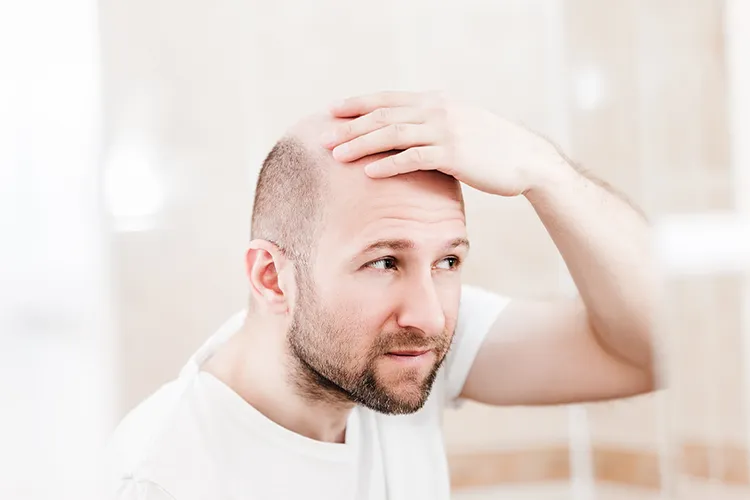
The moment you discover bald patches can be deeply unsettling. And yet, sometimes, something unexpected happens. Despite visible hair loss, many people report feeling hair—such as a pulling, tingling, or the sensation of hair blowing in the wind.
These so-called phantom hairs are more than just imagination. They are a neurological phenomenon that demonstrates how deeply anchored our body image is in our brain. In this article, we’ll be looking into why the phantom sensation of hair can occur, how to come to terms with hair loss, and what can be done to restore what is lost.
Summary
- What are Phantom Sensations?
- Typical Phantom Perceptions After Hair Loss
- Psychological Reactions: When the Mind Won’t Let Go
- Why the Brain Needs Time to Process Hair Loss
- Mental Preparation: How Phantom Feelings Can Even Be Helpful
- Hair Transplantation: Reuniting Perception and Reality
- Conclusion: Phantom Hair – The Depth of Body Memory
- FAQs
What are Phantom Sensations?
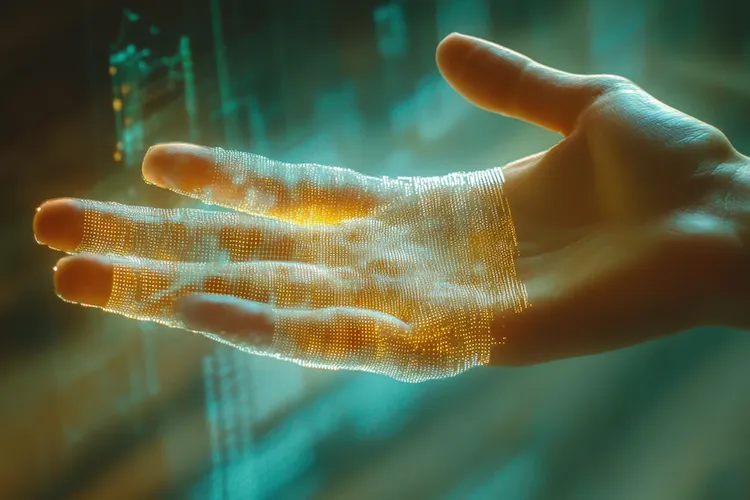
In medicine, phantom sensations are primarily known within a different context, namely phantom pain after amputations. There, too, those affected feel stimuli like pain, cold, and itching in limbs that no longer physically exist. A similar phenomenon occurs with hair loss, albeit in a less dramatic way.
The central nervous system “remembers” the body’s prior status, the stimulation of the hair, the weight, the draft on the hairy scalp. These stored impressions can continue to appear as sensations for weeks or months even after complete hair loss.
Typical Phantom Perceptions After Hair Loss
Many sufferers describe very similar sensations on their now hairless scalp:
- Itching on bald spots
- Tingling as if hair were growing
- Pulling or slight burning at the hairline
- A feeling of draft even though there is no hair left
These signals aren’t imaginary, but the result of maladaptive stimulus processing in the brain. The body needs time to adjust to the new condition, especially if the hair loss was sudden or emotionally stressful.
Psychological Reactions: When the Mind Won’t Let Go
Phantom hair can trigger very different emotions:
- Irritation over the disconnect between perception and reality
- Denial of the reality of hair loss, as the phantom sensations provide false comfort
- Grief with each reminder of hair loss
- Hope that these sensations signal new growth
Especially for people who haven’t yet accepted their hair loss internally, phantom perceptions can become a source of emotional tension. While the body has long since adapted to change, the brain clings to old patterns. This can make acceptance of hair loss all the more difficult.
Why the Brain Needs Time to Process Hair Loss
Our brain stores bodily states as part of an internal self-image – the so-called body schema. When this schema suddenly changes, for example, due to hair loss, shaving, or a bald head, a kind of sensory gap arises. The neural maps for the once hairy scalp are still active, even though the stimulus is missing.
Only gradually does the brain learn to accept this new state. How long this takes varies from individual to individual, though it often several weeks to months.
Mental Preparation: How Phantom Feelings Can Even Be Helpful
As unusual as it may sound, those who experience phantom hair have a very close connection to their body’s sensations, and this can be an advantage. Those who consciously deal with this sensation can use it to prepare for a hair transplant.
The mental image of hair that is still present in the brain can help to stabilise the idea of the desired hair appearance and complement the healing process after the procedure.
In addition, some patients report that the feeling of “phantom hair” subsides after a successful hair transplant, or is replaced by the new hair. The brain receives new stimuli and begins to rewrite the body schema.
Hair Transplantation: Reuniting Perception and Reality

Phantom hairs demonstrate how deeply anchored the previous hair pattern is in the body’s memory. A hair transplant can address this issue by providing the brain with new, realistic stimuli. Modern methods such as FUE (Follicular Unit Extraction) or DHI (Direct Hair Implantation) enable particularly precise and natural results.
Many patients report not only thicker hair after the procedure, but also a feeling of returning to themselves. The new hair replaces the phantom hair – and with it, a familiar self-image returns.
The Effects of a Hair Transplant:
- Naturally growing hair that feels the way it used to
- New sensory stimuli that reshapes the body schema
- More self-confidence in everyday life
In this way, a fleeting phantom feeling becomes a tangible, vision of the self again, one that is lasting and authentic.
Conclusion: Phantom Hair – The Depth of Body Memory
When people feel hair that is long gone, it shows one thing above all – how deeply our body image is tied to our self-image. Phantom hair isn’t a sign of confusion, but rather of the sensitivity of our nervous system. And it’s an indication that the desire for change often goes deeper than the mere need for a full head of hair.
A hair transplant can help to bring this inner image back into line with external reality, resulting in far more than just a new look.
FAQs
How common is the experience of phantom hair after hair loss?
While not everyone who loses hair experiences phantom sensations, it is more common than many realise. People who have undergone sudden or patchy hair loss, such as through alopecia areata or chemotherapy, often report tingling, itching, or the sense of hair movement even weeks after complete hair loss.
Does phantom hair mean that hair is growing back?
No, phantom sensations are not an indicator of regrowth. They are caused by the brain’s memory of sensory input from the lost hair, not by biological hair activity. True regrowth can only be confirmed through visual observation or a trichological examination.
Can stress or anxiety make phantom hair sensations worse?
Yes. Psychological stress can heighten awareness of bodily sensations and make phantom feelings more noticeable. When someone is anxious about hair loss, the brain’s sensory circuits can become more reactive, intensifying the perceived sensations.
Are phantom hair sensations painful or harmful?
Generally, they are not harmful, though they can be uncomfortable or emotionally distressing. The sensations may range from mild tingling to momentary itching, but they typically fade as the brain adjusts to the change in body image.
How can someone reduce the feeling of phantom hair?
Relaxation techniques, mindfulness, and gentle scalp massages can help by providing the brain with new sensory input. Accepting and acknowledging the sensations as normal neurological responses can also reduce emotional distress.
Should I see a doctor about phantom hair sensations?
If the sensations persist, become painful, or are accompanied by skin irritation, it is advisable to consult a dermatologist or neurologist. In most cases, however, reassurance and understanding the cause are sufficient.
How soon after hair loss can someone consider a hair transplant?
This depends on the underlying cause of hair loss. For pattern baldness, a transplant can be considered once the loss has stabilised. In the case of medical conditions such as alopecia areata or after chemotherapy, it’s best to wait until the scalp and immune system have fully recovered.
Will phantom sensations disappear after a hair transplant?
In many cases, yes. As the scalp receives new hair and corresponding nerve signals, the brain’s sensory map updates itself. Over time, the new hair provides real stimuli that replace the phantom ones.
Can people without total hair loss experience phantom hair sensations?
Yes. Even those who shave their heads or lose hair only in small patches may notice the illusion of hair presence, especially if they had dense or textured hair before.
What does phantom hair reveal about human perception?
It highlights how our sense of self is not purely visual but deeply rooted in the brain’s sensory memory. The phenomenon shows that identity and touch are interconnected—our perception of “having hair” persists even when the physical reality has changed.

Dr. Imad Moustafa
Hair transplant specialist