

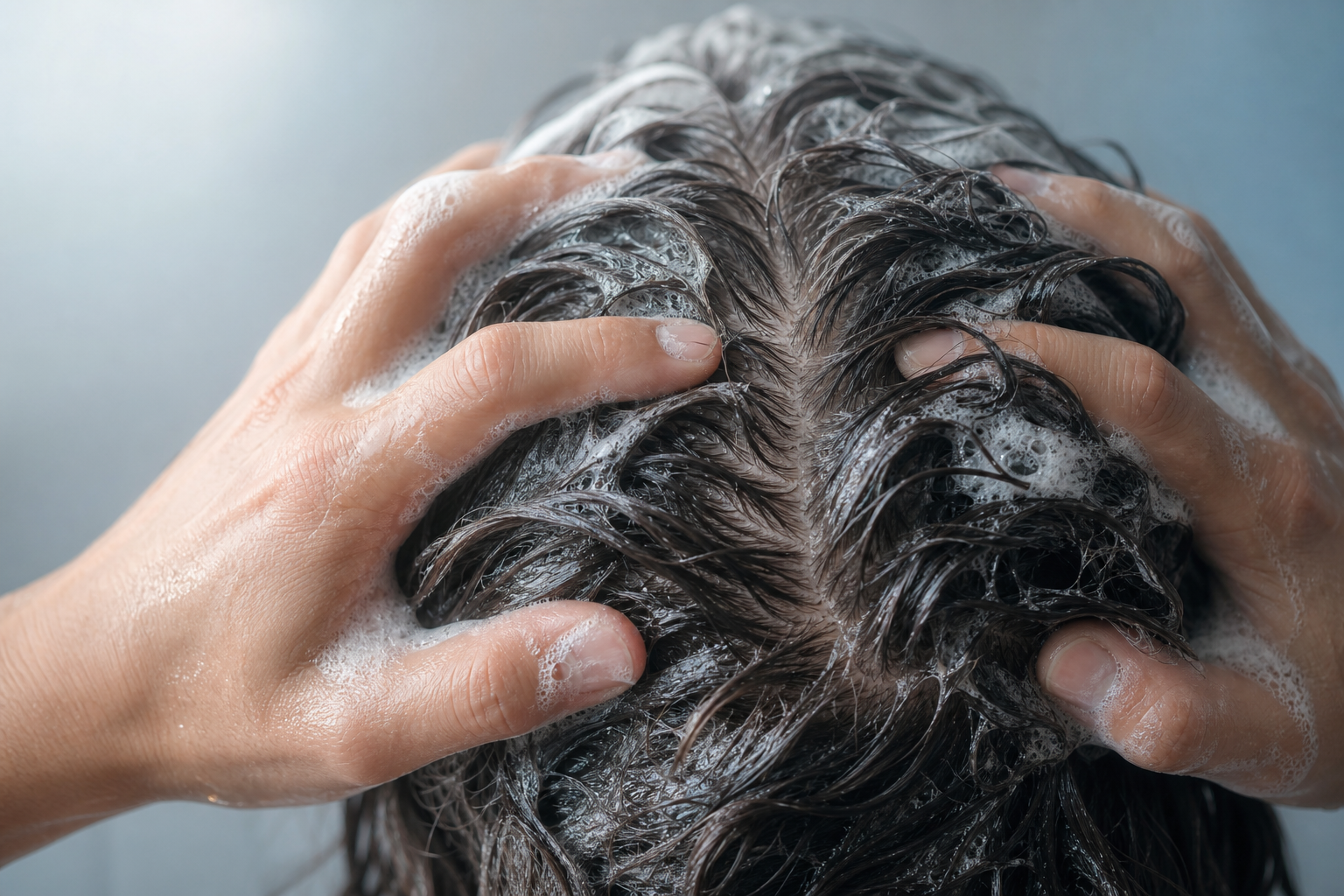
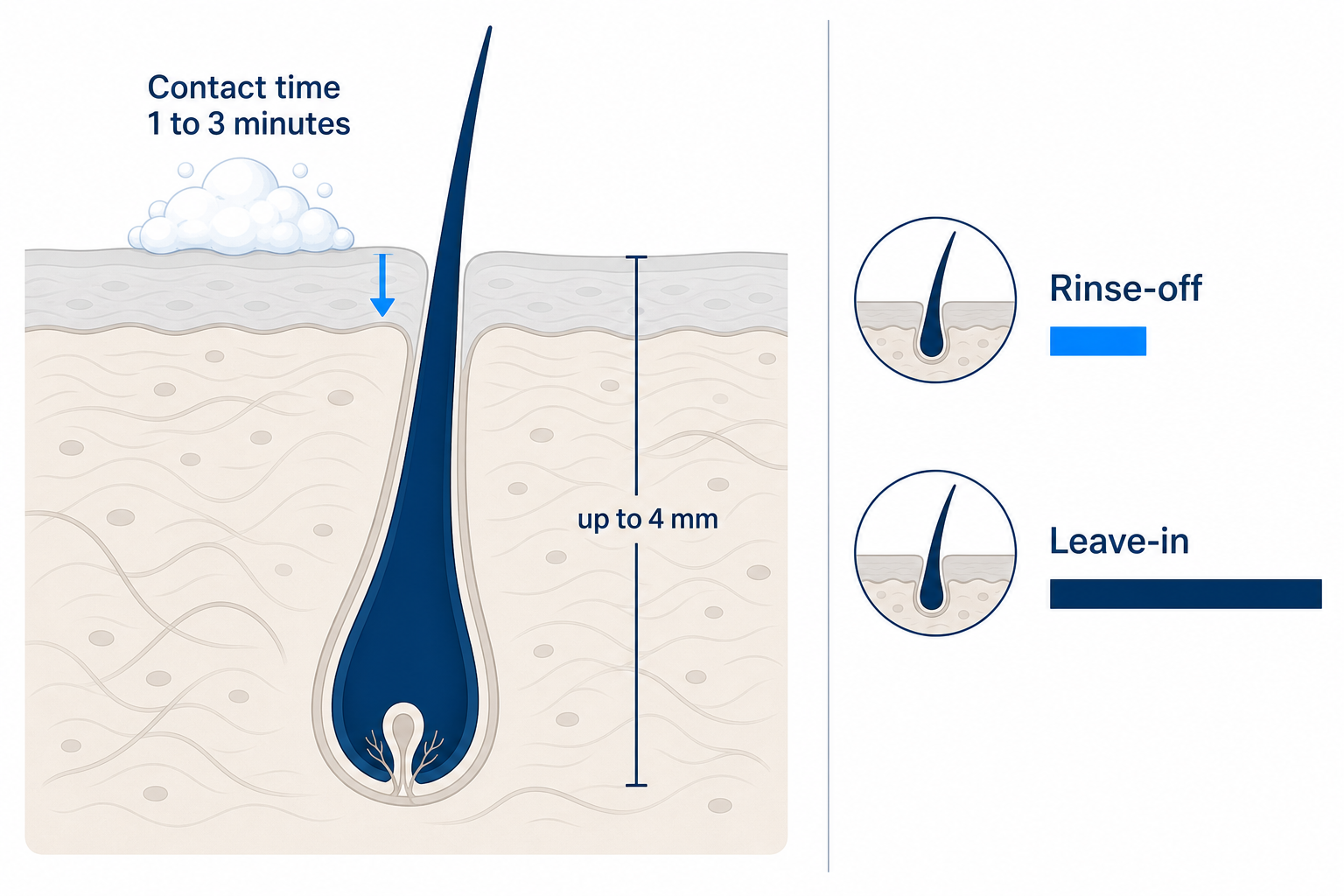
Every other bottle on the shelf promises fuller hair, which is exactly why the uncomfortable answer belongs right up front: a shampoo for hair loss cannot stop hereditary hair loss. It gets rinsed out again after 1 to 3 minutes, and the cause sits at the dermal papilla of the hair follicle, according to the NIH database StatPearls up to about 4 millimeters below the skin surface. What a shampoo can very much do is treat the scalp, and that is worth more than it first sounds.
The key points at a glance
- ✓No shampoo stops androgenetic hair loss: the contact time is too short and the cause sits too deep
- ✓Ketoconazole 2% is the only shampoo ingredient with clinical data on hair density, but in the US it is approved for dandruff, not for hair loss
- ✓Caffeine shampoo is popular, yet the evidence comes almost entirely from hair follicles cultured in the lab
- ✓Against dandruff, itching and seborrheic dermatitis, on the other hand, an active-ingredient shampoo is the proven standard treatment
The table of contents shows what you will find where. After that we go into detail ingredient by ingredient, with an evidence rating, a symptom matrix and a label check for your phone.
Transparency note: Elithair does not sell shampoos and has no financial stake in any of the ingredients discussed here. This assessment is commission-free. As of 2026.
Summary
- Can a shampoo for hair loss stop hair loss?
- What an anti-hair-loss shampoo can actually deliver
- Ingredients compared: the honest evidence rating
- Caffeine shampoo for hair loss: what the studies actually show
- DHT blocker shampoo: can a shampoo block DHT?
- Diffuse, genetic or breakage? The distinction that decides everything
- How to recognize a serious shampoo for hair loss
- Using a shampoo for hair loss correctly: washing frequency, contact time, combinations
- Can a shampoo cause hair loss?
- When the shampoo is not enough: what demonstrably works against hereditary hair loss
- Where to go from here: the next sensible step
- Frequently asked questions about shampoo for hair loss
Can a shampoo for hair loss stop hair loss?
A shampoo for hair loss cannot stop hereditary hair loss: it gets rinsed out after 1 to 3 minutes, while the trigger sits at the dermal papilla of the hair follicle, according to the NIH database StatPearls up to about 4 millimeters below the skin surface.
For an active ingredient to reach that depth, it has to travel through the horny layer or down along the follicular opening. Both require dwell time and concentration. A cleansing product that is lathered up and rinsed off again delivers neither one in a relevant amount.
The real bottleneck is therefore not the active ingredient but the dosage form: rinse-off versus leave-in. A minoxidil solution stays on the scalp for hours and, according to the patient information issued by the Royal Berkshire NHS Foundation Trust (October 2025), is used continuously, usually twice a day. A shampoo disappears down the drain.
That also explains why no shampoo shows up in the treatment recommendations. The European S3 guideline on the treatment of androgenetic alopecia (Kanti et al., JEADV 2018) and MedlinePlus, the patient portal of the US National Library of Medicine, name topical minoxidil and prescription drugs as the options with solid data behind them, not a wash-off product.
There is one exception, and it is the reason for the rest of this article: ingredients that work on the skin surface and at the follicular opening do not need to reach any depth at all. Antifungals against the yeast Malassezia are among them. For those, a shampoo is in fact the right dosage form.
What an anti-hair-loss shampoo can actually deliver
An anti-hair-loss shampoo treats the scalp, not the genetics of the follicle: five effects are realistic, and the best documented one is the treatment of dandruff and seborrheic dermatitis.
1. Scalp environment and barrier. Sebum, sweat, styling residue and dead skin flakes collect at the follicular opening. A shampoo removes them reliably. A calm, intact scalp is the basis for everything else, but it will not bring an already miniaturized follicle back.
2. Treating dandruff and seborrheic dermatitis. This is where the best-documented benefit lies. A pooled global prevalence estimate comes to around 4.4 percent of the population, while older individual figures range between 1 and 10 percent depending on the method used, with a peak between the ages of 30 and 60. Topical antifungals are the first-line treatment when the scalp is involved.
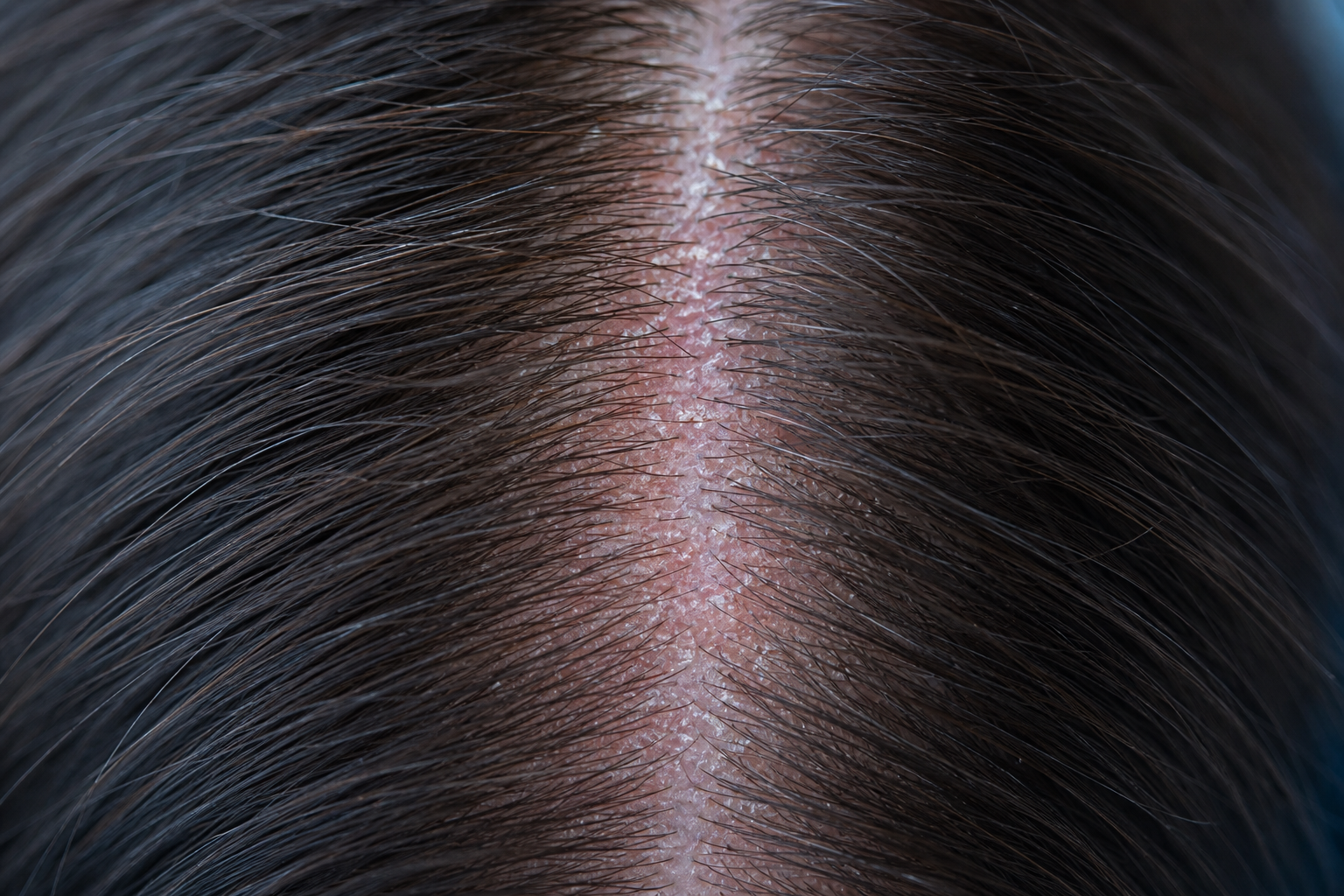
3. Reducing inflammation and itching. Anyone who scratches less does less damage to the hair shaft and the scalp, and perifollicular micro-inflammation is discussed as a contributing factor in thinning. With persistent redness, weeping or pustules, however, the scalp belongs in a doctor’s office: more on that under scalp inflammation and folliculitis.
4. Acting as a carrier. For substances meant to work on the surface, a shampoo is a good vehicle. For anything that has to reach deep into the dermis, it is a poor one. That single distinction explains almost every disappointment with a hair loss shampoo.
5. Reducing hair breakage. Conditioning formulas make the hair shaft smoother and more resilient. If fewer hairs break, you end up with visibly more hair, without a single follicle having been saved. A real effect, but a purely cosmetic one, and advertising likes to sell it as growth.
| What you notice | Likely behind it | What makes sense in a shampoo | Realistic expectation |
|---|---|---|---|
| White flakes, itching, briefly better right after washing | seborrheic dermatitis, Malassezia | an antifungal active ingredient, left on for the full contact time | flaking and itching decrease markedly |
| Scalp feels tight, flakes finely, worse after coloring | dryness, impaired skin barrier | a mild shampoo, lower surfactant load, no active-ingredient regimen | calming over a few weeks, no effect on hair density |
| Greasy roots by the second day, plus flaking | sebum plus Malassezia | washing more often, an antifungal active ingredient | the scalp calms down, hair density stays unchanged |
| Scalp looks unremarkable, but the part is widening or the temples are receding | androgenetic alopecia | this is not something a shampoo can fix | no shampoo halts this progression, see the section on the options that work |
| Hair breaks off, split ends, short broken pieces | hair breakage from heat, chemicals or tension | conditioning care, less heat, gentler handling | the hair looks fuller within weeks, the follicles were never affected |
| Redness, pain, pustules, shiny bald patches | inflammatory or scarring scalp disease | no self-experiments with active-ingredient shampoos | have it evaluated by a dermatologist promptly |
Ingredients compared: the honest evidence rating
Of all the ingredients advertised in a shampoo for hair loss, exactly one has clinical data on hair density: ketoconazole 2%. Several others are well documented against dandruff, and the most popular marketing ingredients have the thinnest data of all.
Two notes on the table. The entry “usually not declared” is not a gap in our research, it is the finding: cosmetics have to list their ingredients, but not the concentrations. And the evidence level rates the quality of the available studies, not our buying advice. That is why the next column shows what the substance is actually approved for.
| Ingredient (INCI) | Typical concentration | What it demonstrably does | Approved or classified for | Works against hereditary hair loss? | Evidence |
|---|---|---|---|---|---|
| Ketoconazole (INCI: Ketoconazole) | 1% or 2% | antifungal against Malassezia, works against flaking and inflammation; data on hair density, hair shaft diameter and anagen ratio | drug for seborrheic dermatitis and tinea versicolor, not for hereditary hair loss | signals from one small long-term study, using it for that purpose is off-label | Well documented for the approved indication |
| Caffeine (INCI: Caffeine) | usually not declared | effect on follicle growth in organ culture (ex vivo) | cosmetic | not documented | Weak |
| Piroctone olamine (INCI: Piroctone Olamine) | usually declared at 0.1 to 1%; no statutory US ceiling (EU cap: 1.0% in rinse-off products) | antifungal against Malassezia, effective against flaking | cosmetic | no | Documented against dandruff |
| Salicylic acid (INCI: Salicylic Acid) | 0,5–3% | keratolytic, loosens layers of flaking and hardened keratin at the follicular opening | cosmetic | no | Documented as a preparatory step |
| Selenium sulfide (INCI: Selenium Sulfide) | 1% over the counter, 0.6% in micronized form | strongly antifungal against dandruff and seborrhea | over-the-counter drug for dandruff and seborrhea | no | Documented against dandruff |
| Aminexil and peptides (Capixyl, Redensyl, Procapil) | usually not declared | manufacturer data, mostly generated with leave-in formulations | cosmetic | not documented in a shampoo | Weak |
| Plant extracts (rosemary, nettle, saw palmetto, pumpkin seed) | usually not declared | conditioning, in part antioxidant; the studies cited involve leave-in oils | cosmetic | not documented | Weak |
| Biotin in shampoo (INCI: Biotin) | usually not declared | conditioning effect on the hair shaft | cosmetic | no | Not documented |
| “DHT blocker” complexes | undefined | umbrella term with no consistent definition and no fixed composition | cosmetic | no | Not documented |
Ketoconazole: best documented, but not approved for hair loss
Ketoconazole (INCI: Ketoconazole) is the only shampoo ingredient with clinical data on hair density in androgenetic alopecia. In 1998, Piérard-Franchimont et al. reported in the journal Dermatology an increase in hair density, hair shaft diameter and anagen ratio in 39 men with hair loss at the vertex who used a 2% ketoconazole shampoo over 21 months, comparable to a 2% minoxidil group.
That study is a signal, not proof: a small sample, a partly uncontrolled design, and no confirmation in a large randomized trial since. Anyone selling it as evidence for a hair growth shampoo is stretching it considerably.
The regulatory picture is unambiguous. In the US, ketoconazole shampoo is sold for dandruff, seborrheic dermatitis of the scalp and tinea versicolor: the 1% strength over the counter, the 2% strength only with a prescription. Hereditary hair loss is not a labeled indication for either one. Using it against hair loss is off-label, an approach that is being studied scientifically and belongs in a doctor’s hands.
In practical terms: 1 gram of shampoo contains 20 milligrams of ketoconazole, which is 2%. The labeled regimen is twice a week over 2 to 4 weeks, then once a week to prevent recurrence. In the US the 2% strength is prescription only, while 1% products are freely available. The details are in our article on how effective ketoconazole is against hair loss.
Piroctone olamine: the current anti-dandruff standard
Piroctone olamine (INCI: Piroctone Olamine) is the anti-dandruff standard wherever zinc pyrithione has disappeared from the shelf, which is the case throughout the EU. In the US it competes with zinc pyrithione, which is still permitted there. The US has no statutory ceiling comparable to the European one, so manufacturers are responsible for the safety of their own formulas; the EU, based on the underlying SCCNFP assessment, allows a maximum of 1.0% in rinse-off products and 0.5% in leave-on products. Shampoos usually declare 0.1 to 1%.
Its effect against Malassezia and flaking is well documented, and there is no data on hair density in androgenetic alopecia. Put honestly, the substance helps your scalp, not your hair growth. For many people buying an anti-hair-loss shampoo, that is nevertheless exactly the effect they were really looking for.
Salicylic acid: loosens flakes, grows no hair
Salicylic acid (INCI: Salicylic Acid) is a keratolytic and is typically used in cosmetics at 0.5 to 3%. It loosens stubborn layers of flaking and hardened keratin at the follicular opening, which is what allows other ingredients to reach the skin in the first place.
It is not a hair growth product, it is a preparatory step. The flip side matters for safety: salicylic acid also increases the absorption of other topicals you apply. So if a dermatologist has prescribed you a solution or a foam, discuss the combination first.
Selenium sulfide: strong against fungus, hard on the hair
Selenium sulfide (INCI: Selenium Sulfide) is strongly antifungal and is approved for dandruff and seborrhea. In the US, the FDA’s over-the-counter monograph covers 1% selenium sulfide, or 0.6% in micronized form, for these indications. It has no effect on hair density in hereditary hair loss.
Two practical downsides are listed on the product labeling: selenium sulfide dries out hair and scalp and can discolor color-treated or bleached hair. How to cushion that without giving up the treatment is covered further down in the application section.
Aminexil and peptides: tested as a leave-in, sold as a shampoo
Aminexil and peptide complexes such as Capixyl, Redensyl or Procapil are manufacturer developments. The available studies are small, largely industry-affiliated and, this is the decisive point, mostly carried out with leave-in formulations: with tinctures, serums or ampoules that stay on the scalp.
An ingredient that was studied in a tincture is not automatically effective in a shampoo that gets rinsed out. So if you want to check an advertising claim, look for the dosage form in the study reference. If it says lotion or serum, it says very little about the shampoo in your hand.
Plant extracts and biotin in shampoo
Rosemary oil, nettle, saw palmetto, pumpkin seed and biotin are the classics among plant-based additives. The most frequently cited work is by Panahi et al. (2015), which compared rosemary oil with minoxidil 2%. It is methodologically limited, and it studied an oil that stayed on the scalp, not a shampoo.
Biotin applied from the outside cannot supply the hair shaft with nutrients, because the visible part of the hair consists of dead keratin. Biotin works, if at all, systemically and only in a documented deficiency. In a shampoo it is a conditioning ingredient, not a growth factor.
Zinc pyrithione: still permitted in the US, banned in the EU
Zinc pyrithione (INCI: Zinc Pyrithione) was the anti-dandruff classic for decades, and in the US it is still permitted: the FDA’s over-the-counter monograph (21 CFR 358.710) allows pyrithione zinc at 0.3 to 2 percent when it is formulated to be applied and then washed off. Europe went the other way. Under Regulation (EU) 2021/1902 the substance was classified as toxic for reproduction (CMR category 1B), and cosmetics containing zinc pyrithione had to be withdrawn from the EU market by March 1, 2022, which is why European manufacturers reformulated to piroctone olamine and climbazole. If you compare products across markets, that difference explains why the ingredient list on a European bottle reads differently from an American one.
So what is the best shampoo for hair loss?
The best shampoo for hair loss is the one whose active ingredient fits your scalp problem, not the most expensive one and not the one with the biggest promise. For dandruff and seborrheic dermatitis, antifungal ingredients are the first choice; for an irritated, dry scalp, a mild shampoo with a low surfactant load.
You will deliberately not find a product ranking here. As a clinic we do not rate retail brands, and standing in front of the shelf, the ingredient list tells you more than any best-of list anyway. How to check a label in one minute is explained further down.
Caffeine shampoo for hair loss: what the studies actually show
Caffeine shampoo is among the best-selling products marketed against hair loss, yet the evidence comes almost entirely from hair follicles cultured in the lab. There is no randomized human trial with hair density as an endpoint for caffeine shampoo.
The most frequently cited work comes from Fischer et al. (International Journal of Dermatology, 2007): 14 follicle biopsies from the vertex region of men with androgenetic alopecia were kept in organ culture for 120 to 192 hours. Testosterone suppressed growth, and caffeine at concentrations of 0.001 and 0.005% counteracted that suppression.
A follow-up study by the same group (British Journal of Dermatology, 2014) described effects on hair shaft elongation in male and female follicles, again ex vivo. One of the mechanisms discussed is inhibition of 5-alpha reductase. That is a plausible mechanism, but not proof of efficacy in humans.
The difference that matters: in the culture dish the substance sits on the follicle continuously, while washing your hair takes minutes. Ex vivo is not in vivo, and that leap is regularly skipped over in product communication.
An honest verdict: as a mild everyday shampoo, caffeine is unproblematic, and if it makes scalp care easier for you, there is nothing against it. As a treatment for hereditary hair loss it is not documented. Anyone who waits six months on it loses six months. We have collected user reports on one well-known caffeine product in our article on Plantur 21 .
DHT blocker shampoo: can a shampoo block DHT?
A DHT blocker shampoo has virtually no effect on DHT levels inside the hair follicle. Dihydrotestosterone is produced directly in the tissue, by an enzyme that a rinsed-off cleansing product does not inhibit to any relevant degree.
The cascade in four steps: testosterone reaches the scalp via the bloodstream. There, the enzyme 5-alpha reductase (types I and II) converts it into dihydrotestosterone. DHT binds to the androgen receptor of the dermal papilla. With every cycle, the follicle then produces a thinner, shorter hair, until only vellus fuzz is left.
What is marketed on bottles as a DHT blocker is usually saw palmetto (Serenoa serrulata), pumpkin seed oil, green tea extract, caffeine or biotin. For saw palmetto there are small oral and topical leave-in studies with methodological weaknesses; for the rinsed-off shampoo form there is no solid data. On top of that, “DHT blocker” is not a defined technical term but a marketing label with no fixed composition.
To date, the only demonstrable way to lower DHT is systemically. Finasteride and dutasteride are prescription drugs in the US; according to MedlinePlus, visible results often take 6 to 12 months, and the side effect profile includes erectile dysfunction and depressed mood, among others. How they work is explained in our article on DHT blockers.
Diffuse, genetic or breakage? The distinction that decides everything
Whether a shampoo for hair loss can achieve anything at all depends on the type of hair loss you have. Three patterns have to be told apart: even thinning across the whole head, a receding hairline with a thinning crown, and broken hairs without a root.
Diffuse thinning points to a cause inside the body, such as iron deficiency, the thyroid, an infection, a medication or significant weight loss. The pattern with receding temples and a thinning crown points to the androgenetic form. Broken hairs are not hair loss at all, they are a care and styling issue. For the overview, see our article on the causes of hair loss.
In practice, several patterns often occur at the same time. That is exactly why self-diagnosis via a search engine is unreliable, and exactly why it pays to look at the end of the hair before you buy the next product.
| Feature | Hair breakage (a care and styling issue) | True hair loss (follicle) |
|---|---|---|
| End of the hair | snapped off, no bulb visible | a small whitish keratin bulb, the root |
| Length in the drain | short pieces of varying length | mostly the full length of the hair |
| Where you notice it | ends, mid-lengths, the roots around a ponytail | the part, the temples or the whole head |
| How it feels | straw-like, split ends, short hairs sticking up | the scalp shows through, the ponytail gets thinner |
| What helps | less heat, gentler styling, conditioning care | identify the cause, then an effective treatment |
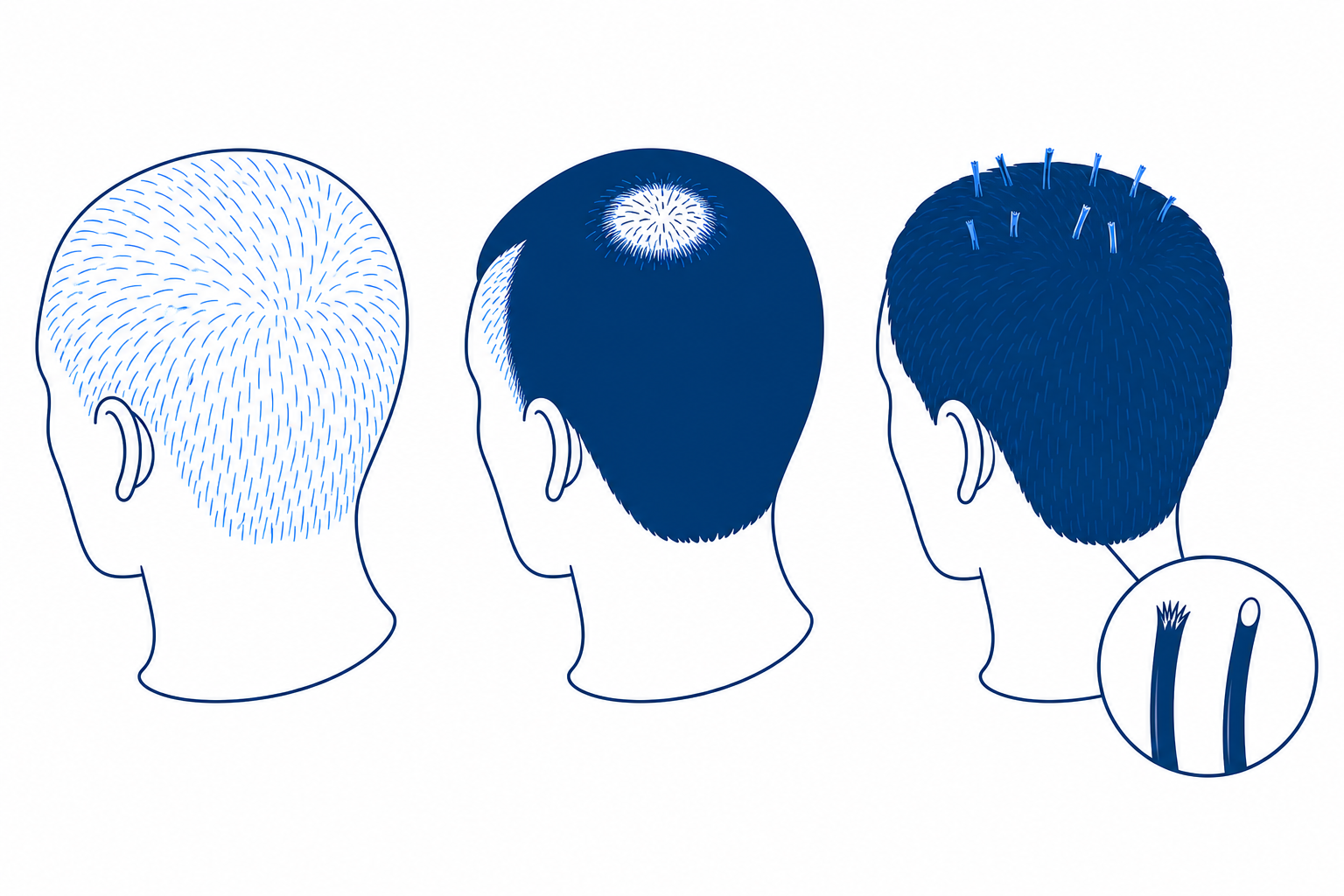
The pull test that dermatologists use is a useful addition: take a strand of about 40 to 60 hairs close to the scalp and pull slowly and evenly all the way to the tip, at several spots on the head and not right after washing your hair.
How to score it, though, is inconsistent. Classically, a result of more than 10% of hairs pulled out, roughly 6 out of 40 to 60, counted as abnormal. McDonald et al., by contrast, found in 2017 in the Journal of the American Academy of Dermatology that in healthy volunteers a normal pull test yields no more than 2 hairs. That makes the test a rough guide at best, and it does not replace a medical examination.
What we see in consultations
A large share of the people who write to us have already worked their way through several shampoos before their first professional assessment, without anyone ever pinning down which pattern they actually have. That costs months, and the hair loss keeps progressing in the meantime. The other order makes far more sense: first establish what you are dealing with, then decide whether any product can contribute anything at all, and which one.
Shampoo for hair loss in women: usually the diffuse pattern
In women, hair loss shows up diffusely more often than in men, and behind a diffuse pattern there is usually a cause inside the body that no shampoo can reach: iron deficiency, the thyroid, the period after giving birth, menopause or a very strict diet.
The hereditary form exists in women too. According to MedlinePlus, up to 70% of men and 40% of women are affected over the course of their lives, in women typically as a widening of the center part according to the Ludwig classification rather than as a receding hairline. A shampoo changes nothing about the pattern itself. More on this in our article on hair loss in women.
Realistically, a shampoo does three things for women: scalp care, treatment of flaking and itching, and less hair breakage from coloring, heat, extensions and tightly bound ponytails. With traction alopecia caused by constant pulling, the hairstyle is the treatment, not the shampoo.
Pregnancy and breastfeeding: be cautious with medicated shampoos, and talk to your doctor or pharmacist before using one. The heavy hair loss after giving birth, known as postpartum effluvium, is usually self-limiting and normally settles within 6 to 12 months.
If the part is getting wider or the thinning continues over months, blood work should come before the next product purchase. What matters most are ferritin, thyroid values and vitamin D. For ferritin, various target values between 30 and 70 ng/mL are cited; there is no consistently agreed threshold for hair loss, and iron should never be taken without a medical diagnosis because of the risk of overload. We have separate articles on the two most common triggers: iron deficiency and hair loss as well as hair loss caused by the thyroid.
Shampoo for hair loss in men: usually the genetic pattern
In the vast majority of men it is the genetic pattern, which is precisely the form a shampoo can do nothing about. A population-based study of 1,005 men found a prevalence of around 58% between the ages of 30 and 50, with a marked increase at older ages. Figures like these vary considerably depending on the study population, but the direction is unambiguous.
The sensible role of a shampoo is therefore that of a companion, not a treatment: keeping the scalp free of flaking, itching and inflammation so that an effective therapy can work on calm skin. That is not glamorous, but it is the honest contribution a wash-off product can make.
How to recognize a serious shampoo for hair loss
A serious shampoo for hair loss names its active ingredient and concentration, promises effects on the scalp rather than hair growth, and does not advertise with before-and-after photos.
The legal framework explains why labels sound the way they do. In the US, a shampoo is normally a cosmetic and not a drug under the Federal Food, Drug, and Cosmetic Act, which defines cosmetics as articles applied to the body for cleansing or beautifying. The moment a product claims to treat a condition, it counts as a drug. Since 2022, the Modernization of Cosmetics Regulation Act (MoCRA) has additionally tightened safety, registration and reporting requirements for cosmetics manufacturers.
On top of that, the Federal Trade Commission acts against misleading advertising under Section 5 of the FTC Act, which declares deceptive acts or practices in commerce unlawful: claims have to be truthful, supported by verifiable evidence and must not mislead. That is why bottles almost never say “stops hair loss” but rather “for thicker, fuller-looking hair” or “helps reduce breakage.” Once you have understood that, you read every label differently.
“Clinically tested,” by the way, only means that testing happened. It says nothing about how many people took part, for how long, against what it was compared and what came out in the end. If those four details are missing, the phrase is decoration.
| Good sign | Warning sign |
|---|---|
| active ingredient with a percentage, for example “ketoconazole 2%” | the active ingredient appears only in the product name, not in the ingredient list |
| the INCI name high up in the ingredient list: Ketoconazole, Piroctone Olamine, Selenium Sulfide, Salicylic Acid | the advertised substance sits at the very end of the INCI list |
| contact time and frequency of use are stated | “simply use like a regular shampoo” |
| promises effects on the scalp: flaking, itching, care | promises to stop hair loss or to wake up dormant hair roots |
| a study reference with sample size, duration and comparison group | “clinically tested” with nothing else attached |
| a realistic time frame in months | “visible in 14 days,” before-and-after photos, self-awarded seals |
| mild surfactants as the base: Coco Glucoside, Sodium Cocoyl Isethionate, Disodium Cocoamphodiacetate, Sodium Cocoyl Glutamate | on an irritated scalp: Sodium Lauryl Sulfate or Sodium Laureth Sulfate as the first ingredient after Aqua |
What does “mild shampoo” actually mean? The surfactants on the label
You do not recognize a mild shampoo by the marketing word “gentle” but by the surfactant that does the cleansing. Surfactants appear in the INCI list right after Aqua, because the list is sorted by descending amount. Anyone who looks there knows in ten seconds how aggressively a product cleanses.
The classic sulfates count as strong cleansers: Sodium Lauryl Sulfate and Sodium Laureth Sulfate. They foam heavily and can further dry out a skin barrier that is already irritated. Sugar-based and amino-acid-based surfactants, on the other hand, count as mild, such as Coco Glucoside, Sodium Cocoyl Isethionate, Disodium Cocoamphodiacetate, Sodium Cocoyl Glutamate or Cocamidopropyl Betaine.
One important point of context: sulfates do not cause hair loss, they are a question of comfort on a sensitive or flaking scalp. And you do not swap an active-ingredient shampoo containing ketoconazole or selenium sulfide for a mild product, you use the mild one between the active-ingredient days.
Over the counter or prescription: where the difference really lies
The difference is not a question of price but of regulatory status. On the drugstore and supermarket shelf you will mostly find cosmetics, plus over-the-counter drugs that follow an FDA monograph, such as anti-dandruff shampoos with an approved active ingredient. Behind the pharmacy counter you will also find prescription products: with a declared active ingredient, a defined concentration, a package insert and an approved indication.
Ketoconazole is the textbook example: the 1% strength is available over the counter and, unlike in most of Europe, is not restricted to pharmacies, while the 2% strength requires a prescription. Conversely, an expensive cosmetic shampoo bought at a pharmacy is still a cosmetic. The rule of thumb is therefore: what counts is the status on the package, not the point of sale and not the price.
Using a shampoo for hair loss correctly: washing frequency, contact time, combinations
Active-ingredient shampoos need contact time: the labeling for ketoconazole and selenium sulfide shampoos specifies 3 to 5 minutes and, in the acute phase, two applications per week. Lathering briefly and rinsing straight away renders even the best-documented ingredient useless.
How often you wash depends on your scalp, not on the amount of hair in the drain. With a greasy, flaking scalp, washing more often is actually part of the treatment, because it reduces the sebum that Malassezia feeds on. So what matters is not how often you wash, but what you wash with and how long it stays on.
| Time frame | What realistically happens | How you measure it |
|---|---|---|
| Week 1–2 | With an antifungal active ingredient, itching and flaking usually decrease. The labeling for ketoconazole shampoo puts the treatment phase at twice a week over 2 to 4 weeks. | itching, visible flakes on dark clothing |
| Week 3–4 | The scalp calms down, redness decreases. After that comes maintenance, usually once a week or every two weeks. | a photo of your part in the same light, at the same distance, with the same hairstyle |
| Month 2–3 | If heat and tension have been reduced, hair breakage decreases. Hair density does not change in this period. | fewer short broken pieces in the sink |
| Month 3–6 | An effect on hair density is possible at the earliest now, and only with an effective treatment. For topical minoxidil, the NHS patient information cites 3 to 6 months until a visible effect. | comparing the photos of your part across the months |
| From month 6 | If the thinning continues despite a calm, healthy scalp, the cause is not in the scalp. | a medical workup instead of the next product switch |
If the active-ingredient shampoo dries you out, which is the most common reason people give up on ketoconazole and selenium sulfide: put the active-ingredient shampoo on the scalp only, and use conditioner or a mask exclusively on lengths and ends, never at the roots. Use a mild shampoo between applications.
Baby shampoo is mild, but it is not a remedy for hair loss. Mild surfactants protect the skin barrier and cause less irritation. On a follicle that is shrinking under the influence of DHT, they change nothing. Mild means gentle, not effective.
Solid shampoo bars make ecological sense and come with two practical catches when hair loss is the issue. Classic soap-based bars sit at a pH of around 9 to 10, while the scalp’s acid mantle is at pH 4.5 to 5.5; in hard water, soap residue can form and roughen the cuticle. Modern syndet bars with an adjusted pH largely avoid this.
The second catch is mechanical: rubbing the bar across the scalp under pressure puts unnecessary strain on hair and skin and can encourage breakage. Better to work up a lather in your hands and spread the foam.
Combining with topical minoxidil: wash first, let the scalp dry completely, then apply. The NHS patient information explicitly advises against putting minoxidil on wet skin. So not at the same time and not straight out of the shower.
Combining with prescription products: if a dermatologist has given you a solution or a foam, discuss any addition or switch beforehand. Salicylic acid increases the absorption of other topicals, and prescribed products come with their own application schedules that you should not overlay or discontinue on your own.
Silicones and sulfates are the perennial forum topic. Silicones coat the hair shaft, make the hair look fuller and do not cause hair loss. Sulfates (INCI Sodium Laureth Sulfate and Sodium Lauryl Sulfate) cleanse vigorously and can further dry out an irritated barrier. That is a reason for itching, not a reason for losing follicles. How a hair is formed and shed in the first place is shown by the hair cycle.
Can a shampoo cause hair loss?
A normal shampoo does not cause hair loss. What it can trigger is a contact allergy or scalp irritation, and that can contribute to hair loss indirectly, through inflammation and scratching.
The usual culprits are preservatives such as methylisothiazolinone, fragrances, hair dyes and bleaching agents, plus very harsh surfactants on an already damaged barrier. Typical signs are redness, burning, weeping and flaking that disappear again after a product switch.
Does washing your hair every day cause hair loss?
No, washing your hair daily does not cause hair loss. According to the American Academy of Dermatology, shedding 50 to 100 hairs a day is normal. Those hairs were already in the resting phase; washing merely releases them from the head, it does not push any hair into shedding early.
The error is one of perception. If you only wash every three days, you see three days’ worth all at once in the drain and mistake it for a sudden worsening. Washing less often just lets the telogen hairs pile up, it does not prevent them.
With a greasy, flaking scalp there is even more to be said for frequent washing: it reduces the sebum that Malassezia feeds on and is therefore part of treating dandruff. What matters then is a mild base product on the days between the active-ingredient applications.
These signs belong at the doctor’s office, not in the drugstore aisle
- •persistent pain or burning of the scalp
- •pustules or weeping areas
- •shiny, bald patches with no visible follicular openings, a sign of scarring alopecia
- •sudden, circular hair loss
- •hair loss in children
With findings like these, time decides the outcome. Switching products is not enough here; the scalp needs a dermatological examination.
When the shampoo is not enough: what demonstrably works against hereditary hair loss
For androgenetic hair loss, topical minoxidil and physician-prescribed drugs have the most solid data in the US. Both stay on the scalp or work systemically, and neither of them is a product that gets rinsed out.
Topical minoxidil is available over the counter in 2% and 5% formulations. According to the NHS patient information, an effect becomes apparent after about 3 to 6 months, and the application has to be continued permanently, otherwise the effect recedes. Benefits, limits and side effects are covered in our article on minoxidil for hair loss.
Prescription 5-alpha reductase inhibitors belong in a doctor’s hands, including a proper conversation about the side effect profile. According to MedlinePlus, visible results are often only to be expected after 6 to 12 months. What lies behind them is explained in our article on DHT blockers.
Before any of that, though, comes step zero: establishing the cause. With diffuse thinning it is worth looking at ferritin, thyroid values and vitamin D before buying any product at all. Which values make sense to measure is covered in our article on the blood test for hair loss.
Where to go from here: the next sensible step
When it comes to shampoo for hair loss, the next sensible step is not another bottle but a classification: which pattern do you have, diffuse thinning, the genetic pattern or hair breakage? That question decides whether a product can contribute anything at all. Two routes lead there.
If an internal cause is suspected, meaning with diffuse thinning, the route runs through your primary care physician or a dermatologist: blood values such as ferritin, TSH and vitamin D can only be clarified there, and with pain, pustules or bald patches a dermatological examination is a given anyway.
And to be transparent about our own role: we are a hair clinic, but we do not sell shampoos. What we do offer is a free hair analysis, meaning a visual assessment of your pattern based on your photos, open-ended and with no obligation to book a treatment afterwards. It does not replace a medical blood test, and with a diffuse effluvium a hair transplant is explicitly not the topic.
Frequently asked questions about shampoo for hair loss
How long does a shampoo for hair loss have to stay on?
The labeling for ketoconazole and selenium sulfide shampoos specifies 3 to 5 minutes of contact time before rinsing, twice a week in the acute phase. Lathering briefly and rinsing straight away renders even the best-documented ingredient useless. A short timer on your phone helps more than any additional product.
Do I have to use an active-ingredient shampoo permanently?
With chronic seborrhea, as a rule yes. After the treatment phase of 2 to 4 weeks comes maintenance with one application per week or every two weeks, otherwise flaking and itching come back. The active ingredient treats the condition, it does not remove the predisposition behind it.
Why does my active-ingredient shampoo smell so medicinal?
The characteristic smell comes from the antifungal ingredients themselves, and it is particularly noticeable with selenium sulfide. It is not a quality defect, and you can soften it by using a mild shampoo on the days in between and applying conditioner only to lengths and ends.
Does baby shampoo help with hair loss?
No. Baby shampoo is mild and barely irritates the scalp, which is pleasant on irritated skin. On a follicle that is shrinking under the influence of DHT, it changes nothing. Mild means gentle, not effective.
Are solid shampoo bars suitable for hair loss?
They are possible, with two caveats. Classic soap-based bars sit at a pH of around 9 to 10, while the scalp’s acid mantle is at pH 4.5 to 5.5, and in hard water soap residue can be left behind. Do not rub the bar across your scalp under pressure; lather it up in your hands instead.
Can I use anti-hair-loss shampoo during pregnancy?
Be cautious with medicated active-ingredient shampoos during pregnancy and breastfeeding, and discuss their use with your doctor or pharmacist. The heavy hair loss after giving birth is usually self-limiting and normally settles within 6 to 12 months.
Which shampoo should you use after a hair transplant?
In the first few weeks what counts is wound healing, not the active ingredient. Use a mild, fragrance-free product exactly as instructed by the clinic. Active-ingredient shampoos do not belong on the scalp during this phase and should be reintroduced only after checking with the clinic.
Scientific sources
- Piérard-Franchimont C et al.: Ketoconazole shampoo, effect of long-term use in androgenic alopecia. Dermatology (1998). PubMed
- Fischer TW et al.: Effect of caffeine and testosterone on the proliferation of human hair follicles in vitro. Int J Dermatol (2007). PubMed
- Kanti V, Messenger A, Blume-Peytavi U et al.: Evidence-based (S3) guideline for the treatment of androgenetic alopecia in women and in men. J Eur Acad Dermatol Venereol (2018). Wiley Online Library
- McDonald KA et al.: Hair pull test, evidence-based update and revision of guidelines. J Am Acad Dermatol (2017). JAAD
- Anatomy, Hair Follicle (follicle depth and dermal papilla). StatPearls, NCBI Bookshelf, NIH. NCBI Bookshelf
- MedlinePlus (NIH, National Library of Medicine): Ketoconazole Topical, use and application schedule. medlineplus.gov
- MedlinePlus (NIH, National Library of Medicine): Hair Loss (Alopecia). medlineplus.gov
- MedlinePlus (NIH): Ketoconazole shampoo, labeled indication and application. medlineplus.gov
- 21 CFR 358.710, FDA over-the-counter monograph (pyrithione zinc 0.3 to 2 percent in rinse-off products). law.cornell.edu
- FTC Act Section 5, 15 U.S.C. § 45 (prohibition of deceptive acts and practices in advertising). law.cornell.edu
- American Academy of Dermatology: Do you have hair loss or hair shedding? (50 to 100 hairs per day). aad.org
This article is for information and does not replace a medical diagnosis or treatment. Active-ingredient shampoos are drugs or cosmetics with their own instructions for use; with persistent hair loss, an inflamed scalp, during pregnancy and breastfeeding and in children, please speak to your physician or pharmacist.
Related topics from our hair loss cluster: ketoconazole for hair loss, minoxidil for hair loss, DHT blockers as well as the overview of the causes of hair loss. After a procedure, it is worth reading our post on which shampoo to use after a hair transplant.
Dr. Imad Moustafa
Hair transplant specialist