

The scalp burns, tingles or feels numb, and yet the mirror shows nothing at all. Sensations like these fall into two large groups of causes: visible findings in the skin, and signals that arise at the nerve or get amplified in pain processing. Something dangerous is rarely behind them, but they are not automatically harmless either. Just how common the problem is was shown by a study from Askin and colleagues (Skin Appendage Disorders 2021): Of 249 patients with hair disorders, 89, or 35.7 percent, reported trichodynia, meaning pain or burning of the scalp. This article sorts out each sensation individually and explains when watching and waiting is reasonable and when it is not.
Key points at a glance
- ✓Burning, tingling, tightness and numbness are sensations, not diagnoses: they arise in the skin, at the nerve or in central pain processing
- ✓An unremarkable scalp is no proof that the cause is psychological, because several skin conditions burn before anything becomes visible
- ✓Sudden neurological deficits with paralysis, speech or vision problems are an emergency: call 911. Blisters, fever or a new temple headache from around age 50 need immediate medical assessment
- ✓Stress demonstrably amplifies perception, but it only works as an explanation once skin and nerve causes have been checked
The table of contents shows what you will find where. After that, the article goes through symptom by symptom, from burning and tingling to the feeling of tightness and the numb scalp.
Summary
- Scalp and nervous system: why the skin on the head is so sensitive
- Scalp burning: telling skin, nerve and psychological causes apart
- Sensitive scalp and nerves: why combing or a hat hurt
- Tightness on the scalp: causes in the galea, dryness and the ponytail
- Tension and the scalp: do the complaints come from the neck and jaw?
- Tingling on the scalp: harmless or a warning sign?
- Numb scalp: causes and when it becomes urgent
- Distinguishing scalp inflammation: when the cause is in the skin after all
- Stress, the nervous system and the scalp: what is documented and what is not
- Scalp complaints and hair loss: what belongs together and what does not
- A special case: numb scalp after a hair transplant
- When to see a doctor about scalp complaints
- Calming the scalp: what you can do yourself and what to leave alone
- Conclusion: classify the sensation, check the pattern, know the warning signs
- Frequently asked questions about the scalp and the nervous system
- Sources
Scalp and nervous system: why the skin on the head is so sensitive
The scalp and the nervous system are directly connected: the skin over the skull is richly supplied with sensory nerve fibers, and the sensory branches of the trigeminal nerve and the occipital nerves carry their signals into the central nervous system, where pain, emotion and autonomic responses are processed. How strongly a stimulus on the scalp is experienced differs from person to person; a reliable comparison with other regions of the body is not available.
The scalp contains mechanoreceptors for pressure and touch, free nerve endings and nociceptors that report pain and temperature stimuli. They transmit along afferent pathways, and even light stimuli such as a comb or a hair tie produce a clear signal.
Which nerve is responsible for which area is summarized in the review by Kemp, Tubbs and Cohen-Gadol (Surgical Neurology International 2011): the forehead and front of the crown are supplied by the supraorbital nerve and the supratrochlear nerve as branches of the first trigeminal division, the temple and ear region by the zygomaticotemporal nerve and the auriculotemporal nerve from the second and third divisions, and the back of the head by the greater and lesser occipital nerves from the second cervical segment.
In practice this means: where the complaint sits is the first diagnostic clue. Complaints at the back of the head that radiate toward the crown follow a different nerve territory than burning at the temple. Because the cervical segment C2 overlaps with neighboring segments and with trigeminal territories, however, neck and occipital complaints often cannot be separated sharply.
This sensitivity serves a purpose. The scalp covers the skull and reports mechanical and thermal stimuli early. The trade-off is that it also responds more sharply to traction, tension and inflammation than other areas of skin.
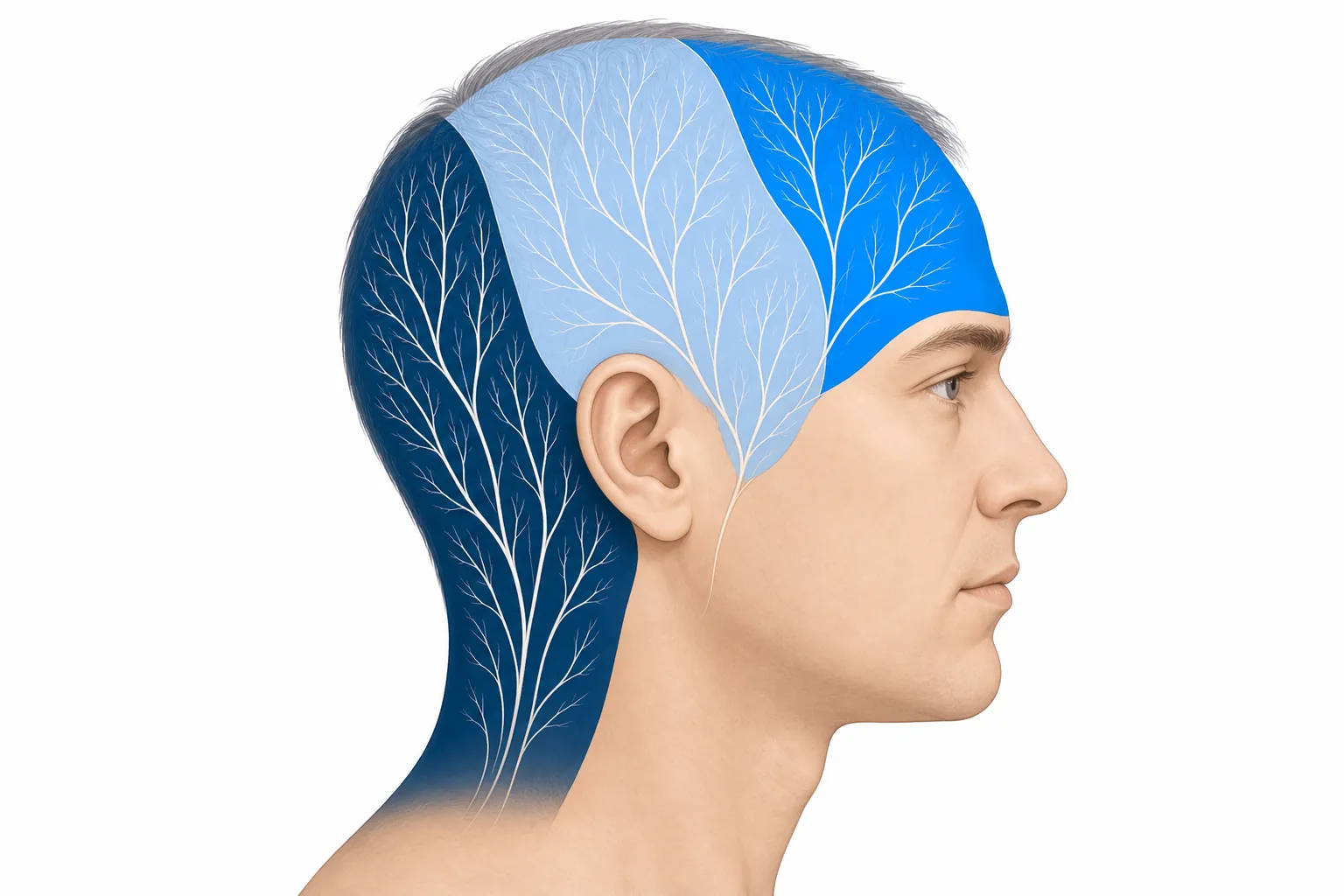
The color zones in the graphic
- Forehead and front temple: supraorbital nerve and supratrochlear nerve, first trigeminal division
- Lateral temple and ear region: zygomaticotemporal nerve and auriculotemporal nerve, second and third trigeminal divisions
- Back of the head and neck: greater and lesser occipital nerves from the second cervical segment
Scalp burning: telling skin, nerve and psychological causes apart
If the scalp burns, three levels come into question as a cause: the skin itself, the nerves supplying it, and pain processing, which is shaped in part by strain. Burning without a visible finding is called trichodynia or scalp dysesthesia in dermatology, and that is the description of a symptom, not a psychiatric diagnosis. In the study by Askin and colleagues (2021), 35.7 percent of 249 patients with hair disorders had such complaints, most often with scarring alopecia.
The most important point first: an unremarkable, non-reddened scalp does not rule out a cause in the skin. For scarring alopecias such as lichen planopilaris, DermNet lists burning, pain and itching as typical symptoms. In a study on itching in lichen planopilaris and frontal fibrosing alopecia, 73.8 percent of those affected reported itching, accompanied by tingling in 19.7 percent and burning in 14.8 percent.
A developing contact sensitization, an early folliculitis or a skin barrier damaged by surfactants can also burn before anything is visible. The window between the first symptom and a visible finding can be weeks.
The conclusion “nothing is visible, so it must be psychological” is therefore backwards. What is correct is that strain can change pain processing and markedly amplify an existing abnormal sensation. That is not the same as imagined, and it does not replace an examination of the skin.
What you can do yourself before the appointment: describe the sensation precisely. Location, time course, pattern and accompanying signs lead to the right specialty faster than the question of whether it is “physical or psychological.”
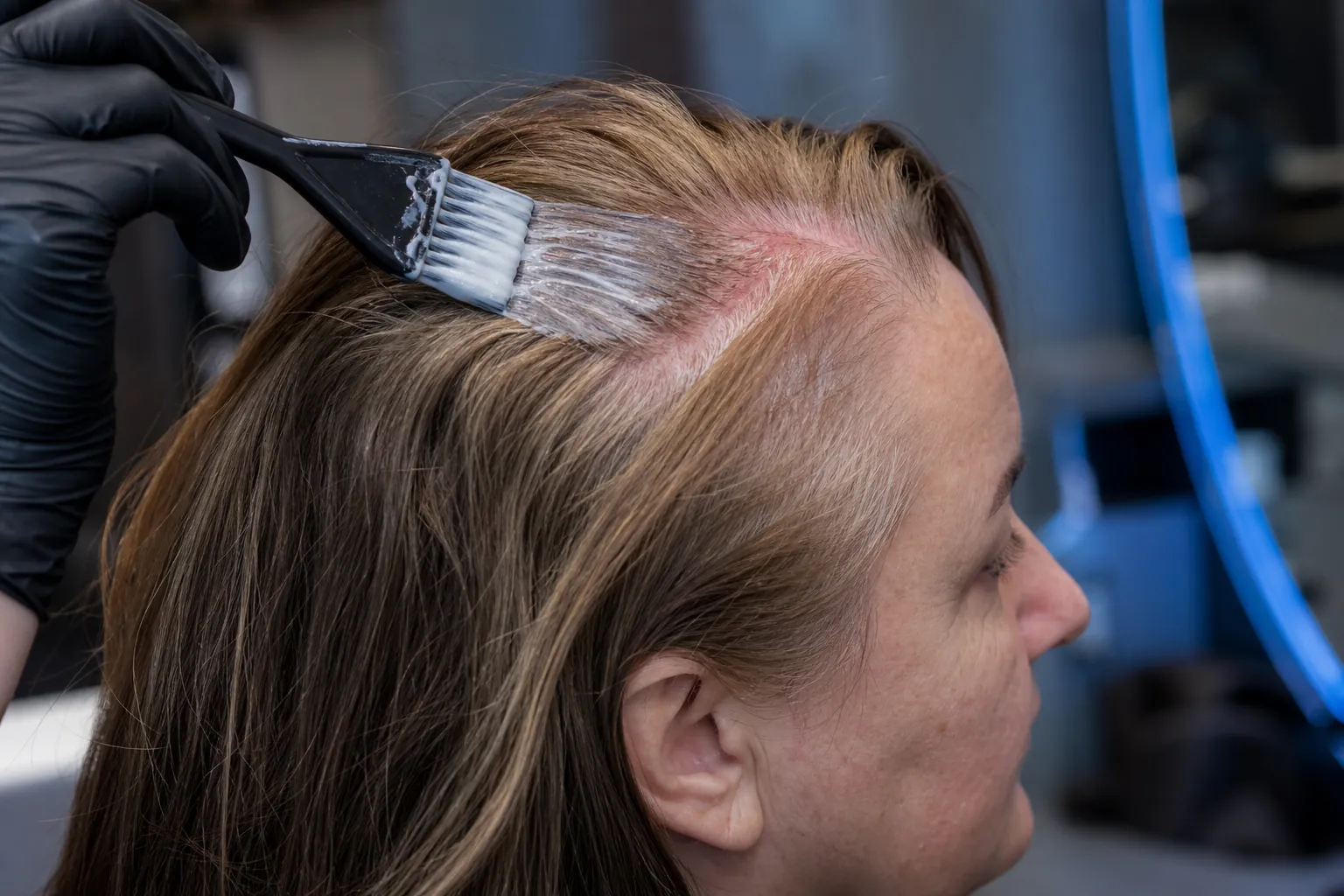
Scalp burning after coloring or bleaching: irritation or allergy?
If the scalp burns after coloring or bleaching, two mechanisms come into question, and they differ above all in their time course. Chemical irritation sets in during the processing time or shortly afterwards, stays limited to the treated area and usually subsides within one to two days. In principle it can affect anyone who gets enough of an irritant onto sensitive skin.
An allergic contact reaction follows a different pattern. It is an acquired reaction of the immune system and typically shows up only hours to days after contact, often on the second day. Itching, redness, weeping and swelling are then often not limited to the treated area but involve the hairline, ears, neck or eyelids. It can also appear for the first time after years with the same product.
It is an emergency if swelling of the face or eyelids, tightness in the throat, shortness of breath or circulatory problems follow a coloring. In that case, call 911. Extensively weeping or blistered skin after bleaching also needs to be looked at the same day and not covered up with skincare.
For everything below that, the caveat from earlier applies: an incipient contact sensitization may at first only burn before anything is visible. Whether an individual case is irritation or allergy is clarified by dermatological testing, usually patch testing, and not by trying out the next product. Until then the rule is: no re-coloring, not even with a different brand.
Symptom map: which sensation points to what
The following map sorts the five most common sensations by time course, pattern and accompanying signs. Every cell is an observation, not a diagnosis. The grid structures the workup; it does not replace it.
| Sensation | Time course | Typical pattern | Points to a cause in the skin | Points to nerve or tension | Next step |
|---|---|---|---|---|---|
| Burning |
|
|
|
|
|
| Tingling |
|
|
|
|
|
| Feeling of tightness |
|
|
|
|
|
| Numbness |
|
|
|
|
|
| Pain on touch |
|
|
|
|
|
Sensitive scalp and nerves: why combing or a hat hurt
A sensitive scalp whose nerves already respond with pain to combing, a hair tie or a hat is called allodynia in medicine. The stimulus is normal, the pain threshold is lowered. The sensation is real, even if the skin looks completely unremarkable.
Best studied is the connection with migraine. In the population-based cohort by Han and colleagues (Scientific Reports 2021) with 2,501 participants, the prevalence of cutaneous allodynia was 16.0 percent among people with migraine and 14.5 percent with probable migraine. Older US cohorts such as the work by Lipton and colleagues (2008) report markedly higher figures of 39 to 63 percent, which is mainly due to different measurement instruments. What is reliable, therefore, is the statement that allodynia is common with migraine, not any single percentage.
Beyond that, there are mechanical and external triggers: tightly tied hairstyles and hairpiece clips worn for hours, sunburn, a skin barrier disturbed by aggressive surfactants or frequent bleaching, and the period after shingles.
With the flu and feverish infections, many people find that even light touch at the hairline hurts. Behind it is probably an inflammation-mediated lowering of the pain threshold: in the human experiment by de Goeij and colleagues (PLOS ONE 2013), the pressure pain threshold of 27 healthy volunteers fell by 20 percent within two hours of endotoxin administration. The scalp was not measured separately there, but the pattern fits, and the sensitivity usually subsides as the infection clears.
An important distinction: touch sensitivity without hair loss is something different from touch sensitivity with hair loss at exactly the same spot. The second case belongs under the dermatoscope.
Tightness on the scalp: causes in the galea, dryness and the ponytail
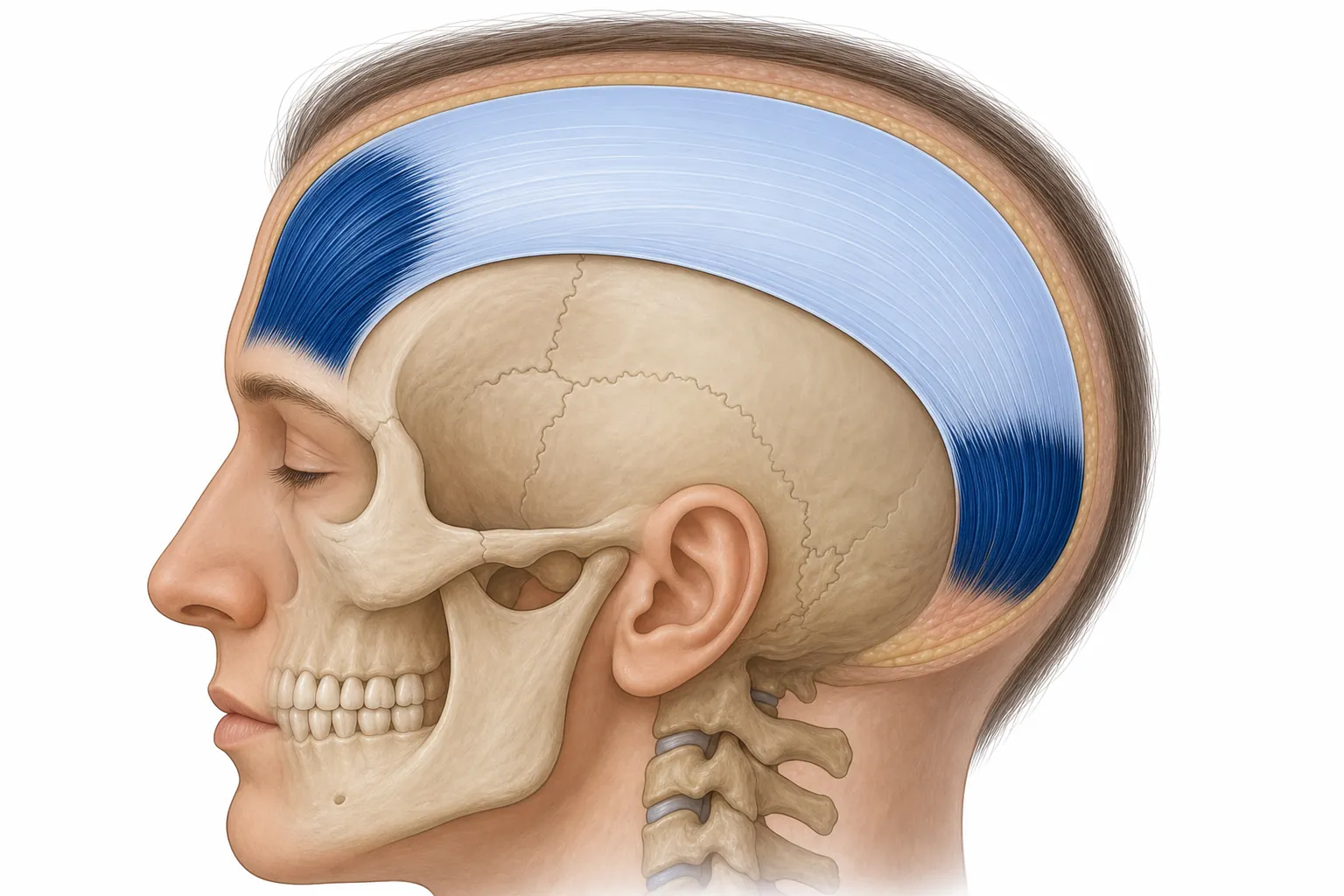
A feeling of tightness on the scalp usually does not arise in the skin itself but underneath it: in the tendon sheet, the galea aponeurotica, and in the muscles that pull on it. Many describe it as though the skin were too small for the head, or as a widespread pressure over temple and crown.
The anatomical basis: the frontalis muscle and the occipitalis muscle tense the same tendon sheet, the galea aponeurotica, and form a functional unit with it. The idea that sustained tension at one end of this unit is felt as widespread pressure across the entire scalp is a plausible explanatory model. This chain has not been measured directly, and other causes of the feeling of tightness deserve equal consideration.
An entirely different source of the same feeling is dryness. After washing, in winter or after bleaching, the skin feels tight because the barrier is disturbed. This tightness typically sets in right after contact with water or a product and improves with milder care within a few days.
The third mechanism is traction from the hairstyle. What is known as ponytail headache is described as an entity of its own, referred to in the headache literature as external-traction headache. Published prevalence figures are around 40 percent in one study population and 53.8 percent in an older survey of 90 women. The fact that the pain often appears only when the ponytail is undone is explained by the follicles and surrounding nerve endings having been held in one direction of pull for hours, with the load reversing when the hair is released. That is not a directly measured mechanism; the frequency, by contrast, has been surveyed.
A useful self-check: does the feeling change if you wear your hair down for a day, consciously relax your jaw or move your head? If it does, that points to a mechanical component. If none of it changes anything and the spot remains tender to pressure, it needs to be looked at.
Tension and the scalp: do the complaints come from the neck and jaw?
Tension in the neck and complaints of the scalp are connected, but more weakly than the widespread explanation suggests: what is documented is the connection with headache, not with scalp pain. For headache the evidence is clear: the ICHD-3 headache classification of the International Headache Society divides tension-type headache according to whether the pericranial muscles are tender to pressure, and calls this increased pressure tenderness the most significant abnormal finding of this headache type.
For the sentence “my neck tension is causing my scalp pain,” by contrast, the evidence is thin. The best-known work is a case series by Thornsberry and English (JAMA Dermatology 2013) in 15 female patients, 14 of whom showed radiological changes of the cervical spine. A retrospective cohort from the Mayo Clinic (Lee et al., Journal of the American Academy of Dermatology) found degenerative changes on 28 of 29 evaluable radiographs among 65 patients with scalp dysesthesia.
Both works are small, retrospective and without a symptom-free control group. Degenerative changes of the cervical spine are very common from middle age onward even in people without complaints, so the association does not prove a cause. On the treatment outcome, the authors of the Mayo cohort were reserved themselves: 34.1 percent achieved a moderate to complete improvement, described as a modest treatment success.
Clearly defined, by contrast, is occipital neuralgia. The ICHD-3 describes it as paroxysmal, shooting or electric-shock-like pain in the territory of the occipital nerves, with attacks lasting seconds to minutes and a palpable tender point at the back of the head. That is clearly different from the dull, widespread feeling of tension.
An underrated trigger is nighttime teeth grinding. Clenching at night strains the temporalis muscle, and it is precisely this region that many of those affected describe as tight or tender to pressure. There is no direct traction connection to the tendon sheet of the scalp here, because the temporalis muscle attaches to the lower jaw. The connection runs via the pressure-tender pericranial muscles that the ICHD-3 describes for tension-type headache. There is no dedicated cohort study on bruxism and scalp tension; it remains an explanatory model, but a testable one: the jaw joint and dental status can be assessed by a dentist.
In practice, that means physical therapy, posture work and an assessment of nighttime clenching are sensible routes when a muscular component is involved. They do not replace a workup if the pattern looks like nerve pain, that is, one-sided, shooting and occurring in attacks.
Tingling on the scalp: harmless or a warning sign?
Tingling on the scalp is a paresthesia, that is, a false sensation without an external stimulus. Usually it is locally limited and harmless. You should pay attention if it occurs on one side only or if the hands and feet tingle as well, because systemic causes then come into question.
Locally, traction from the hairstyle, cold, product irritation and nerve fibers regrowing after an injury or a procedure come into question. One important special case is shingles in its early phase: according to the German AWMF S2k guideline 013-023, in around 80 percent of cases the skin manifestation is preceded by a prodromal stage with abnormal sensations and usually mild to moderate pain in the affected area of skin, that is, days before blisters become visible.
Systemically, vitamin B12 deficiency, diabetic polyneuropathy, thyroid dysfunction and certain medications are on the list. For B12, a German medical review notes the following: even a slight decline can be accompanied by paresthesias, and serum B12 is only a screening value. With borderline findings, methylmalonic acid and homocysteine belong in the workup, because they are regarded as more sensitive functional markers. If both are normal, a deficiency is all but ruled out.
One interpretation circulating online should be dropped: tingling is not a documented sign that hair is growing back. No study on this can be found in the specialist literature. Anyone who reads tingling this way may, in the worst case, delay a sensible workup.
You should have tingling assessed by a doctor immediately if it appears suddenly together with weakness or with speech, vision or sensory disturbances in the face. This combination counts as an emergency and is a case for 911, not for an appointment next week.
Numb scalp: causes and when it becomes urgent
If the scalp is numb or feels fuzzy, the signal transmission of a skin nerve is disturbed. The most common causes are mundane: sustained pressure from a helmet or headwear, lying on one side for a long time, the aftermath of an injury or of a procedure on the scalp. Less often, occipital neuralgia, shingles with subsequent neuralgia or central causes are behind it.
With shingles on the head, speed counts. The German AWMF S2k guideline 013-023 recommends starting antiviral therapy as early as possible; reliable study data are available for a start within 72 hours of symptom onset. For the head and neck region there is additional urgency, because the eye and ear are close by.
A scenario of its own is giant cell arteritis, also called temporal arteritis. According to the review by Kraemer and colleagues (Der Nervenarzt 2021) it practically never occurs before the age of 50. Cardinal symptoms are a newly starting, often very severe temple headache, a tender, hardened temporal artery, pain on chewing in about 30 percent, and visual disturbances up to loss of vision. The Cleveland Clinic reports a pressure-sensitive scalp in around half of those affected, often first noticed while brushing the hair or lying on one side of the head.
From this follows a clear instruction: with this pattern, go to the emergency room or an eye emergency department immediately, and with a new visual disturbance without any delay at all. Treatment with glucocorticoids begins as soon as there is justified suspicion, even before confirmation by biopsy, because permanent loss of vision affects 6 to 37 percent of those affected depending on the study population and usually cannot be reversed.
For all this caution: the vast majority of numbness on the scalp is due to pressure or a procedure, and it resolves. What is decisive is the distinction between numbness that slowly gets smaller and numbness that sets in suddenly or increases.
Distinguishing scalp inflammation: when the cause is in the skin after all
Inflammatory conditions of the scalp produce the same sensations as nerve-mediated causes, but they differ in having visible or palpable findings. They are the first group that needs to be ruled out before nerves or strain are discussed.
Typical signs are scaling, redness, pustules, crusts, weeping areas, tenderness of individual hair follicles and hair loss exactly at the spot that burns. Common conditions are seborrheic dermatitis, contact dermatitis, folliculitis and psoriasis of the scalp. Causes, symptoms and treatment of this group are covered by the dedicated article on scalp inflammation in detail.
If the itching is connected with a recent hair transplant, the article on an itchy scalp after a hair transplant will help you further, because it focuses on the time course of wound healing.
And once more the caveat from earlier, because it matters most at this point: an unremarkable visual finding does not rule out a cause in the skin. Early stages and scarring forms only burn at first; they become visible later.
Stress, the nervous system and the scalp: what is documented and what is not
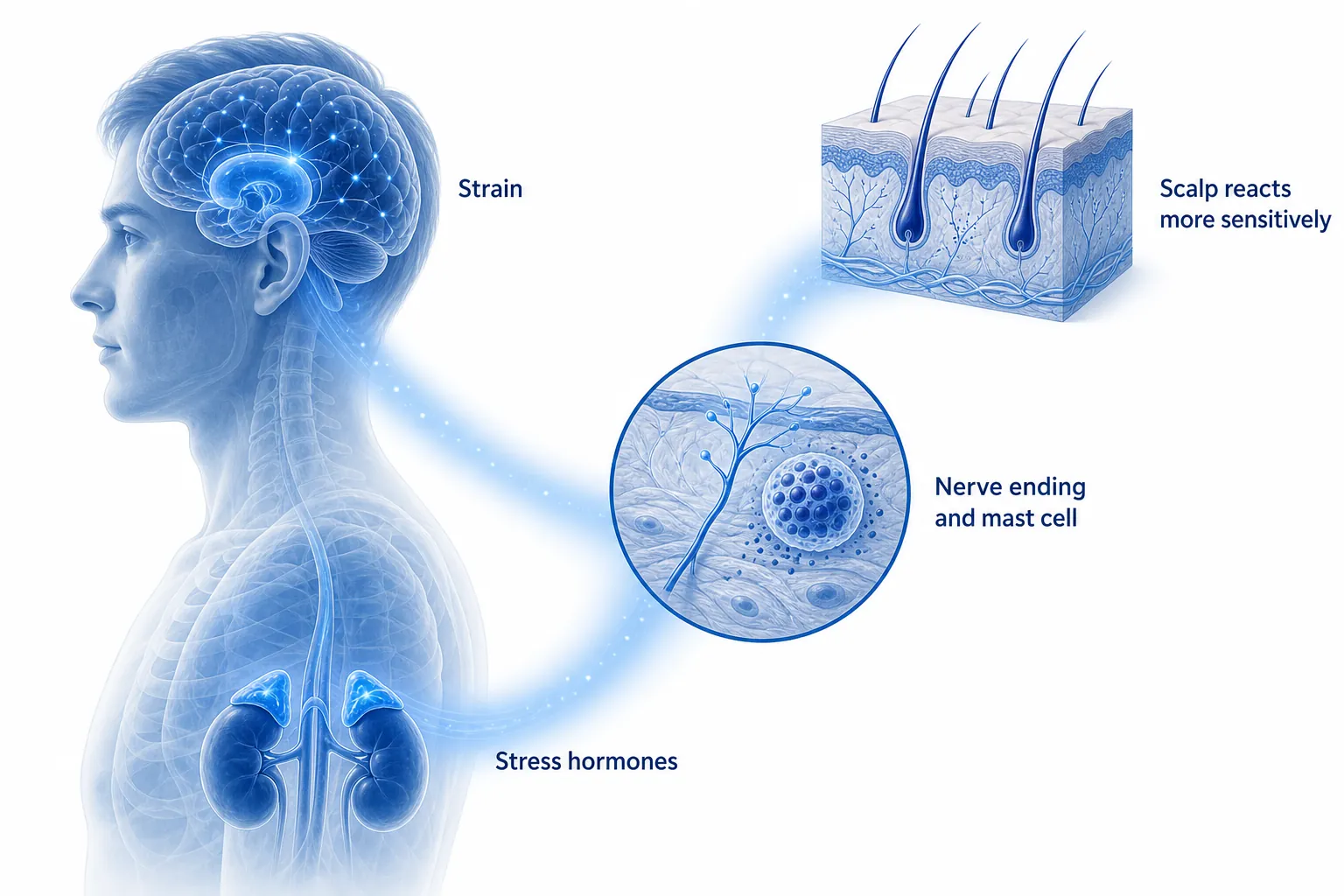
Stress reaches the scalp via the nervous system, but along two routes with very different levels of evidence. Well established is that psychological strain changes the perception of pain and itch and amplifies existing complaints. Much more weakly supported is the idea that stress directly triggers inflammation of the scalp via particular messenger substances.
The most frequently cited explanatory model for this is substance P, a neuropeptide that is released from nerve endings and can activate mast cells. In an organ culture of human skin, substance P dose-dependently triggered edema, vasodilation and the release of inflammatory messengers, and in cultured human hair follicles a premature transition into the regression phase. Both are tissue models, not observations in living patients, and the link between stress and changes in hair growth comes predominantly from mouse models.
A cautious formulation is therefore the right one here: substance P is discussed as an explanatory model for neurogenic inflammation, demonstrated in cell and animal models. Epidemiological and clinical studies in humans have so far not shown any definitive causal connection between psycho-emotional stress and changes in hair growth.
What remains robust is the connection via pain processing. Tension, lack of sleep and sustained strain lower the threshold at which a stimulus is felt as unpleasant and thereby amplify existing burning or itching. For the scalp specifically there is no controlled study on this; for the general mechanism there is.
In alopecia areata too, stressful life events are frequently reported. That is an association and not proof that stress triggers the condition. Whether states of the nervous system will ever be measurable at the scalp at all is something the article on psychological states and scalp measurement puts into perspective.
Scalp complaints and hair loss: what belongs together and what does not
Burning or tightness is no proof of hair loss and no measure of its course. The two often occur together, but they need to be assessed separately, because the causes can differ.
What does belong together on the evidence: trichodynia occurs more often in people with hair loss than in people without. Askin and colleagues (2021) found it in 35.7 percent of 249 patients with hair disorders, and the older reference work by Kivanç-Altunay and colleagues (International Journal of Dermatology 2003) in 248 affected people compared with 184 controls found it more often with diffuse hair loss than with hereditary hair loss.
What does not follow from this: burning does not mean that hair is falling out right now, and tingling does not mean that hair is growing back. The sensation says nothing about the number of hairs in the telogen phase.
One pattern, by contrast, deserves real attention: burning or pain at a spot that is thinning at the same time, along with shiny skin or follicular openings that have disappeared. This can point to a scarring alopecia and is time-critical, because scarred follicles do not come back. This finding belongs under the dermatoscope promptly, with a biopsy if needed.
If hair really is falling out alongside the abnormal sensations, the first question is not the treatment but the type: diffuse hair loss and hereditary hair loss look different and are approached differently. An overview of the possible causes of hair loss is provided by the corresponding article.
Two clarifications belong here. A hair transplant is not a treatment for a burning, tingling or sensitive scalp. And an unexplained scalp condition is a reason to postpone a procedure, not to plan one.
A word about us
Elithair is a hair clinic, so this section is marked as an offer and not as medical advice: if hair really is falling out alongside the abnormal sensations, the free hair analysis uses your photos to classify the visible pattern of loss and shows which workup is the obvious next step. It does not determine which type of hair loss is present. This is a clarifying step for the question “which pattern,” not diagnostics of the scalp: it does not replace trichoscopy, visual examination, blood work or a biopsy, and for burning, tingling or numbness it is not the right route.
A special case: numb scalp after a hair transplant
Abnormal sensations after a surgical procedure on the scalp are the special case in this article: here there is usually an obvious explanation, and the course is generally benign. That is not a given, though: other causes can be behind it even after a procedure, so complaints that increase, are clearly one-sided or come with pain and redness need to be assessed. After a hair transplant temporary numbness, tingling and touch sensitivity are to be expected, because the finest nerve fibers in the skin are severed during extraction and implantation. Sensation returns as these fibers grow back. The same basic pattern applies after injuries and other procedures on the scalp.
Figures on this come from the scoping review by Liu and colleagues in Aesthetic Plastic Surgery, which evaluated 43 publications: it reports that sensation returns in most of those treated over the course of a few months. We deliberately do not give an exact time window here, because no reliable figure for it can be read in the accessible part of the paper. Across different extraction techniques, the range of reported persistent numbness goes up to 11 percent. This maximum value comes from heterogeneous individual publications with differing methods and is not a risk rate for FUE, and certainly not one for our clinic. Strip harvesting, FUT, is associated with longer-lasting sensory disturbances than FUE, because deeper structures can be affected.
What matters is the distinction from warning signs: increasing pain, redness, pus or fever are not a nerve phenomenon but signs of a wound infection and belong with the treating clinic. What the normal course looks like is described on the page on healing after a hair transplant.
A practical note that often gets lost: when the scalp is numb, its protective sensation is missing. Heat from a hairdryer or the sun and mechanical pressure are then noticed too late. The fact that touch on the head feels strange for a while after the procedure is the topic of the article on changed touch perception after a hair transplant.
| Time frame | What many describe | What does not belong to it |
|---|---|---|
| First days to week 2 |
|
|
| Week 2 to month 2 |
|
|
| Month 2 to month 8 |
|
|
| After more than 8 months |
|
|
When to see a doctor about scalp complaints
Observing instead of getting a workup is only acceptable with brief, mild, clearly triggered complaints that subside quickly again, for example after a ponytail that was too tight or a new hair care product. Everything else needs to be assessed promptly: new complaints that persist, unclear complaints without a recognizable trigger, one-sided complaints, complaints with hair loss at the same spot or with general symptoms. There is no fixed waiting period for this, and for the warning signs below it does not apply at all.
Who is responsible depends on the pattern. The following overview assigns the most common constellations to a specialty and names what is usually done there.
| Constellation | Who is responsible | What is typically done there |
|---|---|---|
| Burning or itching with scaling, redness, pustules or hair loss at the same spot | Dermatology | Visual examination, trichoscopy, pull test, and if there is suspicion a swab or a scalp biopsy |
| One-sided, shooting, electric-shock-like pain at the back of the head | Neurology | Examination of the nerve exit points, distinguishing occipital neuralgia from tension-type headache according to ICHD-3 |
| Tingling or numbness in the hands and feet as well | Primary care physician, then neurology if needed | Basic lab work, vitamin B12 with methylmalonic acid and homocysteine as functional markers, blood sugar, thyroid values |
| Dull feeling of tightness with a tense neck, strongest in the morning | Primary care physician, plus physical therapy, and a dentist if there are jaw complaints | Palpation of the pericranial muscles, posture and jaw findings, assessment of nighttime grinding |
| Numbness, tingling or pain on touch after a hair transplant | The treating clinic | Wound check and distinction of nerve irritation from signs of infection |
| A new temple headache with a pressure-tender scalp from around age 50, sudden one-sided numbness with paralysis, one-sided painful blisters | Emergency room or eye emergency department, immediately; with a new visual disturbance right away and without delay | Immediate workup; if giant cell arteritis is suspected, inflammatory markers and vascular imaging with an immediate start of treatment |
Why this assignment matters in practice: nerve pain responds differently to medication than inflammatory pain. The NICE overview on the treatment of neuropathic pain notes that the usual over-the-counter painkillers often do not work well enough here and that other substance classes are used instead, among them certain antidepressants and anticonvulsants in pain-modulating use as well as topical preparations. That is an explanation, not a recommendation: how well one of these substances works in an individual case cannot be said in advance, and the choice belongs in medical hands. Over-the-counter topical salicylate preparations, according to a review in Pain Medicine 2025, have no robust evidence of efficacy for neuropathic pain.
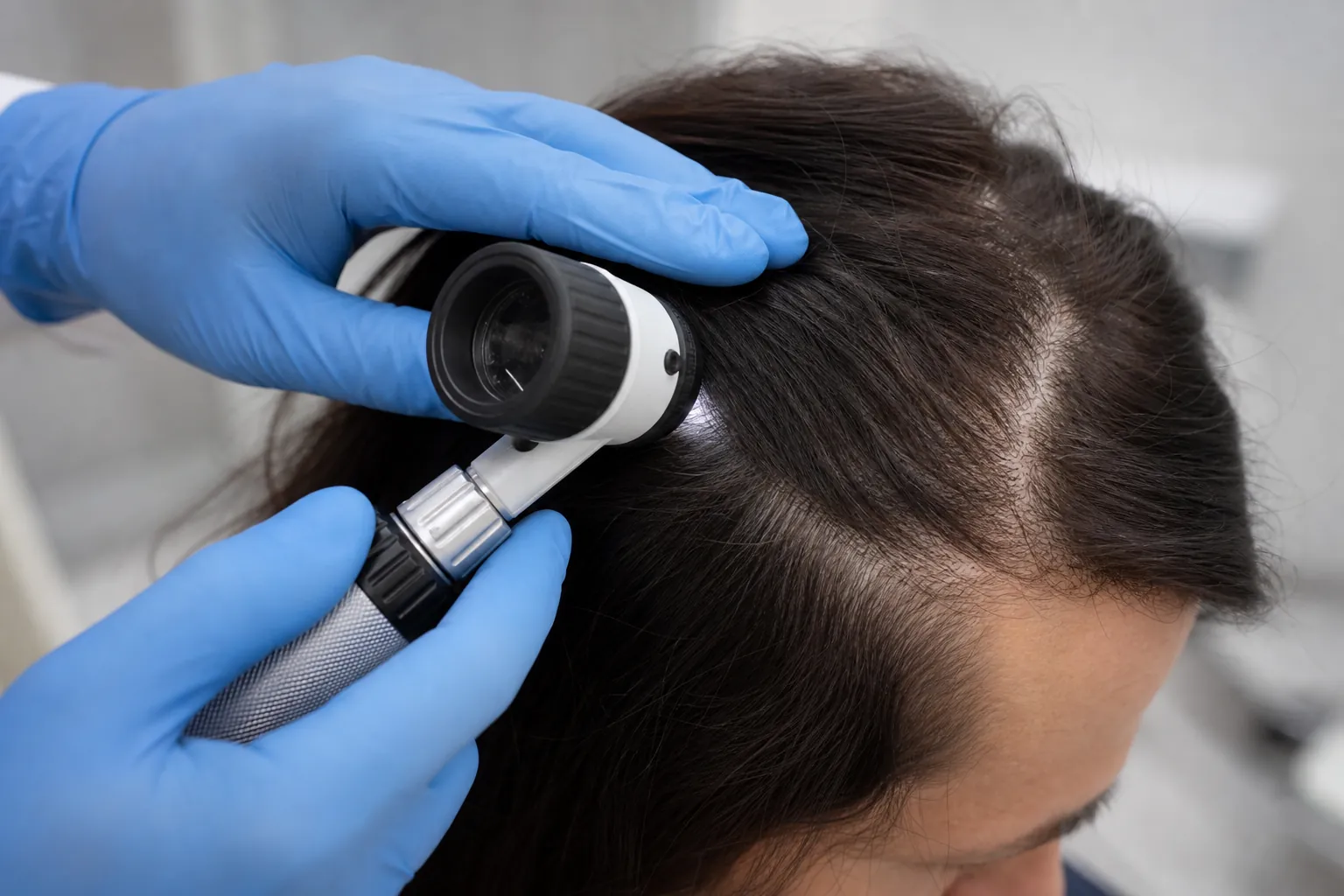
What to expect at the appointment is manageable: history taking, visual examination, trichoscopy and pull test, and depending on the suspicion a swab, blood work or a small scalp biopsy. With a nerve pain pattern, the neurological examination of the nerve exit points is added. This article does not replace a diagnosis; it helps you choose the right door.
Calming the scalp: what you can do yourself and what to leave alone
Self-help with scalp complaints aims at taking stimuli away and reducing amplifiers. It does not replace a workup, but it does provide clarity about what influences the problem and what does not.
In concrete terms that means: a mild, fragrance-free shampoo and lukewarm instead of hot water. Introduce no new products for four weeks, and pause styling products, dry shampoo and coloring so that a source of irritation can be identified at all. Wear hairstyles without constant pull and check your headwear for pressure points.
With a muscular component, movement breaks, a look at your sleeping position and relaxing the jaw help. A gentle scalp massage is acceptable as long as it does not hurt and there is no acute inflammatory finding. With nerve pain patterns and with inflammatory conditions, hair care alone achieves nothing, and that needs to be said plainly.

Home remedies for a burning scalp: what you are better off leaving out
With a burning scalp, the usual home remedies do harm more often than good. Undiluted tea tree oil and other essential oils, apple cider vinegar, lemon juice, baking soda and salt or sugar scrubs strip oil and the outer horny layer from skin whose barrier is already disturbed. As a rule the burning gets stronger from this rather than weaker.
Two points come on top of that. Essential oils and plant extracts can themselves trigger a contact sensitization, and that in particular can burn before anything is visible on the scalp. And the more remedies are in play at once, the harder it is to say afterwards what the scalp actually reacted to.
And the limit of this self-help: if the cause lies in the nerve or an inflammatory condition is behind it, hair care changes nothing about it. Anyone who tries out remedies for weeks mainly delays the workup. With the warning signs in the next section, self-treatment has no place at all.
What helps most, though, is a symptom diary. Two weeks with the date, spot, intensity and trigger turn “it burns sometimes” into a pattern that a doctor can classify in a few minutes. You can print out the following template, save it as a PDF or simply take a photo of it and bring it to your appointment.

| Date | Sensation and exact spot | Intensity 0 to 10 | Trigger or anything notable | Visible signs |
|---|---|---|---|---|
| Mon., 2nd | Burning, right temple, palm-sized | 5 | New shampoo since Friday, little sleep | No redness visible |
| Tue., 3rd | Pain on touch when combing, crown | 3 | Wore a ponytail all day | Two small flaky spots |
Here is how to take the template with you: on a smartphone via the browser menu with “Share” and then “Print” or “Save as PDF,” on a computer with Ctrl+P or Cmd+P. When printing, the template is automatically set to full page width. If you prefer typing: the date, spot, intensity, trigger and visible signs are enough as a note on your phone.
Conclusion: classify the sensation, check the pattern, know the warning signs
The connection between the scalp and the nervous system explains why burning, tingling, tightness and numbness arise so differently and still sound similar. What is decisive is not the question “physical or psychological,” but the pattern: time course, one-sidedness, accompanying signs.
Brief, mild and clearly triggered complaints that subside quickly may be observed with a symptom diary. New complaints that persist or remain unclear need to be assessed promptly rather than waited out. With warning signs there is no waiting period at all, above all with a new temple headache and a pressure-sensitive scalp from around age 50. And if hair is falling out as well, the abnormal sensation and the hair loss need separate workups.
Frequently asked questions about the scalp and the nervous system
What can I do right away when my scalp burns?
Take stimuli away instead of adding new ones: loosen your hair, wash with lukewarm water and a mild, fragrance-free shampoo, leave out the product you introduced most recently and apply something cool for a few minutes. Aggressive home remedies such as undiluted tea tree oil, apple cider vinegar or scrubs additionally irritate the disturbed barrier and make the search for the cause harder later on. If blisters, fever, swelling in the face or shortness of breath are added, that is not a case for self-help but for immediate medical assessment.
Why does my scalp hurt at even light touch when I have the flu or a fever?
With fever and the flu the scalp is sensitive to touch because systemic inflammation lowers the pain threshold. In a human experiment by de Goeij and colleagues (PLOS ONE 2013), the pressure pain threshold of 27 healthy volunteers fell by 20 percent within two hours of endotoxin administration. The scalp was not examined separately there, but the pattern explains the phenomenon well. As the infection clears, the sensitivity usually subsides again.
Why does my scalp hurt when I undo my ponytail?
This is described as ponytail headache, known in the specialist literature as external-traction headache. Published prevalence figures are around 40 percent depending on the study, and 53.8 percent in an older survey of 90 women. The explanation given is that the follicles and the surrounding nerve endings were held in one direction of pull for hours and that the load reverses when the hair is released. That is not a directly measured mechanism.
Why is my scalp more sensitive in the morning than in the evening?
One obvious reason is nighttime teeth grinding: it strains the temporalis muscle for hours, and many people describe pressure-tender pericranial muscles as morning tightness at the temple and crown. There is no direct traction connection between the temporalis muscle and the tendon sheet of the scalp; the temporalis muscle attaches to the lower jaw. There is no cohort study specifically on bruxism and scalp tension, so this remains an explanatory model. Sleeping position and a tightly tied ponytail worn overnight also come into question.
Can hormonal changes such as menopause or a switch of birth control make the scalp sensitive?
It is possible, but it is not proven. Many of those affected report a more sensitive scalp during such phases, usually together with increased hair loss. What is documented above all is that trichodynia occurs more often in people with hair loss: in the study by Askin and colleagues (2021) it affected 35.7 percent of 249 patients with hair disorders. A hormonal mechanism of its own acting on the scalp nerves is not proven by this. With persistent hair loss, the cause belongs in dermatological hands.
Is a dry scalp in winter the same thing as a neurally sensitive scalp?
No, the two only feel similar. With dryness it typically feels tight right after washing, it flakes finely and milder care improves it within days. Neurally mediated complaints, by contrast, persist regardless of washing, tend to follow a nerve territory and barely respond to hair care products. Both can be present at the same time.
Can tingling on the scalp mean that hair is growing back?
There is no evidence for this. In the specialist literature on trichodynia, nerve regeneration and hair growth there is no study that identifies tingling as a sign of regrowing hair. The interpretation circulates online, but it is undocumented. Anyone who notices tingling should instead watch for accompanying signs: one-sided occurrence with pain, or tingling in the hands and feet as well, needs to be assessed.
How long is the scalp numb after a hair transplant?
Usually a few months; an exact time window cannot be reliably stated from the accessible data. The scoping review by Liu and colleagues in Aesthetic Plastic Surgery reports up to 11 percent persistent numbness across different extraction techniques. That is a maximum value from heterogeneous individual publications and not a risk rate for FUE. Longer figures of up to 12 months come from clinic articles without study evidence. Numbness that increases or comes with pain and redness belongs at the treating clinic promptly.
How long should I observe scalp complaints before I see a doctor?
That depends on the type of complaint; there is no general waiting period. Brief, mild and clearly triggered complaints that subside quickly can be observed with a symptom diary. New complaints that persist or remain unclear, that are one-sided, that come with hair loss at the same spot or that are accompanied by general symptoms belong with a doctor promptly. With sudden neurological deficits with paralysis, speech or vision problems, call 911 immediately; with blisters, fever or a new temple headache from around age 50, see a doctor without delay.
Sources
The basis for this article. Shop pages, forums and clinic blogs without source citations were not used as evidence.
- Askin O, Gok Ozer H, Serdaroglu S (2021): Presence of Trichodynia Symptoms in Hair Diseases and Related Factors. Skin Appendage Disorders 7(1):18
trichodynia in 89 of 249 patients with hair disorders - Kivanç-Altunay I et al. (2003): The presence of trichodynia in patients with telogen effluvium and androgenetic alopecia. International Journal of Dermatology 42:691
trichodynia more common with diffuse than with hereditary hair loss - Han SM et al. (2021): Prevalence and characteristics of cutaneous allodynia in probable migraine. Scientific Reports
population-based cohort with 2,501 participants, allodynia prevalence 16.0 percent - Thornsberry LA, English JC (2013): Scalp dysesthesia related to cervical spine disease. JAMA Dermatology 149(2):200
case series in 15 female patients, no proof of causality - Lee MR et al. (Mayo Clinic): Cervical spine imaging and treatment outcomes in scalp dysesthesia. Journal of the American Academy of Dermatology
retrospective cohort in 65 patients, modest treatment response - International Headache Society: ICHD-3, tension-type headache and occipital neuralgia
pericranial pressure tenderness as a classification criterion - Kraemer M et al. (2021): Diagnostik und Therapie der Riesenzellarteriitis. Der Nervenarzt 93(8):819
age limit, cardinal symptoms, urgency and risk of blindness - German AWMF S2k guideline 013-023 (2020): Diagnostik und Therapie des Zoster und der Postzosterneuralgie
prodromal stage in around 80 percent, 72-hour window for antiviral therapy - de Goeij M et al. (2013): Systemic Inflammation Decreases Pain Threshold in Humans In Vivo. PLOS ONE
pressure pain threshold drops by 20 percent with systemic inflammation - Kemp WJ, Tubbs RS, Cohen-Gadol AA (2011): The innervation of the scalp. Surgical Neurology International 2:178
supply territories of the trigeminal and occipital nerves - Liu RH et al.: A Scoping Review on Complications in Modern Hair Transplantation. Aesthetic Plastic Surgery
up to 11 percent persistent numbness across different extraction techniques (heterogeneous maximum value) - Deutsches Ärzteblatt, a German medical review: Ursachen und frühzeitige Diagnostik von Vitamin-B12-Mangel
paresthesias as an early neurological sign, methylmalonic acid and homocysteine as functional markers - NICE: Neuropathic pain in adults, pharmacological management in non-specialist settings
why the usual painkillers often do not work for nerve pain - DermNet: Lichen planopilaris
burning and pain as an early symptom of scarring alopecias
Note: This article is for information and does not replace medical advice, diagnosis or treatment. With persistent, one-sided or suddenly starting scalp complaints, with pre-existing conditions or ongoing medication, have the cause assessed by a doctor. Last updated: September 2026.

Dr. Imad Moustafa
Hair transplant specialist