


Summary
- Cloning Hair: How Does it Work?
- How Hair Cloning Works: The Method in Three Steps
- How it Differs From Past Cloning Experiments
- The State of Hair Cloning Research Now
- Hair Banking: Planning for the Future
- Stem Cells in Hair Medicine
- Hair Transplantation: A Reliable, Available Option
- Conclusion: Strong Potential – But Not Yet Reality
- FAQs
Cloning Hair: How Does it Work?
Hair cloning is a biotechnological procedure in which cells are taken from existing hair follicles, multiplied in the laboratory, and then reintroduced into the scalp. The goal is to create new, functional hair follicles—ideally with permanent growth.
Unlike traditional hair transplantation, which involves redistributing existing follicles, cloning would theoretically allow for a limitless number of new hairs. The procedure could therefore also help people whose donor area has insufficient healthy follicles for extraction.
How Hair Cloning Works: The Method in Three Steps
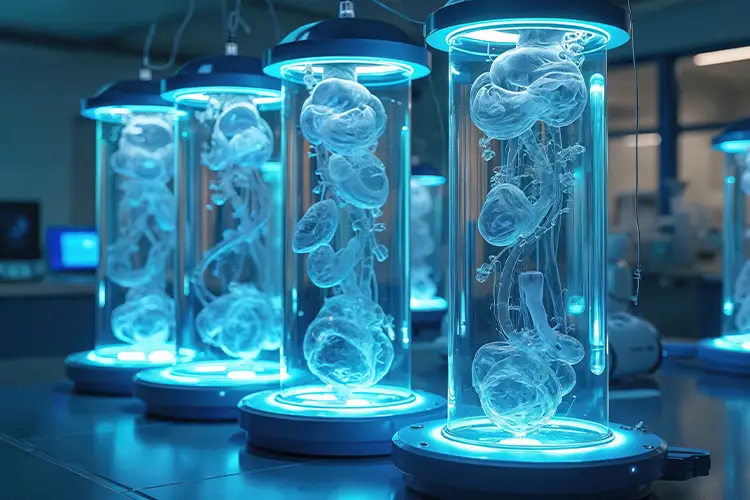
Although the technology is not yet approved for clinical use, the basic principle follows a fixed procedure:
1. Cell Extraction from the Hair Follicle
In the first step, a small amount of dermal papilla cells is removed from healthy hair follicles. These cells are located at the base of the follicle and play a central role in controlling hair growth. The cells are usually collected through a minimally invasive biopsy.
2. Cell Proliferation in the Laboratory
In the laboratory, the extracted cells are cultured under controlled conditions and stimulated to divide using special growth factors. The goal is to generate sufficient cell material to form new follicles.
However, this is where one of the biggest challenges lies: the cells often lose their ability to trigger new hair growth once they have divided multiple times.
3. Reimplantation into the Scalp
If enough vital cells are available, they are injected back into the scalp—ideally into hairless or severely thinning areas. In theory, new hair follicles should form there, producing permanent hair. In practice, however, this step only works under certain conditions and mostly in preclinical models.
How it Differs From Past Cloning Experiments
A common misconception is that hair cloning is comparable to the famous cloned sheep “Dolly.” However, the two processes are fundamentally different. While Dolly’s entire organism originated from a single cell, hair cloning involves the targeted reproduction of tissue, so-called mini-organs (hair follicles).
These consist of complex cell types and require a precise interplay of stem cells, papilla cells, and hormonal factors . So far, science has not been able to reliably replicate this balance in the human body.
The State of Hair Cloning Research Now

As fantastical as it might sound, hair cloning technology is not the stuff of science fiction. Numerous research projects are currently in the clinical or preclinical phase:
- The Aderans Research Institute is testing cell-based therapies to reactivate weakened hair follicles in humans.
- Researchers at Yokohama National University have produced fully developed hair follicles in mice in the laboratory for the first time – a significant milestone, even though transferability to humans is still pending.
Despite these advances, experts estimate that it will take at least five to ten years before hair cloning is safe, effective, and widely applicable. The biggest challenges remain the functionality of the cultured cells, the formation of complete follicles, and regulatory approval.
Hair Banking: Planning for the Future
Since hair cloning relies on the body’s own cells, another option for treating hair loss is gaining traction: hair banking. This involves removing hair follicles at an early stage, freezing them, and storing them in specialized laboratories – in the hope of later using them for cloning therapy or cell-based treatments.
Stem Cells in Hair Medicine
Stem cells also play a role in modern hair research. They are considered key cells for tissue regeneration – including hair follicles. Initial approaches, for example, using stem cells from adipose tissue or PRP (Platelet Rich Plasma therapy), aim to revitalize weakened follicles.
However, these are not real cloning procedures, but regenerative measures that are only useful if active hair roots are still present.
Hair Transplantation: A Reliable, Available Option
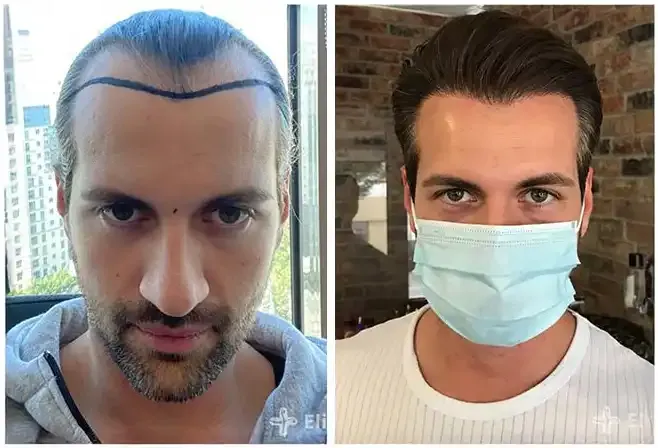
Even though research into hair cloning is promising, there is currently only one proven, medically sound solution that can reliably help with advanced hair loss: hair transplantation .
This procedure involves transplanting genetically resistant hair follicles from the hairline (usually from the back of the head) into bald or severely thinning areas. The transplanted follicles retain their original growth quality and, if successfully integrated, ensure naturally growing hair – without no artificial appearance.
If you’re considering a hair restoration as a proven solution to restore your hair, understanding the full process, costs, and what to expect is essential. Our guide to hair transplants in Turkey provides a comprehensive overview of everything you need to know before your procedure – from choosing the right clinic and understanding the FUE and DHI techniques to what recovery and aftercare involve. Discover why thousands of patients travel to Turkey each year for high-quality, affordable hair transplant results.
Two established methods are used particularly frequently today:
- FUE method (Follicular Unit Extraction):
Individual hair follicular units are removed gently and with precision, resulting in minimal scarring and rapid healing. - DHI technique (Direct Hair Implantation):
A technique in which the grafts are inserted directly using an implanter pen without first opening channels – ideal for maximum control over growth direction and density.
Advantages of a modern hair transplant:
- Natural and aesthetic results
- Minimally invasive, low risk of scarring
- High success rate when carried out professionally
- Personally adjustable hairline and density
So, if you don’t want to wait for future procedures or are already suffering from advanced hair loss, hair transplantation is a reliable, proven solution with visible results – already possible today and tailored to your specific needs.
Conclusion: Strong Potential – But Not Yet Reality
Hair cloning is undoubtedly one of the most exciting future topics in hair medicine. Its ability to generate new follicles from a few cells could one day make hair loss infinitely more treatable. But at present, the technology isn’t quite there yet. The research is promising, but complex—and clinical use is still years away.
Anyone who wants a real, visible solution today will still benefit most from a professionally performed hair transplant – currently the only method with scientifically proven, lasting success.
FAQs
What are the risks or side effects of hair cloning, once it becomes available?
While research is still ongoing, potential risks could include immune reactions to implanted cells, scarring, inconsistent results, or even the formation of cysts or tumours if cell growth isn’t properly controlled. Regulatory trials will need to address these safety concerns before widespread use.
How much could hair cloning cost once it becomes available?
The costs are difficult to predict, but given the complexity of laboratory cell culturing and reimplantation, hair cloning is expected to be significantly more expensive than current hair transplant procedures—potentially several thousand pounds more, especially in the early years of availability.
Who would be the ideal candidate for hair cloning?
Hair cloning would be particularly beneficial for individuals with advanced hair loss and limited donor hair—such as those with scarring alopecia, genetic baldness with a depleted donor area, or people who have undergone multiple transplants and can no longer use traditional methods.
Is hair cloning a permanent solution to hair loss?
In theory, yes—if the cloned follicles successfully mimic natural follicle behaviour, they should grow hair indefinitely. However, long-term stability and growth patterns of cloned follicles in humans still need to be proven in clinical trials.
Can hair cloning reverse all types of hair loss, including autoimmune or hormonal causes?
Not necessarily. While cloning new follicles could replace those lost, underlying conditions like alopecia areata or hormonal imbalances (e.g., DHT sensitivity) may still affect the results unless these causes are also treated or managed.
How does hair cloning compare to synthetic hair implants or wigs?
Hair cloning would offer a biologically integrated, natural-looking solution unlike synthetic implants or wigs, which are external and often require ongoing maintenance. Cloned hair, if successful, would grow, can be styled, and would not fall out like artificial solutions might over time.
Where are the leading clinics or companies currently working on hair cloning?
Current research is being led by institutions such as the Aderans Research Institute (USA), Yokohama National University (Japan), and some biotech firms in South Korea and Germany. However, no private clinic currently offers this procedure to the public.
What makes hair cloning more challenging than traditional stem cell therapy?
Hair follicles are mini-organs with a complex structure and cellular communication system. Unlike simple cell therapies, hair cloning requires coordination between multiple cell types, including dermal papilla cells and stem cells, in a precise environment that mimics the natural follicle niche—something that’s still hard to replicate reliably.
How can someone prepare now if they want to take advantage of hair cloning in the future?
Hair banking is a promising step. Individuals can opt to have healthy follicles extracted and cryopreserved today, potentially giving them access to their own high-quality cells for future cloning procedures once they become available.
Will hair cloning replace hair transplants in the future?
While hair cloning may eventually become a strong alternative or complement to hair transplants, it is unlikely to fully replace them in the near term. Transplants are already reliable, and cloning may initially be used in conjunction with them—especially in cases where donor supply is insufficient.

Dr. Imad Moustafa
Hair transplant specialist