

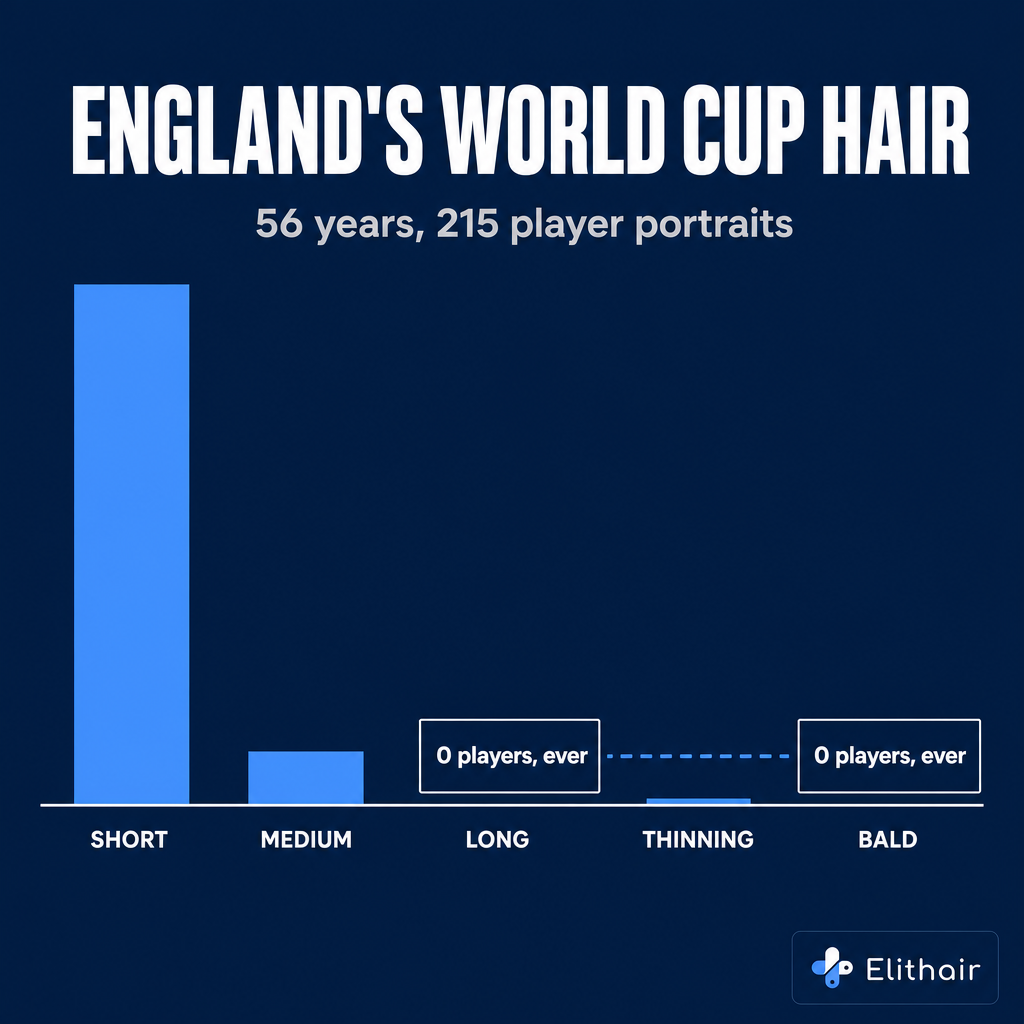
Here is a stat to drop into the next pub argument about England. In fifty-six years of World Cup sticker albums, across 215 player portraits, not one England player has ever turned up with long hair. Not one has ever turned up bald, either. Both ends of the scale, the flowing rock-star mane and the shaved-clean dome, are completely empty. England did the entire history of the World Cup with a short back and sides and the occasional brave perm.
And it gets more on brand. We classified every England face from the official World Cup collectible stickers since 1970 (never Panini, perish the thought), sorting hair into short, medium, long, thinning and bald, and beards into clean-shaven, stubble and full. Sixty England goals sit in the data. The punchline is almost too perfect: by 2018, England had a squad in which every single recorded player had short hair, the tidiest dressing room at the entire tournament, and that squad scored more World Cup goals than any maned England side before it. Sixty years without a trophy, but the neatest haircuts on the planet. The joke writes itself, and we are going to let it.
Summary
- The Squad That Refused to Grow Its Hair Out
- The Squad That Went Fully Short
- Tidy Hair, Full Net: Where England’s Goals Actually Came From
- Two Golden Boots, Two Completely Different Heads
- England Grows Its Beards in the Back Four
- 2026: The Stubble Finally Lands
- The Thinning Legends
- Sixty Years of Hurt, Beautifully Groomed
The Squad That Refused to Grow Its Hair Out
Most footballing nations have a long-hair era somewhere in the album. A wild seventies, a shaggy noughties, somebody with hair down to the shirt number. England simply never had one. Zero long-haired portraits in the entire run. The biggest England ever committed to was “medium”, the swept side-parting or the mullet, and even that was rare and getting rarer.
The medium share peaked early and then withered decade by decade. Roughly 18 percent of England portraits in the 1970s carried some sort of mane, around 16 percent in the 1980s, then a long slow decline to under 6 percent in the 2020s. By 2018 and 2022 it hit zero. England did not so much follow the global crop-cut trend as get there first and stay longest.
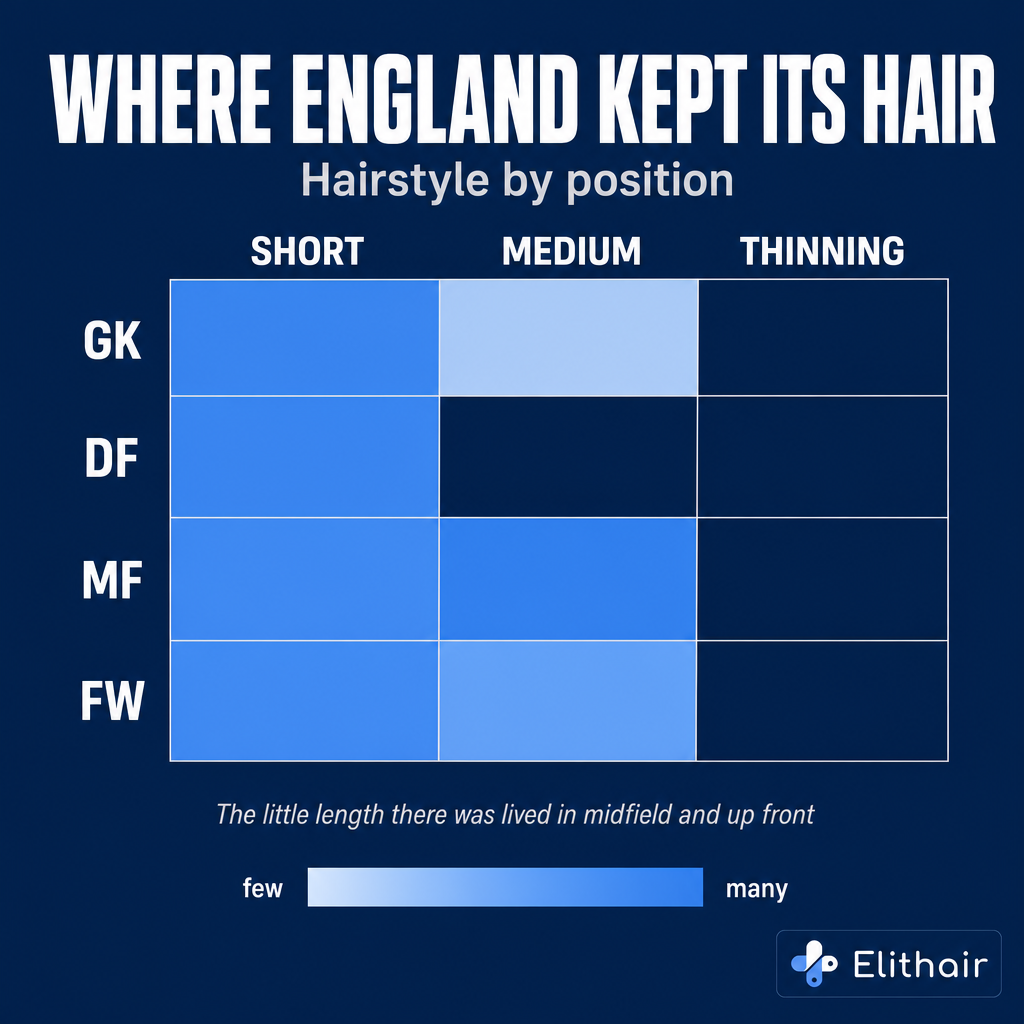
When England did grow a bit of hair, it lived in a very specific part of the pitch. Split the squad by position and the pattern is clean: the few manes England ever fielded clustered in midfield and attack, while the back of the team stayed shorn. Midfield carried the most medium-length portraits, the forwards a handful, the defenders barely any. The goalkeepers, two medium portraits aside, kept it uniformly short. If you wanted to find a fashionable head in an England squad, you looked up the pitch, not back.
The Squad That Went Fully Short
Somewhere between Italia ’90 and Russia 2018, England got a haircut and never grew it back. And the discipline era did not arrive gradually. It arrived completely.
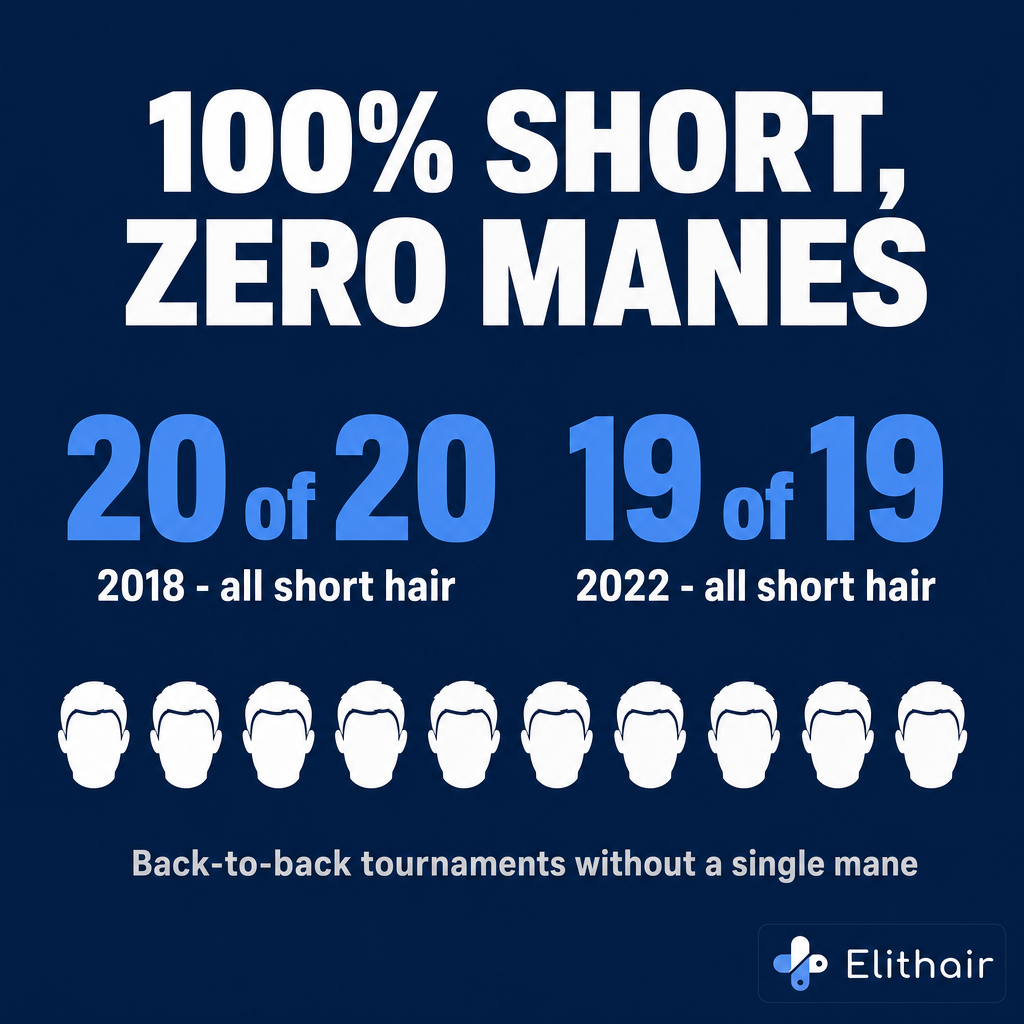
At the 2018 World Cup, every recorded England player had short hair. Twenty out of twenty. In 2022, same story, nineteen out of nineteen. No mane, no mullet, not a single player with hair past the collar in either album. That does not mean nineteen identical buzzcuts, mind you. Jack Grealish brought his gelled, swept-back mop and Phil Foden his bleached mod crop, both still inside the short bucket, just with a lot more product than Harry Kane or Bukayo Saka. The point is not that England shaved their heads. It is that the long rock-star mane almost every other nation fielded at some point simply never turned up. No other England generation comes close to that, and frankly no other generation tried.
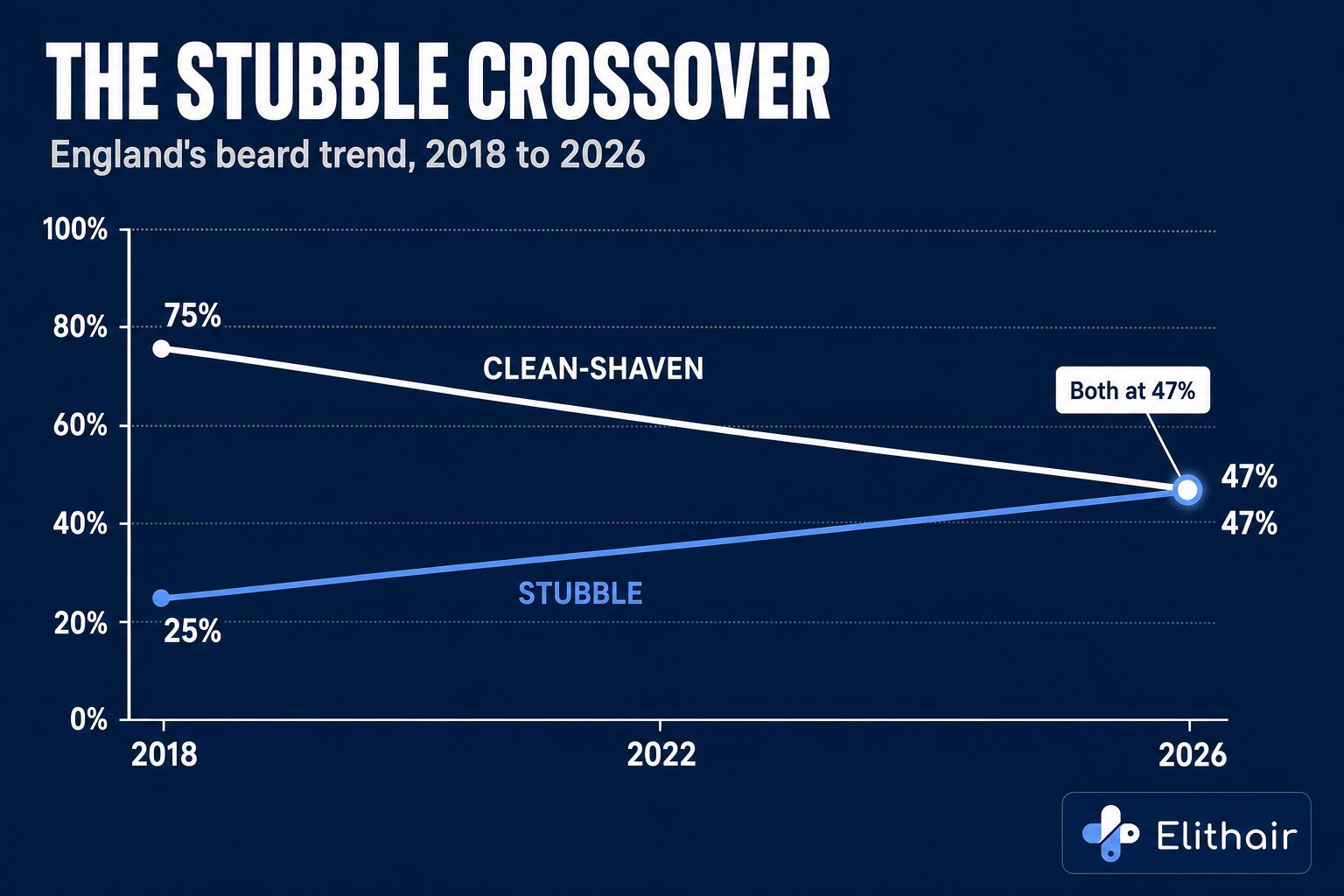
The beards told the rest of the Southgate story. In 2018 three-quarters of the squad were clean-shaven, the smoothest jaws since the 1990s. By 2022 the full beard finally crept in, but only just: three of nineteen players, around 16 percent, Conor Coady, Kalvin Phillips and Luke Shaw. Two defenders and a holding midfielder. Hold that thought, because England’s beards have a postcode and we will get to it.
Tidy Hair, Full Net: Where England’s Goals Actually Came From
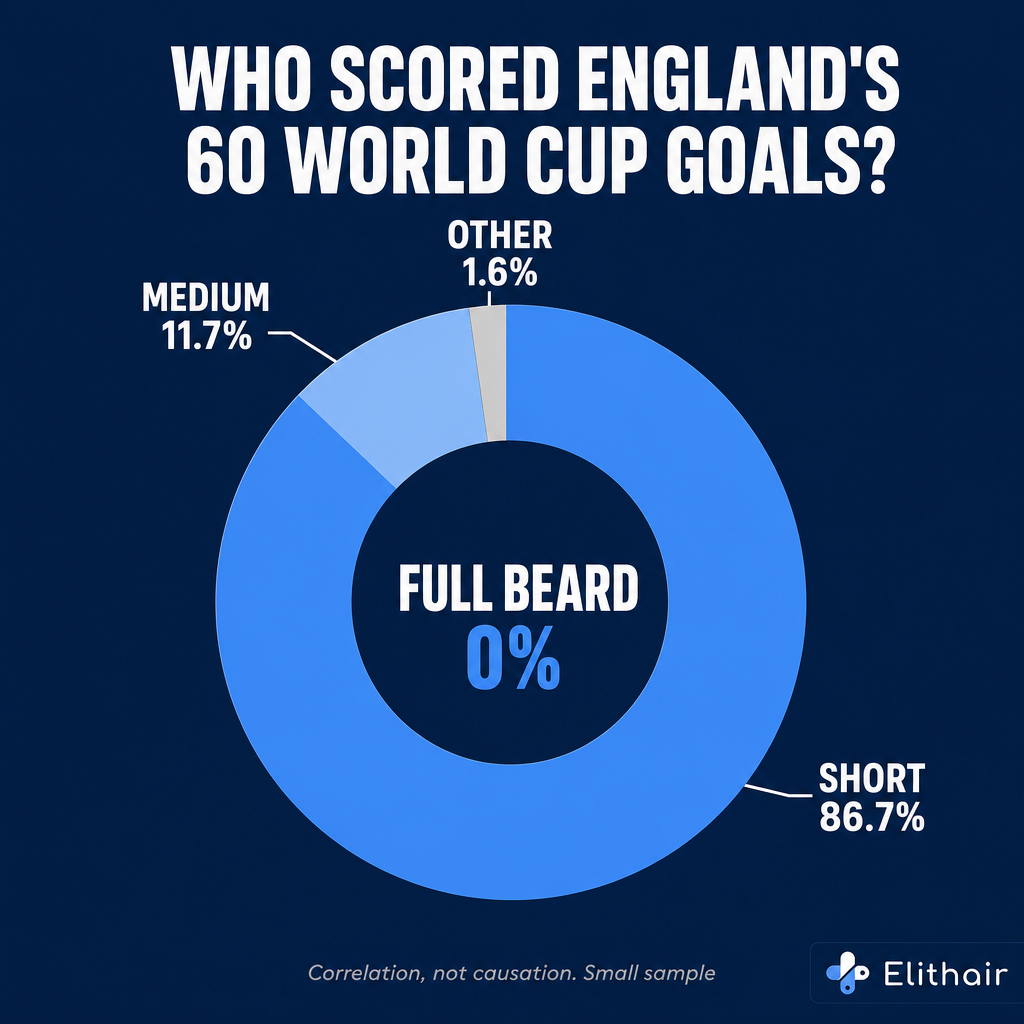
Now the part that should sting a little. Take all 60 England World Cup goals in the dataset and sort them by the scorer’s haircut, and the verdict is brutal for the romantics. Short-haired players scored 86.7 percent of England’s goals. The medium-length manes managed 11.7 percent, almost all of it one man (more on him in a second). Full beards scored exactly zero. Sort by beard instead and it is the same shape: clean-shaven heads scored 85 percent, stubble 15, full beard nothing.
And the tournaments back it up. The two scrupulously short-haired, beard-light squads of 2018 and 2022 produced the most prolific tournaments in the entire England dataset: 13 goals in 2022, 12 in 2018. The shaggier sides of the eighties managed five goals in 1982 and six in 1986. England’s tidiest teams were also their sharpest in front of goal.
Please do not read that as a haircut tactic. Hair does not score goals, the samples are small, and the real reason 2018 and 2022 outscored 1986 is that football changed, not that clippers did. But it is a gorgeous coincidence, and it is properly on brand: the nation that perfected the disciplined crop also, eventually, learned to finish. Discipline outscored the mane. The Years of Hurt rolled on regardless.
Two Golden Boots, Two Completely Different Heads
If you want the whole story in two faces, take the two men who won England a World Cup Golden Boot.
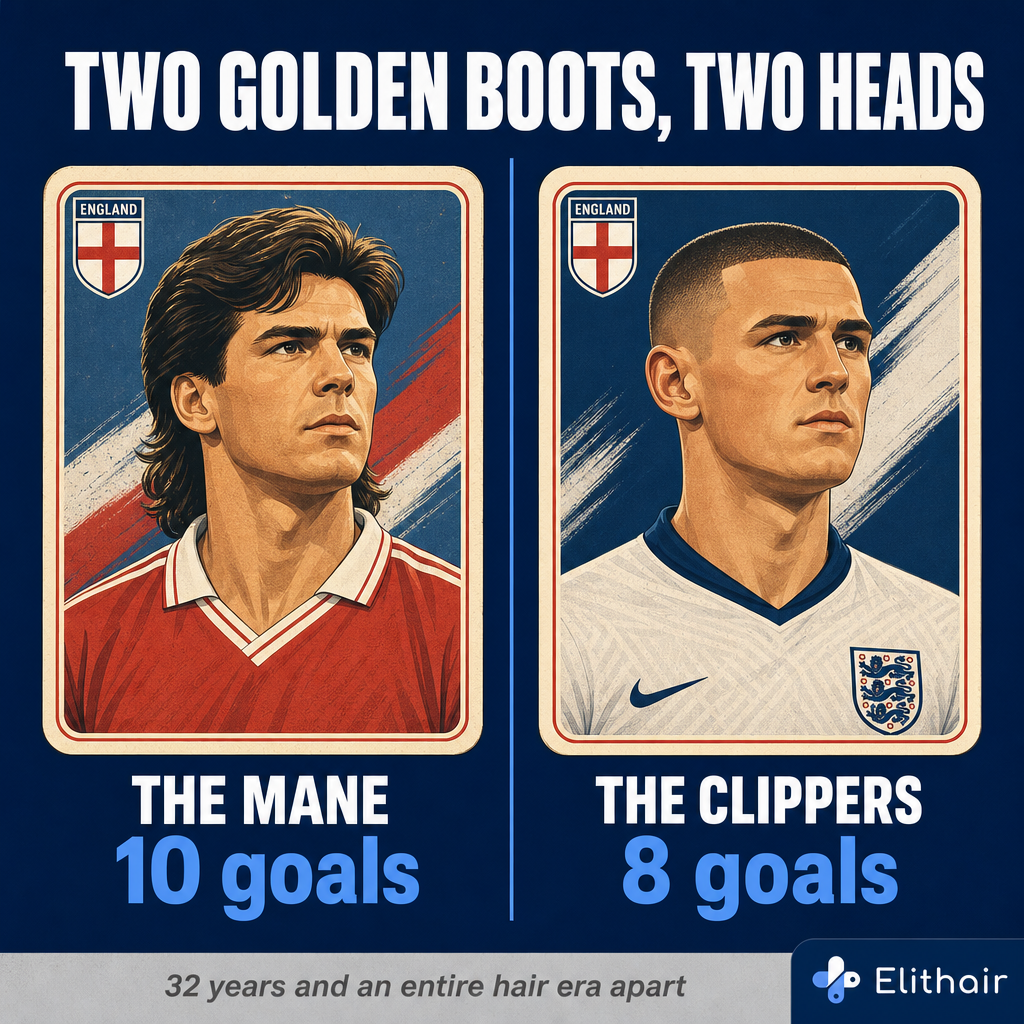
Gary Lineker top-scored the 1986 World Cup, and the detail is almost absurd: his six goals at Mexico ’86 were all six of England’s goals that tournament. The entire national attacking output, delivered by one man with a dark, side-swept, voluminous medium-length cut, more than a hint of mullet about it. England’s best striker of the eighties looked exactly like the eighties. Four years later at Italia ’90 he was back, now cropped short, and chipped in four more. Lineker’s ten World Cup goals are split right across England’s hair revolution: six with the mane, four with the crop.
Harry Kane top-scored the 2018 World Cup with six of his own, and he is the photographic opposite. A tight, clean crop, clean-shaven, the literal prototype of the Southgate era. Across the whole dataset Lineker sits on ten World Cup goals and Kane on eight, the two most prolific England forwards we recorded. Same role, same Golden Boot, 32 years and one complete hairstyle revolution apart. Lineker scored his with a mullet. Kane scored his with clippers. Neither, you will note, scored quite enough.
England Grows Its Beards in the Back Four
Time for the question every pub eventually asks. Does a proper beard mean more goals? England offer a beautifully clean test case, and the answer is a flat no.
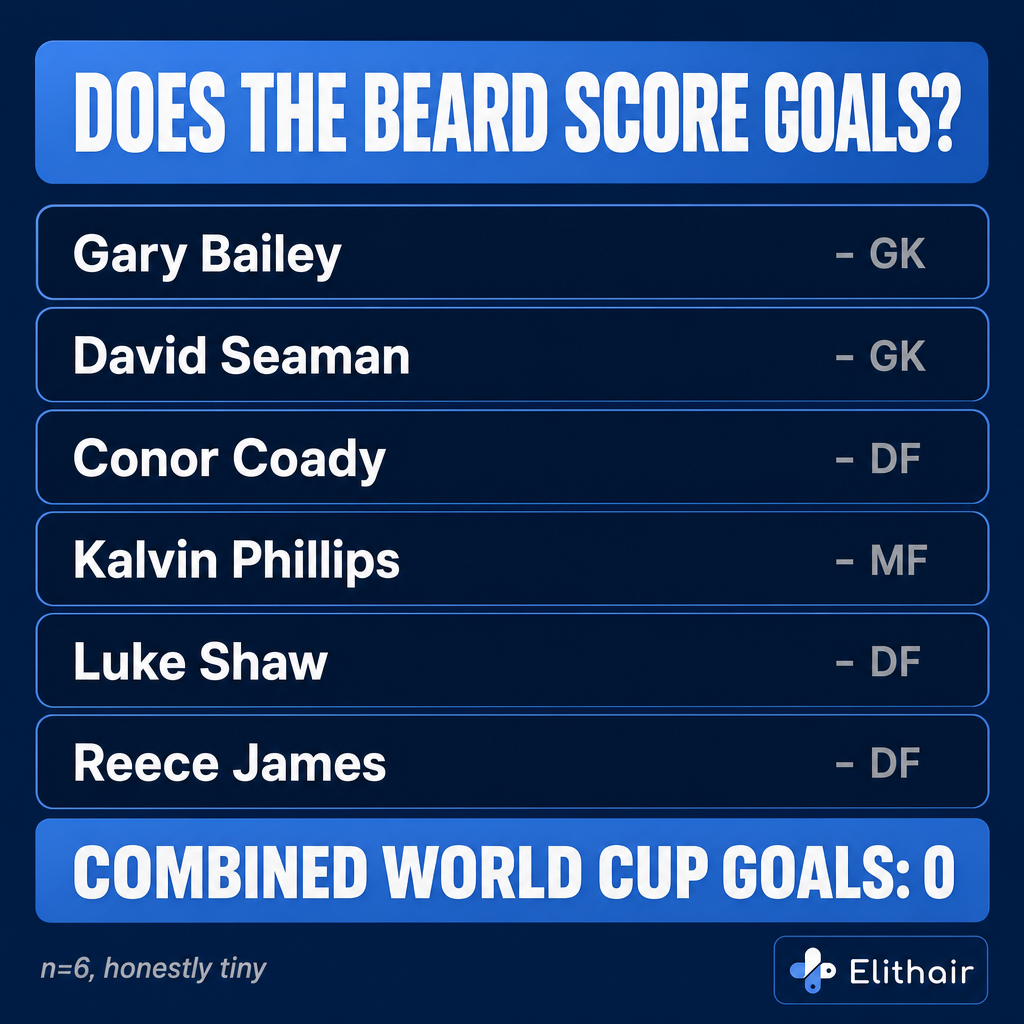
Across the entire England dataset, six players have worn a full beard at a World Cup: Gary Bailey in 1986, David Seaman in 2002, Conor Coady, Kalvin Phillips and Luke Shaw in 2022, and Reece James in 2026. Their combined World Cup goal tally is zero. Not one. And there is a reason that is not as mystical as it sounds: every full beard England has ever fielded belonged to a goalkeeper, a defender or a holding midfielder. A full-bearded England striker does not exist in the data. The forwards stayed smooth or wore designer stubble at most; the proper beards lived at the back, where nobody is paid to score.
That is the honest caveat, by the way. This is a sample of six players, n=6, which is barely a witness statement, let alone a verdict. It proves precisely nothing about beards and everything about who England trust to grow one. So next time someone insists a beard wins football matches, you can tell them no bearded Englishman has ever scored a World Cup goal, then immediately admit the sample is laughably small and order another round. That is the correct spirit.
2026: The Stubble Finally Lands
For five decades England did clean-shaven better than almost anyone. In 1970 the very first recorded squad, Banks, Moore, Hurst and the Charlton brothers, was 93 percent short-haired and 100 percent clean-shaven, the smoothest jaw line in the smoothest tournament of the whole series. England looked like they had a parade in the morning.
2026 breaks the habit, hard. For the first time, fewer than half of the England squad turned up clean-shaven: just under 47 percent. Another 47 percent now sport the three-day designer stubble, the modern scruff that has nothing to do with the proud handlebar moustaches of the old days. As recently as 2018 three-quarters of the squad were smooth. The stubble wave that swept world football has finally reached the Three Lions, fashionably late as ever.
The mane is creeping back too. After two complete blanks, zero medium-length players in both 2018 and 2022, the 2026 squad has medium-length hair again at around 13 percent, courtesy of Anthony Gordon and Declan Rice. The global centre-parting comeback has caught England as well. The full beard, mind you, stays exactly where it always lives: the only one in the 2026 squad belongs to defender Reece James. England grows beards in the back, never up front. Some laws do not change.
The Thinning Legends
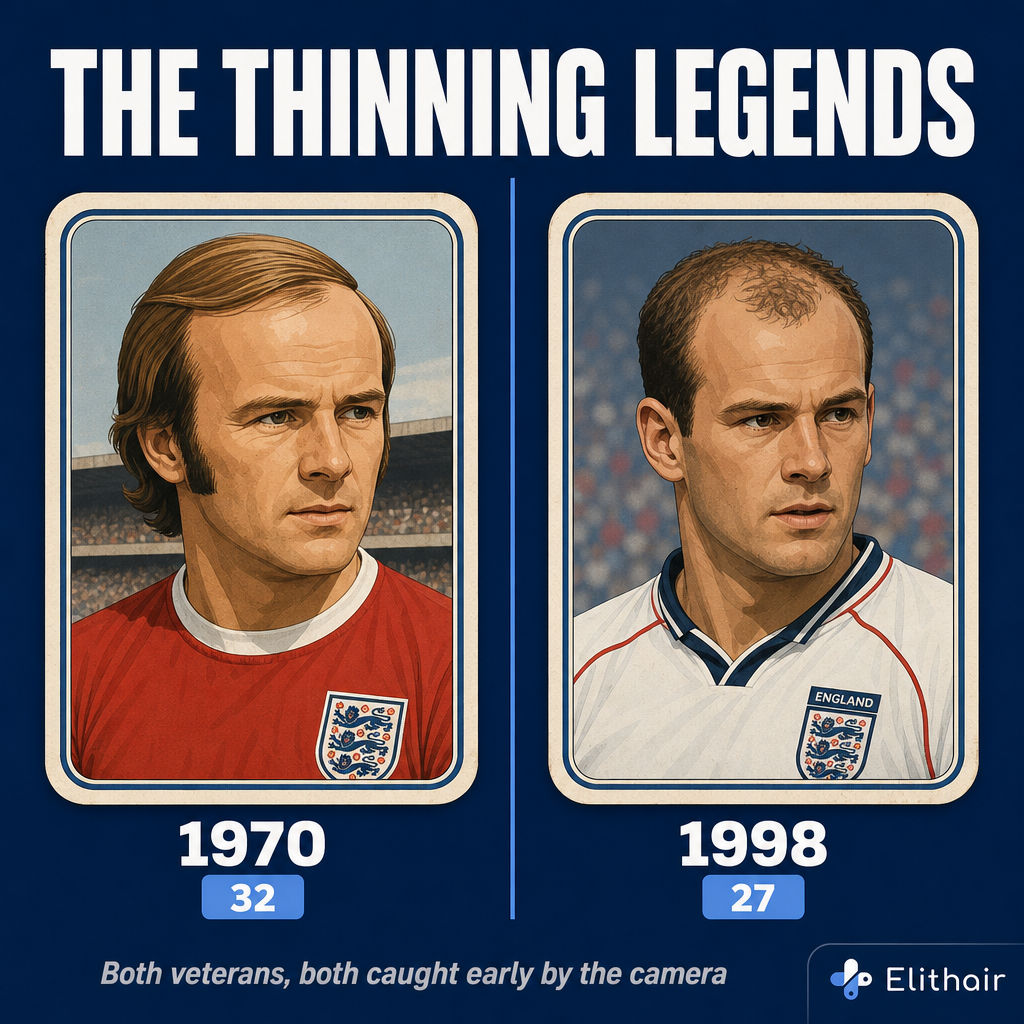
Now the quiet detail in the data, the one that has nothing to do with fashion. In 215 England portraits across 56 years, only four players were ever classified as thinning. None were classified as bald. And those four are not random squad fillers. They are, every one of them, senior figures and veterans.
Bobby Charlton in 1970, aged 32, with the famous comb-over swept across a high, receding hairline, the textbook image of the look. Gareth Southgate as a player in 1998, aged 27, already thin on top. Wayne Rooney in 2014, aged 28, whose early hair loss became one of the most talked-about in English football. And Dan Burn in 2026, aged 34, the oldest outfield player in the squad. The numbers line up with the story: England’s thinning portraits average around 30 years old, against roughly 27 for the short-haired crowd. Thinning hair in elite football tends to find the experienced, never the kids.
And it can arrive startlingly early. Rooney was so open about his receding hairline that he spoke publicly about his hair transplant, a reminder that hereditary hair loss does not wait for retirement and does not care how fit you are. Even a 28-year-old international forward at the peak of his powers can watch his hairline go. The footballers tend to do something about it because the cameras never blink, and the treatments that made Rooney’s case so visible have quietly become routine. England’s thinning legends were not unlucky outliers. They were just the ones the lens caught early.
There is a lovely symmetry to it, too. Gareth Southgate, classified as thinning at 27 in 1998, went on to manage the most rigorously short-haired squads in England’s history. The thinning defender became the discipline master. You could not script it.
Sixty Years of Hurt, Beautifully Groomed
So here is England in a nutshell, follicularly speaking. A team that never once grew its hair long and never once shaved it off. A team whose few manes lived in midfield and whose beards lived in defence. A team so committed to short hair that two whole squads turned up without a single mane between them, and then went and outscored every shaggier England side that came before.
England have had the perm and the mullet, the comb-over and the buzzcut, the lonely full beard and the designer scruff. They have had, at various points, the tidiest hair at the entire tournament. They have never, in any of it, had the cup. Sixty years of hurt, beautifully groomed.
—
*Methodology note: every player face from the official World Cup collectible sticker albums since 1970 was classified by image, with manual review, into hair (short, medium, long, thinning, bald) and beard (clean-shaven, stubble, full). The England sample is 215 portraits across fourteen tournament entries. Two of those entries, 1974 and 1978, contain only four guest stickers each because England did not qualify, so they are excluded from squad-level trends. England did not qualify in 1994 either, which is why that album has no Three Lions at all. Goal-by-hairstyle figures are for entertainment. Hairstyles do not score goals, and the per-player and beard samples are small enough to say so out loud.*
Dr. Imad Moustafa
Hair transplant specialist