

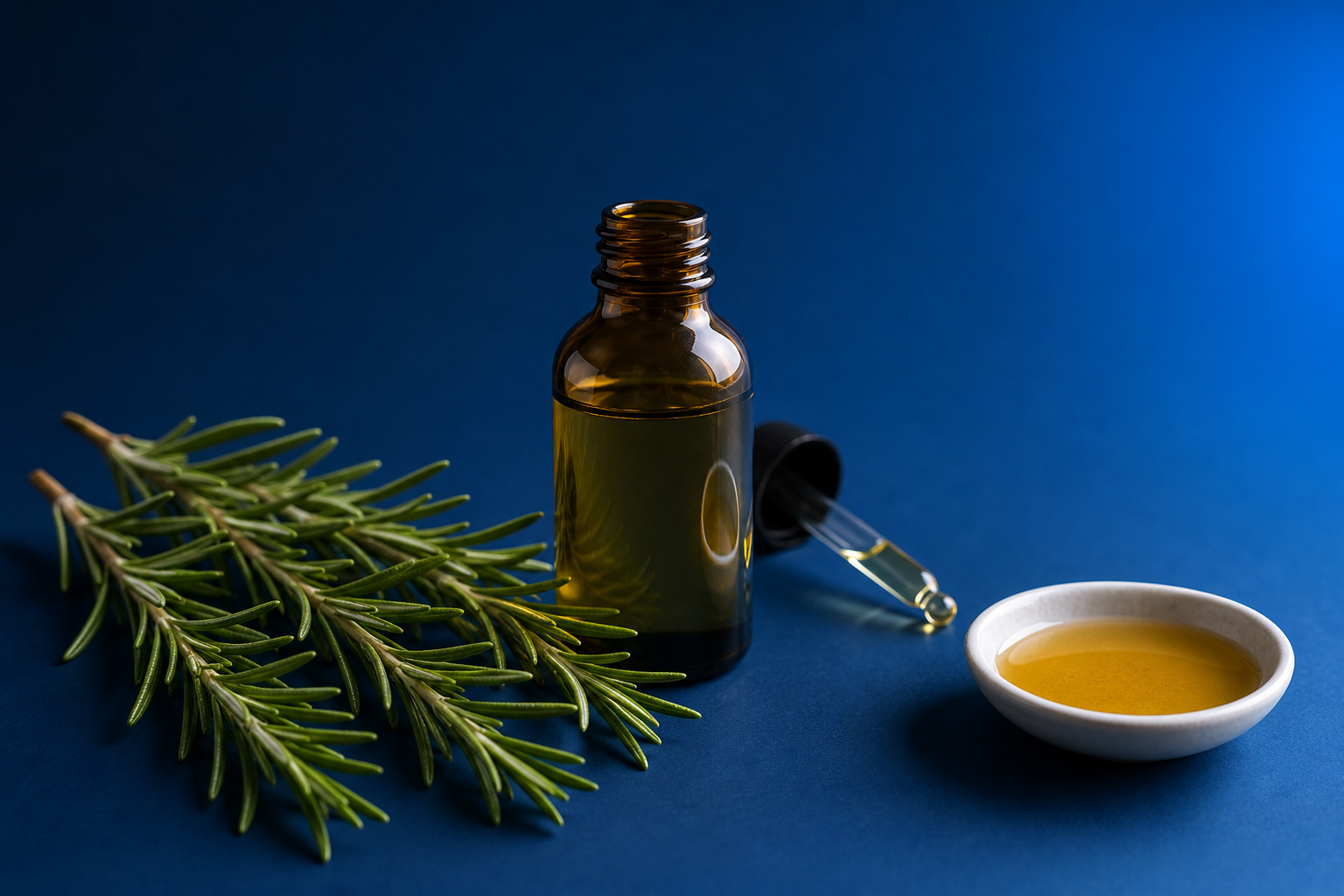
On social media, rosemary oil is sold as a natural substitute for minoxidil. The hard evidence behind that comes down to a single randomized trial: in 2015, Panahi and colleagues compared a rosemary oil lotion with a 2% minoxidil solution in 100 men with hereditary hair loss and found more hairs in both groups after six months, but no significant difference between them. That trial had no placebo arm, ran in men only and has still not been independently repeated, which makes rosemary oil a signal worth taking seriously rather than a proven substitute for treatment. This article first sorts out which kind of hair loss rosemary oil is even a candidate for, and then shows exactly how to dilute it, apply it and dose it safely.
The key points at a glance
- ✓The entire body of evidence on rosemary oil for hair loss consists of one comparative trial in 100 participants over 6 months, without a placebo group
- ✓Essential rosemary oil never goes on the scalp undiluted; 1 to 3 percent in a carrier oil is common practice, which works out to 1 to 3 drops per teaspoon
- ✓Before the first application, do a patch test on the inner elbow and wait at least 24 hours
- ✓Rosemary water is not rosemary oil, and the only thing you can make at home is an oil infusion, never an essential oil
The table of contents shows what you will find where. After that comes the diagnosis filter, then the evidence, then the application step by step.
Summary
- Who is rosemary oil right for, and who should skip it?
- Does rosemary oil really help against hair loss? What the evidence shows
- How does rosemary oil work on the scalp? The proposed mechanisms
- How to use rosemary oil on your hair: step by step
- Making rosemary oil yourself: what really works at home
- Rosemary water for hair: what it is and what it is not
- Rosemary oil compared: essential oil, rosemary water, oil infusion or finished product
- How long does it take for rosemary oil to work?
- What experiences do users report with rosemary oil?
- Is rosemary oil safe for the scalp? Side effects and limits
- Rosemary oil and the diagnosis: which kind of hair loss it makes sense for
- Conclusion: rosemary oil for hair at a glance (as of 2026)
- Frequently asked questions about rosemary oil for hair
- Sources
Who is rosemary oil right for, and who should skip it?
Rosemary oil has been studied in only one form of hair loss: hereditary male pattern hair loss. With diffuse, sudden or patchy hair loss it is the wrong approach, because the cause of the hair loss has to be identified first.
That is why this filter comes at the beginning and not at the end: if your situation falls into one of the bottom three rows, it saves you six months of applying something that misses the point.
| Your situation | What rosemary oil can do here | What counts first |
|---|---|---|
| Slowly progressing pattern hair loss: receding temples, thinning crown, hair still there but fine | The only case that has been studied. A reasoned self-experiment over six months, not a guideline-based therapy | Dilution to 1 to 3%, patch test, before photo |
| Diffuse thinning across the whole head, sudden, after an illness, a diet or a new medication | Not studied. It does not address the cause | Finding the cause, for example with a blood test for hair loss |
| Round bald patches, hair coming out in clumps, plus itching, pain or crusting | Wrong approach. Alopecia areata is driven by an autoimmune reaction | Have a dermatologist look at it promptly, do not wait |
| Bald, smooth, shiny areas without any fuzz at all | Nothing. Where no follicle is left, there is nothing to stimulate | A medical assessment of which options remain |
| Women as well as children and adolescents under 18 | No data available. The trial enrolled only men aged 18 to 49 | With hair loss in women , get the diagnosis first; for under-18s the EMA monograph advises against use |
If you are in the first row, the rest of this article is worth your time. The different forms of hair loss are set out in detail further down; first comes the question of what the evidence actually supports.
Does rosemary oil really help against hair loss? What the evidence shows
Whether rosemary oil helps against hair loss is not conclusively established: the entire body of evidence consists of one randomized comparative trial in 100 men, which found no significant difference from minoxidil 2% after six months but ran without a placebo group.
Rosemary oil is the essential oil obtained by steam distillation from Rosmarinus officinalis, a Mediterranean member of the mint family. Whether rosemary oil helps against hair loss rests on a single randomized comparative trial: in 2015, Panahi et al. published a six-month study of 100 men aged 18 to 49 with androgenetic alopecia in the journal SKINmed.
The participants had vertex-pattern hair loss of Hamilton grade II to IV. One group applied 1 ml of a standardized rosemary oil lotion twice a day, the other 1 ml of a minoxidilsolution 2%, each with gentle massage on the crown and the frontal area. Standardized microphotographs were evaluated by two blinded dermatologists.
After three months, nothing measurable had happened in either group. After six months, hair count rose significantly from baseline in both groups (minoxidil from 138.4±38.0 to 140.7±38.5; rosemary from 122.8±48.9 to 129.6±51.2; p<0.05). At no point did the trial find a significant difference between the groups (p>0.05).
The trial at a glance (Panahi et al. 2015, SKINmed)
- •Population: 100 men, ages 18 to 49, androgenetic alopecia Hamilton II to IV, Tehran
- •Intervention: rosemary oil lotion, standardized to at least 3.7 mg 1,8-cineole per ml, 1 ml twice a day
- •Comparator: minoxidil solution 2%, same schedule, 50 participants per group, no placebo arm
- •Result after 6 months: increase in hair count in both groups (p<0.05), no significant difference between the groups (p>0.05)
What this rosemary oil trial does not show
This is exactly where sober interpretation parts ways with the hype. Six points limit what the Panahi trial can tell us, and none of them makes it worthless, but together they do not support the claim that it “works like minoxidil.”
- No placebo arm. The comparison was only against minoxidil 2%, not against a dummy preparation. The fact that both groups improved does not necessarily mean the improvement came from the active ingredients. Hair loss fluctuates seasonally and cyclically all by itself.
- “No significant difference” does not mean “equally effective.” With 50 participants per group and no documented sample size calculation, a real but smaller difference may simply have gone undetected. This is the point most often twisted online.
- The comparison was against minoxidil 2%. The European S3 guideline reports two studies in which minoxidil 5% was superior to the 2 percent version. In men, 5% is the more commonly used strength.
- What was tested was a ready-made lotion, not a home blend. The preparation was standardized to at least 3.7 mg 1,8-cineole per ml. A mixture you stir together yourself from essential oil and carrier oil is not the same thing.
- Men only, vertex pattern only. Women, diffuse hair loss, alopecia areata and scarring alopecias were not the subject of the trial.
- A single study with potential for conflicts of interest. The rosemary oil product was supplied free of charge by the manufacturer, and an independent replication of comparable quality still does not exist.
One more finding worth knowing: the trial also measured participant satisfaction. On the self-reported item “less hair loss,” rosemary oil scored significantly better than minoxidil; on “more hair growth” there was no difference. Scalp itching increased in both groups, but significantly more often under minoxidil than under rosemary oil.
What the guidelines say about rosemary oil
Rosemary oil has no recommendation grade of its own in the relevant guideline. The European S3 guideline on androgenetic alopecia (Kanti et al., European Dermatology Forum, 2018, also published in the journal of the German Dermatological Society) mentions rosemary oil solely as the comparator arm of the Panahi trial in its chapter on minoxidil.
The guideline groups all other botanical and comparable preparations under “Miscellaneous,” with the conclusion that on the basis of the available literature neither a recommendation for nor against them can be made. The European Union herbal monograph of the European Medicines Agency (EMA) on Rosmarinus officinalis, aetheroleum likewise lists no approved use for hair loss.
The honest bottom line in two sentences: the signal is worth taking seriously, but it is thin. Anyone who uses rosemary oil is running a reasoned self-experiment and not a guideline-based therapy, and that is entirely legitimate as long as expectations are realistic and nothing more important gets postponed because of it.
How does rosemary oil work on the scalp? The proposed mechanisms
How rosemary oil works on the scalp is not settled: three mechanisms are discussed, namely better blood flow, antioxidant and anti-inflammatory effects, and inhibition of the enzyme 5-alpha reductase. None of them has been proven in humans. All three are plausible to differing degrees.
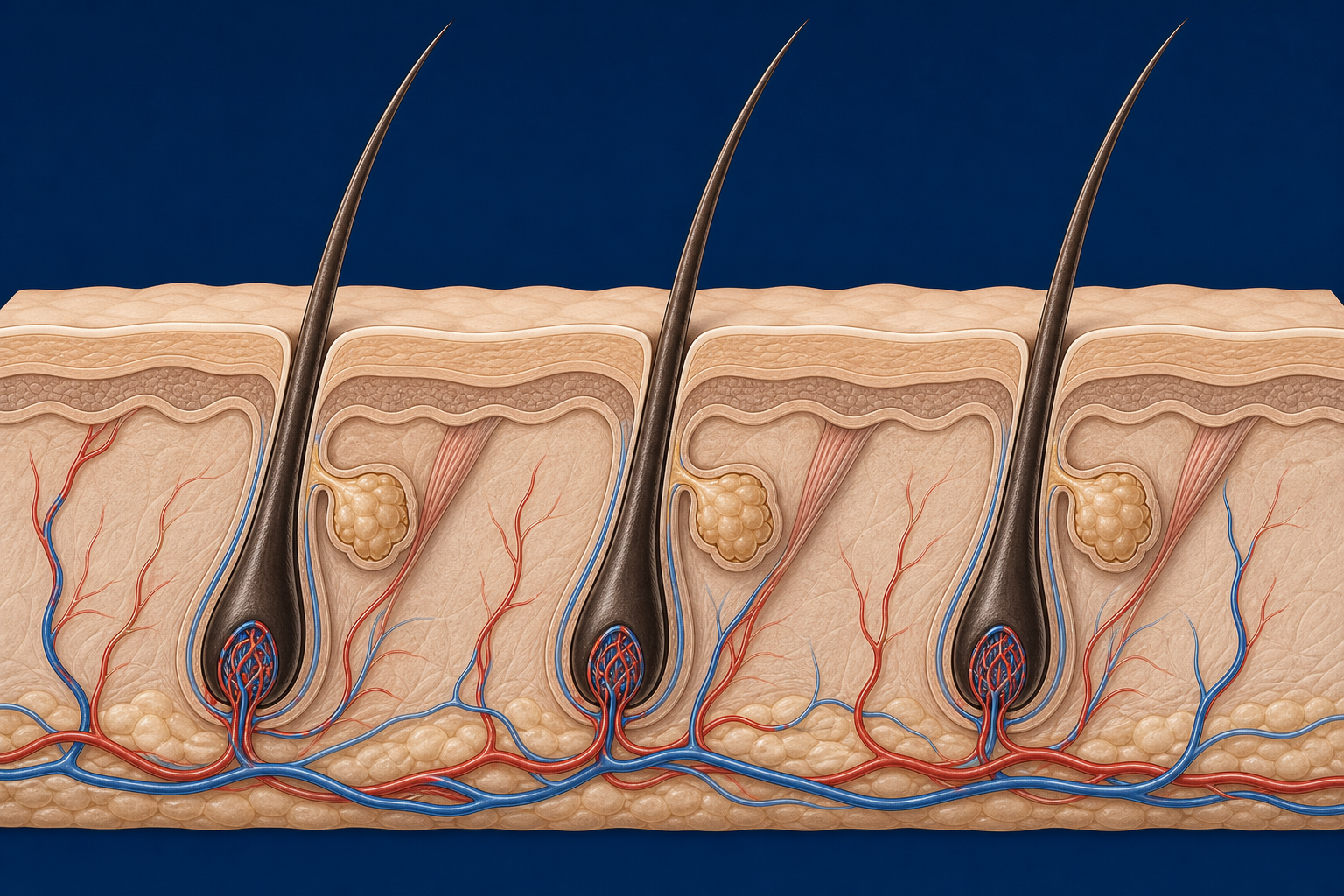
Blood flow. In older pharmacological work (Aqel 1991 and 1992, cited in Panahi et al. 2015) rosemary oil relaxed smooth muscle, which could point to vasodilation and with it a better supply to the hair follicles. Camphor is also considered to promote local circulation.
Antioxidant and anti-inflammatory. In the lab, rosemary oil scavenges free radicals and inhibits lipid peroxidation. In a paper cited by Panahi et al., patients with alopecia had lower antioxidant and higher oxidant levels in their blood. That is a possible link, not a proven one, but it is the most likely explanation for the frequently reported improvement in itching.
5-alpha reductase. An in vitro paper by Murata et al. (Phytotherapy Research 2013) found an inhibition of 82.4 percent at 200 µg/ml and 94.6 percent at 500 µg/ml for rosemary leaf extract in an enzyme assay, attributed to 12-methoxycarnosic acid. That is a cell model and not an effect on a human scalp.
One point is missing from almost every article on the subject: in the Panahi trial, the lotion was always applied with gentle massage . Part of the improvement in both arms could stem from the scalp massage rather than from the active ingredient. A plausible mechanism is simply no substitute for a proven effect in humans.
Rosemary oil and the three hair phases
- •Anagen (growth phase): this is where better blood flow is supposed to act, and this is where hair grows at around 1 cm per month
- •Catagen (transition phase): a few weeks, no plausible point of attack for a topical oil
- •Telogen (resting phase): about 10 to 15 percent of all hairs are in it (NIH StatPearls), and on the scalp it lasts particularly long. That is why the hair cycle sets the pace, not the oil
If you want to read up on the sequence in detail, you will find it in the article on the hair cycle. It is the basis for the expectation timeline further down.
How to use rosemary oil on your hair: step by step
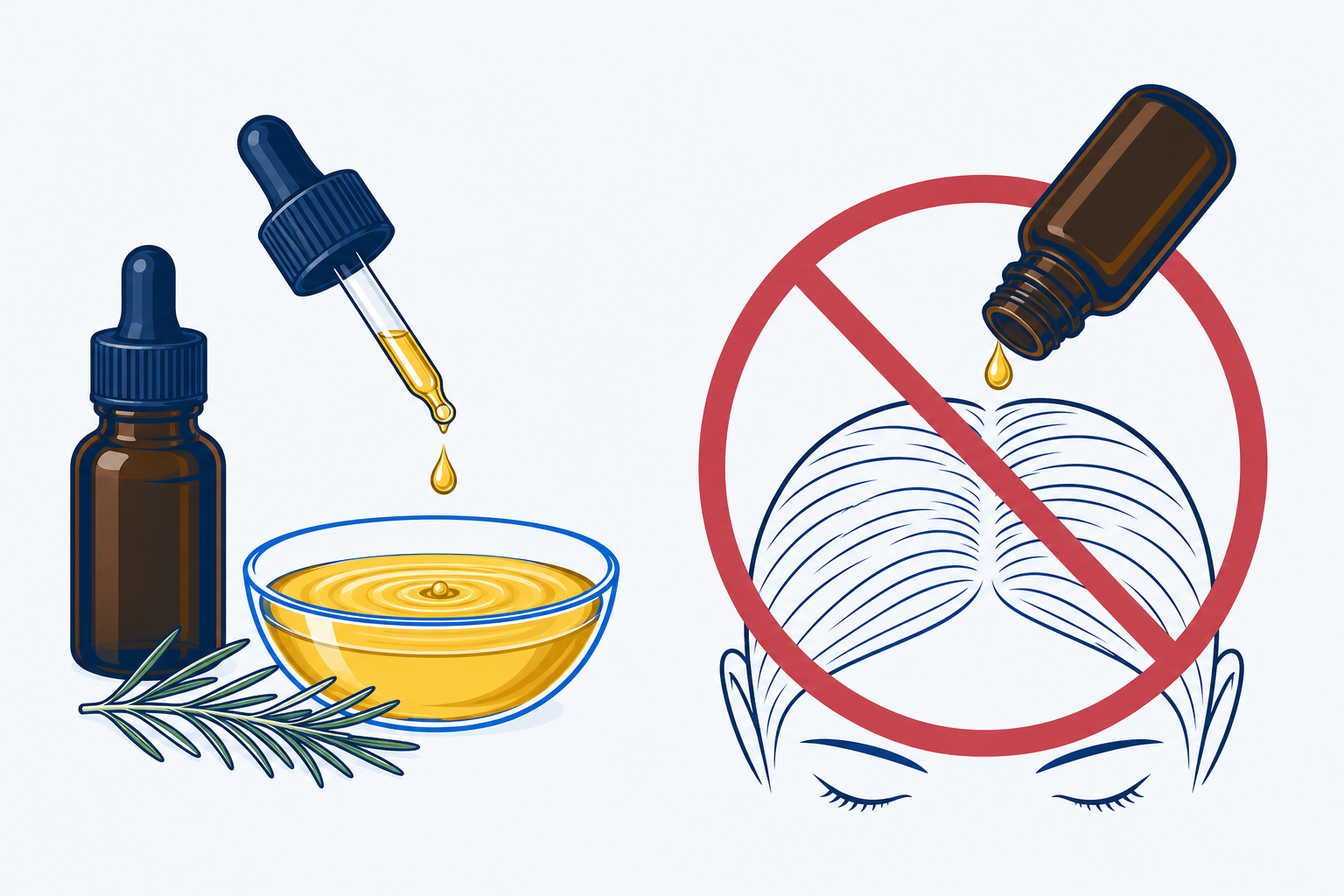
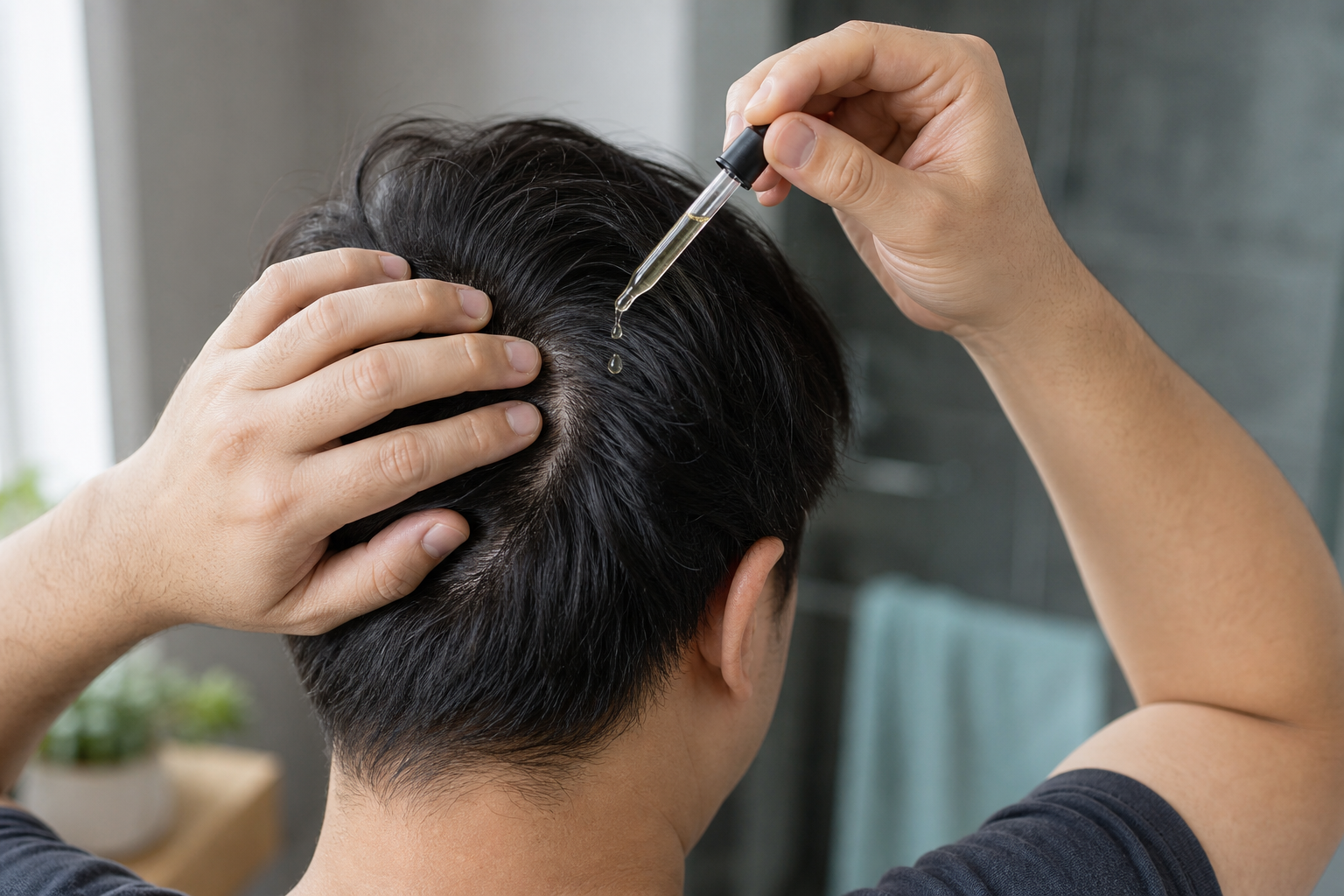
Essential rosemary oil is never used on hair undiluted; it is brought to a concentration of about 1 to 3 percent in a carrier oil, applied to the scalp, massaged in, left on for 15 to 60 minutes and washed out. With the usual industry conversion of 20 drops per milliliter, that comes to 1 to 3 drops per teaspoon of carrier oil.
This range is a safety framework, not a study dose. The fragrance industry’s self-regulatory body IFRA sets a maximum of 1.0 percent rosemary oil for leave-on body products, and the US Cosmetic Ingredient Review (CIR) rated a formulation containing 1.5 percent as neither irritating nor sensitizing in a repeat insult patch test. The one trial, by contrast, tested a ready-made lotion whose cineole content cannot be converted back into drops.
The application in eight steps
- Patch test first. Put a little of the finished blend on the inner elbow or behind the ear, leave it unwashed for at least 24 hours and watch for redness, itching or blisters. This is step 1 and not the afterthought at the end.
- Dilute. Number of drops according to the table below, carrier oil according to your scalp type (table in the next section). Label the blend and add the date.
- Apply. On the scalp, not on the lengths, part by part, section by section. Dry or slightly damp hair. Go easy on the amount: more oil does not produce a stronger effect, only more washing.
- Massage it in. Two to three minutes in circles with your fingertips, not with your nails. The massage was part of the protocol in the trial and is probably the underrated part of the whole procedure.
- Let it sit. 15 to 60 minutes is enough. Overnight is possible but has no proven added benefit and only prolongs skin contact with a potential contact allergen. If you do it anyway: put a towel on your pillow.
- Wash it out. Mild shampoo, warm rather than hot water, and shampoo twice if needed. The trick for greasy lengths: work the shampoo into the dry, oily hair first and only then add water.
- Frequency. One to three applications per week is the usual practical recommendation. Daily is not better: continuous contact with an essential oil raises the risk of sensitization, and that usually stays for life.
- Stick with it and judge honestly. Before photo in the same light, with the same head position, dry hair and the same part. You judge it in months, not in weeks.
| Amount of carrier oil | Kitchen measure | 1% (sensitive scalp) | 2% (standard) | 3% (upper practical limit) |
|---|---|---|---|---|
| 5 ml | 1 teaspoon | 1 drop | 2 drops | 3 drops |
| 10 ml | 2 teaspoons | 2 drops | 4 drops | 6 drops |
| 15 ml | 1 tablespoon | 3 drops | 6 drops | 9 drops |
| 30 ml | 2 tablespoons | 6 drops | 12 drops | 18 drops |
| 50 ml | half a small bottle | 10 drops | 20 drops | 30 drops |
| 100 ml | small bottle | 20 drops | 40 drops | 60 drops |
| Undiluted (100%) | no carrier oil | Do not use | Do not use | Do not use |
Which carrier oil suits which scalp type?
In practice, the carrier oil matters more for tolerability than the rosemary oil does: light oils such as jojoba suit oily and blemish-prone scalps, heavy ones such as coconut or castor suit dry scalps and coarse hair. There is no study on the best combination; the pairings below follow cosmetic practice.
| Scalp and hair | Works well | Better avoided, and why |
|---|---|---|
| Oily scalp, prone to breakouts along the hairline | Jojoba oil (strictly speaking a liquid wax, very light) or grapeseed oil, used sparingly | Coconut oil and other heavy oils: they can encourage pomade acne, especially at the front hairline |
| Dry, tight or flaking scalp | Almond oil as a neutral all-rounder, and coconut oil for coarse hair | Nothing in principle, but no oil treatment at all on an acutely inflamed scalp |
| Sensitive scalp that reacts quickly | A single mild oil such as jojoba, rosemary oil at 1%, patch test mandatory | Ready-made blends with many essential oils and added fragrance: every component is a possible allergen |
| Fine hair that quickly looks flat and stringy | Jojoba oil, small amount, short leave-on time of 15 to 30 minutes | Undiluted castor oil: very thick, usually needs two washes |
| Known nut or fragrance allergy | First have a dermatologist determine which plant oils you tolerate | Almond oil with a nut allergy, because it comes from the kernel of a stone fruit; with a fragrance allergy, the rosemary oil itself as well |
The smell: why many people stop after two weeks
Rosemary oil smells intensely herbal and camphor-like, and that smell is the number one practical reason people quit. Depending on hair length, a residual scent lingers after washing and tends to resurface when you put on a hat or sit in a warm office. With an overnight application, the whole bedroom smells of it in the morning.
In practice, the fix is simple: apply in the evening rather than in the morning, start at 1 percent instead of 3, and wash twice with a mild shampoo before a workday. Anyone who schedules the whole thing for the weekend tends to keep the routine going far longer than someone who tries it out on a Tuesday before a meeting.
The most common mistakes when using rosemary oil
Most disappointments come from the application and not from the oil: used undiluted, used in too large an amount, put on the lengths instead of the scalp, used daily, given up after two weeks, applied to an inflamed scalp or started without any patch test. Another classic: touching the dropper to the scalp or hair and carrying germs back into the bottle.
Breakouts along the hairline usually come from the carrier oil rather than from the rosemary oil, as described above. The fix: choose a lighter carrier oil, use less, leave out the front hairline and rinse more thoroughly.
Sun: according to the CIR test data, rosemary oil is not phototoxic, but a film of oil on thinning spots and receding temples is no sun protection either. Do not go out into blazing sun unprotected after an application. With extensions, bonded hair and scalp micropigmentation , be careful: oils can loosen adhesive bonds, there is no solid research on it, and when in doubt ask at the studio.
Combining rosemary oil with minoxidil, a dermaroller or shampoo
Combinations are possible, but not without limits. Minoxidil and oil do not belong on the same spot at the same time: the oil changes the conditions for absorption of the active ingredient, and this combination has not been studied anywhere. Anyone using both should space the applications apart in time and discuss it with the treating physician.
After microneedling with a dermaroller , no essential oil belongs on the scalp while the microchannels are fresh. That is exactly what they are made for: they carry everything deeper, potential contact allergens included. Mixing it into shampoo is the least complicated option, but because of the short contact time it is also the weakest.
Checklist: patch test and safe use
Before the first application
- ✓Mix up the finished dilution, never test the undiluted essential oil
- ✓A pea-sized amount on the inner elbow or behind the ear, keep the spot dry for 24 hours
- ✓Redness, itching, burning or blisters mean: do not use it
- ✓Take a before photo: same light, same part, dry hair
With every application
- ✓On the scalp only, sparingly, massage in for two to three minutes
- ✓Never touch the dropper to scalp or hair, drip it from a distance into your palm
- ✓Wash your hands after applying, keep away from the eye area
- ✓Space it out: one to three applications per week, not daily
- ✓Store the blend in a cool, dark place, tightly closed and out of reach of children and pets
Warning signs and when to stop
- ✓Burning that lasts longer than a few minutes: wash it out immediately
- ✓Redness the next day, blisters, weeping or increasing itching: stop
- ✓Symptoms that persist: have a dermatologist check them
Making rosemary oil yourself: what really works at home
Essential rosemary oil cannot be made at home. It is produced exclusively by steam distillation, and that cannot be recreated in a kitchen. What you get at home is a rosemary oil infusion, technically a macerate: carrier oil that has taken up some of the rosemary constituents, orders of magnitude weaker and not standardized.
That is not a criticism, just a classification. An oil infusion is perfectly fine as scalp care, it is just not what was studied in the Panahi trial. Anyone who wants the version that was studied needs a pure natural essential oil and the dilution from the table above.
Recipe: rosemary oil infusion in four steps
- Use dried rosemary. Residual moisture from fresh herbs in an oil infusion encourages mold and, in rare cases, anaerobic bacterial growth. That is a standard food hygiene warning for homemade herb oils and applies here in exactly the same way.
- Set it up. Fill a clean, dry jar about a third full with dried rosemary and cover it completely with carrier oil. Cold infusion: leave it in the dark for two to four weeks, swirling it occasionally. Warm infusion: several hours in a water bath at low temperature.
- Strain it. Through a fine strainer or a cloth, removing all plant material completely. Anything floating in the oil is a source of germs.
- Store it and check it. Dark bottle, cool and away from light, labeled with the date. A rancid smell, cloudiness or sediment means: throw it out.
How to spot a good essential rosemary oil
Because search results for rosemary oil are dominated by shops, what follows is not a product tip but a checklist. What matters is the botanical name, the declaration as 100 percent pure natural essential oil, a batch number and country of origin, and dark glass. The chemotype is worth a look as well.
Depending on where it comes from, rosemary oil is available as a cineole, camphor or verbenone type. The difference matters for safety: in their standard reference on aromatherapy safety, Tisserand and Young give dermal maximums of 16.5 percent for the camphor type and 6.5 percent for the verbenone type. Those are toxicological limits and not usage recommendations, but they show that the chemotype is not irrelevant. A CO2 extract is something else again: different process, different constituent profile, not the study product.
| This belongs on the label | This argues against buying it |
|---|---|
| Botanical name Rosmarinus officinalis | No botanical name, just “rosemary” |
| “100% pure natural essential oil” | “fragrance oil,” “perfume oil,” “nature-identical” |
| Chemotype stated (cineole, camphor, verbenone) | No information on chemotype or origin |
| Country of origin and batch number | Missing batch number, no expiration date |
| Dark glass with a dropper insert | Clear glass or a plastic bottle |
| In finished products: a position high up in the INCI list | In finished products: Rosmarinus officinalis right at the end of the INCI list |
| A stated concentration or percentage | Only “with essential oils,” with no amount stated |
Rosemary water for hair: what it is and what it is not
Rosemary water for hair is a water-based extract of rosemary needles and not an oil. It contains water-soluble constituents such as rosmarinic acid, but hardly any of the fat-soluble components of the essential oil. The Panahi trial did not study rosemary water, so its result cannot be transferred to rosemary water.
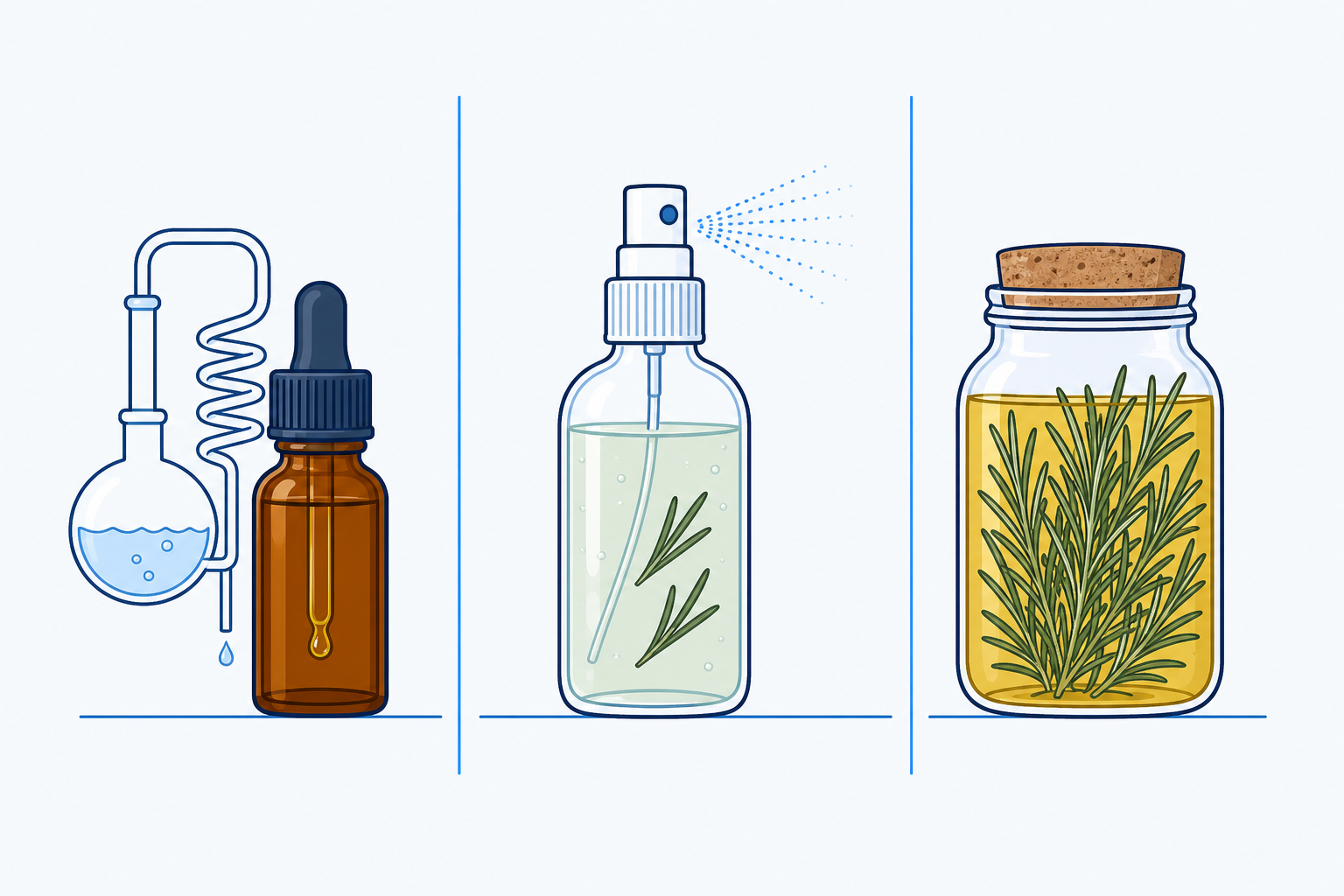
It is made in three ways. For an infusion the needles are covered with hot water and left to steep, for a decoction they simmer for a few minutes, and for a cold infusion they steep for hours in cold water. The decoction extracts the most, the cold infusion is gentlest on heat-sensitive compounds.
The most important point is mentioned almost nowhere: homemade rosemary water is a water-based product without a preservative and therefore a breeding ground for germs and mold. There is no official shelf-life figure from any authority for it, and the numbers circulating range from one day to four weeks. So stay conservative.
In practice that means: a clean spray bottle, keep it in the fridge, use it for a few days only and throw it out at any sign of cloudiness, flakes or a changed smell. Do not spray it on a broken or inflamed scalp. It is used as a leave-in spray or as a final rinse, and washing it out is not necessary.
The honest classification: rosemary water is pleasant, inexpensive and lower in risk than an essential oil, but far less well supported. Anyone looking for the effect seen in the trial should use the diluted essential oil; anyone who just wants light scalp care can hardly go wrong with rosemary water.
Rosemary oil compared: essential oil, rosemary water, oil infusion or finished product
The four rosemary oil variants differ above all in concentration, and only one standardized oil preparation has been studied. The essential rosemary oil is highly concentrated and has to be diluted, the homemade oil infusion is weak and unstandardized, rosemary water contains only the water-soluble fraction, and finished products often contain no more than a trace of it.
| Criterion | Essential oil (diluted) | Rosemary water | Oil infusion (macerate) | Finished product |
|---|---|---|---|---|
| Extraction | Steam distillation | Infusion or decoction | Cold or warm infusion in carrier oil | Industrial, usually heavily diluted |
| Studied in the trial? | Yes, as a standardized ready-made lotion | No | No | No |
| Concentration | High, has to be diluted to 1 to 3% | Low, water-soluble compounds only | Low to medium, unstandardized | Usually very low, check the INCI position |
| Application | On the scalp, massaged in | Spray or final rinse | On the scalp, massaged in | As directed by the manufacturer |
| Washing out needed? | Yes | No | Yes | Depends on the product |
| Shelf life | Years, stored dark and cool | A few days, refrigerated only | Months, can turn rancid | As stated on the pack |
| Main risk | Contact dermatitis if used incorrectly | Microbial spoilage | Mold from residual moisture | Fragrances and alcohol, little active ingredient |
| Effort | Low, mix it once | Medium, make it fresh regularly | High, weeks of lead time | None |
With finished products such as rosemary hair oils, sprays or shampoos, the same checklist helps as when buying the pure oil: does Rosmarinus officinalis appear high up in the INCI list or right at the end? Is a concentration stated? Does the product stay on the scalp or is it washed out? And does it contain additional fragrances or alcohol that could irritate a sensitive scalp further?
Rosemary oil is not the only essential oil discussed for hair, by the way. Peppermint oil is marketed in similar terms but has only preclinical data behind it, castor oil and coconut oil are conditioning oils with no proven effect on hair growth, and argan oil acts on the hair fiber rather than on the follicle. You will find the overview in the article on essential oils for hair growth.
How long does it take for rosemary oil to work?
With rosemary oil, nothing can be judged before several months have passed, because the hair cycle sets the pace and not the oil. Scalp hair grows around 1 cm per month, roughly 0.35 mm a day (NIH StatPearls), and a hair in the resting phase needs months before it sheds and a new one pushes through.
The only hard timing comes from the Panahi trial itself: after three months no significant change was measurable in either group, and only after six months did hair count rise significantly from baseline. Anyone expecting a result after four weeks is up against biology.
| Period | What realistically happens | What does not happen yet |
|---|---|---|
| Week 1 to 4 | The scalp feels suppler, itching and flaking can ease, and tolerability becomes clear | Nothing is visible or measurable in terms of hair growth |
| Month 2 to 3 | The routine is established, and biologically the first changes in the hair cycle would be possible at the earliest now | In the trial, no significant change in hair count was measurable after 3 months |
| Month 3 to 4 | Regrowing hairs are still short and fine, and a first photo comparison is worthwhile | Visibly more density that other people notice |
| Month 5 to 6 | The point at which the trial measured a significant increase in hair count | Any replacement for lost follicles on bald areas |
| From month 6 | The honest point to judge it: compare photos and decide whether to keep going or get it checked out | A finished result that lasts without further application |
| After that | Anyone who sees an effect keeps going permanently, because the hair loss itself continues | A one-time course of treatment with a lasting effect |
On the frequently reported heavier shedding at the start: in the trial itself, no shedding is documented for rosemary oil, and the side effect profile shows only increased itching. Heavier shedding at the beginning is described above all for minoxidil. With rosemary oil, normal cycle fluctuations or the mechanical effect of the massage are the more obvious explanation.
If nothing is apparent after about six months of consistent use, that is information and not a reason to double the dose. At that point the cause of the hair loss needs to be worked out instead of spending another six months on the symptom.
What experiences do users report with rosemary oil?
Experiences with rosemary oil for hair range from clear satisfaction to no effect at all. The most common and most plausible reports are of less itching, less flaking and a suppler scalp. Visibly more density is reported more rarely and far less precisely.
There are four reasons why personal reports are particularly unreliable here. First, selection: nobody films a video when they see no effect. Second, the photos: light, camera angle, wetness, haircut and styling change apparent density more than any oil does in six months.
Third, parallel changes: many people change their diet, shampoo or stress level at the same time, or start taking supplements. Whatever worked can then no longer be pinned down. Fourth, cycle fluctuation: hair loss increases and decreases seasonally on its own, and more than one success story lands in exactly such a lull.
| What gets claimed on social media | What can actually be supported |
|---|---|
| “Works just as well as minoxidil” | One trial without a placebo arm found no difference from minoxidil 2%. That is not proof of equivalence, and the strength commonly used in men is 5% |
| “Results after two weeks” | In the trial, nothing was significantly measurable after 3 months, only after 6 |
| “Brings receding temples back” | What was studied was vertex-pattern hair loss, Hamilton II to IV. On bald areas without follicles there is nothing to stimulate |
| “Helps against gray hair” | Graying is caused by aging melanocyte stem cells (NIH). There is neither a study nor a plausible mechanism for rosemary oil |
| “The more, the better” | Higher concentrations mainly raise the risk of contact dermatitis. IFRA sets a maximum of 1% for leave-on products |
| “Natural means free of side effects” | Cases of contact dermatitis from rosemary oil have been published, including on the scalp |
| “Rosemary water works just like the oil” | Different composition, never studied. The findings cannot be transferred |
| “You can make essential oil yourself” | Only by steam distillation. At home you get an oil infusion |
If you still want to find out for yourself, do it properly: a before photo in daylight, always the same position and the same part, change only one thing at a time, write down your protocol and judge only after six months. That carries more weight than most before-and-after pictures online.
Is rosemary oil safe for the scalp? Side effects and limits
Diluted, rosemary oil is well tolerated by most people, and the relevant risks are skin irritation and allergic contact dermatitis. In the safety tests of the US Cosmetic Ingredient Review (CIR), rosemary leaf oil at 10 percent in petrolatum was non-irritating in a 48-hour occlusive patch test, and a formulation containing 1.5 percent was neither irritating nor sensitizing in a repeat insult patch test.
But that applies to diluted use only. Undiluted, essential oils can cause redness, burning and contact dermatitis, and repeated contact raises the risk of sensitization. Once acquired, a contact allergy usually stays for good. Such cases have been published for rosemary oil, among them a case report of treatment-resistant eczema on the scalp, neck and hands in which the diterpene carnosol was identified as the trigger.
What to do if it gets in your eye
If rosemary oil gets into your eye, rinse thoroughly with water first: under running water or by dipping your face into a bowl, opening and closing the eyelid repeatedly and moving your gaze in all directions. Only afterwards, if the burning persists, can a drop of neutral plant oil be applied (a recommendation from the Tisserand Institute). If the symptoms persist, have an eye doctor look at it.
Pregnancy, breastfeeding, children and pre-existing conditions
The European Union herbal monograph of the European Medicines Agency (EMA) on rosemary oil states that safety in pregnancy and breastfeeding is not established and that use is not recommended for lack of sufficient data. The same monograph advises against use in children and adolescents under 18, likewise because of insufficient data.
With infants and toddlers there is a separate risk on top of that: pharmaceutical trade publications and pediatricians’ professional bodies warn against camphor- and cineole-containing essential oils in the face and nose area, because they can trigger a spasm of the larynx. Rosemary oil belongs to this group. Without medical advice it has no place there.
Epilepsy: camphor is known to lower the seizure threshold, but the documented cases almost all involve oral intake or very high doses. For diluted use on the scalp, no case report was found. Anyone with epilepsy is nevertheless better off discussing the use with a doctor beforehand.
High blood pressure: classic aromatherapy lists rosemary oil as circulation-stimulating, but that warning goes back to a source from 1964 whose references turned out to be misattributed or untraceable (analysis by Robert Tisserand). Its main constituent, 1,8-cineole, tended to lower blood pressure in animal studies. Solid human data are missing in both directions, so with pronounced or unstable high blood pressure it still makes sense to check with a doctor first.
Scalp, pets and the right time after a hair transplant
Rosemary oil has no business on an inflamed, broken or weeping scalp. Treat the scalp inflammation first, and only then think about care. With atopic dermatitis, psoriasis, seborrheic eczema or known fragrance allergies the same applies in a milder form: only after medical advice.
One point that appears in almost no article: concentrated essential rosemary oil is regarded by veterinary sources such as the ASPCA and VCA Animal Hospitals as potentially toxic to cats, because their livers can break down certain compounds only to a limited extent. In practice this matters above all with the popular overnight application. Cover your head, keep the animal off the pillow and store the bottle closed.
After a hair transplant , no oil belongs on fresh grafts or on the donor area. There is no reliable figure for when it becomes harmless again: the time frames circulating come from clinic blogs, not from guidelines. What counts is therefore not a number but the explicit clearance from the treating clinic.
| Situation | Why no rosemary oil | What makes sense instead |
|---|---|---|
| Undiluted use | Irritation and contact dermatitis, increased risk of sensitization | Dilute to 1 to 3% in a carrier oil, patch test beforehand |
| Known allergy to mint-family plants or to fragrances | Cross-reactions and renewed sensitization possible | Ask a dermatologist, patch testing if appropriate |
| Inflamed, broken or sunburned scalp | Disrupted skin barrier, stronger irritation, deeper absorption | Have the inflammation treated first, then talk about care |
| Atopic dermatitis, psoriasis, seborrheic eczema | Sensitive and pre-damaged skin reacts unpredictably | Only after medical advice, mild basic care |
| Freshly transplanted area and donor zone | Grafts and wound surfaces do not tolerate essential oils, and no reliable time frame is available | Only after explicit clearance from the treating clinic |
| Freshly needled scalp after microneedling | Open microchannels carry everything deeper, allergens included | Use it only once the skin has fully closed |
| Pregnancy and breastfeeding | EMA monograph: safety not established, use not recommended | Medical advice, and when in doubt skip it |
| Children and adolescents under 18 | The EMA monograph advises against it for lack of data; in small children there is a risk of a laryngeal spasm | A medical work-up of the hair loss instead of self-treatment |
| Epilepsy | Camphor is proconvulsant, though the cases involve oral or high doses | Discuss it with a doctor beforehand, choose low-camphor chemotypes |
| Pronounced or unstable high blood pressure | The classic contraindication is poorly supported and human data are missing | Check with your doctor first |
| Household with a cat or dog | Concentrated essential oils are considered potentially toxic to cats | Cover your head, keep the animal off the pillow, store the bottle safely |
| Sudden, clumping or patchy hair loss | This calls for a diagnosis, not a home remedy | Have a dermatologist check it promptly |
See a doctor rather than reach for the oil if the hair loss comes on suddenly or in clumps, if round bald patches appear, if itching, pain, redness or crusting come with it, if fatigue, weight changes or changes to your menstrual cycle accompany it, if it started after a new medication, or if children are affected.
Rosemary oil and the diagnosis: which kind of hair loss it makes sense for
Rosemary oil has only been studied in hereditary pattern hair loss, and even there only in men. The filter above gives the short version; here are the details behind it.
Rosemary oil has been studied exclusively in androgenetic alopecia, that is, pattern hair loss with receding temples, a thinning crown and a thinning top of the head, and there only in men with Hamilton grade II to IV. For every other form of hair loss there is no study on rosemary oil at all.
With diffuse hair loss across the whole head, for instance from iron deficiency, a thyroid disorder, medication or an acute telogen effluvium, what is needed is a work-up of the cause and not an oil. Alopecia areata is driven by an autoimmune reaction, and with scarring alopecias every lost month counts, because destroyed follicles do not come back.
That also answers the question behind most disappointments: on a bald, smooth, shiny spot, rosemary oil does nothing. At best it can support follicles that are still there and miniaturized. Where no follicle is left, there is nothing to stimulate. With hair loss in women , there are no data on rosemary oil at all, because the trial enrolled no women.
What we see in our hair consultation
People regularly come to our hair consultation after using a home remedy for six months without knowing which kind of hair loss they actually have. There is nothing wrong with the oil as such. The problem is the time lost when the cause was something entirely different and would have been treatable.
That is exactly the order this article suggests: first the classification, then the tool. No oil and no medication can achieve anything if it is aimed at the wrong form of hair loss. Where follicles are still present and merely shrunken, the goal is preservation. Where they are lost, a hair transplant is the established option, in which extraction by FUE and implantation by DHI belong together.
You do not need an appointment for that first step. Our free hair analysis is a visual assessment of your loss pattern based on photos: it shows which pattern you have and which stage you are at, and it replaces neither a medical blood test for hair loss nor a dermatological diagnosis. What it does tell you is whether your case even falls within the scope in which rosemary oil was studied.
If the assessment shows that no procedure is needed, that is just as good a result. You then know what to spend the next six months on, instead of guessing.
Conclusion: rosemary oil for hair at a glance (as of 2026)
Rosemary oil for hair is a plausible, inexpensive home remedy with a single study signal worth taking seriously: in the randomized comparative trial by Panahi et al. (2015), hair count rose in both arms in 100 men with androgenetic alopecia after six months, with no significant difference between the rosemary oil lotion and minoxidil 2%.
Because a placebo arm is missing, the sample is small and nobody has repeated the trial independently, the European S3 guideline gives neither a recommendation for nor against rosemary oil. Anyone who uses it dilutes it to 1 to 3 percent, does a patch test beforehand, stays at one to three applications per week and judges after six months. Rosemary water is a different matter and cannot claim the trial’s results.
In favor
- +Inexpensive, freely available and easy to get
- +At least one randomized comparison does exist
- +Less itching than under minoxidil in the same trial
- +Pleasant to use and easy to combine with medical treatment
Against
- −The evidence rests on one trial without a placebo arm
- −No guideline recommendation, and no approved use in the EMA monograph
- −No effect on areas that are already bald, studied in one form of hair loss only
- −Risk of irritation and allergy, demands months of discipline and can delay a proper work-up
Frequently asked questions about rosemary oil for hair
How many drops of rosemary oil go into how much carrier oil?
The practical range is 1 to 3 percent. With the usual conversion of 20 drops per milliliter, that comes to 1 to 3 drops per teaspoon (5 ml) or 6 to 18 drops per 30 ml of carrier oil. If your scalp is sensitive, start at 1 percent.
Is rosemary oil as effective as minoxidil?
There is no way to know for sure. One trial (Panahi et al. 2015) found no significant difference from minoxidil 2% after 6 months. Without a placebo arm, with 50 participants per group and against the weaker concentration, that is not proof of equivalence.
Can you mix rosemary oil into shampoo?
Yes, and it is the least complicated option: a few drops into the amount of shampoo for a single wash, not into the whole bottle. Because of the short contact time on the scalp it is the weakest form of use, and the evidence does not cover it.
Does rosemary oil help against receding temples?
Only where miniaturized hairs are still standing. What was studied was vertex-pattern hair loss of Hamilton grade II to IV, and on a bald, smooth, shiny surface there is no follicle left that an oil could stimulate. A lost hairline cannot be brought back this way.
Does more hair fall out at the start when you begin using rosemary oil?
In the trial itself, no heavier shedding at the start is documented for rosemary oil, and the side effect profile shows only increased itching. Heavier shedding at the beginning is described above all for minoxidil. With rosemary oil, normal cycle fluctuations or the massage are the more obvious explanation.
Does rosemary oil help against gray hair?
No, there is neither a study nor a plausible mechanism for it. Graying is caused by aging melanocyte stem cells in the hair follicle, which supply fewer pigment-producing cells (NIH). A topically applied oil does not affect that.
Does rosemary oil help with alopecia areata?
There is no study on rosemary oil alone for it. Alopecia areata is an autoimmune reaction and needs a dermatological work-up. An older paper by Hay et al. (1998) tested a blend of several essential oils, but that is neither rosemary oil on its own nor transferable to hereditary hair loss.
Sources
- Panahi Y, Taghizadeh M, Tahmasbpour Marzony E, Sahebkar A. Rosemary Oil vs Minoxidil 2% for the Treatment of Androgenetic Alopecia: A Randomized Comparative Trial. SKINmed. 2015;13(1):15-21. PubMed
- Kanti V, Messenger A, Dobos G, et al. Evidence-based (S3) guideline for the treatment of androgenetic alopecia in women and in men. J Eur Acad Dermatol Venereol. 2018;32(1):11-22. Full text (PDF)
- European Medicines Agency, HMPC. European Union herbal monograph on Rosmarinus officinalis L., aetheroleum. EMA/HMPC/513893/2021. EMA
- Cosmetic Ingredient Review. Safety Assessment of Rosmarinus Officinalis (Rosemary)-Derived Ingredients. CIR (PDF)
- Murata K, et al. Promotion of hair growth by Rosmarinus officinalis leaf extract. Phytother Res. 2013 (preclinical, cell model). PubMed
- NIH/NCBI StatPearls. Physiology, Hair (growth rate, hair cycle). NCBI Bookshelf
- NIH News in Health. Aging melanocyte stem cells and gray hair. NIH
- DermNet NZ. Allergic contact dermatitis to essential oils. DermNet
- Tisserand Institute. What to do when experiencing an adverse reaction (first aid for eye contact) and Safety maximums for dermal application. Tisserand Institute
- Pharmazeutische Zeitung. Ätherische Öle: Für Babys und Kleinkinder gefährlich (essential oils are dangerous for babies and toddlers, article in German). Pharmazeutische Zeitung
- ASPCA. The Essentials of Essential Oils Around Pets. ASPCA
Last updated: August 2026. This article is for information only and does not replace a medical diagnosis or treatment. If your hair loss is persistent, sudden or patchy, or if you have scalp symptoms, please see a primary care physician or a dermatologist.

Dr. Imad Moustafa
Hair transplant specialist