


Summary
Understanding Neuroaesthetics
Neuroaesthetics is an interdisciplinary field of research at the intersection of neuroscience, psychology, and art theory. It addresses the question, “What happens in the brain when we perceive something as beautiful or aesthetic?”
Specifically, it’s about how our brain reacts to certain stimuli—such as colors, shapes, or proportions—and instantly generates a feeling of “like” or “dislike.” This reaction is often emotional, automatic, and culturally influenced, but at its core, it’s evolutionarily shaped.
Much research in neuroaesthetics has been conducted on how we perceive faces, for example:
- Even small visual changes – e.g. due to hair loss – can have a strong impact on the overall appearance
- Our brain unconsciously registers these differences and assigns them to certain categories, such as “young,” “old,” “healthy,” “unhealthy.”
In neuroaesthetics, beauty is not an opinion – it is also biology.
How the Brain Interprets Faces

Our brains are programmed to process information at lightning speed—especially when it comes to faces. They perceive certain features with particular sensitivity:
- Full hair is often automatically associated with youth and health
- Thin or missing hair is unconsciously associated with age, stress or even illness
- Studies show: People with thicker hair are perceived as more attractive, vital and self-confident in photos
This perception happens subconsciously – before we even think about why we find someone attractive or not. Hair loss changes the shape of the face—for example, through a receding hairline or bald patches. This affects how we see ourselves—and how others perceive us.
The Evolutionary Role of Hair in Dating
Attractiveness isn’t just a matter of taste—it also has a biological function. In evolutionary psychology, beauty often represents:
- Reproductive ability
- Health characteristics
- Social strength and status
Hair has always played a role:
- In men, a thick hairline signaled youth and strength
- In women, long, shiny hair was seen as a sign of fertility and vitality
- In many cultures, people with full hair were considered more socially successful and desirable
This evolutionary “code” is deeply anchored in our brains – even though societal ideals of beauty have changed.
Psychological Consequences: When Self-Image Suffers

When hair slowly disappears, not only does one’s appearance change, but so does one’s self-confidence. Many affected individuals report:
- a loss of attractiveness
- the feeling of suddenly looking “older”
- less self-confidence in social or professional situations
Since our brains make such a strong connection between hair and identity, hair loss can become a real emotional burden. What we find attractive in others, we often project onto ourselves. If full hair is perceived as the “ideal,” hair loss can massively disrupt our self-image.
Hair Transplantation: A Path to Confidence
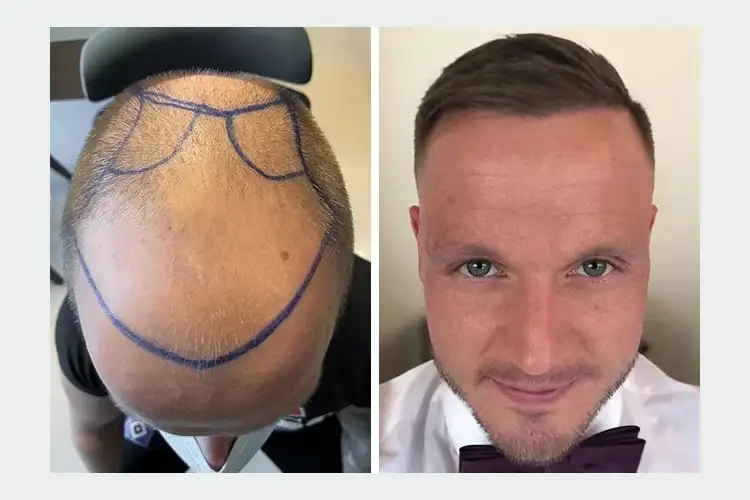
If your external appearance is significantly different from your internal self-image, a hair transplant can help restore this balance. It’s far more than just an aesthetic procedure—it can be a step toward greater self-acceptance and well-being.
Advantages of hair transplantation from a neuroaesthetic point of view:
- Restoration of facial proportions
- More harmonious overall picture, which is perceived as “more attractive” by the brain
- Strengthening self-esteem
- Long-term solution for clearly defined hair loss
Many patients report a “mindset shift” after treatment – they feel more like themselves again, more self-confident and more authentic. If you’re thinking about taking the next step to restore your confidence, you can read our guide to hair transplants in Turkey is the perfect place to start. It explains everything you need to know about the process — from the different techniques such as FUE and DHI, to recovery tips, costs, and how to choose the right clinic for you. Discover why thousands of patients choose Turkey every year for world-class, natural-looking hair restoration results.
Conclusion: Beauty is in the Eye of the Beholder
Neuroaesthetics shows us that hair is far more than a fashion accessory. It shapes our perception of youth, health, and attractiveness—both in others and in ourselves. If hair loss disrupts your self-image, a hair transplant can help restore what your brain perceives as “lost”: self-confidence, charisma, and inner harmony.
If you’ve been struggling with your confidence and self-image due to hair loss, feel free to contact our experts today to receive your free hair analysis.
FAQs
What specific areas of the brain are involved in neuroaesthetic responses to hair and facial features?
Neuroimaging studies suggest that regions such as the orbitofrontal cortex, amygdala, and fusiform face area are particularly active when evaluating beauty and facial aesthetics. These areas process emotional reactions, social cues, and visual symmetry—key elements influenced by changes in hair and facial proportions.
Can hair loss affect men and women differently from a psychological standpoint?
Yes, while both genders can experience psychological distress due to hair loss, studies indicate that women often report a stronger impact on self-esteem and identity. This is largely due to cultural and societal expectations surrounding femininity and beauty. Men, on the other hand, may associate hair loss more with ageing or diminished vitality.
How soon after a hair transplant do patients typically see results?
Visible results from a hair transplant usually begin to appear after 3 to 4 months, with full results typically evident around 12 to 15 months post-procedure. It’s important to note that initial shedding of transplanted hair is normal and part of the growth cycle.
Are the psychological benefits of hair transplantation supported by scientific research?
Yes, several clinical studies have shown that patients who undergo hair restoration procedures often report significant improvements in self-confidence, social engagement, and overall mental well-being. These effects are especially pronounced in individuals who experienced distress due to their appearance.
Is hair loss always permanent, or can it be reversed without surgery?
Not all hair loss is permanent. Conditions like telogen effluvium or stress-related shedding may be temporary. In such cases, medical treatments, lifestyle changes, or topical solutions may help reverse the process. However, genetic hair loss (androgenetic alopecia) often requires more permanent solutions like transplantation.
Are there risks or downsides to undergoing a hair transplant?
As with any medical procedure, hair transplants carry potential risks, including infection, scarring, or unsatisfactory cosmetic results. Choosing a qualified and experienced specialist significantly minimises these risks. A thorough consultation is essential to set realistic expectations.
Can neuroaesthetics be applied to other cosmetic procedures besides hair transplantation?
Absolutely. Neuroaesthetics is increasingly used to inform decisions in various fields of cosmetic medicine, from facial fillers to dental aesthetics and plastic surgery. It helps clinicians and patients understand how changes in appearance influence emotional and psychological responses.
What role does culture play in how we perceive hair loss or attractiveness?
Cultural norms heavily influence perceptions of beauty, including the importance placed on hair. For example, while full hair is valued in many Western cultures, other societies may have differing ideals. Nevertheless, evolutionary associations between hair and health appear to transcend cultural boundaries to some extent.
Is a hair transplant suitable for everyone experiencing hair loss?
Not necessarily. Suitability depends on the cause of hair loss, the availability of donor hair, and the patient’s overall health. An individual assessment is necessary to determine the most effective treatment plan, which may or may not include surgical intervention.

Dr. Imad Moustafa
Hair transplant specialist