


Hair transplantation is now a well-established procedure, and innovative methods allow hair follicles to be precisely extracted and implanted in bald areas. But what happens if someone no longer has their own donor hair?
In theory, a macabre question arises: Could hair follicles also be extracted from deceased individuals? Is this medically conceivable or ethically completely out of the question? In this article, we examine the facts and why this idea raises more questions than it answers.
Summary
Is Posthumous Hair Transplantation Possible?
The human body changes rapidly after death – cell functions cease, and tissue begins to decompose. Nevertheless, certain cell structures, including hair follicles, remain biologically intact for a short time.
Theoretically, it would be conceivable to extract hair roots within a very narrow window of time after death – similar to organ donation, where certain organs or tissues are preserved under sterile conditions. However, hair follicles are significantly more sensitive and, without their own blood supply, have only a limited lifespan.
How Long do Hair Follicles “Live”?
Hair follicles consist of specialised cells that require an active supply of oxygen, blood, and nutrients. Just a few hours after death, they lose this supply and begin to die.
In contrast to the kidneys or heart, which can be preserved for several hours under ideal conditions, hair follicles do not have their own tissue management system to keep them functioning after removal.
A hair transplant requires vital roots; follicles that not only appear intact but can also actively grow again. This is, sadly, is almost impossible to guarantee after death.
Ethical Questions: Where Are the Limits?
Even if it were medically conceivable, serious ethical questions remain:
- Dignity of the deceased: Is post-mortem hair removal compatible with human dignity?
- Consent: Are there any regulations that legally cover this form of donation?
- Intended use: Does the removal serve a medically necessary purpose?
Are There Comparable Approaches in Medicine Currently?
There is indeed research being conducted on preserved hair follicles, for example in the context of so-called hair banking. In this process, hair roots are taken from living individuals and frozen, for example, for later use in hair cloning or cell-based therapies.
Skin or hair samples are also preserved in tissue research, but only for scientific purposes, not for hair transplants. The use of hair follicles from deceased individuals for transplants into living patients is not currently permitted, and is unlikely to be in the foreseeable future.
Why Traditional Hair Transplants Remain the Best Solution
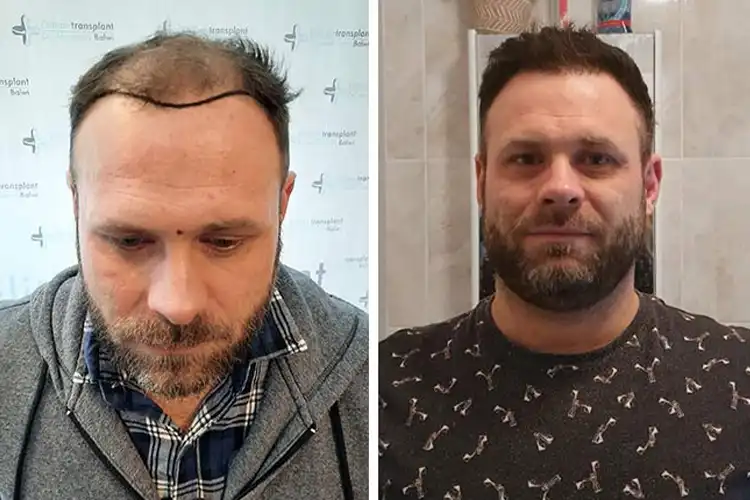
Instead of hoping for hypothetical future scenarios, modern clinics rely on proven methods using the body’s own hair follicles.
Techniques such as FUE (Follicular Unit Extraction) or DHI (Direct Hair Implantation) allow for aesthetically convincing and lasting results even in cases of advanced hair loss – without any ethical gray areas.
- Gentle extraction
- Natural result
- Lasting effect
- No external materials required
Anyone who wants to regain their own hairline now has realistic, safe options, and doesn’t need to take any questionable detours.
Conclusion: Fascinating, But Not Feasible
The idea of donating hair after death raises fascinating medical and ethical questions, but currently it is neither practical nor possible. Hair follicles are highly sensitive structures that can only be transplanted under ideal conditions, and today this is only possible with living tissue.
Those seeking a permanent solution to hair loss continue to rely on what has proven successful: hair transplantation using their own hair. Natural, safe, and with lasting results.
FAQs
Would using donor hair from another living person be possible instead?
No. Even in living donors, using someone else’s hair is not feasible. Hair follicles are genetically coded, and the immune system would reject them in the same way it rejects incompatible organ transplants. Unlike organs, hair follicles cannot currently be matched or immunosuppressed effectively enough to allow donor-to-recipient transplantation.
Could advanced preservation techniques extend the lifespan of hair follicles after death?
At present, preservation methods such as cryopreservation are only effective for follicles taken from living donors. After death, the rapid breakdown of blood supply and cellular function cannot be halted quickly enough for follicles to remain viable for regrowth, even with cutting-edge storage technologies.
Is synthetic or bioengineered hair a potential alternative to post-mortem follicles?
Synthetic or bioengineered hair systems are being researched, particularly in the fields of hair cloning and stem-cell therapy. However, these technologies are still experimental and not available for clinical use. Current artificial fibres used in cosmetic procedures do not replicate natural hair growth and carry medical risks.
Could future hair-cloning techniques eliminate the need for donor hair altogether?
Possibly. Hair cloning aims to multiply a person’s existing follicles in a laboratory, creating an unlimited supply of genetic matches. While promising, the technique is not yet clinically approved. If it becomes successful, it would make discussions about posthumous donation irrelevant.
Are there legal frameworks that could ever allow hair donation after death?
No legal systems currently classify hair follicles as transplantable tissue after death. To permit posthumous hair donation, entirely new regulations around consent, tissue handling, and medical necessity would be required. Given the limited medical value of hair transplantation compared with organ donation, such legal changes are unlikely.
Does religious or cultural guidance address post-mortem hair removal?
Most religious and cultural traditions place strong emphasis on maintaining the dignity and integrity of the deceased. Post-mortem cosmetic tissue removal, such as hair extraction, is generally discouraged or prohibited. This further strengthens the ethical barriers against such procedures.
If someone has severe baldness, what options exist when donor hair is insufficient?
Patients with limited donor supply may consider combined approaches such as beard-hair transplantation, body-hair extraction in selected cases, medical treatments like finasteride or minoxidil, scalp micropigmentation, or hair-system integration. A professional consultation helps determine the most suitable combination.
Could deceased individuals’ hair follicles be used purely for research?
Yes, with proper consent and ethical approval, hair follicles from deceased individuals can be used in scientific research. They cannot, however, be used for transplantation or cosmetic procedures. Research use focuses on understanding hair biology, disease, and future therapeutic possibilities.
Does hair continue to grow after death, and could this affect transplantation viability?
Despite a common myth, hair does not continue to grow after death. Skin dehydration can make hair appear longer, but no cellular growth occurs. This lack of activity reinforces why follicles quickly become unusable for transplantation.
Would immunosuppressive medication make post-mortem hair transplantation possible?
No. Even with immunosuppression, transplanted hair from another individual—or a deceased donor—would not integrate properly. Hair follicles require ongoing vascularisation and metabolic activity, both of which are lost rapidly after death and cannot be restored through medication.
Dr. Imad Moustafa
Hair transplant specialist