


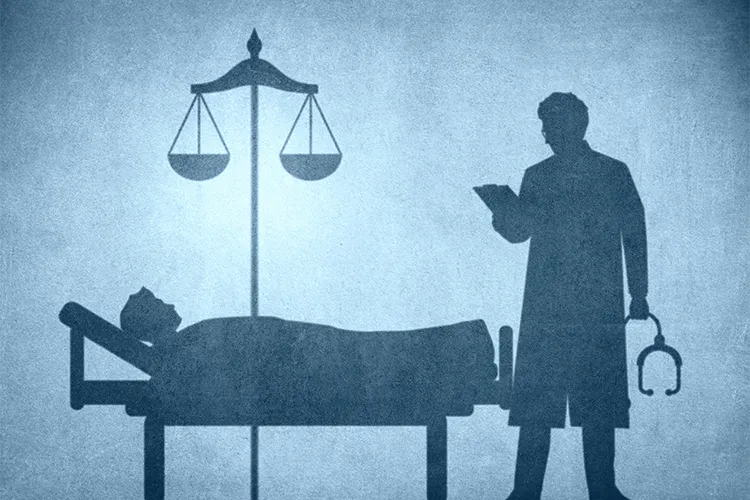
Medicine is always advancing rapidly, and the field of hair loss is no exception. Genetic interventions, artificially cultivated follicles, even animal testing for the development of new hair therapies; if there is the remotest potential for a new treatment option, it is being tested.
But one question often remains – should we really do everything we could? Especially in such a sensitive area as human appearance, medical progress and ethical responsibility are closely intertwined. In this article, we’ll be taking a closer look at some of the ethical quandries that arise in the field of hair restoration medicine.
Summary
- Genetic Engineering & Hair Cloning: Where Does the Boundary Lie?
- Hair Medicine and Social Responsibility: Who Gets Access?
- Animal Testing in Hair Research: An Ethical Dilemma
- The Fine Line Between Progress and Responsibility
- Why Hair Transplantation is the Most Responsible Way
- Conclusion: Ethics Begins with People
Genetic Engineering & Hair Cloning: Where Does the Boundary Lie?

Genetic interventions for hair restoration are a major focus of research. For example, the targeted deactivation of DHT receptors or the activation of dormant stem cells. Cloning hair follicles is also being tested to make an unlimited supply of donor hair available.
However, these procedures raise critical questions:
- How safe are such interventions for the entire body?
- Where does medical treatment end and where does the designer human begin?
- How do we address social inequalities if such procedures remain expensive and exclusive?
What is researched in the laboratory today will affect our understanding of naturalness, identity, and self-determination tomorrow.
Hair Medicine and Social Responsibility: Who Gets Access?

Highly advanced procedures like gene regulation or hair cloning could one day be effective – but for whom? If such methods are only available to the wealthy, a new form of aesthetic inequality will emerge. Hair reconstruction will then no longer be just a question of appearance, but of social status.
Hair medicine must therefore also ask itself ethical questions, such as how do we ensure that progress benefits everyone and not just a select few?
Animal Testing in Hair Research: An Ethical Dilemma
Many new active ingredients against hair loss are first tested on animals, often on mice or rats whose genetic makeup has been altered to simulate hair loss.
Even though animal testing is still standard practice in some areas of research, ethical questions arise:
- Is the cosmetic optimisation of humans a legitimate reason to cause animals to suffer?
- Are there alternatives, e.g., human cell cultures or AI-supported models?
- How much progress is morally justifiable if the price is the lives of others?
Especially in the field of aesthetic medicine, animal testing should be critically examined because it is not about life and death, but about quality of life.
The Fine Line Between Progress and Responsibility

Innovation is important, that much is indisputable. But ethical progress doesn’t just mean that something becomes possible, but that it can be applied well, safely, and responsibly.
Hair medicine must therefore ask itself:
- How much intervention in biology is justified – and at what point does man become a canvas?
- Who protects dignity when beauty is technically created?
- What happens to our self-image when naturalness becomes one option among many?
Digital innovations such as AI-supported hair diagnostics, smart scalp scanners or app-based analysis methods also raise ethical questions – for example, regarding data protection, algorithmic transparency and possible misinterpretation of sensitive health data.
Why Hair Transplantation is the Most Responsible Way
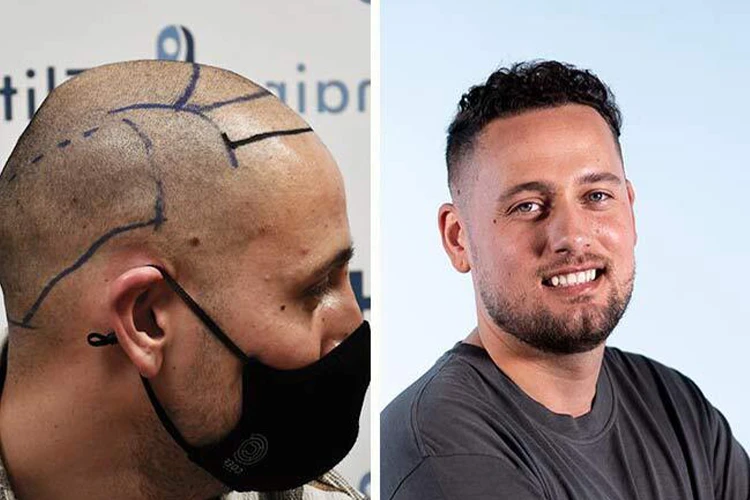
Amidst all these questions, hair transplantation remains a procedure based on respect for the human body:
- It uses the body’s own resources – no foreign cells, no genetic manipulation.
- It does not use animal testing in its application.
- It preserves naturalness and individuality, instead of standardising both.
Modern procedures such as the FUE method and DHI technique enable precise, aesthetically convincing before-and-after results – based on biological processes, not biotechnological speculation.
Conclusion: Ethics Begins with People
Technology can do many things – but not everything that is possible is also right. Hair medicine, like many medical fields, faces the challenge of deciding between feasibility and ethics.
Hair transplantation shows that progress can also be responsible, humane, and sustainable – without artificial detours, without moral gray areas. But with real hair, real feeling, and real respect.

Dr. Imad Moustafa
Hair transplant specialist