

Hair loss affects many people – not only physically, but also emotionally. Those who lose their hair often lose a measure of self-confidence. It’s no wonder, then, that the desire for new solutions is growing ever stronger – and research is exploring approaches that were unthinkable just a few years ago.
One of these ideas? Transplanting animal hair into humans. What sounds like a crazy thought experiment is at least being discussed in research. But how realistic is this really? And how far has science progressed? In this article, we’ll be taking a closer look.
Summary
- What Animal Testing Can Teach Us About Hair Growth
- Biohybrid Hair Transplantation: When Animals and Humans Converge
- Research Using Animal Follicles
- Xenotransplantation: The Ethical and Immunological Limits
- Stem Cells and Tissue Engineering: The More Realistic Future
- Modern Hair Transplantation: The Safe Solution for Today
- Conclusion: Fascinating Research, But Not Applicable
- FAQs
What Animal Testing Can Teach Us About Hair Growth
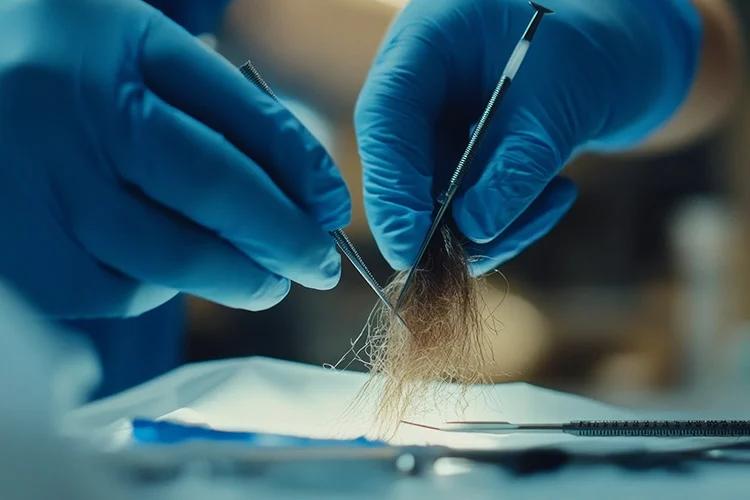
Animal testing plays a central role in a great deal of scientific research – including in the field of hair growth. Mice, pigs, and other animals provide important insights into the structure, cycle, and control of hair follicles.
What we know so far from animal testing:
- Dermal papilla cells significantly control hair growth
- The hair cycle can be influenced by external stimuli, hormones or nutrients
- Some animals show particularly active hair growth, which is suitable for studies
However, animal follicles differ significantly from human ones, both biologically and functionally. Their response to test substances cannot be easily transferred—let alone transplanted.
Biohybrid Hair Transplantation: When Animals and Humans Converge
So-called biohybrid transplantation is a research approach in which biological materials of different origins—for example, animal tissue—are combined with human tissue. In theory, animal hair follicles could be engineered to grow into human skin and produce hair.
Sounds revolutionary – and it is. But for now, it remains a hypothetical. While experiments with animal follicles in mice have shown that they can stimulate regenerative processes, there’s a world of difference between cell culture and clinical application. Especially when it comes to complex structures like hair roots, which react to numerous environmental factors.
Research Using Animal Follicles
Many laboratory studies use animal hair follicles to better understand specific processes. For example:
- How do skin cells communicate with hair roots?
- Which molecular signals stimulate new growth?
- How can stem cells be transformed into follicle-like structures?
However, this research serves to gain knowledge—not to provide direct therapy. Animal hair cells behave very differently in human skin, and the risk of immunological reactions is extremely high.
Xenotransplantation: The Ethical and Immunological Limits
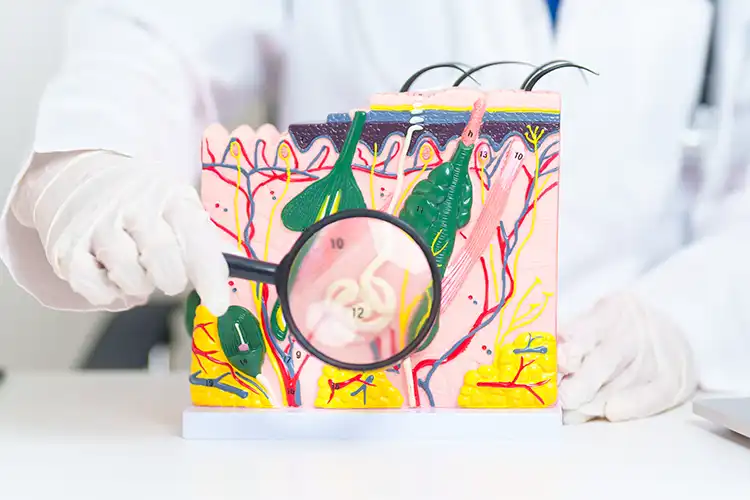
The transplantation of animal tissue into humans—medically known as “xenotransplantation” —has been an ethically controversial field for decades. If performed at all, it is used only for organs such as heart valves—and even then with great caution.
In the cosmetic field, such as hair transplantation, this step would be even more questionable. The risks include:
- Rejection reactions by the immune system
- Unpredictable tissue reactions in human skin
- Risk of transmission of animal pathogens
- Ethical debates about animal welfare and medical responsibility
Given these hurdles, animal hair transplantation seems a distant prospect, not only medically but also socially.
Stem Cells and Tissue Engineering: The More Realistic Future
While animal follicles are problematic, modern research is pursuing a more promising approach: cultivating hair follicles from human cells in the laboratory.
Induced pluripotent stem cells (iPS cells) are primarily used for this purpose. They can be obtained from the body’s own tissue and developed into any cell type—including hair-forming cells.
This method is still in the experimental stage, but it offers realistic opportunities:
- No rejection reactions
- No ethical conflicts
- Possible solution for patients with advanced hair loss and small donor area
However, it will take time – and many more studies – before such procedures are mature and widely available.
Modern Hair Transplantation: The Safe Solution for Today
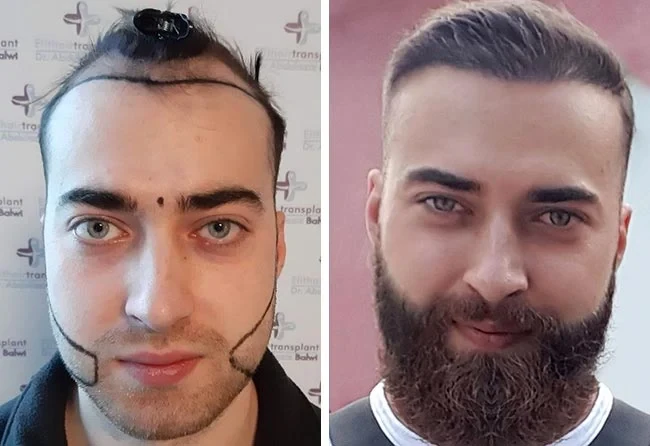
While other procedures are still being tested in the laboratory, hair transplantation has long since proven itself – with a high success rate and natural-looking results.
The FUE method and DHI technique are particularly convincing due to these advantages:
- Minimally invasive: no linear scars, hardly any downtime
- Permanent results : once transplanted hair remains for a lifetime
- Natural look: Hairline and growth direction are individually adjusted
- Can be used on all hair types
- Can also be combined with PRP to optimise the result
- Suitable for advanced hair loss, androgenetic alopecia or receding hairline
Another advantage: It is based on the body’s own tissue – so there are no risks from foreign material or genetic incompatibility.
Conclusion: Fascinating Research, But Not Applicable
The idea of transplanting animal hair onto humans is fascinating—but for now, it simply isn’t viable. Research is providing valuable insights, especially into the biology of hair follicles. However, it will be many years before these studies translate into a practical solution for humans—if it ever gets that far.
Anyone seeking a safe, effective, and proven treatment for hair loss today will find the answer in modern hair transplantation. Not futuristic—but real. And above all: effective.
FAQs
Can animal hair physically grow on human skin if transplanted?
No, animal hair cannot grow on human skin in a functional or lasting way. Biological incompatibilities, including immune rejection and differing follicle structures, prevent the integration of animal hair into human tissue.
Has animal hair ever been successfully transplanted into a human?
To date, there have been no documented or medically approved cases of successful animal hair transplantation into humans. All current studies are limited to preclinical, experimental environments.
What types of animals are most commonly used in hair research?
Mice, pigs, and occasionally rabbits are commonly used in hair growth research due to their regenerative skin properties and manageable follicle structures.
Could animal hair be used as a temporary cosmetic solution (like wigs or implants)?
While animal hair has historically been used in wigs, it is not suitable or safe for implantation due to the risk of infection and immune response. Today, synthetic or human hair is preferred for such purposes.
What would happen if animal follicles were implanted into human skin?
The human immune system would likely reject the foreign tissue, leading to inflammation, infection, or graft failure. There is also a risk of transmitting animal-specific pathogens to the human host.
Why is xenotransplantation more accepted in life-saving treatments than in cosmetic ones?
In life-threatening conditions, the potential benefit of xenotransplantation (such as a heart valve replacement) can outweigh the risks. In contrast, cosmetic applications lack that urgency, making the ethical and medical risks less justifiable.
How close are we to growing full human hair follicles in the lab?
While promising strides have been made using stem cells, lab-grown hair follicles are still in experimental stages and are not yet available as a clinical treatment. Human trials are likely several years away.
Can existing animal studies be used to speed up stem cell-based hair research?
Yes, animal studies help researchers understand cellular communication and hair follicle development, which are critical foundations for human stem cell therapies. However, translation into human applications still requires extensive testing.
Why can't we just modify animal cells to make them more compatible with humans?
Genetically modifying animal cells to mimic human biology is extremely complex and poses significant ethical, safety, and technical challenges. Even minor modifications can trigger unintended consequences or immune rejection.
Dr. Imad Moustafa
Hair transplant specialist