


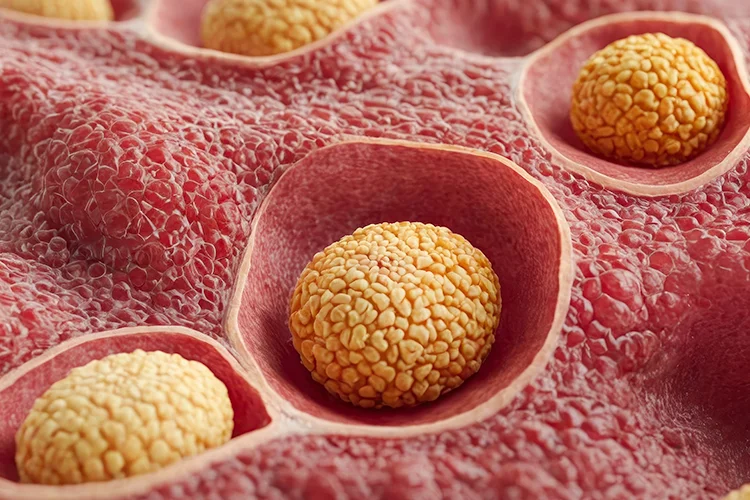
The search for new ways to promote hair growth continually leads modern medicine down surprising paths. One much-discussed approach is the use of stem cells from the body’s own adipose tissue.
But how exactly does fat influence hair growth? And can a combination of fat cells and hair transplantation actually deliver better results?
In this article, we take a scientifically sound look at the research surrounding adipose stem cells, their potential role in hair regeneration – and what is realistically possible today.
Summary
What is Fat-Based Hair Therapy?
This method does not involve directly transplanting fat tissue, but rather the stem cells it contains, the so-called adipose-derived stem cells (ADSCs) . Under certain conditions, these can stimulate hair growth because they:
- Release growth factors that can influence the activity of the hair follicles.
- Possess anti-inflammatory properties and
- Can improve blood circulation in the scalp
The goal is to use these cells to create a favorable environment for hair growth, especially in combination with hair transplantation or in cases of incipient hair loss.
How Does the Application Work?
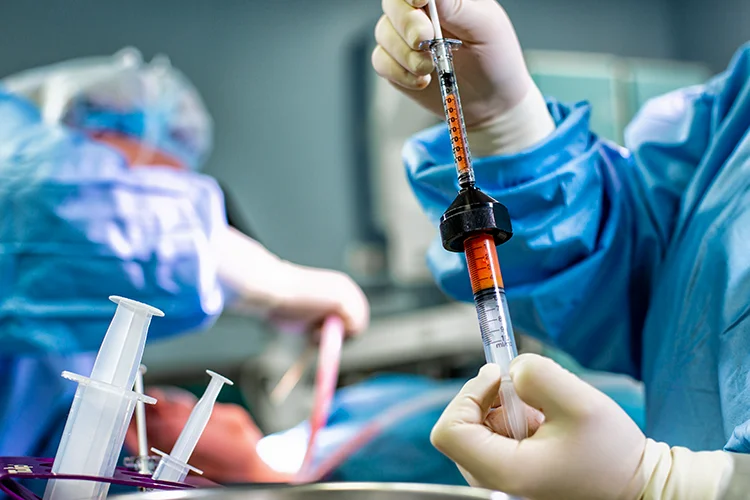
The application usually takes place in several steps:
- Fat harvesting (liposuction)
– A small amount of fatty tissue is gently removed from body areas such as the abdomen or thighs. - Processing
– The extracted fat is specially processed to isolate the stem cells. This can be done mechanically (e.g., by centrifugation) or enzymatically. - Injection into the scalp
– The processed cells or the microfat obtained from them are injected specifically into hairless or thinning areas.
This technique is often used in combination with a hair transplant to further stimulate the transplanted hair and support the healing tissue.
What Does the Research Say?
Scientific research into this method is still in its infancy, but shows promising approaches:
- Studies show that ADSCs can increase hair density in patients with androgenetic alopecia – but only to a limited extent and with individual response.
- Other studies suggest that a combination of transplantation and ADSC injections can positively influence the healing and growth of the transplanted grafts.
- The so-called nanofat therapy – a variant using particularly finely processed fat – is also currently being investigated in studies, especially with regard to its regenerative effect on skin and hair follicles.
Nevertheless, it remains true that long-term and large-scale clinical trials are still lacking. The methods are currently considered experimental, although not without potential.
Advantages and Limitations at a Glance
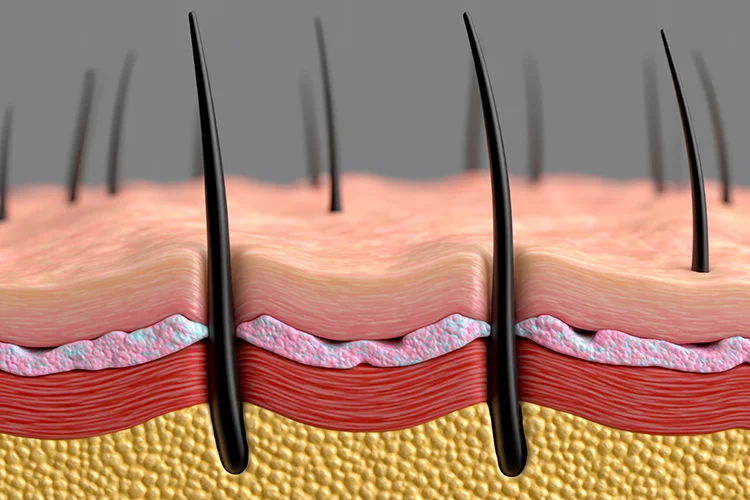
Possible Advantages:
- Regeneration of damaged follicles in cases of early hair loss
- Improvement of skin blood flow and microcirculation
- Supporting wound healing after hair transplantation
- Using the body’s own cells – no foreign substances
Current Limitations:
- No substitute for a transplant in cases of advanced hair loss
- Results are not permanently proven.
- The procedure is not yet standardised or widely approved.
- The effect is highly dependent on individual biology and hair condition.
Where is This Method Currently Being Used?
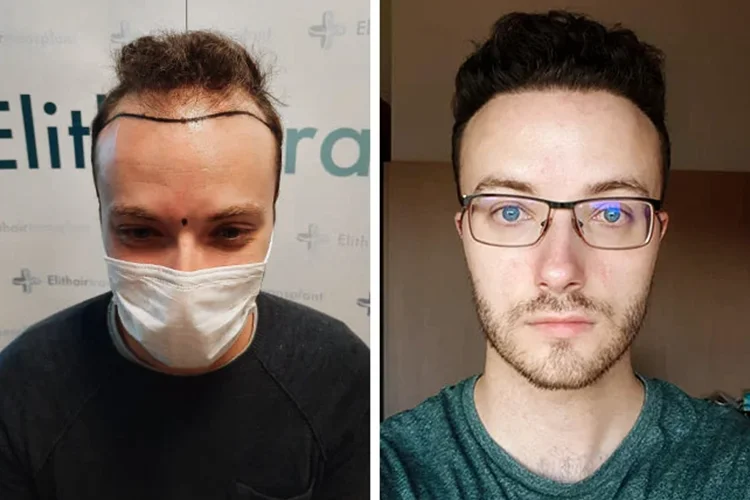
Several specialized clinics worldwide are currently testing adjuvant therapies using stem cells from adipose tissue, usually in combination with a traditional hair transplant. It is important to note that fat transplantation does not replace the transplant, but can, potentially, serve as a complementary support during the regeneration phase.
In hair medicine, modern autologous hair transplantation remains the only procedure with proven effectiveness. In particular, the established methods FUE (Follicular Unit Extraction) and DHI (Direct Hair Implantation) achieve natural and aesthetically convincing results.
- FUE: gentle extraction of individual hair follicles, minimally invasive and with few scars
- DHI: direct implantation with high control over growth direction and density
- Both methods allow for precise shaping of the hairline and lasting results – without an artificial look.
Nanofat is also increasingly used in aesthetic medicine, for example for facial skin rejuvenation. However, the use of fat stem cells in hair medicine is still in its infancy – research is ongoing, but successes have so far been limited.
Conclusion: Innovative, But Not Yet a Replacement for Transplants
The idea of using the body’s own fat to promote hair growth is fascinating and shows how far hair medicine has progressed. Initial studies confirm the regenerative potential of fat stem cells – but widespread, standardised use is not yet realistic.
Anyone looking for a reliable solution to hair loss today should rely on proven methods such as modern hair transplantation. Combining this with regenerative procedures – such as PRP or, in the future, ADSCs – can be supportive, but cannot replace transplanted hair.

Dr. Imad Moustafa
Hair transplant specialist