


Have you ever experienced a dry feeling on your skin after using tap water? Then you probably live in one of the hard water areas of the UK. Although hard water has benefits for our health, it can also be unpleasant for our hair.
Learn more about the downsides of hard water for your hair and how it can contribute to hair loss in our article.
Summary
What is Hard Water and How Common Is It in the UK?
Hard water refers to tap water that contains elevated levels of dissolved minerals—chiefly calcium (Ca²⁺) and magnesium (Mg²⁺).
Water Hardness Scale (mg CaCO₃/L)
| Category | mg CaCO₃/L | Commonly Found In* |
| Soft | 0-100 | Parts of Scotland & North Wales |
| Slightly hard | 100-150 | Some Midlands areas |
| Moderately hard | 150-200 | Large parts of England |
| Hard | 200-300 | Southern and eastern England (chalk/limestone geology) |
| Very hard | >300 | Specific local supply areas |
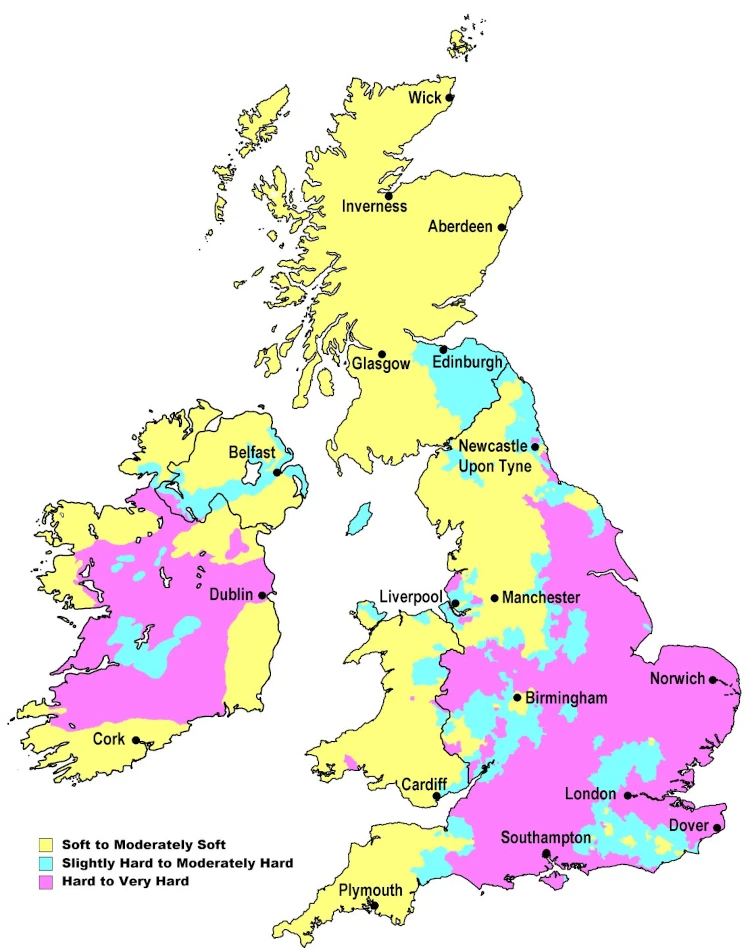
To determine the hardness of the water in your home, there are several ways to do this. First, check your local council’s website to find out about the water quality where you live.
A quicker and more effective way to check if you have scale in your water is to have a look at your taps and appliances. If you see white streaks or hard deposits, the limescale level is high.
Is Hard Water Bad for Your Health?
Limestone is actually quite beneficial to our bodies, despite its bad reputation. Drinking water rich in calcium and magnesium provides our bodies with essential minerals. What is limestone?
It is a mineral made up of calcium ions, carbonate ions or oxides, which covers the need for magnesium and fights against cardiovascular disease. If limestone brings benefits from the inside, on the other hand, it can damage the outside of the body for the same properties, aggressive to our skin.
Can Hard Water Cause Hair Loss?
Several studies have shown that hard water exacerbates dermatological problems. In fact, a study by the University of Sheffield showed an increase in cases of dermatitis in people living in an area with high water hardness. The scalp can also be affected if a person has too much hard water in their home.
That said, it is unlikely to be the main cause of true hair loss such as male-pattern baldness or female thinning. Dermatologists emphasise that genetics, hormones and follicle health remain the dominant drivers of hair loss. Therefore, think of hard water as a modifying factor, not the root cause.
Signs Your Water Might Be Affecting Your Hair
If you live in a hard-water area (see table above) and notice the following, water may be playing a part:
- Hair looks dull, lifeless, lacks shine or bounce
- You notice frequent tangles, breakage or split ends despite good care
- Shampoo won’t lather properly, or your conditioner seems less effective
- You see mineral residue (white scale) on shower tiles or hear the faucet “whistles” when running
- Your scalp feels coated, heavy or itchy (particularly if you already have scalp sensitivity)
You live in a high-hardness area and are not using chelating/clarifying care
4 Ways to Reduce Hard Water in Your Hair
- Spare your shampoos: It’s easy to avoid constant contact with water.
- Don’t use tap water for your hairstyles. You can replace it with bottled or demineralized water.
- Use an anti-limestone shower head
- Invest in a water softener
Can I Wash My Hair With Tap Water After a Hair Transplant?
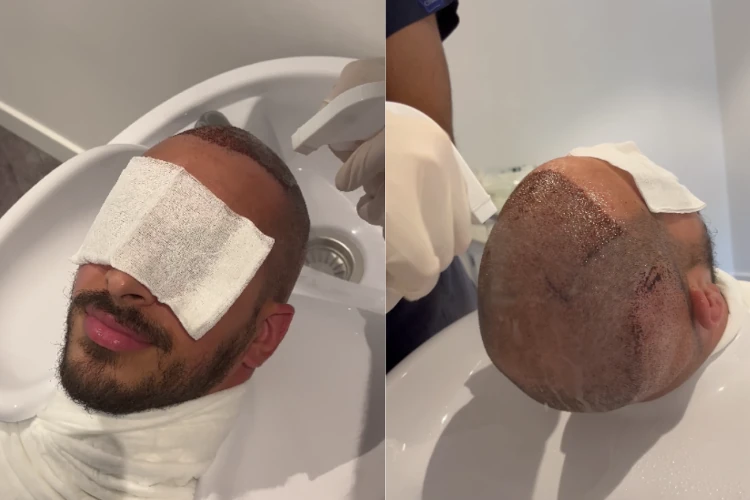
Your medical team will give you guidelines on how to care for your hair at home after your hair transplant. For the first two weeks there will be redness. The grafts are still fragile. You are advised not to use your shower head directly.
Instead, if your water is too hard, you can use a spray with mineral water to rinse off. Once the scabs have fallen off, you can use tap water for washing. Complete your new hair care routine with Dr Balwi’s Shampoo to stimulate hair growth.
Need more advice about your hair loss or hair transplant? Contact one of our experts to start your free hair analysis.

Dr. Imad Moustafa
Hair transplant specialist