


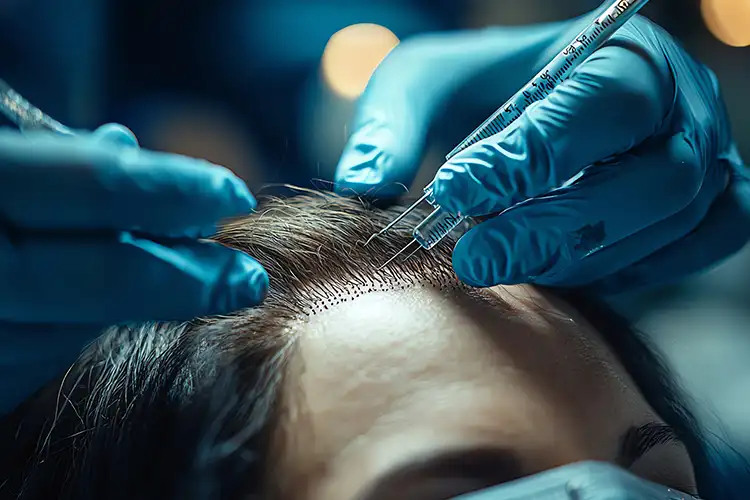
Many of us yearn to have a full head of hair and will go to great lengths to get one, especially when conventional remedies like shampoos, serums, and medications don’t give the desired results. While hair transplantation is a safe and long-lasting solution, scientists the world over continue to research alternative approaches to this issue.
One of the innovative ideas gaining traction is the use of artificial hair follicles made of bioplastic. These synthetic follicles would then be implanted into the scalp, just as natural follicles are implanted today as part of a hair transplant procedure. But how realistic is this visions, and could synthetic hair follicles compete with the real thing?
Summary
What Are Synthetic Hair Follicles and Bioplastics?
Unlike traditional wigs or hairpieces, artificial hair follicles are designed to be permanently anchored into the patient’s the tissue. Researchers are investigating so-called biocompatible materials—such as special bioplastics that are well-tolerated by the body. The goal is to design these artificial structures so that they:
- Appear as natural as possible
- Are not rejected by the body
- Represent a permanent solution for severe hair loss.
In contrast to autologous hair transplantation, in which real hair roots are transplanted, these are non-living implants – similar to medical synthetic fibers or implants from other areas.
The Current State of Research

Much international research on bioplastics is already underway, and some has touched upon the possibility of 3D-printing hair follicles and using the keratin of real hair in the production of bioplastics. In theory, with biological material as its basis, certain bioplastics could be well-accepted by the body.
You might already be aware that synthetic hair transplants, which do not require bioplastics, are currently an option available to patients. In these procedures, fiber-like synthetic hairs are implanted directly into the scalp using microneedles. This option is, however, typically reserved for those whose hair loss is so extensive that there is insufficient donor hair available for transplantation.
In the meantime, more research on the implantation of artificial hair follicles, specifically, is needed. To date, it cannot be ascertained whether such implants could be tolerated long-term by the body, if they would cause inflammatory reactions, how durable the bioplastic can or should be, or if any speculative procedures could result in a natural appearance.
Promising at a Glance
On paper, the idea sounds promising—especially for people whose hair loss is so extensive that there is no longer sufficient donor hair for extraction. Theoretically, artificial hair implants could offer the following benefits:
- Independence from the donor area
- Fast visible effect, as no growth phase is necessary
- Uniform density
- No genetic or hormonal dependence
This could open up a new option, especially in cases of complete hair loss (e.g. due to illness or genetics).
The Limits: Why Real Hair Follicles Reign Supreme
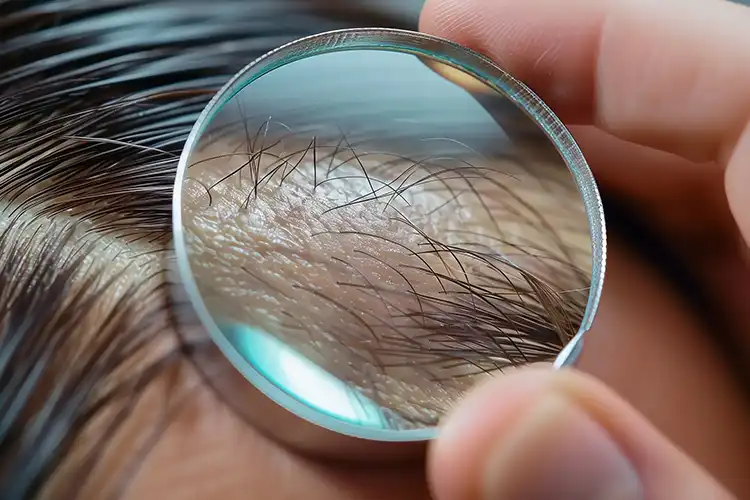
Despite exciting approaches, research has also revealed clear limitations. Synthetic hair implants:
- do not grow with the hair – that means: no change in length, no styling possible
- do not respond to the natural hair cycle
- often appear less authentic upon closer inspection
- carry a higher risk of infection or rejection reactions
What is particularly of note is that the body can recognise the implants as foreign material, and even with biodegradable plastics, encapsulation, inflammation or permanent irritation can occur. Previous experiments with synthetic hair implants were discontinued or even banned in many countries due to the imperfection of the materials.
Why Traditional Hair Transplants Endure
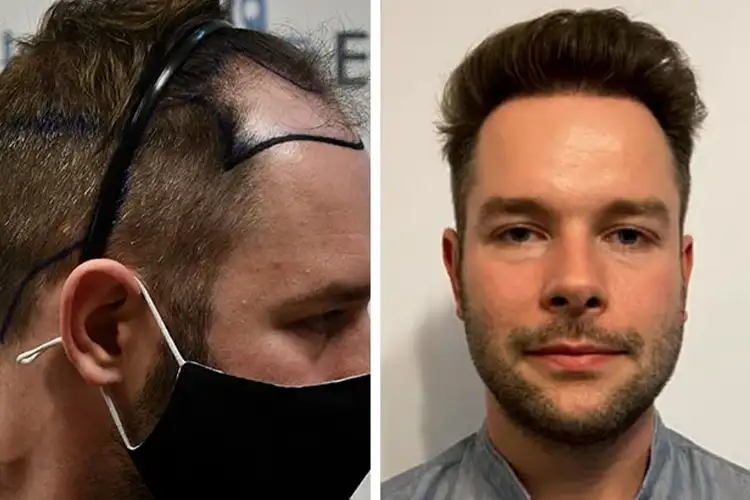
Modern hair transplantation techniques like Follicular Unit Extraction (FUE) and Direct Hair Implantation (DHI) use the body’s own living hair, which grows permanently and behaves naturally. The before-and-after results demonstrate impressive changes. Advantages include:
- Tailored to your needs and appearance
- Durable and long-lasting
- Indistinguishable from natural hair growth
Especially in cases of progressive hair loss, a transplant is the only method that can bring back not only visible fullness, but also a real new self-confidence – with real roots, literally and emotionally.
Interested in discovering why Turkey is one of the leading destinations for advanced hair restoration? You can find detailed insights in our expert guide to hair restoration in Turkey for everything you need to know.
Conclusion: Bioplastic Hair Follicles Need More Research
Research into artificial hair follicles made of bioplastic demonstrates the innovative thinking of tomorrow’s medicine. The idea of creating a visually dense hair structure without donor hair is fascinating—but in reality, it’s still far from being a safe application.
For anyone who wants to make a visible change, hair transplantation offers by far the most natural and proven solution today. And more than that, it gives many people the feeling of being themselves again.

Dr. Imad Moustafa
Hair transplant specialist