


What does the hair transplant recovery phase look like?
Recovery after a hair transplant is a straightforward process — especially with the right aftercare and dedicated follow-up support. These measures keep healing as smooth as possible, so you can enjoy the first results of your procedure even sooner than expected.
As a global leader in hair restoration, we use the most advanced, minimally invasive techniques to keep recovery time as short as possible. Our focus is a seamless recovery, so you can begin your journey to thicker hair with full confidence.
Thanks to expert support at every stage, your path to “transformation” has never been easier.
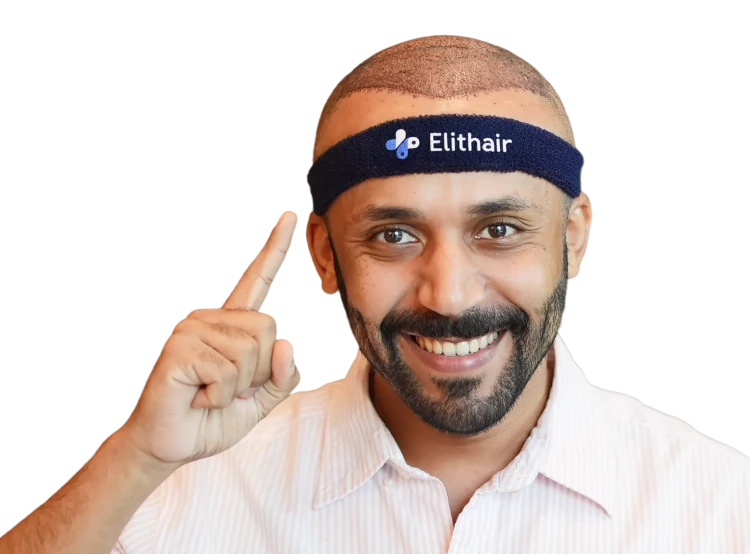
How long does recovery take after a hair transplant?
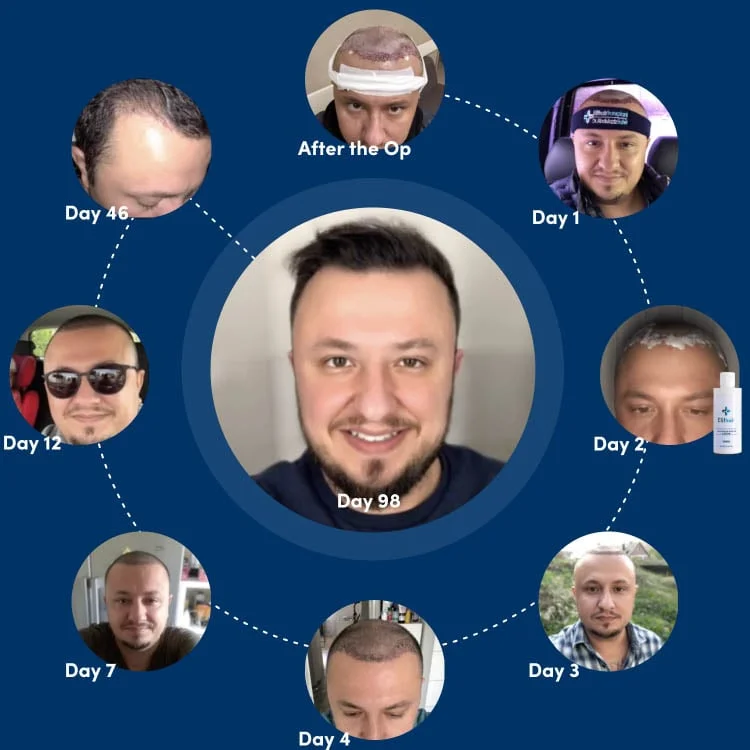
The recovery process after a hair transplant is designed to be smooth and efficient, with each stage marking visible progress.
In the days after the procedure, scabs naturally form as part of the healing process. This is completely normal and an important step in protecting the transplanted areas. Mild redness in the treated zones is also normal and fades quickly.
The redness comes from increased blood flow, which supports healing — a typical positive side effect of the procedure.
With proper aftercare and our expert support, you’ll feel confident again in no time and ready to show off your new hair!
Fast healing, visible results
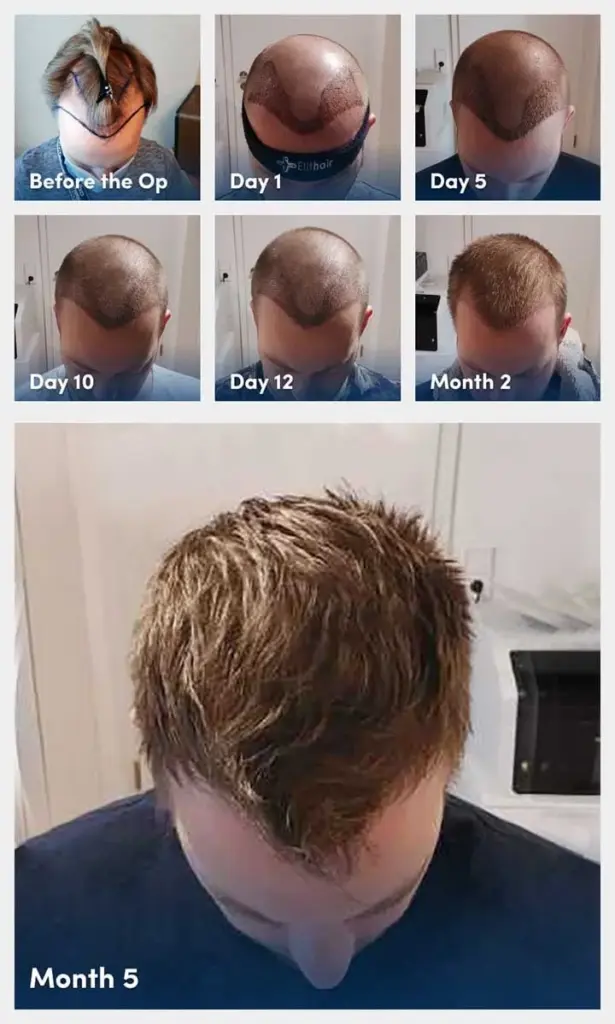
Healing after a hair transplant usually progresses quickly, so you can enjoy naturally fuller hair sooner than you might expect.
Within just a few days, the wounds heal, scabs fall off, and mild redness disappears.
From day 12 onward, the difference between your existing hair and the recipient area is barely noticeable — and the path to renewed confidence begins!
Comprehensive aftercare for your hair transplant with Elithair
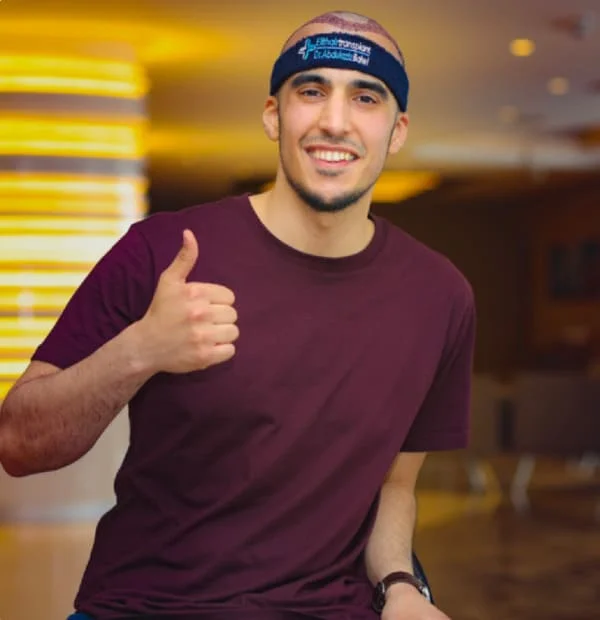
At Elithair, we place a strong emphasis on your recovery and provide a complimentary aftercare kit that supports the healing of both donor and recipient areas after your hair transplant.
Caring for your scalp during this critical phase is especially important. Wash your hair gently and avoid any direct contact with the treated zones for the first two weeks. This keeps the recovery process smooth and protects your freshly transplanted grafts.
To further enhance your result, you receive a complimentary PRP treatment as part of your hair treatment package. This advanced therapy supports the regrowth of your transplanted hair and contributes to dense, natural-looking results. Additional expert-recommended products tailored to your needs are available in our online shop.
Elithair: We support you at every step
At Elithair, we provide unique support throughout your entire journey to fuller hair. Our expert team is available at all times to make sure you always have the help and support you need — both during recovery and afterward.
Join the community of more than 100,000 satisfied patients who trust the global leader to restore their confidence and deliver exceptional results. With Elithair, you’re never alone on your journey to thicker, healthier hair.
FAQ
Can I use wound-healing ointments after the procedure?
Wound-healing ointments are not necessary. If you’d like to use them, you can — after consulting our experts — gently dab specific products onto your donor area.
Make sure to use only high-quality ointments and to wash your hands before applying them.
Is recovery after a hair transplant painful?
Some wound discomfort caused by swelling of the head is possible after a hair transplant. This should subside within a few days.
Wound healing can also cause itching. Please do not scratch with your fingernails under any circumstances.
What can I do to support healing after the hair transplant?
Right after the treatment, take it easy and spend a lot of time lying down. We provide a special neck pillow for sleeping. Avoid physical exertion to protect the transplanted area.
You should also wear the headband we provide.
For the first 2 weeks after the procedure, you must be especially careful when washing your hair. You can attempt your first wash about 48 hours after the procedure. Use lukewarm water and let any lotions sit for several minutes before rinsing.
Avoid direct sunlight.
What are the stages of the aftercare phase?
After your hair treatment, scabs form first. This is your body’s natural response to the procedure and a very good sign.
The scabs fall off after about 12 days. At that point, healing is complete. After that you may still see redness, which is completely normal.